
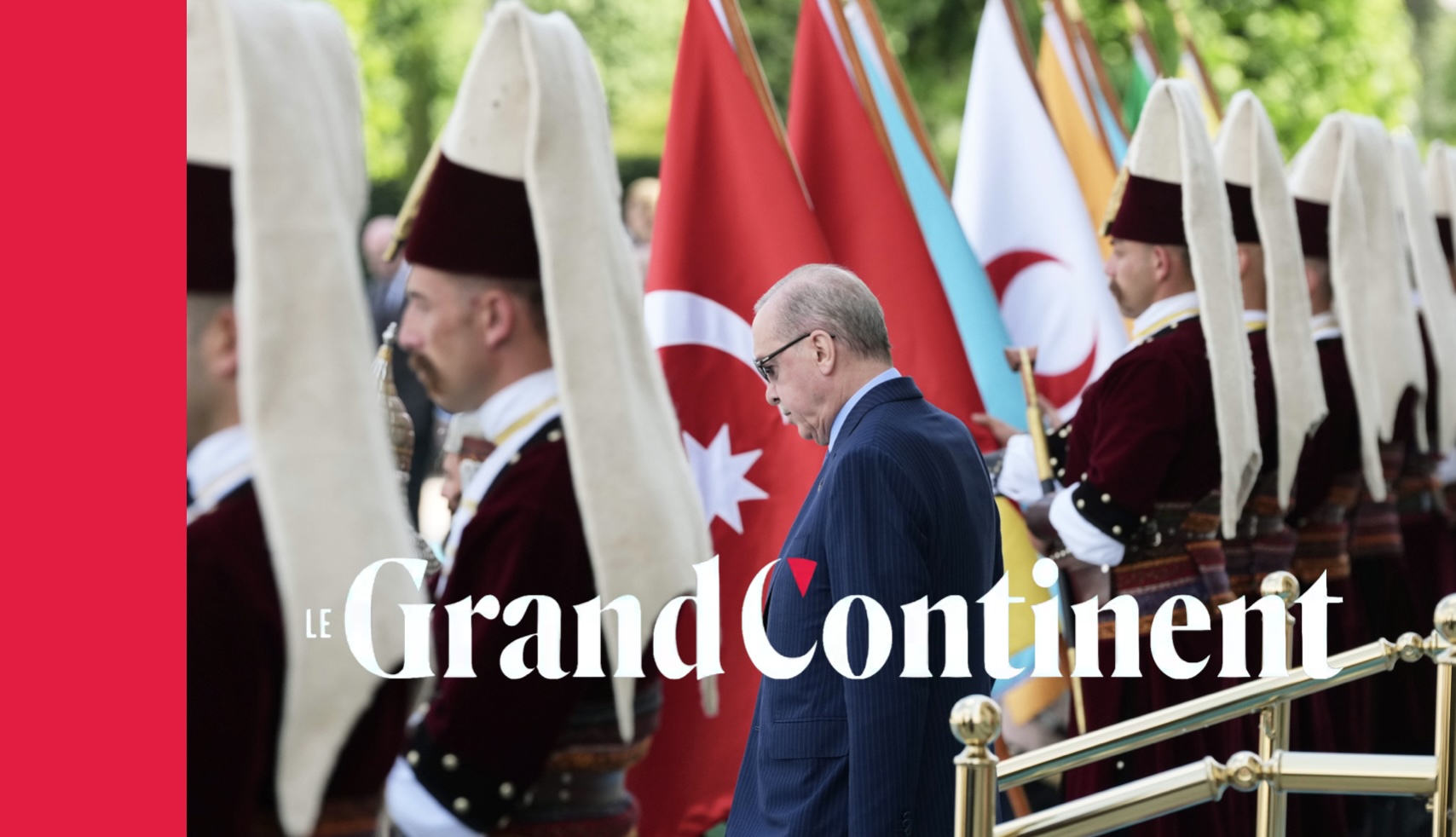
The new print issue of The Grand Continent The Enemy Who Points at Us is now available. Edited by Giuliano da Empoli, find it at Gallimard or by clicking here — to receive it and support an independent editorial team, consider subscribing to the magazine
Although it has never reached the stage of a consolidated democracy, Turkey has nonetheless experienced phases of openness and reform aimed at democratic change in its recent history. These took place starting in 1999, within the framework of its pre-accession process to the European Union. But this reform momentum, initially carried by genuine political and societal enthusiasm, gradually faded , to the point that the Ankara regime became one of the precursors of the wave of authoritarianism that governs the post-democratic era.
The Turkish political system gradually organized itself around two axes that are both parallel and interdependent, one at the domestic level, the other applying to foreign policy. They consist, on the one hand, of challenging the primacy of the rule of law as the source of the regime’s legitimacy, and, on the other, of disregarding the post-Westphalian order, governed by non-interference, sovereignty, and respect for inter-state treaties.
This has translated into offensives launched with the knowledge, approval, and even endorsement of its partners against state institutions established since the 19th century in the Ottoman Empire and later in Turkey. Internationally, it is the entire corpus of treaties and inter-state regulations consolidated since 1945, in which Turkey was embedded, that is increasingly disregarded. It is thus permissible to say that the Ankara regime participates in an “anomic Zeitgeist” or “nomocidal,” in the sense of annihilating the nόmos, of what is commonly shared.
The “Right of Politics” against the Rule of Law
Since the founding of the Turkish Republic in 1923, which followed the Empire, and even more since 1945, the country has attempted—despite obstacles and its own contradictions—to build itself as a state governed by the rule of law. This trajectory began to falter decisively in 2013, with the Gezi Park uprising and the exposure of a sweeping corruption scandal involving nearly the entire upper echelons of the state. The 16 April 2017 constitutional referendum, which inaugurated the regime’s hyper-presidential turn, marks the definitive abandonment of the rule of law in Turkey.
Since then, the keystone of the regime’s ideological architecture has been, in the name of the absolute primacy of politics—which has itself been elevated to a supreme principle beyond “law”—the delegitimization not only of the rule of law, but also of the inter-state order based on legal norms.
The Turkish political regime has gradually structured itself around two axes that are at once parallel and interdependent, one internally, the other applying to its foreign policy.
Cengiz Aktar
The six pillars of this architecture are the following: majoritarianism; its corollary, the delegitimization of opposition; the unity of power; revolutionary constitutionalism; the masses; and the predominance of the so-called “natural” law in interstate relations. The legitimacy derived from the ballot box—i.e., majoritarianism—takes precedence over all other bodies and principles of political and social life.
Majoritarianism demands the delegitimization of any potential opposition to the political power and its representatives. The doxa that guides the implementation of this majoritarianism in Turkey carries several characteristics: it is Sunni-inspired and anti-secular; it is resolutely Turkish-nationalist; and it rests on a heteronormative and masculine view of social order. In this sense, any figure capable of embodying the opposition is designated an enemy in the Schmittian sense: it is delegitimized, or even imprisoned, as illustrated by the mayors of Istanbul, Ekrem İmamoğlu, or by former co-leader of the pro-Kurdish party, Selahattin Demirtaş. This logic extends to political parties themselves, as shown by the neutralization, through judicial scheming, of the main opposition party, the CHP, during May 2026.
The exercise of political power as Erdoğan envisions it—centered first and foremost in the executive—requires the unity of powers, or more precisely, the subordination of all counter-powers to the regime, beginning with the judiciary. Turkish citizens experience this daily through the denial of justice.
Yet this subordination of the law is not contradictory to the regime’s revolutionary aims: the establishment of a hyper-presidential system runs counter to the Kemalist, secular, and modernizing republic that preceded it. Its ultimate step is a Constitution tailored to Erdoğan, currently being drafted. This major transformation is inherently linked to the process of building a new anti-democratic regime in Turkey.
This regime claims to rely on the support of the masses. Indeed, coercion is not the only instrument of this new absolutism or new sultanate, which unfolds in tandem with Atlantic-near neo-royalism, with which the Turkish regime shares many similarities. The regime also depends on the loyalties it inspires and the social mobilizations that anchor it deeply in the daily life of Turks. Their support is a vital need.
The 16 April 2017 constitutional referendum, which inaugurated the hyper-presidential turn of the regime, marks the definitive abandonment of respect for the rule of law in Turkey.
Cengiz Aktar
This embodiment of power and the massive support it can elicit from the population bring us closer to the categories developed by Arendt in her work on totalitarianism and the “totalitarian system.” In general, to better understand contemporary anti-democratic regimes, one must recognize that they do not impose themselves solely through violence, but are also elected and desired. Following the pioneering work of Wilhelm Reich and its rereading by Deleuze and Guattari, the question remains to explain “the totalitarian desire,” namely the adherence and support such regimes inspire in broad swaths of the population.
To hope to decipher the rise of Erdoğan, Netanyahu, Orban, Putin, Modi, or Trump, as well as the new types of regimes they are building stone by stone, mass support constitutes a crucial key of analysis. It is in this that the foundations of their power lie, which, despite manifest deficiencies and sometimes considerable errors in economic, political, military or moral terms, do not appear to be shaken.
To this end, the current Turkish regime benefits from an unprecedented popular backing in the history of the Republic. In many respects, parallels can be drawn with authoritarian precedents from the Ottoman ittihadist era (1908–1918) and the single-party Kemalist era of the early Republic (1923–1946). But what those regimes lacked was the mass support.
This mass authoritarian desire must be considered in itself. Unlike Germany and Russia at the start of the 20th century, the Turkish drift toward authoritarianism, as in other countries, did not arise from deep-seated societal convulsions. It emerged in a country that, at the turn of our century, was considered a model of a “Muslim democracy,” one that could be attempted to replicate across the region because of its promising economy and European ambitions.
Today one sees that this model has given way to Turkey’s own “natural right” of intervention and to the unashamed assertion of its supposed cultural, historical, and religious preeminence. These claims are exercised abroad, at the expense of its neighbors and against inter-state law.
The Assault on the State
The practice of the “right of politics,” which destabilizes positive law in the name of a higher principle of legitimacy, targets the major institutional pillars of the state: the judiciary, the army, foreign affairs, education, public finance, and the civil administration. These are, in Turkey as in many anti-democratic regimes, subjected to a systematic process of discredit, which erodes their institutional memory and distorts their very function as institutions. Gradually dismantled by political power, these democratic attributes have become targets of state arbitrariness.
In this context, the relative autonomy of Turkish institutions has vanished in favor of direct alignment with the executive. The mechanisms of balance and checks between the executive, legislative, and judiciary, as well as between the central power and local authorities, have progressively disappeared from the political landscape.
It is crucial, in order to better understand contemporary anti-democratic regimes, to recognize that they are not imposed solely by violence, but are also elected and desired.
Cengiz Aktar
This re-conquest of control differs from the era of the single party, when the state and the party were one. Today, even the hegemonic political party, the AKP, has been drained of its substance, like the state institutions themselves, and transformed into an office of a clan revolving around the “sultan” Erdoğan.
To illustrate this broad consolidation of power, a few significant examples are worth noting.
First, changes to the Law on the Council of Judges and Prosecutors entrench the subjugation of the judiciary under the direct authority of the Minister of Justice and, by extension, the executive branch.
Similarly, the armed forces, whose supreme commander is the president Erdoğan, are tightly controlled by the executive: the military is no longer in service of the Turkish nation but of Erdoğan’s regime, through a system of promotions and appointments that depends directly on the president’s will.
It is well known that the diplomatic corps is no longer consulted in formulating and making foreign policy decisions. Two examples illustrate this: it was Erdoğan and his inner circle who bet against the diplomats’ advice in 2011 on the imminent fall of Bashar al-Assad, and it remains this clan that, by constantly threatening Cyprus and Greece, has drawn them into the Israeli orbit even as Greece has long been a ally of the Palestinian cause.
In the field of education, scientific knowledge no longer holds primacy. The president of the “Higher Education Council,” as well as the presidents of every Turkish university—some 200 in total—are appointed by President Erdoğan.
Economic governance reduces to interest-rate policy, leading to an overvalued currency, galloping inflation, and the general impoverishment of a country lacking natural resources. It is worth noting, however, that the economic malaise harms the general population but not the Erdoğan dynasty. Indeed, the clan-based economic system around the president, which includes clientelist politicians, oligarchs whose influence shifts with loyalty, and a broad network of foreign-linked mafiosi, is largely spared.
As for the civil administration, it has become, like the judiciary, army, and higher education, a tool of the regime, to the point that any provincial AKP leader outranks the prefect. The decisive criterion for appointments and promotions is not competence but loyalty and obedience—i.e., nepotism and clientelism within a tight circle—leading to a spectacular erosion of capabilities across these institutions.
Against Inter-State Law, the Assertion of a “Natural Right” on the International Stage
To justify what it presents as a natural right of intervention, Turkey mobilizes a set of recurrent arguments: security threats, the fight against terrorism, historical continuity with former Ottoman territories, and solidarity (i.e., primacy) toward populations perceived as culturally or ethnically close (Azeris, Uzbeks, Kazakhs, etc.) in its immediate neighborhood, the South Caucasus, and Central Asia.
On the legal front, authorities frequently—and abusively—invoke the right to legitimate defense, as defined by Article 51 of the UN Charter, to justify their external interventions.
In practice, observers identify a blend of tools drawn from diplomacy, deterrence, and strategic communication. This includes displays of force, overt threats (on 22 September 2022, Erdoğan complained of the “militarization of the Greek islands” and even threatened invasion by stating, “We can arrive suddenly, in the dead of night [..] If you Greeks go too far, the price will be very high”), the creation of faits accomplis on the ground, and sporadic tensions with certain NATO allies. Even diplomacy, when it engages in dialogue, tends to press Turkey’s position with force rather than seeking a compromise. The most emblematic example is the doctrine of the “Blue Homeland” (Mavi Vatan), introduced by Admiral Cem Gürdeniz in 2006, a maximalist aim that covers a maritime area of 462,000 square kilometers around Turkey’s landmass, running counter to the rights of neighboring states and flouting UNCLOS.
Notably, the economic malaise affects the general population but not the Erdoğan dynasty.
Cengiz Aktar
Thus, the regime’s rhetoric rests on a blend of political, economic, historical, geographical, and identity-based elements, mobilized according to the different zones of tension and theaters of operation (Cyprus, Greece, Libya, Iraq, Syria, etc.). The publicly stated security concerns fail to conceal the energy issues related to access to fossil resources.
Thus, UN Security Council sanctions monitoring teams’ reports covering 2014–2016, on the rise of ISIS in Iraq and Syria, uncovered informal trading networks involving several regional actors, including Turkey. The country was alleged to be involved in illicit petroleum trafficking from areas controlled by the terrorist organization. Even after ISIS’s defeat and territorial losses, some forms of trafficking are thought to have persisted, notably in Iraqi Kurdistan.
Turkey’s involvement in Libya, as well as its support for Azerbaijan, thus go beyond strategic considerations and include energy-related aims. Added to this inventory are predatory economic practices observed in conquered or tutored territories, especially in northern Syria.
Similarly, Ankara, like comparable regimes, chooses either not to join certain conventions (for example, the Rome Statute establishing the ICC), or to ignore decisions of jurisdictions to which it remains bound (notably the ICJ), or to denounce instruments it had initially ratified, such as the “Convention of the Council of Europe on preventing and combating violence against women and domestic violence,” better known as the Istanbul Convention (sic).
The Clan That Holds Power
Today, Turkey has become the prey of a maelstrom of family loyalties, clientelism, and institutional loyalties, with Erdoğan at its heart. His inner circle includes his ubiquitous wife, his younger son, and his two sons-in-law. Berat Albayrak, the husband of his elder daughter, previously served as Minister of Energy and then Minister of the Treasury and Finance. Selçuk Bayraktar, the husband of his younger daughter, is an engineer and owner of Baykar, a weapon-making company ranked 73rd among the world’s top arms producers according to SIPRI. It is Baykar that manufactures the Bayraktar drones, which gained notoriety at the outset of the Russia–Ukraine war. Its management remains opaque and benefits greatly from state technological and financial backing.
Among Erdoğan’s loyalists are also Devlet Bahçeli, head of the MHP, Foreign Minister Hakan Fidan, a figure seen as the most probable successor to Erdoğan, İbrahim Kalın, the director of the intelligence services and Erdoğan’s principal legal advisor Mehmet Uçum, as well as a core group of supporters who hold strategic positions within the government, the Parliament, and the high magistracy.
The second circle consists of economic actors, including Finance Minister Mehmet Şimşek and the powerful leaders of oligarchic conglomerates, labeled by the press as the “gang of five.” This group includes Mehmet Cengiz, chairman of Cengiz Holding; Nihat Özdemir, CEO of Limak Holding; Mehmet Nazif Günal, head of MNG Holding; Naci Koloğlu, CEO of Kolin Construction; and Cemal Kalyoncu, chairman of Kalyon Construction. Specializing in construction, energy, mining, and infrastructure such as airports and railways, these groups took part in nearly all of the most lucrative mega-projects of the past two decades (Istanbul airport, the new presidential palace, highways), for which they would have benefited from about $203 billion in public contracts between 2003 and 2021, according to CHP’s Kemal Kılıçdaroğlu. According to a World Bank report, these groups rank among the ten companies worldwide most favored by public infrastructure contracts. These groups help to reinforce the regime through their control of media, including Kalyon’s Turkuvaz Media, one of the country’s major media groups.

It is also worth mentioning the Sunni brotherhoods, particularly well established and influential in the upper judiciary, as well as far-right organizations present in the army, the police, and secondary education.
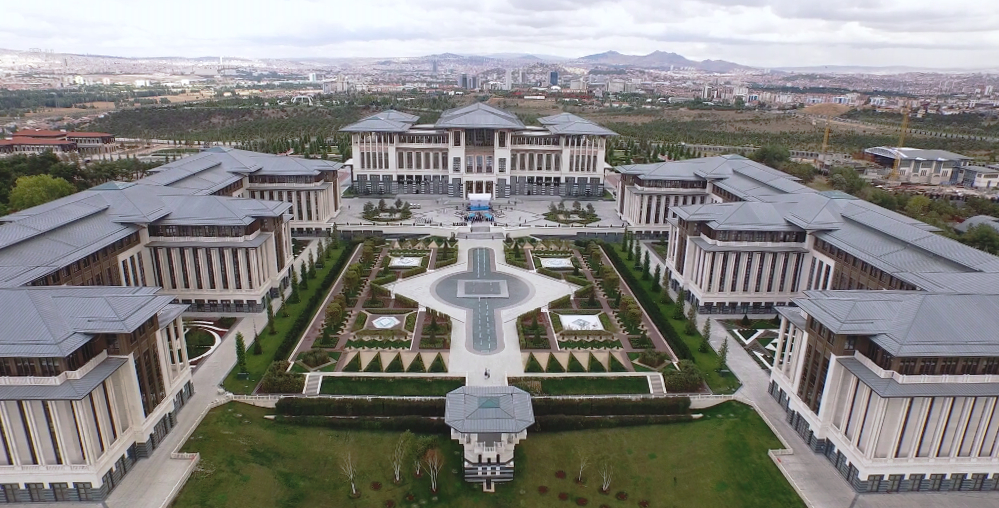
All this paints a true courtly portrait, since Erdoğan’s manner of governing bears a striking resemblance to a monarchic or sultanate regime. The Külliye may be the best symbol: a colossal béton palace that the leader had erected on the very site where a forest stood before, a forest that the Republic’s founder Mustafa Kemal Atatürk had bequeathed to the Turkish state. The name given to this presidential residence evokes a traditional grouping of buildings in Muslim countries, including a mosque, a madrasa, a tomb, a hospital, and public baths. Yet there is nothing of the sort in this Ankara Külliye, since it is inaccessible to citizens and reserved for the ruler’s entourage. Nevertheless, the message is clear: the architecture of the Külliye is a staged display of power with neo-Ottoman overtones.
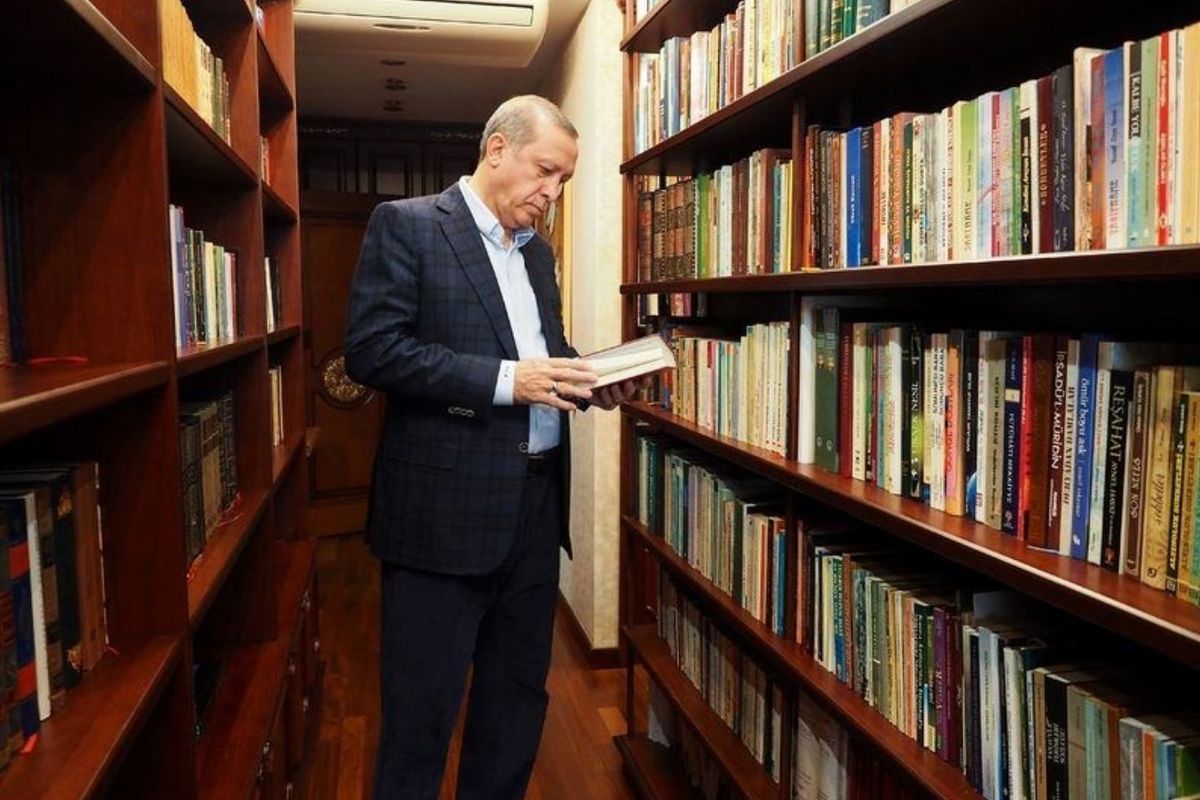
As for the exercise of power itself, its extreme personalization, amplified by hyper-presidentialism, remains a perpetual source of arbitrariness and unpredictability. In this sense, Erdoğan belongs to this vast network, continually expanding worldwide, where all kinds of business are conducted in a strict bilateralism among powerful and wealthy men. They form a kind of personalist International, launched to attack the old order and legitimating themselves simply by acting in concert.
Finances
Under Erdoğan’s regime, everything is bought and sold. Want to secure the release of a prisoner? You simply pay off the authorities so that the person is freed the next day, provided they are not a political opponent. This practice, which amounts to “let it happen and let it pass,” is especially widespread in the inner circle around the presidency, which has become the hub of illicit Turkish business. It is almost possible to speak of a “commercialization” of the presidency. Notably, in 2018 the law concerning the Turkish Sovereign Wealth Fund was amended to allow the President to become chairman of the fund’s board, whose assets are estimated at around 310 billion euros.
Over the past thirty years, the construction sector has stood at the forefront of Turkey’s economic development, just as in Orbán’s Hungary. It accounts for roughly 5–6% of GDP and employs nearly two million people—more than 5% of the active workforce. If we consider the direct and indirect effects of the sector on related industries—materials, construction machinery, engineering, and architecture—its share of the national economy rises to about 30%. The construction sector drives demand for goods and services produced by over 200 sub-sectors, making it the main engine of the Turkish economy.
Building infrastructure often follows a public-private partnership model, where a private firm finances and builds an infrastructure project, operates it for a fixed period to recoup its investment, and then transfers ownership or operation to the state at the end of the contract. Almost all mega-projects have been realized under this model, with the state guaranteeing a minimum number of users. If this threshold is not met, the operator is compensated. Enormous sums are continuously paid to operators, usually aligned with the regime. In 2024, the Treasury had to pay $67 million to the operator of the Ankara railway station—the consortium of Kolin, Cengiz, and Limak—because the traffic was 64% below the guaranteed level (13.7 million passengers instead of 38 million).
In this sense, Erdoğan is part of this vast network, continually expanding worldwide, where business of all kinds is conducted in a strict bilateralism among powerful and wealthy men.
Cengiz Aktar
Very high profit margins, generous subsidies, and preferential allocation of public contracts to oligarchs: these elements make this facet of the Turkish economy a web of companies and actors fully controlled by the Ankara regime.
This windfall has become inexhaustible. It benefits further from generalized financial opacity and pervasive corruption, the forced privatization of public assets, and the lax taxation of large fortunes, not to mention allegations of AKP officials and government cadres’ involvement in cocaine trafficking from South America: in 2021, the mobster Sedat Peker claimed that the interior minister at the time offered him protection and alleged the involvement of Erkam Yıldırım, son of Binali Yıldırım, a senior AKP figure and prime minister between 2016 and 2018, in international cocaine trafficking. Money-laundering schemes are also common: in 2013 Reza Zarrab, a Turkish-Iranian businessman, pleaded guilty in the United States to fraud, money laundering, and evading sanctions on Iran. He testified to paying bribes to high Turkish officials to facilitate these money transfers via Halkbank, a state-owned bank. The opposition frequently denounces repeated tax amnesties that allow repatriation or simply transfer of capital from any origin, as well as insider trading.
We are indeed dealing with a kakistocracy: a governance by a clan composed of the most mediocre, the most incompetent, the least virtuous, and the most servile, acting solely in the service of their own interests.
External Supports and Networks: From the West to Peers and Mafioso Circles, Through the Muslim Brothers and Salafists
Despite its ambitions, Turkey remains a middle power whose freedom of action is largely conditioned by the space that major powers are willing to concede. For this, it constantly relies on supports, networks, liaisons, and complicity with peers who operate with the same clan-based trans-state management and tools that go with it.
Similar to Hungary’s Orbán and Russia’s Putin, former German Chancellor Angela Merkel developed a privileged relationship with Erdoğan during her time in office, making ten visits to Turkey—an all-time record among Western leaders. She continued these visits within the framework of a migration pact between the EU and Turkey concluded with Erdoğan, visiting Turkey three times in 2016, when the country was politically and morally battered by deadly attacks attributed to the Islamic State (notably the October 10, 2015 attack in Ankara) and by radical Kurdish groups. While the chancellor hosted Erdoğan in Germany, the excesses of Ankara’s regime became increasingly evident. Yet neither the growing authoritarianism at home nor the aggressive actions in the Aegean, the Eastern Mediterranean, in Iraq, Libya, and Syria, nor Turkey’s support for jihadist terrorism deterred her from maintaining unwavering support, including in arms sales.
Since 2015, the European Union has pursued a policy of appeasement toward Ankara, driven by Merkel’s influence. Despite the disastrous consequences of this strategy and the flood of mea culpa that followed the failure of the same approach toward Russia, the West continued to placate with its usual rhetoric about Ankara’s “legitimate security concerns.” And the more the EU and the United States sought appeasement, the more Erdoğan exploited them; the more his regime consolidated, the more the conflicts he fomented took root, both domestically and in his neighborhood.
In truth, the proponents of appeasement failed to recognize that Ankara’s modus operandi was fundamentally incompatible with the norms, standards, values, and principles of the Union, which regressed merely as obstacles to its “proper functioning.” Exactly as in Hungary under Orbán. No more than Budapest’s regime could it be reformed. The structural impasse in the coexistence of democratic regimes with anti-democratic regimes gradually became evident.
At the beginning of 2016, during discussions on the migration agreement that sought to compel Turkey to curb refugee departures to Europe, German Interior Minister Thomas de Maizière, asked about Ankara’s arbitrary seizure of a major press group by the regime, replied coldly: “We are not referees on human rights.”
Supporters of appeasement failed to recognize that the modus operandi of Ankara was fundamentally incompatible with the standards, values, and principles of the Union.
Cengiz Aktar
The regime could not reasonably expect anything better.
In August 2020, German Foreign Minister Heiko Maas, during an official visit to Ankara, explicitly reaffirmed his government’s stance by refusing to address questions about the regression of the rule of law, labeling it as an “internal affair.”
In fact, satisfied with the prospect of an effective end to the Union accession process, Berlin did not hesitate to become a full partner of Ankara. The chancellor cultivated a privileged relationship with her counterpart, as if she belonged almost to this circle of autocrats who understand, protect, and help one another.
In parallel with Western support, the Ankara regime established, from the early 2000s, ties with the Muslim Brothers, notably in Egypt, Syria, and Tunisia, positioning itself as the “big brother” with the financial backing of Qatar. While this fraternal inclination faltered badly in Egypt and Tunisia, it was reinforced by the emergence of the Islamic State in Mesopotamia, bringing a Salafist dimension of terrorism that the regime accepted without flinching. This collusion greatly aided its anti-Kurdish fixation in northern Iraq and Syria, turning the border region into a rear base for all kinds of illicit trafficking—humans, drugs, and oil—filling the clan’s coffers.
Similarly, the mafias that thrive in countries where the rule of law is sidelined are deeply ingrained in Turkey. Turkish territory gradually became a crucial node in the global cocaine trafficking routes linking South America to European, Russian, and Caucasian markets, while the country ranked among those with the highest levels of organized crime and weak institutional resilience, according to the Global Illicit Trade Index. The core issue lies in the alleged links between the regime’s inner circle, far-right networks, security services, and organized crime actors. Today, Turkey is among the narco-authoritarian countries, akin to some of its South American counterparts.
Erdoğan’s peers and accomplices within the “Personalist International” are legion. Alongside veterans like Putin and Trump, until recently Maduro and Orbán joined, as well as Aliyev and Netanyahu, with whom trade continues despite frequent and blunt clashes. Not to mention male autocrats of every stripe who abound worldwide and operate under the same personalist model.
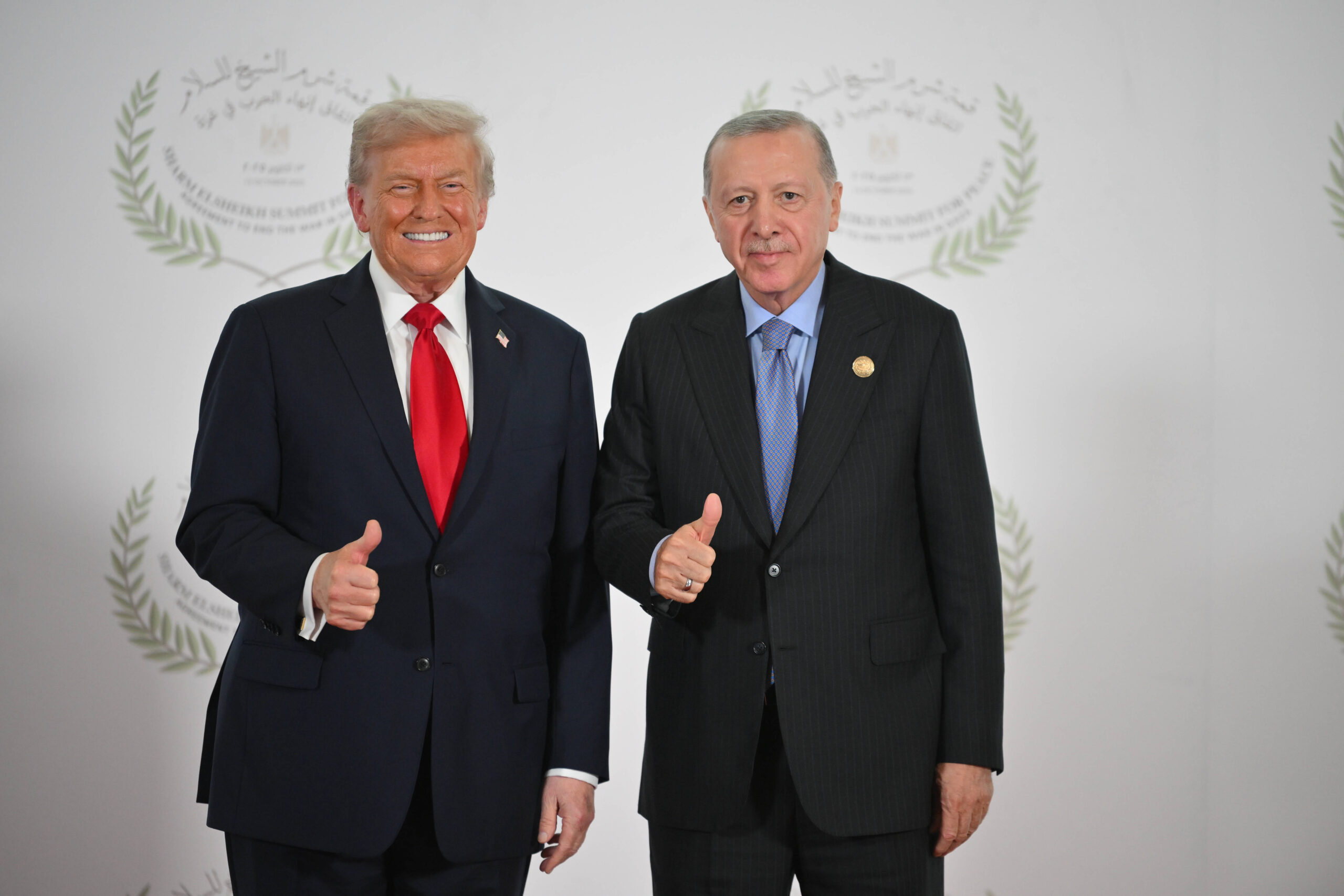
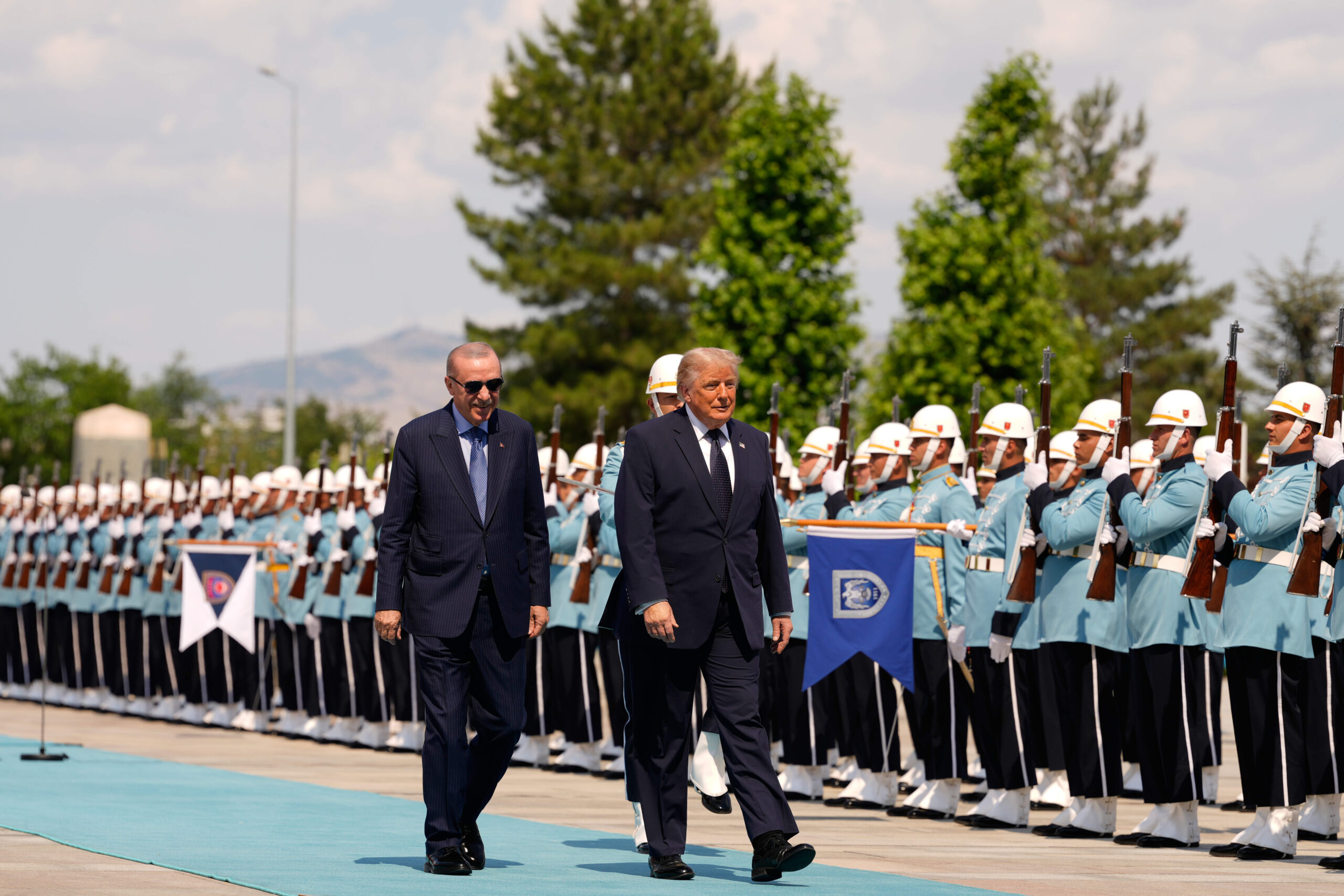
Finally, it is worth paying homage to Erdoğan-Trump, the “ruler” and the “king.” Their relationship dates back to 2012, when Donald Trump visited Istanbul for the inauguration of his “Trump Tower.” During his first term, their ties were sometimes tense due to Turkey’s acquisition of Russia’s S-400 air defense system, which was incompatible with NATO both politically and technically. Yet Trump never forced a rupture and repeatedly found excuses for Erdoğan, including in matters of Turkish financial disputes in the United States.
Similarly, Ankara’s repeated requests for Washington to end its support for Syrian Kurds never truly dented Trump’s esteem for the strongman in Turkey. On the contrary, Erdoğan was regularly praised whenever the two leaders spoke. This is just one illustration of the functioning of the personalist network that now structures most interstate and inter-clan relations.
Against the Normalization of Neo-royalism and Anti-Democracy
Parallel to this consolidation of anti-democratic regimes, we are witnessing a project to “normalize” these same regimes. It is increasingly common to read analyses that resemble less critical examination than political communications based on current realpolitik, aimed at presenting these regimes as natural, normal, legitimate, and even sometimes democratic, since they are elected.
But these regimes cannot be considered natural or normal. They arise from artificial political constructions that are profoundly deviant from democratic principles, as evidenced by their constant effort to redefine norms and to alter established institutional frameworks. It is the duty of anyone who writes or speaks to expose them, to denounce them in order to curb their banalization.
Yet denunciation should not stop there.
We are dealing with peoples in a state of “voluntary servitude,” exacerbated by new technical means of intelligence, communication, manipulation, and the distortion of truth. These contribute just as much to planetary genocide as do the kakistocratic clans; in reality, they are complicit in it.
These regimes on a path toward normalization are the gravediggers of life, and they must be fought by every means available.