
Test the Grand Continent. The ideas and analyses you won’t find anywhere else. But you’ll see them everywhere soon. In your inbox starting at 8 euros per month
Stéphane Audoin-Rouzeau, The War, Face to Face, La Tribu
Why does it appear inconceivable to most Europeans that a new large-scale war could erupt on their territory? Why have we turned away from this real danger?
Over the past four years, war has returned to Europe, and its threat now looms on our horizon. Attacks in multiple forms extend beyond Ukraine’s borders to approach ours dangerously closely.
War belonged to the past; now it has returned to our present, closer than ever to a territory long used to only peaceful times. For forty years, the historian Stéphane Audoin-Rouzeau has devoted himself to this subject: war.
To its deployments of violence, cruelty, and the mass exterminations that often accompany it. He reminds us that we continue to live between two conflicts and that it would be reckless to keep denying the danger. War is expanding its reach, and we must look it in the face. A necessary voice to break our collective denial.”
Publication on November 4
Read more
Blaise Bachofen, Jean-Jacques Rousseau. Elements of a Theory of War, Puf
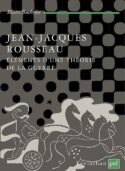
“Can Rousseau be seen as a theorist of war? The recent discovery of his Principes du droit de la guerre invites a rereading of his entire political oeuvre and a search within it for the elements of a study of war, which proves far more fruitful than it might first appear.
For Rousseau, war has nothing to do with a consent-based or quasi-contractual relation. It is a distinctly political reality but does not yield easily to law, since it is a struggle over sovereignty—the only body capable of creating effective law. Hence emerges a deeply original and continually relevant reflection on the ‘life’ and the ‘death’ of political bodies, which explains his interest in insurgent wars waged by ‘nascent peoples’ and helps us understand his skepticism about establishing a law of nations and a perpetual peace.”
Publication on November 5
Read more
Laurent Joly, The Trap. The Right confronted with the Far Right since the French Revolution, Tallandier
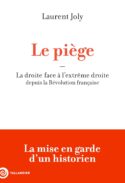
“The French far right was born from the wreckage of the Revolution. It has been monarchist, nationalist, xenophobic, antisemitic, populist… It has relentlessly drawn conservatives toward its passions and obsessions.
With the right, the author writes, the far right shares similar concepts, but in a manner always absolute, emotional, and largely perverted. Nostalgic for a mythified Golden Age, it distrusts science, norms, and the law. By instinct, it favors strong power. Always, it sows division and designates scapegoats.”
Laurent Joly reconsiders the long history of the relationship between the French far right and the major conservative-liberal currents that are now in crisis.
Publication on November 5
Read more
Javier Cercas, The First Postmodern: The Literary Work of Gonzalo Suárez, Taurus
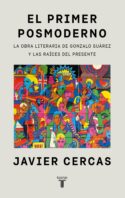
“In the 1960s, Gonzalo Suárez was a real geek in Spain, a meteor out of control, an absolute original who wrote literature that no one else wrote and which, in time, we all ended up writing.”
Suárez broke with realism when realism ruled, wrote fantasy literature when almost no one did, wrote detective novels when they were considered reactionary or childish, wrote metaliterature when hardly anyone knew what metaliterature was, wrote pop fiction when pop was still just a visual style, and co-authored “new journalism” before American new journalists had even named the invention. In short, he did things that some would do twenty, thirty, forty, or fifty years later, believing no one had done them before—things that, in the culture of the time, were unusual and are now normal, such as placing in a single sentence the venerable names of Di Stéfano and James Joyce.
Suárez was not only a pioneer in his literature; he was also a pioneer in his cinema, with which in the late sixties he did in practice what Quentin Tarantino or Pedro Almodóvar would spend decades doing. For even if one sometimes says that what matters is not arriving first or last, but arriving well, in literature, as in almost everything, the first to arrive arrives twice.
All in all, if there is literary postmodernity, Suárez was the first Spanish postmodern writer.”
Publication on November 5
Read more
Michel Foucault, The Place of Man in Modern Western Thought. Tunis Lectures (1966-1967), Gallimard, Le Seuil and Éditions de l’EHESS
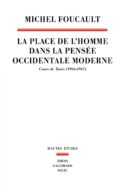
“In 1966-1967, the first year of his teaching at the University of Tunis, Michel Foucault dedicates a public course to the place of man in modern Western thought. A few months earlier, the publication of The Order of Things had sparked fierce controversy by announcing the imminent ‘disappearance’ of man from the a priori of contemporary knowledge.”
Why is it so difficult to give up the idea of the human? Foucault responds by proposing to interpret this idea as a “myth,” necessary for Western culture to find itself amid the extraordinary dispersion of its manifestations. He uncovers its motives and its limits. He unravels the paradox of a humanist claim that asserts itself even more strongly as its epistemological and cultural foundations begin to erode. We thus discover an unpublished Foucault, an “ethnologist” of his own culture. He explores its fault lines across the arts, the sciences, literature, and technologies, and diagnoses the ‘universalization’ by knowledge and colonization that leads every culture to define itself in relation to the West.”
Delivered in a recently independent Tunisia, at a moment when the issues of this universalization intersect with decolonization, this course invites a rereading of Foucault’s critique of humanism in light of the intellectual and political tensions of his time.
Publication on November 6
Read more
Philip Scranton, Spare Parts; A Global History of a Modern Problem, 1940–1980, Johns Hopkins University Press
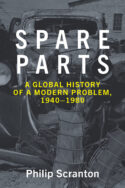
Spare Parts retraces the global history of spare parts and shows how their absence — or abundance — shaped war, industry, and daily life in the twentieth century. It follows the path of production, distribution, and use of spare parts across capitalist, socialist, and postcolonial economies, from World War II to the Cold War.
During World War II, spare parts proved as decisive as fuel or munitions, determining how tanks moved, how planes flew, and how factories ran. In the postwar era, shortages of spare parts became a chronic problem in centrally planned economies, while market economies faced different dilemmas driven by rapid technological change, obsolescence, and corporate strategy.
Focusing on vehicles, agricultural machinery, and radio and television technologies, Scranton shows how repair practices differed across political systems. In socialist states, chronic shortages encouraged improvisation, salvage, and informal exchanges. In capitalist economies, spare parts became tools of profit, control, and planned obsolescence, often pushing consumers toward replacement rather than repair. Scranton also traces the trajectory of spare parts beyond the superpowers, examining how postcolonial nations managed inherited infrastructure and how these parts functioned as geopolitical levers.
By tracing the decline of the culture of repair at the end of the twentieth century, as durable vehicles and disposable electronics redefined maintenance and longevity, Spare Parts places this familiar frustration at the heart of modern history and sheds new light on the technology, power, and hidden systems that keep the world turning.
Publication on November 10
Read more
Marco Mondini, Militari e politica. Sei storie nell’Italia della Repubblica, Einaudi
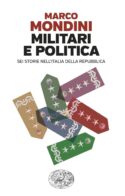
Can the history of the Italian Republic be told through the men who exercised military power? After 1946, a handful of key figures at the top of the armed forces each embodied—at times for the better, at times for the worse—the new role assigned to the military in postfascist and postmonarchist Italy: Raffaele Cadorna, Giorgio Liuzzi, Giovanni de Lorenzo, Giuseppe Aloia, Franco Angioni, Claudio Graziano.
A country to be rebuilt, to be re-founded, that had to leave behind not only the Ventennio, with its collusion between barracks and regime (symbolized by the immovable Pietro Badoglio), but also the strong identitarian and devotional bond between the corps of officers and the House of Savoy. In an Italy and Europe that must cope with the return of war as a new normal, as generals are asked every day to make vital decisions for everyone’s future (and some, now retired, venture into risky political operations), understanding the relationship between the military and state leadership proves more necessary than ever.”
Publication on November 10
Read more
Théo Blanc, Salafism in Tunisia; Political Engagement and the Advent of Post-Salafism, Cambridge University Press
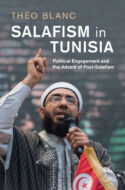
“In proposing a comparative analysis of Salafist movements in Tunisia, Théo Blanc develops a systematic theory explaining the diversity of paths to political engagement among Salafists, structured around the concepts of subjective and procedural opportunities.”
The book first explores how Salafism developed in the country and crystallized into distinct currents—scholastic, political, and jihadist—then examines their respective adaptations to the 2010-2011 revolution and their evolutions during the democratization decade (2011-2021). This evolution has led Théo Blanc to describe a drift toward post-Salafism, defined as a rehierarchization of actors’ priorities in action.
Théo Blanc draws on rich fieldwork documentation, including interviews with the founding figures of Salafism in Tunisia, leading ulama and Salafist ideologues, as well as leaders of Salafist and Islamist parties, alongside original documentary sources. In doing so, he makes a significant contribution to debates on inclusion and moderation, post-Islamism, the structure of political opportunities, politicization, and the conceptualization of Salafism and Islamism.
Publication on November 10
Read more
David M. Sacks, The Realist: The Life and Ideas of Hans Morgenthau, Hurst
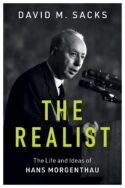
“International politics, like any politics, is a struggle for power.” Hans Morgenthau wrote these words in 1948, as wartime Soviet-American cooperation gave way to postwar rivalry. His Politics Among Nations swiftly became the standard manual of international relations, prompting Henry Kissinger to declare that “all of us who taught this subject after him, however different our opinions might be, had to start from his reflections.”
Morgenthau’s realism drew from the traumatic experiences he endured in interwar Germany. Amid rampant antisemitism, his classmates ostracized him and spat in his face. He watched Hitler violate the law with impunity when he marched on his hometown of Coburg. Morgenthau concluded that abstract ideals offered no protection: only a counterpower could check power. After seeking refuge in the United States in 1937, his influential thinking guided foreign policy debates during the Cold War. While peers supported the Vietnam War, Morgenthau dismantled intervention arguments by leaning on realist principles.
The Realist demonstrates the enduring relevance of Morgenthau’s ideas in our era of international disorder and great-power rivalry.”
Publication on November 12
Read more
Alexandre Kojève, The Latin Empire. And Other Writings on the World Order (1941-1968), Gallimard
“The philosophical teaching that made Kojève famous ends in 1939. The war sees him participate in the Resistance while maintaining ties with the Vichy regime, and in 1945 the great interpreter of Hegel joins the Ministry of the Economy. He then dedicates himself to international economic negotiations, within the context of the Cold War, decolonization, and the early stages of European construction. He writes, in the shadow of administration, brief texts, mostly unpublished, which Jamila Mascat and Sabina Tortorella gather and publish for the first time.
These writings reveal Kojève’s reflections on the geopolitical problems of his time, which remain ours. Thus, in “The Latin Empire,” a 1945 text often cited and here read in full, he advocates a union of France with Spain and Italy to counter Anglo-Saxon and Russian empires.
We will see in these writings how the thinker of the “end of history” theorized and, away from public view, implemented the unification of the European continent, the North–South rebalancing, and the global convergence still called “globalization.”
The volume appears in the Gallimard “Bibliothèque de géopolitique” series, in partnership with Le Grand Continent.
Publication on December 12
Read more
Napoleon Bonaparte and Charles-Maurice de Talleyrand-Périgord, Correspondence (1797-1810), Perrin
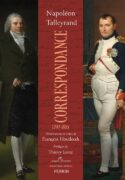
Fire and composure. In the galaxy of figures surrounding Bonaparte, Charles-Maurice de Talleyrand-Périgord holds a special place. Plotting, at times with him and at times against him, striving to inscribe the actions of the First Consul and later Emperor within the diplomatic games of European nations, never losing sight of his own interests, the “lame devil” emerges at every episode of the Napoleonic saga.
Thus the correspondence between the two men, reproduced here in full for the first time, constitutes one of the most revealing epistolary collections for knowing and understanding the growing power gradually claimed by the victorious general in Italy. Yet it also reveals, in the margins, a relationship shaped by reciprocal political necessity and an early clarity about their deep divergences.
From Talleyrand’s appointment to the Ministry of External Relations in 1797 to the empire’s collapse and the final rupture, the letters—often flattering to one, authoritative for the other—illuminate the Napoleonic saga amid a turbulent Europe: negotiations with Austria, the Russian alliance, the confrontation with Britain, and domestically the creation of an almost dictatorial executive power. A historiographical event long hoped for.”
Publication on December 12
Read more
Marion Van Renterghem, Extreme Women, Les Arènes
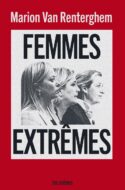
Born at the end of the baby boom, inheritors of the 1960s emancipation, they are the female face of reactionary parties on the far right. Yet who would have bet on them in the early 2000s, when globalization surged everywhere, Europe expanded eastward, and a common currency was introduced?
Marine Le Pen was not the designated successor. Abandoned by her mother, she divorced twice and broke with her father. Alice Weidel worked for Goldman Sachs and for the Bank of China in China; she is in a relationship with a Sri Lankan-origin woman with whom she has two children. Giorgia Meloni, abandoned by her communist father and raised by her mother, joined the neo-fascist party at a young age and lives alone with her daughter.
Nearly twenty years later, Marine Le Pen, Giorgia Meloni, and Alice Weidel stand as the three leading figures, very different, of a wave of the extreme right that dominates Europe. The postwar cordon sanitaire has broken. Their passions set alight all forms of anger. Putin’s war lays them bare. Tracing their ascent and their paradoxes, Marion Van Renterghem tells our story, that of a Europe stunned by a major turning point.”
Publication on November 12
Read more
David Motadel, The Shah’s Great Tour: Global Monarchy in the Imperial Age, Oxford University Press
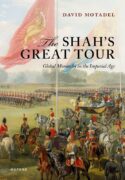
At the height of the imperial era, the shahs of Persia undertook grand royal journeys, traveling the world from the Ottoman Empire to the coasts of Scotland. Their monarchies and their retinues were greeted with great fanfare in European capitals: Saint Petersburg, London, Paris, Berlin, Vienna, Brussels, The Hague, Rome, Constantinople, and many others.
Offering a novel reinterpretation of the relations between non-European and European sovereigns in the age of empires, this work shows that royal visits offered guests a way to join, themselves and their countries, a world order dominated by the great European powers. The shahs’ participation in state visits’ rituals—gift exchanges, the exchange of knighthoods, and military displays—expressed their dynastic legitimacy and the sovereignty of their countries.
David Motadel provides a striking panorama of late-century Europe seen from the outside, tracing the shahs’ encounters with monarchs and ministers, magnates and merchants, priests and prostitutes, revolutionaries and assassins. Their royal tours also inspired writings by some of the era’s greatest authors, from Anton Chekhov to Mark Twain.”
Publication on December 12
Read more
Clemens Luhmann, Niklas Luhmann. Ein Leben zwischen Umbruch und Ordnung, Klett-Cotta
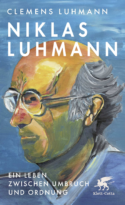
Niklas Luhmann (1927-1998) stands among the greatest social theorists of the twentieth century. His systems theory continues to influence sociology, law, political science, theology, pedagogy, and art theory well beyond the German-speaking world.
Clemens Luhmann traces and describes his father’s life and work in full breadth and depth. From his childhood in Lüneburg to war and captivity, through his law studies in Fribourg, his legal training and his tenure at the Ministry of Culture in Hanover, his travels in Italy and France, that decisive year at Harvard, up to the succession of Adorno’s chair in Frankfurt and the chair he founded in Bielefeld. Exclusive letters and testimonies accompany personal memories and historical research. A work for anyone who wants to discover Luhmann not only as a theorist, but also as a man—an observer of his era, a daily thinker, and someone able to forge closeness from distance.
Publication on November 14
Read more
Jeffrey Weng, With One Voice; Mandarin’s Conquest of China, Stanford University Press
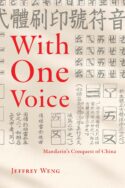
The Mandarin is one of the most spoken languages in the world. But when it was codified to become the new national language in China, between 1910 and 1930, its artificial character was such that only a handful of people could speak it fluently. The creation and diffusion of the national Chinese language, led by the state, represents perhaps the greatest example of social engineering in human history. What took Europe centuries to achieve happened in barely three decades in China. How did this national linguistic unification occur? And more broadly, what can this process teach us about the role of language in Chinese society?
Jeffrey Weng studies the transition from classical Chinese to modern standard Mandarin at the dawn of the twentieth century, i.e., the efforts by the Chinese state to standardize and elevate a new language to the rank of national language. He argues that the final form of this language was not inevitable. It emerged from a tangle of controversies and decisions taken in the early years of the Republic, embodying a particular vision of Chinese society: unitary and egalitarian.
Publication on November 16
Read more
Barbara J. Keys, Super K: The Making, Breaking, and Remaking of Henry Kissinger’s Legacy, Simon and Schuster
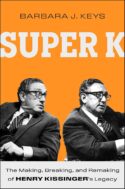
During the nearly half-century that followed his exit from public office, Henry Kissinger remained one of the most admired—and most controversial—figures in American public life. Super K reveals how he built this extraordinary notoriety.
Drawing on private correspondence previously unpublished and on interviews with journalists and editors he courted and confronted, historian Barbara J. Keys reveals the machinery Kissinger used to build and defend his reputation.
From fierce battles over his record in Cambodia and Chile to high-stakes clashes with television networks and major publishing houses, Kissinger spent nearly five decades shaping how the world would remember his eight years in power, and turning those years into lasting influence.
Super K is not only the portrait of a man seeking to shape history: it is a sweeping account of the media and elite institutions that enabled him to do so, and it highlights vulnerabilities that continue to mark public and political life today.”
Publication on November 17
Read more
Davide Conti, L’Italia della strage di Bologna. P2 e neofascismo all’alba degli anni Ottanta, Einaudi
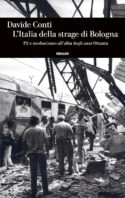
“The Bologna massacre fits within a chronological arc spanning 1978 to 1981. A transition that takes Italy from the major transformations of the 1970s to the dawn of the last decade of the Cold War and the ‘Republic of Parties.’ A new phase, marked by the return of the strategy of tension, that will profoundly and durably alter society’s face in politics, economic and social relations, forms of governance, and representation.
The Bologna massacre is the culmination of an underground subversive process, which found its widest maneuver space in the period from the death of Aldo Moro in 1978, with the political and systemic crisis that followed, to the unveiling of the P2 lodge scandal in 1981, which halted the ascent of Gelli’s Masonic lodge. If the Constitution, the true target of the massacre, remained standing, the impact of the bomb did not stop on August 2, 1980, leaving the country with an inheritance that is still difficult to contend with today.”
Publication on November 17
Read more
Serhii Plokhy, Killing the Pope: John Paul II and the Last Battle of the Cold War, Allen Lane
On a hot, sunlit afternoon in May 1981, more than 10,000 pilgrims from around the world gathered in St. Peter’s Square for the start of Pope John Paul II’s general audience. Suddenly, a gunshot rang out. John Paul II collapsed. An armed man was apprehended.
After the attack, John Paul II stated that “one hand fired, another guided the bullet.” But in this gripping account of one of the Cold War’s most emblematic events, historian Serhii Plokhy invites us to ask: could there have been more than two hands that day? Drawing on new archival research, he trails the would-be assassin across Europe as he prepared his act, and traces the threads of history into the Kremlin and the Vatican, through the intimate circles of Turkish ultranationalists, KGB officials, Sicilian mobsters, and Catholic cardinals.
Killing the Pope takes us to the heart of the last decade of the Cold War, an era of extreme paranoia, where the age of disinformation we know today was slowly taking shape.”
Publication on November 19
Read more
Sophie Corbillé, Emmanuelle Fantin and Sébastien Fevry, Perdre la neige. Histoire d’une metamorphose climatique et culturelle, Champ Vallon
The gradual disappearance of snow in Europe is one of the most sensitive upheavals of contemporary climate change. Long perceived as a cyclical and unchanging phenomenon, snow is thinning, undermining local economies but also practices and imaginaries deeply rooted.
From the snowman to the Christmas sweater, from discovering the snowflake to producing artificial snow, through the cinema of snow and the myth of the Yeti, this book offers an unprecedented analysis of the history of snow loss as a cultural loss. Following the transformations of snow, it reveals the anthropological depth of this singular material and questions our intimate and collective experience of the Anthropocene.”
Publication on November 20
Read more
Ye Liu, Only Daughters: Women and China’s One-Child Policy, Princeton University Press
Within China’s one-child policy, a generation of only daughters born in the 1980s grew up with unprecedented access to higher education and well-paid careers in highly lucrative sectors. Often nicknamed “little princesses,” these single-daughter girls benefited from their parents’ ambition and the family wealth traditionally reserved for boys. And yet, as Ye Liu reveals in Only Daughters, this cohort of educated, privileged women did not overturn patriarchy; on the contrary, they were checked by cultural expectations. Ye Liu shows that the one-child policy forced these women to confront a double burden: achieving a success typically reserved for men while upholding traditional feminine virtues. Empowered in childhood, once they became women, they struggled to reconcile inherited ideals of filial piety with the demographic duty imposed by the state to bear children alongside their own aspirations for autonomy and achievement.
Publication on November 24
Read more
Franco Cardini, Civiltà medievale. La grande luce dei secoli bui, Jaca Book
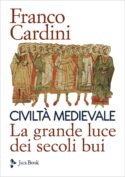
“Not long ago the Middle Ages were dubbed a ‘Dark Age’; today, however, this period arouses enormous interest. How to approach a world so complex and multifaceted, which still has much to tell us?”
In this volume, enriched with numerous color illustrations, Franco Cardini opens the doors to medieval civilization, tracing its evolution over a thousand years of rich and varied history. The Middle Ages saw the birth of many elements we now take for granted: universities and intercultural exchange despite wars; democracy despite kingdoms and empires; philosophical thought and logic, not to mention a flourishing artistic output. The roots of our culture lie in the Middle Ages; indeed, thanks to medieval translations we rediscovered the heritage of Antiquity.
The Middle Ages went through distinct phases: from the time monasteries rebuilt Europe to the rise of urban centers and new social challenges. If the Middle Ages were certainly a difficult period, many received ideas deserve to be deconstructed—whether it concerns the image of the monk cut off from the world or that of the woman confined to the domestic sphere.”
Publication on November 30
Read more