

By reconstructing the trajectory of the term “ whore »Since the XIIe A century, Dominique Lagorgette updates the logics of language oppression at work in our societies.
Dominique Lagorgette delivers with Whore. History of a word and a stigmaa remarkable analysis which transcends the boundaries of linguistics to propose a true archeology of power inscribed in the language. This recognized specialist in verbal violence and language transgressions, which has continued over its publications to determine the mechanisms of linguistic oppression, undertakes here a work of historical and social deconstruction of a term which crystallizes centuries of stigmatization.
Far from being satisfied with a simple lexicographic study, Dominique Lagorgette offers researchers who are interested in the sexualities of essential analysis tools to understand the political scope of the words they use. His approach reveals how language actively participates in the construction and perpetuation of relations of domination, demonstrating that each use of the term “ whore “In particular vehicle and strengthens secular oppressive structures. This research thus constitutes an essential milestone for any critical reflection on the contemporary issues of sex work and the mechanisms of stigmatization that surround it.
Structured in four parts – “ To the origins of the word whore “,” Words of sex work over time “,” Reactions in the name “, And “ The extension of the word of the word whore : Damn ! Viarge ! and others – The work methodically retraces the trajectory of a word that has become one of the most powerful stigma in the French language. This architecture allows the author to deploy a rigorous diachronic approach, embracing eleven centuries of linguistic history in the area of Oïl French.
Complexity of an etymology
The first part of the work reveals the etymological complexity of the term. Dominique Lagorgette exposes with caution the different hypotheses concerning the origin of the words “ whore ” And “ damn », Stressing the absence of final scientific consensus (p. 33-37). Its analysis reveals the double original function of the term. First adjective to derogate from concepts or objects in a pejorative way, the term quickly invests the field of moral qualification of people, conceived as a hereditary character, to become a “ axiological term ” par excellence. The author observes that the passage “ From a concrete sense to an abstract sense therefore seems to have emerged early enough, objective physical dirt is associated with subjective morality (P. 45). This semantic evolution reflects patriarchal dynamics where women perceived as deviant are systematically marginalized by the very language. The analysis of medieval corpus reveals that, from the XIIe century, the noun “ whore “Crystallizes this logic of stigmatization by applying it specifically to women according to a double moral and economic conviction. Never having neutral or positive value, it simultaneously refers to “ Women of bad life and light mores And to a profession, establishing from the outset this deliberate confusion between morality and economic activity which still characterizes today the representations of sex work.
The second part, “ Words of sex work over time », Brilliantly deploys the analysis by retracing the historical evolution of this lexical field. Dominique Lagorgette is not limited to the feminine and takes care to evoke the terms reserved for transgender men and people (p. 81-82), while revealing that the stigma of prostitution remains specifically associated with women. Borrowing from foreign vocabulary (English, Turkish, Portuguese) testifies to the international circulation of these stigma, but also their adaptation to specific cultural contexts (p. 91).
The author establishes a precise lexicon which offers a striking overview of the extent of the phenomenon. His analysis reveals how, by the metonymy process, the lexical field of prostitution massively invests the language: terms evoking the movements or specific places, but also positions with the term “ horizontal “, First names with pejorative dimensions such as Catherine, who becomes Catin, references to the sacred characters diverted, or even titles of subverted politeness as” lady of love ». The mobilized bestiary is particularly rich-names of birds, domestic, wild, undergrowth, exotic, aquatic and game-these animal comparisons systematically distance women from humanity (p. 145). This lexical cartography reveals the disturbing magnitude of the phenomenon, almost all of the female vocabulary seems to be contaminated by these connotations. As the author points out, it might be easier to list the terms designating women who do not also refer to prostitution or so-called slight customs (p. 145). This observation highlights the symbolic violence exerted by the language, which makes each woman a potential prostitute in the collective imagination.
The author thus demonstrates how this lexical proliferation participates in a social control strategy, each era developing its own variants according to its specific moral concerns.
Word uses
The third part, devoted to “ reactions to the name “, Undoubtedly constitutes the most innovative contribution of the work. Dominique Lagorgette relies on an impressive corpus of literary, legal and religious sources to demonstrate how the use of the word has been consolidated in moralizing speeches. Religious texts and legal codes of the Middle Ages systematically use related terms to “ whore To designate women accused of witchcraft or debauchery, revealing the political dimension of this stigma.
In the chapter “ Risk words (P. 191), she reveals the contemporary tension between the “ banishment of well -born and well -high mouths “And the” need to spontaneously express lively emotions (P. 191). The author shows how these prohibited terms are paradoxically “ required to humiliate others by degrading it by speech »While being eupheted in the media by formulas such as” P *** (P. 194). This analysis of censorship strategies reveals “ the social appearance of the enemy “That we symbolically seek to change (p. 192-193). These partial prohibition mechanisms maintain the transgressive load of the word while preserving the moral appearances of the company.
The analysis of cultural and literary representations reveals the permanence and the adaptation of these stereotypes (p. 198-199). This is one of the most precious contributions in our sense of work, because Dominique Lagorgette offers readers a real cultural panorama. By taking for analysis supports books, films and songs, it constitutes de facto a corpus which transforms the work into an intellectual guide for any researcher (p. 194-199). By thus weaving the links between semantic evolution and artistic production, the author brilliantly demonstrates how language shapes our perceptions and our beliefs in short how the meaning of these words is anchored in the collective imagination and perpetuate in the cultural atmosphere.
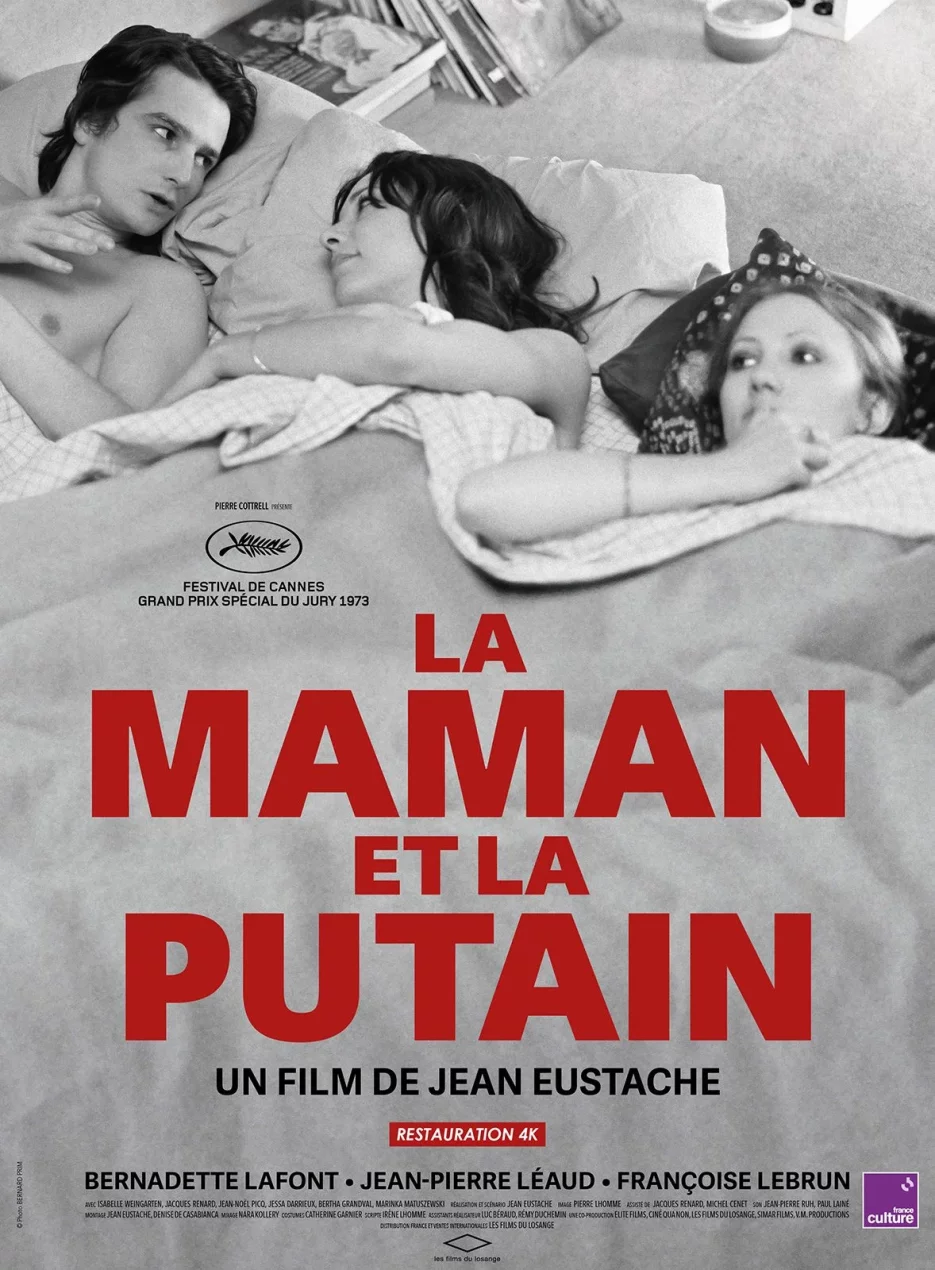
Even if the work abounds with references, in this third part, the author highlights the way in which the term could be gradually censored. In this regard, she invites us to read or reread English letters of Father Prévost, the correspondence of Madame de Sévigné, the Rhapsodies Petrus Borel poet, the play The respectful whore by Jean-Paul Sartre-today published under the title The p … respectful Due to the prohibition to use the word in the titles – or even the cult film by Jean Eustache, The mom and the whorewhose trailer for the restored version masks the word “ damn “The title of a red rectangle on which is written” CENSORSHIP ».
Finally Dominique Lagorgette shows in a particularly convincing way that the stigma extends far beyond sex workers to become a gendered insult aimed at all women who transgress patriarchal standards. This extension reveals the real function of the term, namely an instrument of control exercised on the body and the word of women, regardless of their effective relationship to sex work.
Towards reappropriation
Since the ambition of the work is to retrace the whole history of the word, the author examines in the fourth part the contemporary initiatives of deconstructions of the stigma, by presenting feminist movements and associations of sex workers who claim the use of the term as a form of agent. These reappropriation approaches aim to recontextualize the word to denounce moral hypocrisy and institutional violence, part of a logic of reversal of the stigma which transforms the insult into a tool of political demand (p. 245-252). Dominique Lagorgette also analyzes the resistance to this reappropriation, particularly in conservative or abolitionist environments, asking the crucial question of whether the stigma can be completely dissociated from the word or if it remains irreparably marked by its oppression story. This question reveals all the complexity of contemporary issues around the resignation of oppressive terms, that is to say the transformation of the meaning of words by their reappropriation. Finally, the author shows how these debates reflect divergent conceptions of prostitution and gender relationships, each position defending a specific vision of female emancipation.
The contemporary extension of the term through neologisms as “ putaclic “Testifies the persistent vitality of the stigma in the digital age. Lagorgette analyzes these new forms of use which perpetuate the mechanisms of moral disqualification while adapting to contemporary technological contexts. This evolution reveals that speakers remain at the heart of linguistic change, capable of both reproducing and subverting inherited oppressive structures.
Ultimately, Dominique Lagorgette gives us in this work all the contributions of linguistic research on this issue. Whore. History of a word and a stigma It is therefore imposed as a reference work which largely exceeds its initial object of study. If we must express a regret, it is that of not having had access to this masterful synthesis during our doctoral research, as the author succeeds in filling a major scientific gap. Indeed, the strength of his analysis lies in his ability to reveal how a simple word crystallizes centuries of beliefs, confirming that “ All expressions referring to women can also refer to prostitutes (P. 9) and reveals the extent of the stigma system that crosses the French language. The diachronic approach allows us to understand how symbolic violence is rooted and perpetuated, but also how they can be disputed and subverted.
Dominique Lagorgette’s work undeniably laid the foundation stone of a theoretical and methodological building called to develop. By opening this field of research on the linguistic archeology of gender stigma, the author traces perspectives which call for future deepens.