
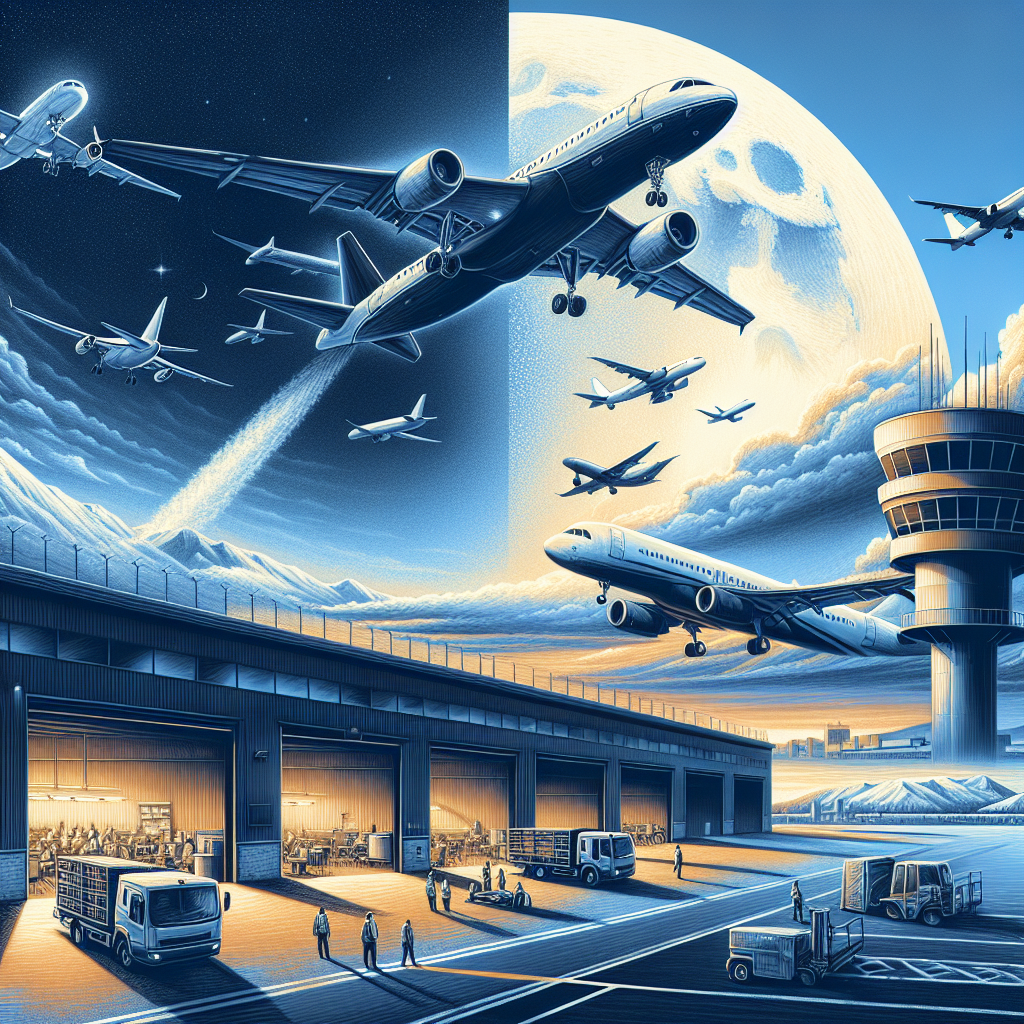
A century of aviation in Europe takes us from Blériot to Concorde, from Aéropostale to EADS. Today, Airbus is the leading civil manufacturer in the world, which does not prevent us from asking the question of the future.
Producing a summary book is not an easy task, not to mention the limited size of the volume. Jean-Marc Olivier, professor of contemporary history at the University of Toulouse-Jean Jaurès and Clair Juilliet, contract researcher and member of the laboratory FRAMESPAset out to chart the evolution of the European aeronautical industries during the XXe century. Their work sheds light on major aeronautical trends in the technical, economic, industrial, environmental and geopolitical fields in light of national and international events.
Du Bleriot XI at Air France
Specialists in the history of aeronautics, the authors offer a beautiful synthesis around a century of civil aviation in Europe. The work is divided into three chronological parts: the decisive role of Western Europe in the craftsmanship and the aeronautical industry (1890-1945), the aeronautical companies in reconstruction (1940-1970) and the construction of the European giant Airbus (1970-2020).
For reasons of volume and complexity, they do not address military aviation, despite its central role throughout the XXe century, and undoubtedly more so at the beginning of XXIe century. The authors take as their starting point what they consider to be the first popular airplane, the Blériot. XIwho crossed the Channel in 1909, to complete their study with the 2020 decade, its environmental issues and the shock of Covid-19, which put the future of the airline industry at stake.
They take us through the century, moving from pioneer figures (Clément Ader, Otto Lilienthal, Georg Unné and others) to national industries mainly for military purposes (United Kingdom, France). During the interwar period, military planes were transformed into civilian planes to connect the various points of the world through the opening of air lines. Commercial transport is the prerogative of the United States, with the Douglas D.C.-3. We see the appearance of airships and zeppelins which undertake to cross the North and South Atlantic: we can cite the case of Aéropostale in France (1918-1931), which aims to transport mail and people between the mainland and the French colonies. The plane therefore allows the maintenance of colonial domination.
Companies are formed, notably KLM (Netherlands) in 1919, CASA (Spain) in 1923, Imperial Airways (United Kingdom) from 1924, Air France (France) in 1933. However, they did not produce as many aircraft as the United States industries (American Airlines). Due to the rise in international tensions, military aeronautics dominated until 1945.
THE “ Jet Age »
The Second World War is characterized by the very strong presence of the air: bomber, fighter, transport plane, glider, seaplane, etc. After 1945, aviation experienced various technical advances such as the jet engine, breaking the sound barrier, civil turboprops and turbojets. Travel time is greatly reduced (Paris-Dakar goes from 34 hours in 1939 to 5h30 in 1960) combined with the development of tourism by plane (+226 % growth between 1949 and 1958 !): this is the Jet Age.
European industries are rebuilding (United Kingdom, France, FRG), while European cooperation programs were set up in the context of the Cold War. As part of theNATOvarious countries co-produce aircraft (F-104 supersonic fighter, Breguet 1150 Atlantic, C-160, Panavia Tornado). The best example in the civil field, which became the “ best failure ” At XXIe century, is the Concorde, the result of collaboration between French and British in the 1950s and 1960s.
Cooperation also involves the creation of the International Aeronautical Equipment Manufacturing Association (AICMA) from 1950, bringing together Belgium, Denmark, Spain, Italy, France, Norway, the Netherlands, then Switzerland, Sweden and FRG. These various international elements favored the emergence of the Airbus program in the 1960s. The aim was to compete with the Boeing 747 intended for long-haul flights with large capacity (350 to 480 passengers). The Airbus A300 program, designed as a “ air bus », was born in 1967. Between the withdrawal of the British, the entry of the Netherlands and Spain and the refusal of Italy, the project moved forward with difficulty: the A310 was a semi-commercial failure, while the A320 positioned itself well in the medium-haul category and the A330 in the long-haul market.
Airbus became the world’s leading manufacturer of civil aircraft in 2012, ahead of the American Boeing. Founded in 2000, EADS (European Aeronautics Defense and Space) positions itself as a European-level industrial manufacturer. European countries, at the origin of aviation at the end of the XIXe century, returned to XXIe century at the forefront in the field of civil aeronautics.
An industry with variable geometry
This territory is defined, throughout the work, as having variable geometry by the authors, who paint a portrait of Soviet, Italian, German, British industries, etc. Within the first two parts, we clearly see the evolution of national industries, the study of the Airbus company (1970-2020) giving way to Europeanization and globalization.
While we must congratulate the authors for this fine synthesis, it is a shame to see national studies appear and disappear depending on the organization of the plan. For example, in one sentence, the authors mention Poland, Hungary, Switzerland, Romania and Bulgaria (p. 77), and we hear no more about them thereafter.
In the same way, themes are occasionally addressed: the role of pioneers and the use of female labor during the First World War and the XXIe century, the growth of airport areas, regulations, nuisances and environmental issues. These themes are very interesting and we would have liked them to be systematized, to offer a panoramic vision of the XXe century. For example, have we not seen, since the appearance of aviation, opposition to this industry, due to nuisances and pollution? ? Quid of the location and size of airports, which appear to have increased throughout the XXe century – truth or prejudice ?
If the figures for the number of employees, production, number of passengers, types of aircraft or propulsion are mentioned for the post-1945 period and even more for the post-1960 period, it is a shame not to have more statistical tables for the earlier period. ; but perhaps these figures do not exist or do not allow us to provide a satisfactory overview of Western Europe ?
The case of low cost is discussed for the period 1970-1990 (p. 234-238) and, here too, we would have liked a more consistent development to address the period of XXIe century and the number of employees, planes, lines opened by these companies (Ryanair and Easy Jet) or by the large airlines which offer flights low cost.
The authors develop an analysis on the difficulties of linking air and hydrogen, which would have deserved a few more lines to explain its return to the forefront (p. 290), but they pass too quickly on electricity which could be used as an alternative energy to fuel when the plane moves on the tarmac. Of course, it’s a drop in the bucket, but it still counts.
Going beyond object fetishization
The authors have succeeded in producing an innovative and coherent synthesis of the history of civil aeronautics in Europe in XXe century. They confess, in the conclusion, that they have not dealt with the history of workers, the spatial domain, the imagination. It would have been relevant for them to point out in the footnotes the few references which would allow these fields to be explored, such as the work of Nathalie Roseau, Marie Thebaud-Sorger or Pascal Ory for the French case. So there is room for a second volume !
The aim of this work is to propose a history of transport, that is to say a modal history – in this case air transport. However, throughout the pages, gateways with other modes of transport appear. It’s about the automobile, with the first shows at the beginning of the XXe century, coupling automobiles and airplanes. During the First World War, some planes were equipped with Renault automobile engines.
It is also a question of links with cycling: the pioneers of aviation are also passionate about bicycles, like Clément Ader. There would therefore be multiple links to reweave to propose a history of mobility, i.e. an approach that embraces several modes of transport. We can mention the cateringwhich is deployed in the air, automobile and rail sectors.
Finally, the authors show that aeronautics goes far beyond the plane, that is to say the technical object. They underline the importance of pioneers, industrialists and companies, legal texts, historical events, environmental and ecological issues, national and international collaborations, and various innovations. Indeed, the role of historians – putting them in context – proves very useful for understanding the paths of dependence that the aeronautics industry has taken in Europe, progressively questioned in this XXIe dawning century.