
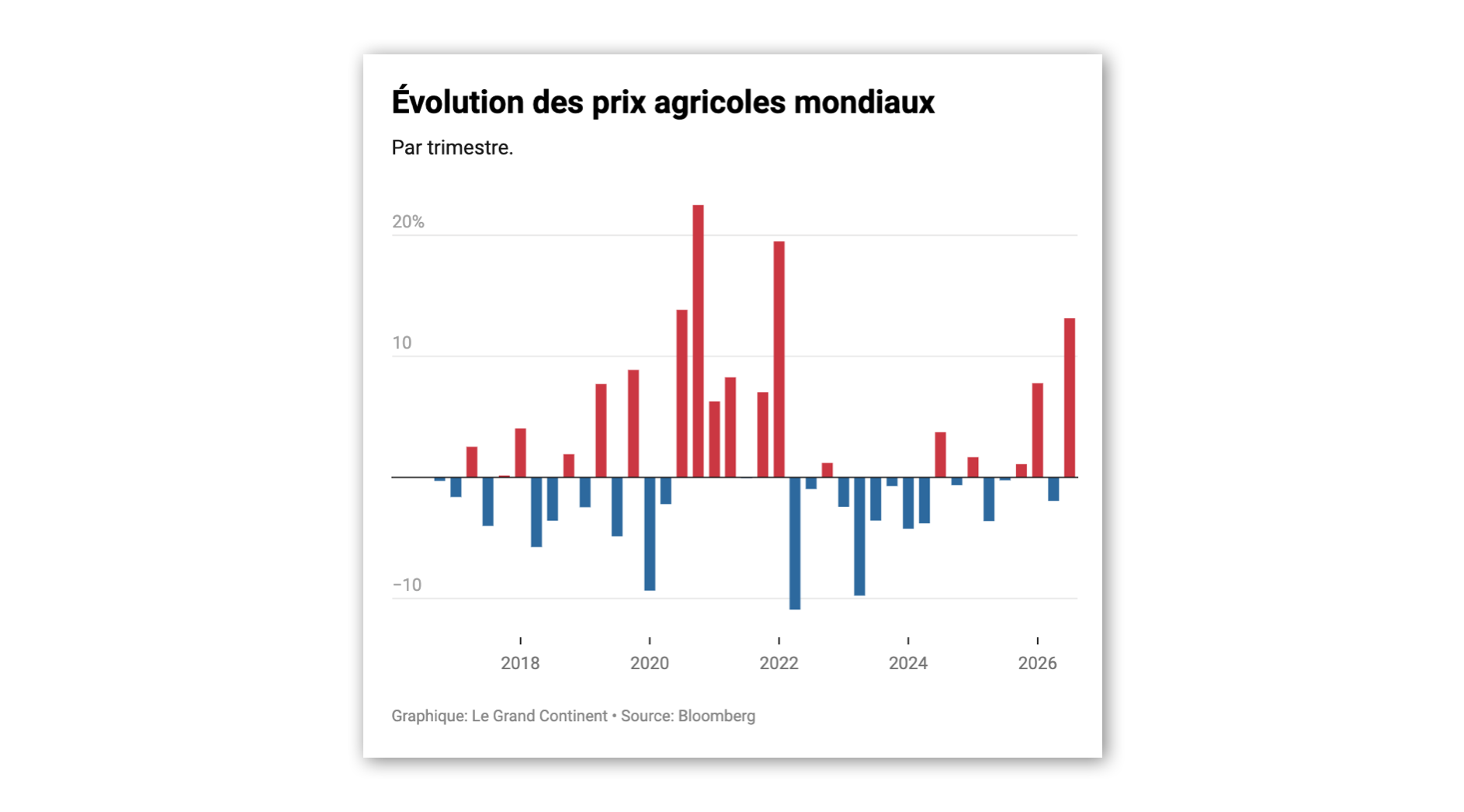
According to Bloomberg’s Agriculture Spot index, which tracks price movements for 10 key crops (corn, wheat, soy, sugar, coffee, and more), agricultural prices surged by 13% during the third quarter of 2026. This marked the sharpest rise since the first quarter of 2022, a period highlighted by Russia’s large-scale invasion of Ukraine, when the index had climbed 19.5%.
- The pronounced increase in agricultural prices reflects concerns about the deterioration of weather conditions and, in particular, the growing frequency of extreme events that are fostered by El Niño.
- According to most forecasts, this phenomenon is set to be one of the strongest in recent history: in the Niño 3.4 region, in the central equatorial Pacific Ocean, the average ocean temperature has already reached 3.1°C above the long-term average, the highest anomaly ever recorded.
Agricultural prices are also sensitive to the decline in Russian grain exports, which has accelerated since September. Because of Ukrainian strikes against the grain terminals on the Black Sea, Moscow’s exports were 17% lower than those of Ukraine between September 1 and 20.
Last year, at the same period, they were more than twice as high.
- The rise in commodity prices should not, in the short term, be passed through to the prices paid by consumers.
- However, the surge in agricultural prices is likely to further fuel inflation, as high energy costs, driven by the war in the Middle East, are already weighing on the budgets of households and farmers in particular.
- Between February and September, gasoline prices rose by nearly 50% in the United States, by 35% in Indonesia and in South Africa, by 17% in China, and by an average of 24% across the European Union.
Because Tehran’s closure of the Strait of Hormuz led to a drop in Gulf fertilizer exports, one of the world’s leading producers of urea, global sowings of wheat and corn, in particular, have been smaller this year.
- The sequence is mechanical: a farmer who cannot afford to buy urea at the start of planting may reduce application rates, switch to less demanding crops, or simply decide not to sow.
- Three to six months later, this decision is reflected in harvest data. One to three months after that, it reverberates into prices for consumers.