
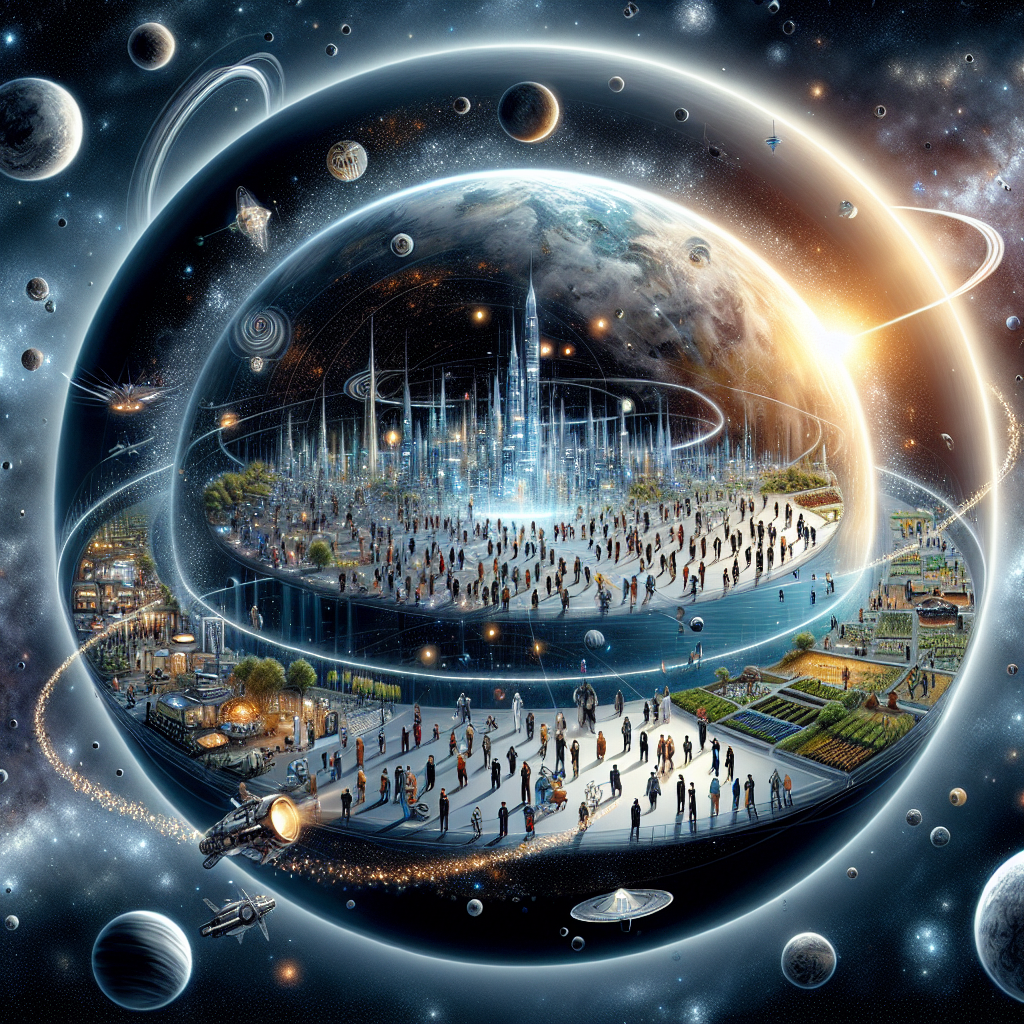
How to represent a phenomenon that links processes as different as climate, oceans, agriculture, urbanization or resource flows on a global scale ? The answer lies in a centuries-old form: the atlas.
See the Anthropocene
Does the Anthropocene really exist? ? The question continues to divide researchers. Popularized in the early 2000s by atmospheric chemist Paul Crutzen, the notion refers to the idea that human activities have acquired an influence comparable to that of major geological forces. But its status remains debated. The institutions responsible for defining the scale of geological time have not yet recognized the existence of a new epoch, and several historians or philosophers contest the relevance of a term which would indiscriminately attribute to humanity transformations whose causes are historically located. Despite these controversies, the word has spread widely in the social sciences and in public debate, where it is often used to designate a more general observation: the entry of human societies into a situation where their activities modify the very biophysical conditions of their existence.
It is in this context that Our footprint on Earthjournalist Laurent Testot and cartographer Perrin Remonté. The work does not seek to resolve the dispute over concepts. It starts from a more concrete difficulty: how to represent a phenomenon which links processes as different as climate, oceans, agriculture, urbanization or resource flows on a global scale. ? The answer proposed by the authors lies in a centuries-old form: the atlas. The work thus combines richly illustrated maps and synthetic texts which explain the mechanisms represented. The maps favor clear compositions, where biophysical, climatic, demographic and economic data are linked in an immediately perceptible way. Relatively classic, this form is distinguished from more radical experiments like the Feral Atlas directed by Anna Tsing, which explores more fragmented narrative and visual forms. Here, the choice of a structured and educational map makes the work accessible, perhaps at the cost of less formal disruption.
The work is based on the intuition according to which the Anthropocene is first and foremost a problem of representation. The transformations of the Earth system are now widely documented by scientific research, but they remain difficult to understand because they link phenomena usually studied separately, such as biogeochemical cycles, economic dynamics, technological transformations or international balance of power. This hypothesis, however, deserves to be discussed. If the difficulty of representation undeniably constitutes an obstacle to understanding the transformations underway, making it a central element of the problem amounts to suggesting that responses to the Anthropocene would essentially involve a change of perspective. However, the biophysical dynamics at work do not depend only on the way in which they are perceived. The atlas is thus located at the articulation between a cognitive issue, making visible, and a material issue, that of transforming trajectories already underway.
The Anthropocene as a change of perspective
The implicit thesis of the book is one idea. For Testot and Remonté, the Anthropocene does not only designate an accumulation of environmental crises, but a change of perspective on human history. For a long time, societies have been able to consider the planet as a relatively stable background for their activities. The maps brought together in the work suggest, on the contrary, that human history is now inseparable from planetary processes, such as the circulation of carbon, the transformations of the oceans or the disruption of the nitrogen and phosphorus cycles.
This shift in perspective has important consequences. It leads us to think about contemporary history not only from the perspective of human societies, but from the interactions between societies and the Earth system. The Anthropocene thus appears as a moment when the classic categories of history that are States, economies and civilizations must be placed in a broader framework, that of the biophysical conditions which make human life in society possible.
However, it is important to distinguish two partially distinct developments. On the one hand, the development of environmental and climatic history has profoundly renewed the analysis of past societies, including well before the Anthropocene. On the other hand, the notion of the Anthropocene refers to a contemporary transformation of the very conditions under which the Earth system functions. The work articulates these two dimensions without always explicitly dissociating them, even though they relate to different analytical registers.
Mapping a system of interdependencies
The use of cartography constitutes the main originality of the work. The map is not only used to locate phenomena, but it becomes a tool for visualizing interactions. The maps devoted to pesticides and endocrine disruptors (p. 119) offer a particularly illuminating example of this approach. One of them represents France using a treatment frequency index, which measures the intensity of pesticide use by municipality. The map shows heavily treated areas, particularly in the large grain-producing regions of the Paris Basin or in the wine-growing areas of the South-West and South-East, where the darker shades indicate higher exposure. This information is linked, on the same page, with data on the most treated crops, vines, hops or certain cereal crops, as well as with an estimate of the health and environmental costs associated with the use of pesticides. The whole allows us to concretely understand how localized agricultural practices are part of intensive production systems, generating differentiated exposures of populations and environments. By making visible the overlaps between types of crops, intensity of treatments and collective costs, the map shows the mechanisms by which endocrine disruptors circulate in ecosystems and affect human health, without these links being immediately perceptible on the scale of ordinary experience.
The map then becomes an intellectual device. It allows scattered information to be brought together and relationships to be made perceptible that would otherwise remain invisible. In this sense, the atlas is part of a broader movement which seeks to represent the Earth as a system of interdependencies.
The Anthropocene and the geography of responsibilities
Another contribution of the book lies in the attention paid to the political dimension of these transformations. The maps collected in the book clearly show that the Anthropocene is not a homogeneous experience. The activities responsible for environmental disruption are concentrated in certain regions of the world, while their consequences often affect much more vulnerable territories. This asymmetry sheds light on a debate now well established in the social sciences: certain researchers prefer to speak of “ Capitalocene » in order to emphasize that contemporary environmental transformations result less from human activities in general than from certain economic and technical regimes.
Beyond this question of responsibility, the atlas also suggests that environmental upheavals could transform geopolitical balances. Maps devoted to energy resources, agricultural land or the pressures exerted on ecosystems show how access to resources is becoming a strategic issue. In a context of growing ecological constraints, several major powers are already seeking to secure their energy, food or mining supplies, which could accentuate rivalries between States.
The atlas also addresses, in its final pages, several contemporary debates on possible responses to the ongoing, multiple and interconnected upheavals, an authentic hallmark of the Anthropocene. Transformation of energy systems, preservation of biodiversity, regulation of certain technologies or evolution of forms of international governance: if these proposals do not constitute a structured political program, they nevertheless make it possible to outline a set of open questions on the institutions capable of responding to the transformations underway.
An ambition and its limits
The main strength of Our footprint on Earth lies in its ability to transform a set of scattered data into an overall vision. By combining cartography and historical synthesis, the work offers an effective instrument for grasping the interdependencies which characterize the planetary transformations at work.
This ambition, however, has limits. The atlas format favors the rapid visualization of phenomena, sometimes to the detriment of the discussion of scientific debates surrounding certain data or certain concepts. The reader does not always have the necessary elements to evaluate the choices of representation or the arbitrations which structure the cards.
A second question concerns the political scope of the project. The atlas precisely describes the transformations underway and suggests several possible responses, but it remains relatively cautious about the institutional forms likely to emerge in a world marked by increasing biophysical constraints. This restraint is undoubtedly due to the format of the work, but it also refers to a more general difficulty. If the diagnoses of planetary transformations are becoming clearer, the political forms capable of responding to them remain largely undetermined.
These reservations do not detract from the main interest of the book. By choosing to map the Anthropocene, Testot and Remonté offer an original way of approaching a notion often used in an abstract manner. The atlas thus reminds us that understanding contemporary transformations does not only imply accumulating knowledge, but also inventing new ways of seeing the world. At the same time, he suggests that this transformation of outlook constitutes a necessary, but not sufficient, condition for confronting the current upheavals.