

The history of East African parks features “ gentlemen-experts » postcolonials eager to recreate the “ earthly paradise “. Their aristocratic pseudo-ecology must be replaced by an authentic popular ecology.
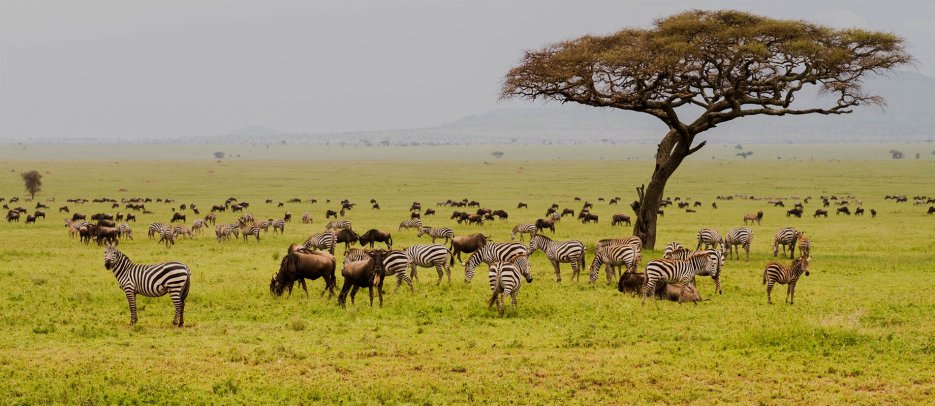
Who has never, even as a child, watched an animal documentary on television where nonchalant lionesses watch over their playful lion cubs, against a backdrop of good-natured zebras, wildebeests, giraffes, gazelles and the inevitable elephants? ? Only the hyena undergoes critical treatment, but we will grant that this animal, which takes so little care in its communication, sought it out. Some concessions are made to predatory activity, because it is difficult to deny that leopards, panthers and other big cats have not yet adopted a diet compatible with an afternoon show, but the mention is often allusive. More or less, we believe we are in the eschatological vision of Esai, when the lion finally wanders with the lamb. On Wednesday TV, the Serengeti (Tanzania National Park) is an actualization of Eden.
THE “ expert-gentlemen »
It is this reference to the earthly paradise which is effectively used by Anglo-Saxon authors to legitimize the formation, in East Africa, of large natural parks in the second half of the XXe century. A Paradise, however, whose creation would have stopped in the middle of the sixth day, just before the appearance of a disruptive element: the human being. The problem is that these spaces “ wild » (wild) are inhabited by people – certainly not very dense, since they practice agropastoralism and hunting. Their eviction, deemed necessary by conservationists, is the origin of a tragicomedy – certain aspects being frankly burlesque – which is still perpetuated today.

The protagonists, although they only occasionally visit the field, are the “ expert-gentlemen », to use Raf de Bont’s formula. Often born and educated in mainland France, generally naturalists, foresters or filmmakers, as adults they discovered the immense spaces of colonial empires. Charmed by this nature which contrasts with European mediocrity, they set out to convince the imperial authorities: it is imperative to protect nature “ intact “, “ virgin », of what we are not yet calling the demographic bomb. Because, at the end of often approximate studies which do not prevent them from being categorical, they are convinced: it is in the process of disappearing, under the pressure of unconscious and ignorant peasants who are multiplying.
To do this, like what is done in the United States, we must create parks that will preserve nature in its original state. Our gentlemen fear the fateful hour of decolonization. Since the end of the Second World War, in fact, empires have been faltering. To relegitimize their mandates, metropolitan authorities have engaged in a new concept – the “ development » –, fraught with threats for the bush. For political reasons, they are not keen on further alienating the populations. Vain calculation, moreover: neither the ferocious repression against the Mau-Mau in Kenya nor the too late economic policies will be able to prevent the deadline.
The natural parks policy
What will the new African elites do with their parks? ? It’s a divine surprise. The Nyerere, Kenyatta, Obote or Haile Selassie Ier (although not colonized, Ethiopia faces similar problems) do not appear hostile. Concerned at the same time about economic development, international recognition and the strengthening of central power – their power – over often peripheral regions and different populations, they clearly see the advantages they can draw from this new policy of natural parks.
The pact was sealed during a conference held in Arusha in 1961. The parks were saved and even called upon to develop. The gentlemen-experts strive to obtain international funds, both private and public, and registration in the programs of theUNESCOfrom the FAO or WWF. In addition, they highlight the tourist potential, likely to bring in foreign currency.
In the absence of Westminster, Tanzania will have the Serengeti. Cultural heritage on one side, natural heritage on the other, since blacks, affirm the neo-colonials, would not yet be “ made history »… Ethiopia is also playing the game. The Whites want ibex, oryx and walia ? We will give them some, including later in the form of “ safari diplomacy », with beautiful trophies in perspective. The critters will illustrate banknotes and commemorative coins. In the meantime, our greenfeet are delighted by this welcome: the new governments will realize their conservationist dream, better than the Empire.
Amazing zoo-engineering
Once political agreement has been obtained, the real actors are the park directors. These are often real products of colonization, born in the Empire in India or Uganda – and not in mainland France. Some, like John Blower or Mervyn Cowie, even participated in the repression of the Mau-Mau. In short, they know the chicotte and they enjoy the hunt ! It takes a certain temperament to go alone white man », embody conservationism in these remote areas where the authority of central power is tenuous. The parks policy allows them to retrain as international experts, since African wildlife is now a “ good of humanity “. They are the agents of a policy which often turns to the ludicrous.

While relying on scouts often from other regions, in the tradition of the indigenous auxiliary of the heyday of the Empire, they strive with relative success to oust the locals, they open trails and facilities to welcome tourists and develop the safari economy. Claiming rational management, they monopolize hunting rights, both to sell trophies and meat to the locals. Because animal populations do not necessarily balance out. Here the lion swarms ; there, the elephant.
But be careful ! Their hunt scientist » opposes the poaching of the inhabitants, little consolation for the prey. They practice astonishing zoo-engineering, moving elephants from park to park, lions or gazelles here, to recreate the “ nature » original of gentlemen-experts and luxury tourists. In an operation worthy of nickel-plated feet, one of them, Ian Grimwood, goes to capture the last Arabian oryx in Aden to reintroduce them to Kenya ! At the end of a month’s expedition, he captured four unfortunate antelopes, one of which did not survive its capture.
In setting up these parks, field experts come up against national strategies. The authorities only limply support them, at least as long as they do not see the benefit of strengthening their power. The relationships of these white officials imposed by cooperation with their local counterparts, superiors or subordinates, are often execrable. ; poorly paid scouts ransom populations or participate in the trafficking of meat and trophies. Local populations resist, gunshots are exchanged, villages burned, herds confiscated. Or they play tricks, pretend to leave, then come back.
Historical continuities
From the 1970s, two changes began to take place: on the one hand, a definitive Africanization of the administration and, on the other hand, the recognition (notably at the initiative of the ecologist Raymond Dasmann) of the role of indigenous populations. It is the end of the sixth day: we must admit that (black) man is part of creation. The formation of modern African states continues – but not necessarily for the benefit of the animals and traditional populations of the parks.
Guillaume Blanc offers us a pleasant analysis of the history of East African parks in the postcolonial period, adopting an approach inspired by Karl Jacoby, based on the trajectory of the types of actors. However, the colonial/decolonial context, strongly recalled, risks masking deeper continuities. There “ population bomb » is a theme that goes back to Malthus, who applied it to the poor classes, apart from racist considerations.
Likewise, the monopolization of hunting and the eviction of populations to the privilege of the great are part of an aristocratic tradition which dates back to High Antiquity, the term paradeisia which could also mean a hunting reserve in the Achaemenid Empire, and we remember that it is the fight of Robin Hood, the character of Walter Scott. In France, the restitution of hunting rights is an element of the Revolution, which probably accelerated the disappearance of large wildlife.
Likewise, the peasant uncultivated » (and its expulsion from the forests which it degrades through over-predation) is a recurring motif in the formation of modern central administrations. This is the basis of Colbert’s 1669 ordinance on forests. The creation of East African parks is the expression, in the colonial/decolonial context, of a broader motif. Ecology has largely been instrumentalized in power relations and continues to be so. Today, the challenge is to promote an inclusive democratic ecology, as an alternative to aristocratic ecology. Will we get there? ? The future will tell us.