
Tutelary figure, resistance fighter and father of the Annales, Marc Bloch enters the Pantheon in 2026. The opportunity to understand his multifaceted legacy through the eyes of today’s historians.
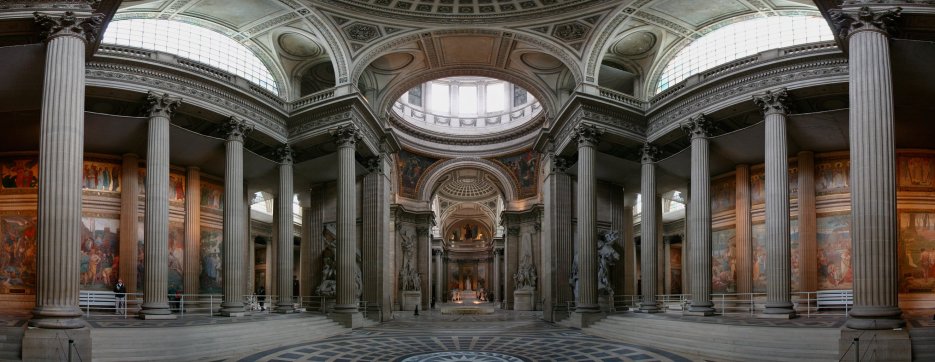
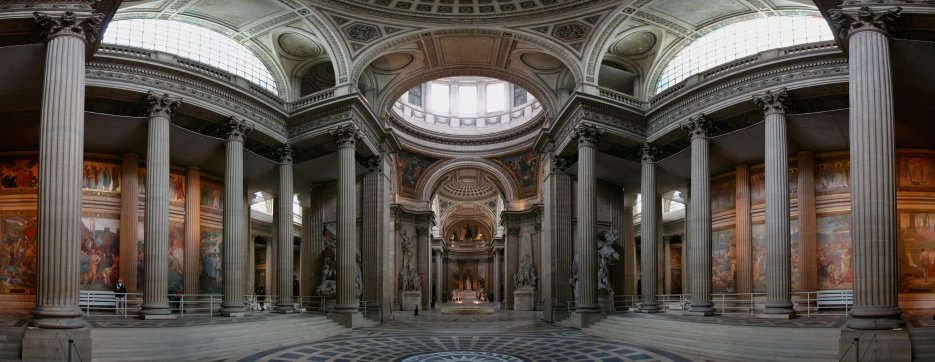
On June 23, Marc Bloch will enter the Pantheon. Behind the solemn, even consensual, homage, the republican rite, which elevates for the first time a professional historian to the rank of “ big man ”, acts as a revealer. It exposes, in fact, the tensions accumulated over nearly a century between the scholarly and multifaceted work of the medievalist, the testimonies of the intellectual from one war to another, the heroic memory of the resistance fighter who died for France, and political practices still disputed. It therefore seems necessary to explore these tensions, starting from the postulate that celebration cannot be enough, and presents itself as a propitious moment to revisit, with the tools of the historian, the making and the issues of such a heritage.
Tutelary figure of the profession, co-founder of Annalsresistance fighter shot by the Gestapo, Marc Bloch embodies a certain idea of the committed historian. During his lifetime, this stature was not self-evident: an eminent intellectual, his ambitious temperament annoyed certain peers. Even more, the anti-Semitism of the 1930s did not spare its course. It was only after his death and the end of the Second World War that the work of “ canonization » noted by Olivier Dumoulin in 2000, and above all carried out within the editorial framework of the Annales and under the leadership of his colleague and friend Lucien Febvre.
The gradual rediscovery of the work of Marc Bloch, republished in particular by the Gallimard house from the 1980s, has not exhausted the debates on its specificity. The journey of his most emblematic works allows us to measure this process. Thus, studying in 1924 the healing power attributed to French and English monarchs in The miracle-working kingscould Marc Bloch imagine that his remarks would continue to refer to the XXIe century, not only for political historians, but for researchers in social sciences, anthropologists, sociologists or political scientists ? The status of “ classic » is constructed in a plastic reception, through successive uses and appropriations, generation after generation. Likewise, public uses of the figure of Marc Bloch must not push into the background the work for which he was recognized during his lifetime, in particular on feudalism, on economic and social history, and the ambitious undertaking constituted by the creation of the Annales in 1929.
At the end of the XXe century, and especially after the republication of Marc Bloch’s testimony on the phoney war – The strange defeatrepublished by Gallimard in 1990 – the work of scholarly legitimation is coupled with national recognition. This is, however, not without risks, and the commemorative enterprise tends to freeze a “ icon », emphasizing the resistance and the martyr. In a political context troubled by debates on identity and the place of the nation, Bloch was thus able to be captured by politicized uses, embodying an exemplary republican figure. However, these appear illegitimate, particularly when they erase the realities of anti-Semitic persecution, anti-fascist commitment and underground resistance. Thus, the moral reflections and criticisms addressed by Bloch towards the French elites of the interwar period also extend through a school system then incapable of fulfilling its civic mission.
Also, entering the Pantheon is an opportunity to highlight, based on the multiple commitments of Marc Bloch, the “ social role » of the historian, his civic mission and his relationship with those in power. But this political choice also sheds light on the lesser known facets, or the latest research on the career of Bloch, object of the attention of a historical community which considers itself his heir, and whose intellectual journey like his tragic death are the subject of new stories. Neither celebration of an icon, nor questioning of its heritage, the present file proposes to follow the lesson of Bloch himself, drawing a story which looks at the past from the present, “ science of men over time and which constantly needs to unite the study of the dead with that of the living » (Apology for history or profession of historian).