

Several French political leaders disdain archeology when it concerns their country, even though it is very popular there. Where does this curious contempt tinged with ignorance come from? ?
“ I prefer to put money into restoring heritage rather than digging a hole for the sake of digging a hole », declared Rachida Dati in April 2025, as this book recalls. Such vulgarity was shocking, coming from the minister who today presides over the destiny of a booming archeology. For around thirty years, preventive research, carried out upstream of land development, has contributed to rewriting vast sections of the history of our country over a million years. These developments are multiplying, while every kilometer, an archaeological site is likely to provide valuable information on one or more stages of our history.
Since 2001, legislation has governed this preventive activity, defining its public operators — the National Institute for Preventive Archaeological Research (INRAP) alongside several local authorities — and private individuals — a few approved companies. This law also specifies the methods of control of these excavations by the Ministry of Culture as well as their financing, ensured by solvent developers. At the same time, in non-threatened places, research programs are taking place, fewer in number and subsidized by the State for their scientific interest. The total cost remains very modest: barely 0.01 % of GDP national to discover, study and make known these parts of history which fascinate an ever-widening public.
History of missed opportunities
By denigrating this, the minister is part of a well-known rhetoric: that of administrative simplification brandished to justify less vigilance towards our buried heritage. Faced with these repetitive attacks from various officials, some five thousand French archaeologists mobilize periodically, divided between anger and weariness. It was also through their mobilization that the late advances of 2001 were won, through hard work, as recalled by two major figures in this fight: Jean-Paul Demoule and Alain Schnapp. Jean-Paul Demoule, professor emeritus in protohistoric archaeology, was the first president of theINRAPwhile Alain Schnapp, professor emeritus in Greek archaeology, was the first director of the National Institute of Art History.
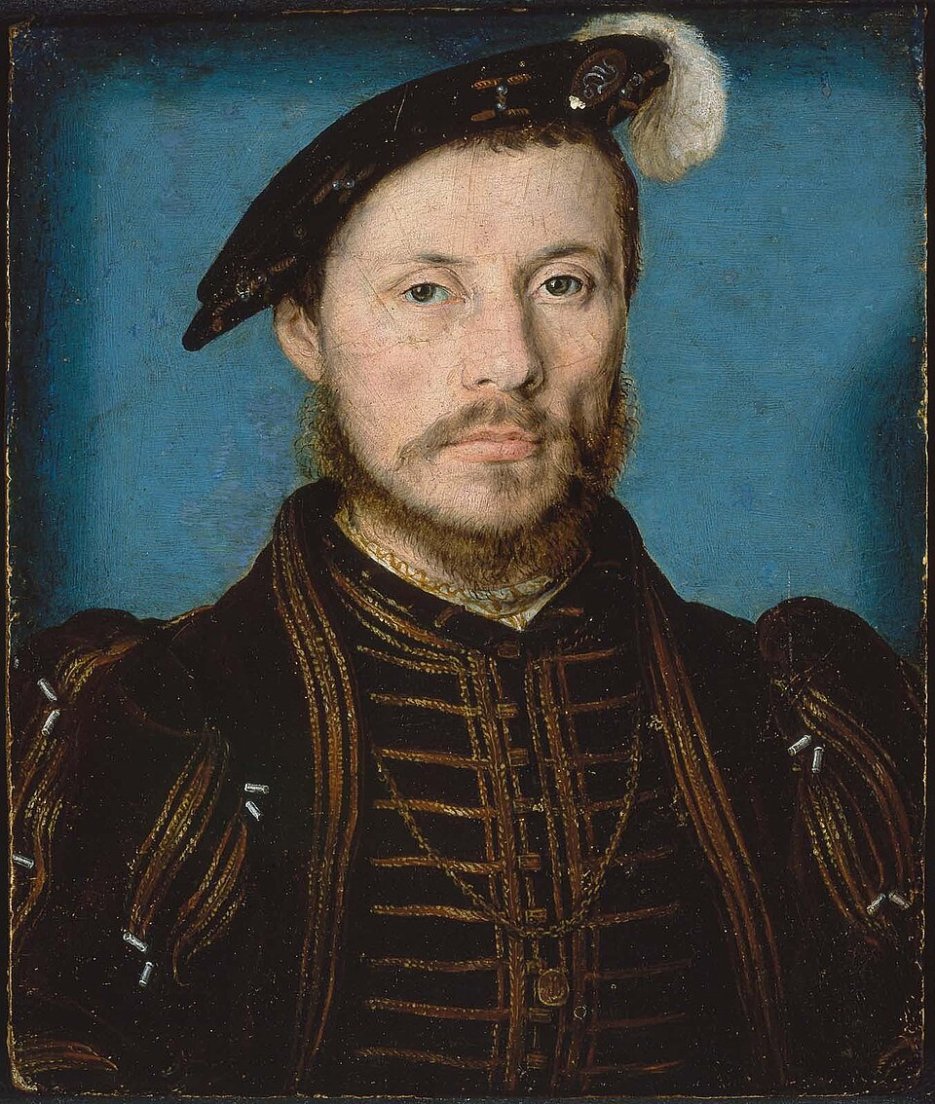
Actors of May 68 and great witnesses of recent decades, the two authors are also erudite historians of their discipline. They show in this meticulous chronicle that the disinterest of our country’s leaders in its heritage goes back a long way. While in 1548, Anne de Montmorency, governor of Languedoc, protected the ancient monuments of her province by an ordinance, François Ierto whom he was close, did not relay the decision. As early as 1515, however, Pope Leo X had created an office in Rome responsible for this protection, first entrusted to the painter Raphael. The Kingdom of Sweden established its own in 1630, but Louis XIV did not found one in France, despite the proposal of Roger de Gaignières, a stubborn antiquary. Colbert, however, founded the Academy of Inscriptions and Belles-Lettres at the beginning of a century which saw the curiosity of antiquarians open to emerging archeology.
In 1799, the new sources it provided were fully taken into account in the plea – which also remained without effect – by which Pierre Legrand d’Aussy defended the idea of a national organization of excavations. He also pleaded for a pre-Roman section in the new Museum of French Monuments, but it closed its doors in 1816. The Louvre Museum never opened its doors to national antiquities, and this heritage was relegated under Napoleon IIIin the museum he created in Saint-Germain-en-Laye. This exclusion, far from the Parisian center, contrasts with the place that national archeology occupies in the major museums of other European capitals. These were home to powerful university institutions very early on, while in France the discipline remained throughout the XIXe century, essentially voluntary. Moreover, it was not to its practitioners, but to a small number of architects who were entrusted, from 1830, with the finally official missions of protection of “ historical monuments “.
The Pausanias complex
Paradoxically, from the military campaigns in Egypt and Greece, French archeology abroad was constantly encouraged. Since the creation, in 1846, of the French School of Athens, this growth has resulted in the founding of numerous institutes, mainly devoted to the study of the ancient Mediterranean world and the first great civilizations of the Near East.
Demoule and Schnapp designate this exotic tropism under the name of “ Pausanias complex », in reference to the reproaches that the geographer of IIᵉ century AD addressed his fellow Greeks, more fascinated by distant wonders than by their own heritage. This taste for the distant, common among elites at all times and in all places, often pushes them to look for origins elsewhere. The kings of France invented it in Troy, while the nobility of the Ancien Régime claimed to come from the Franks, victors of the Romans, themselves conquerors of the Gauls – considered, themselves, as the ancestors of the Third Estate. After the defeat of Sedan, the latter, although defeated, ended up finding a place in a national novel tinged with shame in the face of these successive debacles.
The Gauls were then perceived as barbarians civilized by Roman genius, and this vision – subsequently diverted by the Vichy regime to justify collaboration with the occupier – fueled the idea of a civilizing mission in the colonies. From the start of the XXᵉ century, they also benefited from an archaeological administration which the metropolis lacked until 1964.
To all these divisions of identity – which played, and still play, in what the authors describe as “ national neurosis » — epistemological factors were added: the primacy of the written word in the once very literary culture of the French elites ; the fascination for the most monumental remains ; the lack of interest in the most modest, yet at the foundation of the archeology of the countries of Northern Europe, where the Greco-Roman heritage remains discreet, even absent.
Sisyphus archaeologist
Despite its underdevelopment, national archeology slowly prospered during the first half of the XXe century, carried out by a few major researchers and academics, relying on the network of learned societies and taking advantage of nascent legislation, which finally made excavations subject to authorization, in order to limit looting. From 1945, France finally began to catch up, thanks to the commitment of new professionals and volunteers. With the Trente Glorieuses, the unbridled development of the territory multiplied the destruction, in the face of which a “ rescue archeology “. Little by little, public opinion was made aware of it, under the leadership of new generations of activists, including that of the two authors.
From there, Demoule and Schnapp offer us first-hand accounts of the long collective efforts of conviction to which they actively contributed from their student years. Each was also the author of a report among the dozens commissioned on archeology by the Ministry of Culture since 1975. In a breathtaking story, the book traces the professional mobilizations and the official indifference with which they encountered, as attested by all these reports which remained a dead letter.
Also recounted are the rare political opportunities that opened up, particularly in 2000, when the process began that led to the 2001 law on preventive archeology and the creation of theINRAP. This public establishment, however, remained understaffed – just like the state services responsible for archaeology. Nevertheless, theINRAP works spectacularly – through its discoveries, its exhibitions and its publications – to popularize national archaeology, including among developers, most of whom are convinced that their financial efforts are rewarded by such a harvest of knowledge.
This did not dissuade the legislator from establishing, in 2003, a risky competition between public operators and poorly controlled private companies, due to lack of personnel in state services, and without learning the lessons of the failures of commercial archeology abroad. Thus, archeology is still practiced in France in a fragile framework, constantly threatened by demagogues. The authors conclude with a call to put an end to this precariousness.
This call deserves to be widely relayed by other practitioners of the social sciences, who know what we owe to the archeology of recent years and its critical function – applying to textual sources as well as to identity myths. A sign of maturity, its results today seem less easy to exploit than in the past by hypernationalist regimes. Wouldn’t it also be this demystifying role that frightens some today? ?