

Were the lights already in crisis at the end of XVIIIe century ? R. Whatmore examines this hypothesis from thinkers who agree to diagnose the collapse of the ideals of peace, freedom and progress, in a context of revolutions, imperialism and economic slump.
Richard Whatmore offers a counter -intive reading of the end of the Enlightenment through the thought of eight major authors. At the end of XVIIIe A century, everyone notes that the ideals of the Enlightenment – peace, tolerance, progress, democracy – undergo a certain erosion. This regression goes hand in hand with revolutions, economic crises, wars and an increasing rivalry between European powers who seek to maintain and extend their “ commercial empires ». The continuation of these ambitions, however, leads to the ruin and the loss of freedoms, in a time of absolutization of the monarchies, and while “ The republics enter a period of prolonged crisis (P. XXIV).
The American and French revolutions accentuated the disorders in the British and French colonial empires, as in the entire mercantilist system. While the United States and Haiti access independence, the claim to the universality of the values of the Enlightenment is questioned: freedom, equality and fraternity only applies to European men. Whatmore’s words therefore does not relate so much to the universality of the Enlightenment, or even to the partial collapse of the two great colonial empires, but rather to the decline of the ideals of the Enlightenment – developed from the end of the XVIIe century and throughout the XVIIIe century, after the wars of religion had touched their end in Europe (p. 135) – and the rise of new conceptions of secular political power.
The decline in light values
Whatmore retraces the criticism by Adam Smith of the mercantilist system. This is based on a commercial monopoly between a colonial power and its colonies, slowing down exchanges and economic growth, and concentrating power in the hands of a “ New monetized class Whose capital and liquidity were not always linked to the public interests of a given state. This system, note Whatmore, form “ A corrupt network of merchants and bankers, who move capital for trade ». What’s more, “ the political actors they are welding (…) adopt laws for their benefit rather than at the service of society (P. XXVI). Smith as Hume firmly denounces: this criticism forms the critical perspective from which the thinkers who participate deplore the end of the Enlightenment.
Whatmore distinguishes two groups of thinkersses which confront this decline. The first includes Catherine Macaulay, Jacques-Pierre Brissot, Mary Wollstonecraft and Thomas Paine, all convinced that “ Freedom, revolution and republicanism could (…) restore the lights ». The second group includes William Petty (second count of Shelburne), Edward Gibbon and Edmund Burke, who all believe that “ A Great Britain turning away from the Empire, war and excess of trade could become a model of moderation and tolerance (P. XXXII). Richard Whatmore devotes a chapter of his book to everyonee of these thinkersses and examines the way in which they have theorized and treated the disappearance of the values of the Enlightenment. These figures not corresponding to the usual cannon that we expect to find in a book on the thought of XVIIIe century, gathering them around the theme of the end of the Enlightenment makes it possible to renew our understanding of this history, by a skepticism which feeds on the criticism of the political and economic structures of imperialism. Firmly documented, the work retraces the complex story of multiple events that have been able to contribute to the perception of a decline in lights.
Lights in colonial context
The notion of the end of the lights raises a question: what do we mean by lights ? Richard Whatmore begins his work with a brief examination of the meanings of the term, stressing how the concept was debated, in particular with regard to colonialism, sexism and racism. He quotes some of his main detractors, and notes that those “ who rejected the lights were socialist or Marxists, often heirs of religious or republican traditions (P. 4). Transversely criticizing the criticisms of the modernity of the lights of “ Report only the faults of the past while ignoring the deeper and complex developments then in play The author shows that the thought of the time was not unified and that debates were counted, for or against imperialism and slavery (p. 6).
However, by this position, he evacuates some of these criticisms – notably those developed in the field of subordinate, postcolonial or Critical Race Theory – according to which modernity and lights emerged through colonial experience and generally violent encounter with non -European peoples, by conquest, genocide, oppression and slavery. The fact remains that colonialism has produced immense wealth which has contributed to the emergence of new ideas, to the progress of the arts, of the human and physical sciences, as well as moral philosophy in Europe.
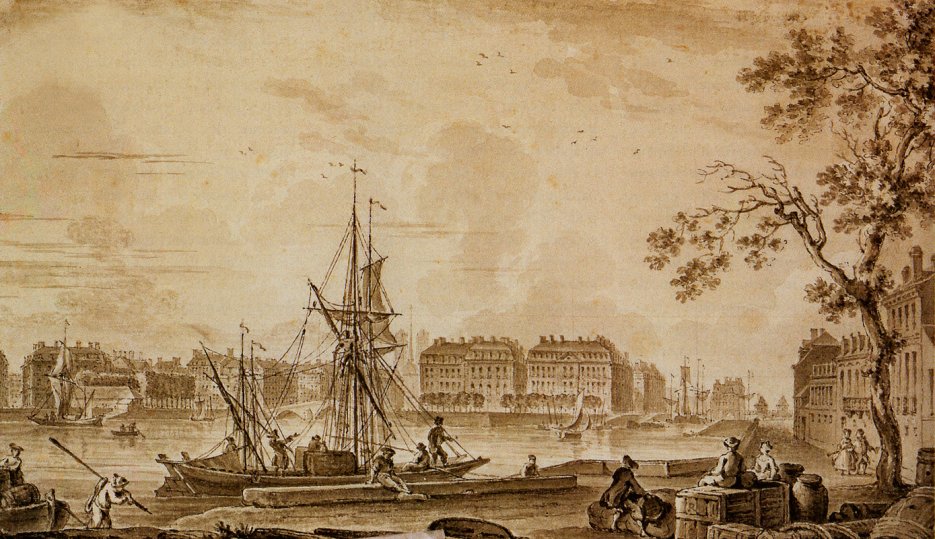
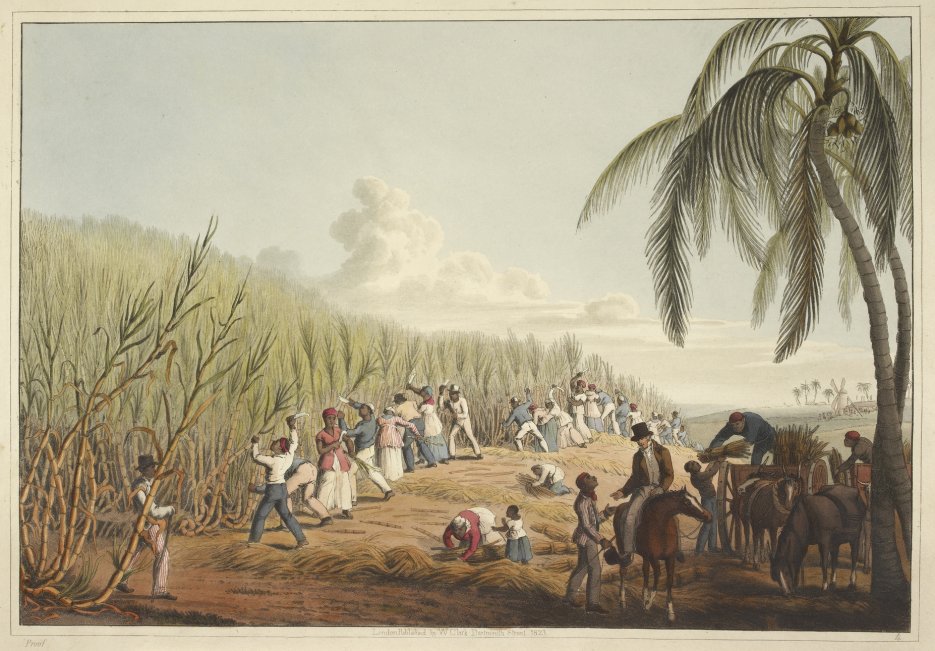
The central thesis of Richard Whatmore’s book is that the values and ideas of the Enlightenment are in decline at the end of XVIIIe century, as the European powers became more voracious, corrupt and obsessed until fanaticism by the quest for freedom, luxury, power and wealth. The author insists on the role of European colonial empires, based on conquest, trade (including the trafficking of West Africans), the extraction and exploitation of resources by mining activities and the planting economy in the Americas, in Asia and Africa (p. XXV). So he situates and interprets the thought of the Enlightenment in a wider imperial context. However, the affirmation that the decline of the Enlightenment would be due to the imperial fact tends to take insufficiently into account that the thought of the Enlightenment itself has not only been forged simultaneously to the colonial empires, but is the product. And if it is true that greed, violence and corruption characterizing the commercial empires contradict the ideals of freedom, equality, peace and tolerance, this paradox also reveals the moral ambivalence of prosperous nations based on exploitation, on oppression, on servile work and the predation of resources – yesterday as today.
The contradictions of revolutionary speeches
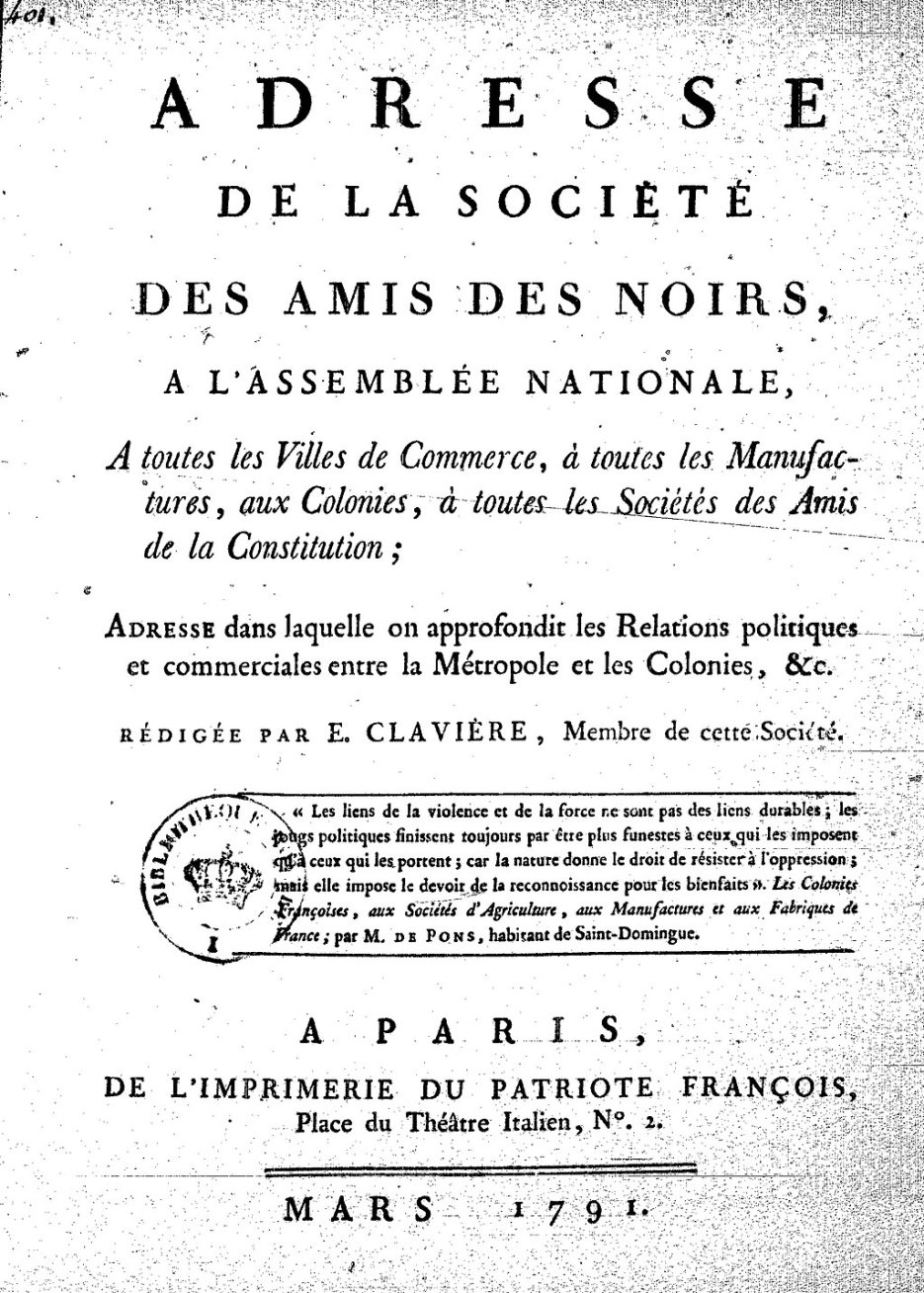
Many of these contradictions appeared in broad daylight when the slaves of the French colonies of the Caribbean revolted against the colonial system, before and during the French Revolution. In 1794, the National Convention abolished slavery in the colonies, but the decision was never fully applied. Questions relating to freedom and slavery are the subject of lively debates within the Convention, and the Revolution has as many conservative as radical elements: the club of the Massiac hotel on the one hand, the Société des Amis des Noirs on the other. The members of the first are favorable to the maintenance of trafficking and slavery, while the second advocates abolition. The result is a series of wars, skirmishes and reversals of alliances between European powers, in particular in the Caribbean where Saint-Domingo revolts against the French in the 1790s, a process after which Haiti acquired his independence in 1804. Military losses inflicted in Napoleon in Santaime in Santaime makes him incapable of maintaining the colony and North American in the United States in 1803.
Conversely, the American revolutionaries reject the mercantilism which prevents them from choosing their trade partners, and fight British imperialism, while retaining a colonial functioning involving the maintenance of slavery and the exclusion of indigenous populations. Although Richard Whatmore does not always bring out these contradictions, he recalls that Catherine Macaulay does not care about the slavery of possession (Chattel Slavery) that she considered a simple “ denial of civil freedom (P. 124), while Thomas Paine does not worry either the slavery of possession, nor the oppression of indigenous peoples and women (p. 231). The perception of lights as touching on their end is clearly imposed, due to the wars for colonial possessions and the characteristic corruption of a mercantilist system closely linked to the triangular trafficking.
According to Richard Whatmore, the British are then aware that “ The lights end “, And that the” vision of a Europe, and a world, based on the natural development of negotiation and trade without imperial frame (P. 95). The author underlines the obsolete and intrinsically corrupt character of mercantilist political economy, and that instead of continuing their commercial empire projects, the imperial powers would have had an interest in promoting peaceful forms of commerce. At the same time, desire exists a return to the ideals of the Enlightenment of peace and tolerance (p. 6), and most of the thinkersseexamined argue the republican promise of freedom, equality and fraternity. However, it is also swept away by the terror and ascent of Napoleon.
End of an era, or persistence of a struggle ?
Richard Whatmore presents a complex argument, examined in his book from several angles, as he considers wars, the imperial expansion in Asia, the collapse of political and economic systems, the revolutions, the rise of a public conscience and the loss of certain values while Great Britain sink into corruption, and that France is won by Napoleonian terror and Cesarism. Contemporary in a contemporary way appear reasons to be optimistic, while the problems linked to slavery and women’s rights nourish the debates, and even so few concrete reforms result from it. The author establishes a parallel between this past and the uncertainties of the present, marked by a questioning of the values of equality and tolerance around the world. However, what he presents as an end could just as well be considered the persistence of a long -term fight for these ideals, engaged long before the lights, at times and in different places of the globe.
Finally, undoubtedly a more detailed treatment of wars opposing imperial powers and enslaved peoples would allow the reader to better situate himself, and to qualify the theses of the work relating to intellectual reactions to the events which changed the course of the world at the end of XVIIIe century, and the way they shaped the apprehension of the end of the Enlightenment, the Empire, the Trade and the Crises. Holding all these aspects together and following its thread in a single book is not a thin achievement: Richard Whatmore manages to restore the end of the Enlightenment in a lighten the writings of several authorriceS Keys belonging to these tumultuous and decisive moments.