
Genetics enters into debates on the early Middle Ages: by combining biological, archaeological and historical data, it renews the study of migrations and identities, far from racial models and fixed stories of origin of European peoples.
At XIXe century and at the beginning of XXe century, historians claimed that early Middle Ages Europe was born from barbarian invasions which would have put an end to the Roman Empire. This vision has since been widely called into question, even if it has persisted for a long time in school curricula, and even in certain non-scientific publications today. Different models have attempted to explain the political, social and demographic changes of late Antiquity and the early Middle Ages in the light of social sciences. Patrick Geary, today professor emeritus of medieval history at the Institute for Advanced Study in Princeton and at the University of California in Los Angeles, has devoted a good part of his career to these questions, and in particular to the problem of the formation of ethnic identities. In recent years, he has also worked on a large project funded by theEuropean Research Council (ERC) and baptized HistoGenes. Integrating Genetic, Archaeological & Historical Perspectives on Eastern Central Europe, 400-900 A.D..
An advocacy book
How genetics rewrites the history of the Middle Ages comes from the work of this multidisciplinary research group. The project brought together scientists from many disciplines and succeeded in getting specialists from so-called “sciences” to work together, despite accepted methodological differences. hard » and human sciences. This truly interdisciplinary dialogue has enabled the study of the populations of the Carpathian basin using history and archeology as well as genetics. The Carpathians were chosen because of their geographic position and demographic history. Between the end of the Roman Empire and the first medieval centuries, this area experienced several large population movements and major cultural changes. Studying the genetics of these populations therefore makes it possible to complete, or even nuance, what we know about these movements.
We can call them movements for lack of a better term because, as the author clearly says, the terms used are subject to caution and do not have the same significance for a geneticist or an archaeologist. Methodological precautions also form the bulk of the work and, in a very educational manner, Patrick Geary always explains the possible biases of a genetic approach. The first chapter is thus devoted to “ The Dangerous Legacy of Racialized History “.
Some researchers are indeed skeptical of the idea of a population genetic study, and rightly so. The racial science of XIXe century developed, particularly among German historians, what is called the archeology of settlements or establishments (Siedlungsarchäologische Methode) and associated, in the spirit of the Enlightenment, a people with a language, an identity and a “ soul of the nation » which would be fixed and immutable. This approach, carried among others by the archaeologist Gustaf Kossinna (1858-1931), assumes the coincidence between archaeological material cultures and ethnic groups: this or that object would be representative of a people, with an idea of hierarchy between these peoples. Kossinna and others cross-reference these data with supposedly biological elements: the archaeologist thus establishes a map of the “ Roessen culture » from a supposedly specific type of pottery and skulls… And “ he didn’t stop there. He searched throughout Europe, in the skulls of his European contemporaries, for evidence of the expansion of Germanic peoples within the Roman Empire » (p. 24). The Nazis were obviously fond of this kind of study.
Having early provoked significant rejections, notably from French-speaking historians such as Henri Pirenne, the obvious excesses resulting from this approach have not completely disappeared, if only through abuse of language: for example, we sometimes use ethnic names from written sources (the Goths, the Lombards, etc.) to designate material cultures. But “ pots are not people » (p. 32), and peoples themselves are not fixed entities: they are dynamic and heterogeneous structures. It should be noted that this book is not a translation but (with the exception of the first chapters, translated from German) a work written directly in French and therefore intended for a French-speaking public, taking into account their specific reluctance to this type of approach.
Patrick Geary’s approach presents itself as resolutely – and fortunately – opposed to these old studies, advocating the development of a common language between specialists from different periods. The work presents itself as a real plea in favor of a profoundly transdisciplinary and renewed genetic history, hence its lively tone (particularly at the beginning) and its short and punchy sentences. It seeks to make genetic data historical sources like any other, therefore assuming the same approach precautions as a text or an artifact, and a constant cross-checking between these different data.
L’DNA for dummies
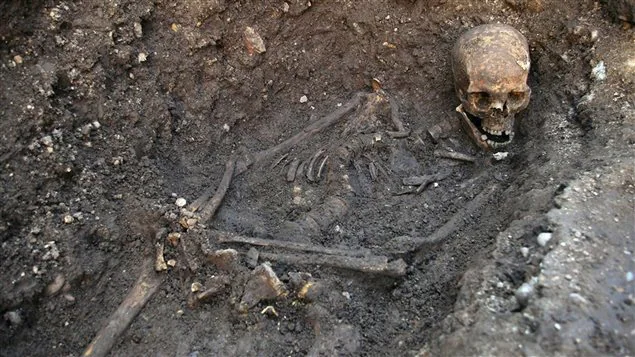
But for this, it is necessary to have a good understanding of what genetics is and what it can do. To date, mainly used for issues dating back to very ancient prehistory (the study of different human lineages) or for fairly anecdotal elements on the scale of history, genetics has for example made it possible to determine that the skeleton discovered in 2012 under a Leicester car park was indeed that of Richard III. But no doubt she can be applied to larger and more important historical questions » (p. 44) than the story of a skeleton or the determination of a celebrity’s biological children.
Patrick Geary therefore launches, in two fairly technical chapters, into an explanation of the essential principles of genetic research. If we refrain from summarizing them here, one of the major interests of these pages – apart from the fact that they show that the author has assimilated the codes of disciplines far from history – is to underline the biases and the difficulties of the exploitation ofDNAin particular of theDNA ancient. One example among others:DNA of a person from the early Middle Ages can be contaminated byDNA many other people, both those who buried it centuries ago as well as archaeologists, then geneticists, even manufacturers of laboratory gloves on the other side of the world ! Certainly, these difficulties are increasingly being overcome and we also know that certain parts of the skeleton, such as the petrous bone (part of the temporal bone), are particularly conducive to the extraction of theDNA. In addition, some old data is compared to contemporary databases, which poses major interpretation problems. Patrick Geary clearly shows that these tools are imperfect, as are each of the sources that historians use.
Genetic mixing in the Carpathians
Devoted to an essay on the genomic history of the Carpathian basin, the heart of the work and the demonstration seeks to retrace the history of the region between the end of the Roman Empire and the beginning of the Carolingian era by integrating genomic studies as one source among others, which proves to be particularly conclusive. The Carpathian basin has indeed experienced several successive dominations, attested by the texts, but which are not all manifested in the same way from the point of view of the populations.
Since Roman times, the population of the Carpathians has been diverse. As in the city of Rome itself, many people have Mediterranean, Near Eastern or North African ancestry, and are perfectly integrated: they cannot be distinguished from the point of view of material culture. Furthermore, there is no fundamental difference between the two sides of the limes (name given to the “ border » militarized empire). After the Roman period, European ancestry dominated, but without homogeneity. At Ve century later, the Huns seized the area, but this did not result in significant population movements from the steppes: “ there is evidence of some cultural practices associated with steppe societies, as well as some genetic continuity with Central Asian populations, but both of these are diffuse and limited » (p. 95). What dominates is genomic heterogeneity and, moreover, there is not necessarily a link between Asian ancestry and the practice of voluntary skull deformation, typical of the Huns. Genes do not make culture.
During the Lombard period, we find traces of a greater number of people of Nordic origin than before, but also of political consolidation – proof that population movements are not destabilizing factors. In this area, as in northern Italy, it also seems that new communities are created, with traces of migration in adulthood. In Italy, local Italian elites likely quickly acculturated to Lombard customs and quickly rose to the top of the social hierarchy. The so-called Justinian plague struck the region in the 540s and, although it caused excess mortality, it did not disrupt funeral standards.
Finally, the Avars seized the region in the second half of the VIe century. This time the change is more visible: the elite tombs from this era all show Northeast Asian ancestry, suggesting a fairly rapid movement from east to west. Some typically Asian cultural practices are also visible, particularly in kinship practices. However, genetics invites us to move away from a too schematic or too biological vision of the phenomenon, as shown by the study of the cemeteries of Mödling and Leobersdorf. Located 20 km from each other, they have common cultural traits (same objects in the tombs), however their populations are genetically different: European ancestry in Mödling, Asian in Leobersdorf.
Finally, even while focusing on genetic data, Patrick Geary comes to underline the central role, in the societies of the early Middle Ages, “ of culture, human choices and resilience during these tumultuous centuries. » This is the major contribution of this approach: nothing is written in the genes. In this sense, genetic history as advocated by Patrick Geary and the HistoGenes team does not constitute a major upheaval of what we know about populations in the early Middle Ages. There should be no problem here, quite the contrary: genetic methods make it possible to refine what we know about ancient societies. Used with caution, they are another asset in the toolbox of the historian of populations, kinship or gender. Finally, far from the image of an ethnically homogeneous Middle Ages as it remains fantasized by proponents of a racialized vision of history, genetic data on the contrary shows the diversity of societies of the past as well as the present.