
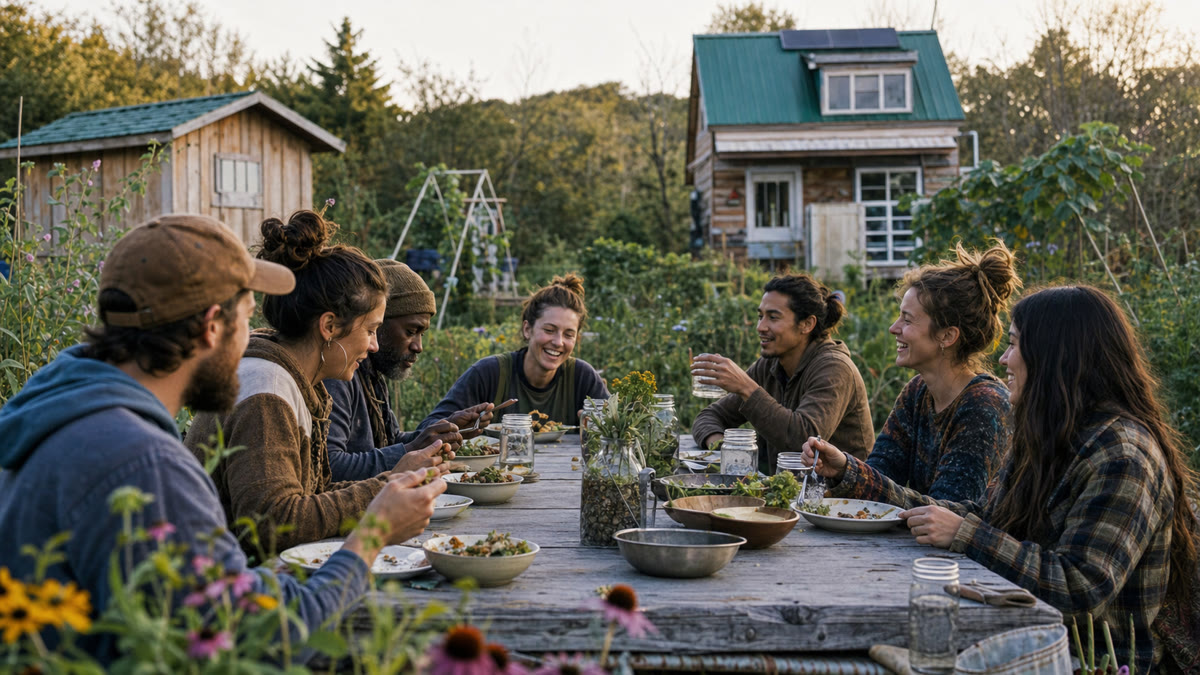
At a time when rent, groceries and debt shape so many decisions, a different kind of American community is attracting renewed attention. Its members share homes, work, meals, tools and income, trying to live with far less money than most people consider possible.
The idea is not new. Intentional communities have existed in the United States for decades, often built around cooperation, ecology, equality or spiritual values. What feels different now is the context. More people are questioning whether the standard individual path still works.
A life built around sharing
In these communities, the basic unit is not the private household but the collective. Members may cook together, farm together, make decisions together and pool resources. Some communities use income sharing, where money earned by individuals goes into a common fund used for housing, food, healthcare and daily needs.
That can sound radical from the outside. But for supporters, it is practical. Instead of seven households buying seven lawnmowers, cars or washing machines, one community can share what it needs. The result is a life with fewer bills, fewer possessions and more dependence on relationships.
Why the movement is growing
The cost of living is one obvious reason. Young adults, families and older people alike are looking for alternatives to isolation and financial pressure. A shared community can offer lower expenses, childcare support, food production and a stronger safety net.
But money is not the only motivation. Many members say they are looking for a slower, more meaningful life. They want decisions made face to face, work that feels useful and a daily routine less dominated by consumption. For some, the appeal is environmental. For others, it is emotional.
The difficult side of communal life
Sharing everything also means negotiating everything. Conflicts over work, privacy, leadership, relationships and personal habits can become intense. A community that looks peaceful from the outside often depends on long meetings, clear agreements and a willingness to change.
Still, the movement continues to draw interest because it answers a question many Americans are quietly asking: what if the most expensive parts of modern life are not inevitable? For people willing to trade independence for cooperation, communal living is no longer a fringe fantasy. It is becoming a real option.