
Marc Bloch founded the Annals with Lucien Febvre by placing economics and social issues at the heart of a history open to other social sciences. Guillaume Calafat returns to the international and interdisciplinary ambition of Annalsand on the heritage of a historical approach assuming the link to the present.
Shooting & editing: A. Suhamy.
Bloch, economy and society
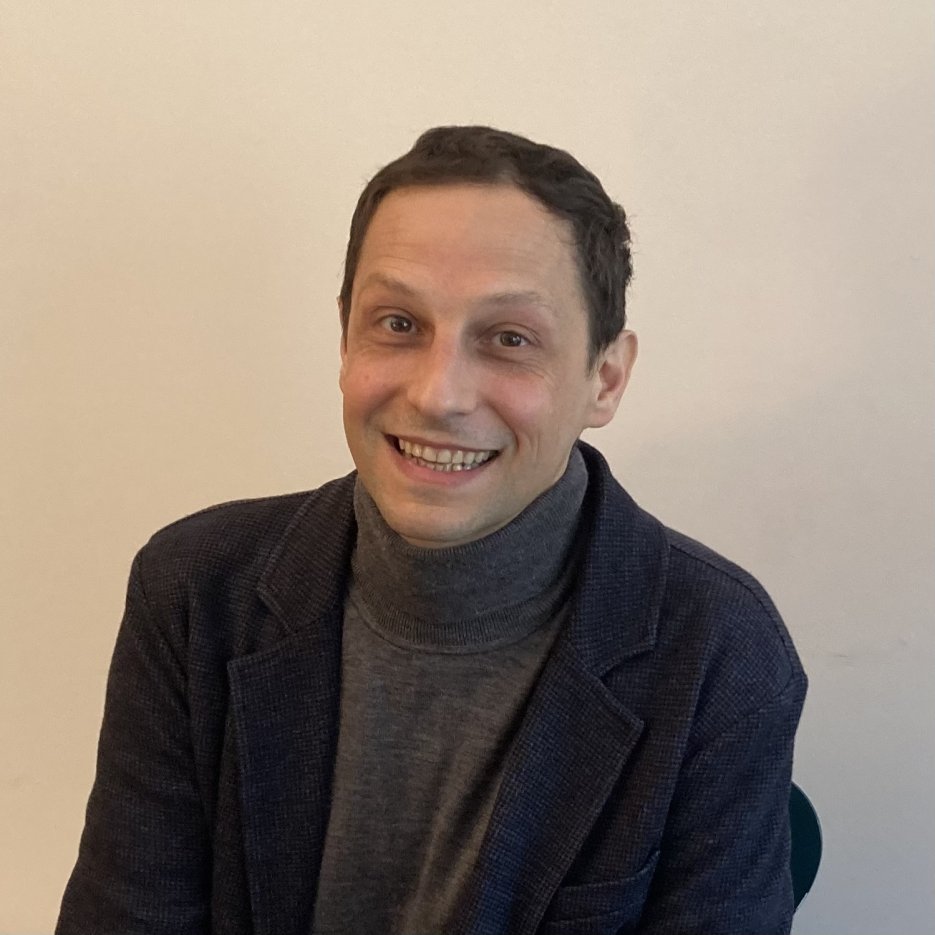
Guillaume Calafat is a lecturer in modern history at the University of Paris 1 Panthéon-Sorbonne, attached to the Institute of Modern and Contemporary History (IHMC), and Junior member of the Institut Universitaire de France (2022-2027). His work focuses on the history of the Mediterranean in the modern era, maritime circulation, shipwrecks and legal practices and regulation of maritime spaces. He is the author ofA jealous sea. Contribution to the history of sovereignty (Mediterranean, XVIIe century)published by Seuil in 2019 and reissued in pocket format in May 2026, as well as Mediterraneans. A history of human mobility (1492-1750) (Points, 2023), co-written with Mathieu Grenet. Member of the journal’s editorial staff Annals. History, Social Sciences since 2015, he has been its director since 2024.
Marc Bloch, economic historian
It was as a professor of economic history that Marc Bloch was elected professor at the Sorbonne in 1937. As Guillaume Calafat recalls, this field was until then mainly occupied by lawyers and economists. Created in 1921, the chair of economic history at the Sorbonne was previously occupied by Henri Hauser, specialist in protocapitalism and the economic history of the modern era – and future contributor to Annals. When Marc Bloch took over, he was inspired by English and especially German schools, and collaborated with correspondents in Italy, where, as in France, economic history was in its infancy.
According to his vision of economic history, Marc Bloch takes up the ambition to study phenomena over the long term, as the sociologist François Simiand invited people to do in 1903, through collective surveys. Bloch is particularly interested in agrarian structures, and develops a regressive history. Thus, in his archives, underlines Guillaume Calafat, “ we see him interested in the Napoleonic land register as well as in the plot plans of XVIIe And XVIIIe centuries, to then go back in time and work on the phenomena of enclosures, consolidation, the structures of small property in rural France of the XIIIe and of XIVe century “.
The adventure of Annals
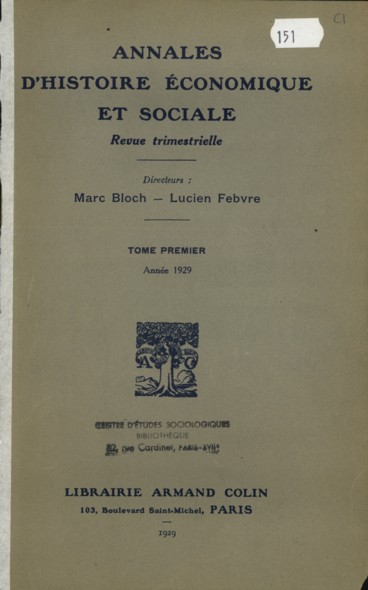
The review project from which the Annals was thought of with Lucien Febvre from the 1920s, and discussed among others with Henri Pirenne. They raise these questions “ with emphasis on the economic and this word which is very useful: socialwhich allows us to talk about society as a whole », confirms Guillaume Calafat. A militant review, which claims to span periods as well as disciplines, it also approaches the Historical synthesis review created in 1900 by Henri Berr.
Published by Armand Colin, the magazine took the nameAnnals – on the model of Annals of Geography which share the same publisher. The ambition of Bloch and Febvre remains to build an international journal, thanks to foreign correspondents, but also to connect present and past. Thus, recalls Guillaume Calafat, the founders of Annals hope to reach an audience of businessmen and politicians, following a model of “ advisors to the Prince “. Although considered pioneering and read abroad, the journal is nevertheless relatively confidential.
THE Annals and Bloch’s legacy, from 1945 to today
After Bloch’s death, Lucien Febvre carried the magazine, which he directed alone until his death in 1956. Fernand Braudel took over its direction. Although they only crossed paths a few times, Braudel continued to be interested, like his elder, in capitalism, mercantilism, and more broadly in the project of “ long-term social science unit “.
By its role in the Annalsbut also the collections that he directs, or the creation in 1947 of the 6e section of the Practical School of Advanced Studies (which then became, in 1975, the School of Advanced Studies in Social Sciences), Braudel carries a project imbued with the work of Bloch. But this work also continues elsewhere, for example at the Sorbonne, where Ernest Labrousse – author with Braudel of a vast synthesis on the economic history of France – succeeds Bloch as chair of economic history.
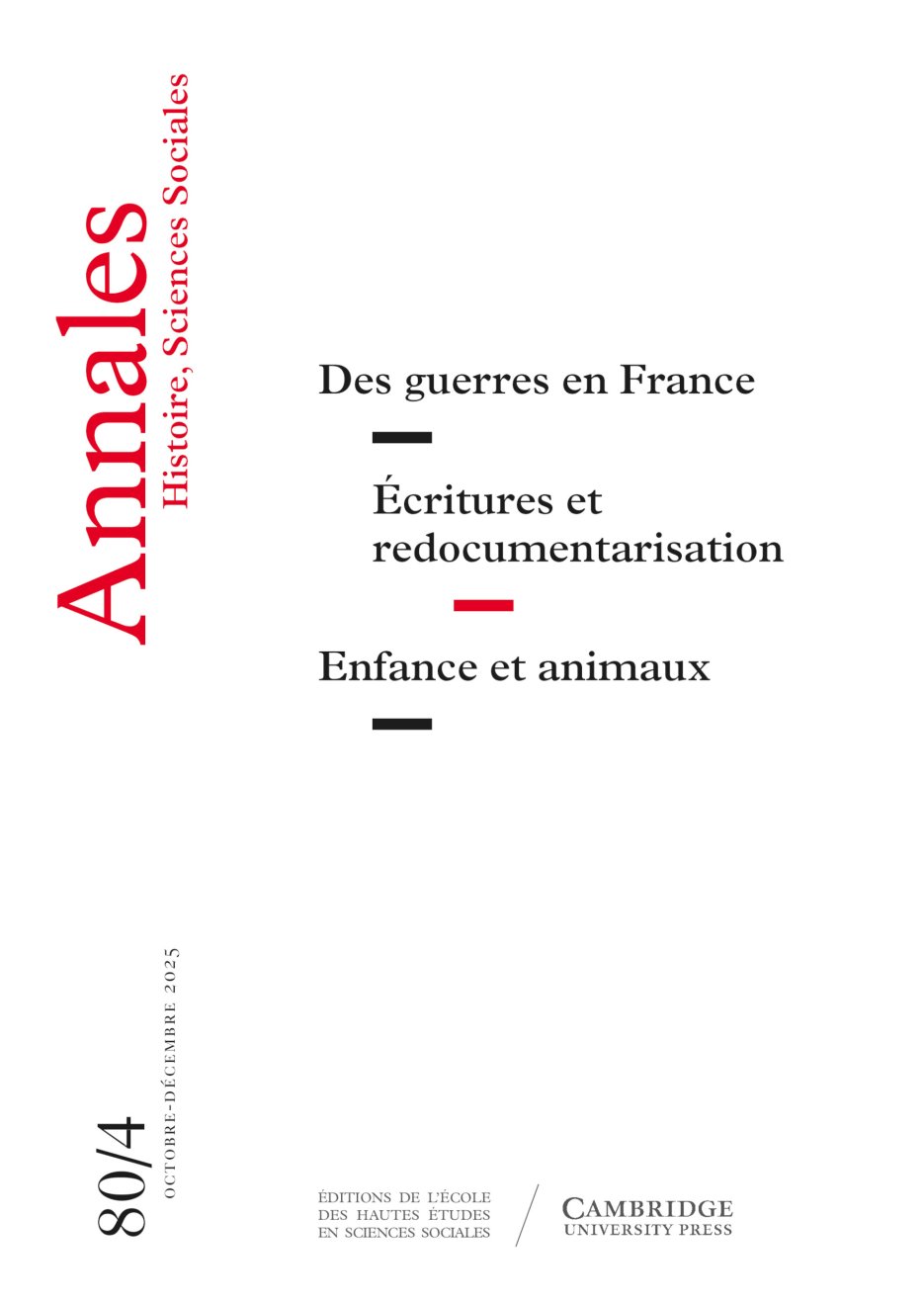
As for the Annalsthey experience different phases, while continuing the initial project of linking present and past. Today focused on the social question as a way of affecting all areas, they retain, according to their current director Guillaume Calafat, “ the heart of what Bloch and Febvre had called theproblem storythat is to say basically less erudition for its own sake than the way in which history allows us to ask new questions, to open new fields “. In this, their work already considered the conditions for their surpassing, while affirming the fundamental link between history and the other social sciences.