
Bringing together studies on sources that have long been little used (images, objects, vestiges) in the context of the history of slavery, appears the first publication of the scientific committee of the program “ Routes of people put into slavery. Resistance, Freedom and Heritage » of theUNESCO.
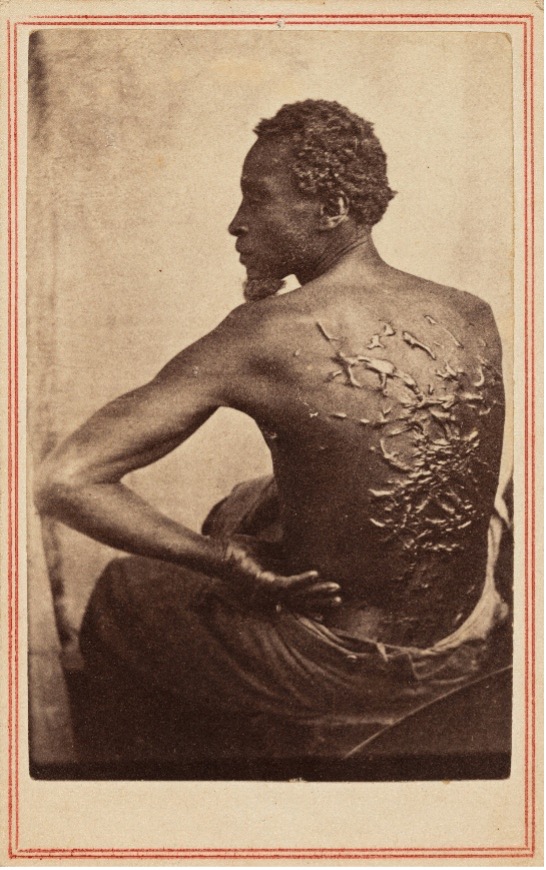
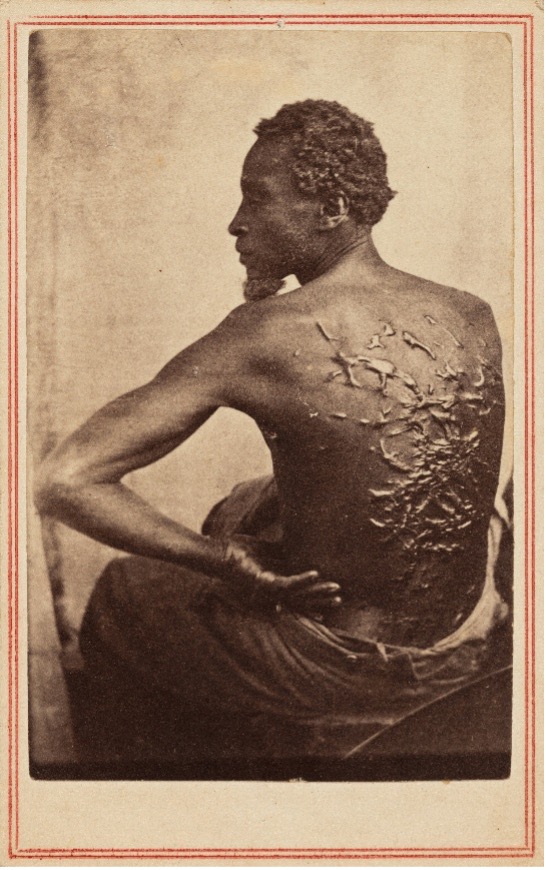
In September 2025, the United States administration, after the establishment a few months earlier of a presidential decree aimed at restoring “ truth and reason in American history » and to put an end to any speech that would denigrate American greatness, has decided to remove from certain national parks and museums any exhibition on the subject of slavery. This action, which is, let us not be afraid to say it, a form of censorship and an ideological rewriting of the history of the United States, was notably embodied in the banning of one of the best-known images in the history of the country, The Scourged Back (The flagellated back) (Fig. 1). This photograph, taken in 1863, shows a black man, a former slave who fled the plantation on which he was enslaved, whose back is lacerated with scars. Precisely because this photo is now banned, we choose here to show it by referring to its historical context.
This image and the way in which it is pushed aside by the US administration seemed to us the perfect gateway to approach the publication of the collective work directed by Ana Lucia Araujo (Howard University), Klara Boyer-Rossol (University of Bonn) and Myriam Cottias (CNRS). This book indeed comes as a welcome counterpoint, both in its genesis and its content, to what is currently taking place in the United States.
This book is in fact the first thematic publication of the scientific committee of the program “ Routes of people put into slavery. Resistance, Freedom and Heritage » of theUNESCO. Launched in 1994 to “ breaking the silence surrounding the history of slavery and the transatlantic slave trade by supporting research, the transmission of memory and intercultural dialogue », this program and the resulting work deal with slavery according to an international and diachronic dimension, justifying the plural used in the title. The objective of this volume is to study the different forms of slavery through visual representations and material objects generated by this system of domination and exploitation with multiple avatars.
The history of slavery: from written sources to material culture
This thick volume of 540 pages thus brings together nearly twenty researchers (whose lack of even a brief bibliography is regrettable) from Africa, Europe and the Americas in seventeen articles which it is impossible to report individually here without betraying their richness. It is organized into five thematic parts which first present studies in art history and visual cultures (“ To see or not to see the difference “, “ Codes of representation of dominated bodies “) to end with two parts focused on the material culture of slavery (“ Materiality of everyday life in the slave-holding Atlantic “, “ Material practices as symbols of resistance, spirituality and freedom “), the central part forming the bridge between the two objects of study (“ The abolition of slavery through images and objects “).
This volume is a historiographical and methodological summation. In the introduction written by Ana Lucia Araujo, Klara Boyer-Rossol and Myriam Cottias we are presented with a very complete historiography of the various studies linked to slavery and the transatlantic as well as Indo-Oceanian trade (quantitative, geographical, urban, genre, biographical, etc.). Essentially based on written sources, having also integrated the contributions of oral sources, these works have however neglected the contribution of images and material culture which remain the prerogative of art historians and archaeologists. This project thus highlights the extraordinary renewal of sources and the contribution of researchers to the history of slavery through texts one of whose qualities is to always announce their objectives, their methods, their sources.
Proof of the vigor of visual and material studies in the context of the history of slavery, the various texts grouped in this work have already been published, which can nevertheless cause some problems during reading. These are in fact both articles and book chapters, so that an author can sometimes refer to examples, hypotheses or conclusions from his book which are not accessible to us. This composite aspect of the work is, however, consistent with the objectives of the project “ The Routes of People Enslaved ”, because it offers a double historiographical contribution. The reader is offered precise and documented studies which he can then continue via the works or issues of journals from which they are taken. This volume therefore acts as a gateway to the subjects it intends to treat and if the diversity of the geographies studied (French Caribbean, Brazil, Gorée Island in Senegal, Kingdom of Kongo) can sometimes lead to a somewhat kaleidoscopic dimension, it nevertheless remains welcome for understanding the different moments and different spaces of the slavery process.
Although the work is a compilation of texts, the editorial work is not neglected. We can occasionally regret certain construction problems, but the echoes between the different contributions are numerous, revealing the coherence of the choice of subjects and are therefore proof of the globalized dimension of the process of domination that is slavery.
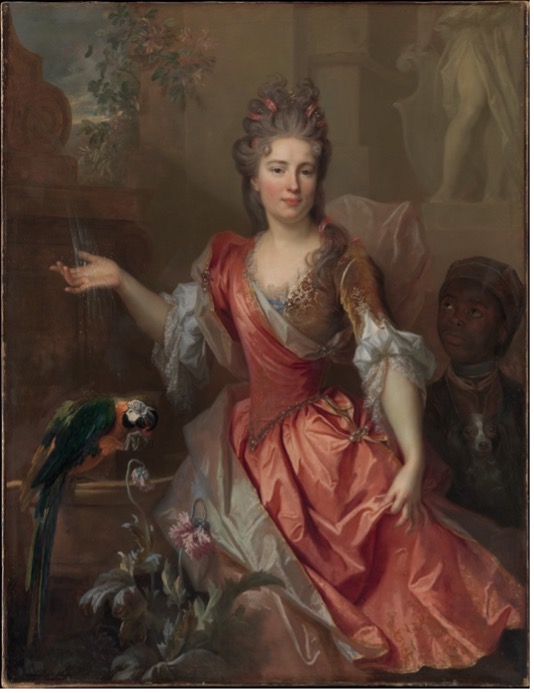
This is the case, for example, between the articles by Anne Lafont (“ How color became a racial marker. Art historical perspectives on race » p. 141-171) and Simon Gikandi (“ Close contact. The culture of taste and the taint of slavery » p. 173-211) through their work on skin colors as evidence and tools for racial hierarchy (Fig. 2). Or between those of Ana Lucia Araujo (“ Visual culture and memory of slavery: French perspectives on populations of African origin in Brazil XIXe century », p. 25-54) and Matthew Francis Rarey (“ Counter view of the visual culture of slavery in Brazil », p. 283-312) which both cite the engravings of Jean-Baptiste Debret, a French painter who participated in Joachim Lebreton’s expedition to Brazil and produced 153 lithographed plates illustrating his Scenic and historical trip to Brazil.
How to show images of slavery ?
In his article, Matthew Francis Rarey returns to a question that runs through the work of Saidiya Hartman, an American writer and researcher specializing in African-American studies: “ How are historians and researchers engaged in reproducing racial power dynamics through images and objects? ? » (p. 311). The researcher, director of the chair of art history at Oberlin College, shares with his Columbia colleague this critical vision regarding the use of the visual culture of the history of slavery as a simple set of documentary sources. For the author, it is necessary:
“ better understand the role that visual culture plays in the active production of race, culture and the history of slavery (and) produce a counter-testimony of these images and objects, to reposition them in relation to the spectacles of violence and subjugation for which they were originally produced » (p. 311).
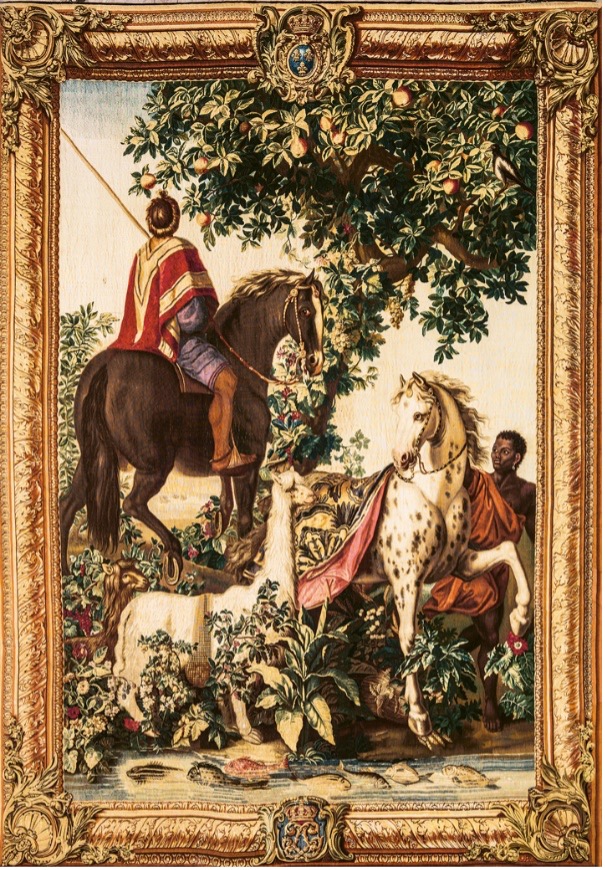
Such distancing from a literal reading of visual sources is obviously necessary and remains the basis of any study in art history. But this recommendation, issued at this point in the work, seems almost superfluous to us given articles like that of Cécile Fromont (“ Kongo, Brazil, France and colonies: the issues of the visible and the invisible in the Indian Tapestry of the Villa Medici » p. 105-140) (Fig. 3) or Anne Lafont (art. cit.) prove that art history and its tools allow a critical study of race in its conditions of visibility and are not content with describing images which, in a certain way, would only reproduce the dynamics of racial power.
This was confirmed by art historian Vivian Braga dos Santos during a debate at the National Institute of Art History, who claims to have gotten into the habit of no longer showing her students certain images of artists depicting black bodies so as not to reiterate the violence they convey or to:
“ leave room for works in which it is possible to perceive a certain control of the self-image by the subjects represented. »
The role of archaeology: circumventing the point of view of the dominant
If visual sources require us to produce not simple descriptions, but analyzes according to the methods of art history, material sources seem to offer these “ counter-testimonies » that Matthew Francis Rarey calls for. The vast majority of the articles in the last two parts of the book have in common the point of underlining the extent to which archaeological discoveries nuance and complicate the discourse on the history of slavery which, if it were based only on documentary or visual sources produced in the vast majority by slave-owning Westerners, would in fact offer a Eurocentric and necessarily biased vision:
“ To fully understand the daily lives of slaves, we must find the data that tells us about their activities. As we know, they could rarely keep written records of their experiences that we could read today, and those who testified about them, like planters or travelers, were rarely objective, sympathetic, or nuanced observers of these lives. »
The various studies thus open up new methodologies such as zooarchaeology which “ examines the remains of fauna found in archaeological sites to analyze the systems of supply, production and consumption of food and its waste » (Kelly & Wallman, art. cit.), marine archeology or call for establishing new geographical frameworks (the spaces and territories between large plantations and properties) to carry out archaeological excavations.
The passage during the volume from one type of object of study – images – to another – archaeological objects – is therefore important, not to create a hierarchy between them but to remind readers who would like to undertake research on the history of slavery of the issues that each can raise. This is once again perfectly in line with the objectives of the project led by theUNESCO from which we are now awaiting the next volumes which will be devoted to questions of health and slavery then to the question of reparations.