
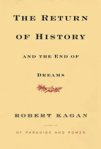
Faced with the setbacks suffered by the American army in the Middle East, the right seeks to redefine the foreign policy of the United States. Robert Kagan, one of the tenors of the neoconservative movement and advisor to the Republican candidate John McCain, proposes to form a “ Democracies League To counter the boom in authoritarian diets.
In 2000, the American neoconservatives were looking for their presidential candidate. As Gary Dorrien reminds us in Imperial Designs: Neoconstrovatism and the New Pax Americaamany of them preferred the main rival of George W. Bush in the Republican primaries, a certain senator John McCain, today the opponent of Barack Obama. In The Weekly Standardthe almost official organ of the movement, William Kristol and David Brooks greeted at the time “ this candidate capable of shaking a establishment republican ossified “, While others saw him a patriot capable of breaking with Clinton’s foreign policy.
Thus, although McCain does not mince his words by criticizing the way in which Bush led war in Iraq, it should not be forgotten that in many ways, his own districts of neoconservative nobility are even more authentic than those of Bush. Long before September 11, 2001, McCain had married unilateralism in international relations, supported the use of force against Iraq and North Korea, and developed a vision of foreign policy focused on the export of the American political model. Today, we can see this neoconservatory affinity by examining the list of his main advisers: we discover in particular the lobbyist Randy Scheunemann (key member of organizations “ neocons “What are the Project for the New American Century (Pnac) and the Committee for the Liberation of Iraq,, Condition) and William Kristol, son of “ founding father »From the neoconservative movement (Irving Kristol), founder of Standard Weekly and Pnac).
Of course, McCain also consults voices from other horizons. But the one who shines most among his advisers in foreign policy, it is Robert Kagan, one of the tenors of the neoconservative movement, aspiring today to the role of his renovator. Because the setbacks suffered by American policy in the Middle East call for a “ update »From the neoconservative agenda: this is the task that Kagan has assigned himself to himself and which is the subject of a small book that he recently published: The Return of History and the End of Dreams. Its watchword: the United States must build “ a league (even a concert) of democracies ». His implicit message: McCain, via Kagan, will be the candidate for temperate neoconservatism.

A graduate of Yale and Harvard, Kagan worked for the Reagan administration in the 1980s. In the 1990s, he approached William Kristol and the help of founding the two main “ ideas »Neoconservatives that are the Standard Weekly and the Pnac. The two sign a manifesto, published in 1996 in the review Foreign Affairswhere they call on the United States to pursue a policy of “ Volunteer overall hegemony ». Recently, Kagan defended a doctoral thesis in American history at the American University in Washington, where he maintains that the foreign policy of the United States has never been fundamentally isolationist, but still “ expansionist ».
Kagan has acquired a certain notoriety thanks to his test Power and weaknesswhich in a way supplied the theoretical foundations to the doctrine of the preemptive war proclaimed by Bush. According to Kagan, the behavior of “ powerful (In this case, the United States) on the international scene is necessarily different from that of “ weak “(In particular Europeans): the former evaluate threats differently (being more able to reply, they tolerate them less …), but above all they are more exposed than the latter, precisely because they are stronger. It is therefore completely normal that “ weak »Complain when the powerful breaking the shop a little ; But it is just as normal, he explains, that the powerful do not pay too much attention to their complaints.
The rise of autocracies
Since Kagan has built his reputation on these arguments, his new book can, at first glance, surprise. The euphoria that the emergence of the United States as the only superpower disappears, leaving room for a much more drove vision. For what ? Because the world, claims Kagan, has become again “ normal ». While, in the years following the end of the Cold War, some had the dream of a “ New World Order »Marked by the end of ideological conflicts and the sagging of rivalries between nation states, there is currently a return to good old diplomacy. Russia and China are essential, India and Iran go up, Japan and the European Union are not forgotten … and the United States, this “ ambitious superpower Is still there. Nothing new under the sun, insists Kagan: this new chess party is only a return, on a planetary scale, of the policy of “ large powers ” of XIXe European century.
This plea against the “ illusions »Of the 1990s obviously aims at the thesis of Francis Fukuyama concerning the” End of history ». It would therefore be tempting to see the recognition of a multipolar world where the international order is maintained by regional powers. However, Kagan remains faithful to the neoconservative heritage: all the powers do not be equipped: the distinction between “ democracy ” And “ autocracy »Keep his relevance for him. “” Autocracy, he observes, is in the process of comeback – In Russia, China, and Iran, in particular. The consequences of this return go beyond the domestic policy of the countries concerned, because “ in the contemporary world, it is the regime of a country, rather than its “ civilization Or its geographic location, which determines its geopolitical alignment. Thus, Asian democracies tend to ally with European democracies against neighboring autocracies.
This situation is partly explained by the fact that autocracy is becoming a real ideology: Russian or Chinese autocracy, it is counter-democracy-that is to say, the sincere conviction that an authoritarian regime is more able to guarantee stability and the standard of living to which its population aspires. “” The global competition between democratic and autocratic governments will become the dominant characteristic of the world XXIe century ».
Thus, the “ Back to normality Do not invalidate, according to Kagan, an idealistic conception of American foreign policy, far from it. With its setbacks in Iraq, American unilateralism has certainly breathless, but that does not change the fundamental data of the international scene. In a world “ precariously suspended above a precipice », A democratic superpower, even faulty, remains essential.
A “ Democracies League »»
If the duty of American power to shape the world remains entirely, you must correct the shot. First, by no longer acting in a purely unilateral way, but by coordinating such interventions with other democracies: Kagan plans a “ Democracies League Which would count, in addition to the United States, the countries of the European Union and NATO, as well as Japan, Australia, and India, even Brazil. Rather than replacing them, the “ league “Would complete the international bodies in place (theUNthe G8 …), its goal being less to create a new block than a forum capable of acting on certain files in a more effective way than theUNand to give certain decisions a legitimacy which the autocracies refuse to them (Kagan notably evokes the case of the intervention of theNATO at Kosovo). But this league, without isolating them, will continue to promote democracy, including in Russia and China.
The other correction of neoconservatism is the abandonment of its irenic vision of history. “” The error of the 1990s, written Kagan, was to believe that democracy will inevitably impose itself ». But the fact that it is not inevitable in no way means saying that it is neither desirable nor necessary. Democracy has triumphed over fascism and Soviet totalitarianism during the XXe century ; But these victories were sealed by the struggle and determination of the fighters, not by a “ story Mythical. The same virtues are just as essential at the time. Kagan concludes: “ The future international order will be shaped by those who have the power and the collective will to shape it. The question that arises is whether the democracies of our world will again come up this challenge ».
We find these arguments in the public interventions of John McCain. Right in the line of his advisor, he targets the “ tyranny Like the great international challenge of the present. He also, of course, quotes terrorism ; But terrorism is now almost folded up on tyranny. McCain insists mainly on the problem posed by the two main autocracies that are China and Russia, deploring not only the repression of democratic movements, but also the fact that the two countries support despotism and threaten democracy beyond their borders, whether in Sudan, Zimbabwe, or in Burma (in the case of China), in Ukraine, Georgia (in the case of Russia), or En’iran (in both cases). McCain thus takes Kagan’s thesis that the nature of the regime of a country is the most reliable index of its allies ; Obviously, it is not a question of looking for a confrontation with these countries, but rather of ensuring that they cannot prevent the development of democracy where it appears, whether inside their borders or elsewhere. This policy must be accompanied by significant changes in the conduct of American diplomacy. When an international action is required, America must start with “ persuade (his) democratic friends and allies that we are right ” – But on the other hand, it must be” ready for them to persuade us In return. It is on such a basis that a “ democracies league Could train.
Admittedly, it is partly an electoral rhetoric: the two candidates must sketch their vision of the American foreign policy, and the “ Democracies League It seems a convenient solution from McCain’s point of view. But it is striking to see that eight years after the election of George W. Bush, the neoconservative thought remains powerful when it comes to defining the role of the United States in the world.