
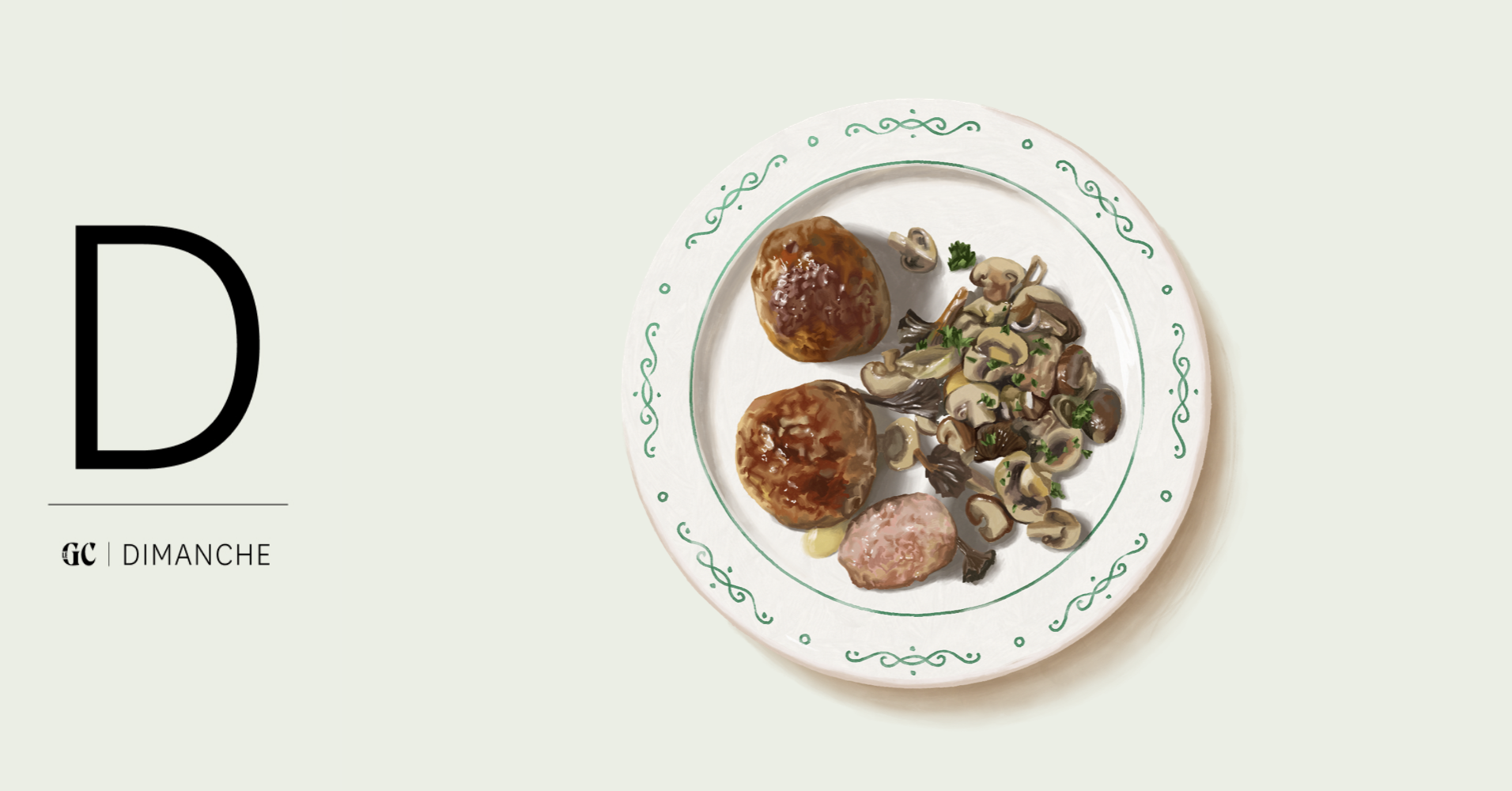
Ingredients:
- Pork liver
- Sausage
- Fillets of poultry or feathered game
- Lamb sweetbreads
- Veal kidneys
- One egg
- Juniper berries
- Nutmeg
- Black pepper
Even though modern humanity has reduced the demands of the gods—there are no longer the “hecatombs” that Hiero II left as an imposing altar in Syracuse— divine foods still exist. And yet we savor them sometimes without even realizing that these edibles were meant to connect us with beings of higher order. They allowed this especially when consumed during the festivals dedicated to them.
Culinary preparations preserve a precise ritual, almost a liturgy. From one generation to the next, recipes are handed down like a Book of Hours. This symbolic dimension is fundamental. The idea of reducing food to a mere answer to the need to eat—especially on Sundays, holidays, and family meals—is a profanation that, ex negativo, confirms the sacred character of the feast.
What, then, are the most precious foods of the gods that have endured to reach us? Mythology confirms that Amalthea, the nursling goddess of the gods, offers them Nectar and Ambrosia. The former is a beverage that, according to tradition and Homer, blends wine with honey. The latter is both a food and an unguent, akin to “a divine oil, fragrant as a rose.” Some scholars think ambrosia was a liquefiable fat (marrow and fat), with olive oil as its plant-based analogue.
We aren’t far from the truth: as Rabelais—introducing us to his journey of wisdom in “haute gresse” (high grease)—invites us to contemplate the essential value of “mouelle”: “Nothing but a little marrow. True enough that this little, more is delicious than the abundance of all others, for marrow is a food prepared by nature in perfection, as Galen notes. … Following that example, it is fitting to savor and esteem these great books of haute gresse, light to the sense, and bold in their encounter.” (Gargantua, Prologue by the author, 1535).
Among the “cannibals,” but not only, the act of penetrating into bones and viscera surely signals an intimacy that nourishes and absorbs the strength and very essence of the animal or person from whom one takes. We can think, for instance, of the rite of “eating the heart” found in medieval legend—Guilhem de Cabestany—or in Boccaccio’s Decameron (IV, 9). Fortunately, our marrow bones do not depart from this tradition; and Guérande salt is enough to give them the right flavor.
Sublime or tragic, these foods that verge on the divine are not the ordinary province of common man. I therefore turn toward the gods who content themselves with the omentum: this fold of the peritoneum binds the viscera together and contains blood vessels and adipose tissue—in other words, light nets of fat. This omentum, once burned to honor the gods, now envelops our crepinettes to shape them, protect them, and enrich their flavor. It is with this dish, characteristic of France, western Switzerland, and Piedmont, that Saint Martin’s Day is celebrated.
The Recipe
The preparation gathers what remains of a grand feast: the crumbs of a farewell. Thus one mixes finely chopped pork liver, sausage, fillets of poultry or feathered game (partridge, woodcock, pigeon), lamb sweetbreads, and veal kidneys. Naturally, to season all these flavors, one adds egg yolk, juniper berries, nutmeg, and black pepper. Personally, I also add a little marrow. All of it is well wrapped in the omentum.

My friend Giorgio Tesino Nasini, a renowned chef and learned interpreter of Piedmontese tradition—by the way, I commend his wonderful book Il buongustaio piemontese—notes that the crepinette is called “grive” locally (in the dialect). This corresponds to the Italian allodola (larks). As if, once more, we seek names and dishes to ascend toward Heaven, and to approach the gods—at least on Sundays.
It is indeed a quest to “seek the soul” through the delicate arts of cookery. In Italian, the thymus gland is called animelle (“tender souls”), one of the most exquisite and smallest offal.
One can also evoke the Ba: among the ancient Egyptians, a Ba soul—with the form of a human-headed bird—flying from a corpse—accompanied the gods as they journeys aboard celestial barges.
Crepinette, crepinette, drenched in a good Nebbiolo of the Langhe, lead us to the celestial boats of our gods and dreams…