
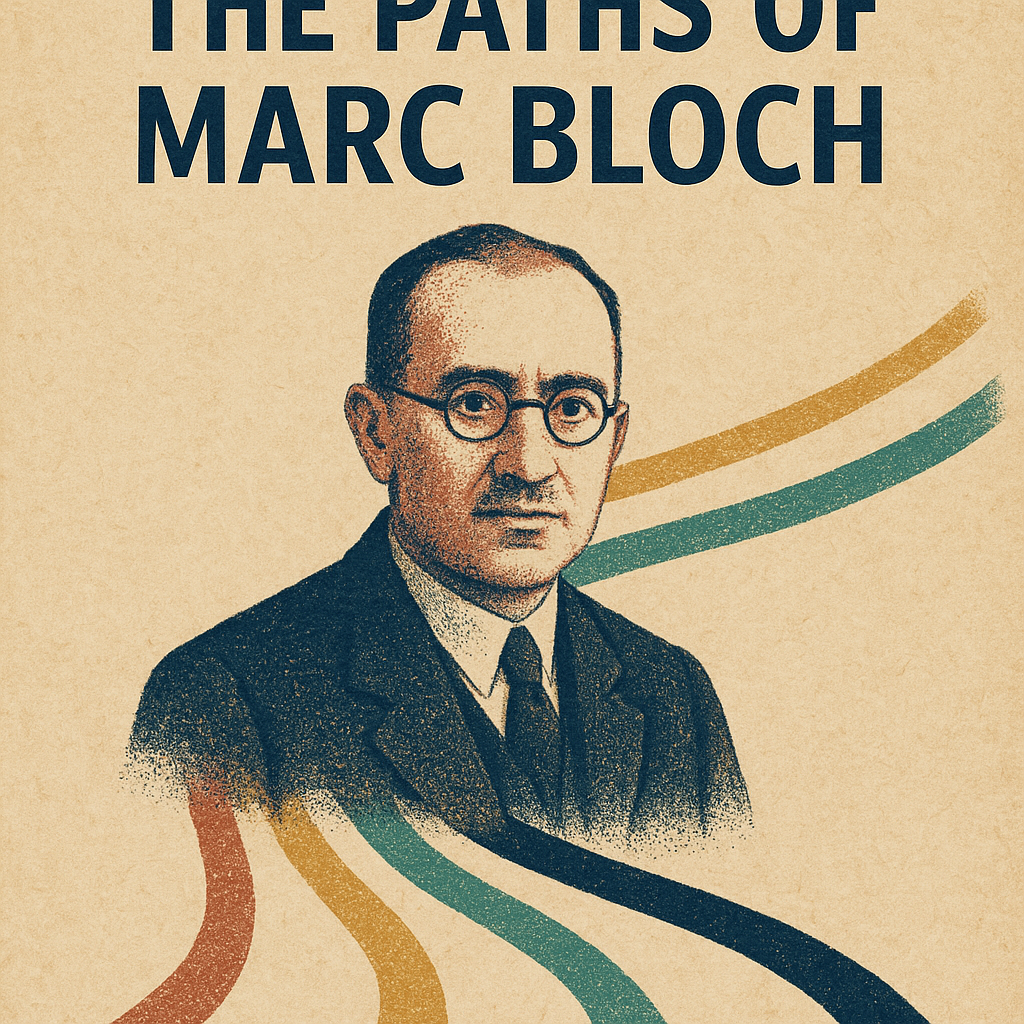
Historian, citizen, resistance fighter: the figure of Marc Bloch invites us to think about the public role of the social sciences. On the occasion of his pantheonization, Patrick Boucheron sheds light on a life devoted to historical research in the service of society, where scholarly rigor merges with the demand for freedom.
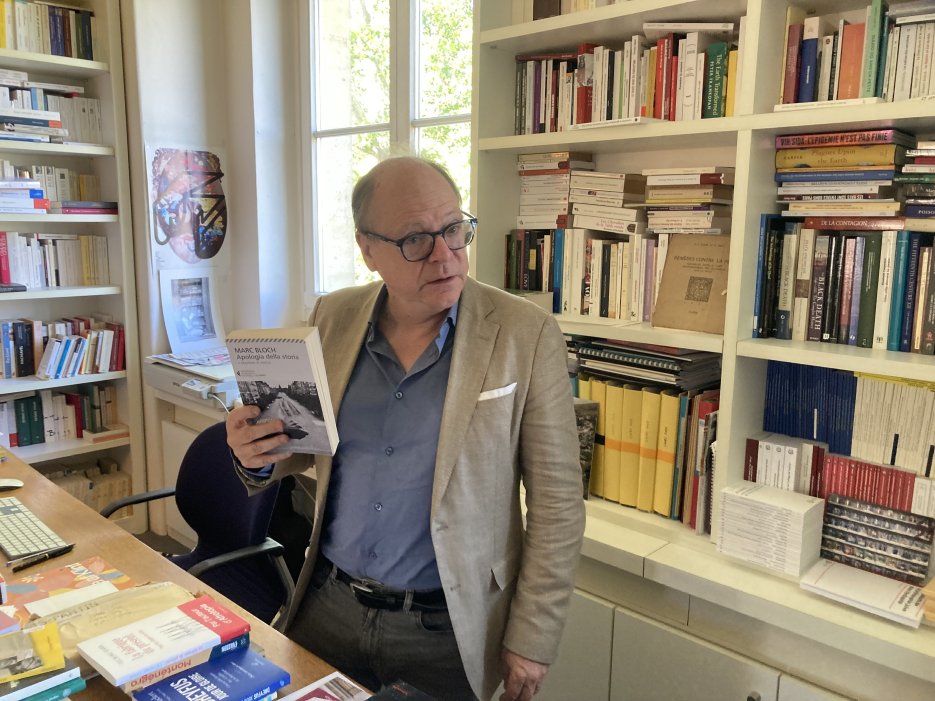
Patrick Boucheron is a historian and professor at the Collège de France, where he has held the “chair” since 2015. History of powers in Western Europe (XIIIe–XVIe centuries) “. A specialist in medieval Italy and the writing of history, he is notably the author of Leonardo and Machiavelli (Verdier, 2008), Ward off fear (Seuil, 2013) and The Trace and the Aura (Threshold, 2019). He led theWorld History of France (Seuil), an enriched edition of which appeared in 2025, and recently published Black Death (Threshold, 2026). He also produces the series When history makes datesavailable on Arte.tv, as well as the show Let’s go see !broadcast every Sunday on France Culture and in podcast.
Shooting & editing: A. Suhamy.
Beyond The Strange Defeat
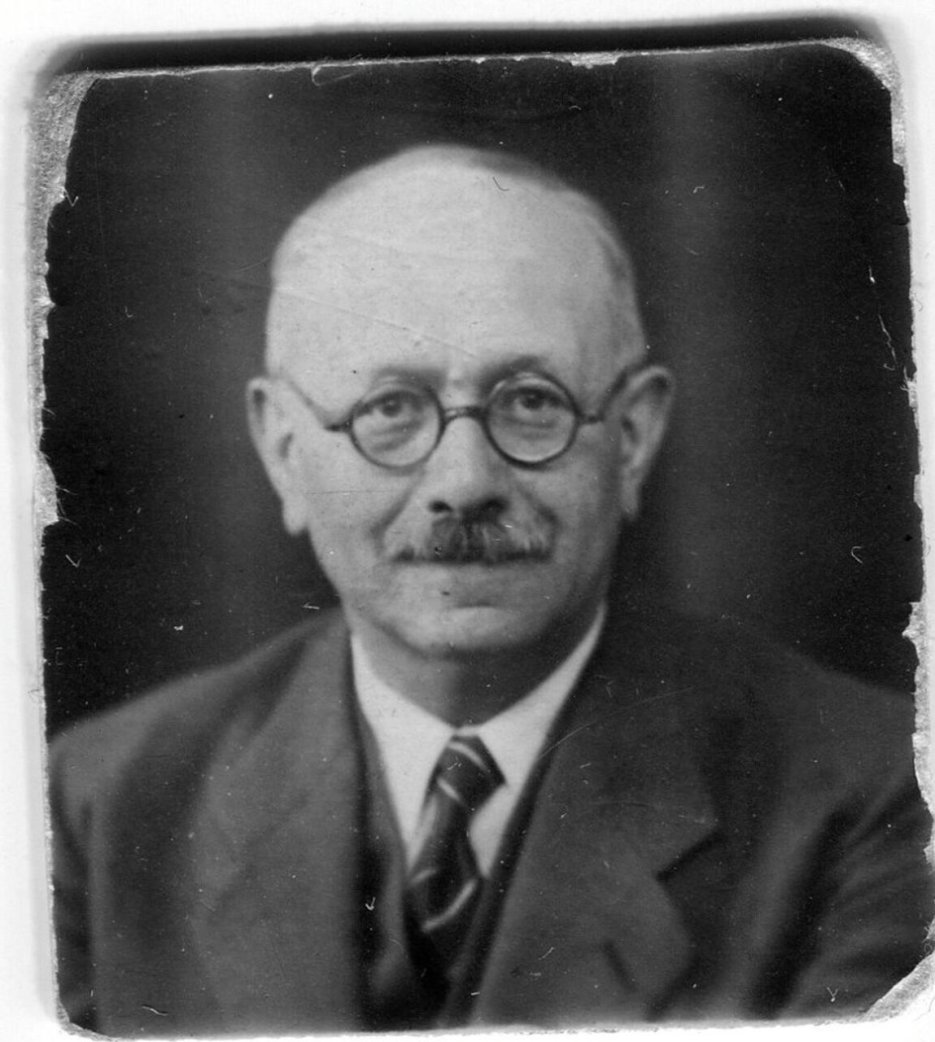
If Marc Bloch is not the most famous personality to enter the Pantheon, Patrick Boucheron recalls the reasons for the tribute desired by the President of the Republic. “ We talk, and this is normal, a lot about his courage – the physical courage of the fighter, and also the moral courage of the witness. » Marc Bloch owes this honor, mainly, to The Strange Defeattestimony on the debacle of 1940, published posthumously after the conflict and reappeared in 1990. However, “ The Strange defeat has belatedly become a sort of mirror book for French elites who like nothing more than to lament their own inadequacies. »
Yet, “ there is something else to offer in the figure of Marc Bloch than this somewhat desperate vision », Believes the professor at the Collège de France. “ Only in France do we read so assiduously, so intensely The Strange Defeat. Everywhere else, if we say Marc Bloch, he is not the witness, but the historian, he is the author of theApology for the historianof the Miracle kingsof Feudal Society. » Pantheonization is, in this way, an opportunity to highlight the entire body of work and all facets of Marc Bloch’s work, and to share it with the general public.
“ The uplifting force of knowledge »
Known and celebrated as a prudent man, Marc Bloch advocates a “ deadpan science » which contrasts with the temperament of his friend Lucien Febvre. Behind the figure of the scholar, the good father and the patriot, there is however also an intellectual whose “ quiet power “. If the individual retains an elusive part – behind the hint of a smile that Peter Schöttler evokes in his biography -, the commitment of Marc Bloch in uniform, renewed in 1940 when his age and his family situation exempted him from it, and in the Resistance in 1943, is constant.
“ If there is something that is absolutely fundamental in all the work and life of Marc Bloch », insists the author of Black Death« it’s because he believes in young people. He believes in transmission, he believes in the uplifting power of knowledge. » Heir to the modern Enlightenment project, Bloch joins several figures in the Pantheon.
“ Serve without enslaving »
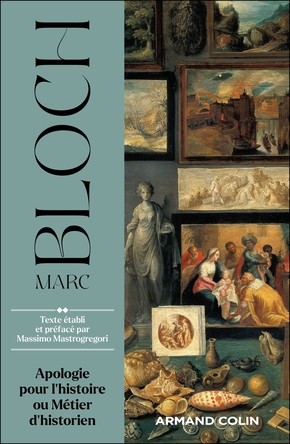
For Patrick Boucheron, you have to read Marc Bloch “ moving », and take into account its pages on forecasting, recently restored in the critical edition of theApology for history by Massimo Mastrogregori (Armand Colin, 2026). If Bloch “ still considers himself the obedient son of the historical method “, he wishes at the same time “ found history as a science, not simply as a scholarly discipline, but in the social sciences “. Even more, Bloch believes in a history serving society: he whose patriotism is anchored in republican sentiment thinks that “ history must serve emancipation “.
The work of Marc Bloch reveals the concern to devote his research to a small number of subjects, and first of all one of them, since his thesis, Kings and serfsin 1920: “ for Marc Bloch, what matters is the question of freedom and emancipation », and Lucien Febvre highlights, from the tribute paid on June 26, 1945 in the great amphitheater of the Sorbonne, how much Marc Bloch worked to not let himself be enslaved. For him, summarizes Patrick Boucheron, “ history would have as its motto something like “we must serve without enslaving ourselves”. Also he does not correspond to what one could call a committed intellectual or even a public historian. His commitment is in his work as a historian. »
Reading Bloch with Carlo Ginzburg
Died on June 16, the date of Bloch’s assassination, Carlo Ginzburg (1939-2026) is among those who most consistently claimed the legacy of Marc Bloch. Patrick Boucheron knew the author of Cheese and Worms And The Witches’ Sabbath. “ He has never stopped saying, and particularly in recent months, how much for him it all started with Marc Bloch. » Reading Marc Bloch with Carlo Ginzburg is also reconnecting with “ the problem story » as Bloch conceived it, and rediscover the specificities of a work which, while prefiguring historical anthropology, remains anchored in the positivism and rationalism of its time.
It was at the age of 25, in 1965, that Carlo Ginzburg published his first text on Marc Bloch, “ with Marc Bloch, from Marc Bloch “. And in the life and work of the Italian historian, the author of Leonardo and Machiavelli also hears an appeal to young historians: “ read Marc Bloch, and it will transform you, it will launch you towards paths that you did not suspect ! »