
Directed by Giuliano da Empoli at Gallimard, the new paperback edition of Le Grand Continent’s L’ennemi qui nous désigne is now available. Click here to discover it — if you would like to receive it and support us, consider subscribing to the journal.
The funeral of the Supreme Leader, killed by the United States on February 28, originally planned for March, offers a dying regime the chance to reenergize the momentum of its messianic political theology, worn down by decades of bureaucratic cruelty. Between the martyrdom’s spectacle and the arithmetic of negotiations with Washington, every image broadcast by state television or regime photographers is a clue worth analyzing and critiquing.
1. Mass Mobilization
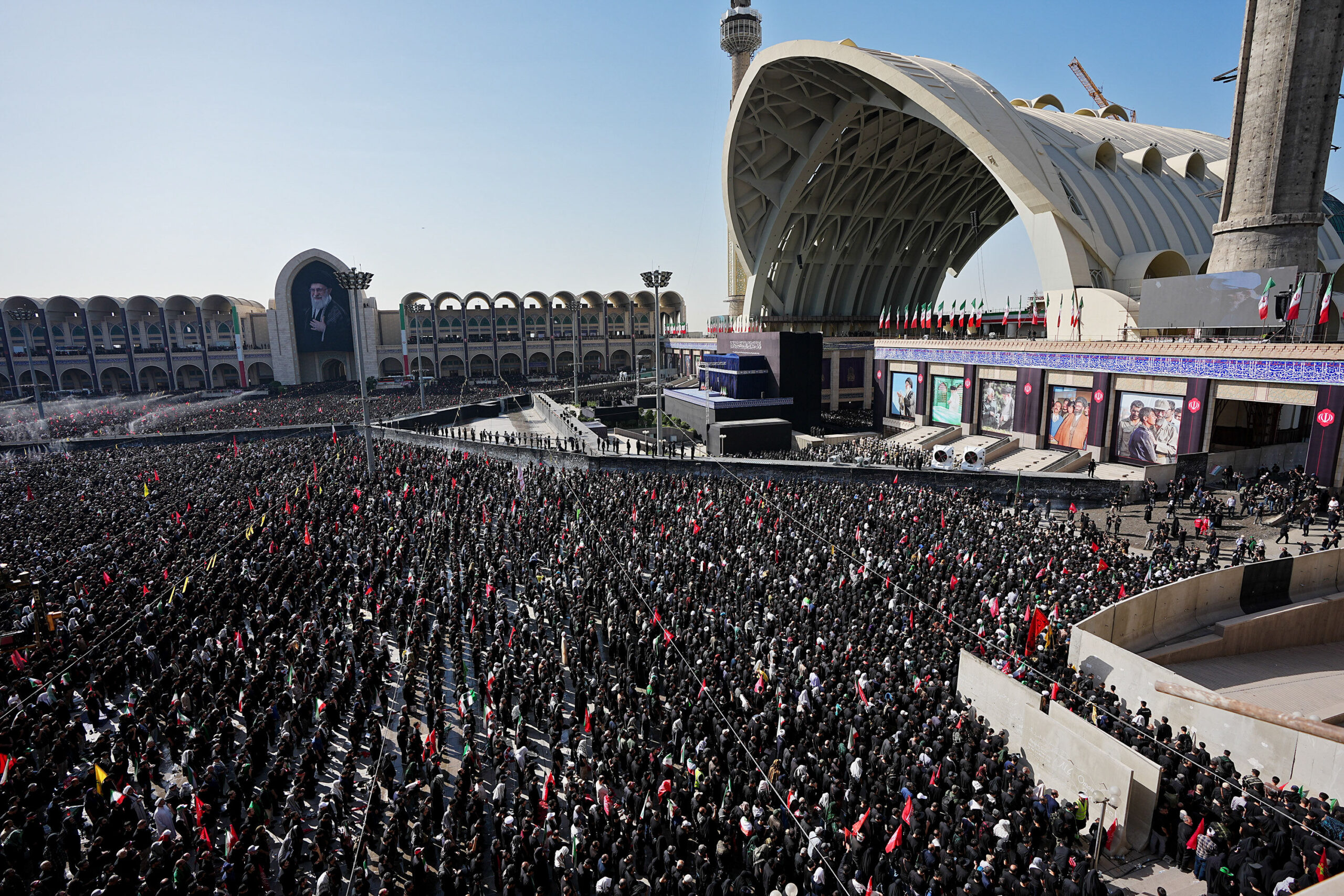
Authorities are hoping for between 15 and 20 million participants just in Tehran for the three days of mourning in the capital, a figure that would surpass Ruhollah Khomeini’s funeral in 1989, recognized by Guinness World Records as having drawn “the largest percentage of the population to attend a funeral,” with about 10.2 million people.
The six days of commemoration unfold across five cities in Iran and Iraq: after the coffin is displayed at the Grand Mosque Mosalla until Sunday evening and the Monday procession through the capital’s streets, the remains will head to Qom on Tuesday, then to Najaf and Karbala in Iraq, before burial on Thursday in Mashhad at the Imam Reza shrine, in the deceased’s native city.
The setup is one of total mobilization.
The regime has proclaimed three holidays, closed shopping centers, and placed businesses into forced rest to guarantee maximum attendance.
Large zones closed to traffic, and more than 400 Red Crescent tents erected to accommodate Iranians coming from all over the country.
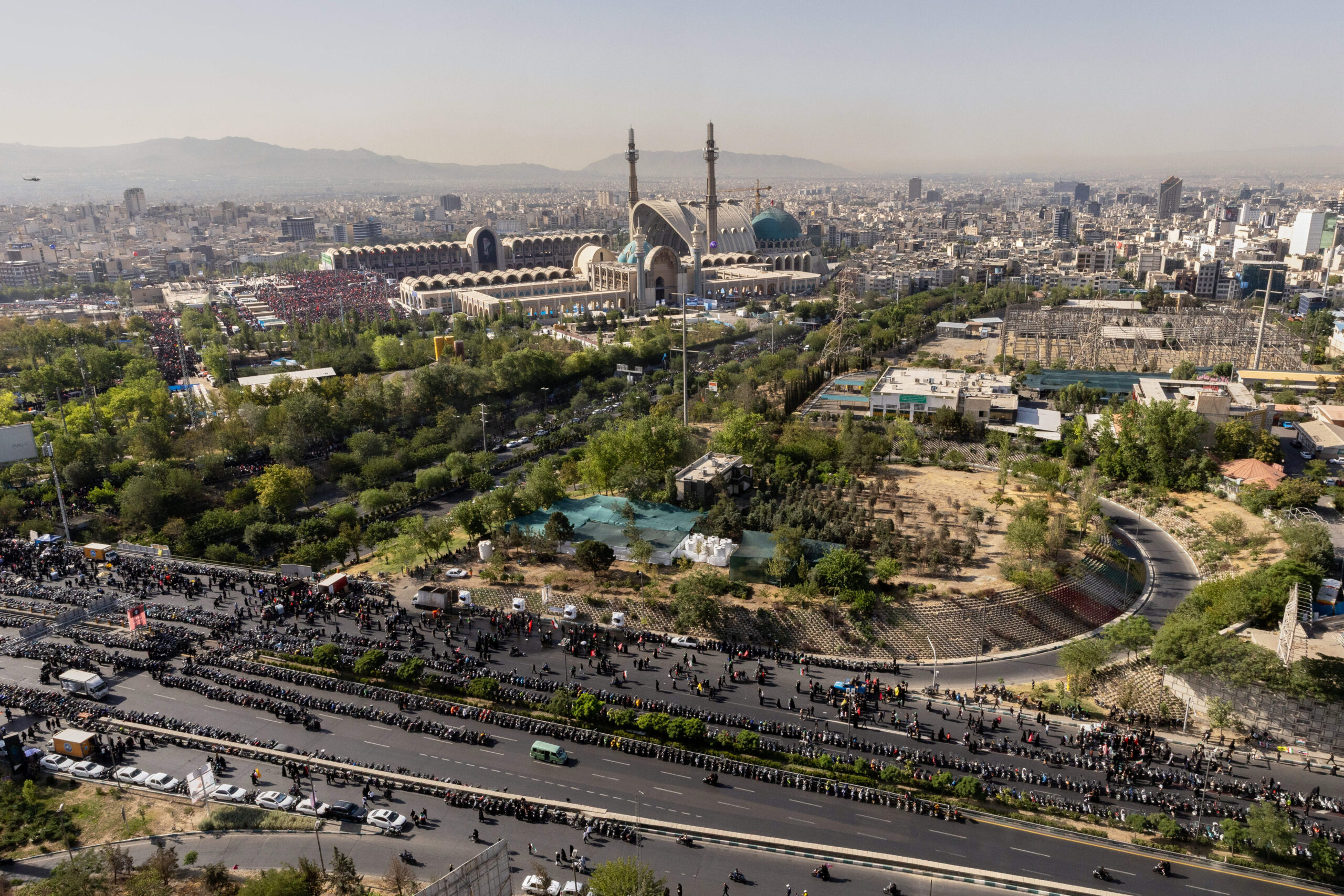
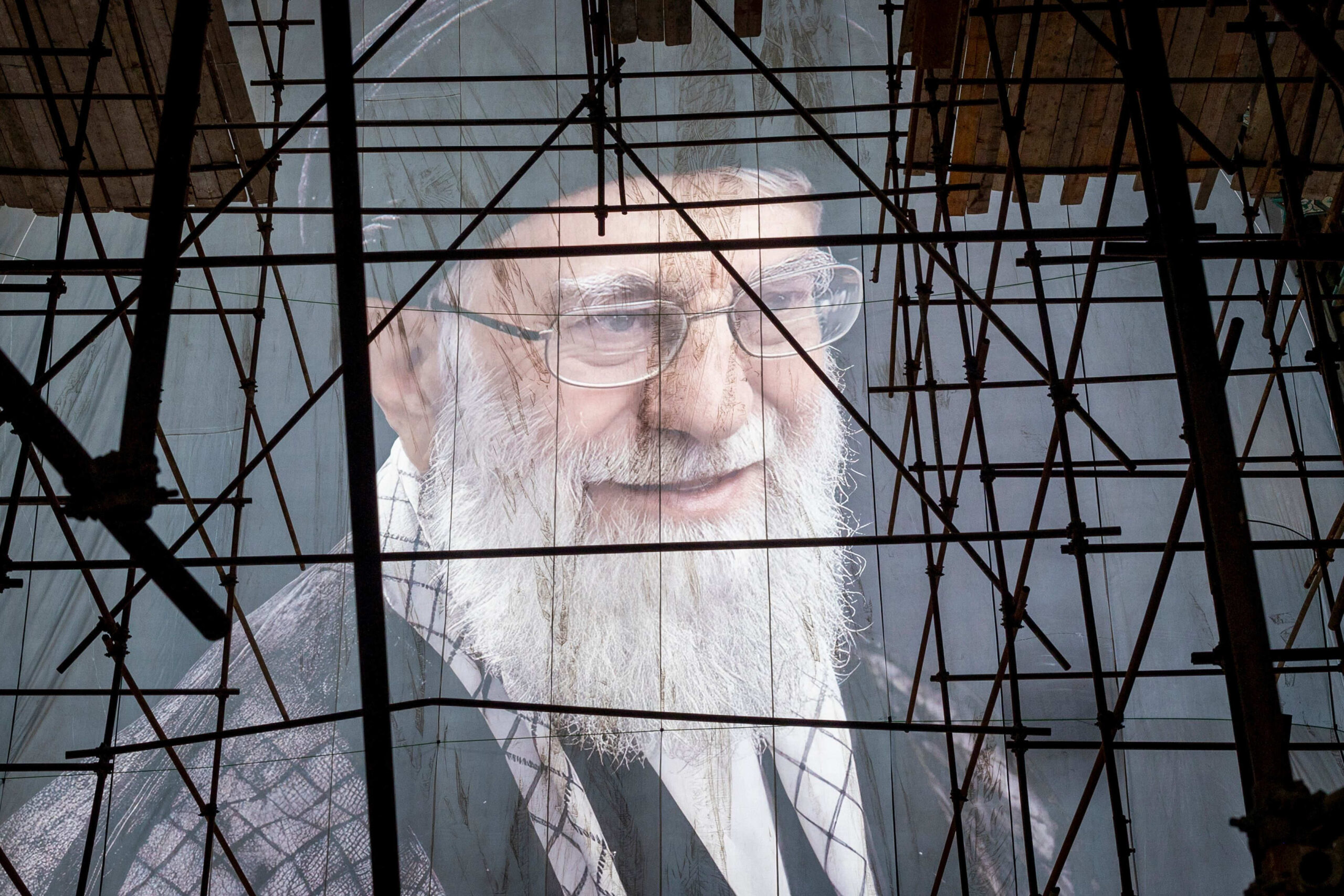
A Tehran’s city hall claimed that 2.2 million worshippers were transported by metro on the first day, while portraits of the Leader were installed in most stations alongside war propaganda images.
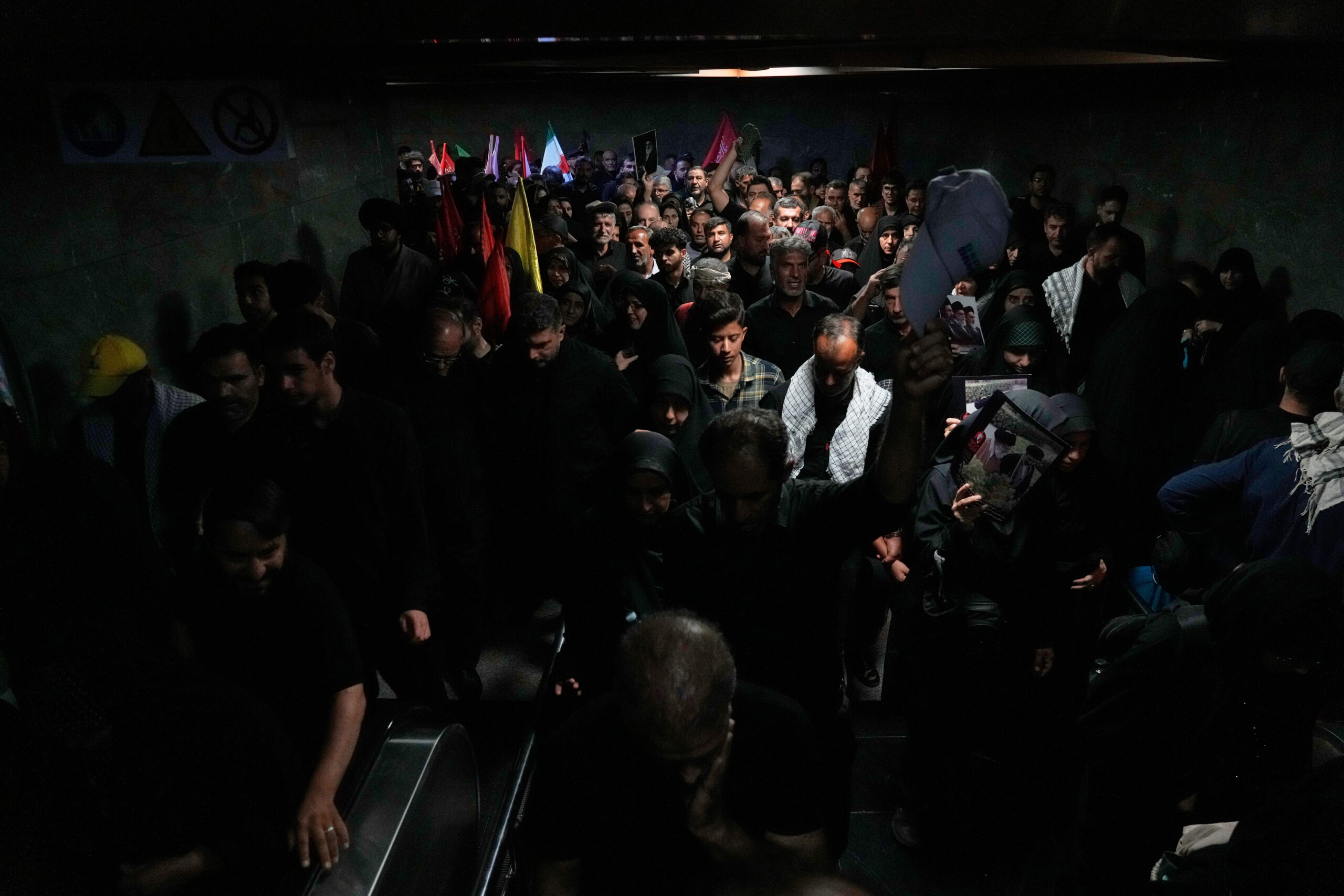
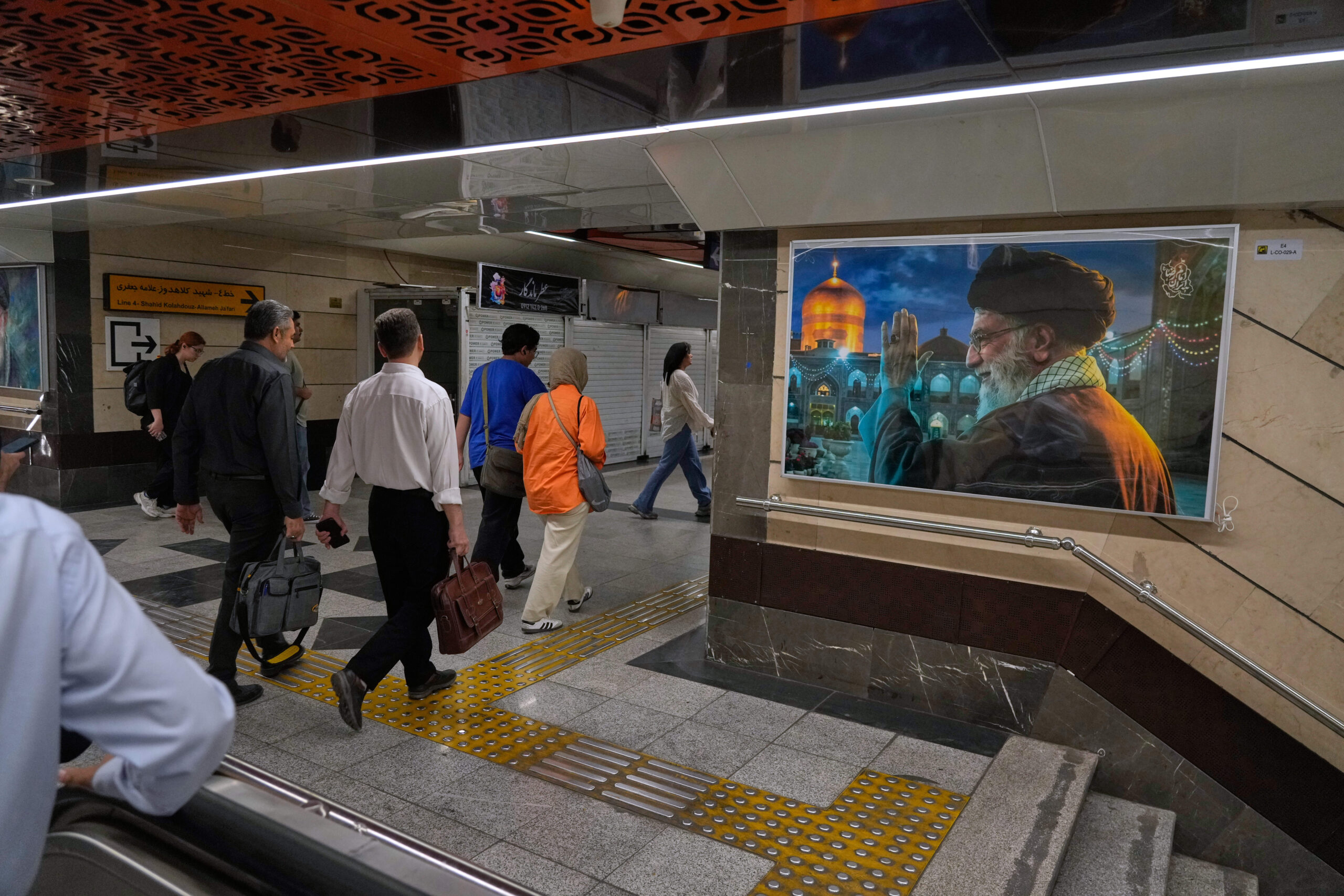
The regime’s aim is first and foremost to stage its resilience in the face of war, inviting Iranian religious dignitaries to participate in the funeral.
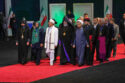
The foreign delegations serve the same narrative.
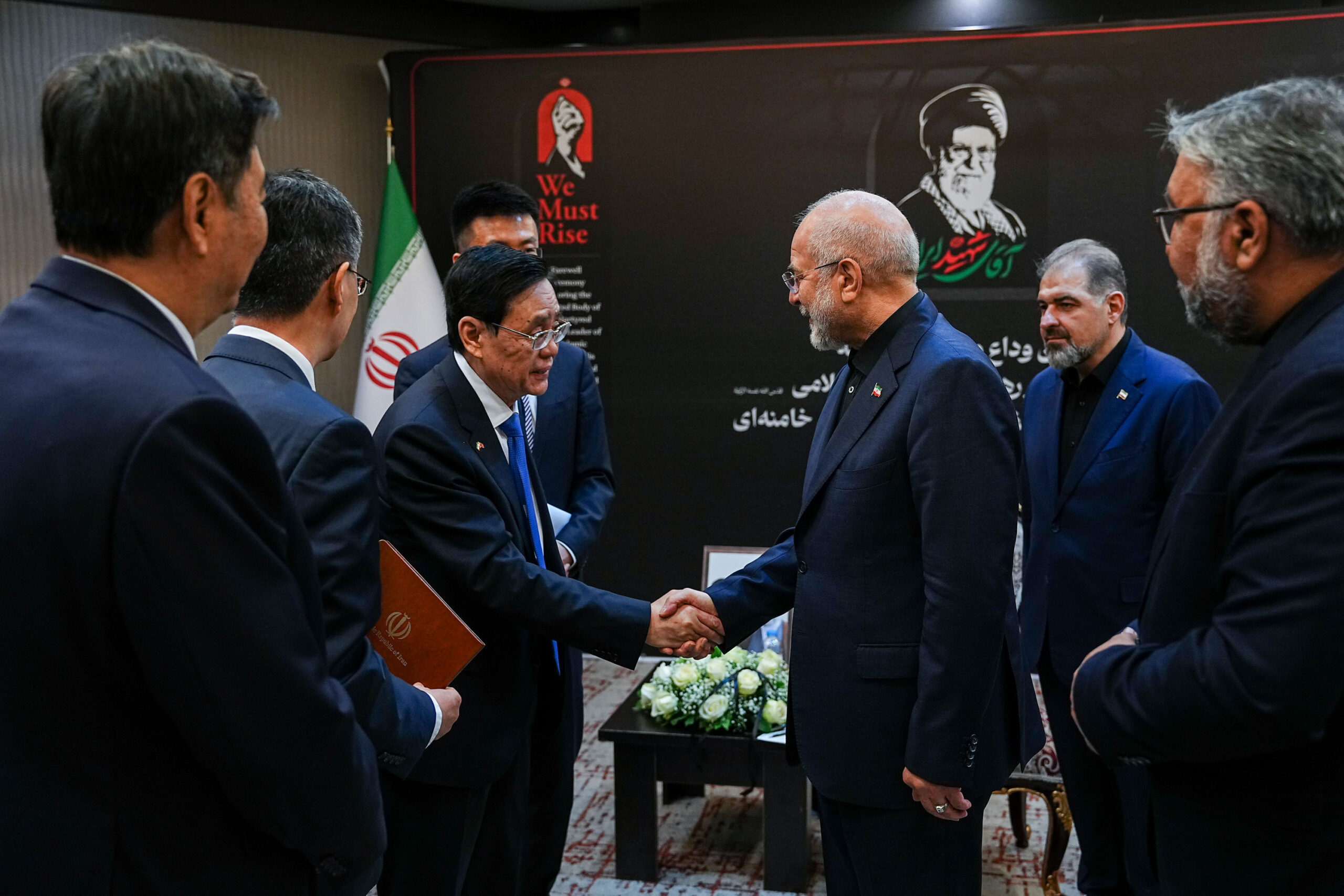
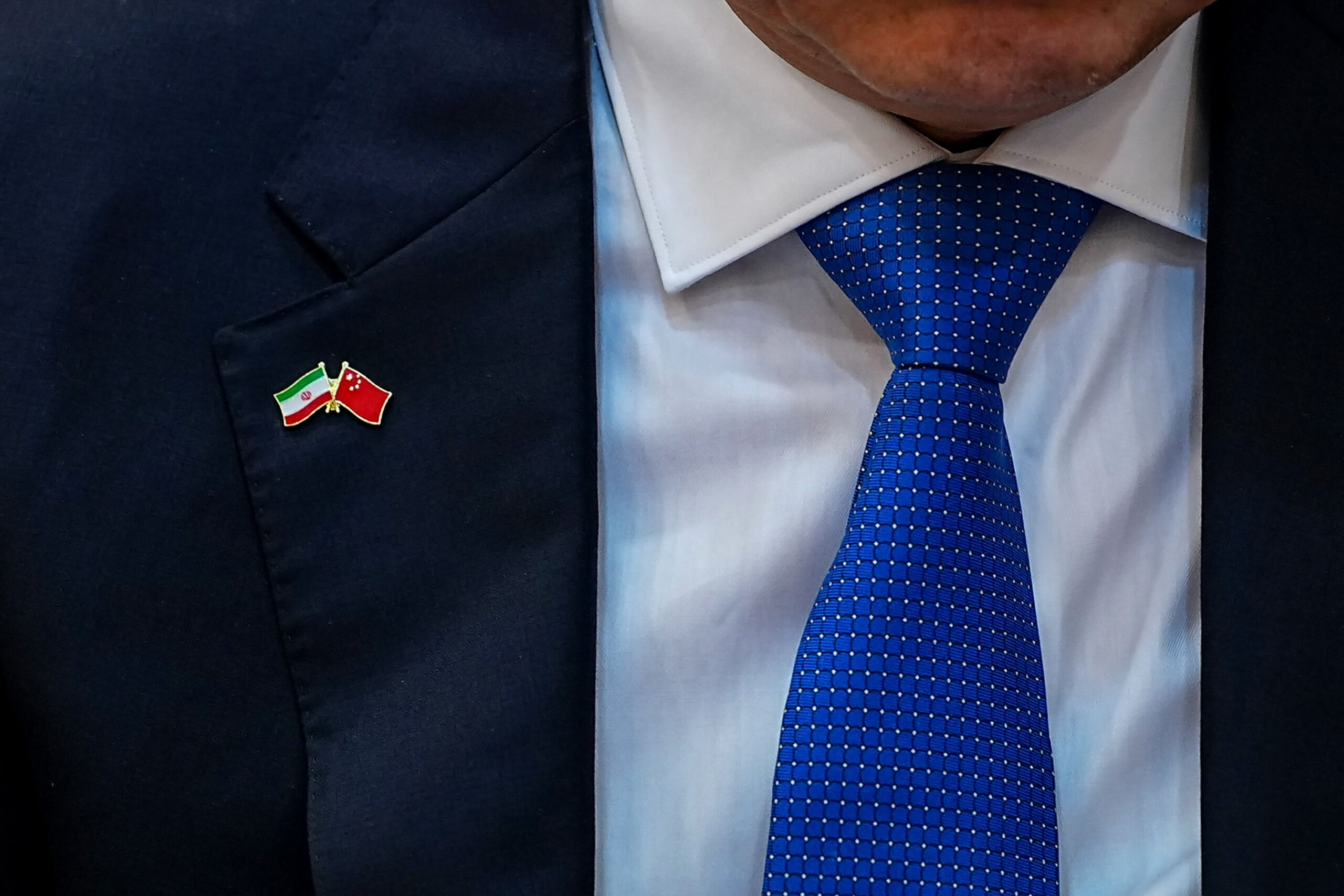
Around thirty countries are represented, including former Russian President Dmitry Medvedev, Pakistani Prime Minister Shehbaz Sharif, and, for China, a senior official of the Parliament, He Wei, as well as leaders from Hamas, including the head of its political bureau Mohammed Darwish, and Hezbollah.
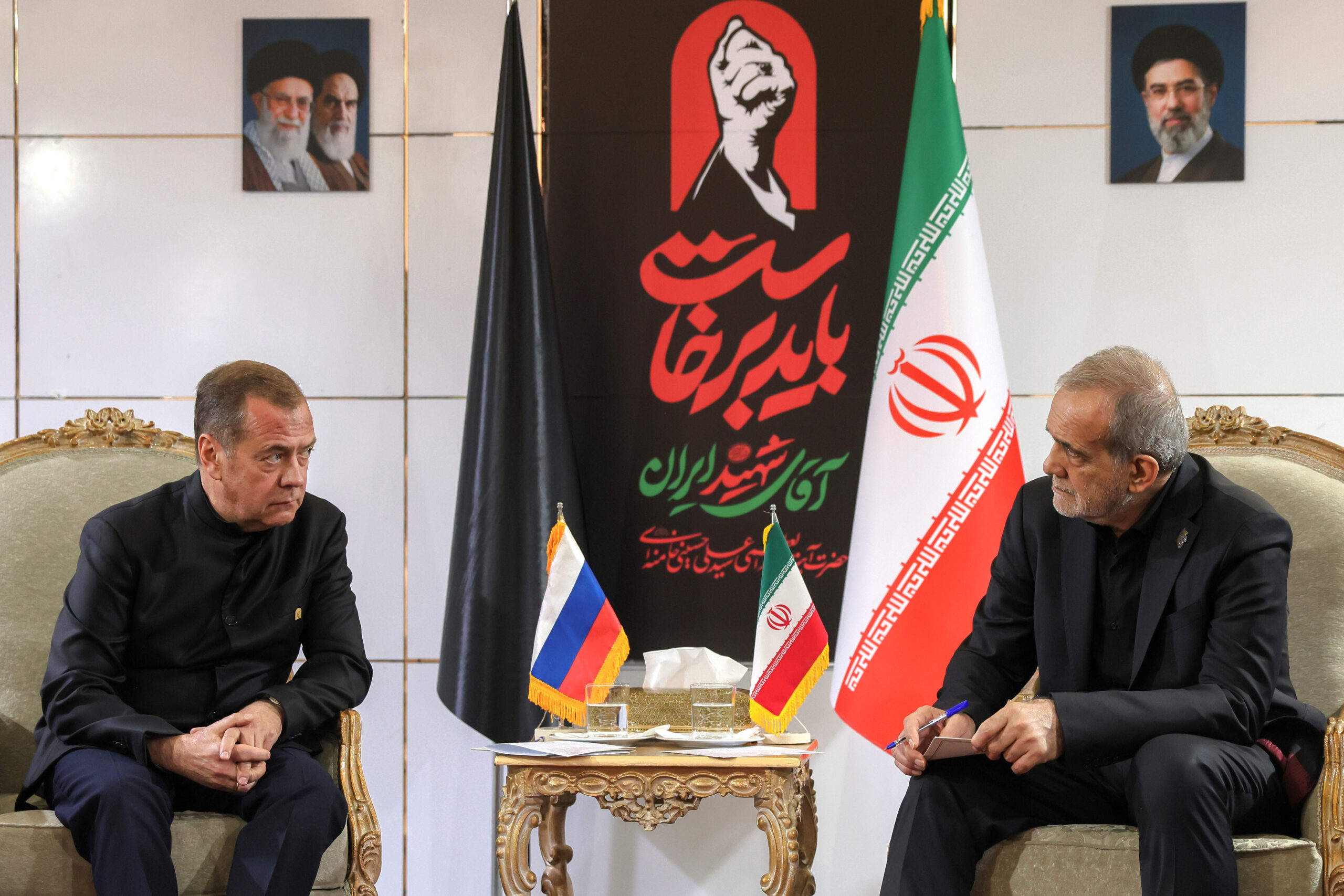
Two absences nevertheless structure the scene.
That of the urban masses harshly repressed by the regime in recent months, and that of the new Leader, Mojtaba Khamenei, 56, officially injured in the February 28 bombardments, who has never appeared in public and only speaks through communiqués attributed to him. He was not present at the grand Sunday prayer, attended by three of Massoud’s sons, Mostafa and Meysam.
2. The Precedent
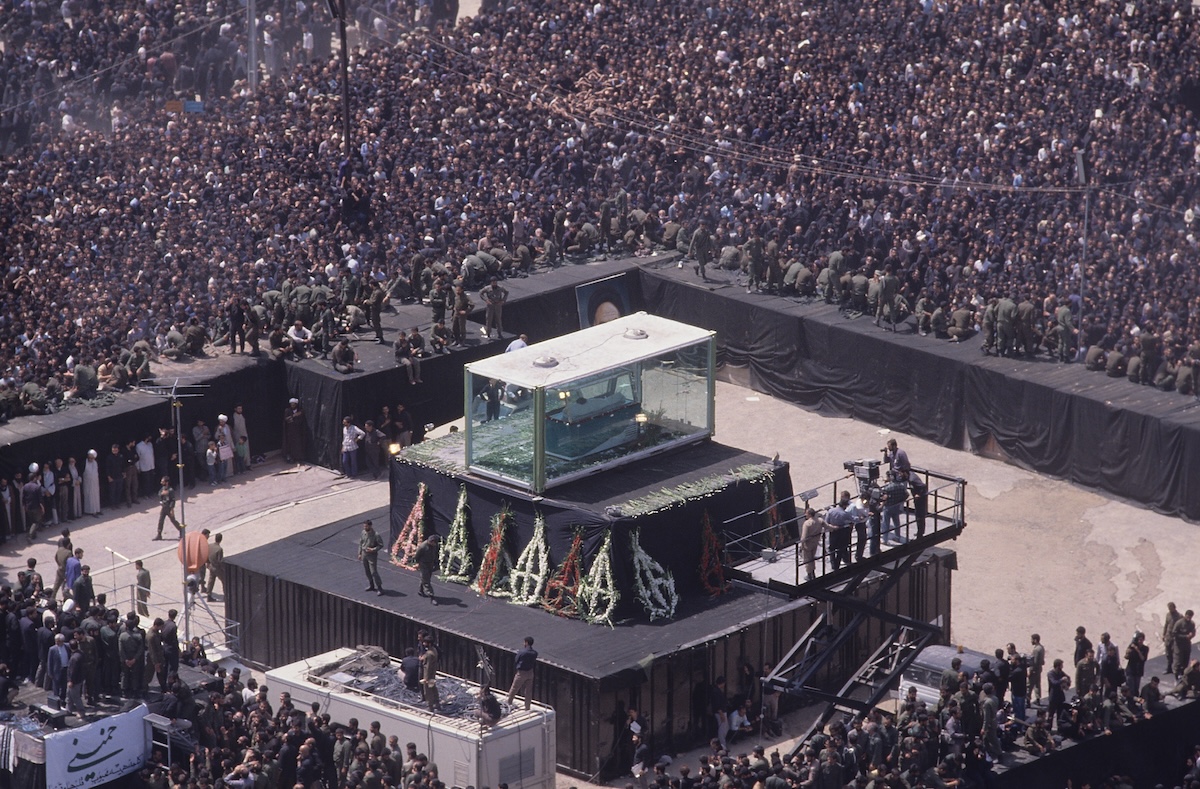
The choreography of July 2026 is set against an original that unfolded in the same places and with a similar grammar in June 1989.
The funeral of Ruhollah Khomeini was one of the largest human concentrations in history and one of the most uncontrollable.
The first procession had to be halted: the crowd, in a frenzy of mourning, toppled the coffin to touch the body and tore the shroud into relics, the corpse falling to the ground before being evacuated by helicopter.
The next day, the body was transported in a sealed metal coffin, under military protection, while fire hoses sprayed the crowd to contain and refresh it.
Reports from the time spoke of deaths and thousands of injuries. Yet this chaos was not a security failure for the regime, but physical proof of the fusion between the Guide and the community of believers, the umma literally becoming one with its imam.
It is this energy that the regime seeks to reassemble today.
3. The Theological-Political Dimension of Martyrdom
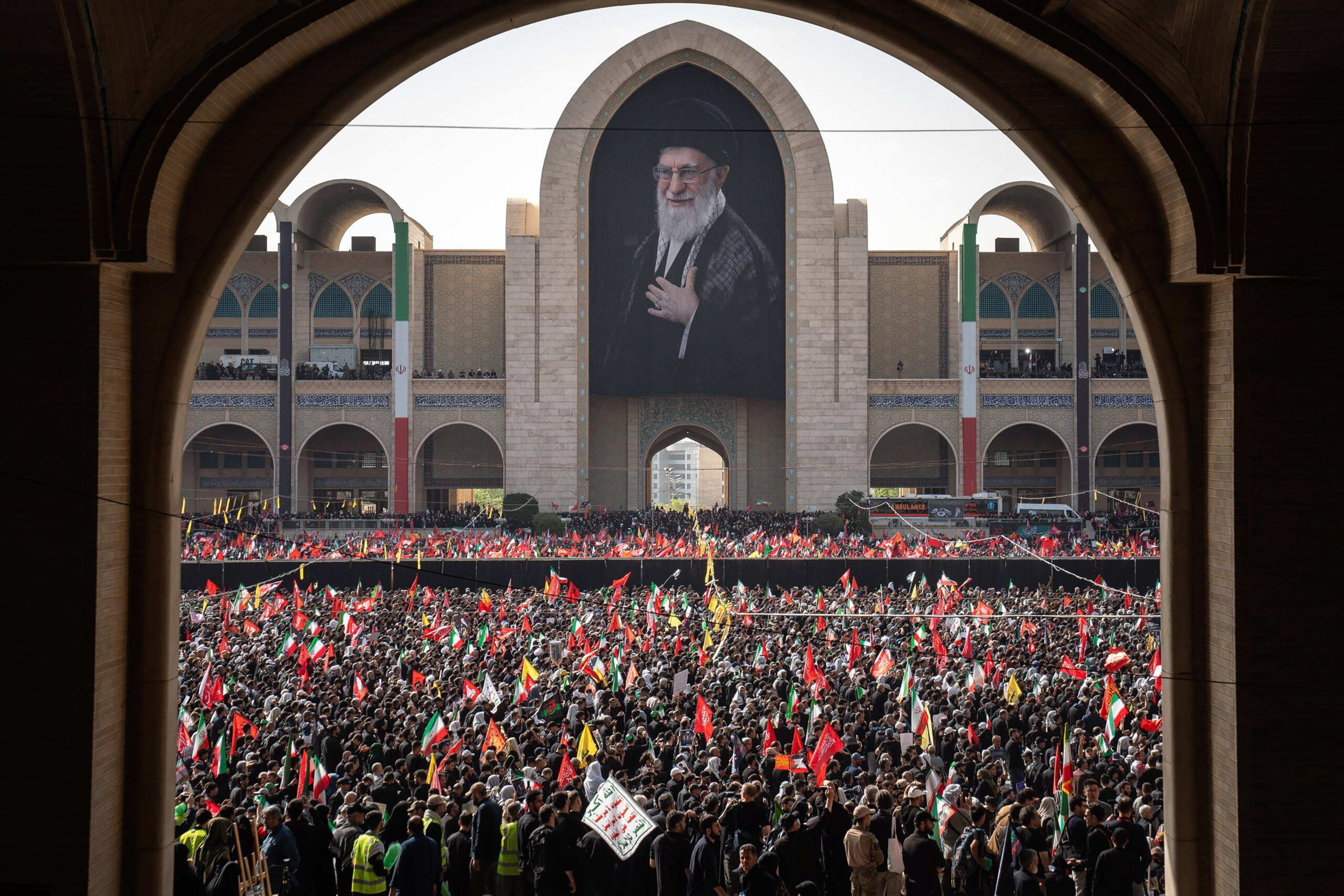
The images from the Mosalla Mosque obey a precise grammar, that of the Karbala paradigm—the martyrdom of Imam Hussein, the Prophet’s grandson, killed in 680—an emotional matrix of political Shiism summarized by the revolutionary slogan: “Every day is Ashura, every land is Karbala.”
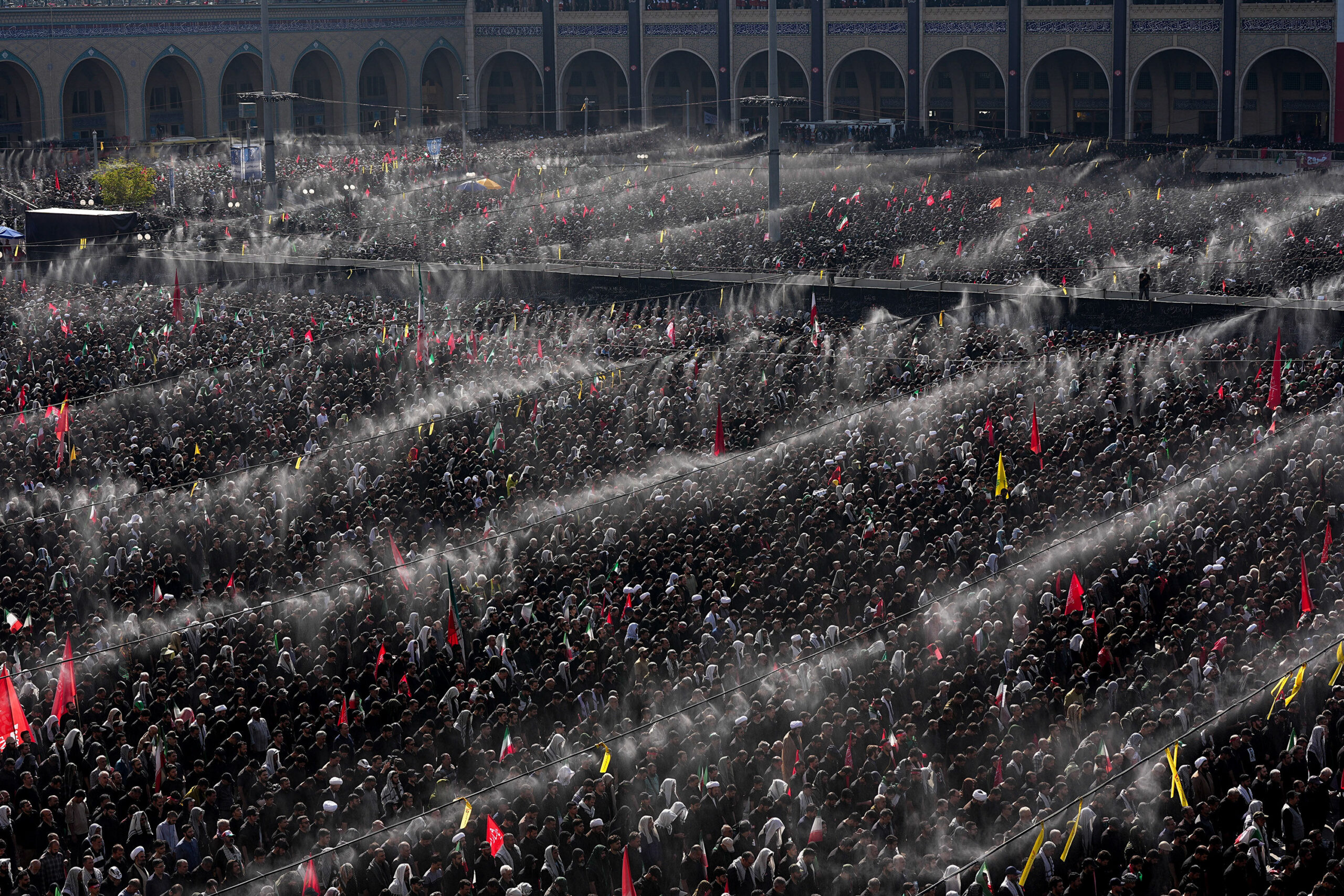
Khamenei killed by America is immediately inscribed in this sequence.
State media broadcast images of the coffin draped in a red flag bearing in white calligraphy “Ya Hussein,” a direct reference to the martyrdom of the Prophet’s grandson.
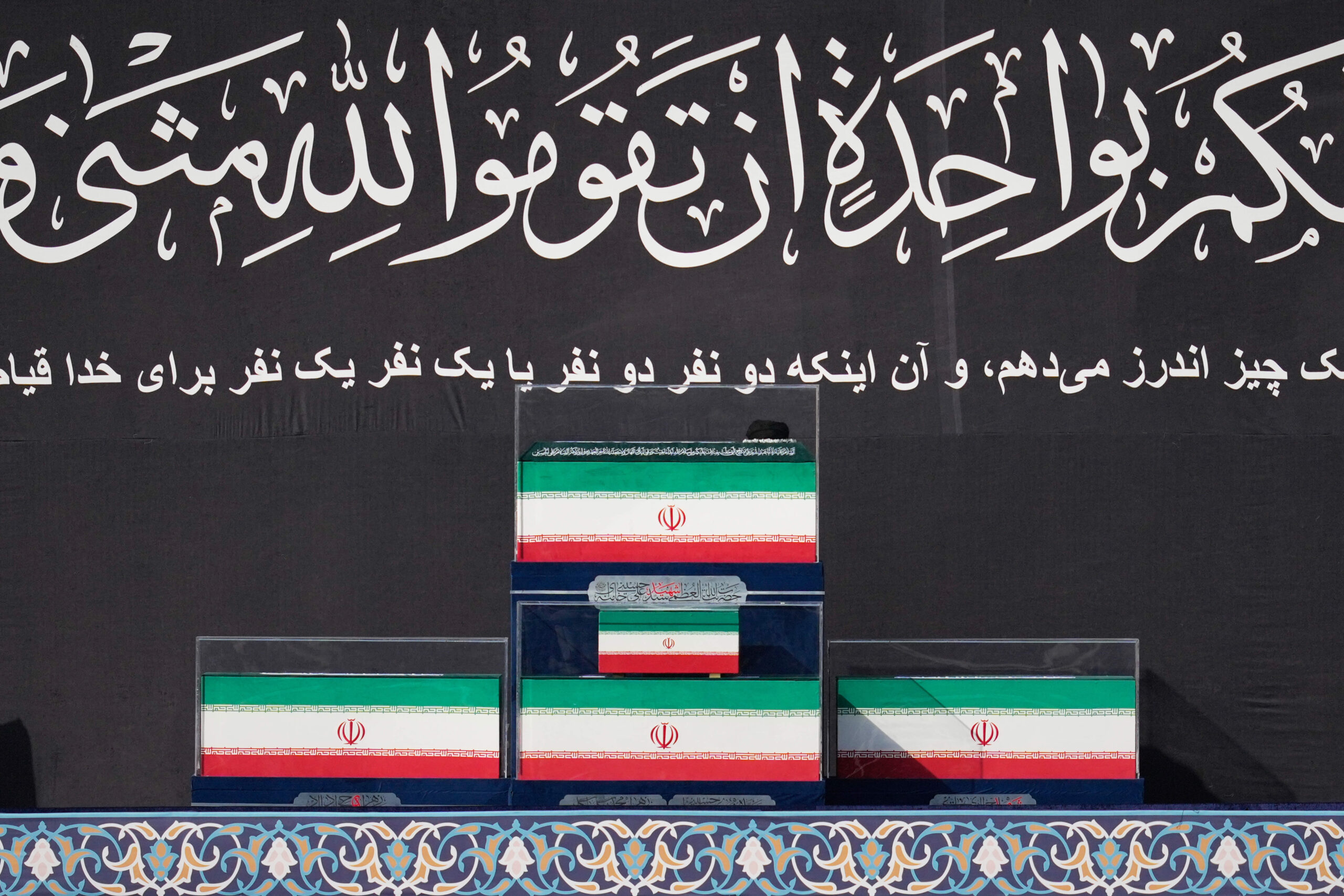
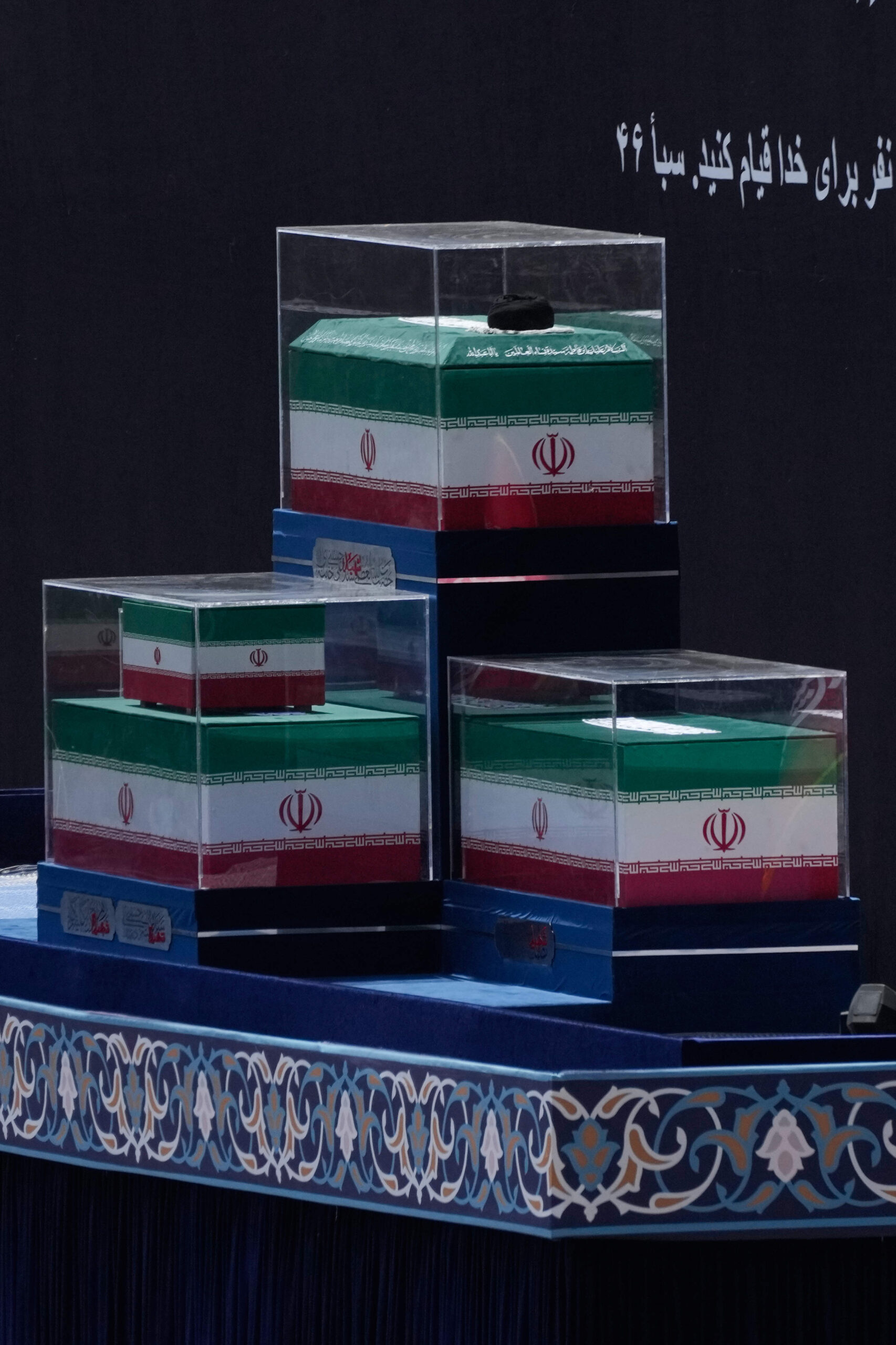
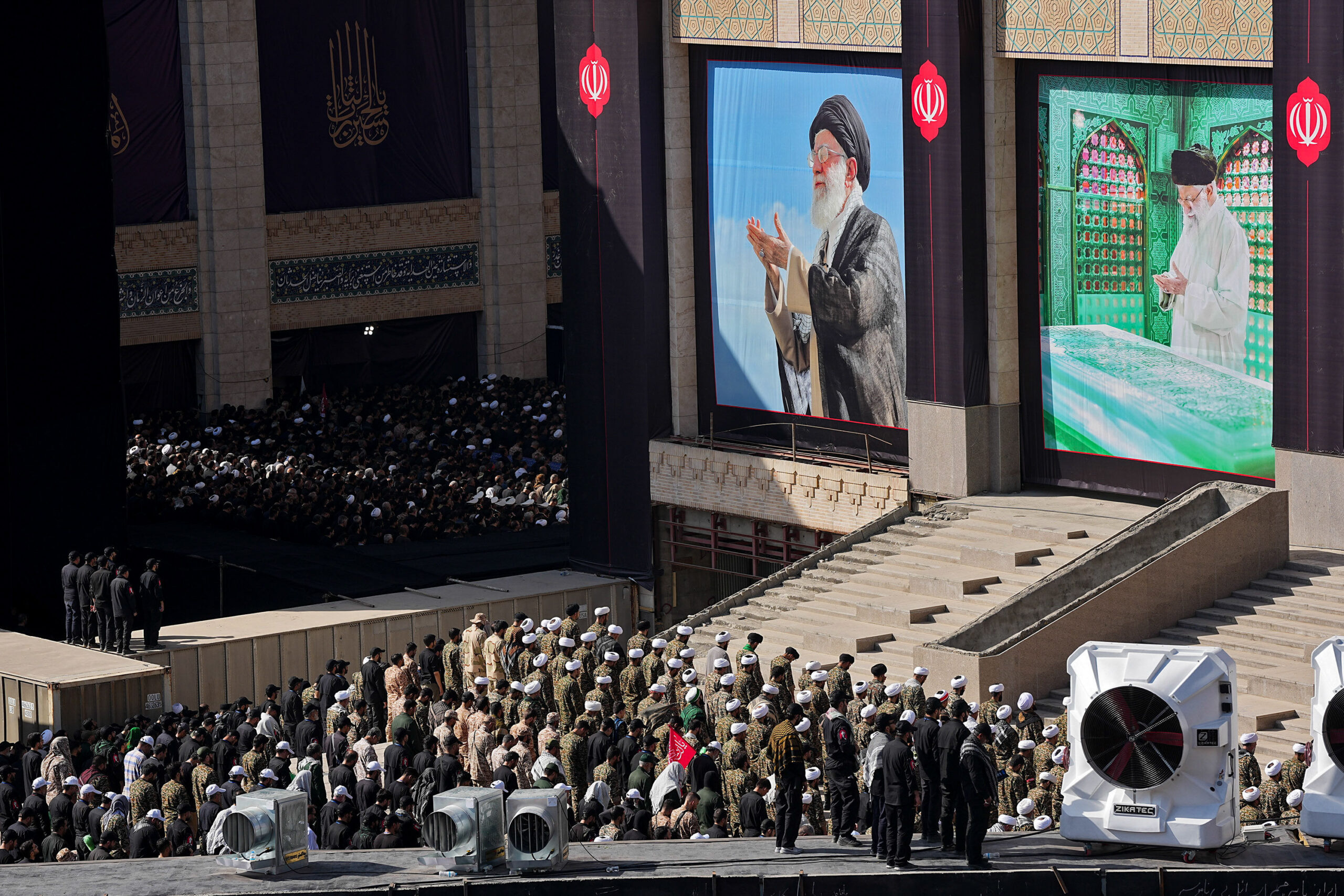
At Mosalla, the coffin of the Leader, wrapped in the Iranian flag and topped with his iconic black turban—signaling the sayyids, the descendants of the Prophet—is displayed alongside those of family members killed with him on February 28. The fact that the coffins are wrapped in the Islamic Republic flags suggests that the funeral sits at once within the theological framework of Shiite martyrdom and within an exaltation of Iranian nationalism.
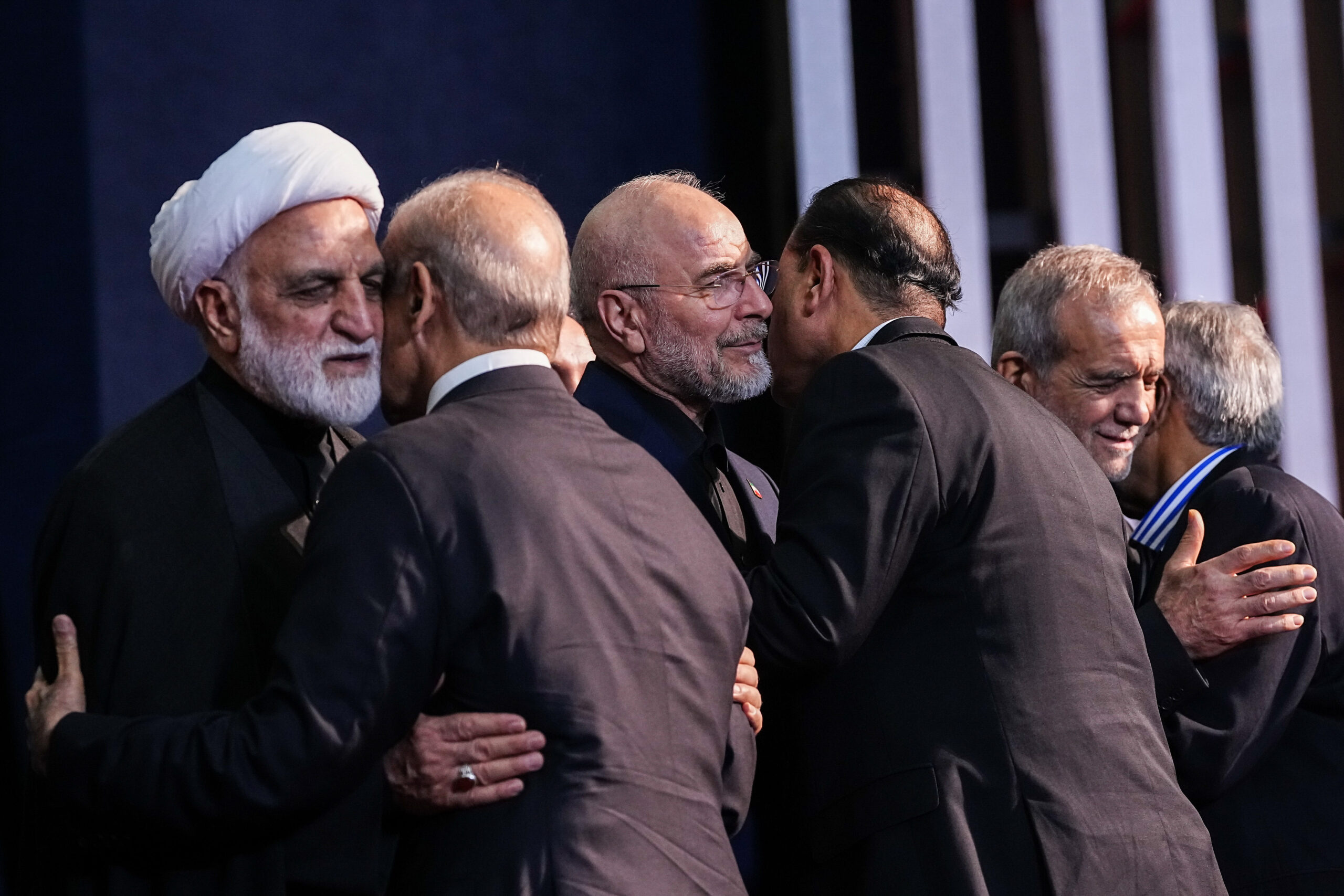
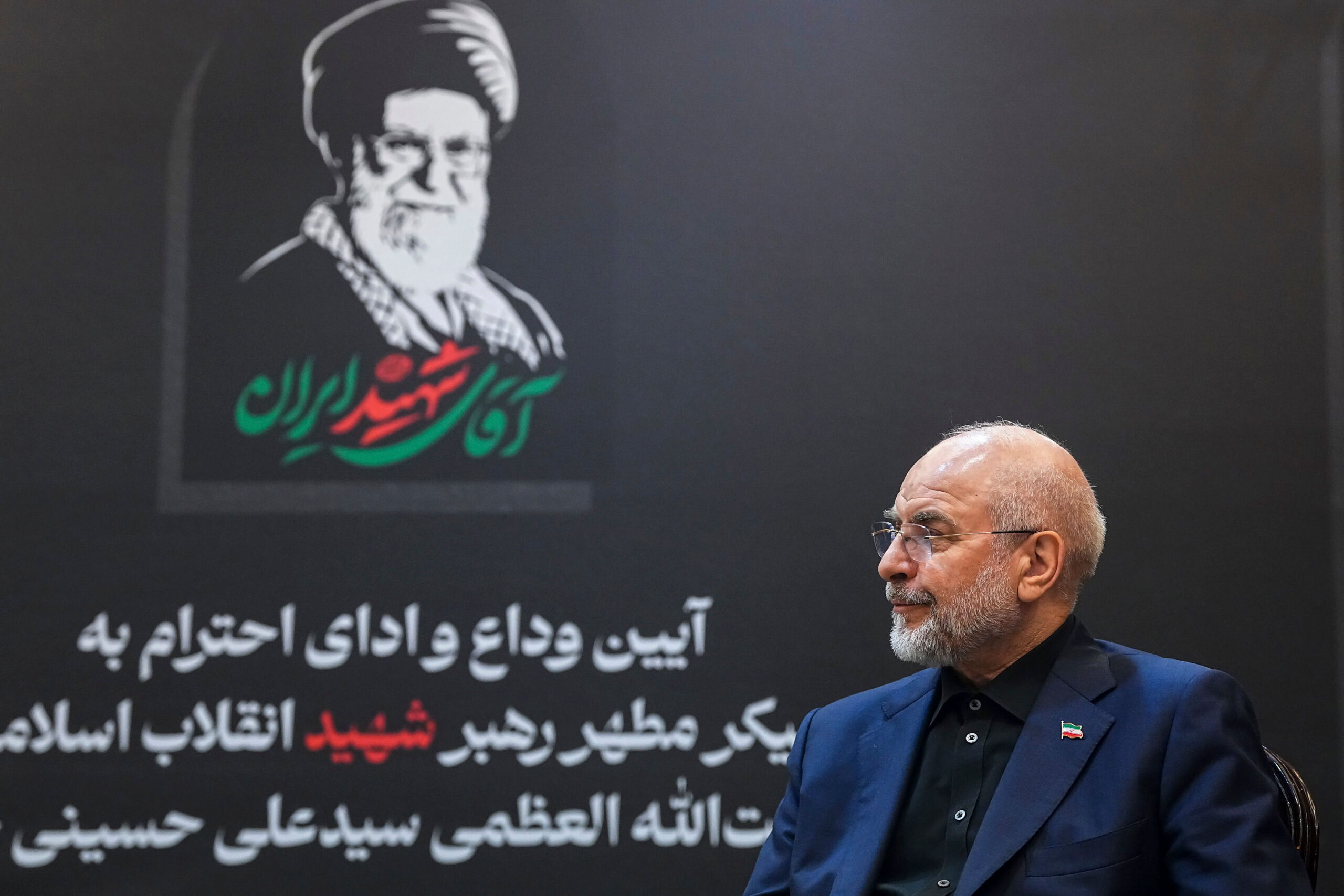
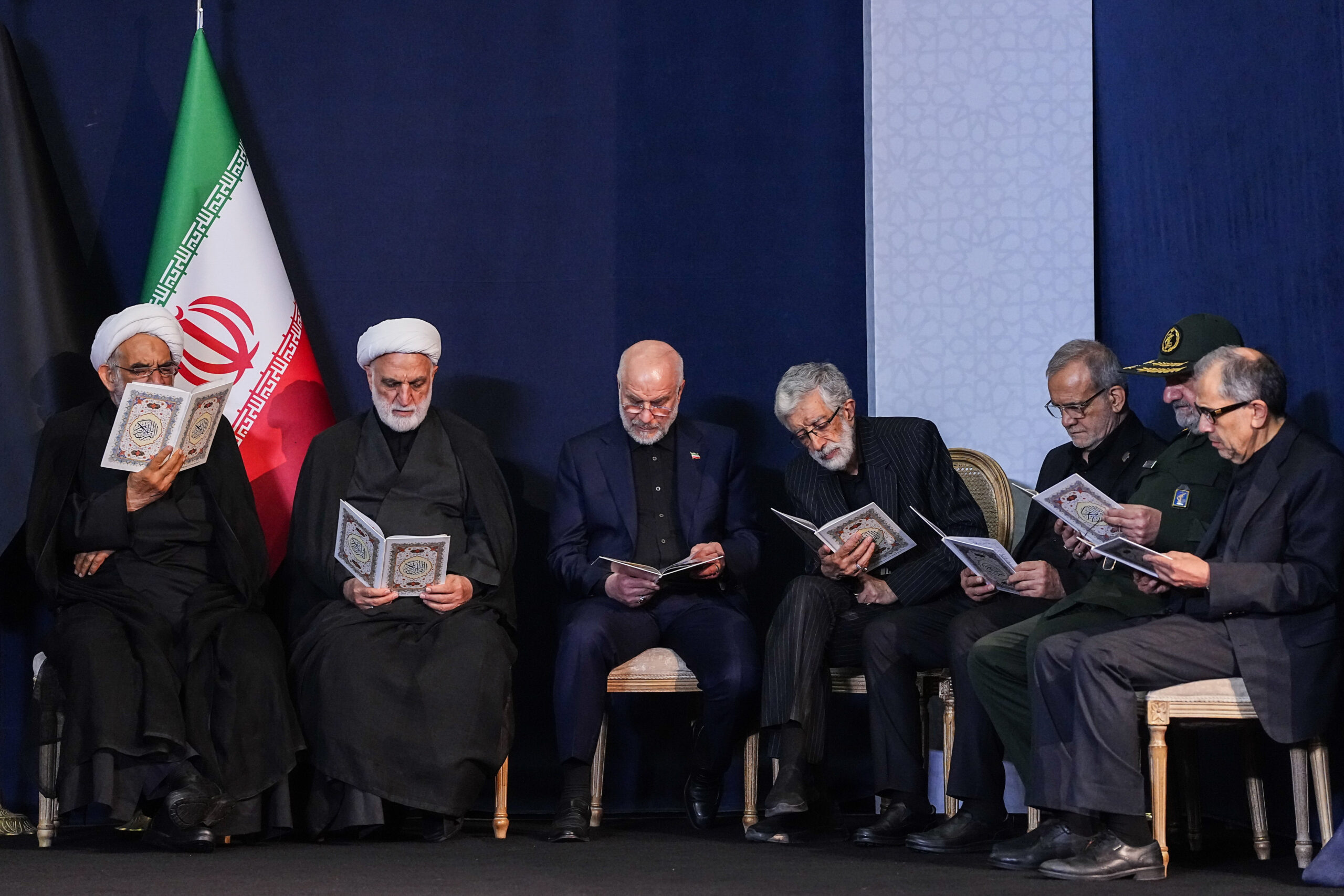
The new ruling elite appeared in tears before the Leader’s coffin. Mohammad Ghalibaf, notably, the Parliament Speaker and current negotiator with the United States, was seen sobbing in front of the coffin.
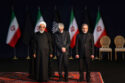
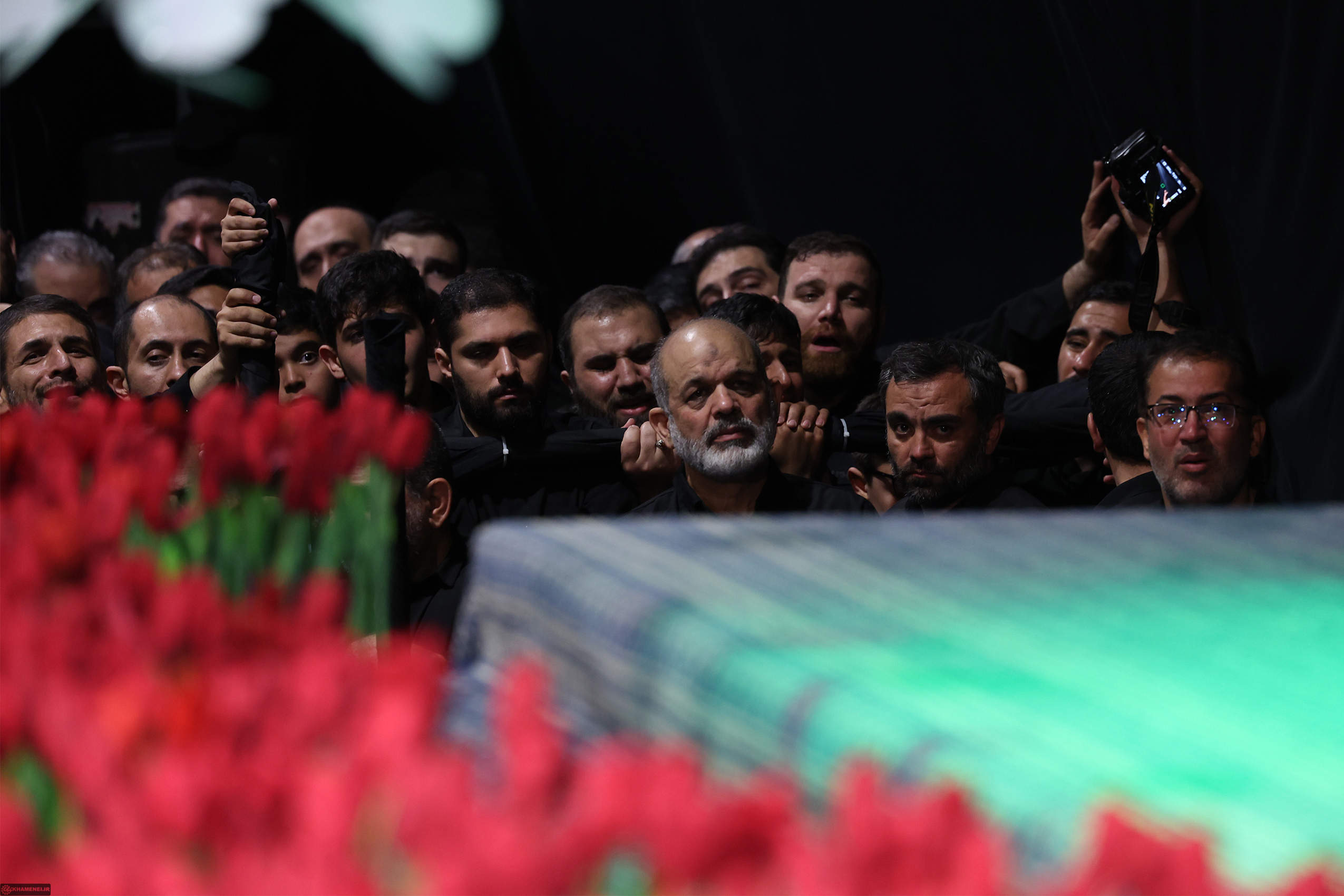
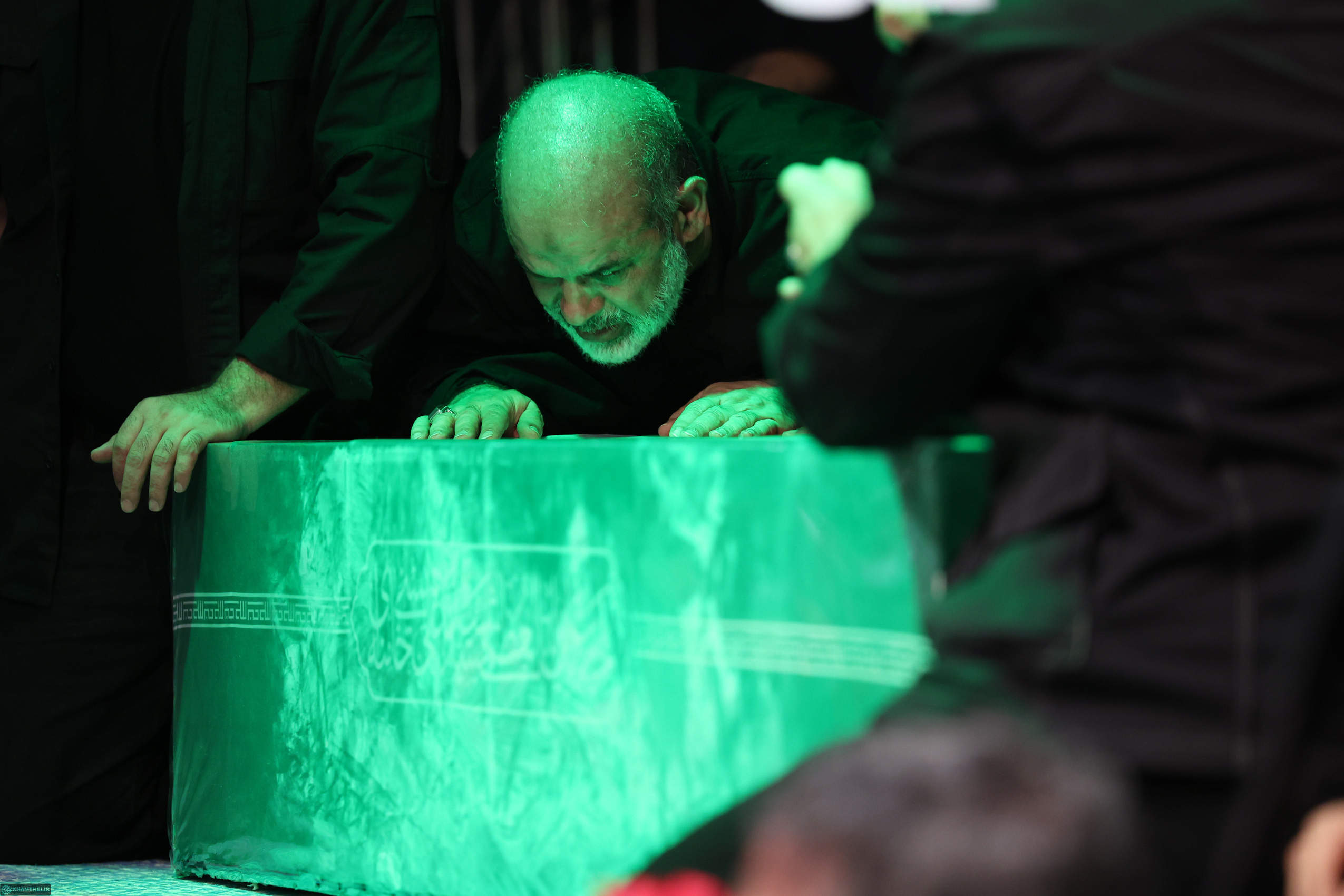
Several visual elements are to be read as coded signs.
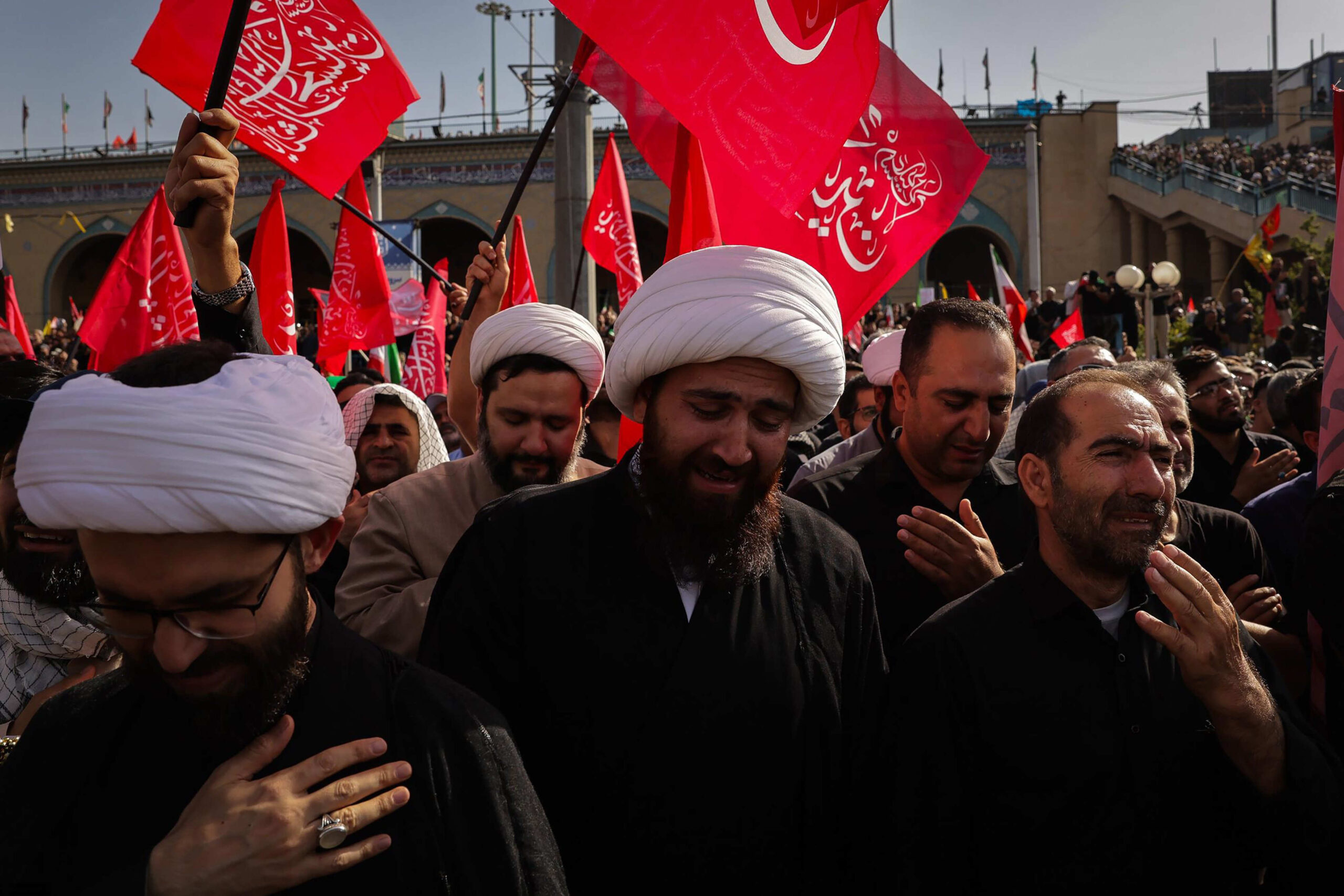
The red flags brandished by the crowd, the color of blood, justice, and vengeance, evoke the banner raised on the Jamkaran Dome after Qassem Soleimani’s 2020 assassination, a promise of retaliation not yet fulfilled.
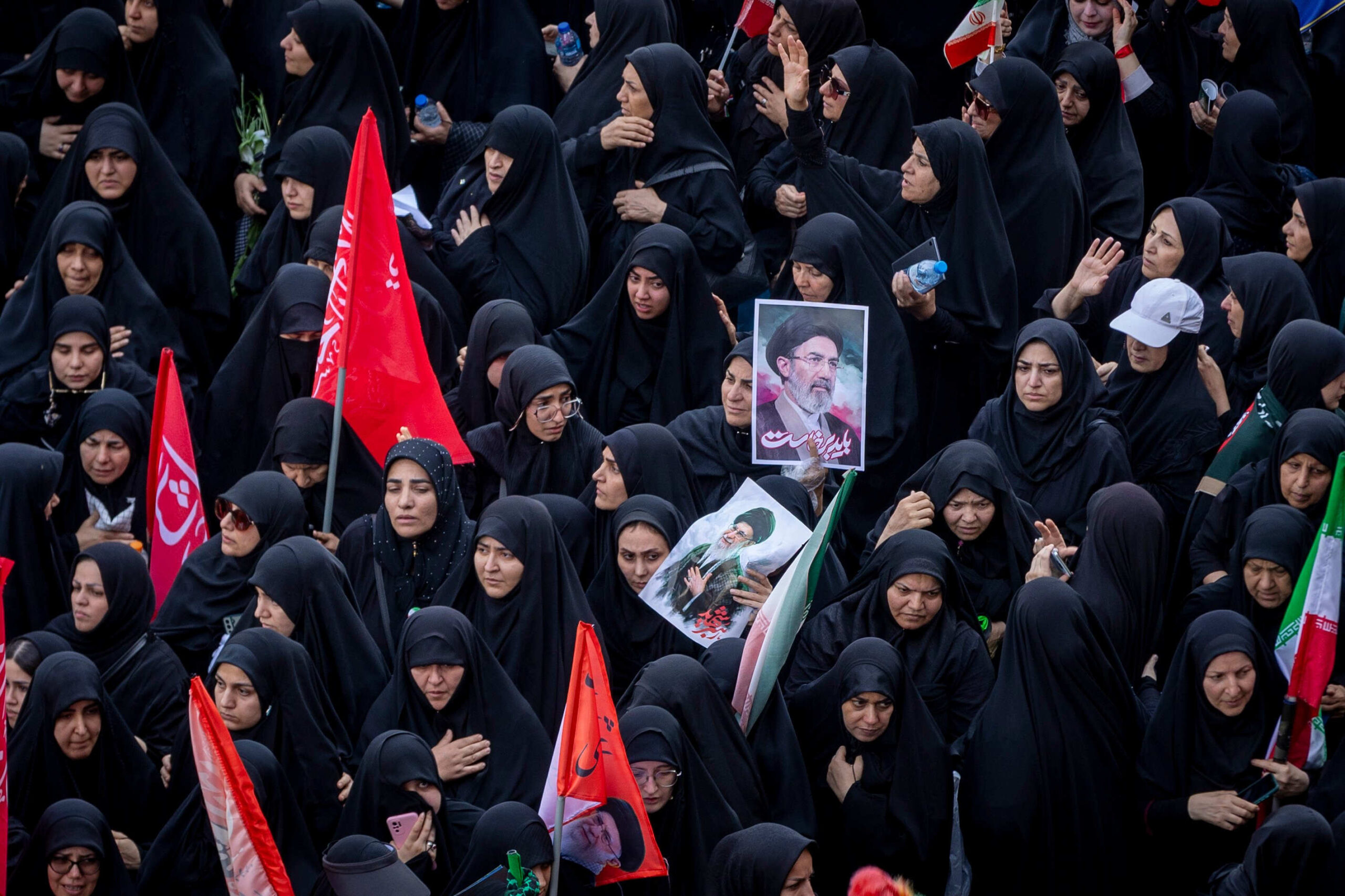
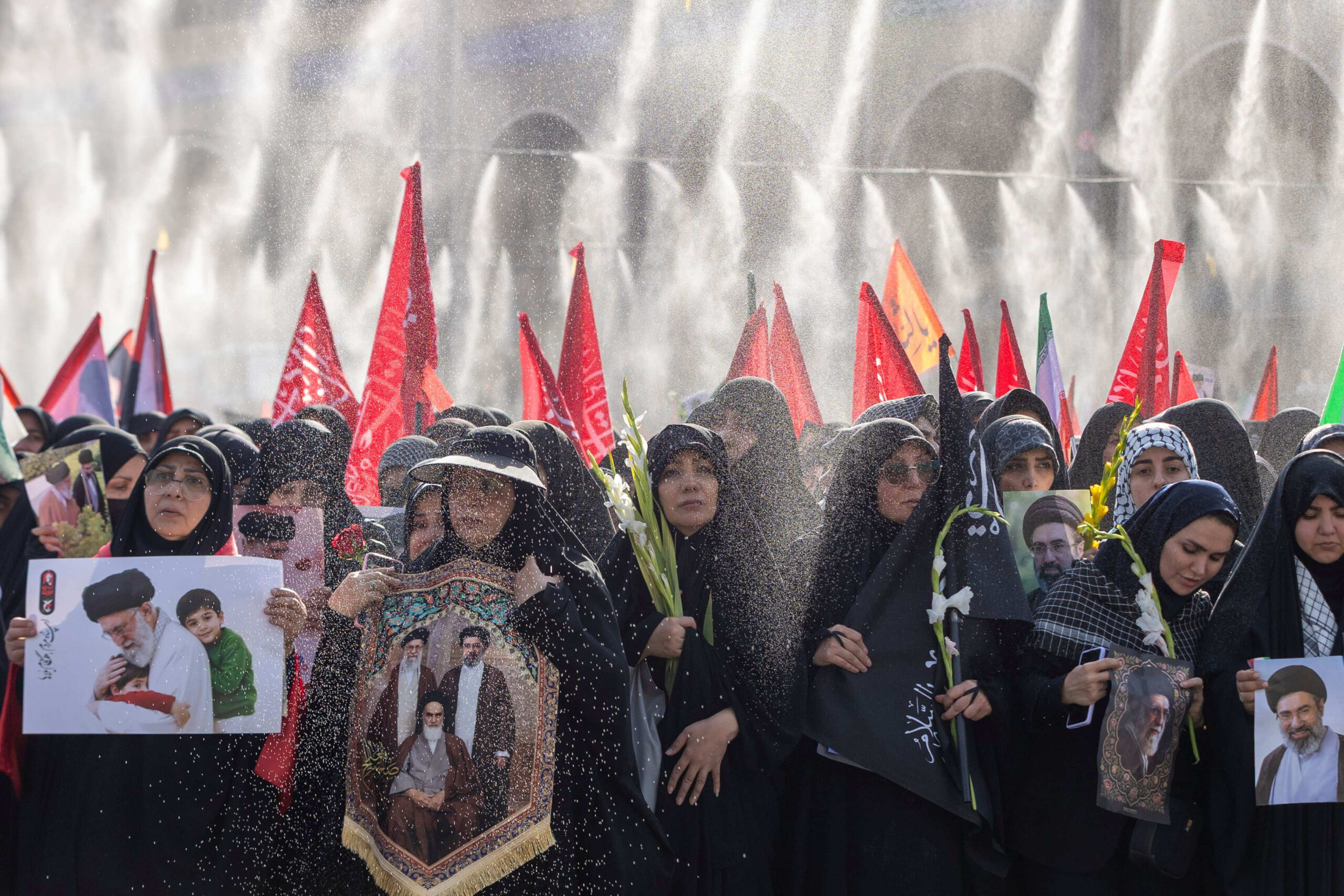
Men strike their heads and chests in a sign of mourning: this is sine-zâni, the Ashura ritual transposed to the nation’s leader.
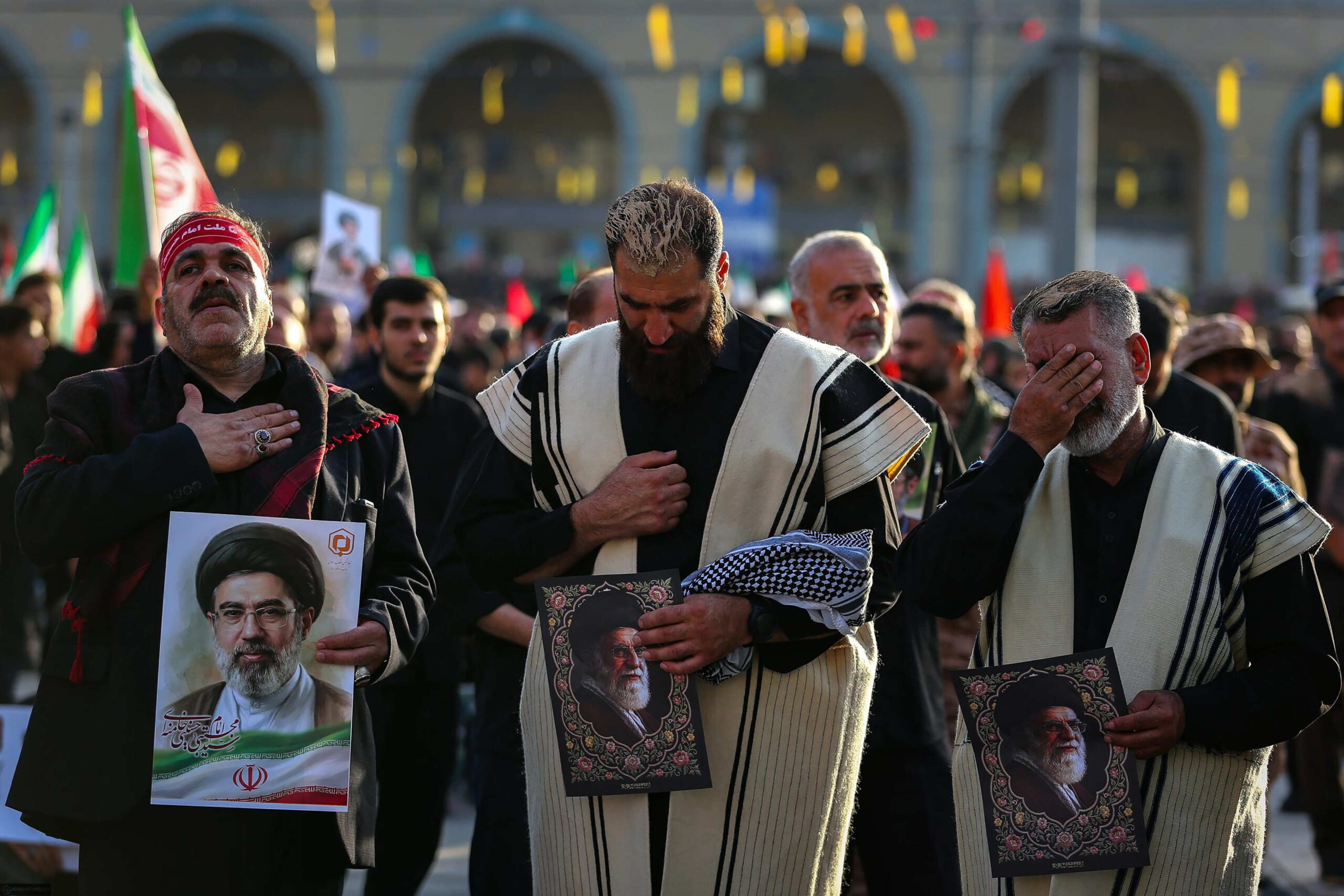
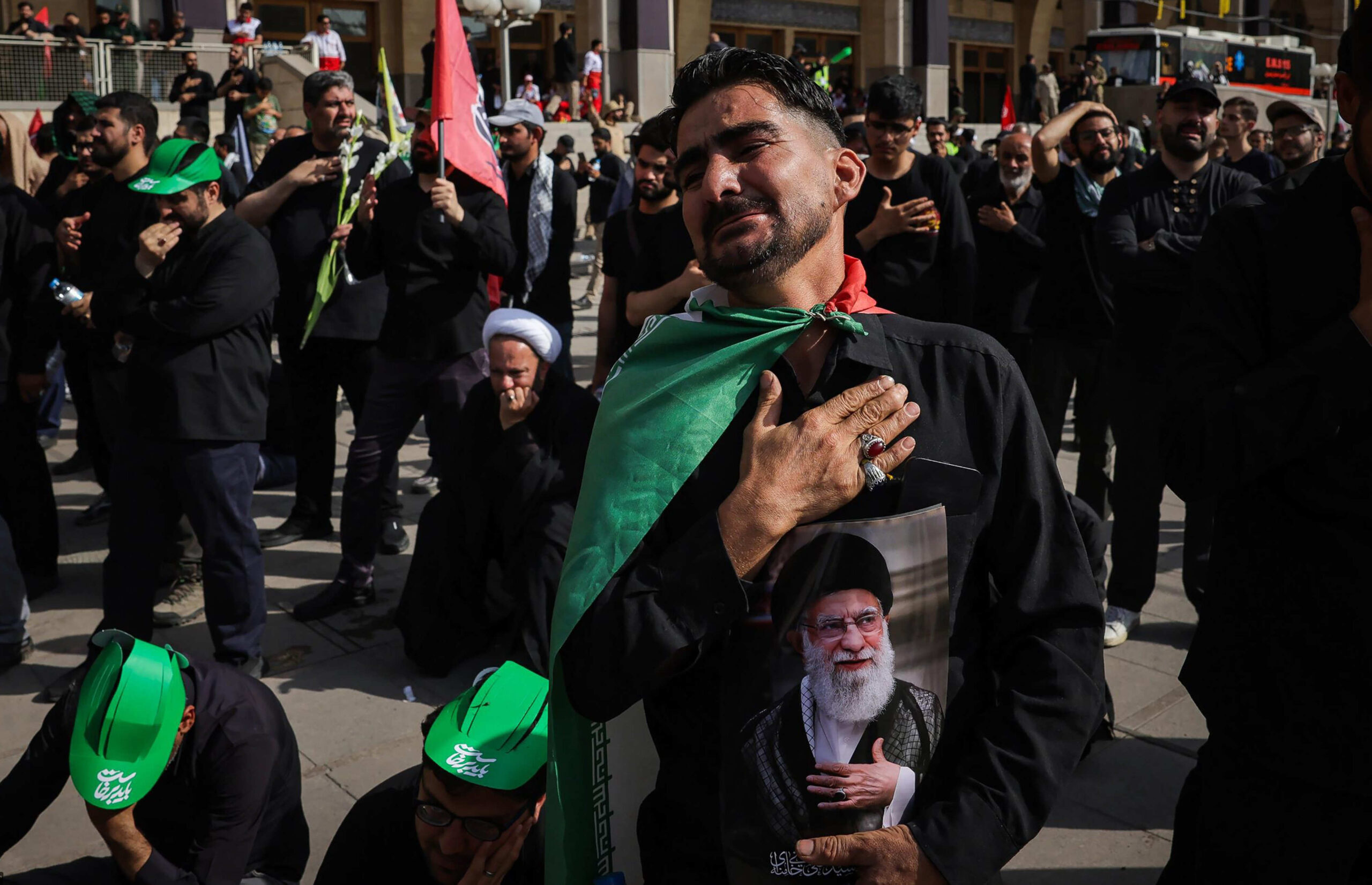
Several women bear the martyr’s icon.
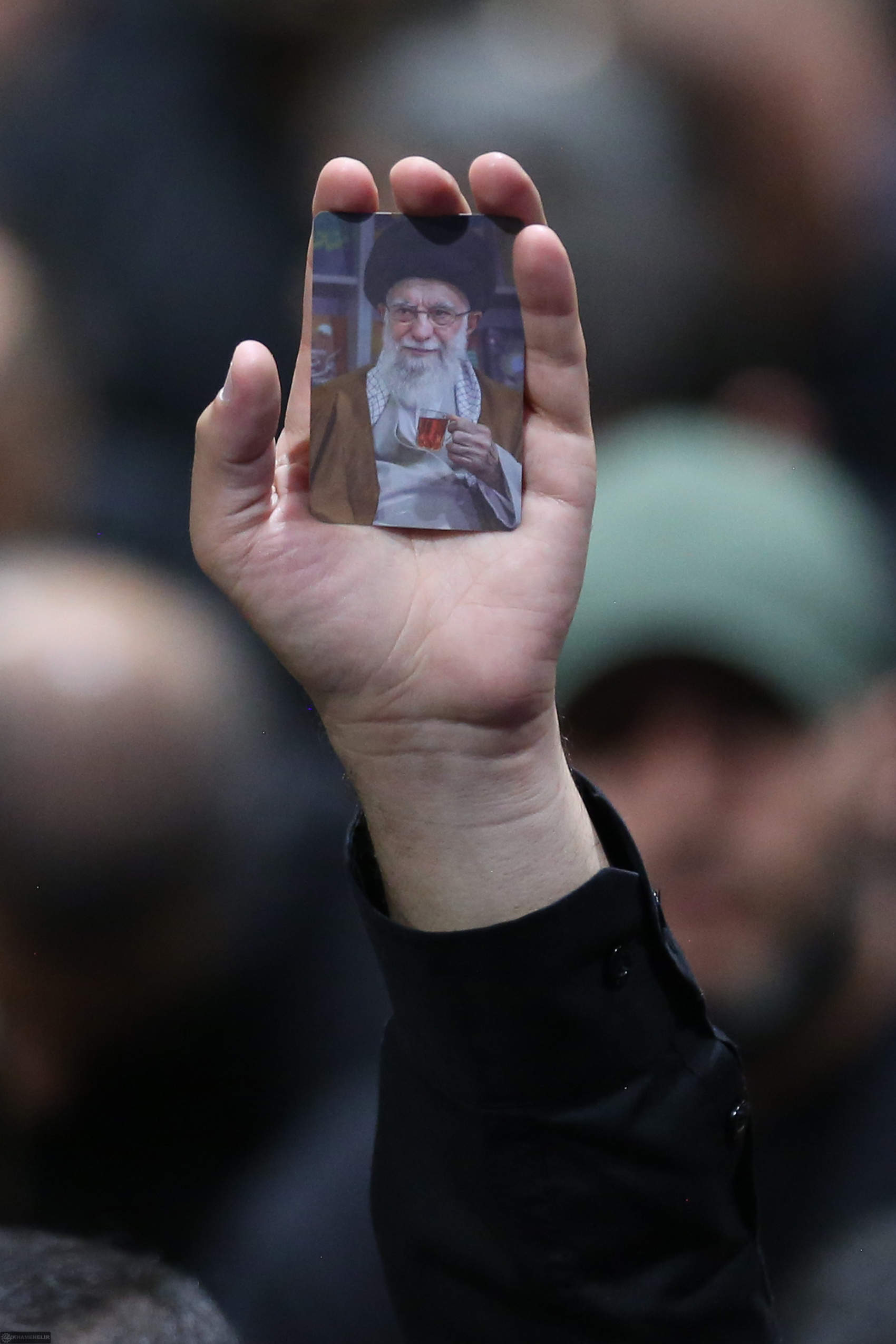
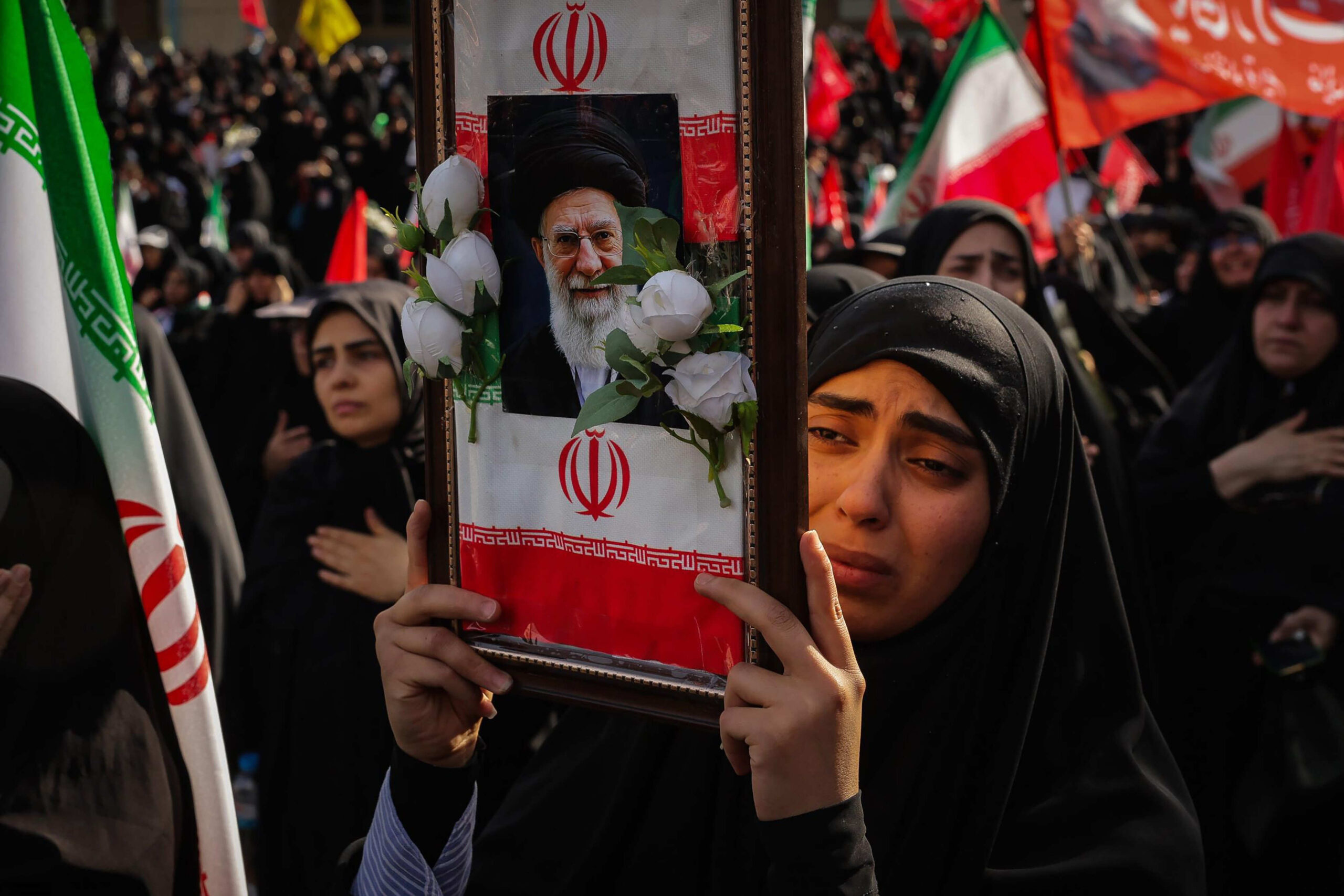
The walls of the site are covered with giant portraits of the ayatollah at different ages of his life, especially at the front of the Iran-Iraq War: the mural martyrology that has shrouded Tehran since the 1980s finds its culmination here. It should be recalled that Ali Khamenei, in life, was disabled following an assassination attempt in 1981.
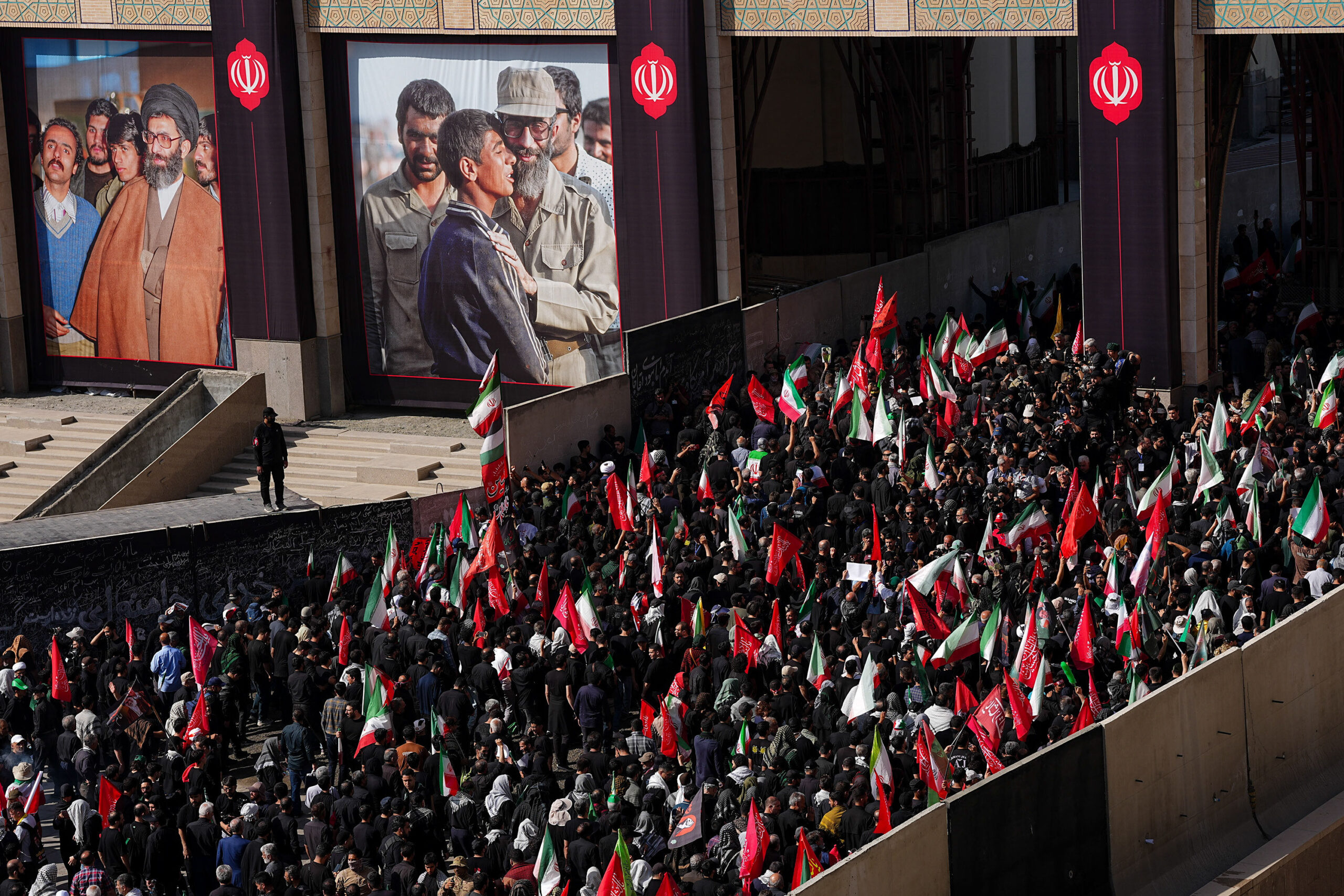
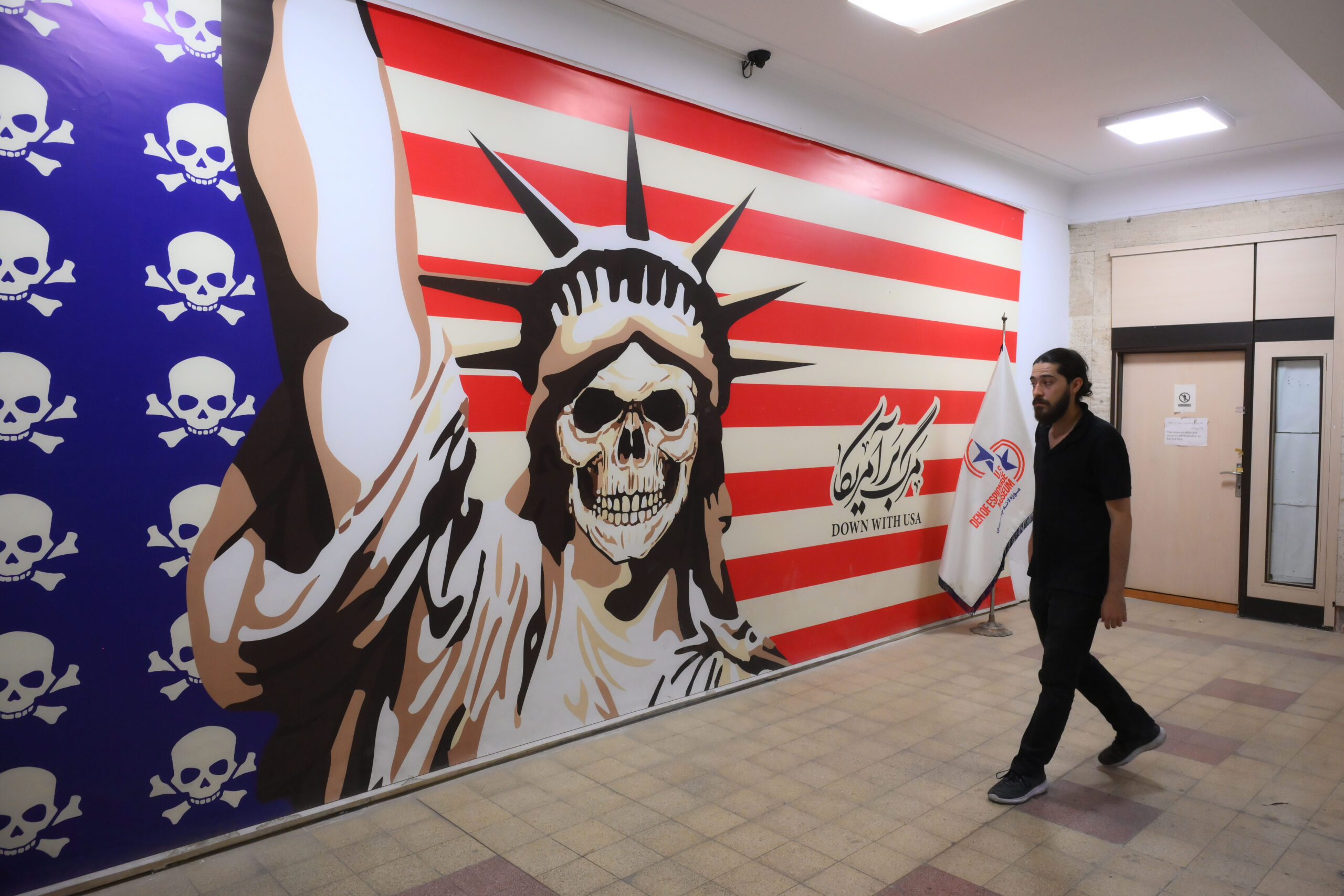
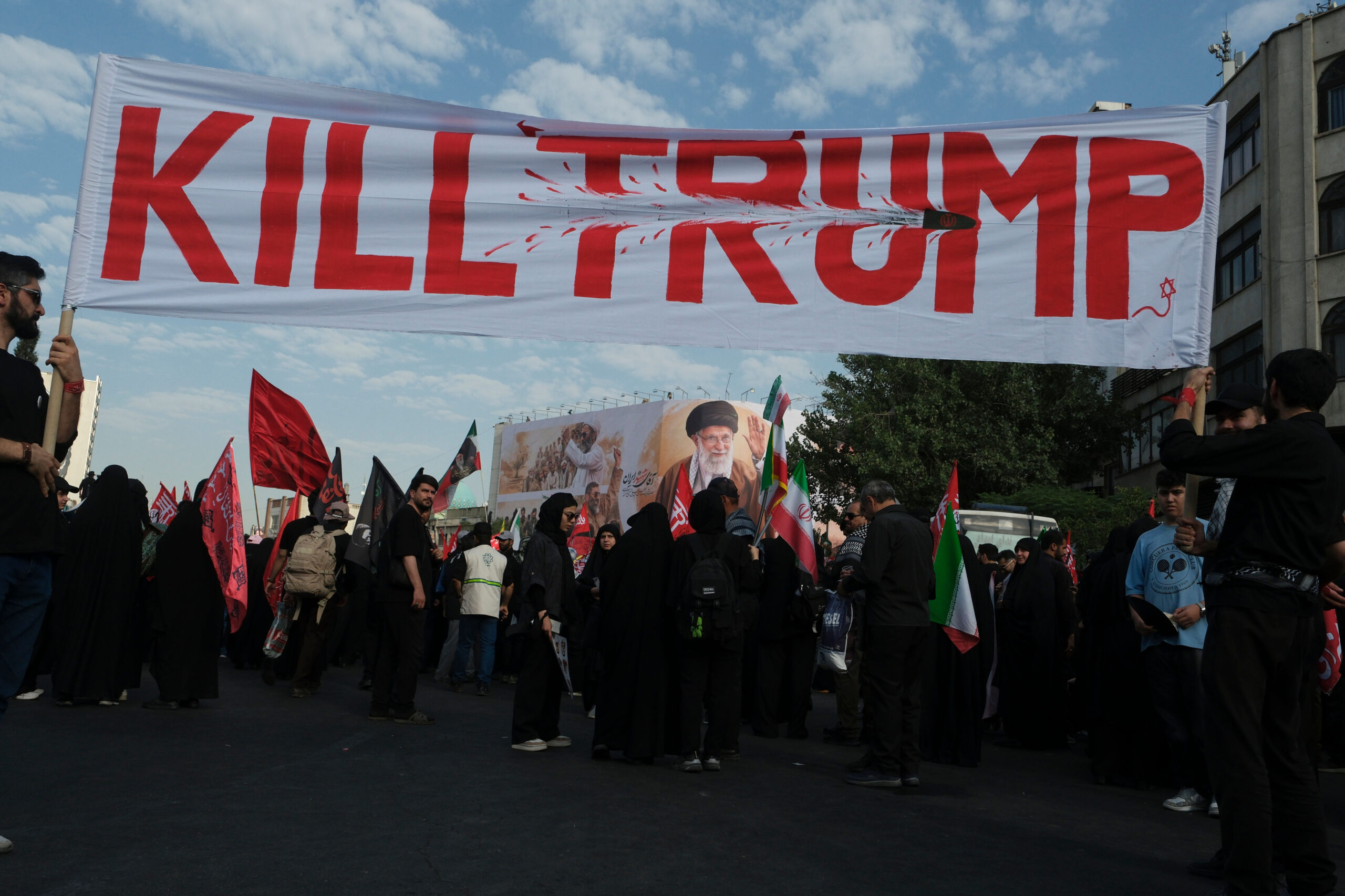
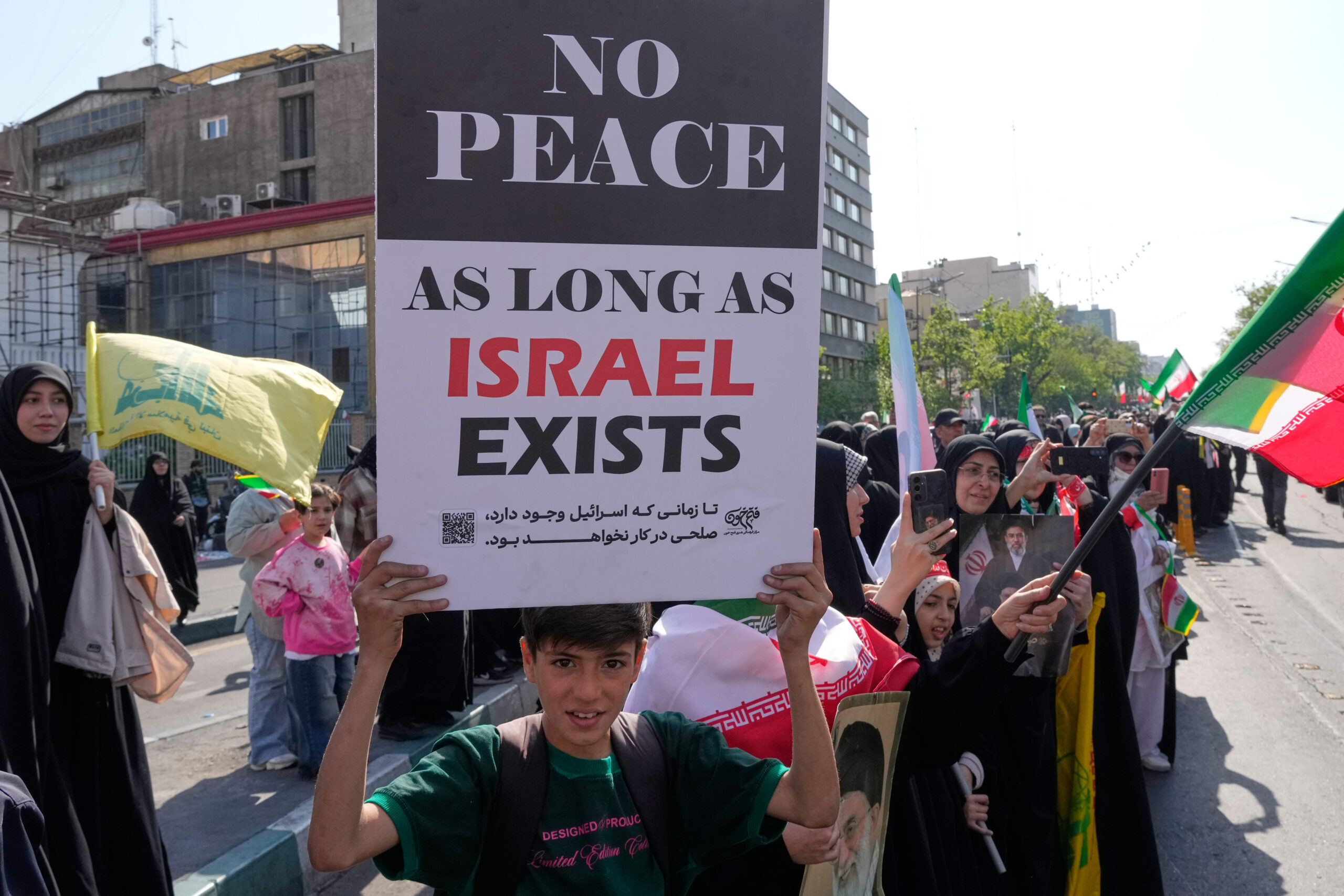
Même l’agenda participe de cette dramaturgie de la vengeance : les funérailles coïncident avec le 250e anniversaire des États-Unis, des banderoles « #KillTrump » apparaissent dans la foule, et des panneaux montrent Khamenei le poing levé sous le slogan « Nous devons nous lever » ou des détournements du drapeau américain et de la statue de la liberté de l’ancienne ambassade des États-Unis.

À côté du cercueil du Guide, ceux de ses proches tués avec lui le premier jour de la guerre: a daughter, a son-in-law, a daughter-in-law, and a 14-month-old granddaughter — innocent lives sacrificed, a figure central to the Kerbala narrative.
4. Venge or Negotiate
The funerals are above all a moment of truth, as tensions run high between negotiators and part of the apparatus that condemns too rapid a rapprochement with Washington.
The measure of popular support could yield two opposing effects: an upsurge of hostility to negotiations, in the name of vengeance for the “martyr” Khamenei. Since Friday, crowds have been shouting “Death to America” and “May God’s curse be upon Israel.” Or, conversely, a strengthened national cohesion behind the negotiators to rebuild the country.
This strategic ambiguity is embodied by a man given a prominent role in the funeral liturgy: Mohammad Bagher Ghalibaf.
The Parliament President and chief negotiator who himself called for “vengeance” for Khamenei’s death through strong participation in the funeral, a vengeance transformed into ceremonial demography rather than missiles.
Negotiations resumed indirectly on July 1 in Doha, with the mediation of Qatar and Pakistan, focusing on two dossiers: securing navigation through the Strait of Hormuz and the modalities for implementing the ceasefire, after last month’s signing of a framework agreement to end the conflict.
The mediators announced that another meeting would take place immediately after the end of the funerals, with no precise date. Donald Trump commented on the pause in his own way: “We gave them a week off for funerals, because we’re nice.”
On the eve of the ceremonies, Tehran warned that an attack during the funerals would trigger a “severe response,” while its ambassador to Beijing spoke of fees imposed on ships transiting Hormuz, a notion rejected by Washington, with “special” treatment for “friend” countries.
Yesterday, several ships crossed the strait by following the route indicated by the United States, along the coast of Oman.
What remains is to see whether the images of this week, a black-and-red tide in Tehran, a stopover in Karbala, a tomb sealed on Thursday in Mashhad, will give the regime the momentum for revenge or the alibi for peace.