
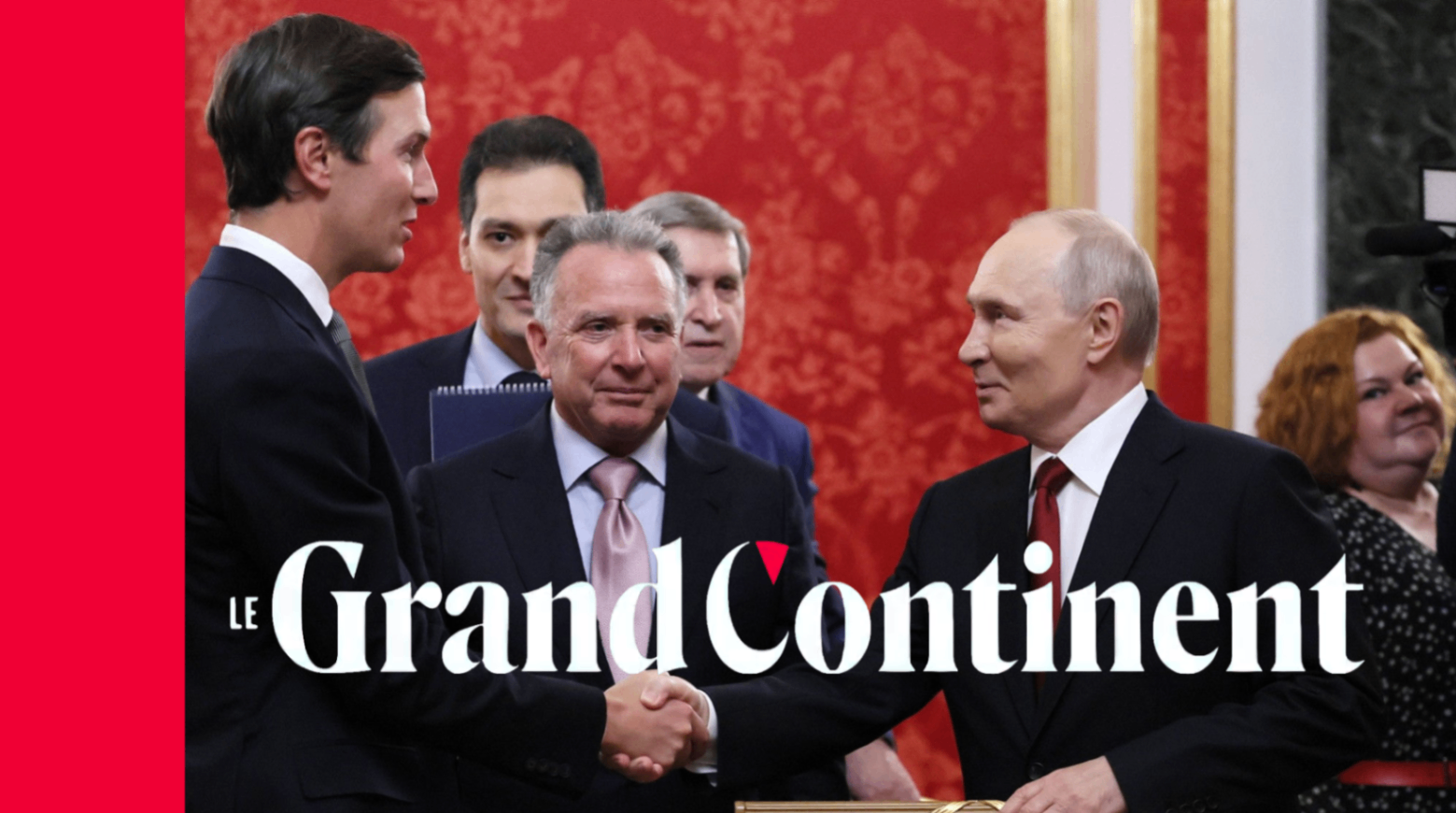
According to American sources cited by the Washington Post, the United States and several European countries “are slowly steering toward a shared peace proposal” to end the war in Ukraine or, at least initially, to achieve the establishment of a ceasefire.
The “plan,” apparently mainly drafted at this stage by the American side, would consist of four main points:
- The first component would address the reconstruction of Ukraine. The World Bank and the investment fund BlackRock would like to establish a framework to finance these efforts. No amount has yet been disclosed, but the Ukrainian side is expected to provide a numerical estimate in the coming days if negotiations continue.
- The second concerns security guarantees for Kyiv. Under the plan, after the fighting stops, Kyiv would receive a commitment from the United States and European countries to respond militarily in the event of a new Russian attack, which the American source describes as an “equivalent” to NATO Article 5.
- The third would aim to strengthen “economic integration” of Russia with Ukraine and European countries, potentially through a pipeline or gas pipeline delivering Russian oil and gas to Europe, with Russia and Ukraine sharing the profits. The agreement would also specify the conditions and timeline for lifting economic sanctions against Moscow.
- Finally, the fourth component would address the issue of territories. The front line would be frozen at its current positions, and the Ukrainian territories currently occupied would be controlled by Russia. It is not specified, however, whether these territories would be recognized, de facto or de jure, as Russian.
Several diplomatic initiatives developed since March 2022 have failed to establish a durable ceasefire. Since returning to power in January 2025, Trump has organized several rounds of negotiations, with bilateral meetings between Russians and Ukrainians, but has not managed to reach a solution. The American proposals have largely favored the Russian position, going as far as reviving Putin’s most maximalist demands in a 28-point plan released in November 2025.
- Zelensky’s communications adviser, Dmytro Lytvyn, described this “peace plan” on Tuesday, October 13, as a “rather successful publicity stunt.”
- According to him, the initiative would reflect the views expressed by the American negotiators at a meeting held Friday, October 9 in Florida with representatives from Ukraine, Britain, France and Germany.
This initiative, which essentially reiterates proposals already studied—including the resumption of energy flows between Russia and Europe, notably via the reopening of Nord Stream 2—comes amid high energy prices in the United States, attributed by Trump to Ukrainian strikes on Russian oil infrastructure.
- On Friday the 9th, after the Florida meeting, Trump announced that he had reached an agreement with Moscow to put “immediately” 300,000 tons of diesel “on the U.S. and global market,” followed by an additional 500,000 tons in November, and then a million tons “immediately after,”
- The American administration had already pressured Kyiv to stop strikes on Russian refineries, which Ukraine agreed to in exchange for a suspension of Moscow’s attacks on Ukrainian energy infrastructure.
- Russia has de facto rejected this condition by continuing its strikes, notably against electrical facilities in the Kharkiv, Donetsk and Zaporizhzhia regions.
According to the Washington Post, while European leaders “were irritated by the diesel deal reached by Trump,” they would be “determined” to pursue the diplomatic process launched by Steve Witkoff and Jared Kushner. A European diplomatic source reportedly stated: “Now is the time to ease tensions and get back to work.”