
Key Points
- 70% of respondents say they are very concerned about war fatigue in society, compared with only 4.9% who are not at all concerned.
- A large majority of Ukrainians (65.3%) say they do not trust Donald Trump, while only 1.3% say they have a lot of trust in him.
- 56.8% of respondents have no trust in the American negotiating team led by Jared Kushner and Steve Witkoff, compared with 2.5% who express a high level of trust.
- 36.7% of respondents say they have a lot of confidence in Volodymyr Zelensky, compared with 13.6% who have no trust in him.
- Two times more Ukrainians regard Donald Trump as an enemy (35.4%) than as a friend (17.0%).
- By contrast, 73.4% of respondents see Americans as friends of Ukraine, while only 3.5% view them as enemies.
- Finally, 74.5% of Ukrainians say they have at least a little trust in EU leaders.
- Local Ukrainian leaders receive 18.9% of responses expressing a lot of trust, but 22.6% of respondents say they have no trust in them.
- Only 7.4% of Ukrainians have a positive view of the United States’ current role in international affairs; 61.6% have mixed feelings and 25.6% hold a negative view.
The war waged by Russia against Ukraine has now lasted so long that it is easy to overlook its daily brutality. Its violence has become routine. Missile and drone strikes continue one after another, civilians keep being killed, while the rest of the world turns to other emergencies.
This normalization, however, is misleading. The war is intensifying. In May 2026, the civilian toll was the heaviest since April 2022, with at least 274 dead and 1,763 wounded.
On the front line, the human toll is of a completely different order: it is no longer counted in hundreds but in thousands of dead and wounded. Ukrainian military officials describe a “harvest” of tens of thousands of soldiers killed or wounded each month, hunted by cheap and increasingly autonomous drones. Russian commanders speak in a symmetrical tone, each claiming to have the upper hand. Yet behind this war of narratives, one reality stands out: both sides continue to sacrifice lives at an unprecedented pace and jeopardize a portion of their demographic future.
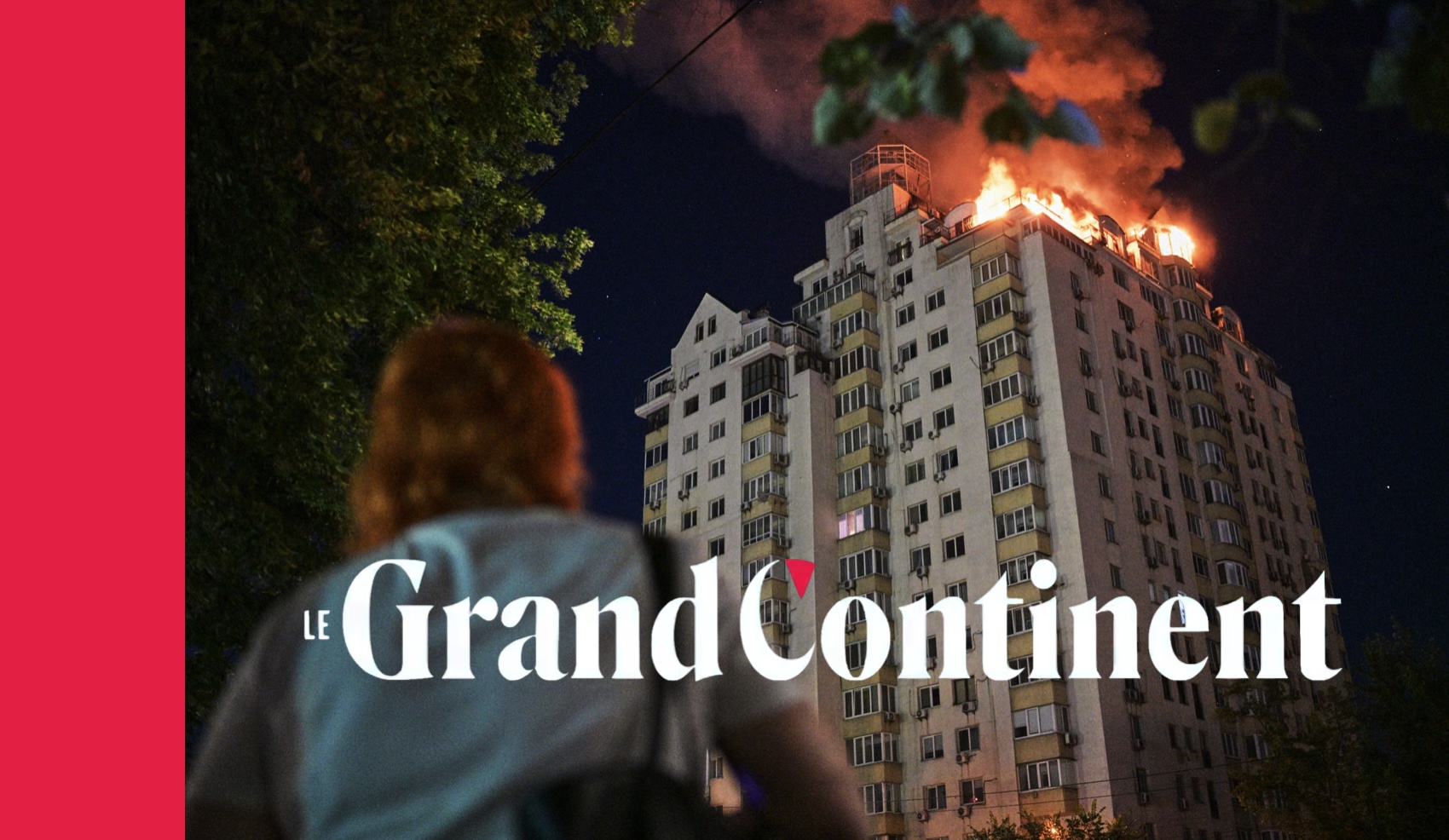
What has changed in recent months is that the war no longer strikes Ukraine alone. Russia has become the target of a sustained campaign of medium- and long-range drones aimed at its military logistics and energy infrastructure. Some analysts quip that the Ukrainian army deserves an award for the quantity of fossil-fuel infrastructure it destroys. But the point lies elsewhere. For the first time, the consequences of the war become tangible for a portion of the Russian population. Fires, toxic smoke, and disruptions now affect metropolises such as Moscow or Saint Petersburg. Ordinary Russians now choke under the weight of their government’s decisions.
Beyond Russia’s daily attacks, Ukrainians have also had to contend with reversals in American policy. Donald Trump had indeed captured a segment of the American electorate with his brazen statements—no fewer than fifty-three times—that he would resolve the Russia-Ukraine war in “twenty-four hours.” To achieve this, the strategy he gradually adopted since returning to the White House involved openly siding with Russia, suspending U.S. military aid to Ukraine (while continuing to share intelligence), repeating the Russian line (“It was Ukraine that started the war”), and hosting Putin in Anchorage to “seal an agreement.”
When Trump’s intentions became clear, European leaders rushed to Washington with Zelensky to prevent the forced cession of Ukrainian territories. They simultaneously accelerated their efforts to shoulder the burden of supplying Ukraine so that it could continue to resist Russia. The United States did not entirely cut off its assistance. A $400 million program, approved by Congress in December 2025, has remained stalled at the Pentagon for several months.
Recent surveys conducted in the United States have highlighted the extent of Donald Trump’s personal hostility toward Volodymyr Zelensky, driven by old grievances related to what he sees as Kyiv’s refusal to compromise with Joe Biden. In public, however, the relationship appears quite different. At the NATO summit in Ankara, Trump and Zelensky were shown as partners, with the American president labeling the Ukrainians a “great people.” Behind this display, which once again showcased the rhetorical opportunism of the American president, mistrust remains deep.
To understand the results of our survey, it is also necessary to consider the exceptional diplomatic context in which it was conducted. The United States remains the indispensable mediator of the conflict, even as the Trump administration has gradually moved closer to Russian positions, leaving Europe largely out of negotiations. After the failure of his promise to end the war “in twenty-four hours,” Donald Trump entrusted the dossier to two close aides, Jared Kushner and Steve Witkoff, marginalizing career diplomats and traditional American foreign policy institutions. Since the United States entered the war against Iran, this diplomatic channel has itself fallen to the background. More tellingly, none of the main U.S. negotiators has visited Ukraine, while Steve Witkoff has made several trips to the Kremlin and claims to have a good relationship with Vladimir Putin.
How is a public opinion survey conducted in a country at war?
Given the central role these actors play in Ukraine’s future, it is useful to ask how ordinary Ukrainians perceive them.
For more than a decade, we have been conducting opinion polls in Ukraine. The start of large-scale war in February 2022 has considerably complicated this work. Russia now occupies about one-fifth of the territory internationally recognized as Ukrainian. More than 3.7 million Ukrainians have been displaced within the country, while several million others have sought refuge abroad. In the absence of a national census since 2001, the available demographic data rely on the best official estimates.
The war makes face-to-face surveys extremely difficult. Most surveys are therefore conducted by telephone, using the CATI method, which nonetheless has its own limitations: few people are willing to answer a stranger on the phone or to express their opinions freely. Response rates are therefore low. Moreover, the wartime context may lead some respondents to favor responses deemed socially acceptable rather than what they truly think.
Despite these limits, CATI surveys remain the best tool we have to measure public opinion. They allow us to assemble a broadly representative sample of the population living in government-controlled territories, based on the available demographic data for 2025. It is also worth noting that, despite the war, Ukrainian civil society remains remarkably vibrant. Many Ukrainians agree to participate in surveys and do not hesitate to offer a critical look at the war, at their leaders, at international actors, or at the direction of their country. The accumulation of these polls throughout the conflict enables us to track how public attitudes evolve in relation to the main questions Ukraine faces.
For this survey, the Kyiv International Institute of Sociology (KIIS), acting on our behalf, interviewed 1,801 Ukrainians living in government-controlled territories between June 9 and June 26, 2026. Residents of areas occupied by Russia, notably the eastern Donbas and Crimea, are therefore not represented. To obtain these 1,801 responses, KIIS interviewers had to place a very large number of calls to randomly generated mobile phone numbers. The overall response rate remained below 7%. Interviews were conducted only in the absence of an air alert and when interviewers judged that safety conditions allowed. Before each interview, respondents were also asked to indicate whether they felt safe; if not, the interview was not conducted.
Here are the main lessons that emerge from this survey.
1. Ukrainians are exhausted by the war
It is not surprising that Ukrainians want a war imposed upon them by Russia to end. But measuring this fatigue is not straightforward. Many hesitate to acknowledge their weariness, for fear it might be seen as a lack of loyalty or as a sign that they no longer fully support Ukraine’s objectives: preserving independence, reclaiming occupied territories, and ending Russia’s imperial project.
To overcome this difficulty, we used a classic method in public opinion research: instead of directly asking people if they themselves are tired of the war, we asked whether they felt that Ukrainian society was tired of it.
The results are very clear. Seventy percent of respondents say they are very concerned about the war fatigue they observe around them, while only 5% state they do not worry about it at all. As the war’s fifth year approaches, the weight of the conflict is felt across society.
2. Ukrainians first place their trust in their own leaders
The survey thus shows a society deeply fatigued by the war, but also increasingly wary of foreign leaders, particularly Donald Trump. European leaders inspire more confidence, though it remains measured.
Among the figures tested, Volodymyr Zelensky is the one who inspires the most trust: 37% of respondents say they have “a lot of trust” in him, compared with 14% who say they have “no trust” in him. Regional and local officials come next, with 19% expressing strong trust.
These levels are not exceptionally high, but they remain meaningful for leaders facing a war that has dragged on for years. The longer a conflict lasts, the more public support tends to erode.
Even though his popularity has declined, Zelensky still enjoys the support of a majority of Ukrainians. Trust in local authorities is more variable, reflecting regional disparities.
3. Ukrainians place more trust in European leaders than in Donald Trump
Ukrainians hold a nuanced view of European leaders. Only a minority (12%) says they have “a lot of trust” in EU leaders, but a large majority (62%) say they have at least a little trust (the middle option chosen by respondents).
Although Ukrainians are more likely to fully trust their local leaders than EU leaders, the share of people in the combined “a little” and “a lot” categories is actually higher for EU leaders than for local leaders.
Moreover, the share of people with no trust in their local leaders is higher (22%) than the share with no trust in EU leaders (17%). This gap probably reflects regional differences in Ukraine in relation to attitudes toward European leaders, for whom uncertainty blends with a basic level of trust, as these countries often view Russia as a common enemy.
The situation is very different for Donald Trump. Sixty-five percent of Ukrainians say they have no trust in him, while only 1.3% say they have a lot of trust in him. Of all the individuals evaluated, he provokes by far the most distrust.
Several factors may explain this perception: the removal of USAID, prevalent in Ukraine, the reduction of military aid, but also his favorable statements toward Vladimir Putin and the public humiliation of Zelensky during their Oval Office meeting in March 2025. This episode also strengthened Zelensky’s support in the country. The negative perception of Trump is confirmed by other survey results.
4. Donald Trump is seen as an adversary to Ukraine, but not the Americans
We also asked respondents about Donald Trump, about his negotiating team with Russia comprising Jared Kushner and Steve Witkoff, and about Americans in general.
The results are striking.
A majority of Ukrainians thus view Donald Trump as an enemy of their country.
Respondents also express very little trust in Jared Kushner and Steve Witkoff to conduct negotiations with Vladimir Putin.
By contrast, Americans, as a whole, continue to be seen as friends of Ukraine.
Our results also show that support for Ukraine joining NATO remains broadly majority. Many Ukrainians now accept that the occupied territories cannot be retaken quickly, but that does not mean their political or strategic goals have changed. Ukrainians want peace, without giving up their aspirations.
The Trump administration may think it can negotiate an agreement with Moscow and then persuade Ukrainians to accept it. Our results nevertheless show that it suffers today from a deep credibility gap and that only a very small minority holds a favorable view of the United States on international affairs.
European leaders are viewed more positively, but the trust they enjoy remains limited. One thing is clear: no durable agreement can be found without the buy-in of Volodymyr Zelensky and Ukrainian officials. In the end, it will be Ukrainians who decide what they are willing to accept and what they will reject.