

A state without a state, however at the heart of European imperialism. Fabien Levy unveils the power of the Genoese and the foundations of the grip of a city city in the commercial and political recompositions of the world of first modernity.
The Middle Ages must be ended ? And how ? The choice of capitalism as a milestone remains one of the best shared, especially among historians of the first modernity. One of the most disputed too. The question of continuities has aroused at least as much interest – whether it is to examine the forms of colonization since the central Middle Ages in the Mediterranean, or the maintenance in America of feudal structures – while the Eurocentric biases of a narrative exposing the process of capitalist unification of the world are also known. In this, Fabien Levy is part of a certain way of making the history of the Mediterranean and the first globalization, and for that, Genoa undoubtedly constitutes an adequate example, as already showed Jacques Heers in his thesis defended in 1958 on Genoa at XVe centurybecome a classic, and directly inscribed under the influence of Braudel and his Mediterranean in Philippe’s time II.
Fabien Levy does not deny these filiations, willingly adopting the Braudelian vocabulary. While taking up the idea of a story located – complementary to other more encompassing perspectives – it makes it a support point for a wide story, registering in collective work to better connect the history of the Western Middle Ages to that of the modern Atlantic.
The Mediterranean before Philippe II
As Fabien Levy shows, the story of Genoa could have been that of a decline. Unable to form a public sphere comparable to the lordships and governments of Milan, Venice or Florence, the port and its nobility are exhausted at the end of the XIVe century by the loss of oriental markets. The city is crossed by conflicts between factions. “” Gennes, who are people inclined to all changes “, Says in his Memoirs Philippe de Commynes to highlight the instability of the port. At XVe century, the reputation of the city is thus to be subject to all internal upheavals, and exposed to all the appetites of conquest.
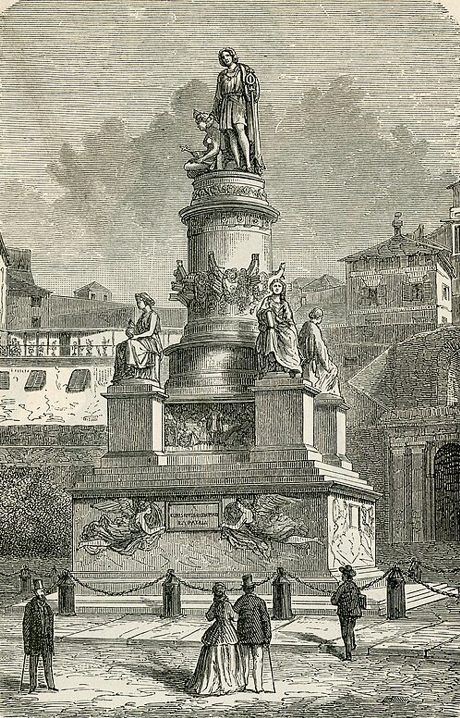
If this story was not unknown, Fabien Levy does not make this period of decline an event in itself, but the reintegers between two much more splendor: the XIVe brilliant century of “ Genoa the superb As the Petrarch nicknames, and the XVIe Triumphant century of the financial capital of the Habsburg Empire, of the homeland of Columbus, soon also opened, as a merchant port but also as a financial center, towards American conquests. THE XVIe century is thus the “ century of the Genoese », Expression resumed by Fernand Braudel – and not that of Genoa. The story is therefore that of a “ bounce », Relatively unique story of a double golden age for a single port place.
From decline to XVIe century, “ century of the Genoese »»
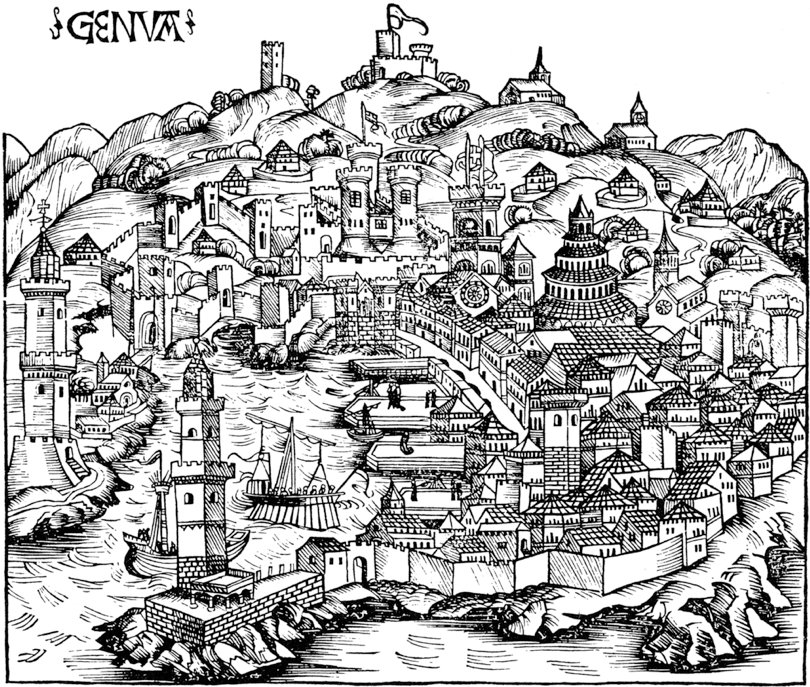
The history of the naval and merchant expansion of Genoa in the Mediterranean begins from the central Middle Ages, while the city, limited in its territorial growth by the mountains, develops along the coast, in high urban planning, to reach up to 80,000 inhabitants. The Genoese implant their counters around the Mediterranean and conquer several territories, from the Tyrrhenian sea to the Levant, most often on the model of the feudal implantation dominated by a large family. Genoese merchants take care of mastering the Black Sea, where spices and slaves circulate, true “ Genoese lake ” At XIIIe century. On the other hand, and in contrast to Venice, the whole does not base a “ coherent empire (P. 25) But a disparate network, where control of Genoa is often loose.
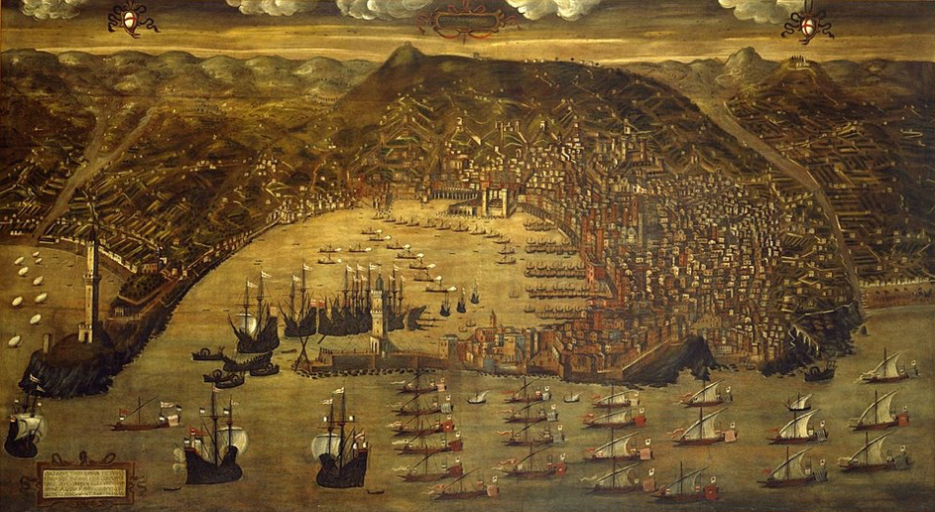
The first Genoese peak ended in 1381 with the battle of Chioggia, often read as a Venetian victory, and especially in 1396 with the first occupation of Genoa by French troops. Combined with the black plague and the Turkish conquest of Constantinople in 1453, this period of external domination and real civil wars applied to the city, among the French chroniclers, the nickname “ Genoa humiliated ».
However, behind this impression of forfeiture, “ THE XVe century appears as much as a century of decline as of transition »P. 127): Many of the instruments of future success in Genoa are already in training, starting with the reorganization of merchant networks to the west of the Mediterranean and north. Well established in North Africa, generally in fondouks Who serve as warehouses, the Genoese even develop their presence in the Iberian peninsula and invest the ports of the Atlantic coast in France, England and Flanders. Here, the subject cannot escape a certain attraction for teleology (that of “ Genoese destiny », P. 16), coupled with a culturalist penchant attributing special features to the Genoese. The photo of “ Genoese individualism “Is sometimes taken up to explain the successes of certain individual journeys by” risk -taking, rebound capacity, taste for adventure, in short, corporate spirit “(P. 94), even a” fundamentally capitalist spirit (P. 290).
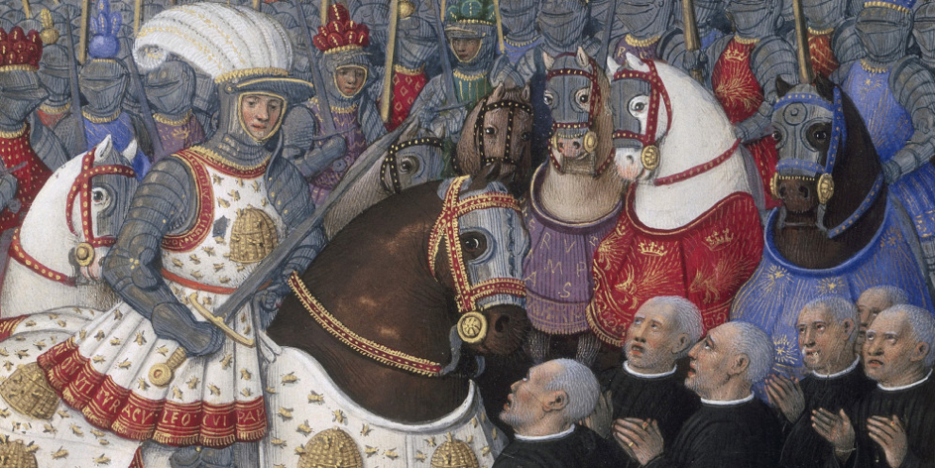
By passing in 1528 under the control of Charles V, Genoa then asserted himself as a privileged interlocutor of the emperor. The port city can indeed guarantee a military fleet, economic networks capable of acting as “ connection between Spanish lands and Germanic space “(P. 200), but also a financial windfall allowing Genoese to establish themselves as” Habsburg bankers “(P. 240) and leaving a relationship” symbiotic “Between the Genoese economic network and the territorial hegemony of Charles V, that of a” informal empire within a formal empire (P. 266).
Capital without capital ?
Among the tools of the Genoese economy, there is indeed the rise of original forms of capital association. Sharing the costs of a business trip is an ancient practice in the Mediterranean. However, in Italy at the end of the Middle Ages of sustainable and important societies develop, among others in Genoa. These companies are divided into shares (carati) Between shareholders, who can resell them. For larger ones, managers or even advice end up administering business, as is the case for Mahone From Chios, which literally owns the island, a first -rate Mediterranean market south of Constantinople. This results in the creation of quasi-monopolies on certain products, for example Mercury mines in Castile.
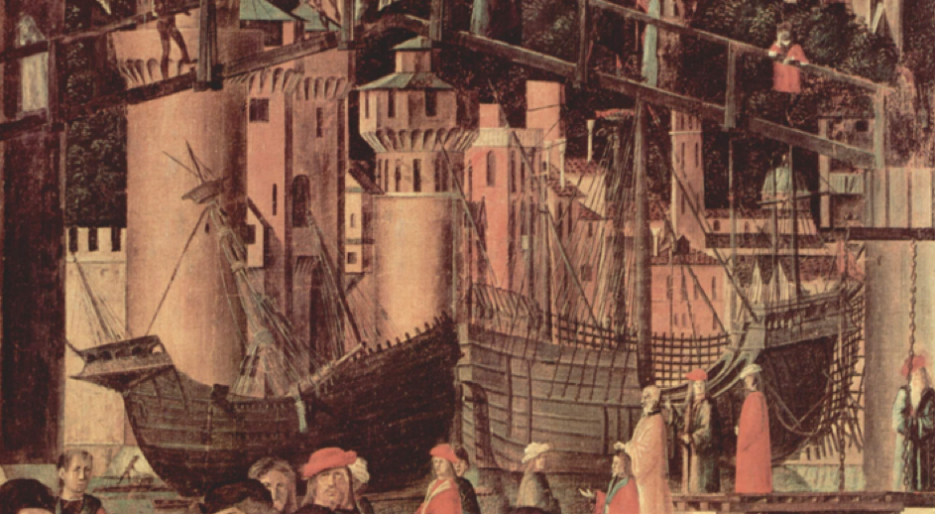
The Genoese position is still based on other tools such as maritime insurances, but also letters of exchange. Banks are multiplying, often created by merchants who seek to diversify their activities. Circulating paper as a currency allows merchants to use it as a means of credit, to provide goods by postponing payment to later. These financial tools are based on very material structures, starting with the volume trade allowed by the Genoese merchant ships, the size of which increases, requiring the reconstruction of the port of Genoa.
At XVIe century, the Genoese “ triumph in finance (P. 163). However, the book often recalls how much behind Genoa the whole north of Italy and beyond most of the European ports and cities in Europe are adopting these tools, which explain that Milan or Florence have largely contributed to the financing of navigations which multiply at the start of the Iberian Peninsula. The specificity of Genoa then derives a lot from the contrast between the strength of its economy and the weakness of its state.
However, recalls Fabien Levy, this is the result of a long work of the big families to limit the public budget and, as we write during an assembly of 1303, “ keep the government in a short leash (P. 54). Consequently, public debt reaches unique proportions: “ The public authorities are thus forced to sell part of the res publica to individual investors (P. 57). Credit associations (comprehe) are gathered at XVe century in a unique organism, the Casa di San Giorgioto which the city’s money entries are delegated and the management of certain territories. Discussed by Machiavelli, this influence remains central to historians of the great commercial companies of the colonial age.
Christopher Columbus and the others: Capitals and Genoese capital in America
In this context, the contribution of Genoese to Atlantic expansion takes several forms. The men themselves, installed in number in the ports of the Iberian Peninsula: Lanzarotto Malocello, famous for having discovered the Canaries, Luca Di Cazzana, who tries like others several trips to the west from the Azores before Columbus, or Bartolomeo Colombo, cartographer in Lisbon before his brother Christophe takes the road to India.
Omnipresent within the more generally cosmopolitan world of navigation The Genoese affirm their economic role. Thanks to their networks, they buy the licenses offered by Iberian monarchs, mount large -scale expeditions, implant the cultivation of sugar or cotton in the Atlantic Islands, and organize the beginnings of the slave trade from the Côtes d’Afrique. However, the increasingly systematic recourse in servile labor marks a paradigm change compared to medieval structures, when the flows of slaves from the Caucasus remained mainly intended for domestic captivity. So that the operating systems that Genoese contributes to creating in the Mediterranean are a continuation of their previous activities, without being the exact extension.
Conclusion
THE “ breath of capitalism “, As it can be perceived through a single city, does not obviously aim to see in Genoa the unique cradle of capitalism, but the choice of such an observatory makes it possible to show how successive switching during this three -centuries period reveal the strength of financial networks. The alert and informed story, although it often leaves sources in the background, attests to the way in which the financialization and structuring of merchant networks allow private initiative to replace the establishment of a state, and to escape the state division of the continent, XVIe century in Italy as on the rest of the European continent.