
What are the economic consequences of conversions in Rome of the first modernity ? The fate of a Jewish family of the elite sheds light on the question of conversions to Catholicism, and consecutive social status changes baptism.
Through her examination of the lives of Salamone and Lazzaro Corcos, Sephardized bankers called-who have become Ugo and Gregorio Boncompagni-, and from their whole family, including son, nephews, nieces and grandchildren, Isabelle Poutrin offers original and innovative light on voluntary as well as forced conversions, explaining their economic repercussions, and family disadvantages.
Isabelle Poutrin’s book reconstructs the richness of Roman Baroque society and offers a perennial picture of its complex social fabric. The author gives life, with master’s degree, to a very diverse set of characters, not only by restoring their individual journeys but also the socio-political forces as well as religious working on their daily experience.
The profession of the historian
As the author specifies, archival research takes time – years sometimes, and even decades. As well written in Latin as in Italian, the legal sources it analyzes are anything but easy to read, interpret and select, especially with regard to long trials, often stretched over several years, or even on several generations, during which popes, judges, notaries and litigants come and go (or even disappear from the registers).
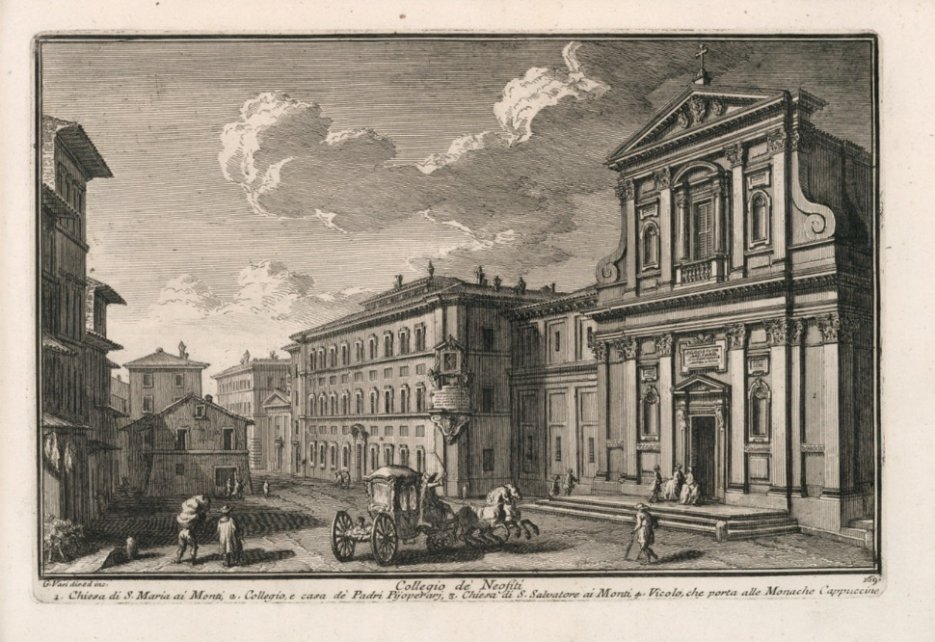
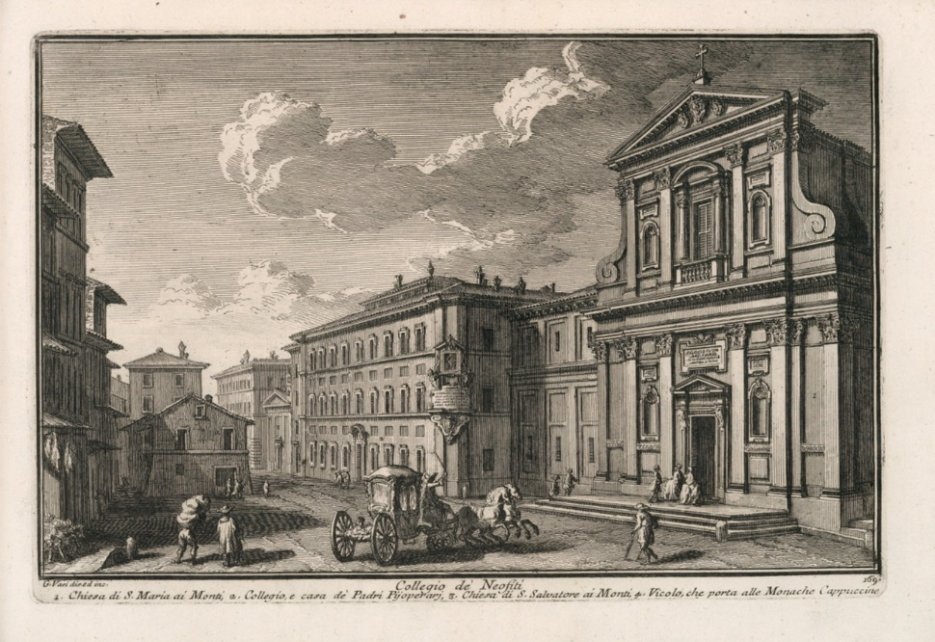
The very rich and complex documentation resulting from the Roman Rote and Roman notaries court – alongside many other sources consulted by Isabelle Poutrin for five years of preparation – makes it possible to grasp relations sometimes difficult to disentangle between converts, their Jewish parents, former members of their community, and, more broadly, the Roman Catholic society. This documentation reflects long -term disputes, property and money cases that reveal the subtle networks of relationships within these groups. Adopting a micro-historical approach, Isabelle Poutrin places the intrigues relating to the same family at the heart of the colorful landscape of the Popes Rome. It gives life to a decor rich in detail: the solemn churches, the Saint-Pierre basilica, the Saint-Ange castle, the Oratory of the Vallicella, the Catechumens house where the converts receive a Catholic instruction, as well as the animation of the streets, places, banks of the Tiber, and the noble residences of the Parione district-all these places Jewish ghetto.
The plural paths of conversion
The eleven chapters of the book establish the chronicle of the different waves of conversions within the Corcos family. The story opens in media res By a dispute about a bet between Elia di Salomone Corcos and the Genoese Cesare Zattera, which plants the decor of the volume. As the author points out, and like other works on the practice of the game in the Rome of the first modernity confirm it, the Romans are passionate about Paris all kinds of subjects – and more particularly as for the pontifical elections and the creation of the new cardinals. Despite the severe restrictions of the pontifical bubble Cum nimis absurdum (1555)-which prohibits the Jews from discussing or interacting with Christians and implements strict spatial segregation within the ghetto-the Jews always manage to take bets in the Banchi district, located between the ghetto and the Saint-Pierre basilica.
Elia Corcos is not an ordinary figure. This rich Sephardic banker with powerful relations among the inquisitors and the cardinals shows a pronounced taste for high issues, going so far as to bet his own potential conversion. This is how he became a Christian in 1566, the result of a daring bet with Cardinal Michele Ghislieri. Corcos promises that he would convert to Christianity if Ghislieri reached the Holy See, saying: “ I will be Christian when I see you pope ». Ghislieri was elected against all expectations, by the janner of January 1566, under the name of Pius V, and Corcos honors his bet, being baptized under the name of Michele Ghislieri in June of the same year.
After a solemn baptism ceremony celebrated by the pope himself, Elia-first “ convert From the Corcos family-is welcomed within the Pope’s family, Roman citizenship is granted to him, as well as many privileges, including a title of knight for his children and himself, in addition to many benefits previously established by the Judaeos cupients (1542). Through the fate of the Corcos family, Poutrin dissipates “ tenacious prejudice “Which consists of” Consider that the poor change religion for material reasons, while the wealthiest or educated individuals are attracted by spiritual, moral or even political motifs, obviously more noble (p. 55). Locating his remarks beyond the idealized portraits of converts as pious souls enlightened by the Catholic faith, the author insists rather on the concrete privileges associated with baptism, and examines the efforts of the converts to maintain a balance between their relationships with their families of origins while distanced from the “ Jewish spot Marking their identity.
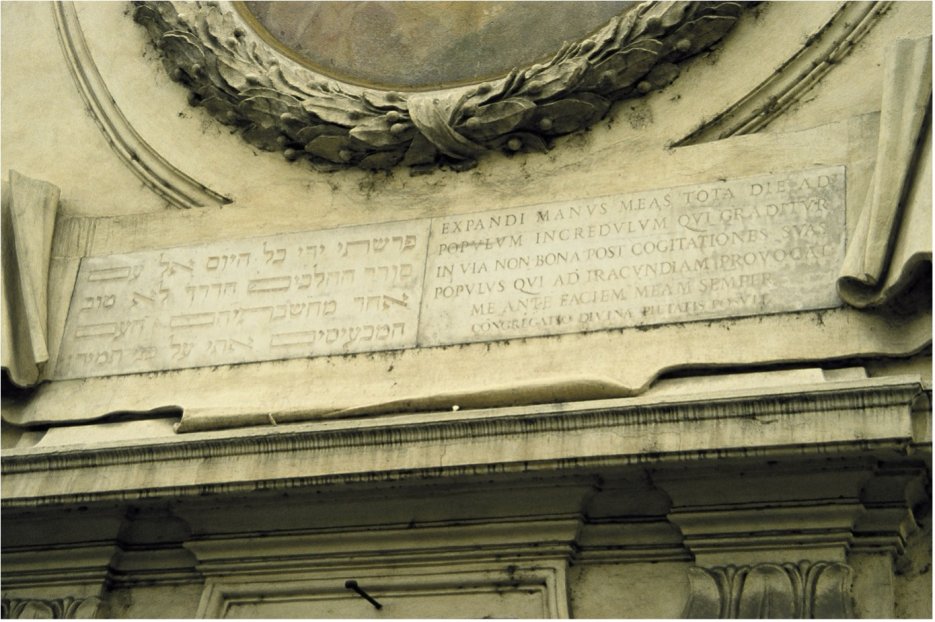
The Jewish community is the subject of constant efforts on the part of Philippe Néré and the Congregation of the Oratory which he founded in 1551, according to a gentle and persuasive method. Later, under Grégoire XIIIsermons targeting the Jewish community are more strict, adopting a compulsory tone. The Roman environment is thus characterized by a persistent influence exerted on the Jews. Added to this is the action of recent converts, which serve pontifical propaganda by encouraging others to follow their path, intensifying this context of persuasion. This mixture of missionary commitment, compulsory preaching, and pressure from new converts, ends up leading to the conversion of new members of the Corcos family, gradually pushed by the combination of social and spiritual forces.
External events, such as the typhus epidemic of 1591, participated in accelerating the kidnapping and conversion of children under stress and violence. Orphans of father, the four nephews of Ugo Boncompagni were removed from their home in 1592 and baptized against their will and that of their mother, Gemma, herself baptized later. Another notable case of kidnapping and forced baptism of children Parentibus guest (“ against the parents’ will ) Is that of Devorà Corcos. The treatment of this question is one of the significant contributions of Isabelle Poutrin’s book.
Mothers and girls, sisters, nieces
Although the book does not claim to constitute “ A study on the subjective experience of religious conversion “(P. 53) Due to the limited information on personal perspectives in the archives, Isabelle Poutrin manages to restore the emotional landscape of those pushed to conversion, in particular that of mothers who are snatched their children to be baptized: fear, inner conflict, anxiety, despair, pain, but also feelings of resistance.
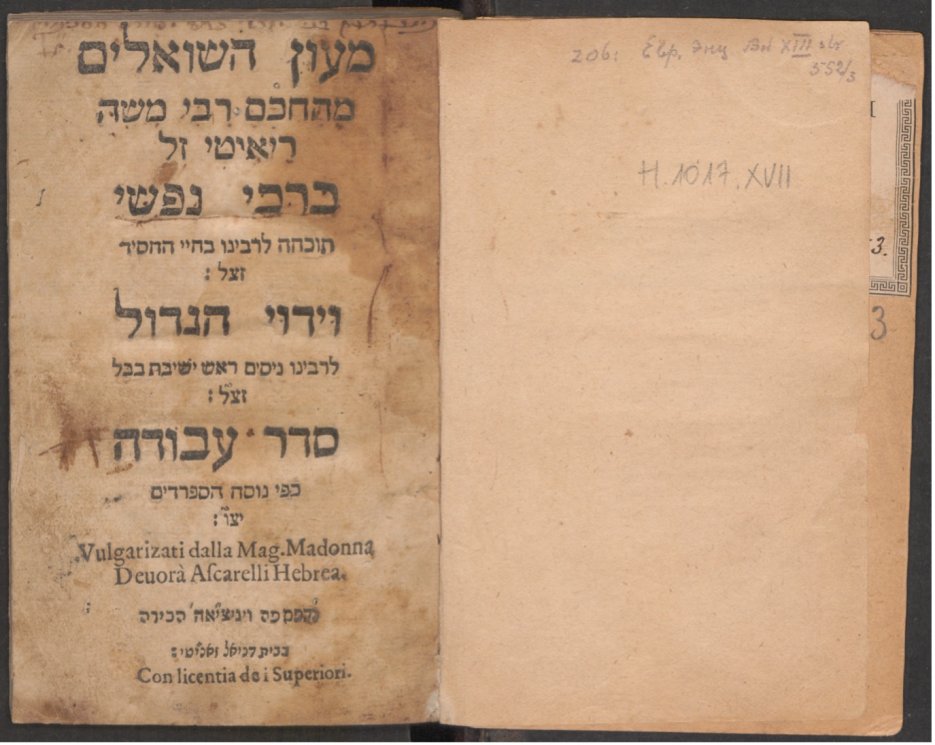
There is no doubt that Devorà, daughter of Ugo and sister of Gregorio Boncompuni, is the object when in 1604 she was taken with her four children at the Catechumens house. After a desperate and vain attempt to save even her youngest baptism, she ended up giving up the conversion that would have enabled her to follow her children. A meticulous archival research allows Isabelle Poutrin to identify this woman with the renowned poet Deborah Ascarelli, probably the first Jewish woman to see her published work.
Unlike Devorà, many other women in the family do not have the means or supports to resist. Some capitulate out of despair, or due to financial difficulties. Missing the social or economic levers available to men, women are often targeted by the decisions of their male parents and the authorities, and maintained under their control, which makes them particularly vulnerable to the mechanisms of constraint and manipulation. The book underlines how much women, taken in pincers between neophytes and their Jewish parents, are frequently at the center of conflicts relating to the DOS, inheritances and childcare rights. From these disputes arises immense pressure for women, considered to be crucial to guarantee the link between family assets and the perpetuation of the lineage. Consequently, women are to the point of convergence of these conflicts, and their destinies intertwine with the reversals of loyalty and the complexities of the judicial battles which mark the time.
Even after conversion, their position does not always improve. While a high cost already accompanies the conversion of men – demanding from them, to settle in a new environment, to break family and social relationships, to leave their homes and their goods, and often to give up their professional skills – Corcos women often pay an even more important tribute. For them, conversion does not only break networks of personal and social frequentation, but plunges them into great vulnerability, often making them dependent on the charity of wealthy parents or ecclesiastical institutions in order to obtain a modest dowry or simply to survive out of the ghetto. In contrast, the assets and relations of the first bankers-annotates allow them to negotiate much more favorable terms, to ensure extensive autonomy, and to have guarantees allowing them to face the problem of their new identity with more security and a greater capacity for action.
Ultimately, the analysis of Isabelle Poutrin sheds light on the complex interactions between political, religious and cultural forces that shape the conversions in the Rome of the popes, revealing the ambitions, conflicts and power dynamics in the background of these conversion processes. Pope’s converts stands out as a remarkable work of historical scholarship, by combining meticulous archival research with an empathetic and nuanced story. Richly detailed, this study is accompanied by genealogical trees extensively covering the Corcos family, and allowing the reader to more easily identify the converts by their Jewish and Christian names, while exploring the tortuous relationships between family members. This book by Isabelle Poutrin is not only an essential contribution for the study of Jewish conversions to Catholicism, but also an essential exploration of the papacy and propaganda of the Catholic Church in the XVIe century, offering a fine approach to questions of identity, power and faith at this key period.
Translated from English by Julien Le Mauff