
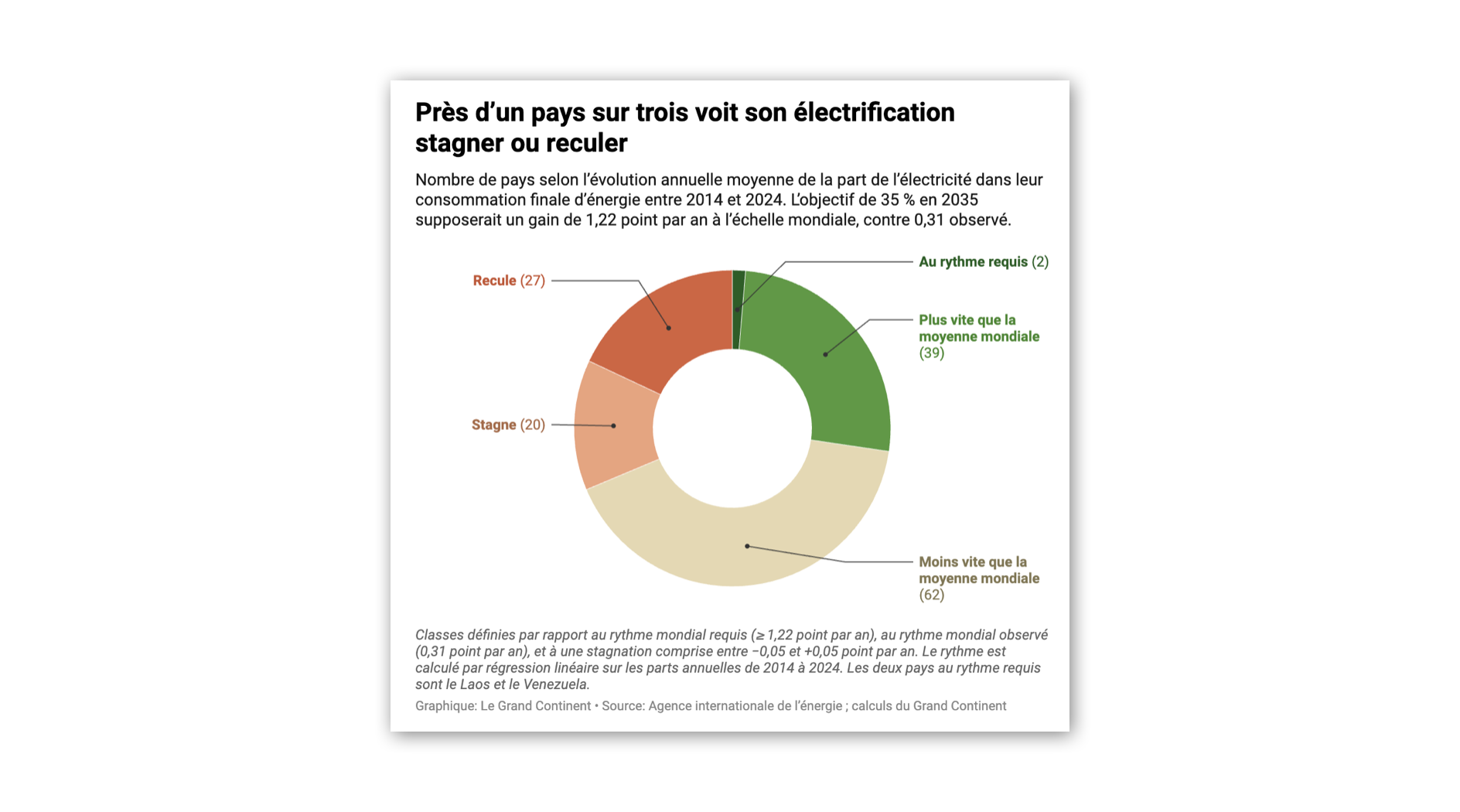
Share of electricity in global final energy consumption has risen by less than three percentage points over a decade, from 18.7% in 2014 to 21.6% in 2024, according to data from the International Energy Agency. While this progress is steady, it is four times too slow to meet the 35% target by 2035 that the Turkish presidency of COP 31, opening today in Antalya, aims to have adopted.
- This indicator is crucial for the transition because electricity, which is more efficient than combustion and emits no emissions at the point of use, already covers nearly 40% of useful energy needs – i.e., the energy available for heating, cooling or lighting.
In an interview with the magazine, Fatih Birol, the director of the International Energy Agency, says that beyond the imperative to reduce CO₂ emissions, electrification also addresses a sovereignty issue for countries and regions that are net importers of hydrocarbons.
- This is especially true for Europe: Birol says he is “convinced that European sovereignty depends on our ability to electrify our economies. It is a matter of sovereignty, energy and economic competitiveness. It is also, ultimately, the condition for achieving climate goals.”
- He adds: “It should be noted that Europe has progressed since the shock of 2022 by accelerating the deployment of renewable energy. Thanks to these considerable efforts, European electricity systems were less exposed to gas supply disruptions this year than they would have been otherwise. But there is still a lot to do.”
According to an analysis by the journal, eight countries and territories (Hong Kong, Iceland, Norway, Malta, Tajikistan, Bahrain, Taiwan and Israel) were already above the 35% threshold in 2024.
- Among the 150 countries and territories studied, only two have electrified their economies in the past decade at the pace required to reach the global 35% target by 2035: Laos and Venezuela.
- In nearly three-quarters of the countries, the electrification pace is below the global average of 0.31 percentage points per year (62 countries), stagnant (20 countries) or declines (27 countries).
- In the European Union, Ireland (0.48 percentage points per year) and Luxembourg (0.34) are the two only member states advancing at a rate higher than the global average.
China lent its support in October to the initiative led by Turkey. The country posted an electrification rate of 29.3% in 2024 and is expected to reach the 35% threshold as early as 2030, five years ahead of the deadline, according to forecasts by the National Energy Administration of China.
- Beijing remains by far the world’s leading emitter of greenhouse gases, and released in 2024 more into the atmosphere than the United States and the 27 member states of the European Union combined.