
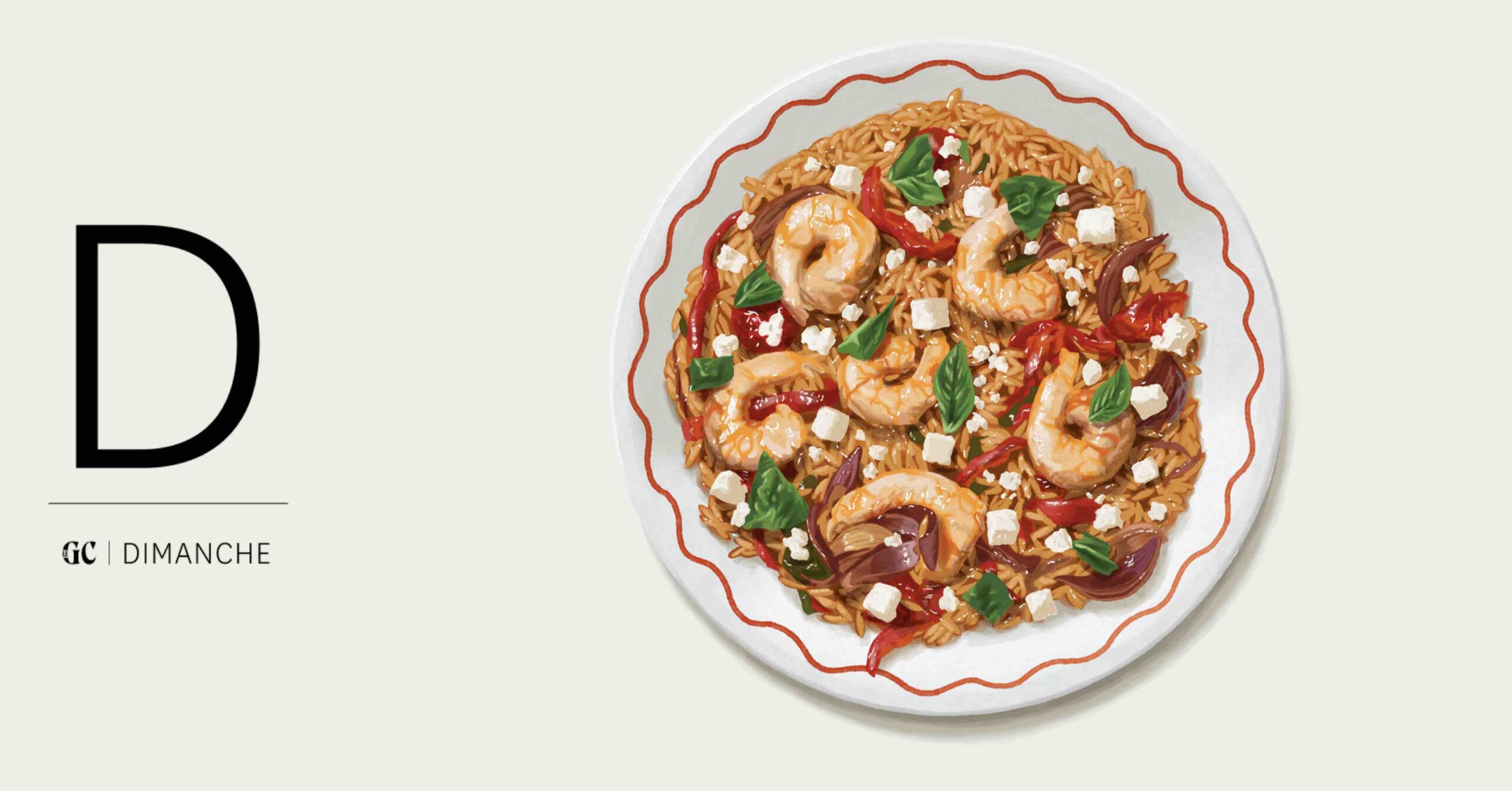
Ingredients (serves 4)
- 200 g feta
- ½ teaspoon crushed red pepper flakes
- 4 teaspoons fennel seeds
- 250 g orzo
- 3 garlic cloves
- orange zest
- 1 can 400 g crushed tomatoes
- 500 ml vegetable stock
- 400 g raw shrimp
- basil leaves
- olive oil
- salt and black pepper
There are dishes that traverse the seasons without ever growing stale, and this one is among them: orzo with shrimp, tomatoes, and marinated feta. To be clear from the outset, this recipe isn’t mine, but Yotam Ottolenghi’s. I’m only making it and serving it, with a devotion that borders on the deepest affection.
My affinity with Ottolenghi isn’t new. I love cooking, but perhaps I love his books even more, and I go to his restaurants whenever the opportunity arises. When I entertain, I almost always turn to him: his cuisine is designed to be shared, from the prep to the moment, always a touch ceremonial, when the dishes arrive at the table.
I had tasted this dish for the first time about seven years ago. A friend, an excellent cook, prepared it for me, before eventually admitting that the recipe came straight from an Ottolenghi book.
What attracts me are two things. The logistics, first: everything can be prepared in advance and set on the table, sparing me back-and-forth trips to the kitchen when guests are around. The flavors, then, that generous blend, halfway between the Middle East and the Mediterranean, which is the very signature of his cooking. I have prepared it more than thirty times, at least once a month, effortlessly and never tiring of it.
It is also, unusually, a dish that pleases everyone at home: my husband doesn’t eat meat, my daughter doesn’t eat fish, but everyone eats shrimp, tomatoes and pasta. The herbs and fennel add an extra lift that makes the difference, the orange brings a citrus note and a great deal of freshness; as for me, I confess a weakness for the tomato sauce. On evenings of indecision, I turn to it. I double, even triple the quantities hoping for leftovers, in vain: we serve ourselves again, and everything disappears that same evening.
Simple, therefore, yet refined enough for a dinner with friends. That is Ottolenghi’s genius: producing versatile, all-purpose dishes in the best sense of the term.
Here is how to proceed.

The first secret: a very good olive oil. Pour a tablespoon into a large sauté pan and sauté the orzo, seasoned with salt and pepper, for three or four minutes, until it is a lovely golden color. Set it aside then, but keep the pan, because this is the other great asset of the recipe: everything happens in the same vessel. A drizzle of oil again, and toast the fennel seeds before crushing them. Then come the orange zest and the garlic; as soon as the garlic starts to color, add canned crushed tomatoes, sometimes fresh ones, bring to a boil with a splash of water, salt and pepper, then reincorporate the orzo, which will cook in that broth. Let it simmer for about fifteen minutes, stirring occasionally.
When the cooking feels right, remove the orange zest; it’s there to perfume, not to be eaten. Then add the shrimp, which cook in about three minutes, and a few basil leaves. All that remains is to arrange the feta on top, marinated beforehand in a little fennel and olive oil. About half an hour in total, and it’s ready.
A crisp green salad accompanies it beautifully, especially in hot weather. For that is its other virtue: despite the cooking, the dish isn’t heavy. The shrimp harmonize with the brightness of the orange and the herbs, the feta does the rest. A dish worth serving twelve months of the year.

All of this, of course, depends on good ingredients. I still order many things for home delivery, but for the finest seafood, when I have time