

80% of world trade passes by sea ; fewer than ten companies control most of this traffic. Capitalism is not limited to the extraction of raw materials, it organizes a system where the fluidity of goods is based on the captivity of bodies and territories.
When a container ship delivers our goods, the scene remains off-camera: weeks at sea, bodies at work, a floating jurisdiction, and sometimes — at the end of the chain — a man left alone. In May 2017, Muhammad Aisha, a Syrian sailor, was hired as a second on theAmana Bahraini-flagged cargo ship. Six months later, the ship was seized in the Egyptian port of Al-Adabiya for unpaid wages. The families of the other crew members finance their repatriation. But someone must stay on board: the Egyptian courts designate Aisha the legal guardian of the ship. For nearly four years, he lived alone on a hull without fuel, without electricity, without food or water, swimming to the coast regularly to recharge his phone and get something to survive.
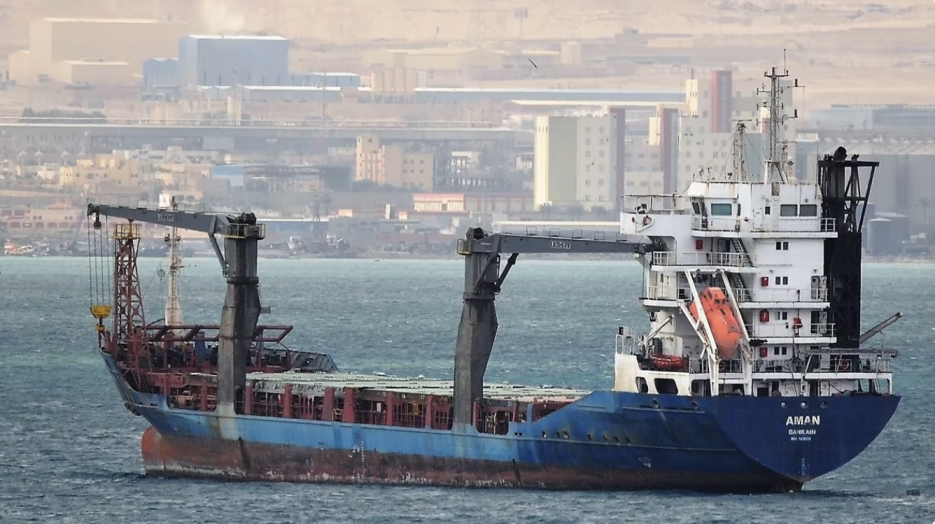
This scene, which L. Khalili recounts with clinical precision, condenses the entire argument of his book. According to the United Nations Conference on Trade and Development (UNCTAD), maritime transport moves more than 80 % of goods traded in the world: an ordinary, but decisive, infrastructure. But the apparent fluidity of this system is due to the invisibility of those who make it work. Professor of Gulf Studies at the University of Exeter, a former consultant and engineer, Khalili had already explored maritime trade infrastructure in Sinews of War and Trade (2020). With Extractive Capitalismit broadens the focal point: the “ extractive » is not only an economy of the mine and the well, but an assemblage – materials, law, finance, logistics – which creates value by making its costs untraceable.
His book is part of the lineage of critical logistics studies — after D. Cowen, A. Tsing or B. Christophers —, while shifting the focus from flows to the legal and financial architectures that make them possible.
Invisibility at the heart of the machine
Khalili’s central gesture is fearsomely simple: extraction is not a sector, but a architecture. Raw materials, contracts, insurance, consulting firms, regulatory havens: these layers fit together to produce “ fluidity »: circulating goods and income while keeping responsibilities at bay. She states it from the outset, linking our consumption to the fate of sailors: “ The book is about the seafarers on the container ships which carry our products which are then abandoned at sea by shipping firms, made invisible while we use their cargo » — « This book illuminates the plight of sailors on the container ships that carry our products, then are abandoned at sea by shipping companies, rendered invisible while we use their cargo » (p. 5). We are not reading a metaphor here: we are reading instructions.
Aisha’s case gives substance to the argument. The scandal is not only humanitarian ; he is analytical. If a man can be thus held outside the world » at the very center of a global system, is that this system requires invisibility to function without apparent clashes. Not an accident, a requirement. His case is not isolated: the joint base ILO/IMO identifies 1,555 abandoned sailors in 2022 (record), for a global workforce close to 1.9 million (BIMCO/ICS).
The first procedure relates to the flag: the state in which the ship is registered — the flag it flies. This connection conditions a large part of the framework applicable on board (controls, standards, taxation, social law). In the “ open registers » (open registries), the shipowner can obtain this registration without any real link with the country, and thus choose paper sovereignty and, with it, obligations reduced to a minimum. Khalili details the logic of flags of conveniencewhere social obligations dissolve into competing jurisdictions. She sums up the asymmetry in one sentence: “ This ‘convenience’ is, predictably, reserved for owners and operators, who are subject to negligible oversight, inspection or accountability, and pay minimal tax and wages » — « This ‘complacency’ is, unsurprisingly, reserved for shipowners and operators, subject to negligible monitoring, inspection and liability, and paying minimal taxes and wages. » (pp. 75-76). The large open registers — Panama, Liberia, Marshall Islands — thus concentrate more than 42 % of global transport capacity.
At this point, the micro-scene joins a broader discussion about the sea as a site of power. As D. Todd recently showed regarding A. Orain in There Life of ideasthe history of capitalism is also a history of maritime rivalries: far from being an open space, the ocean is a terrain of appropriation – roads, straits, registers – where the control of flows is legally constructed.
Extraction intermediaries
The heart of the book then plays out among those who make extraction transportable, insurable, profitable — “ own » for the balance sheets. Traders, consulting firms, finance, law: Khalili describes a chain of intermediation which transforms a material risk — pollution, accident, coercion, social violence — into contractual lines, subsidiaries, arbitrations. Invisibility is no longer a side effect ; it becomes a professional skill.
The chapter on commodity traders outlines the contours of a conflict between us: few firms – Glencore, Trafigura, Vitol, Cargill -, a lot of opacity, a structural dependence on gray areas. Mr. Rich, founder of Glencore, supplied Iranian oil to Israel before and after the 1979 revolution, negotiated with near-bankrupt Jamaica for alumina at 25 % below the market price, and was finally pardoned by B. Clinton. Their power lies less in production than in capture: information on markets, control of storage, transport capacity, access to financing, proximity to States.
Consulting firms play a similar role. Khalili, who herself worked at Andersen Consulting and then Price Waterhouse in the early 1990s, gives an inside look at what she describes as a “ machine grievance » — the institutionalized scam. In 1967, McKinsey advised the British Transport Docks Board to accelerate containerization to break dockers’ strikes: “ expensive labor can be replaced with cheaper capital equipment » — « expensive labor can be replaced by cheaper equipment » (pp. 127-128). Fifty years later, McKinsey South Africa joined forces with the Gupta brothers’ front companies to divert resources from public companies under President J. Zuma. In both cases, the same pattern: externalize human costs, internalize profits, make the transfer indistinguishable.
Superyachts close the loop. They are the visible symptom of a regime that wants to be invisible. THE Azzamcommissioned for more than half a billion dollars by the president of the Emirates, measures 180 meters — the height of the Gherkin in London. THE Serene of Mr. bin Salmane has a room where machines produce ten centimeters of snow on demand. Luxury, here, is not the whim of a prince: it is the index of an order – that which consists of moving the social and legal cost out of reach. The Saint Lucian poet Derek Walcott, Nobel Prize winner for literature (1992), whom Khalili cites in the epigraph of the chapter, said it better than anyone: “ new plantations / by the sea ; a slavery without chains, with no blood spilled — just / chain-link fences and signs, the new degradations » — « new plantations / by the sea ; slavery without chains, without bloodshed – just / fences and panels, the new degradations » (pp. 95-96).
This “ fluidity » yet knows its breaking points. When maritime routes are threatened – piracy, straits, conflicts – what seemed purely logistical becomes political again. E. Frécon was already analyzing it at the time of “ return of the pirates »: securing flows is the other side of their invisibility.
What the book reveals… and what it leaves in the shadows
The merit of the book is to hold together, in 208 pages, material extraction and extraction of rent, infrastructure and law, sea and climate, without taking refuge in a single register – technical, moral or geopolitical. Its strength is also narrative: a few scenes are enough to denaturalize globalization, to bring it back to the level of bodies, contracts and pavilions.
This density has a downside: the kaleidoscope effect. Certain sequences powerfully illuminate a mechanism, others remain more illustrative than demonstrative – the classic price of a panoramic synthesis. We can also discuss the assumed choice of the term cronyism (crony capitalism): it designates many collusions, but can make one believe that architecture is mainly due to “ bad actors », while it is largely normalized by corporate law, tax competition and financialization.
Above all, one area remains little worked on: time. Khalili excels at showing how order is paid for elsewhere – jurisdictions, seas, workers – but she less articulates the way in which extraction “ solves » the present by mortgaging the future – debts, irreversibilities, stranded assets. This limit does not invalidate his statement; she opens a construction site.
The book makes the machine visible. What it displaces in the French conversation is the idea that extraction is not a survival of the colonial past, but the very form of the contemporary economy: an architecture that produces order here by exporting disorder elsewhere. And our future like a bill.