
A long local historiographical tradition has long prevailed the idea that moderation would have characterized the Orleans during the Revolution. It was ignoring the existence of strongly politicized currents, beyond the only revolutionary period.
“” The field of Mars is the only monument left by the revolution…. The Empire has his column, and he still took almost by himself the Arc de Triomphe ; Royalty has its Louvre, its invalids ; The feudal church of 1200 still sits in Notre-Dame ; It is not to the Romans, who have the Caesar thermal baths. And the revolution has for monument … the void … “It is in these terms that the historian Jules Michelet, in the preface of 1847 to his no less monumental” History of the French Revolution », Evoked the virtual absence of architectural legacy of its object of study in the urban landscape of Paris.
In his latest work, the historian Pierre Serna makes the same observation for the city of Orleans, hence the title. He thus evokes a “ architectural “(P. 7) or a” Erased History (P. 398), both for the revolutionary and imperial period. A long local historiographical tradition, of XIXe At XXe A century, even made the Johannine city a paragon of moderantism, presenting it as preserved for a good part of the excess of the revolutionary movement. The moment when the national convention held the reins of the country would have only been “ Plot disaster, red plague (P. 8) Having hardly upset this city, as protected by the moderation of the majority of its population.
Contesting this vision, the author, on the contrary, underlines a full and whole immersion of the city in political jousts, located “ antipodes of a soothing moderation (P. 18). It is a question of emphasizing the fact that there was, certainly, a party which often sought moderation, but that there was simultaneously a “ Live political battle between supporters of strongly opposite conceptions, from the most lively red to immaculate white (P. 16). This study is therefore part of a renewed political history trying to take into account the complexity of realities. What is more, it adopts a transversal chronological perspective, encompassing both the revolutionary, imperial and that of restoration period, in order to better understand these political battles over a long time. This urban monograph participates in the renewal of the genre, playing recurrently in a subtle game of scale between the microphone and the macro which echoes the microhistoric approach inaugurated in the extreme late 1970s by the Italian historian Carlo Ginzburg. Orléans, “ worldwide “(P. 18) whose port was integrated into the networks of the slave trade, is thus considered by Pierre Serna as a” key to understanding the country at war against all Europe (P. 31).
A rich corpus of sources
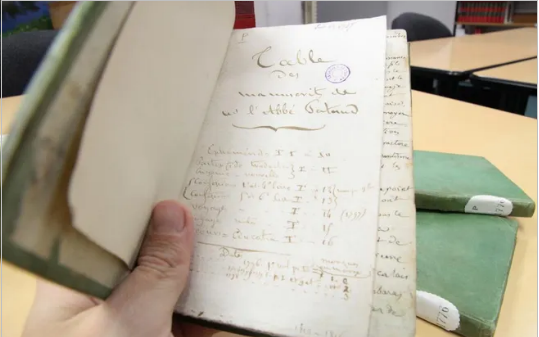
The reflection initiated by Pierre Serna, who makes this work a “ essay “(P. 34) According to the author, in particular on a corpus of sources that is both rich and original. Among the plethora of archives, he exploited what historians have conceptualized under the term of ego-documents, that is to say the writings of the private forum which are an important source “ To try this story at the level of the most modest experience (P. 31). By restoring scraps of the life of these people, their singular vision of events, these documents offer the researcher a direct and subjective testimony of a past which is not reflected for example in the administrative archives. Victory Dellezigne and Marie-Anne Charpentier, two fervent Catholics workers without pouring into bigotry, thus left a written testimony of their experience in the form of fairly voluminous newspapers, from 1788 to 1797 for the first and 1789 to 1804 for the second. Anti -revolutionary convictions are expressed therein “ where the religious, and the politics, the mystical force of events and religious signs mingle (P. 29). The Silvain Rousseau seed, also composed three notebooks from 1767 to 1803. By transcribing everything that was happening in the heart of the city of Orleans, by abundantly commenting on Parisian news, it offers a fairly suspicious look at revolutionary events. The author also and especially relying on the daily chronicle of Father Pataud (1796-1816), a “ CURÉ POLITIologist “(P. 266) which abhor the two extremes, that they were” Chouans fanatics ” Or “ exaggerated Jacobites (P. 268). The ecclesiastics is presented as a real moderate accepting the dissensus “ as the foundation of the Republic and not the mark of its fragility (P. 268).
Other funds enrich this reflection, especially on the start of the revolution. The historian has thus computed in the departmental archives of the Loiret 19 boxes of the deliberations of the Sections of Orleans, a source all the more precious than such an abundance is not common. He was thus able to highlight their preponderant role in the Orleans city during the year II. In this revolutionary process observed “ darker (P. 153), the sections proved not only to the politicization of the people towards a republican ideal, but more broadly played a real political, economic and social role in the city, orchestrating the policy of control of the circulation of grains, monitoring the construction of powders or even organizing charities in favor of the destitute. In doing so, they made a “ institution parallel to the municipality, providing sovereign functions (P. 151).
The myth of a moderate city deconstructed
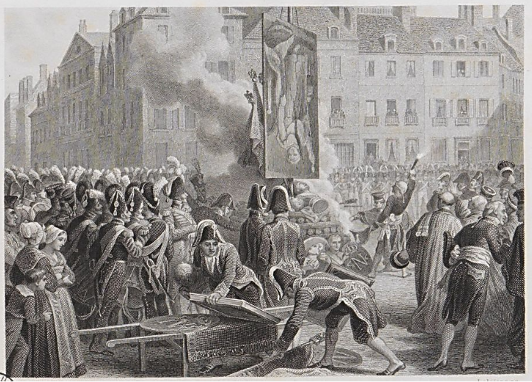
The importance of the sections signals the existence in Orleans of a political game shaken by two strongly politicized wings, beating the idea developed in local historiography of an alleged “ Orleans moderation as a DNA urban (P. 402). On May 30, 1793, a deputation of Orleans sans-culottes to the Convention thus presented the municipal authorities as “ aristocrats It was advisable to get rid of. The city thus played “ The first act, little noticed of historians, of the crisis of May 31 and June 2 “(P. 143), who saw the mountain people oust their Girondin opponents from power. The representative on mission Laplanche resolutely hired the city in a policy of dechristianization, having the Cross of the cathedral replaced by a red cap, augurious – ephemeral – cultural revolution which lives many names of places brought to know a “ Republican baptism (P. 184). Orleans was also the “ One of the French cities most radically engaged in the war effort of mountain policy “(P. 196), a garrison and stage city between the interior (proximity to the Vendée) and exterior (reception of foreign prisoners). To the other extreme of the political spectrum, from the year IIIunder the Thermidorian Convention, punitive expeditions were organized by young people against the honest figure of the “ Jacoquin (P. 222). One of them was even nicknamed the “ year -round III “(P. 222), whose tops competed in its ennoblement under restoration. Taking up the concept dear to the historian Albert Mathiez, the author evokes the “ white terror (P. 376) that the city knew between 1815 and 1817. In a cathartic aim, various symbols of the revolutionary and imperial eras, such as the tricolor emblem, were thus the prey of the flames.
However, Pierre Serna does not deny the existence here in Orleans, throughout the period considered, of a political center which often sought moderation but could display, according to the circumstances, a certain radicality. He thus evokes a “ radical center protecting above all its interests, achievements and wealth “(P. 403), reusing the socio-political concept he himself forged two decades, that of” extreme center (P. 305). In this logic, part of the Orleans elites would have shown opportunism, knowing how to stand alongside the strongest of the moment. It was particularly manifest in the year IIIat the time of the thermidorian reaction: “ The poison of the political weather vane, as disqualification of republican ethics, was born precisely at that time (P. 220). The most archetypal case was that of certain members of the Management Board of the Loiret Department, who were often old hebertists, the wing the left most to the mountain. At the end of the new wind of the reaction, they made a 360 degree turnaround, “ placing their views in the fight of new humanity against barbarism (P. 228). The coming to power of Napoleon Bonaparte, and the rave praise on his victories, underlined the fact that eloquence became “ The demonstration of the plasticity of echines in search of places, decorations and recognitions (P. 358). The whole is apprehended by the author as so many brands of a “ global girouetism (P. 362).
This work fully contributes to the initial design concerning the city of Orleans, recalled in conclusion: “ The time of the revolutionary immoir is over »(P. 404): By trying to reconstruct the Orleans political landscape in all its nuances and complexity, Pierre Serna helps to highlight the impact of the revolution in local political life over a long time. The share of autonomy of individuals and local powers is also implicitly underlined, which breaks with a certain “ summit tradition5 Politics, that is to say essentially Parisiano-Center. In this sense, the author notes a reciprocal influence between Orleans and the capital, “ but never mechanically (P. 60). The alert pen finally makes the reading of this pleasant work, punctuated moreover by some literary references (Denis Diderot, Jacques Le Fataliste, p. 34 ; Eugène Sue, The Mysteries of Paris, p. 378). A stimulating dive in short in the vicissitudes of a rich and tormented history, far from the placidity in which local historiography had somewhat locked up the city. A book whose interest, by the richness of the fund studied, as by the fairly remarkable quality of analysis of sources (chronicle of Pataud and discourse of the representative on Mission Brival in particular), very largely exceeds the local framework.