

Roman diets testify to a dietetic concern, but also moral and political. Frugality and pleasure are not exclusive. Eating is not just filling your stomach !
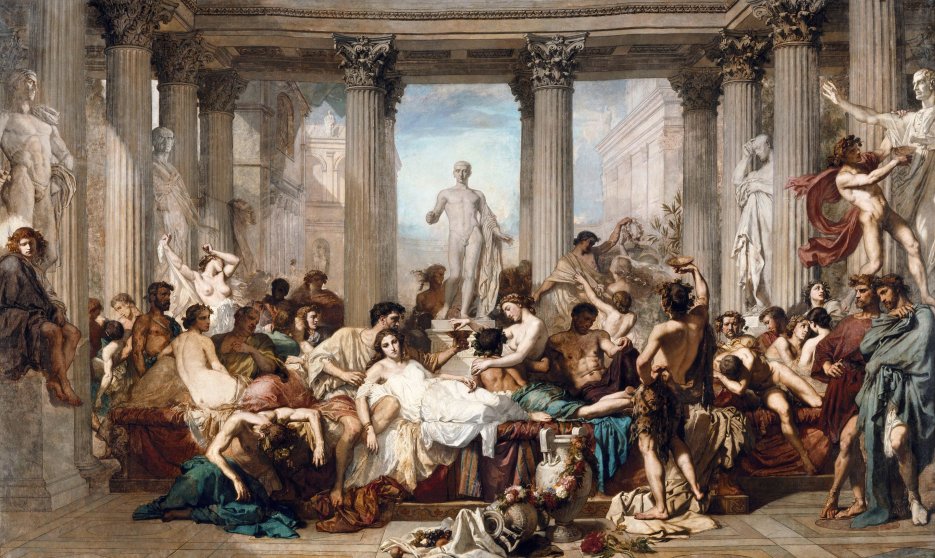
Nunc is bibendum (“ It’s now that you have to drink ), Said Horace, as well as an advertisement for the Michelin tire at the start of XXe century. The first called for celebrating Cleopatra’s death. The second capitalized on the modern image of a licentious and excessive antiquity in terms of drinks, food and pleasures in general.
A total historical object
Dimitri Tilloi d’Ambrosi proposes to take the opposite view of this vision, in a book which he devotes less to food in ancient Rome-theme already abundantly studied-than in the discipline that the Romans imposed themselves in the matter. This “ diet “Must first agree in the political (and etymological) sense of Latin regimen : A question of individual and collective government of food and bellies.
If it notes at first reading of dietetics and therefore of ancient medicine, the regime also has to do with morality, philosophy and sometimes even politics. Tilloi d’Ambrosi therefore looks at a total historical object, crossing the fields of medical, cultural, economic, social and political history. He proposed to do it on the period from the end of the Second Punic War (202 BCE), when medicine and gastronomy arrived from Greece in a Rome that became Mediterranean power, at Vie century, when the last strictly Roman sources died out.
The documentation on which it is based is above all literary, but embraces many genres, from the medical writings of Galien de Pergamé to the gastronomic treaty attributed to the famous ancient gourmet apicius, passing through the philosophy of Seneca, the moral reflections of Plutarch and other unclassifiable writings like those of Aulu-Gelle or Athene of Naucratis. The menu proposed to the reader then seems much more nuanced than the shots to which the peplums have accustomed us.
A medical and technical question
Roman dietetics was primarily a matter of health. It was part of the conceptual framework of the hippocratic theory of “ moods “, Which governed ancient medicine: health and illness were signs of a balance or imbalance between the four moods circulating in the body. The food acting on the production of these moods, regulating it made it possible to correct an imbalance and then maintain a healthy balance. The doctor therefore recommended the consumption of this or that food, the quantity, the frequency, and even the mode of preparation and cooking, according to the needs of the patient, the properties of the food and their “ registrations », That is to say their chemical interactions between them in the stomach of the eater.
To old people whose body “ was cooling “, We would recommend wheat and roasted meat, known” warming up ». Conversely, barley, considered “ humidifying “, Would be consumed more in summer and by young individuals. Health is also dependent on digestion, the doctor also gave instructions to the cook.
Thus, we would spend food in the pestle to release their essences and accentuate the effects during the cotion. We would avoid as much as possible to eat raw and we would therefore favor the boiled, whose cooking was deemed to be more complete than that of the roast, and above all less drying, for the food as for the eater. We would also keep from the excess of gastronomic refinements, which distorted the products and pushed excessive gluttony.
A moral and philosophical question
Food and its good government also took on a moral dimension among the Romans, whose philosophers were clearly positioned on the subject. The dominant stoicism, embodied in particular by Seneca (4 BCE – 65 AD), insisted on the Roman ideal of the frugalitasmoderation and simplicity. Cato d’Utique (95-46 BCE), embodiment of the Roman tradition-the famous MOS Maiorum – And sworn enemy of Julius Caesar, recognized the remarkable frugality of the future dictator. Conversely, the great statesman and general Luculus (118-56 BCE) ends up in general reprobation for his taste for luxury and refined dishes.
The food question joined Roman mistrust vis-à-vis luxury, which arrived like the cooks and their recipes from a Greek Orient deemed decadent and corrupter. The sumptuous laws adopted from the Second Punic War to fight it also gained the amount of food that was served during banquets. The objective was less health than political: excess food could lead to others, more dangerous, and diverted money and the efforts of the powerful of the public interest.
Even epicureans, whose names we are happy to associate with the pleasures of the table, reproved excess food, considering that they were led to poor health, physical but also moral softening. The cook, jacket In Latin, was therefore the enemy of the philosopher, who sent him back to his condition as a slave, certainly in the service of his master, but necessarily deceitful, even a thief, and incapable of the inherent measure in the Roman Libre.
Identities and politics
Eating was already a form of identity affirmation, as recalled since the XIXe century the famous Brillat-Savarin. From the outset, the dietary recommendations of doctors adapted to age, lifestyle, patient health, but also to the season and the Empire region, Roman domination that has not led to food standardization.
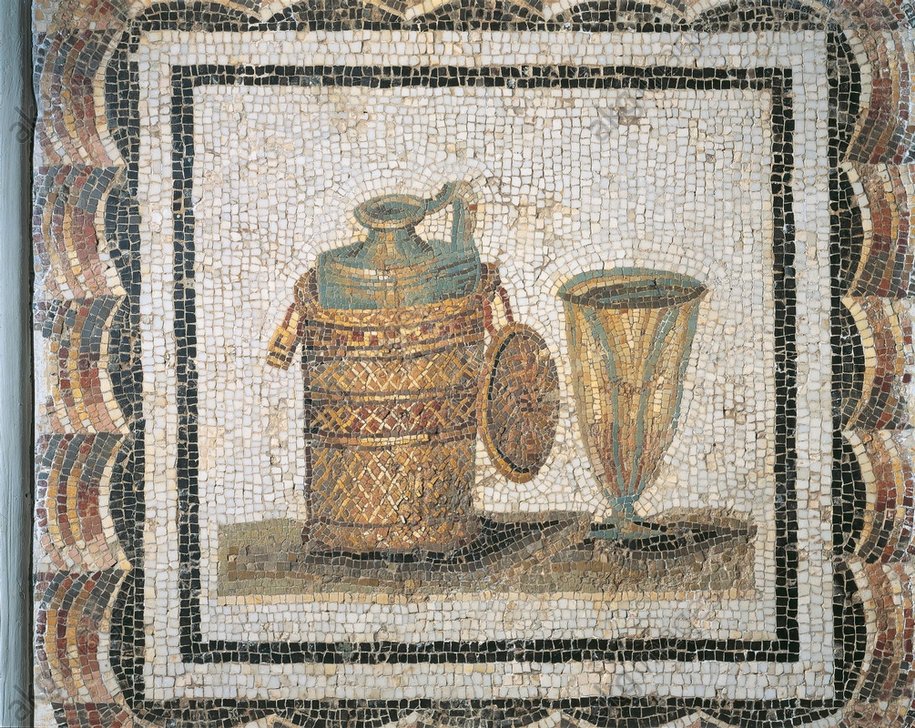
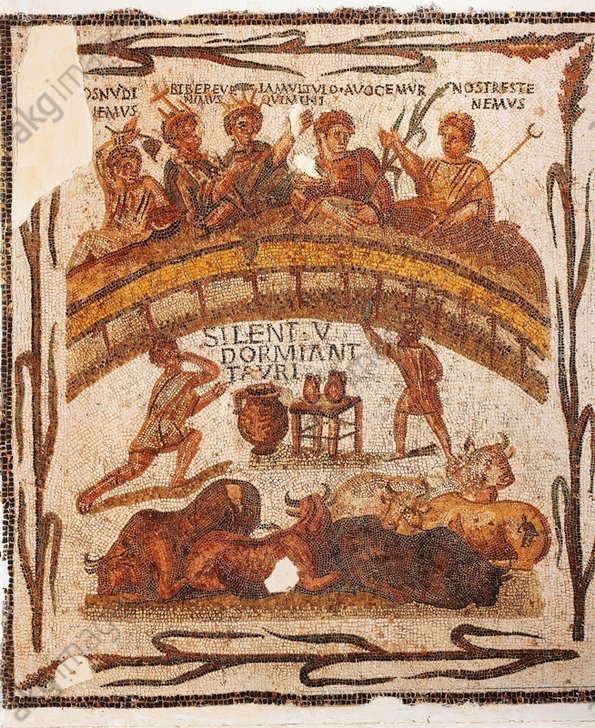
But the food and care brought to it also allowed the elites to distinguish themselves and to assert their social superiority. The Roman banquet, a moment of elite sociability par excellence, was an opportunity to display its richness, by the luxury of dishes and dishes, the abundance of wine, or the refinement of preparations. He was obviously not free from dietary considerations. THE xenia Decorating banquet rooms – such as frescoes and mosaics preserved in Pompeii or Herculanum – represented the foods that were consumed then, but seemed to favor the most dietetic of them, such as vegetables and fish.
Doctors and philosophers, aware of the social importance of these moments of excess and the impossibility of putting an end to them, endeavored to accompany them with various prescriptions to limit the harmful effects: that we are preparing for it, and that they are concluded with foods “ digestive Even purgatives such as snails, lettuce or wine. Pricking himself with dietetics and paying attention to his health, even in these moments of excess, was part of the common culture shared by and deployed the elites: this paideiaalso from Greece, and in which literature, arts, sciences and even medicine mingled.
Maintaining a doctor at home and letting him register meals was an additional brand of education, wealth and refinement. The Roman emperors pushed this dietary concern to the extreme, which has become a political issue at their table. The good emperor – as described by the literature produced by the senatorial elites – is as moderate at the table as in politics: he is content with little and showed a simplicity that Augustus theatrises immediately, being content with water, fresh fruit and breads, taken on the thumb between two political tasks.
Marc-Aurèle, a philosopher emperor par excellence, resumed this regime. Septime-Sévère, Emperor-Soldat whose table recalled the rations of the troops and the central place that meat held, reinvented in a just as political way: vigor but food simplicity of the table guaranteed that of the imperial body and, by metonymy, of the entire Empire, at a time of threats to the borders.
And pleasure in all of this ?
What was the pleasures of the table, in the middle of all these injunctions ? Very little, if we compare the reality of ancient practices to our modern shots. Being vomiting after or during a banquet was not an ordinary way to continue eating, but only a medical gesture in the event of danger. Dietary discourse interfered everywhere, even in the famous culinary manual of Apicius, which was written IIIe Or Ive century AD, but attributed to the contemporary gourmet in Tiberius.
Despite their degree of refinement and gluttony, some recipes testified to real attention to the digestion of the dish and its supposed effects on the body, in accordance with medical theories of the time. The good cook was not only preparing food good to eat, but easy to digest and healthy for the body. Dietetics and culinary pleasure were not everywhere considered enemies. The doctors themselves considered that healthy food should be pleasant in the mouth, and to treat the taste buds also ensured the health of the stomach.
The attention of Roman elites to the taste of food was notably illustrated by their use of eight distinct flavors to describe them, instead of the four that we use today (sweet, salty, acid and bitter). Sauces, spices and other culinary processes intended to improve the taste of dishes could find thanks to the eyes of food prescribers, provided they are part of the humoral system of doctors and to agree with their laps to the needs of the patient.
Dimitri Tilloi d’Ambrosi therefore offers a dive into the reflection that the Romans led to their diet. Or at least, in the one led by the elites, for whom food was not a question of quantity but of quality. We can reproach the work for having left aside the food prescriptions coming from the religious, which was certainly not as prescriptive as the Abrahamic religions will be, but which was not stingy with symbolism in matters of food.
However, he has the great merit of showing the great complexity of the Romans’ reflection on their food. Some differences with our current concerns appear clearly, such as the lack of ecological questions, and for good reason. But the resemblances are also striking, despite the abandonment of the conceptual framework of humoral theory: eating was already for the Romans a serious question, a question of pleasure, but also of health and identity, even civilization.