
There can be no peace among people without peace with the Earth.
This intuition, which ran through Renaissance thought, Anselm Kiefer has once again made visible to all through the correspondences between the branch and the star, in the cycle The Secret Life of Plants for Robert Fludd.
Robert Fludd was an English physician and philosopher of the seventeenth century. In the manner of an ancient midrash that proclaims, “There is not a blade of grass here below that does not have its star in the sky (mazal), which strikes it and says: Grow!”, he conceived the world as a game of correspondences between the macrocosm and the microcosm.
“The Sun, the Moon and the other stars of the heavens, the seeds, the trees, the herbs,” he wrote in Mosaicall Philosophy, are created “[as] man, by a single and same spirit.”
This intuition, Pope Francis expressed in three words: “Everything is connected.”
Why do we have such difficulty seeing this obvious truth today?
The problem concerns, above all, the imagination. The Cartesian distinction between res cogitans and res extensa has determined a way of interpreting the world, and at the same time a way of seeing and imagining it.
Our gaze is essentially instrumental. The world is at our disposal, like a tool at hand, and we use it because we are intelligent. As long as our imagination remains shaped by this schema, we can find the best solutions, but always within the limits of what this schema allows us to think.
The same goes for wars.
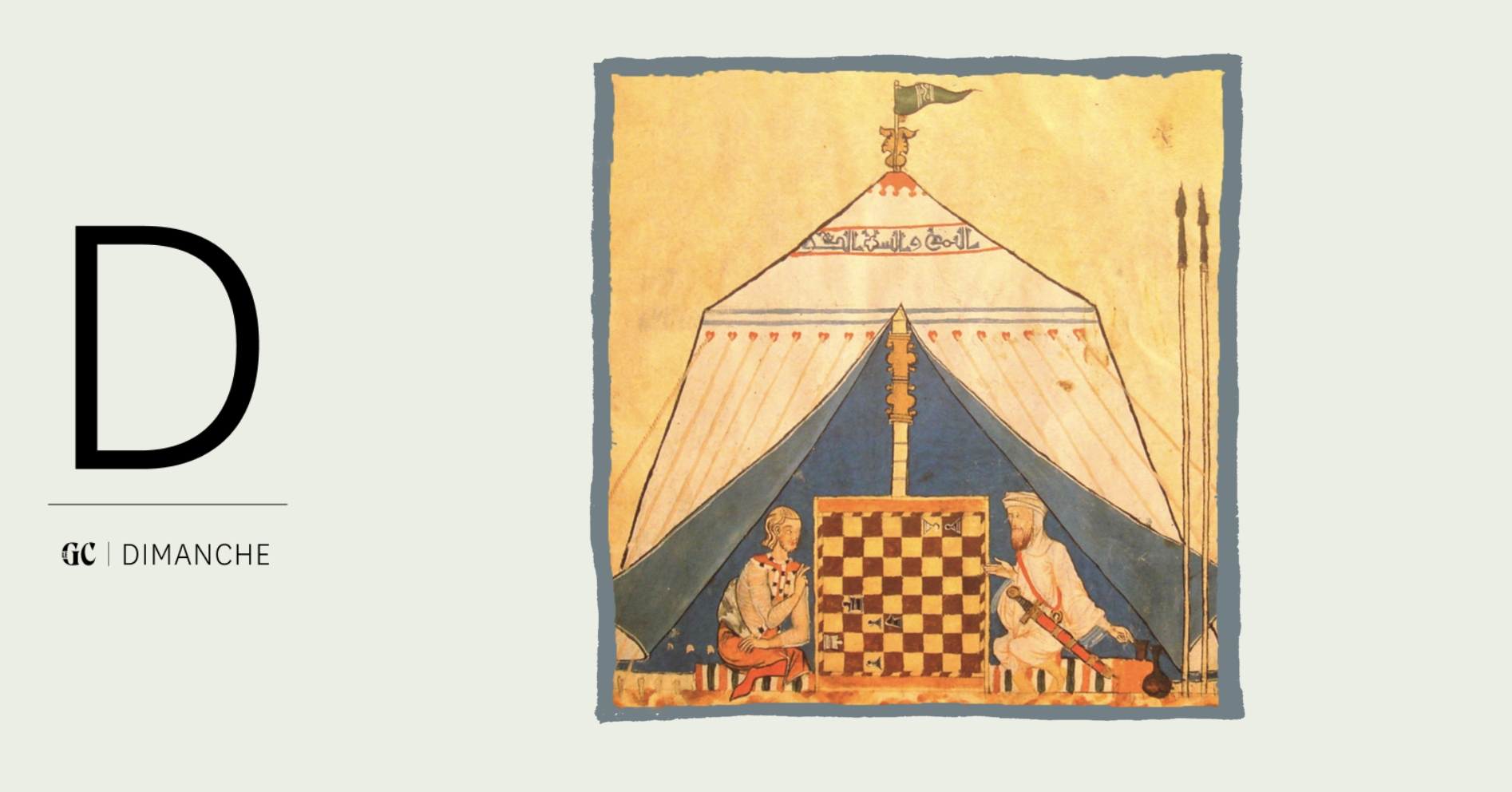
We seek to resolve them by looking at the world as a chessboard, with white and black squares, because that model seems effective to understand it. François had said: “We continue to govern the world as a ‘chessboard,’ where the powerful study the moves to extend their domination at the expense of others.”
On the chessboard, every move is played against someone. In a fabric, if you pull a thread, everything moves. If we looked at the world as a fabric, we would realize that many of the solutions we propose are ill-suited to the problem they would like to solve.
The lines of Kiefer between the branches and the stars are the threads of this fabric.
Our responsibility thus concerns the gaze, and the gaze reveals itself in language. How do we speak of the Earth?
In military language, it becomes terrain, objective, theater of operations, an expression almost elegant to designate the place where one kills.
In economic language, it is resource, deposit, raw material. “Resource” sounds good, too, and has entered our imagination. Yet this word carries an extractive mentality.
In Querida Amazonia, François writes that “the environment as a ‘resource’ risks threatening the environment as a ‘home’” (n. 48).
We thus risk having good ideas and expressing them with words and images that say the opposite of what we intend.
This is why Querida Amazonia seems to me a radical text, one we have not dwelt on enough.
To express a high magisterial teaching, François gives voice to poets, including Amazonian poets who are little known, because he understood that the challenge before us concerns the imagination. These poets, he writes, “help us liberate ourselves from the technocratic and consumerist paradigm that stifles nature.”
The conversion consists in moving from possession to guardianship, and the gaze is educated by contemplation and by poetry.
To artists, we must ask to help us speak of this bond, of this land, of this new world. Of technique, too.
Even in the acceleration of AI, it is fully situated within this vision, and it is not enough to interpret it merely as a threat or as an instrument of domination.
Algorithms, neural networks, large language models are not tools: they are environments that shape us and shape an ever-growing share of our relation to reality.
The verb “to use” risks leading us astray.
AI must be interpreted in ecological terms, as a part of our connections, and the question becomes: how to inhabit it without losing humanity?
Other traditions can help us here. Some Asian thoughts, such as Taoism, do not know Cartesian separation and offer valuable perspectives for rethinking technology in harmony with the world.
Contemporary Chinese philosopher Yuk Hui, with his “cosmotechnique,” proposes to recover forgotten cosmologies to imagine a technique in harmony with the Tian, the Sky.
It is a twin intuition to François’s, who, with the Amazon, raised the question of cultures capable of expressing the unity of creation better than our way of reasoning knows how to.
If everything is connected, we cannot intervene in a field, for example by developing an algorithm, without taking into account the repercussions on human labor, on social relations, on the climate, on democracy.
This holistic view is often lacking in AI debates, which tend to dissect problems by sectors: ethics, safety, productivity.
Whereas, obviously, everything is connected.
Making peace with nature begins when we recognize that the Earth is among the victims of every war and of the conditions of every peace, and that we reweave the link between the branch and the star.
The question posed in Laudato si’ remains open: “What kind of world do we want to leave to those who will come after us, to the children who are growing?”