
Social status, order, quality, virtue, there is no shortage of criteria for defining nobility under the Ancien Régime. However, by looking at this social group, it is clear its diversity, the evolution of its contours and the definition given to it by contemporaries over time.
By analyzing certain groups and social phenomena, historians speak a common language by integrating words whose meaning seems to be accepted by everyone. This is the case for the concept of nobility, used in numerous studies, particularly for the Ancien Régime, without the changing nature of its meaning always being taken into account. This difficulty is not due to a silence of sources, because a profusion of treaties, letters and edicts attempt to trace the contours of nobility even though it is not based on clear legal criteria. However, reading these sources can increase confusion in defining this social group and above all encourages us to note the diversity of contexts, situations and family backgrounds of those who claim to be noble.
The contours of nobility
This observation has led researchers to establish distinctions within the noble order. This is the case of Jean-Marie Constant who, in the 1980s, defined what he called “ second nobility ”, constituted “ of a group of people capable, through their influence in the provinces, of exercising a relay role between the State, the very high nobility and local gentlemen “. Since then, the multiple works on the aristocratic elites have pushed historians like Michel Figeac to speak rather “ nobility » in order to show the diversity of the noble condition under the Ancien Régime. Robert Descimon (on the nobility of dress), Fanny Cosandey and Nicolas Le Roux, for their part, endeavored to analyze the elements of distinction allowing nobles to assert their identity and their position within the society of order.
At the same time, an approach centered on kinship and forms of social reproduction was carried by historians such as Anna Bellavitis, Michel Nassiet and even Christiane Klapisch-Zuber for the medieval period. This work has shown that alliances and the transmission of property within aristocratic families are elements of its perpetuation and dynamism, an aspect which occupies a large part of Elie Haddad’s thinking. More recently, Camille Pollet proposed a reflection on the treaties of nobility which seek to define it while establishing models of behavior for those who claim it.
This overview testifies to the dynamism of research on the nobility in France, to which Elie Haddad’s book brings a remarkable new milestone. It demonstrates the benefits of a study at the crossroads of historical, sociological and anthropological disciplines to understand the way in which members of the aristocratic elite construct, maintain and justify their superiority and the domination they exercise over the lands they own, but also over the societies that compose them. To carry out his study, the author draws on these disciplines while adopting a historical perspective sensitive to the social and economic developments and upheavals which influence the perception of the nobility.
From quality to status
Elie Haddad offers a welcome reflection on a concept whose origins he does not study, but the perceptible upheavals between the XVIe and the XVIIIe century. This chronological choice is justified by emphasizing that, during this pivotal period, the apprehension and definition of nobility moved from the conception of a “ quality » to a « Status » noble with all the economic and social changes that this entails. At the beginning of XVIe century, nobility is thus thought of as a quality “ and not as belonging to a predefined group or as a social category » (p. 331). The nobles are distinguished essentially by their way of life and the attributions attached to the lands they own: exercise of justice, profession of arms, etc. The treaties of the time also emphasize the virtue attached to the noble quality which is transmitted within the lineage and justifies the power granted to this elite.
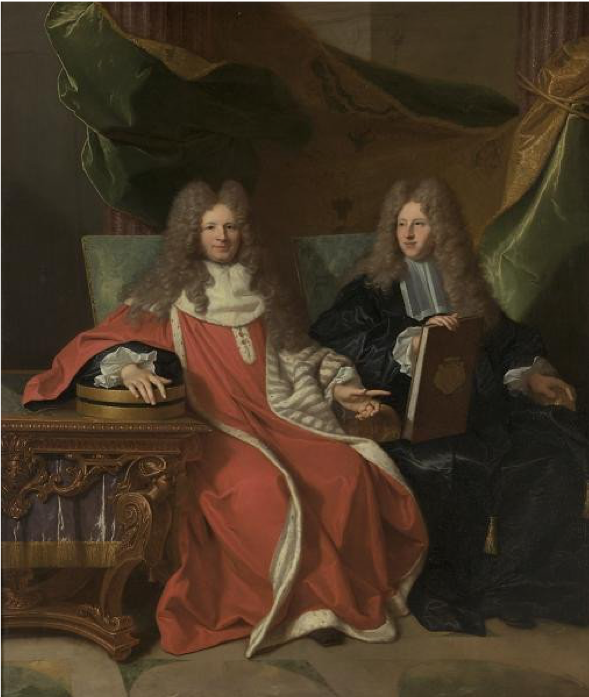
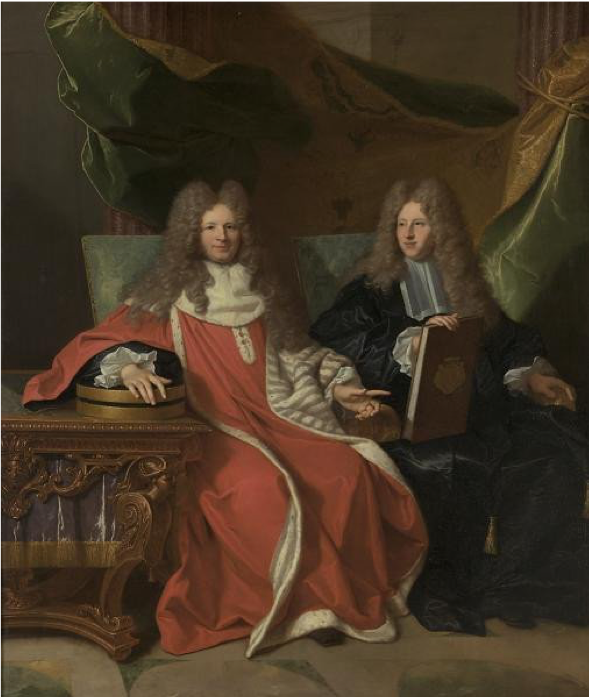
Based on this observation, Elie Haddad highlights the questions that emerge in XVIe century on the subject of the definition of nobility: they emanate both from nobles who defend the seniority of their lineage ; theorists who extol the merits of these members essential to the functioning of the monarchy, but also of the sovereign who seeks to establish which men are worthy of the offices and privileges that he grants. At the same time, the development of the monarchical state led to fueling the creation of a nobility of “ dress » made up of royal servants whose offices allow ennoblement. The latter is perceived as a threat by the proponents of the nobility of the sword, such as Boulainvilliers, who extol the merits of the only and true nobility, that of arms and virtue, acquired by blood and guaranteed by the seniority of the “ breed “. The nobility surveys carried out in XVIIe century by Colbert, minister of Louis XIVtestify to a monarchical need to clearly identify the members of this order in order to exclude usurpers. The author recalls that the chosen criteria set a “ modus vivendi between the idea of political nobility, according to which all nobility derives from royal power, and that of natural nobility, transmitted by blood. » (p. 314). By orchestrating this control over the legitimacy and authenticity of certain titles, the king takes control of the definition of nobility by framing it through a right, changing it from quality to a status which justifies access to a certain number of privileges.
Two main axes emerge from this study: the influence of demography on noble alliances which leads to a tightening of transmissions to elders and the strengthening of patrilineage on the one hand ; the transition from a conception of kinship and nobility based on the possession of lands and lordships to a more personal conception based on race and blood on the other hand.
The author thus shows that demography and in particular the drop in the number of married children and descendants influences the alliance systems which are at the heart of the perpetuation of large families. These marriages make it possible to preserve both a name and a heritage, but are also conditioned by financial aspects in a context of impoverishment of part of the second order. This is noticeable for the second half of the XVIIe century when certain families opened up to the nobility of the robe and in particular to the world of financiers to seal alliances which, although not ensuring prestige, guaranteed financial ease. The reduction in the number of children per couple thus pushes the noble order to open up to other segments of the population in a period where debates on true nobility and the rejection of derogation (the fact of abandoning the noble way of life, by investing in commerce or finance for example), rather induce a social tightening. Elie Haddad thus shows the influence of royal policy aimed at circumscribing the nobility on the choices made by noble families, whether it concerns marriages or the transmission of property and offices.
He analyzes the words to express kinship and in particular the predominance of the terms of “ breed » and “ House » from XVIIe century. It then shows the semantic shifts which lead to replacing the “ line » and the “ lineage » by the « breed » which, for the nobility of XVIIe century, designates “ a kinship group determined by descent » (p.43). Likewise, by replacing the word “ lineage “, the use of the term “ House » testifies to the attachment to a kinship group which is part of a temporality, but also to a heritage, to goods which ensure a certain continuity between people thanks to their transmission. However, the evolution of demographic behavior leads to modifying the routes of transmission and to concentrating inheritances on the elders (including women) at the expense of younger branches which, for lack of means of perpetuation, become extinct. Elie Haddad then reveals a paradox between the need of the nobles to defend their house and the weakness of the means implemented to demonstrate its territorial, memorial and social base.
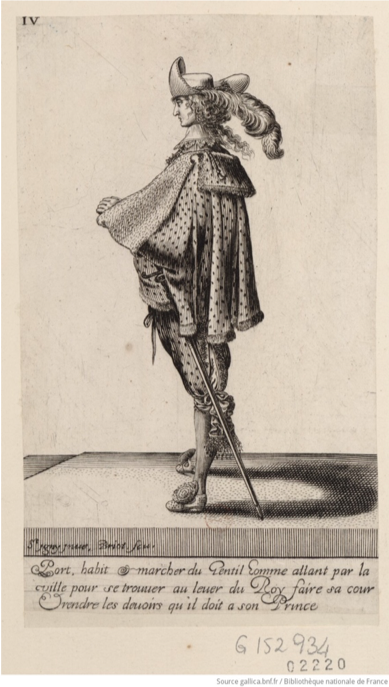
In Paris, at Estienne Dauvel’s house, in the Saint-Michel chapel at the Palais. 1629. Gallica
Practices and customs of the nobility
To establish this observation, the author focuses his study on signs and practices that historians are used to using without necessarily perceiving variations in their use over time. Elie Haddad relies on specific and documented examples: correspondence, notarized documents or even memoirs, some of which are less known than others. The multitude and concordance of many of these examples should not give the illusion of a single model to which all individuals would conform, and the author insists on the need to continue certain investigations while recalling that particular cases can contain their own logic and their own inflections.
Some of the aspects presented are thus well known, such as the attachment to papers (charters, letters, titles) which serve the elaboration and staging of a genealogy and a territorial domination attached to a house. Their inclusion in an analysis with an anthropological aim makes it possible to detect deeper meanings common to this social group. Thus, signatures and addresses, coats of arms undergo mutations, the study of which reflects an evolution in the conception of nobility between the XVIe and the XVIIIe century. Onomastics or the use of titles in the signatures of nobles thus reveal a progressive detachment from property and lordships to highlight belonging to a race and give the house “ a patrilineal connotation » (p. 90).
Likewise, the attention paid to burials and the gradual abandonment of family cemeteries testify to an evolution in the relationship to lineage which was nevertheless at the heart of noble identity in the XVIe century. Gradually, the defense of belonging to the nobility is no longer played out in the staging and demonstration of an accumulation of lands and titles since time immemorial, but through the service rendered to the monarchy and attachment to the sovereign.
A demanding read, Elie Haddad’s work has the merit of confronting an epistemological question while exploring the way in which contemporary societies have themselves shaped what constitutes nobility: quality, virtue, race, way of life. By analyzing these determining elements, he shows the changes in the way nobility is perceived, perceived and defined. These developments can reflect ideological choices, but are also driven by political, social and economic mutations which go beyond the sole framework of the second order. By adopting an approach resolutely oriented towards anthropology and sociology, Elie Haddad thus offers an essential tool for understanding the nobility of the Ancien Régime until the revolutionary upheavals.