
Recently published in English, Italian Renaissance historian Tony Molho’s childhood memories were almost immediately translated into numerous languages. He recounts his family memories in Salonika, the German occupation and the flight, perceived from a child’s perspective.
During the months of confinement, from his apartment in Athens, Tony Molho, known today as one of the great historians of Renaissance Italy, wrote down the story of his childhood and youth. At the age of 80, he recounts his family’s place in the city of Salonika, where more than 60,000 Jews resided before the war, his birth in 1939, then the story of his parents who managed to hide him throughout the period of occupation. Luck too, and what he calls “ kindness of others », to use the translation of the title of his book as it was done into Greek, then Italian and now French.
Written, as he recalls, in a language which is that of his homeland of immigration, the United States, where his entire family left in the 1950s, the book is at an individual level. And even at the height of a child – a very young child, because he was only 2 years old when the Italian planes began to fly over the skies of Salonika, while in the cellar “ the great pudding battle » that his young mother tries to make him eat daily. He was 5 when the occupation gave way to civil war in Greece, and his parents left Athens, where they had managed to survive, for Salonika, where a “ghost city” awaited them.
More than a history book, it is perhaps a book about family and memory. That of the first memories, of repeated stories, of photos saved by miracle which we scrutinize later, and which Tony Molho has added in large numbers, and with great generosity, so that readers ready to embrace through his history some generations of Jewish Salonika from the first half of the XXe century, can embody it in faces.
A child from Salonika
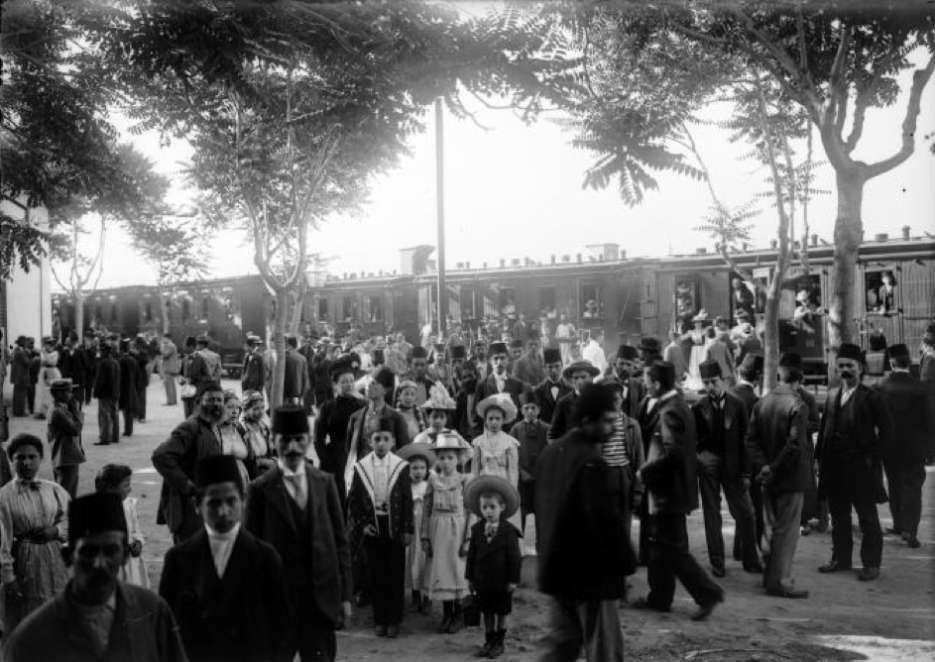
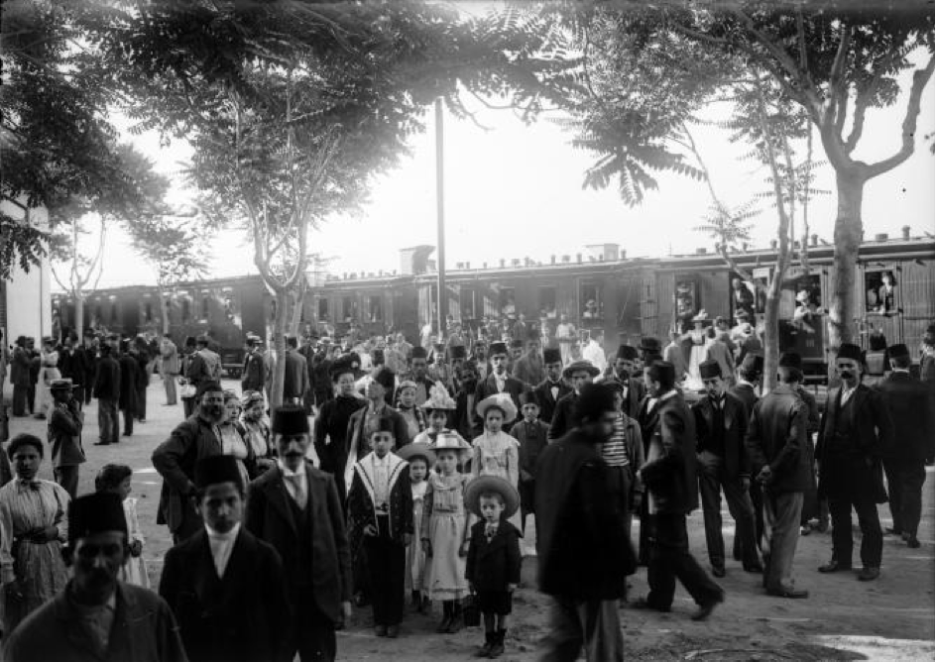
Tony Molho’s family, both his father and his mother, came from the Sephardic bourgeoisie of Salonika, one of the largest cities of the Ottoman Empire, which was only conquered by Greece in 1912. Several members of his family then moved to Istanbul, the capital which could then seem more attractive. One of his great uncles later even married an Orthodox Russian who fled the revolution to reach the future Turkish capital on foot.
In Salonika the situation really changed from 1922, when the Greco-Turkish war precipitated forced population exchanges. Among the million and a half Greeks expelled, around 250,000 settled in Salonika, often without housing and marked by the violence which accompanied their flight. From then on, the policy of Hellenization of the city became more noticeable, while anti-Semitism developed.
However, by delving into his family’s memories, Tony Molho shows that the interwar period was also marked by a growing closeness between the Jews and Christians of Salonika. Among the many signs: his very name, Tony or rather Antoniosa Latin name given in honor of a doctor friend of his maternal family. A name which he writes could not have been given to him 30 or 40 years earlier, he who comes from a paternal family where all the eldest sons are called Lazar or Saul, and who even on his birth certificate will later find the double name of “ Elazar (Antonios) » – before his mother, no doubt, imposed the second. “ During the generation before the war, the lines that separated my mother’s family from their Greek neighbors were certainly looser and more porous than she herself was willing to admit after the war. » (p. 42.)
After the failure of the Italian invasion, Greece was conquered by Germany. Salonika was occupied in April 1941, then at the beginning of 1943 the first trains left for Poland. In this large urban center, only 2000 or 3000 Jews survived the Shoah, and those who return will discover a “ ghost city “.
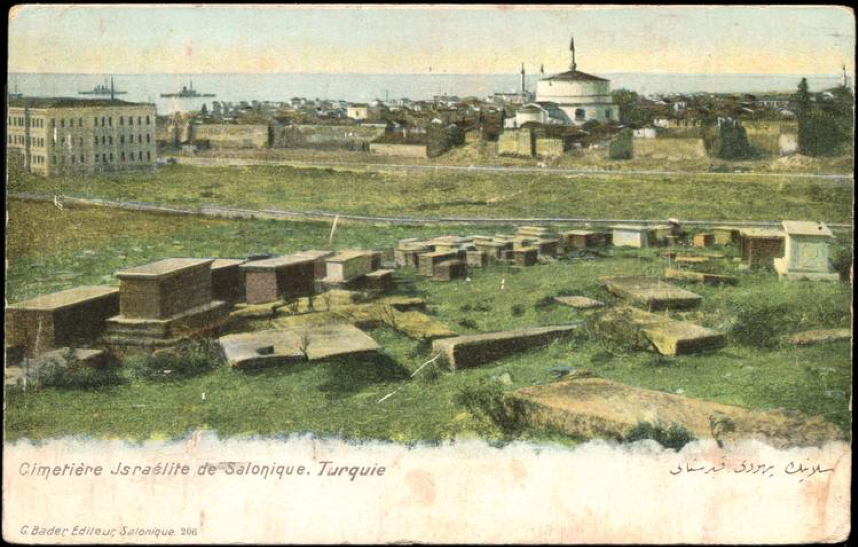
When Tony and his mother joined his father there in April 1945, traveling by boat to avoid the dangers of the civil war that was tearing the country apart, only a few family members were waiting for them. The author recounts his first Yom Kippur in the fall of 1945, in the last remaining synagogue in Salonika. No one, he says, among his school friends, will ask him how he survived. Among his childhood memories, he describes the city’s randomly crossed letters of the Hebrew alphabet, remnants of tombstones looted from what was once one of the largest Jewish cemeteries in Europe – and which the city’s university annexed during the war.
From Salonika to Athens
The story of the flight, or the “ hide and seek » as he titles one of his chapters, navigates between early memories and later stories – often those of his mother, to whom the book is a lucid homage. From Salonika, the escape is complex: Istanbul does not accept refugees, Cairo is far away, French Guinea – where one of their uncles resides – is impossible to reach, and British policy then restricts migration to Palestine (p. 56).
The very young Tony is hidden among Christian couples, even keeping a tender memory for the last one who shelters him. He will visit them after the war, only to find curtains in their home made from a roll of yellow fabric, which they certainly stole from the Molho home, during the great looting that accompanied the deportations.
The child once hidden, the two parents left Salonika with a small group, crossing the mountains on foot in an expedition where his mother suffered a miscarriage, then obtaining false papers in Larissa to reach Athens by train, beyond the Italian occupation lines. Later they bring their child there, thanks to the friendship of a mechanical engineer who hides him in an unlit boiler on the train. With the help of the Orthodox Archbishop Damaskinos, the father joined the resistance around Athens, while the mother found jobs as a cook, a teacher and eventually as an employee of the Red Cross. Meanwhile, little Tony is hidden in a Catholic convent in Athens, then with a widow in charge of her five children. During a reading of his book in Greece very recently, Tony Molho says that he found the eldest of these children, a 91-year-old man, who stood up in the audience to speak.
In June 1944, his mother found accommodation and was finally able to take her son back with her. His strength of character is one of the links that connects the salient episodes of an often non-linear story, which does not force memory and its limits. The episode on the train, where her arrested mother tells the captain that if he hands her over to the Germans she will curse his two children, and thus convinces him to hide her. The tram episode, when in Athens Tony sees conductors boarding the carriage, and his mother, without saying anything, slips her child’s hand into that of a stranger before getting off the train, and waiting for this stranger to bring her son back to her once the danger has passed. Her courage after the war too, when after a period of serious depression, she considered leaving for the United States, completed a doctorate there and pursued a career there before returning to Salonika to spend her old age. In the English title of the book, Courage and compassionwe strongly hear the courage of Lily Molho.
Oral interview with Lily Molho, née Alkalay, in 1996, United Holocaust Memorial Museum Collection
Courage and compassion, or the kindness of others
As for compassion, it circulates throughout the work, carried by the author’s compassion for each protagonist of the story, including the child he was, seeking to retrace the emotional journey of each with an accuracy full of questions. A questioning also on the coincidences which allowed them to survive, between the firm desire to flee and the help received, that he takes the trouble at every step to examine for what it was, without any particular heroism. While Tony Molho’s father himself would later hide opponents during the years of the civil war, in memory of aid received, also, in silence. So there are no heroes in this story. But not a complete coincidence either, for example when he notes that many of the Greeks who helped them were not from Salonika (p. 94) – a city where the influx of recent refugees made the issues of Hellenization and the tension over real estate stronger.
Italian historian compares accounts of Salonika survivors just after the war to Last Judgment frescoes painted after the Black Death, separating the good from the bad ; and he opposes more human and nuanced behaviors that he must patiently reconstruct, through the stories of his mother and others.
“ It was not the banality of evil… rather the banality of good… Decency pushes you to help if this action can fit into your habits and daily routines. But when this help risks compromising your safety and the well-being of your loved ones, then you think twice, and very often you step back and create a distance between your world and the world of the person who needs help. “.
Memory and family
In “ the kindness of others “, we also hear an unresolved question that runs through the book: this definition of the other, the idea of an evolving border with “ the others “. In a young country where the Orthodox religion is quickly becoming a sign of Greekness, Tony Molho tries, always with a lot of questions, to reconstruct what made his family Jewish. That of his parents who spoke Ladino (Judeo-Spanish), French among themselves, but Greek only outside the house, sometimes with a recognizable accent. That of his father, passionate about German culture, who avoided speaking this language after the war, but who only reluctantly accepted emigration to the United States. Finally his own, for example when invited by a school friend to Easter mass after the war, he heard a violent sermon against the Jews and turned around to see which Jews were being addressed. Very early on, his school friends called him Tonis. Tony transformed into Tonis – and a child feels his place, or lack of place, in the world around him in different ways “.
In this definition of his Jewishness, he weighs the place that the Shoah takes after the war. But also recalls the anti-Semitism which did not disappear in the Greece of the second XXe century. His sadness, for example, when one of his teachers advised him against aiming for a diplomatic career, then closed to Jews at a time when identity cards still indicated religious affiliations. Once again, we are very far from a history lesson, and closer to the questions not asked to the parents who have now disappeared, to a reflection on what makes the individual within a broader history, but also of a family, an essential link between the big and the small history.
Tony Molho, The kindness of others. A Jewish child in occupied Greecetranslated from English by Loïc Marcou, Paris, EHESS2025, 224 p., €16.