
All summer long, Le Grand Continent will stay in motion. Every day, wherever you are, we will bring you ideas you won’t find anywhere else (but which will be everywhere come fall), texts that are hard to find or refreshing with our Sundays. To receive them directly in your inbox and support this momentum, consider subscribing to the journal
Ten days separate, each year, the American national holiday from the French one: Independence Day, on July 4 on one side, July 14 (Bastille Day, as they say in Washington) on the other. Usually, the two commemorations have only July in common.
In 2026, they begin to resemble each other.
This sudden proximity is probably more due to Donald Trump’s desire to import French elements into the national celebration. It provides a pretext to resume a line of inquiry pursued for several years: the borrowings, conscious or not, that the American authorities make from the French repertoire.
To Change Its Nature, a Regime First Changes Its Visual Grammar
One could regard the following observations as anecdotal. One could also consider them part of classical political science: no regime changes its nature without first changing its visual vocabulary. A parade, a palace, a gilded vase are never mere ornaments; they announce, before law enshrines them, the practices of power to come. It is this shift, from signs to institutions, that I propose to trace, step by step.
Probably because of Donald Trump’s desire to introduce elements borrowed from the French Bastille Day into the national celebration, 2026 saw, in Washington’s sky, an aerial parade for the Fourth of July.
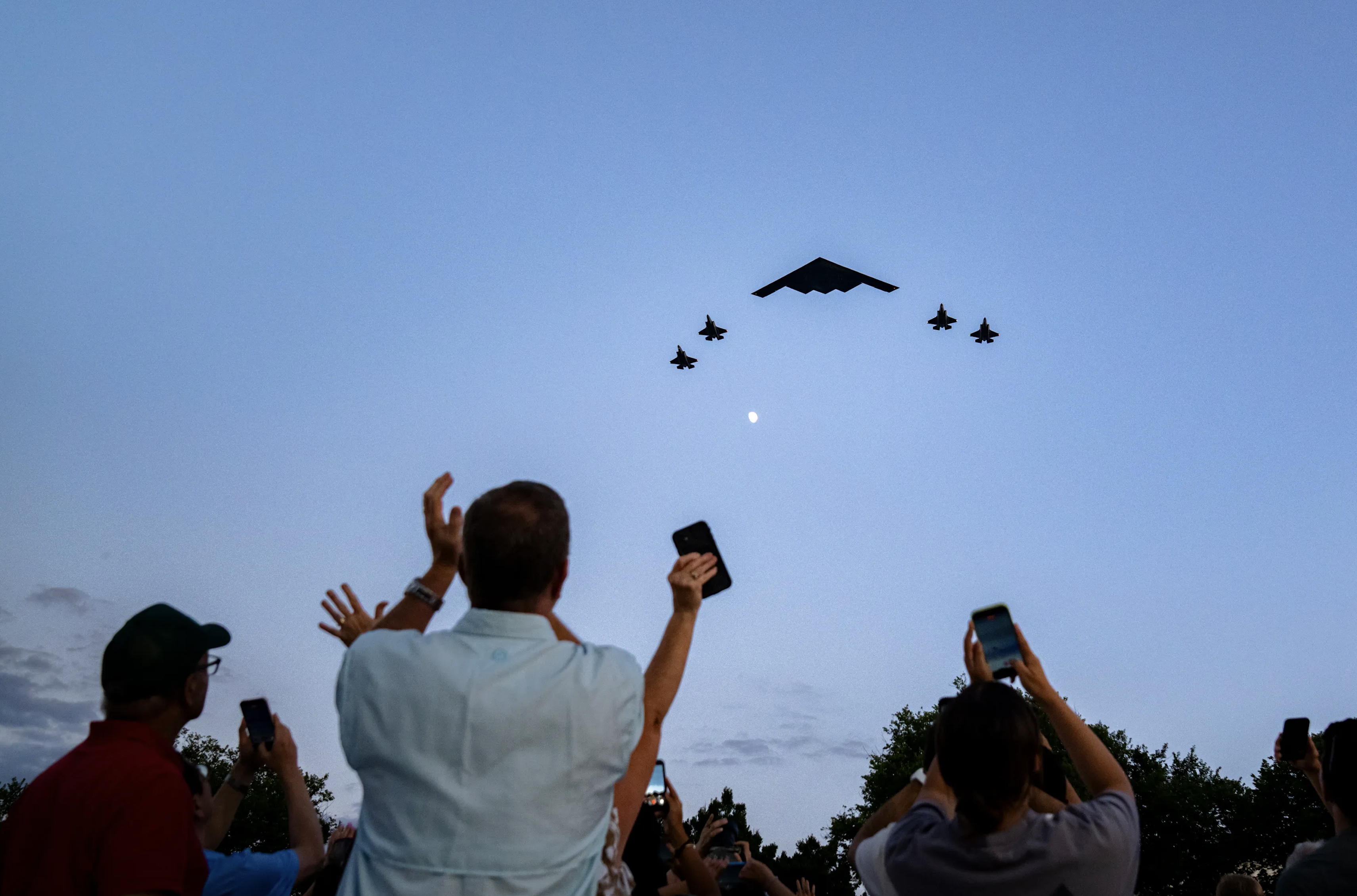
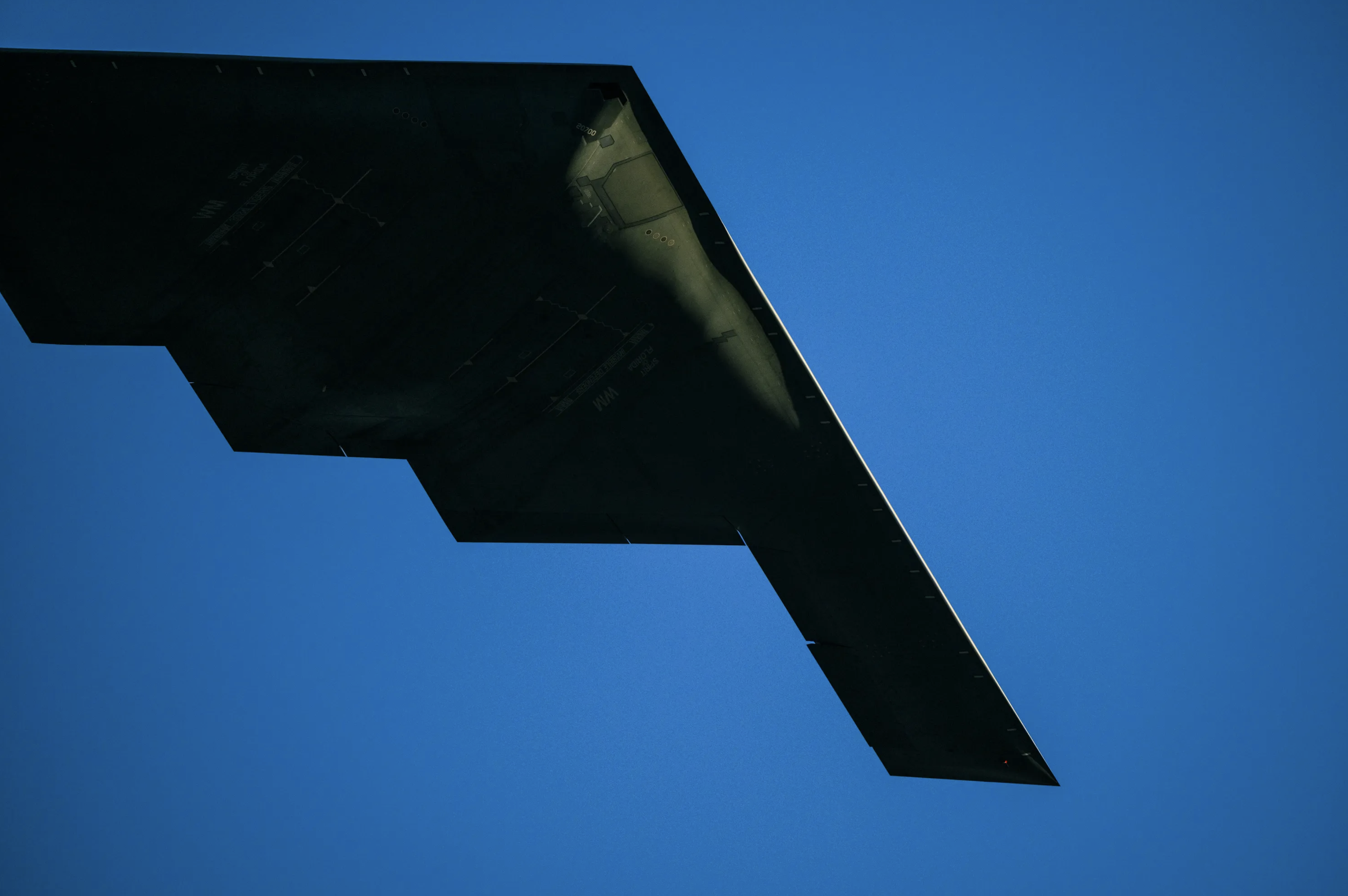
This display of power followed the military parade of June 14, 2025, which met with limited success, precisely analyzed in these pages by Thierry Breton.
As the guest of honor with Melania at the July 14, 2017 parade on the Champs-Élysées, Donald Trump looked impressed by the troops’ millimeter-perfect arrangement, the gleam of the uniforms, the passage of armored vehicles, and the flyover of fighter planes.

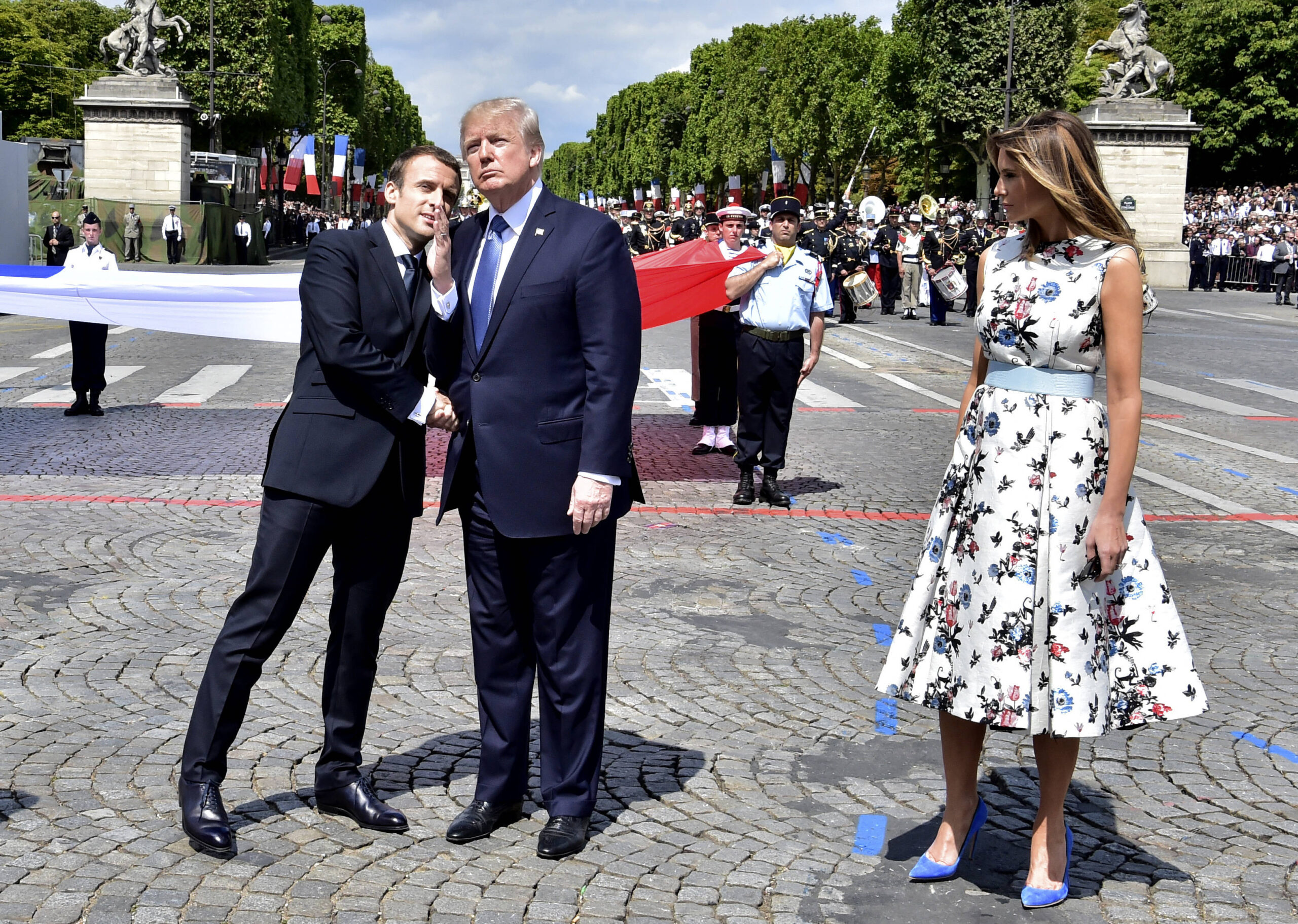
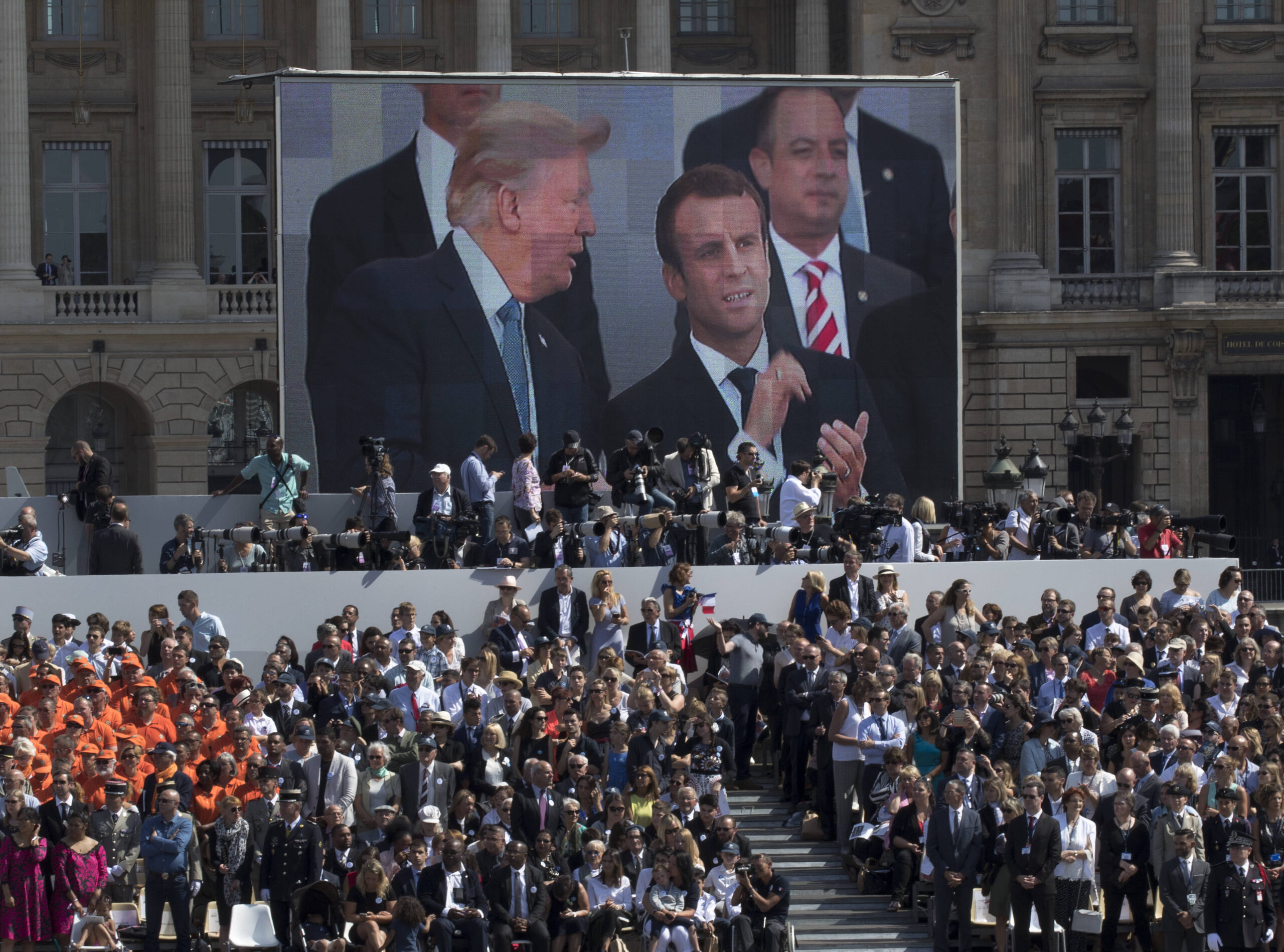
The American president confided, on his return: “It’s one of the greatest parades I’ve ever seen. […] We’re going to have to do something similar in Washington.”
It took him almost ten years. One might have thought, as is often the case with him, that it was a mere hollow phrase. He persisted. This seemingly trivial statement marked the beginnings of a cultural revolution: the more or less conscious attempt to acclimate the royal symbols of French power to the heart of practices historically designed to resist any monarchist tendency.
Tocqueville had already noted that the charm of the American July 4th precisely lies in its lack of pageantry: a civic, family, local celebration, punctuated by barbecues and neighborhood fairs, it belongs more to society than to the State. The French concept of a national fête differs entirely. The taking of the Bastille remains a military operation, whether celebrated as such or not.
Trump had already attempted to organize a parade from the Pentagon for Veterans Day 2018. The operation then turned into a bureaucratic fiasco: the budget exploded and Washington’s city authorities opposed the passing of sixty-ton tanks on the street. It is hard to imagine the Mayor of Paris refusing such a request to the President of the Republic. This episode reveals how powerful local authorities are in the United States: even in the capital, the president is not entirely at home. The American general staff resisted what they perceived as demonstrations typical of autocratic regimes. They showed prudent inertia.
With the second term, the difference becomes obvious: what seemed impossible came to pass. On June 14, 2025, for the 250th anniversary of the US Army, which coincided with the 79th birthday of Donald Trump, a parade inspired by France stretched along Constitution Avenue. Historical reenactments, heavy armor, 6,700 military personnel were mobilized at an estimated cost between 25 and 45 million dollars: by borrowing the French July 14th’s spectacular grammar, the administration transformed the Independence celebration into a parade where legions march for the prince’s prestige. This is not an insignificant fact in a country born from the ideal of the soldier-citizen.
Staging Triumph
In 1970, Roland Barthes published a travel narrative to Japan mysteriously titled The Empire of Signs. There he described a world of pure forms, detached from their initial substance. In Donald Trump, the exercise is more brutal, almost compulsive: he appropriates the French semiology of power, from Louis XIV’s gold to the verticality of the Fifth Republic, in the manner of a arriviste who would treat the antiquities of a lineage not his own as his own. By appropriating an empire of signs, Trump gives birth before our eyes to the sign of an empire.
The temptation becomes more troubling when one moves from the realm of signs to the architecture of institutions. Trump seems to regret not being able to wield armies as a personal attribute, a sentiment that surfaces in his usual vocabulary when he talks about “my generals” or “my navy.” Yet the American military apparatus swears to the Constitution, not to the occupant of the White House, which obliges every soldier to refuse any order contrary to it. Choosing vocabulary is never trivial: using the first-person possessive to describe command shifts from constitutional, temporary, and functional leadership to the position of commander-in-chief, as if the military institution became the sole property of a single man rather than the armed arm of a document.
In France, the situation is different, as Trump perceived acutely in July 2017: President Macron, then only 40 years old, was inspecting the armed forces in the manner of Louis XIV or Napoleon Bonaparte.
Trump told reporters upon returning: “It’s one of the greatest parades I’ve ever seen. […] We’re going to have to do something similar in Washington.”
It took him almost a decade. One might have supposed, as is often the case with him, that it was a mere verbal flourish. He persisted. This seemingly trivial statement marked the beginnings of a cultural revolution: the attempt, more or less conscious, to acclimate the royal symbols of French power to practices designed, historically, to resist any monarchic tendency.
Tocqueville had already noted that the charm of the American Fourth of July lies precisely in its lack of pomp: a civic, familial, local celebration punctuated by barbecues and neighborhood fairs, it belongs more to society than to the State. The French concept of a national fête differs entirely. The taking of the Bastille remains a military operation, whether celebrated as such or not.
Trump had already tried to organize a parade from the Pentagon for Veterans Day in 2018. The operation then turned into a bureaucratic fiasco: the budget blew up and Washington, D.C. opposed the passage of sixty-ton tanks on the street. One can hardly imagine the Mayor of Paris denying such a request to the President of the Republic. This episode speaks volumes about the power of local authorities in the United States: even in the federal capital, the president is not entirely at ease. The military leadership showed reluctance to what it perceived as demonstrations typical of autocratic regimes. It displayed prudent inertia.
With the second term, the difference becomes striking: what seemed impossible happened. On June 14, 2025, for the 250th anniversary of the US Army, which coincided with Donald Trump’s 79th birthday, a parade inspired by France unfolded along Constitution Avenue. Historical reenactments, heavy armor, 6,700 soldiers mobilized at an estimated cost of 25 to 45 million dollars: by borrowing the spectacular grammar of the 14th of July, the administration transformed the celebration of independence into a parade, where legions march for the prestige of the prince. The fact is not inconsequential in a country born from the ideal of the soldier-citizen.
Stagecraft of Triumph
In 1970, Roland Barthes published a travelogue to Japan mysteriously titled The Empire of Signs. There he described a world of pure forms, detached from their initial substance. In Donald Trump, the exercise is more brutal, almost compulsive: he appropriate the French semiology of power, from Louis XIV’s gold to the verticality of the Fifth Republic, in the manner of a social climber who would treat the antiquities of a lineage not his own as his own. By taking possession of an empire of signs, Trump conjures into being the sign of an empire.
The temptation grows darker when we move from the realm of forms to the architecture of institutions. Trump seems to regret not being able to have armed forces as a personal attribute, a sentiment that shows in his usual vocabulary when he talks about “my generals” or “my navy.” Yet the American military apparatus swears to the Constitution and not to the occupant of the White House, which obliges each soldier to refuse any order contrary to it. The choice of vocabulary is never neutral: using the possessive first person shifts from temporary, constitutional command to the position of commander-in-chief, as if the military institution became the sole property of a single man rather than the armed arm of a charter.
In France, the situation is different, as Trump saw in July 2017: President Macron, then only 40, reviewed the armed forces in the manner of Louis XIV or Napoleon Bonaparte.
Trump looked at the scene with approval: “In France, the Republic’s president mounts the military review.”
This is not contrary to the republican spirit, for the birth of the French Republic also coincided with the moment when the homeland rises to arms, in the wake of Valmy. Moreover, Article 15 of the Constitution grants the president the exclusive title of commander-in-chief. Trump understood that such an arrangement was possible within a republic itself.
Signs sometimes come from Truth Social. In February 2025, while his decrees and plans to reshape the federal state were being challenged by the courts, he posted a now-famous sentence: “He who saves his country does not break any law.”

That maxim is often (unjustly) attributed to Napoleon Bonaparte. It sparked a strong reaction in the United States, where it was seen as an explicit declaration of a Césarist claim, the idea that the chief’s legitimacy overrides codes and tribunals. This plebiscitary vision of power, which places the executive above institutions, clashes head-on with American tradition. But the notion of the Savior again points to something French, the providential royal tradition.
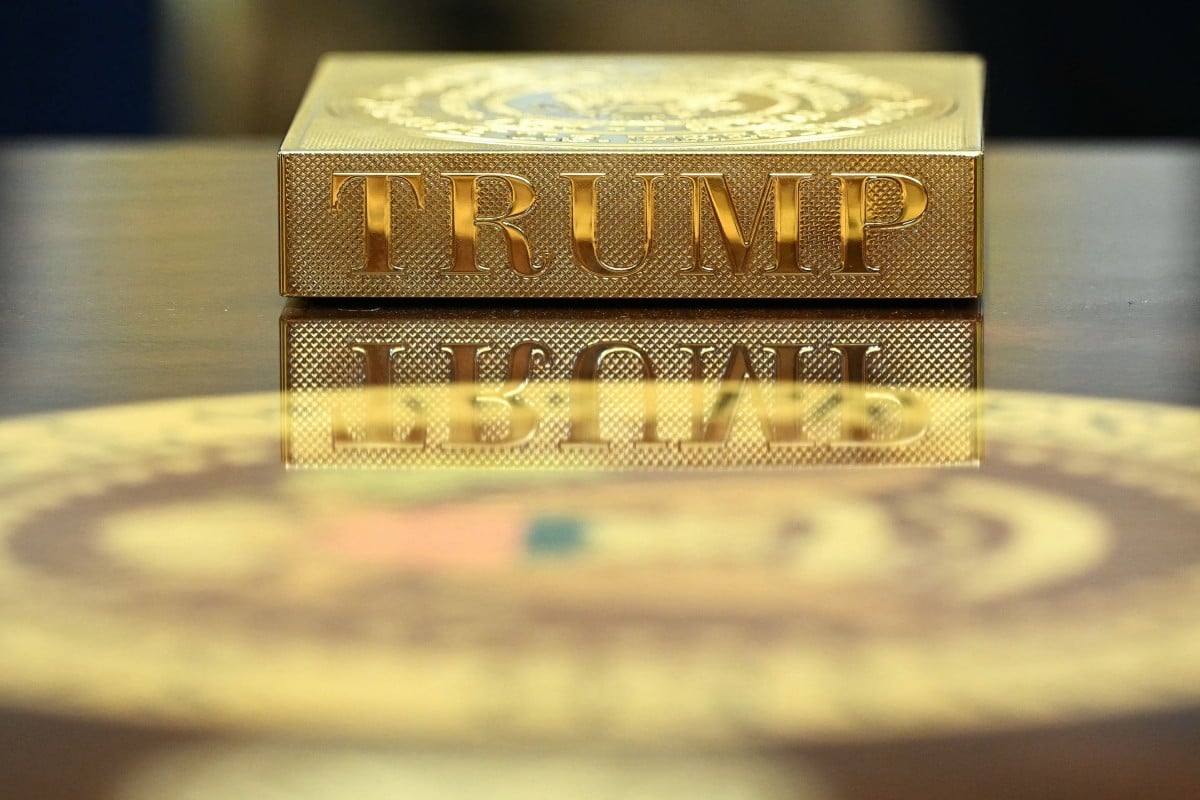
Napoleon resurfaces in the plan for an Independence Arch destined for Washington, whose height, 76 meters, is meant to eclipse the Arc de Triomphe. The monument would be erected at Columbia Island’s roundabout on Memorial Drive, between the Arlington Memorial Bridge and Arlington National Cemetery. On October 15, 2025, Trump showed journalists, in the Oval Office, a model placed on his desk.
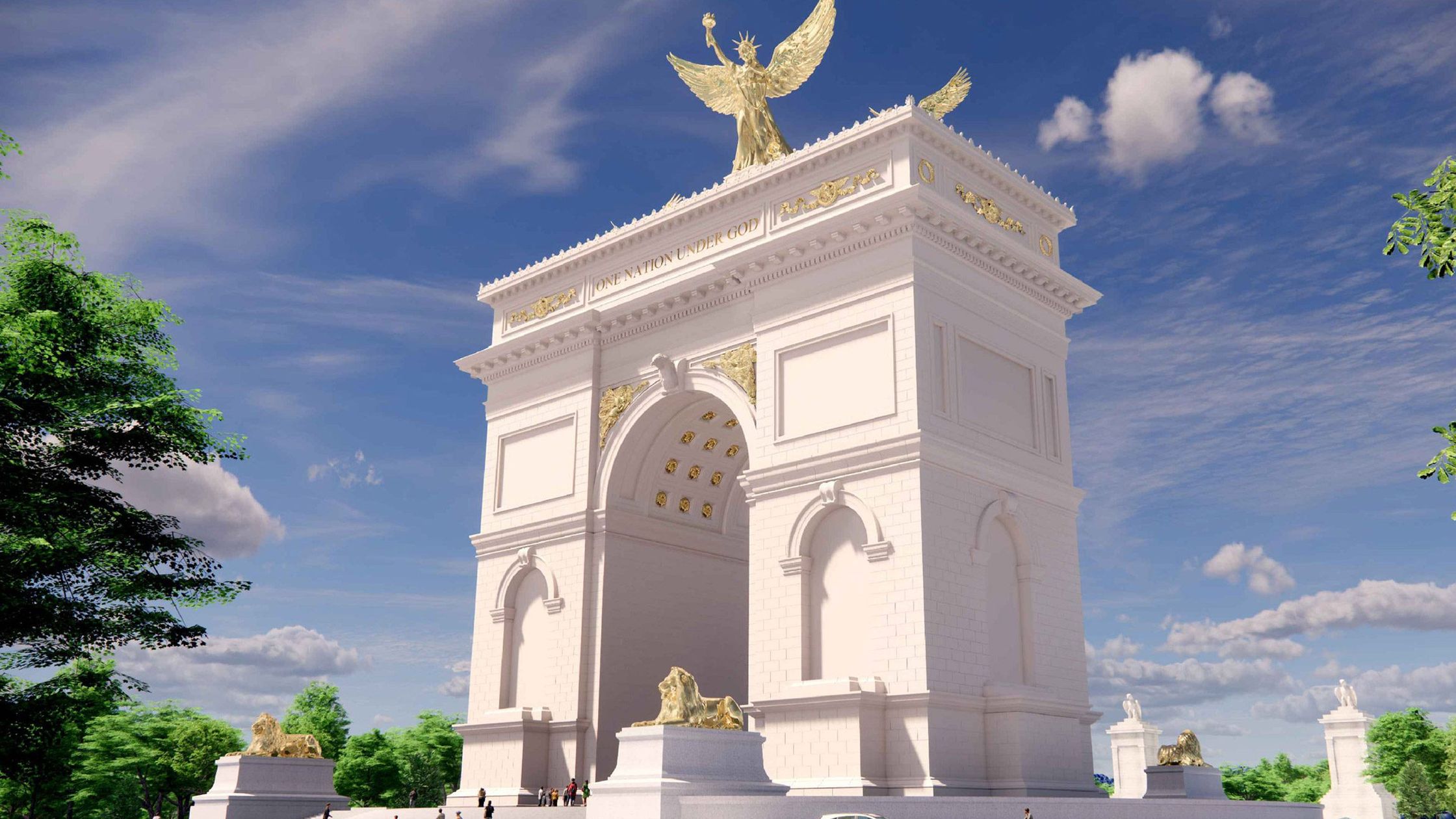
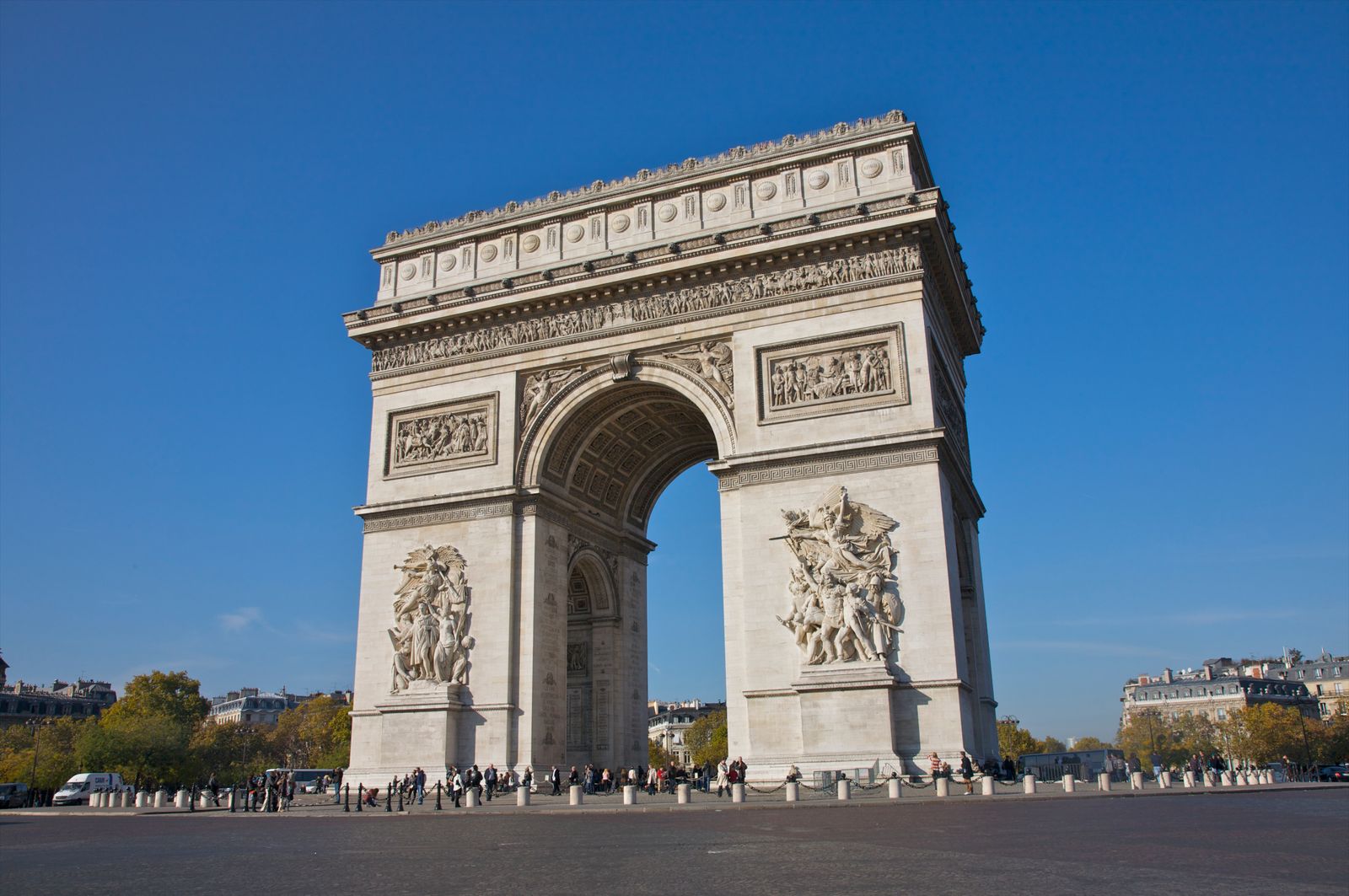
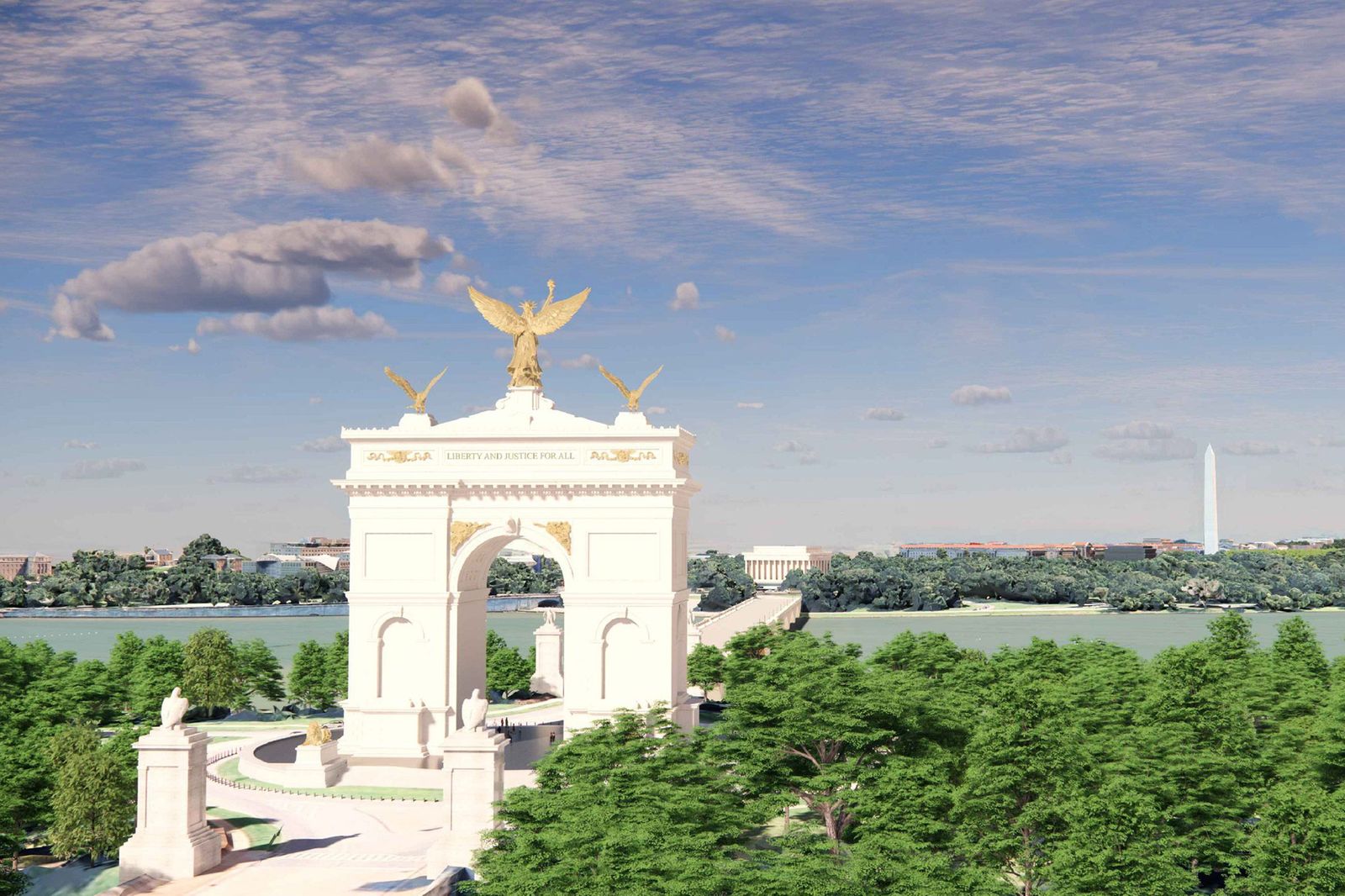
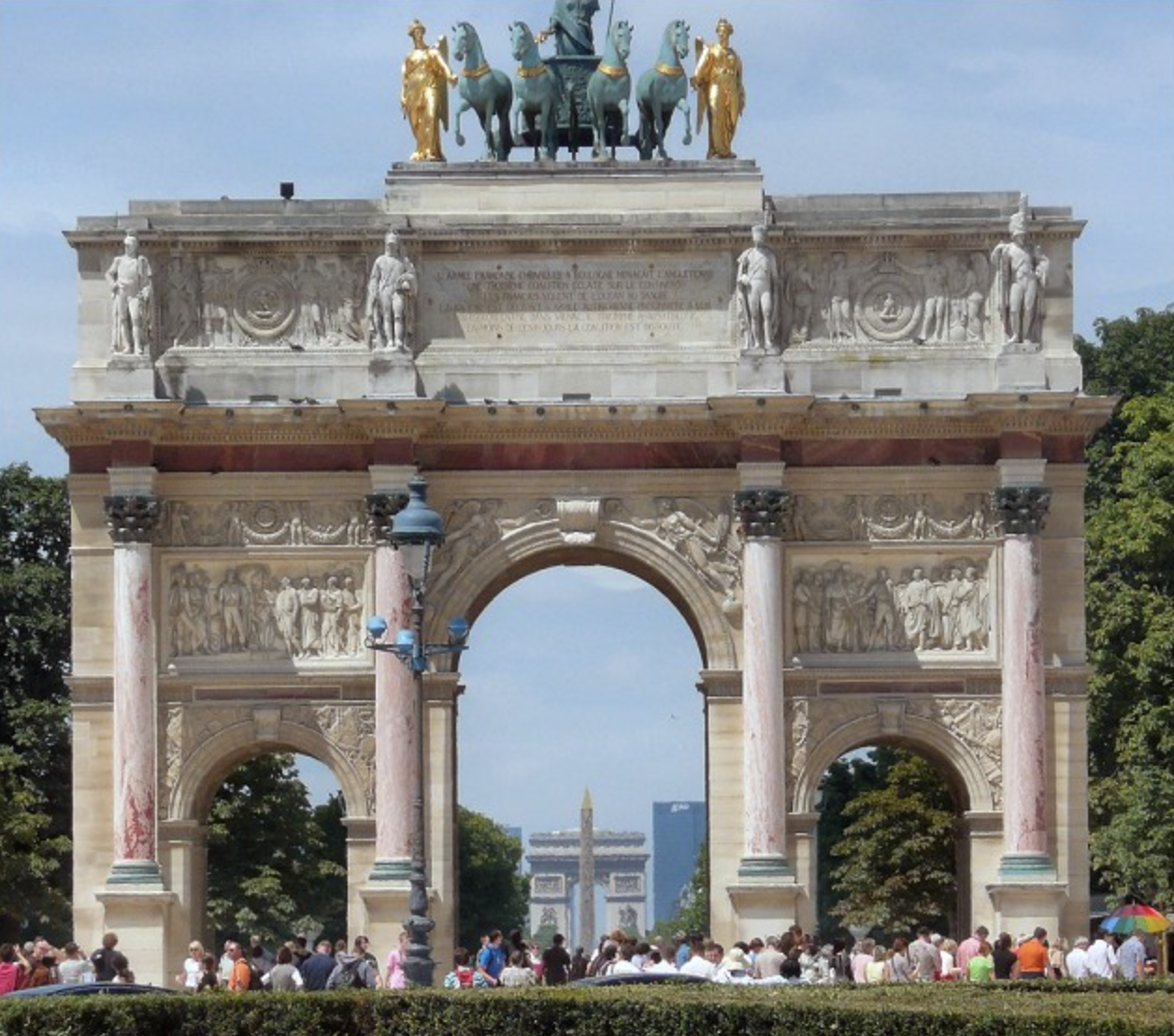
Asked about the monument’s intended recipient, he replied: “Me. And it’s going to be magnificent.” The name “Independence Arch” was thus somewhat misused. By July 2026, the Arc of Trump is not yet built, but the project has moved from concept to preliminary approval, with preparatory work already started on the site.
Gold and the Ball
From the army to the stones, the distance seems large. It is not so far: the power that dreams of commanding the armies alone also dreams, almost necessarily, of living alone in a palace. It is to this second, more intimate (and more gilded) project that Trump dedicated a disproportionate share of his second term.
Perhaps the third example to be most discussed: the White House ballroom, a deliberate break with the history of this iconic symbol of American democracy. A fundamental difference separated, until then, the White House from the Élysée: the former was conceived as the home of a first magistrate, answerable to the people, and a temporary occupant of the premises. The latter is a townhouse, turned palace, inhabited by presidents and by an emperor.
The Élysée possesses a rare attribute for a Western presidential palace: a monumental and elegant ballroom, capable of hosting the Republic’s greetings, as well as state dinners and presidential press conferences. The White House possesses nothing of the sort, and every visitor there feels the modesty of a house, not a palace, because the president is not a king and because kings must adhere to republican rules.
This is the French ballroom that illuminates the current, highly controversial White House State Ballroom project: a colossal extension intended to give the American executive a reception space worthy of a European royal court.
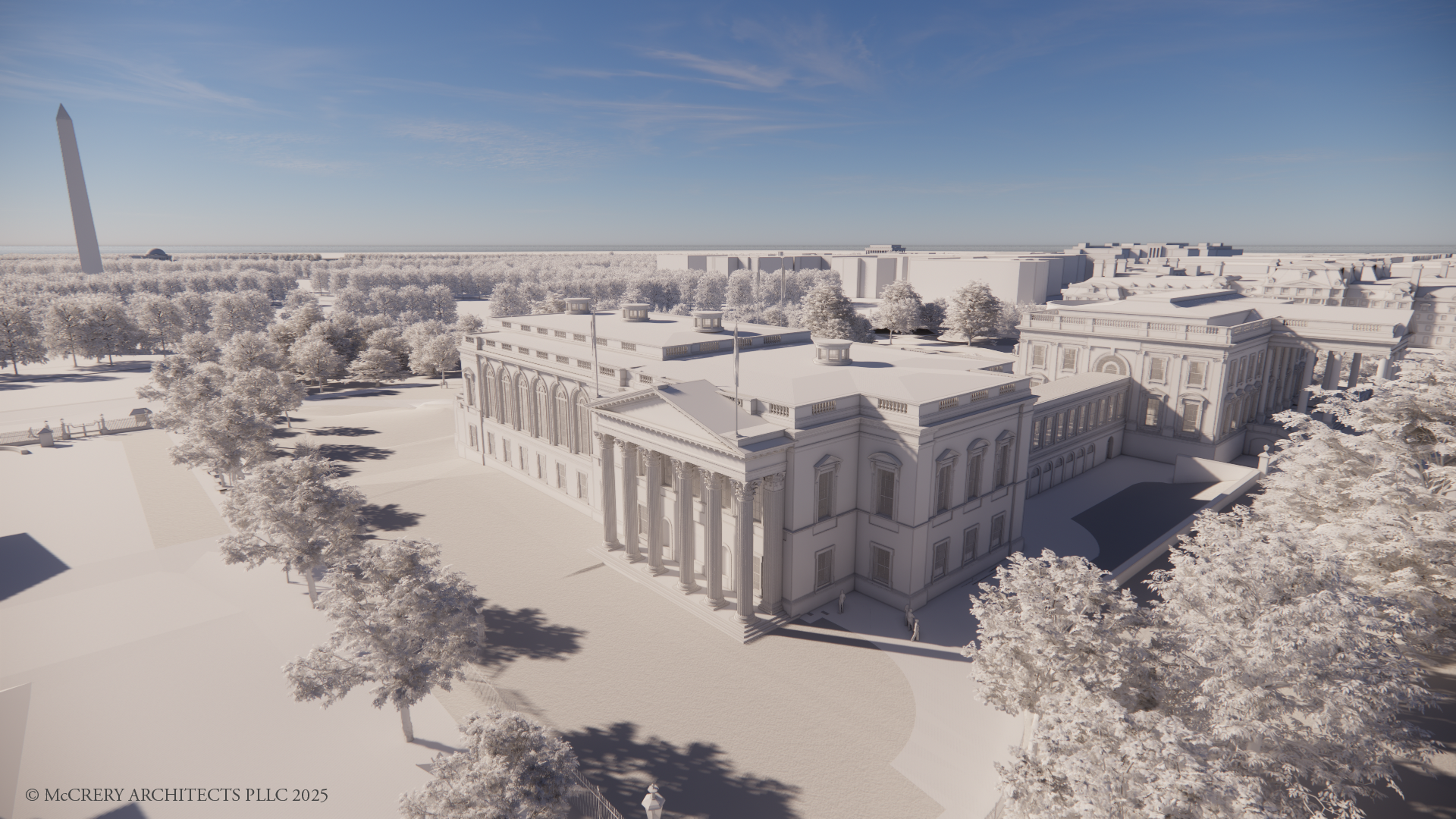
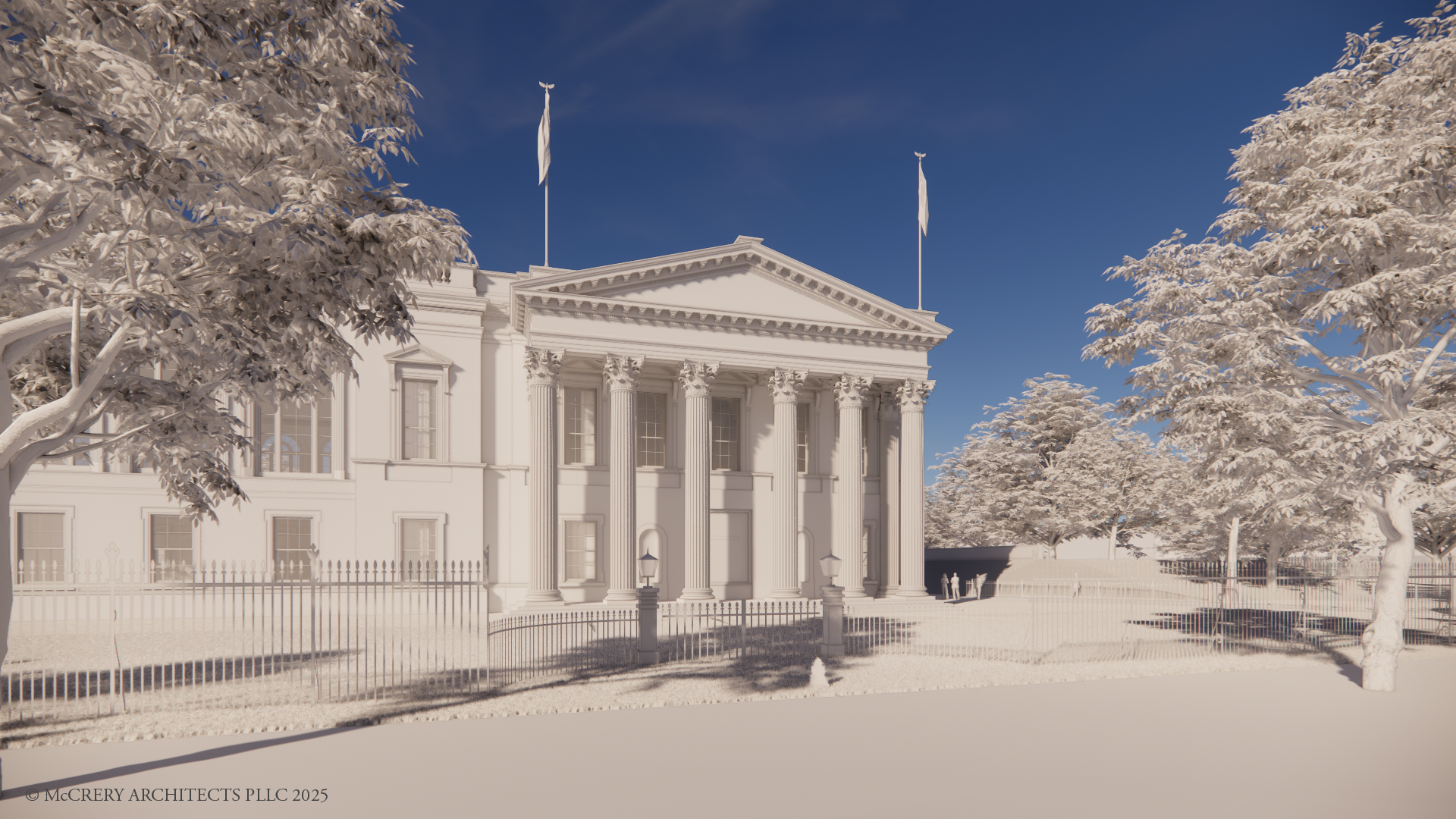
For Trump, power must be shown, which recalls Louis XIV, who invented this principle in the exercise of modern power, even going so far as to perform at Versailles in a Molière room, which is perhaps as remarkable for the time as a MMA fight in the White House garden in 2026.
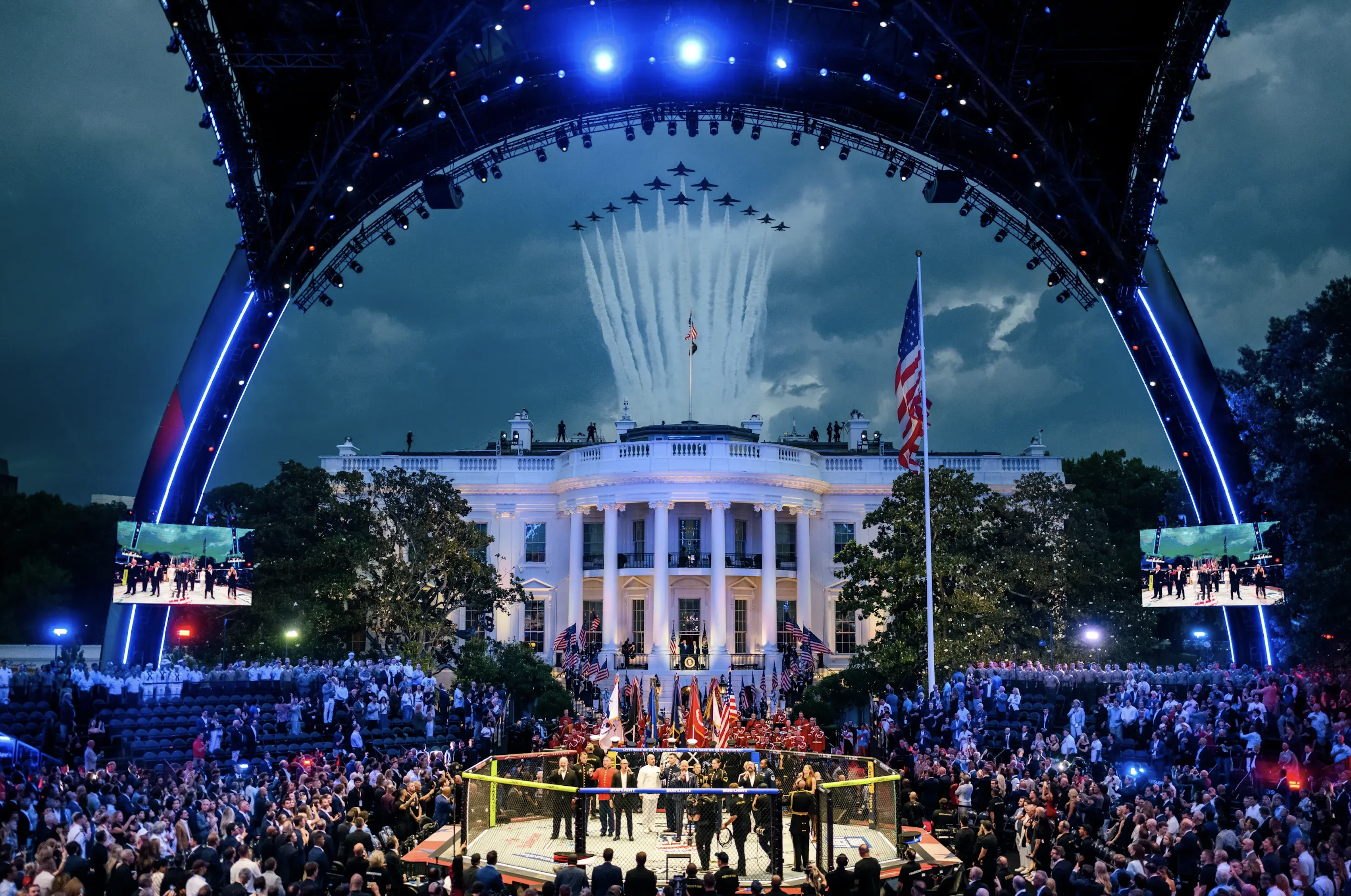
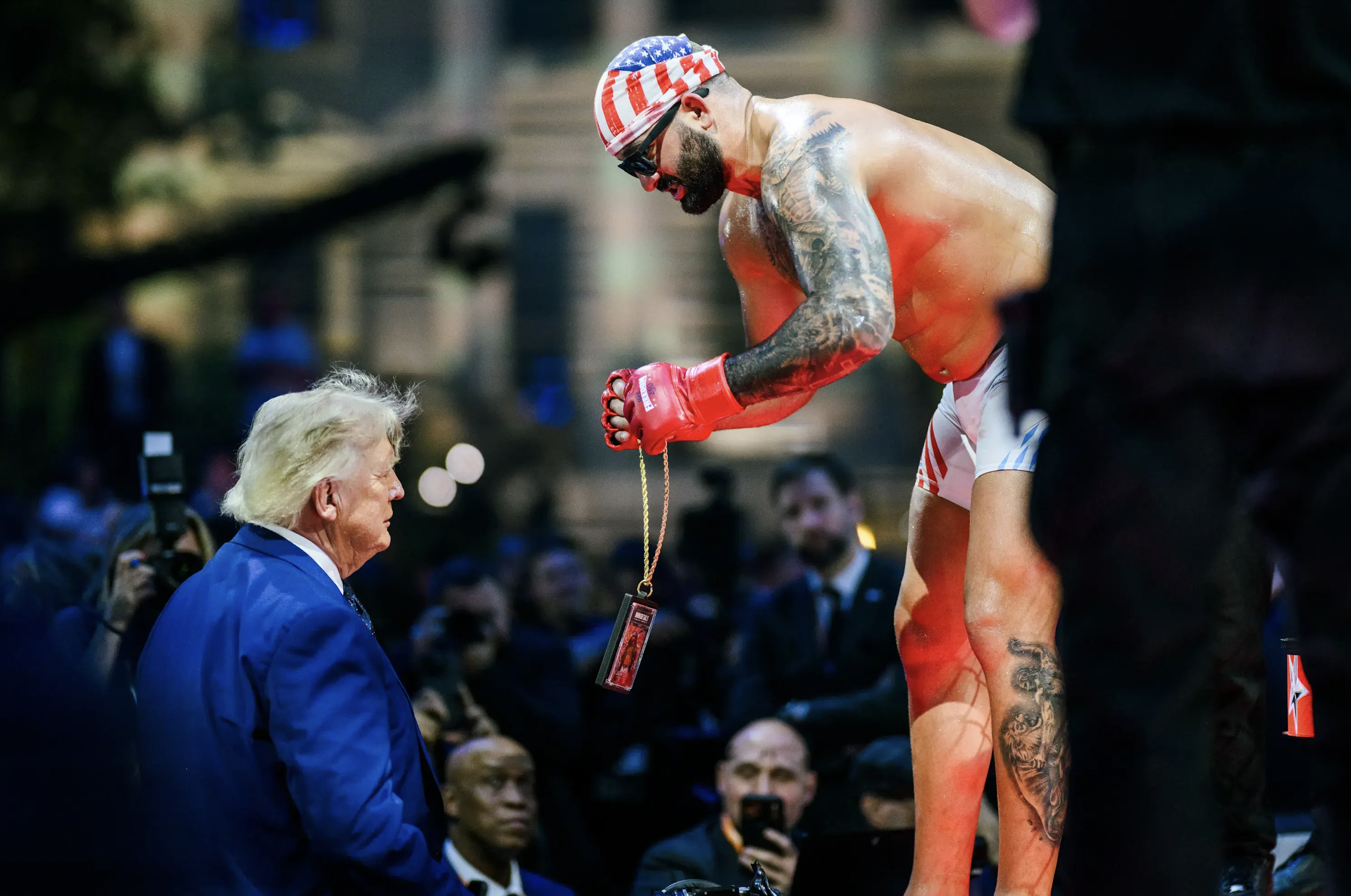
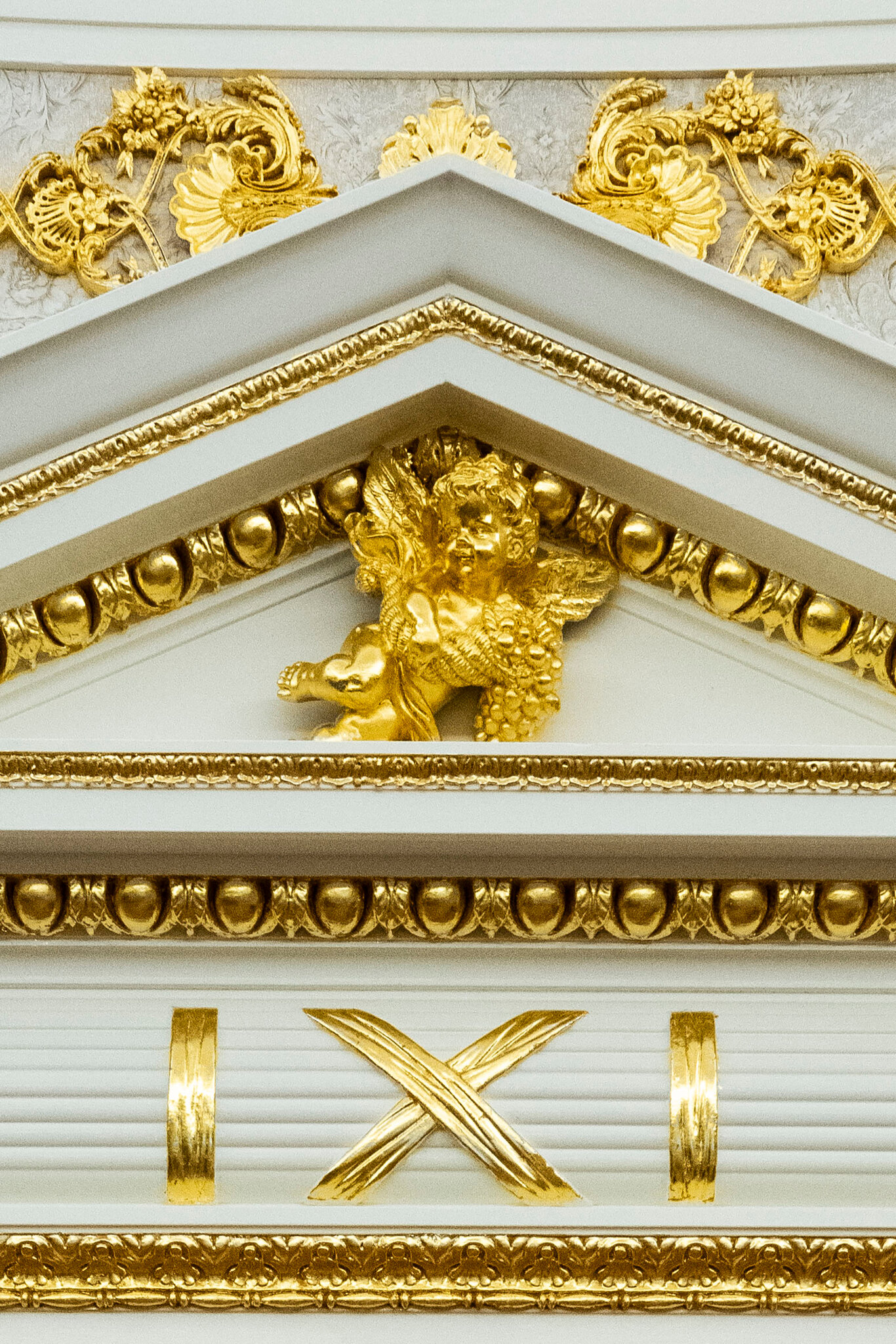
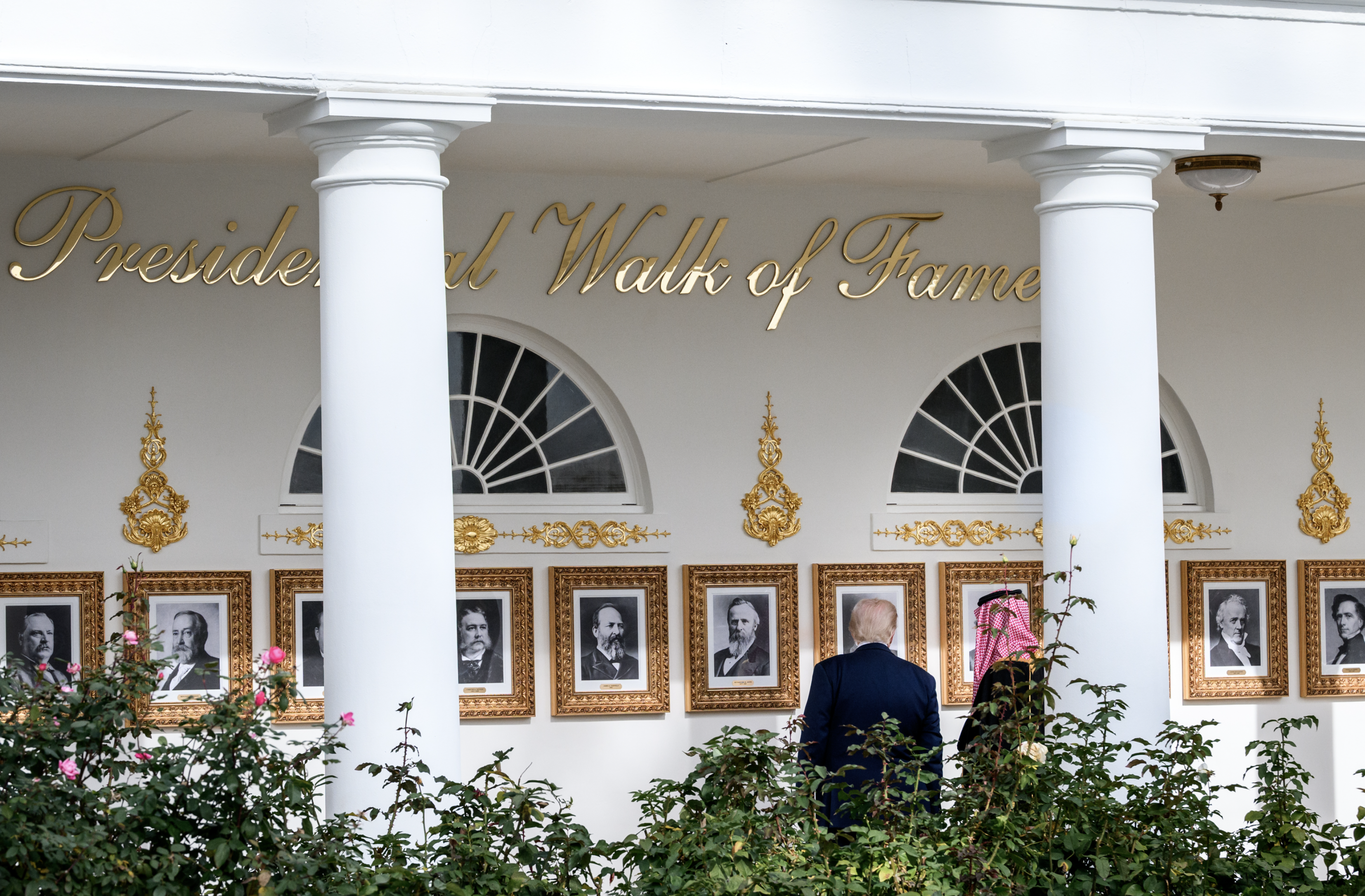
The same arithmetic seems to govern the choice of gold on the White House, where ornament serves as an argument of authority.
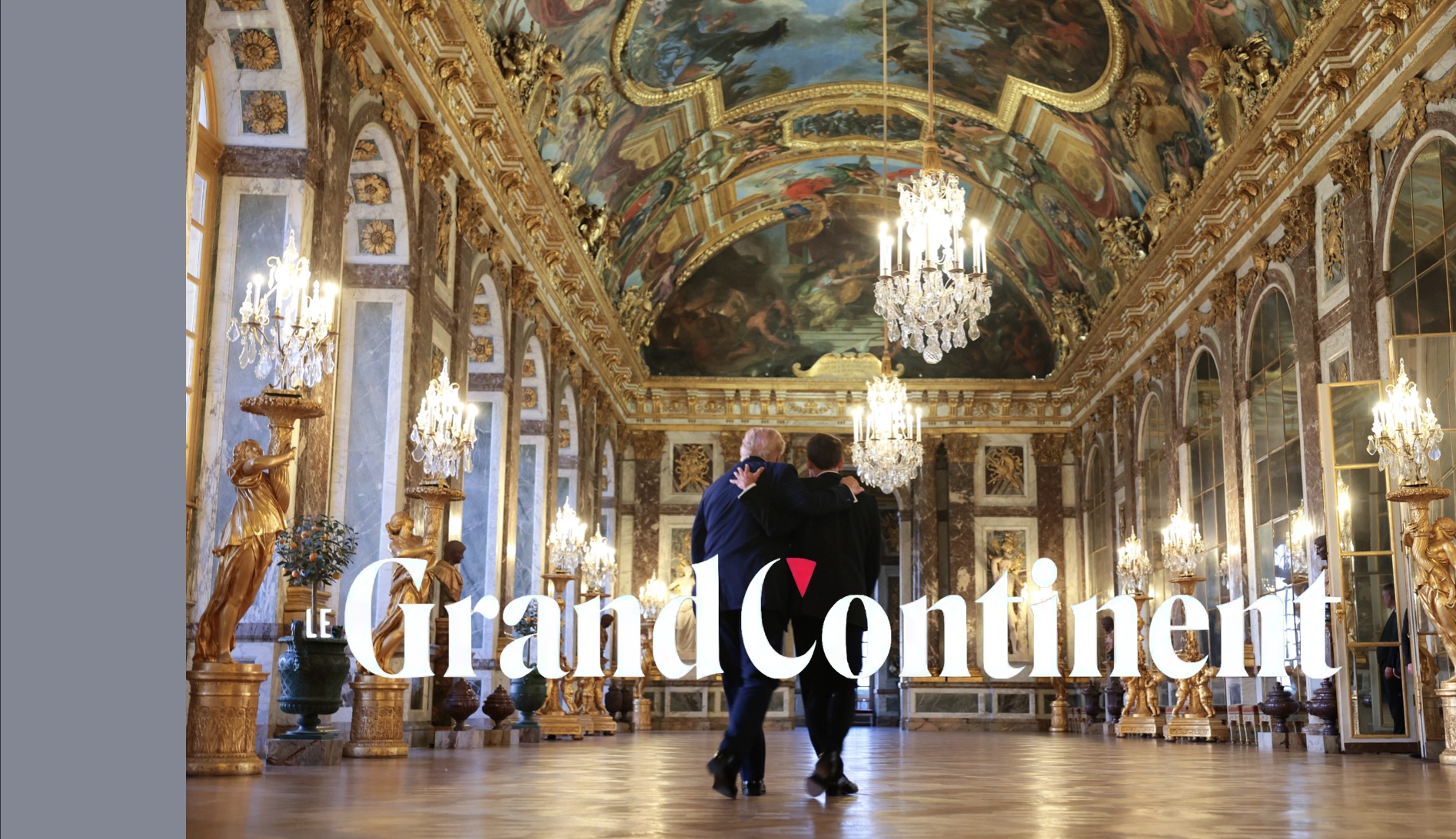
Truth emerges plainly in Evian. When a journalist asked him what had decided him to participate in the Versailles dinner, on the fringe of the G7 summit, he replied, essentially, that it wasn’t about gilding: Versailles was, in his view, the most beautiful palace in the world, “the real deal.”
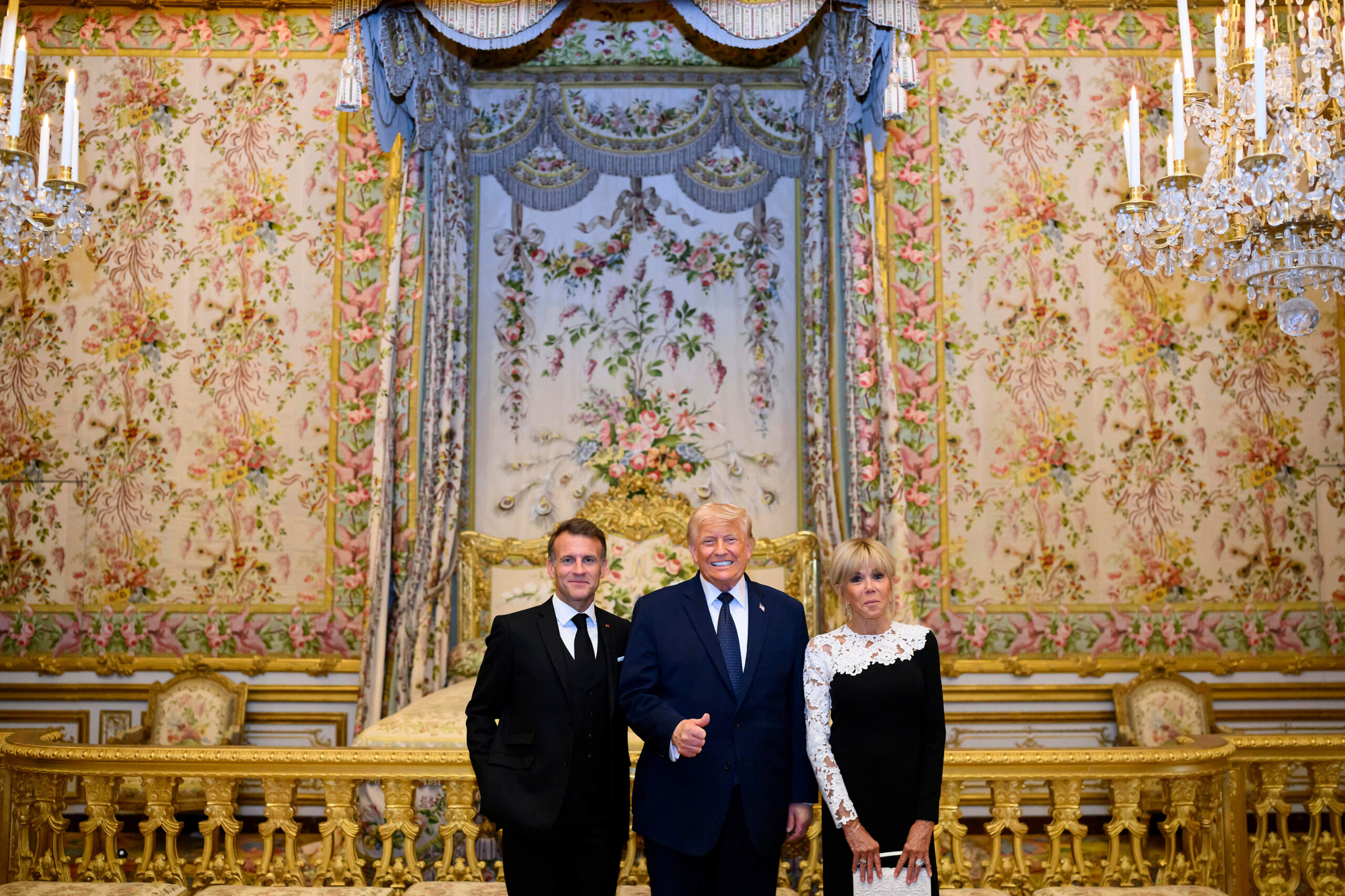
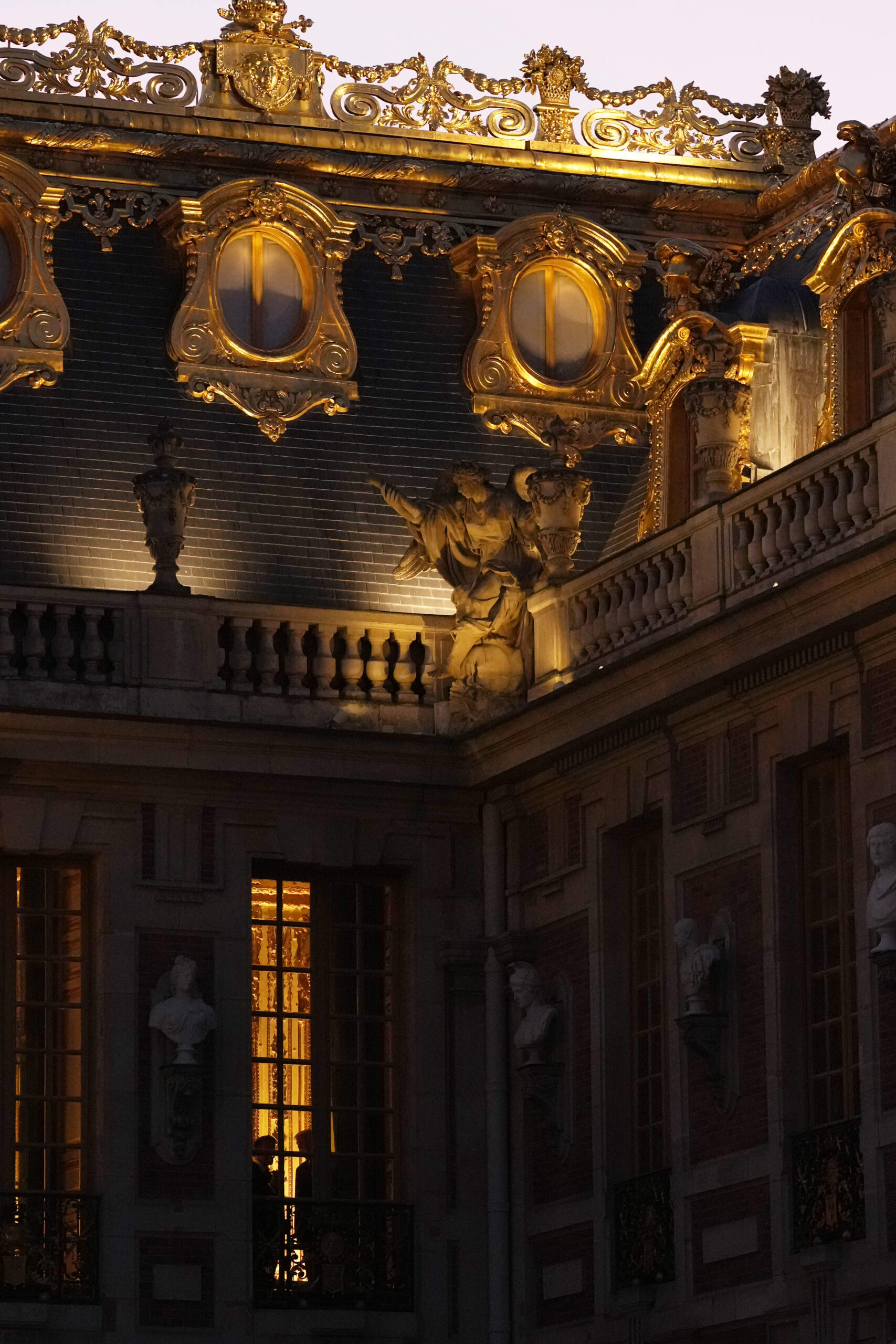
The irony was that he was asked to sign Versailles itself for one of the most fragile agreements, and, in some eyes, for the diplomatic protocol with Iran.
Versailles remains, for Trump, a long-standing obsession. The Mar-a-Lago ballroom in Florida was explicitly modeled on the Hall of Mirrors. He has, in Florida, a craftsman, his “gold guy,” specialized in gilding.
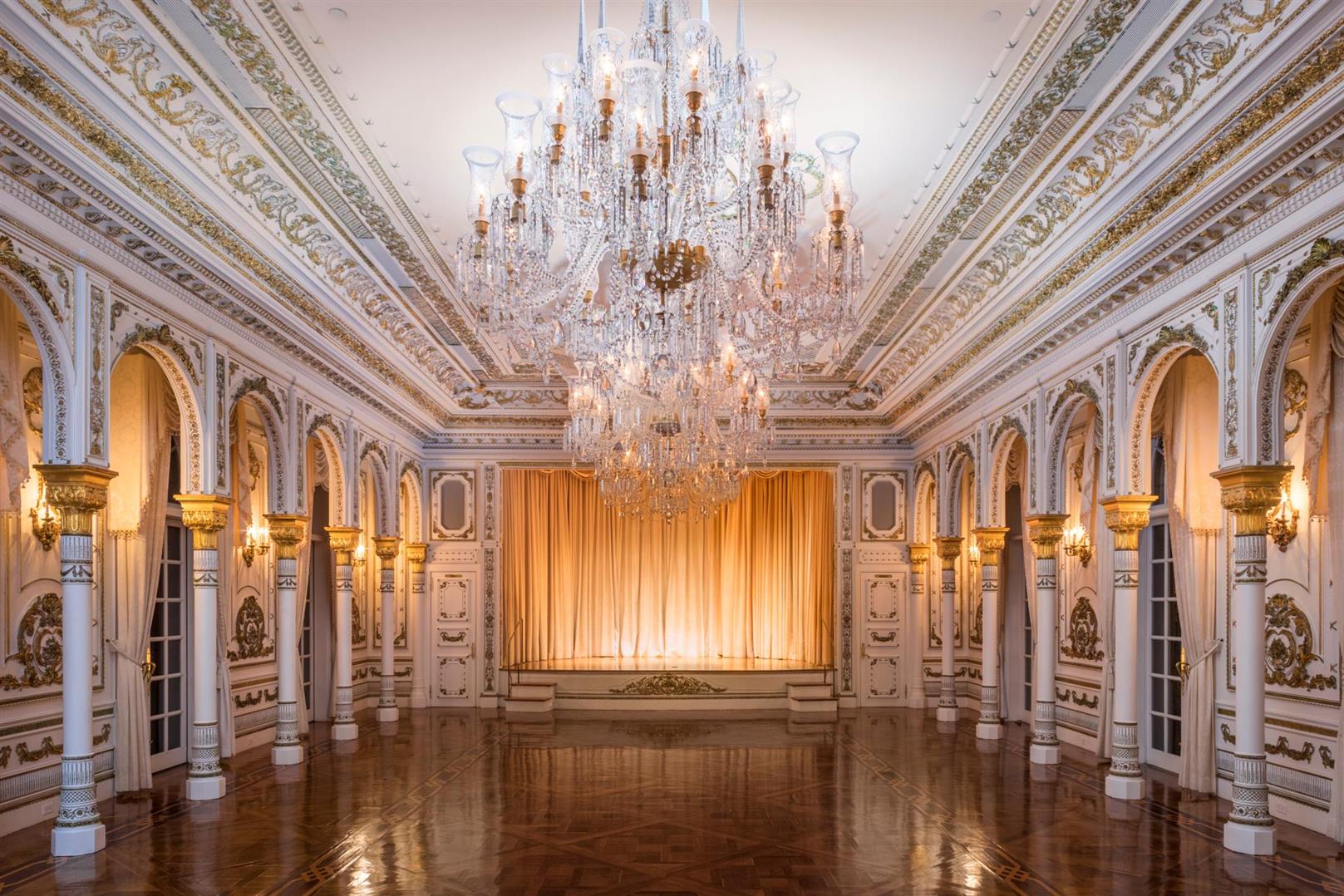
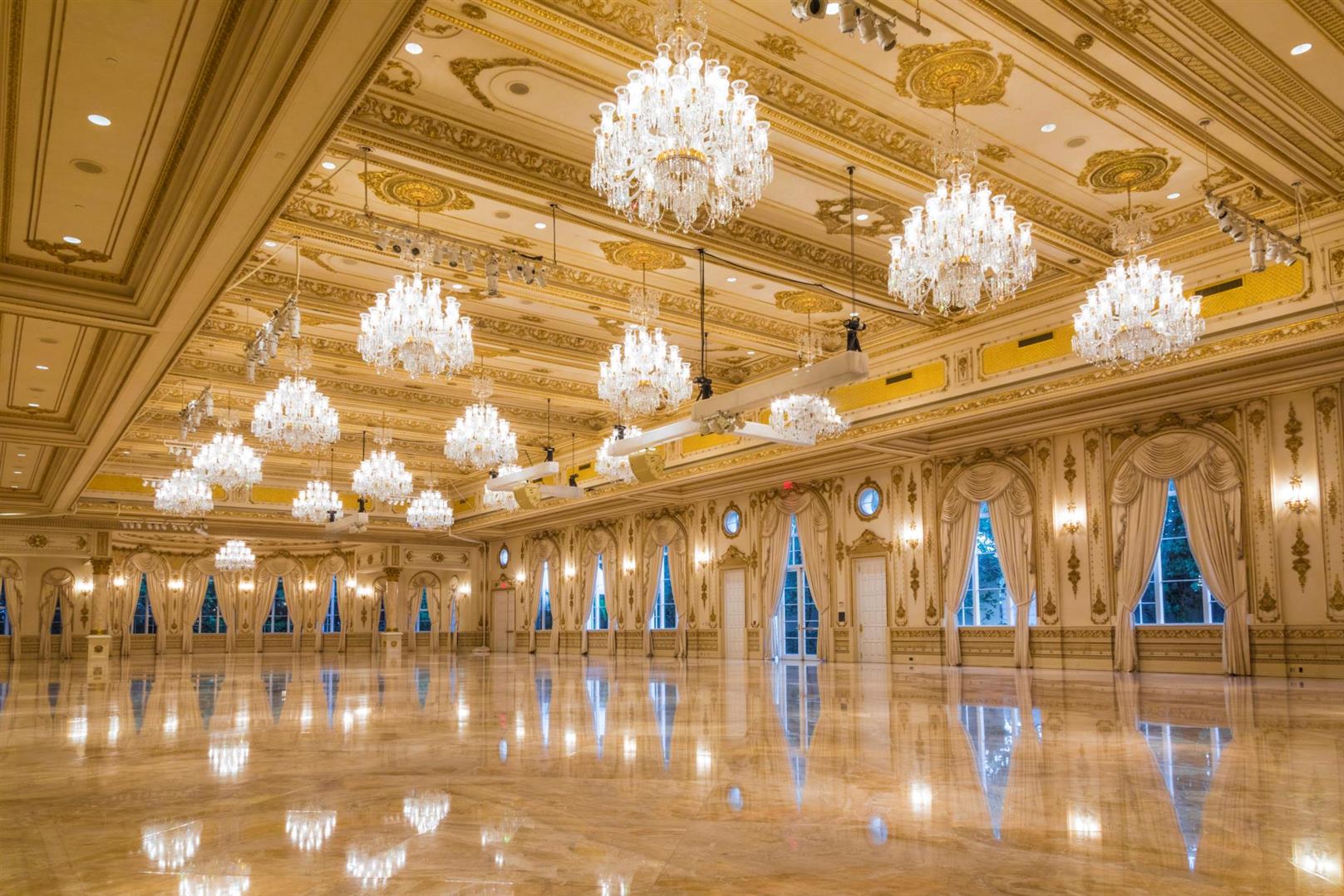
We recall a comic moment: in April 2025, an American delegation, led by Marco Rubio and Steve Witkoff, hosted at the Élysée to discuss Ukraine, produced a scene where the developer and the president’s right-hand man compared France’s palace gilding to Mar-a-Lago, giving the impression that Florida inspired the Élysée. A discomfiting moment, which confirms the evident link between Trump and Louis XIV’s style, stated candidly and without reserve by his close allies. One finds traces of his fondness for the “Louis XIV under steroids” style in his very old three-thousand-square-meter triplex in New York, with frescoes on the ceiling and gold leaf everywhere.
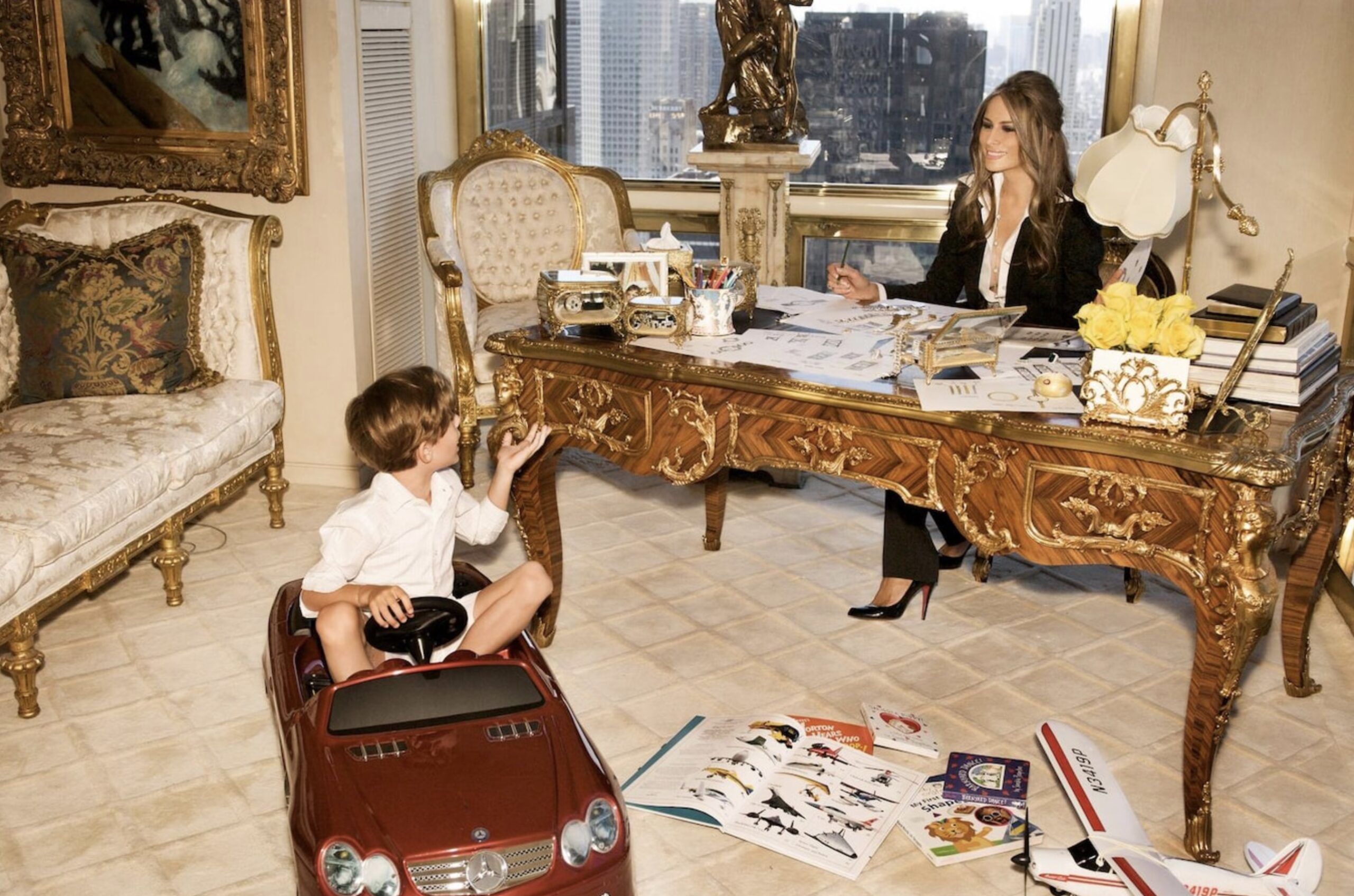
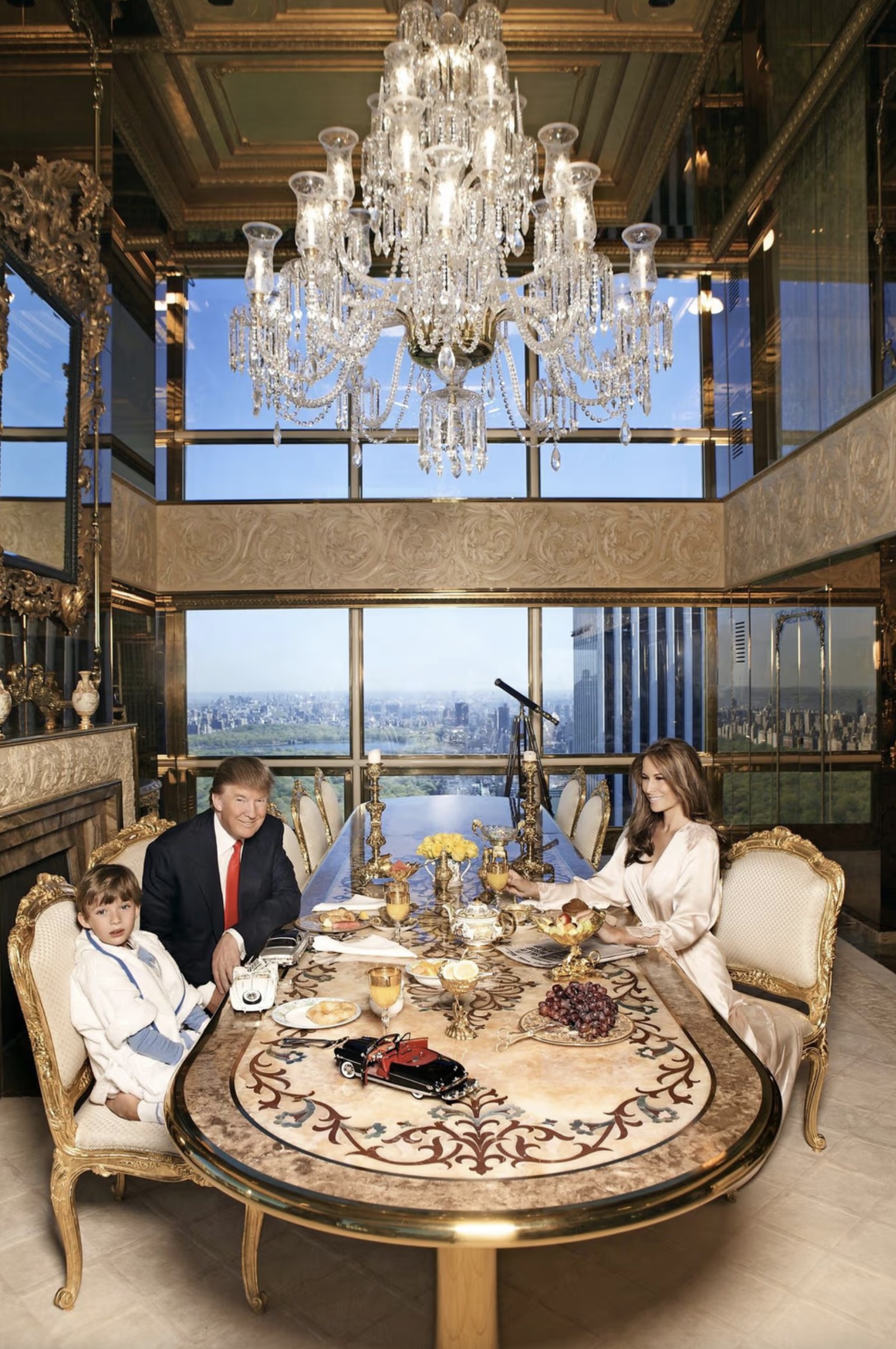
Forging an Empire Style
But this is old history.
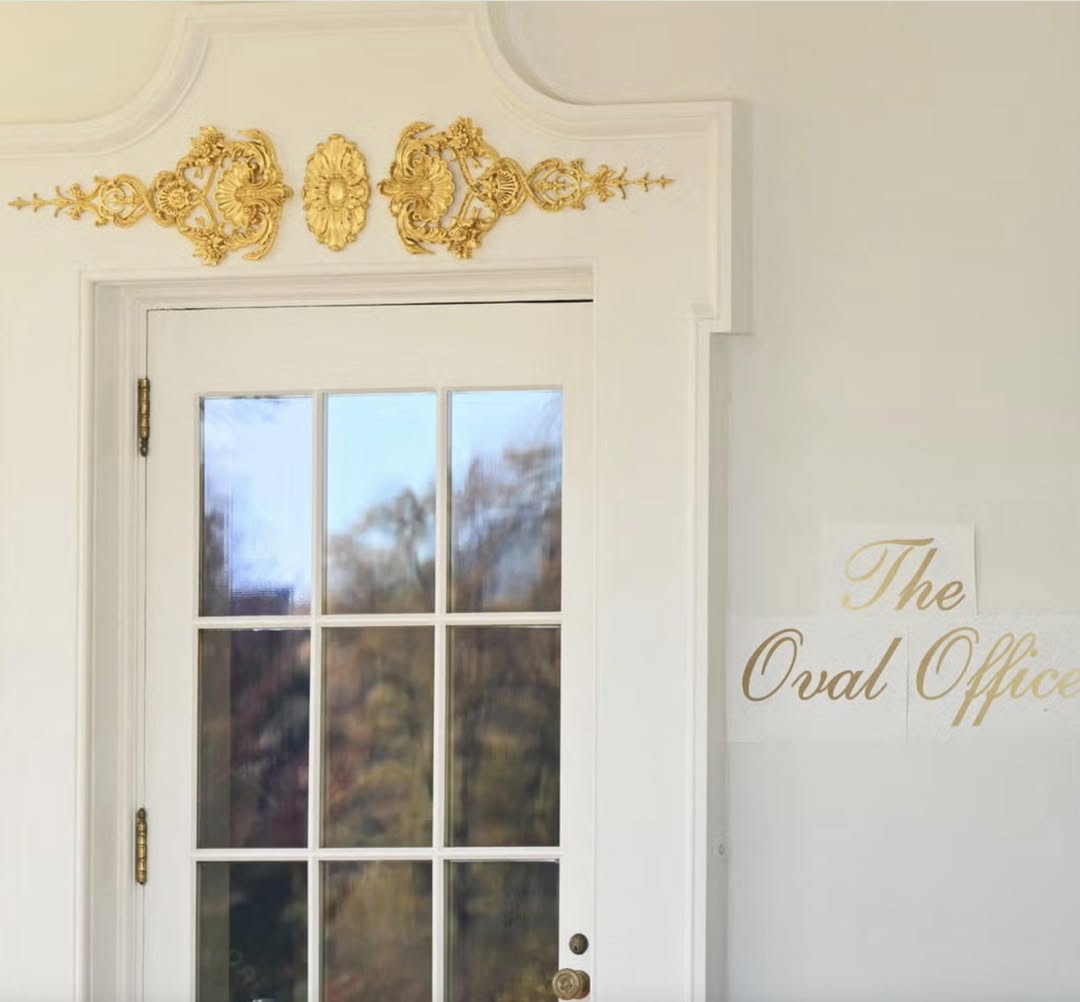
In 2025, the same gesture animates the Oval Office’s makeover undertaken during the second term. The Washington Post profiled it as the rise of a new Sun King (“Sun King”), criticizing decor choices deemed incompatible with the American spirit (un-American).
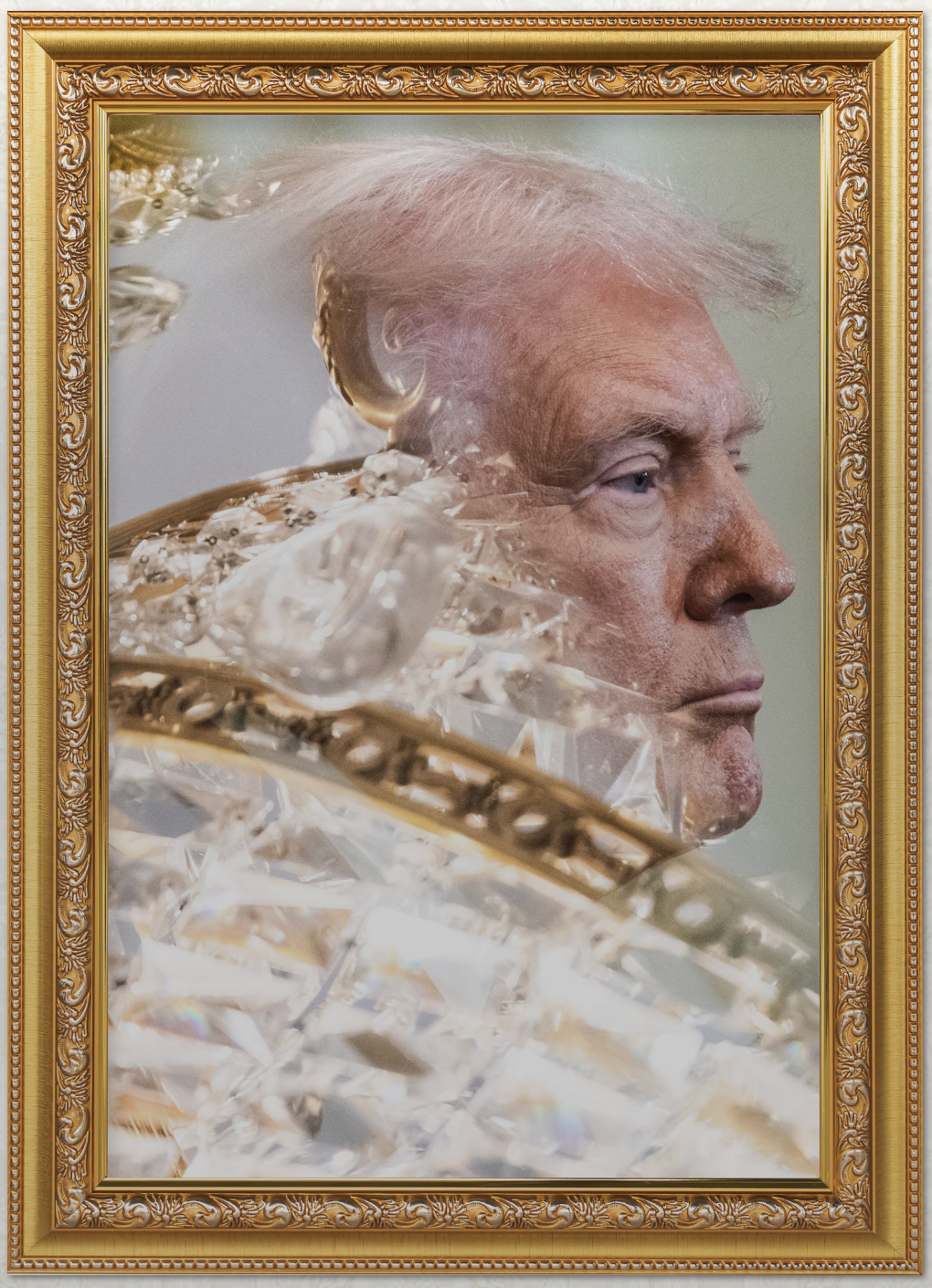
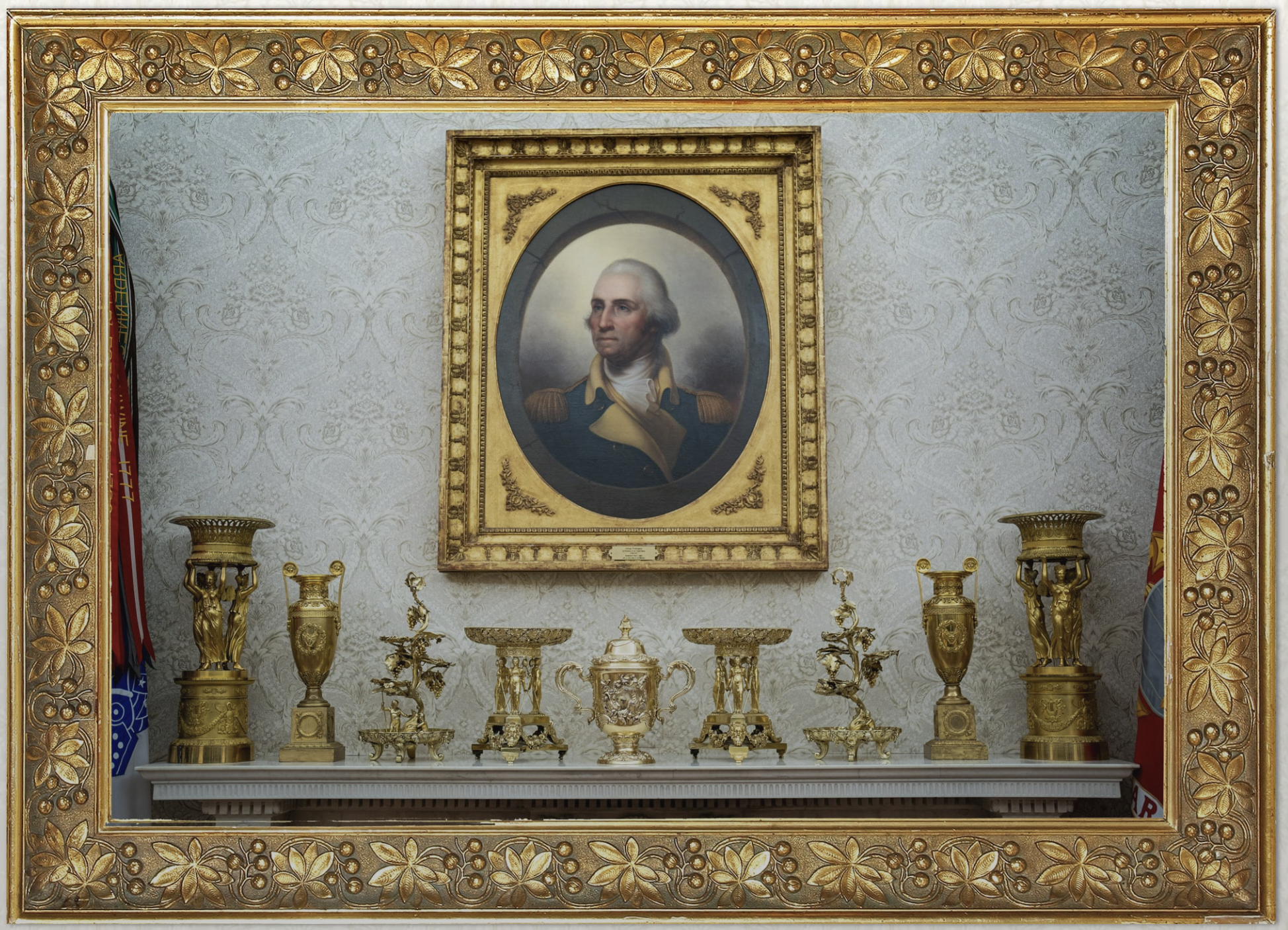
In detail, the executive broke with the usual restraint to adopt a baroque grammar borrowed from seventeenth-century French style — or, lacking period pieces in the White House furniture, from the Empire style. On the fireplace mantle, where a creeping ivy historically grew, there are now candelabra and gilded vases: in the very house where George Washington had demanded a “simple and neat” style, intended to ward off the specter of European courts and mark the break with royal splendor.
The Spanish newspaper El País, whose vigilance regarding the Iberian and thus monarchy in general is well known, investigated the exact pieces chosen for the fireplace: five vermeil ornaments given to Eisenhower, two Empire-style baskets dating from Nixon’s era, two gilded bronze sur tops that James Monroe ordered in 1817 from the emperor’s bronze-worker Pierre-Philippe Thomire. To achieve the Sun King effect, the administration selected pieces made in France under the First Empire and the Restoration, or that reproduce its codes: strict symmetry, heavy gilding, eagle and laurel motifs.
The matter becomes troubling when one discovers Trump’s maximalist taste for 24-karat gold leaf, which gives, to anyone who has seen the Oval Office up close or even on video, an impression of being spray-painted. This impression stems from precise technical reasons. Believe me, a man like Louis XIV would never have used 24-karat gold: it is too yellow, almost fluorescent. Gilders prefer alloys between 18 and 22 karats, with warmer coppery hues, and they work the patina, a dark layer applied in the recesses to create shadows; the reliefs alone are browned.
Another piquant detail: experts who studied the project noted that the moldings and cherubs lacked finesse, because gold leaf is usually laid on carved wood or stucco, materials that produce organic lines. At the White House, the 24-karat gold leaf covers modern polyurethane or injected resin moldings, the kind of resin you might find at a hardware store. The plastic is visible beneath the gold. Trump himself told Fox News that he had resorted to metallic paint, unable to gild everything with leaf. The Oval Office, heavily visited by journalists Trump gladly receives there, must also contend with powerful, bright lighting that emphasizes the failed effect: you feel more like Las Vegas than Versailles.
The Gold of the Queen and That of the General
Melania Trump does not escape the French subconscious of power: from the demolition of Jackie Kennedy’s Rose Garden to the $75 million hagiographic documentary, including the “I really don’t care” jacket worn during a visit to a detention center, the First Lady has been accorded the figure of Marie-Antoinette — a foreign queen, distant and secluded — even by her former communications director and by protesters in powdered wigs at the Kennedy Center.
But these signs are not incidental. In a representative regime, nothing of the representation a power gives of itself remains unrelated to its exercise. And the irony is that this drama unfolds in a city designed by Pierre Charles L’Enfant, under the influence of Versailles geometry: by bending Washington toward a monarchic register, Trump does not deform the capital, he awakens its repressed memory.
Among all the plausible hypotheses that deserve more systematic study, it is likely that this repression has a living model: the Fifth Republic.
The 1958 regime, unique in its kind among democracies, offers Trump what the American system could not produce on its own: the spectacle of an apparatus of state that is an elaborate democracy centered around a republican monarch housed in Old Regime palaces and commander-in-chief by right. The parallel with de Gaulle, drawn with extreme caution given how different the two men are, highlights a common mechanism: a Constitution that folds around a single person.
It is not possible to end this essay on the irresistible power of images without mentioning the most consequential borrowings, which are military: by sidestepping the War Powers Resolution to wage war without Congress, is the American president consciously or not applying the French doctrine of the president as “military monarch,” authorized by Article 35 to engage the armed forces alone — as already illustrated in the summer of 2013 when facing Syria, the contrast between Hollande, master of the fire alone, and Obama, suspended before a reluctant Congress, showed the tension?
This mirror must serve in both directions: the 1958 Constitution, with Article 16, plebiscitary referendum, and direct revision artifices, makes France a dual-trigger Republic, truly democratic and potentially authoritarian. It is this slope, and not the taste for splendor, that France would do well to observe in its ally, for fear of recognizing it one day in itself.