

Test the Grand Continent. The ideas and analyses you cannot find anywhere else. But you will see them everywhere soon. In your inbox starting at 8 euros per month
In Brazil, the relationship between religion and voting is often discussed in stark terms. On one side, the image of a “blind vote” or a “vote of the herd” is propagated—the faithful would passively follow the directives of the pastor or priest. On the other, the defense of religious freedom is presented as a guarantee that nothing spoken inside the place of worship could fall under the state’s interference. What actually happens during masses and services, however, is more nuanced. Between explicit electoral propaganda and anti-political rhetoric, a diversity of political, ethical, and civic stances, direct or indirect, emerges.
A new study conducted by More in Common Brasil in collaboration with the Federal University of Rio de Janeiro analyzed 7,500 sermons and masses on the two Sundays preceding the first round of the October 4 elections, to sketch a portrait of the place politics occupies in the sermons of Catholic churches, Baptist churches, and the Assemblies of God. In total, 13,886 hours of audio recordings corresponding to ceremonies held in 26 states and the Federal District were analyzed, equating to 578 consecutive days of broadcasting.
Behind these video extracts, an empirical portrait emerges of how electoral themes are addressed in religious discourses.
1. Very Marginal Electoral Propaganda
Only 3% of masses and services are concerned with electoral propaganda. By “electoral propaganda,” we mean all practices that promote or attack a candidate, directly or indirectly. This includes explicit calls to vote, but also the designation and/or blessing of candidates or a political camp, some candidates themselves potentially being members of the community.
A candidate from within the community — Our Lady of Fatima Parish, Sorocaba, São Paulo
This figure contradicts the widespread belief that pastors and priests see the faithful as a reservoir of votes. This behavior is very rare during Catholic masses (0.7% of the masses analyzed), somewhat more frequent during Baptist worship services (1.4%), and more pronounced during worship at the Assemblies of God (8.3)%, but remains minority overall.
2. Stronger Electoral Propaganda within the Assemblies of God
Caution is warranted regarding the results obtained for the Assemblies of God. As for the Catholic Church and the two major Baptist conventions, it is possible to rely on administrative records. By contrast, there is no data for the Assemblies of God. Thus, we do not know whether churches that broadcast their celebrations possess less electoral propaganda than others because the content is available on YouTube, or if, on the contrary, they have more, with the more politicized pastors and priests tending to broadcast to widen the reach of their message.
Here is a tip — Assemblies of God of Balneário Camboriú, Santa Catarina.
Nevertheless, even if these samples are not representative, they suggest that electoral propaganda is far more frequent within the Assemblies of God than in Baptist or Catholic churches. How to explain this? The centralized administration of the Catholic Church and the orientation of the two major Baptist conventions (the Brazilian Baptist Convention and the National Baptist Convention) may have allowed for a discipline more aligned with Brazilian electoral law.
3. More Frequent Civic Content
On average, civic content occurred five times as often as electoral content, with a lower ratio of civic to electoral content in Assemblies of God services. In other words, nearly one in six masses or services contained civic discourse.
“Civic content” refers to practices that combat social division and political polarization, and/or that aim to encourage informed voting based on humanist and/or religious values, without ever naming a specific candidate or political camp. These discourses show that churches were able to integrate the electoral context into their sermons and preachings in a civic and non-partisan manner.
The Brazilian electoral law aims to establish an “equivalence of arms” between candidates to prevent any asymmetry. The restriction of campaigning in places of worship is part of measures to guarantee this parity. This, however, poses a problem for churches addressing social questions and promoting ethical and religious values that naturally carry political implications. Nonetheless, many churches have developed discourses that we describe as “civic,” inviting the faithful to vote thoughtfully, taking into account humanist and Christian values, without naming candidates, parties, or political currents. Many also criticize political polarization and social division, reminding communities of the enduring ties that unite them. We believe that this approach not only respects the electoral law but also illustrates how religious services can address political questions during electoral periods, combining pastoral work with a pluralistic approach to politics.
The Catholic Church does not tell you who to vote for. Don’t argue about politics — Saint Joseph Parish, São José do Rio Preto, São Paulo
Vote for those who respect life, the environment, and fight for the marginalized — Parish of the Holy Family, São José dos Campos, São Paulo
4. Designation: the Sign of Local Dynamics
When there is a nominative designation of candidates, the primary targets are not necessarily executive candidates, but candidates for legislative elections, both at state and federal levels. They are often presented due to their closeness to the religious community, their affiliation with the church, or the support they have previously given to the institution. It is thus a policy less centered on the presidency alone and more anchored in local networks of reciprocity and representation.
Reciprocity between the Church and the candidates — Assembly of God Paulistana, Mauá, São Paulo
5. Forms of Propaganda and Electoral Orientation
Propaganda takes many forms, and the explicit call to vote is only one among others. Thus, candidates are presented during celebrations, references are made to candidates supported by the Church, and orientations are based on broader moral and political categories. In some cases, no names are initially mentioned, but there is a contrast drawn between the “right” and the “left,” the “Christians” and the “Communists,” or between candidates who would defend certain religious values and those who would threaten them.
Denial of misinformation and attack against the left — Parish of Menino Jesus, Paraúna, Goiás
In other cases, the church’s physical space becomes a venue for campaigning materials, with pamphlets, lists of “recommended candidates,” campaign posters, and people charged with distributing them at the exit.
Requests to place car stickers — Assembly of God Ypiranga, Valparaíso de Goiás, Goiás
6. Propaganda that Recognizes Its Own Limits
There are also particularly telling situations where leaders themselves appear to acknowledge a boundary to what can be said publicly. As a result, they halt the broadcast or invite the faithful to contact them by phone or in a private meeting to receive electoral guidance. The legal boundary does not restrict certain practices, but it seems to alter the form and channel of dissemination in some cases.
Broadcast interruption — Assemblies of God Ministry Vila Nova, Goiânia, Goiás
7. The Soteriological Dimension of the Religious Reading of Politics
There is also a soteriological dimension in the way politics is viewed from a religious perspective. Soteriology, in simple terms, is the religious reflection on salvation and what ultimately determines the fate of the believer. Even in highly politicized celebrations, electoral action is often relativized by the assertion that the election results do not replace divine sovereignty.
Politics has its importance, it must mobilize the Christian and can even be presented as the arena of a confrontation between antagonistic moral forces, but it remains subordinate to a broader religious order. This is important because it prevents automatically interpreting the politicization of worship as a replacement of religion by politics. In many cases, the opposite occurs: politics is absorbed into a religious grammar that simultaneously demands participation and limits its ultimate significance.
Religious followers’ reactions to the campaign — Assembly of God in Paulo Ramos, Maranhão
First Baptist Church of Itatiaia, Rio de Janeiro
8. Between Public Space and Religious Communities, a Different Reception of Controversies
During the pre-electoral period, much of the public debate was driven by the controversy surrounding Our Lady Aparecida. It was a misinformation claim that the candidate Flávio Bolsonaro planned to strip Our Lady of Aparecida of her title as Brazil’s patron saint. Despite its wide diffusion on social networks and in the press, within celebrations, the controversy remained very marginal and few references were made. When the controversy was mentioned, it was mostly to deny, correct, or clarify the information, though this clarification sometimes carried political interpretations about its dissemination.
This divergence is significant: religious themes likely to dominate the public and digital debate do not necessarily reach the daily life of religious communities with the same force. Catholic liturgy has its own dynamic and does not mechanically reproduce the public controversy agenda.
Saint Augustine Parish, Chapada Gaúcha (MG), September 27, 2026
9. Discourses That Escape the Law
Since the amendment introduced by Law No. 12,034/2009 to Article 37, § 4, electoral law (Law No. 9,504/1997) regards places of worship as “public-use properties,” on par with cinemas, clubs, and stadiums. In other words, they are private spaces but open to the public, where it is prohibited to disseminate any form of electoral propaganda. The same law also prohibits religious entities from making campaign donations (Art. 24, VIII).
The legal framework is thus restrictive in terms of space and resources. It says nothing about discourse: the law does not define what distinguishes preaching on moral and public themes from calls to vote.
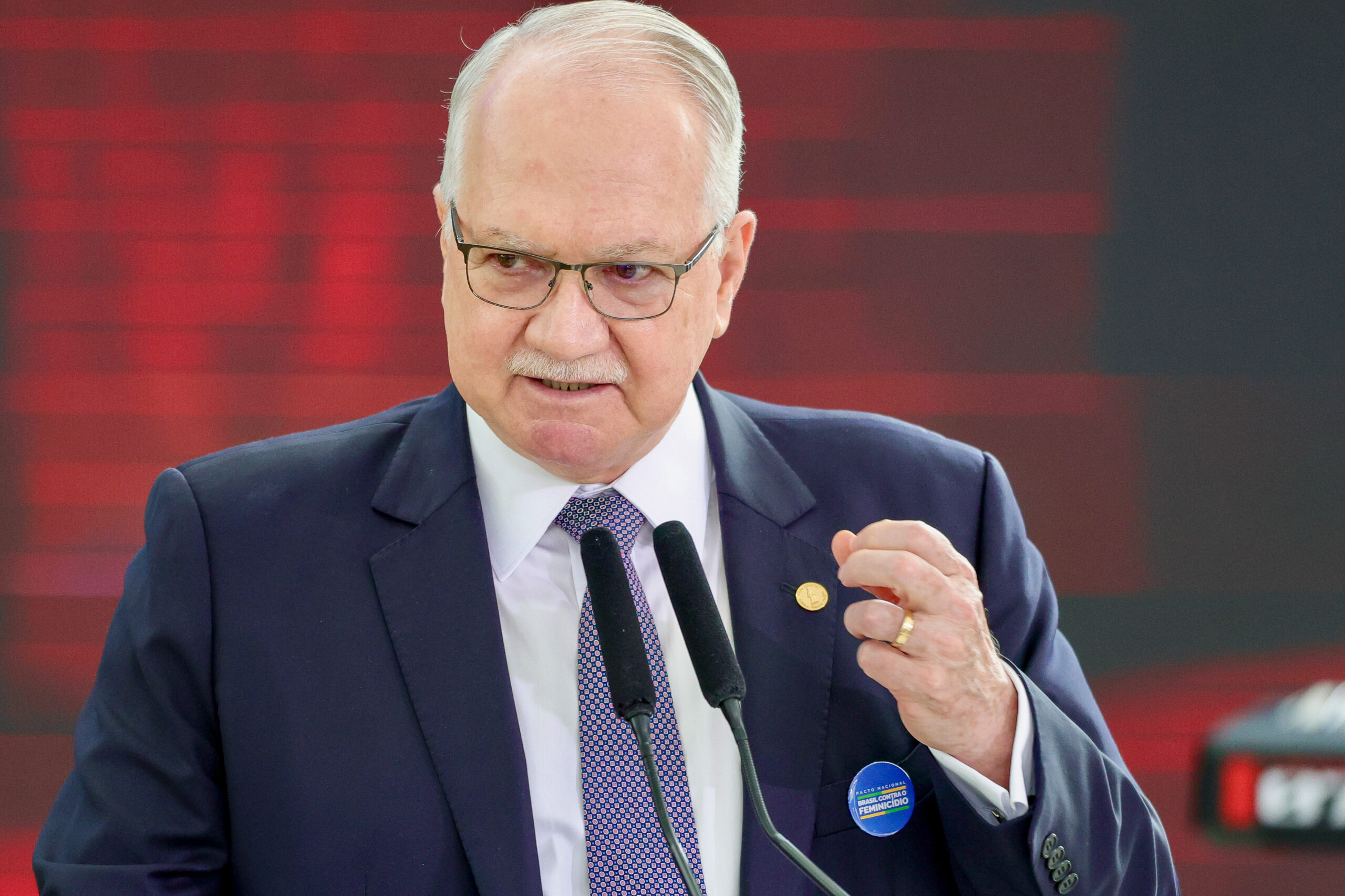
It has fallen to electoral justice to fill this gap, which they did prudently. In 2020, in ruling on a case in Luziânia (GO), Supreme Electoral Court (TSE) judge Edson Fachin proposed recognizing “abuse of religious power” as a standalone category that could trigger removal from office. The majority of the TSE rejected this thesis due to the absence of a legal provision. It was then established that the electoral use of the religious structure can be sanctioned only when it falls under already existing categories of abuse of economic power, abuse of political power, or improper use of the media. The concept of abuse of religious power lacks a clear legal existence, but tolerance of a church space turned into an electoral podium has diminished.
10. A Consensus Between Legislation and the Faithful?
The study “Religion and Public Life in Brazil,” recently published by the Institute of Religious Studies in partnership with Quaest, provides valuable context for interpreting the data, showing that the legal restriction on electoral discourse in churches enjoys broad support. Eight in ten Brazilians oppose political discussions in places of worship, and nine in ten reject the idea that religious leaders open churches to candidates for electoral purposes. This same survey shows that this rejection coexists with practice.
If there appears to be a consensus between legislation and believers, this consensus hides a very large gray area: the legal prohibition applies to propaganda inside the church, but not to distributing leaflets on the sidewalk or outside the worship space, for example. Jurisprudence punishes the candidate who is promoted and celebrated at the altar, but has little to say about discreet invitations to “discuss privately with the pastor.” Topics such as abortion, family, or public safety can be preached as doctrine, and the boundary between such preaching and calling to vote for those who defend them is rarely clearly drawn. Prayer for leaders, expressions of gratitude to those who “helped the Church,” and the presence of officials in the front row are practices that do not easily fit into a legal category.
Christian values against abortion, gender ideology, and corruption — First Baptist Church of Cancela Preta, Padre Miguel, Rio de Janeiro
11. A Theological and Ethical Approach Is Needed
In general, the interface between faith and politics is seen as electoral manipulation. Regulation by electoral justice thus seems to be the only solution. However, religious leaders and institutions can play an important role. It is therefore necessary to question, from both a political and theological perspective, how religious ceremonies can be integrated into the electoral context in a healthier way, respecting pluralism and fostering civic conscience.
From a theological standpoint, this means asking what each tradition understands by “prophetic mission” and what it regards as an instrumentalization of faith. Ethically, it requires respect for the faithful’s conscience and an examination of the power asymmetry between the preacher and the listener.