
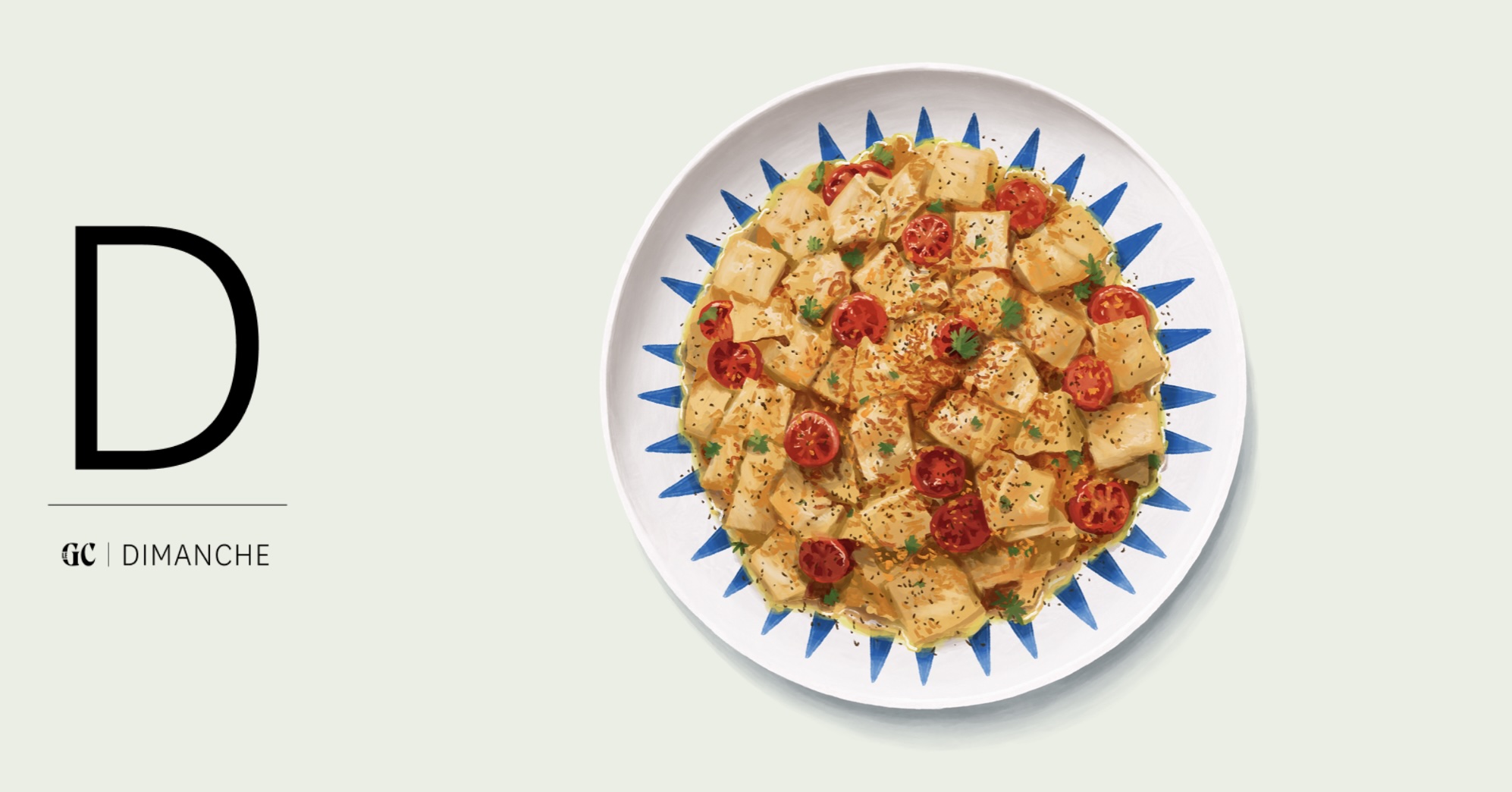
Ingredients for 6 servings:
- 500 g of hilopites
- 60 to 80 g of poutargue from Missolonghi
- about a dozen very ripe cherry tomatoes
- a few sun-dried tomatoes
- 80 ml of extra-virgin olive oil
- the zest of one lemon
- flat-leaf parsley
- oregano
- black pepper
- fleur de sel
My Greek summer always began at the table. We would arrive as a family from France, aboard an old Simca, to the small town of Missolonghi, and the ritual was always the same. My grandmother prepared the hilopites, these famous rustic pasta dishes that she had been making since her youth.
We watched Christina crack eggs from her hens into a large copper basin. She then added the still-warm milk from her ewes, followed by a handful of flour, and so on until the dough grew supple. She kneaded it for a long while, never once glancing at the clock. Her hands moved almost like dancers across the pliant dough, which took on improbable shapes during the kneading. After a resting period, my grandmother rolled it out with a wooden pin (the one she hid above the fridge) to make it uniform. Then, with care, she cut irregular little squares, much like an artist selecting ceramic fragments that would bring life to her mosaic.
She then laid them out on large white sheets stretched in the courtyard and lightly dusted with flour. As the sun rose, this fine wheat dust warmed slowly. A warm, discreet, sweet fragrance rose. A scent I have never found anywhere else.

My grandmother then dried the tomatoes. She selected the juiciest ones. She cut them in half, salt lightly, and laid them out with the flesh facing the sky. Day after day they slowly released their water. Their vermilion red grew deeper, and the flesh transformed. The sun distilled what was superfluous, leaving only the essentials. A few paces away, bouquets of oregano were drying as well. A mere brushing of them was enough to fill the entire courtyard with their fragrance. The sea breeze from the lagoon did the rest.
Odysséas Elytis wrote: “If one dismantles Greece, in the end there remains only an olive tree, a vine, and a boat; this means that with such things one can reconstruct it.”
I have often wondered whether a fourth element was missing: the sun. For it is the sun that gives our pasta its flavor, and the tomato its taste. And what can be said about olive oil? From Homer to the present day, it nourishes people, heals bodies, lights homes, and accompanies every meal. Kostís Palamás saw in the peasants the quiet guardians of a people’s continuity. They did not merely pass on a know-how; they safeguarded the thread of life itself. They kept alive the rhythm of the seasons and the long course of time. This is the Greece I knew as a child. A Greece of light, where one first learned to know time before learning the recipes and the workings of the world.

The hilopites boiled for a few minutes in a large pot of simmering water. Before draining them, Christina always took a ladleful of their cooking water. Meanwhile, she gently sautéed the tomatoes in a generous amount of olive oil. They shouldn’t be cooked outright, but simply softened to release their fragrance. When using sun-dried tomatoes from the previous summer, they gradually regained their suppleness in the hot oil. She would then add a pinch or two of oregano, just long enough for their scent to infuse softly.
The hilopites joined the pot with a few spoonfuls of their cooking water. They were stirred gently so they could absorb the juice of the tomatoes and the olive oil. Christina then divided the pasta as soon as it was hot.
That is when she grated the poutargue from Missolonghi, or sliced it into petals so thin that they nearly became translucent. She let them fall over the steaming pasta. The heat released their bitter, salty aromas. A few shavings of lemon zest, a handful of freshly chopped parsley, and a few turns of the black pepper grinder completed the plate.
Nothing more. The poutargue was not cooked; it was offered as a precious gift. It brought to the dish the lagoon of Missolonghi, as well as the patience of the fishermen who, for generations, knew that the most delicious flavors are those allowed to be born in time.
When the whole family sat down under the shade of an old mulberry tree, gathered around the table, we would make the sign of the cross and give thanks to the good God for being together and in good health. We were hungry, and the holidays could then begin.