
Long before the war made travel unthinkable, reaching Odessa by sea was already a challenge. The dream would have been to buy a cabin aboard a cargo ship departing from Istanbul, to thread the Bosphorus—catching sight of Prinkipo Island where Trotsky, a happy Odessan during his high school years, had taken refuge from 1929 to 1933—only to exit into the most moving sea of all, the Black Sea, which is bordered by the Black Lands, those humus-rich realms that make Ukraine the great breadbasket country of wheat, and of so many cereals, fruits, and vegetables. To sail at length, keep the Crimean Peninsula to starboard, the Danube Delta and Romanian Constanța to port, and arrive at the port of Odessa, facing the Primorski Staircase, literally “to the sea” (in Russian), renamed after Potemkin.
Traverse the sea as one would traverse the ages gone by. Imagine the times when the sea was Pontus Euxinus, a friendly sea—a euphemism used by mariners of the region; imagine that even earlier it was a lake before the saline waters drifting from the Mediterranean filled it with Marmara, and consider that this might be the cradle of biblical history, perhaps where the myth of Noah’s Ark was born, precisely there. A violent rain would have fallen, raising the waters by roughly 150 meters and drowning the lake’s shores populated by farmers, later giving birth in the Bible to the Flood episode, essentially the same narrative found on tablets from the nineteenth century, transmitted to Gilgamesh by an immortal for him to share with the living.
The crossing would briefly bring one back to modern times by way of another legend, that of Jason and the Argonauts, voyaging from Iolcos—today Volos—toward Colchis, present-day Georgia, in search of the Golden Fleece. As a voyage through space-time, the voyage from Istanbul to Odessa, crossing paths with some of the most renowned travelers—Mark Twain or Georges Simenon—would offer the wondrous benefit of warning the newcomer that they are not merely docking in a city, but at the crossroads of powerful legends, of venerable old stories and of newer tales carried by writers with biting wit and humor. Odessa, nicknamed the Pearl of the Black Sea, deserves many battles to prove its worth.
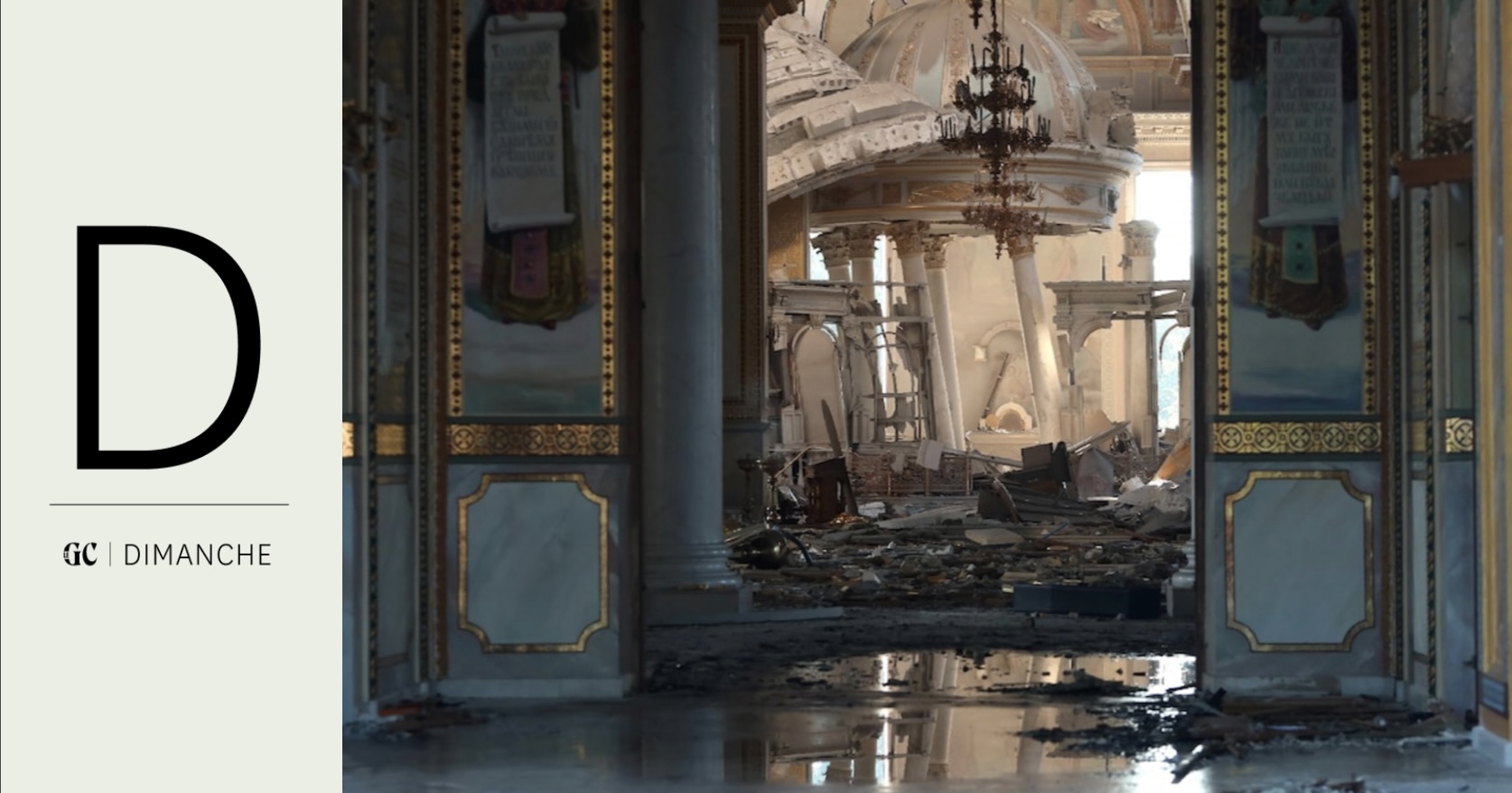
In July 2026, Russian forces resumed attacks on the port of Odessa with missiles and drones. No ship can dock, and the situation resembles a naval blockade. Sirens wail daily, people die, infrastructure is hit. This new war began before Russian troops entered Ukraine. After Viktor Yanukovych fell in 2014, protests were sparked by pro-Russian forces in the East and South of Ukraine. Shortly after the Donbas war began and the annexation of Crimea, in Odessa on May 2, 2014, pro-Maidan militants organized a rally to defend Ukrainian unity. A pro-Russian crowd triggered the violence. An arson was set: the House of Trade Unions in Odessa caught fire, forty-two people perished in the flames. Vladimir Putin, faithful to the successive powers that have ruled the Kremlin, distrusts this Southern city, a beacon of New Russia, now Ukrainian and with a stubborn, independent spirit. Eight years later, with the Russian army entering Ukraine on February 24, 2022, Odessa becomes a military objective, commensurate with the enormous economic and strategic stakes it has represented since its founding. It is from its commercial port that the country’s agricultural wealth flows, but it is also a cultural history that it is ready to defend once again. Shots come from Russian warships, targeting warehouses, destroying infrastructure, killing inhabitants. On the same day, Russian aviation takes over—the Crimea is close. A plan for a sea invasion falters; conscripted Russian sailors refuse it, plotting mutiny. Odessa organizes itself to resist. The downtown, with resort-like vibes, transforms in a few days. The city settles into a prolonged existence marked by the blaring of missiles warning of strikes, yet it strives to live as normally as possible day by day. The vise does not loosen. On the night of July 22–23, 2023, the Cathedral of the Transfiguration, recently inscribed on the World Heritage List, is largely destroyed. Will the Russian power dare? Will Odessa burn?
Before the war unleashed by Vladimir Putin, Odessa had become accessible to all travelers drawn by the resonance of its name. It was then easy to reach, and the sense of wonder awaited everyone. The city’s million Odessans were joined each summer by visitors from the Mediterranean basin. For Odessa’s bicentennial, Marseille—on the opposite end of the sea when one travels West—remembered that this beautiful city on Europe’s edge was its little sister and organized an exhibition at La Vieille Charité, The Memory of Odessa, praising the genius of its builders, the harmony of architecture nourished by the finest sources, the cultural power rooted in the blending of cultures, and the pioneering spirit. A city “still, and despite everything, wildly, wildly interesting,” as the Odessa-born literary genius Isaac Babel wrote. Built on a cliff overlooking the Black Sea, with its back to the sea, the city is infinitely seductive, and the Odessans, so amiable.
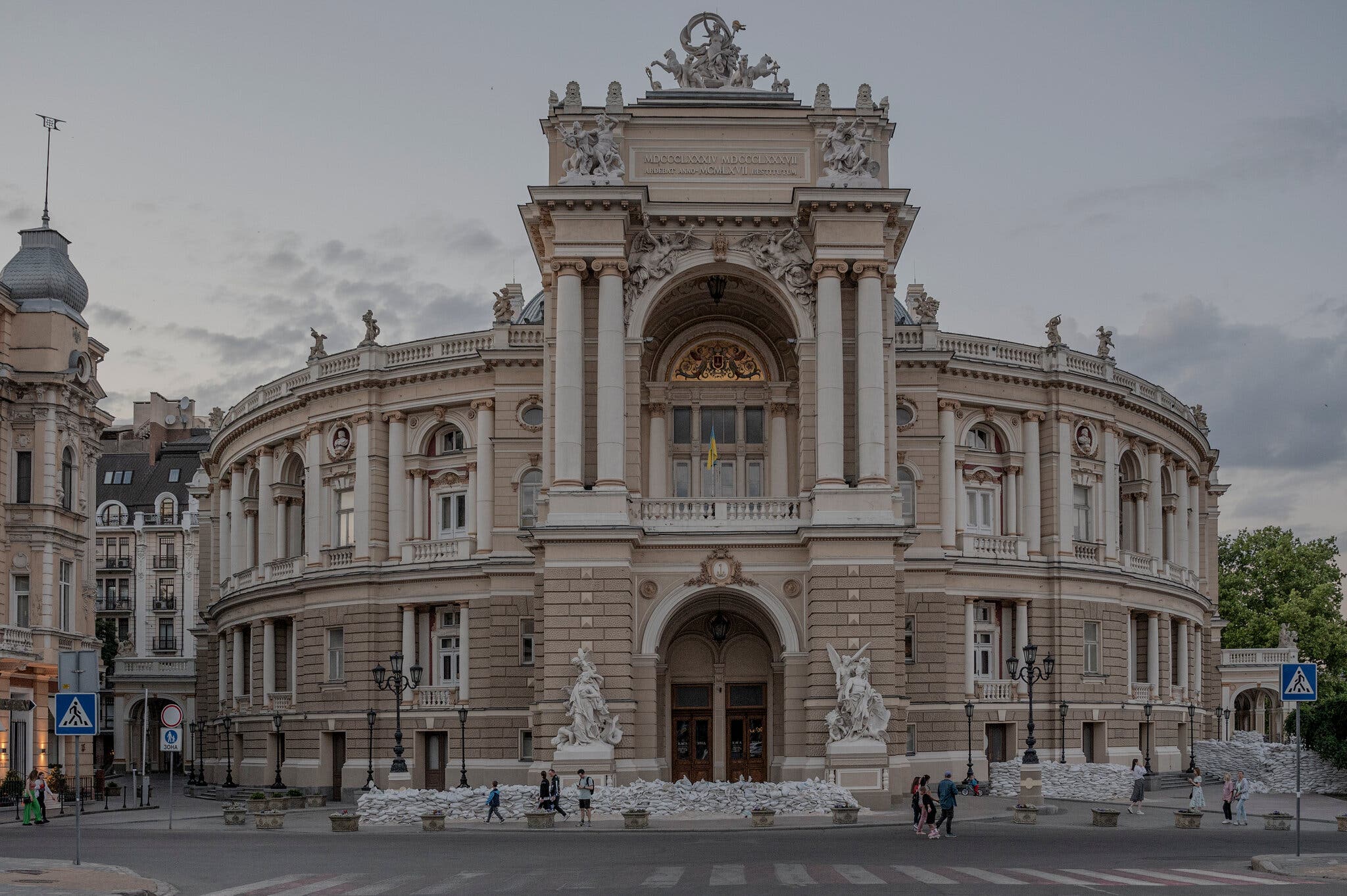
One strolls nonchalantly on the terraces of the broad avenues of the city center, watching, like in a cinema, luxury cars glide by, women with long legs, and plenty of money. Behind the grand neo-classical yellow, ochre, and Pompeian red buildings that have since the start housed the stock exchange, the grand theater, the city hall, the museums and palaces built by large landowners, the long streets are lined with acacias, offering welcome shade and a heady scent, imported in the 19th century. There, the heart of the Odessan city lives, shaped as in Moldavanka, the old Jewish quarter, around inner courtyards where two-story houses lean toward a central tree and a water cistern, adorned with worn wrought-iron balconies.
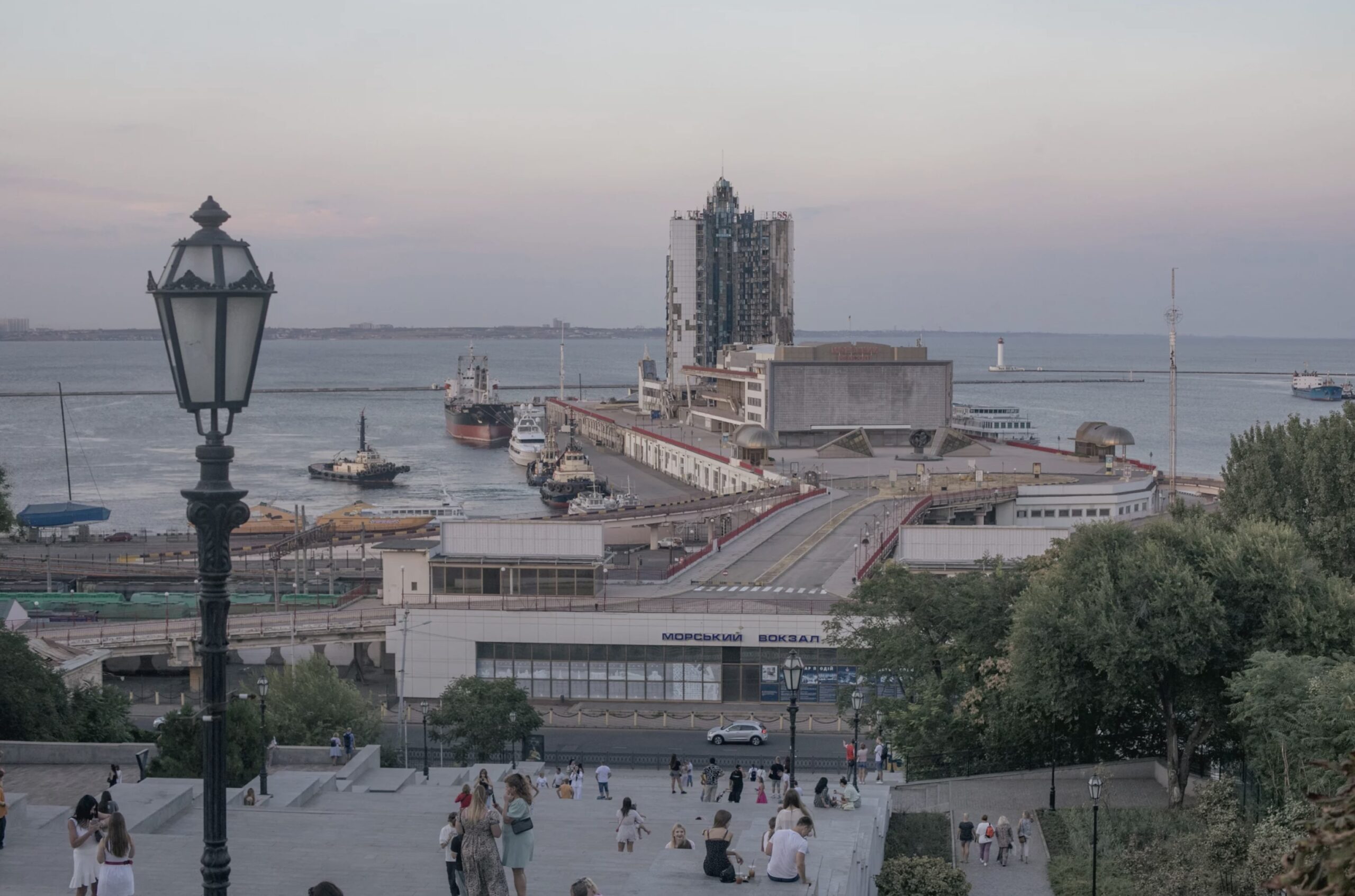
Isaac Babel again: “In Odessa, there are spring evenings voluptuous and languorous, with the spicy scents of acacias, and a moon filled with a steady and irresistible light above a dark sea.” At the Privoz Market, where all the region’s agricultural goods converge, stalls offer vegetables and fruit as far as the eye can see, fish and cured meats; Ukrainian grandmothers sell little pies stuffed with meat or vegetables—are they called pirojkis? Zakuski? It’s a spot joyful for pickle lovers. The cats’ paradise too, who lounge all day in the city and come to feed at Privoz after nightfall. In Odessa, nothing disturbs the harmony except, at the continuation of the Potemkin Staircase, behind the seaport, the Odessa Hotel, a glass tower built in the late 1990s with mafia money, so they say—a ugly building as an insult to the wonderful houses that line Primorsky Boulevard at the top of the stairs, blocking their view of the sea; an unoccupied building that was deemed non-compliant with construction and safety norms, intended only as organized crime mixed with politics as much as economics, to clearly state who runs the city. It’s easy to believe it.
Let us be clear, the city is very beautiful and there is an irresistible ease of life. Its center was miraculously spared from Soviet-style architecture. Stalin would not have dared to deface it, and one can dream that Putin will refrain from destroying it. But the mystery goes beyond the grace of the place. Architecture and climate do not fully account for the fascination Odessa exerts, nor for the resonance of its name. A part of its soul has been carried away from the shores of the Black Sea by all those who, history turning tragic, left it in the 20th century: Jews fleeing pogroms after 1905 and then, for the luckier, arrests and extermination after the Romanian army entered the city in 1941; nobles, the wealthy, or simply the wisest after the Russian Revolution; the best organized during the famine of the early 1930s and Stalinist confinement. So many immigrants in love with a city that is not merely a town but a project, who founded distant little communities that remembered nothing of their origins, like Brooklyn, Little Odessa, along Brighton Beach. Yet Odessa owes its existence only to arrivals.

The story begins in 1794. Catherine II of Russia harbored a bold vision. Political, economic, geographic. To open in Southern Russia a route to the rest of the world, and especially to Europe. There, where Khadji-Bey stood—a Turkish military outpost conquered in 1789 by the Spanish-born, Naples-born, Russian-admiral de Ribas, a friend of Catherine the Great—the idea of a commercial port took shape, and around it a modern city, an ideal city as Enlightenment thinkers imagined it on paper, which would become reality here. Ships would depart the quays loaded with the region’s precious grains to reach Istanbul, Alexandria, the Piraeus, and at the end of their journey Marseille. The project was impressive, but it started from nothing: a limestone plateau, a marshy coastline. Building is one thing; living there is another. Pioneers had to be found to develop the activity. Who would come to build and settle this arid plateau?
The late eighteenth century did not lack unfortunate people deprived of property as of freedom, of bandits at odds with the justice of their lands, of adventurers of all kinds. Rumor spread: in Odessa, they would be able to settle, receive a plot of land provided they built according to the initial plan and found work. Volunteers arrived from the Ottoman Empire, from the surrounding eastern Mediterranean, from the Bessarabians, from Europeans, Greeks, Bulgarians. Serfs fleeing the oppression of great landowners, Jews denied in the major cities of the Russian Empire.
The urban plan was laid out on a grille, each community with its own blocks, and street names identified by their origin. In 1803, Armand-Emmanuel du Plessis, Duke of Richelieu, became Odessa’s first governor and developed the town, which became a free port, and thus a city took shape with a unique spirit nourished by all the origins of its inhabitants, who spoke Russian, Armenian, Yiddish, Italian, French, Turkish, German, Greek, Spanish and practised different religions, Christian, Jewish, Muslim. The city attracted both entrepreneurs seeking wealth and those in difficulty who simply wanted to live. The grain trade created a cultural corridor linking Russia to France.
Travelers boarded ships and brought back the utterly extraordinary story of Odessa, the new city that rose from nothing. In 1823, 1824: Pushkin lived there in exile before winning the affections of the new governor’s wife, Mikhail Vorontsov. There he wrote the early pages of Eugene Onegin before being compelled to depart: “I was in Odessa, the beautiful / The sky there is long clear…”. In 1834, Ewelina Hańska, a Polish countess living nearby in Ukraine, sent an anonymous letter to Honoré de Balzac, who replied. A romance began that would be linked to Lake Neuchâtel. Père Goriot appeared in 1835 and spread the name of Odessa. Goriot dies and worries for his daughters: “You see, I need to be cured, because I need money and I know where to go to earn it. I will go make starch in needles in Odessa… I want to go to Odessa for them….” Madame Hanska is a big part of it, but the novel also mirrors the news.
Mark Twain, in The Innocents Abroad, published in 1867 as a correspondent for Alta California, described this astonishment of a city that had nothing Russian about it and everything American: “Fine, broad, straight streets… the streets and shops have an active and bustling air; people walk quickly; the houses and everything have a fresh look that is familiar to us.” For early in the century, foreign architects were invited to build a first classical theatre as early as 1809, a grand hall for grains where the price of wheat is discussed, the arrangement of the seaport station and the construction of the staircase linking the port to the city: 27 meters of rise, 142 meters in length, 192 steps, 9 landings. By the mid-19th century, with around 500,000 inhabitants, the beautiful Odessa was the third city of the country. Elegant Russians and Poles crowded there—the free port allowing them to purchase luxury goods beyond what Saint Petersburg could offer, Odessa their Paris, a traveler notes. The poor survived proudly because they had a roof and a job and more security than elsewhere; merchants were happy even if the price of wheat rose and fell with harvests in Russia and Europe and with the political events of the trading countries; artists developed schools as freedom marked the spirit of the place. Where else to live but Odessa? The new Russia was drawing an unprecedented landscape: Russian without being entirely so, an identity without excluding the identities that compose it, European without nationalism. Odessa became a country unto itself, with its languages, its religions, its culture, and it would stay that way, even if in the 20th century it would not escape history.
Isaac Babel (1894 – 1940), the author of The Odessa Stories, transformed the spirit of Odessa into a myth through the unmatched force of a style nourished by the Odessan tongue, giving life to the Moldavanka quarter, the city’s characters, the Jewish community, the violence of its bandits—its leader, Benya Krik, largely inspired by real figures. He would have said, according to American writer Jerome Charyn (we’ll return to this), that “the writer is a soldier gone on reconnaissance.” Is the quote exact? He could as well have written that Odessa is a city set off to reconnaissance. A pioneer in every sense, an ultimate episode foretells a large swath of the century to come, which Eisenstein’s cinema (Battleship Potemkin, 1925) would add the final stone to its legend.
In June 1905, Odessa’s port was shaken by a strike, echoing the revolutionary agitation sweeping Russia. The atmosphere was electric. A mutiny broke out aboard the battleship Potemkin, part of the Black Sea Fleet. As the ship prepared to sail, a sailor realized the meat aboard was spoiled. The next day, the crew refused to eat the borscht. The mutineers seized weapons. Officers were attacked and killed. A People’s Committee was appointed to lead the battleship, which decided to steer toward Odessa to find support among the city’s revolutionaries. Martial law was declared. A frenzy of violence broke out near the grand staircase. Within days, thousands lay dead while imperial troops turned on the Jewish population. The events turned into a pogrom and the Potemkin sailed to Constanța where the sailors would surrender to the authorities. The mutiny and its suppression made headlines worldwide thanks to photographs published in the international press, and in France in L’Illustration. These were the first milestones of photojournalism. Odessa entered revolutionary mythology. Isaac Babel, twenty years later, immortalized in his short stories the life of the city before the Soviet Union.
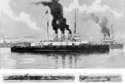
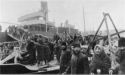
With the legend established, Odessa still faced numerous battles to preserve its distinctiveness in the face of disasters that overwhelmed it yet constrained it. It survived the famine disaster triggered by Stalin in Ukraine in the early 1930s. The seizure of grain trade by the Bolshevik regime was coupled with a will to annihilate a rebellious identity. In the heart of the region—the most fertile in the Soviet Union—its streets were strewn with corpses. One must read Georges Simenon’s reportage, conducted from February to May 1933, People Who Are Hungry, to grasp the terror that buried the sweetness of Southern Russia. It confronted the Romanian army’s entry into the city after it managed to cross the Dniester on August 3, 1941. The massacres of Jews began immediately, and more than 40,000 people were killed while over 100,000 others, and as many Roma, were imprisoned in the Yedisan camp in the Transnistrian zone of occupation. By the city’s liberation in April 1944, the community had been virtually exterminated. It is told that in Odessa, at night, when people sleep, dogs—orphans of all their masters who died or fled to escape repression and massacres—emerge from inner courtyards to howl their grief and call them back. In Odessa, many stories are told, some dreadfully sad.
***
In Odessa, the Russian-speaking, there is now an effort, here and there, to speak Ukrainian, at least in public spaces, while debates roil the city about the appropriateness of derussifying street names and removing statues. Catherine II’s statue, equated with Putin, has been removed from its pedestal, and the square bearing her name was renamed Europe Square. It was also raised, under the decolonization law adopted in May 2023 to erase traces of the Russian Empire and the Soviet era, the removal of the bronze statue depicting Isaac Babel, his dreamy gaze toward the horizon, pen and notebook in hand. The inhabitants opposed it. Should one, with the war against the aggressor, also lose the city’s cultural memory?

There are a few rare writers of talent who know how to bring to life the illustrious predecessor with whom they have walked their whole lives. The book Jérôme Charyn, a New Yorker born in 1937, dedicated to Isaac Babel is a marvel of its kind. It is about a brother that he writes. Odessa brings him back to Brighton Beach and Coney Island, Benya Krik to the small Jewish gangsters of the East Bronx. In it he recounts Babel’s life, works and death, his trial in January 1940 by order of the Kremlin—twenty minutes to declare him guilty of espionage in the service of French and Austrian intelligence and to shoot him at the Lubyanka on January 27. In the 2000s, Charyn created a character who would recur in a series of his books: Isaac Sidel, the chief of police, soon to retire from his duties to become the mayor of New York. Should one topple Babel’s statue in Odessa? Jérôme Charyn recalls this famous final line of the writer, as he is arrested at his datcha and taken away along with all his manuscripts: “They did not leave me time to finish.”
Today, Odessa is a city at war which, faithful to its history, has once again entered into resistance. The outbreak of conflict did not trigger mass exodus. In summer the beaches of the Black Sea are as crowded as before 2022. The warning sirens have replaced the old crackling sound that rang from the old loudspeakers, no doubt inherited from the Soviet era. This has been the case for more than two centuries. A Enlightenment city founded under the czars, which survived Stalinism and faced, like the entire Ukraine, but at the front lines due to its geography and strategic position, a conflict launched by Putin, who has clothed it in cultural and linguistic arguments to justify the aggression, the bombardments, the deaths. In this cultural war, Odessa has much to defend: its place in world trade, the history of its founding fathers who came from Spain, Italy and France, its cosmopolitan settlement, its linguistic identity, its pride… True to itself, it does not fit into any mold, preserving the freedom to be neither entirely from here nor entirely from there.
The day when the war is won by Ukraine, one will have to return to Odessa by the Black Sea, stroll along Deribasovskaya, go back to the opera, visit the literary museum and the Pushkin Museum, swim on Arcadia Beach, dine on that blend of dishes from the surrounding regions and nourished by the Mediterranean. On the return, one would be able to leave Odessa by sea, watching it recede as the boat advances, faithful to the immigrants who left by its port the land of Russia to escape violence, casting between sadness and relief one last look toward their homeland. We have had enough of the old story, wrote Isaac Babel in 1918. Will the light ever come again from Odessa, the dreamed capital “Of sunlit steppe bathed by the sea”?
In 1983, Milan Kundera published Un Occident kidnappé ou la tragédie de l’Europe centrale. If there remains a famous formula that could be rendered here as a conclusion.
European: the one who longs for Odessa.
<span id="end-content"/>