
Test The Grand Continent. The ideas and analyses you won’t find anywhere else. But you’ll see them everywhere soon. In your inbox from 8 euros a month
The Serbian Progressive Party (SNS) has dominated the national political scene since 2012. What underpins its electoral strength?
When the Serbian Progressive Party first came to power in 2012, it was a relatively new party. Yet its origins trace back to the Serbian Radical Party (SRS), from which it split. The SRS is a far-right party that served as a coalition partner in several of Slobodan Milošević’s governments in the 1990s. It was also a major opposition force during the democratic transition in 2000. Before the split, the SRS enjoyed massive support, accounting for about 30% of the electorate, i.e., just over one million votes, but it had never managed to come to power on its own due to its limited coalition potential.
The SNS then established itself as a populist, pro-European, catch-all party, addressing primarily the “losers” of the democratic transition and voters who felt left behind. The party quickly built a solid electoral base of nearly two million loyal voters.
For the first time since 2012, this dominant party faced a serious challenge from the student movement that emerged two years ago. True, there had been prior attempts. One can think of the parliamentary opposition that had achieved significant results in 2023; but that had not been enough to form a government.
The collapse of the Novi Sad train station canopy in November 2024, which killed 16 people, is often presented as the triggering event that gave birth to this student movement. Is this the right interpretation?
To understand how the movement emerged and gained influence, one must distinguish several factors. The first, as you noted, was the collapse of the canopy. It triggered sporadic protests; however, initially they did not manage to gain scale.
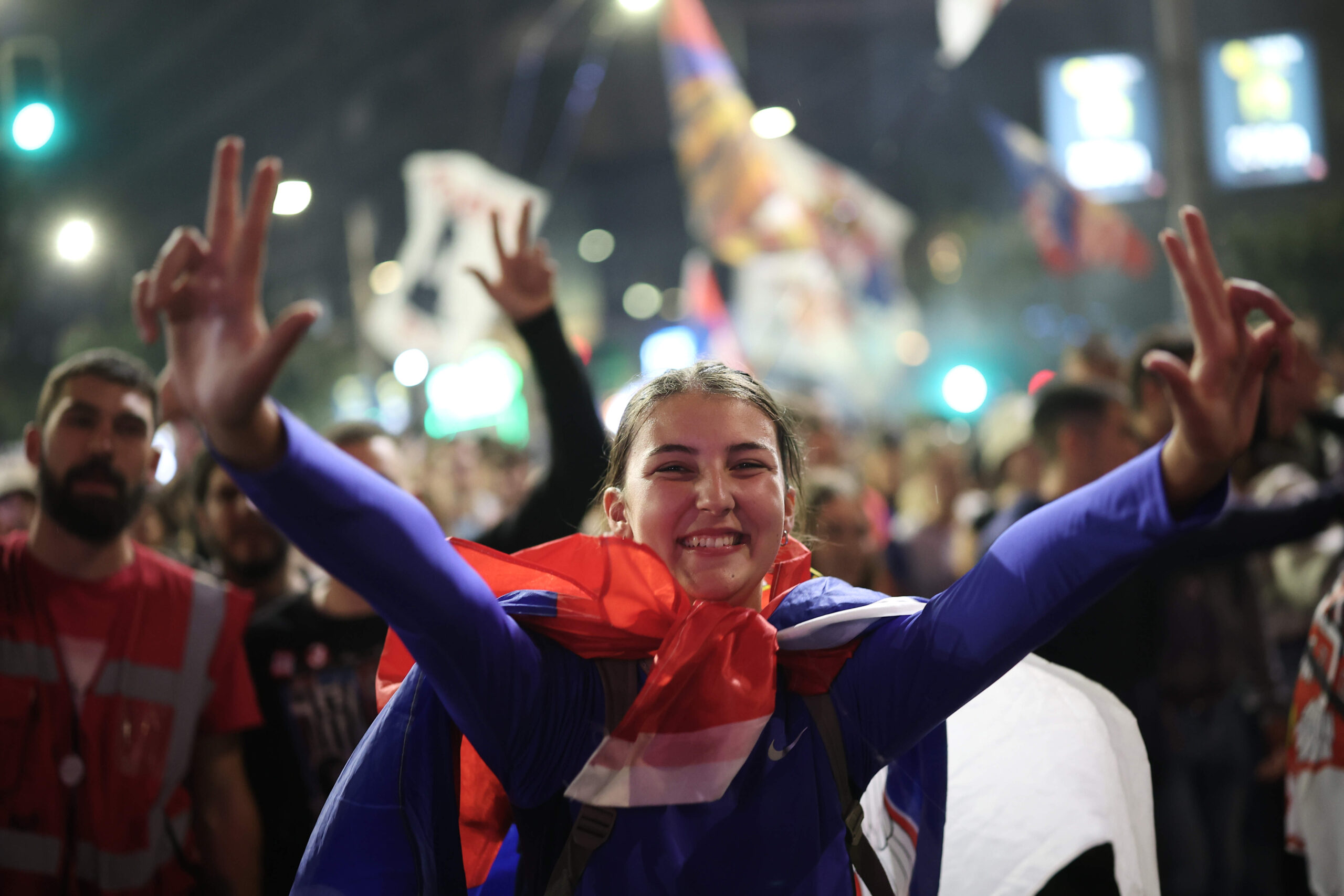
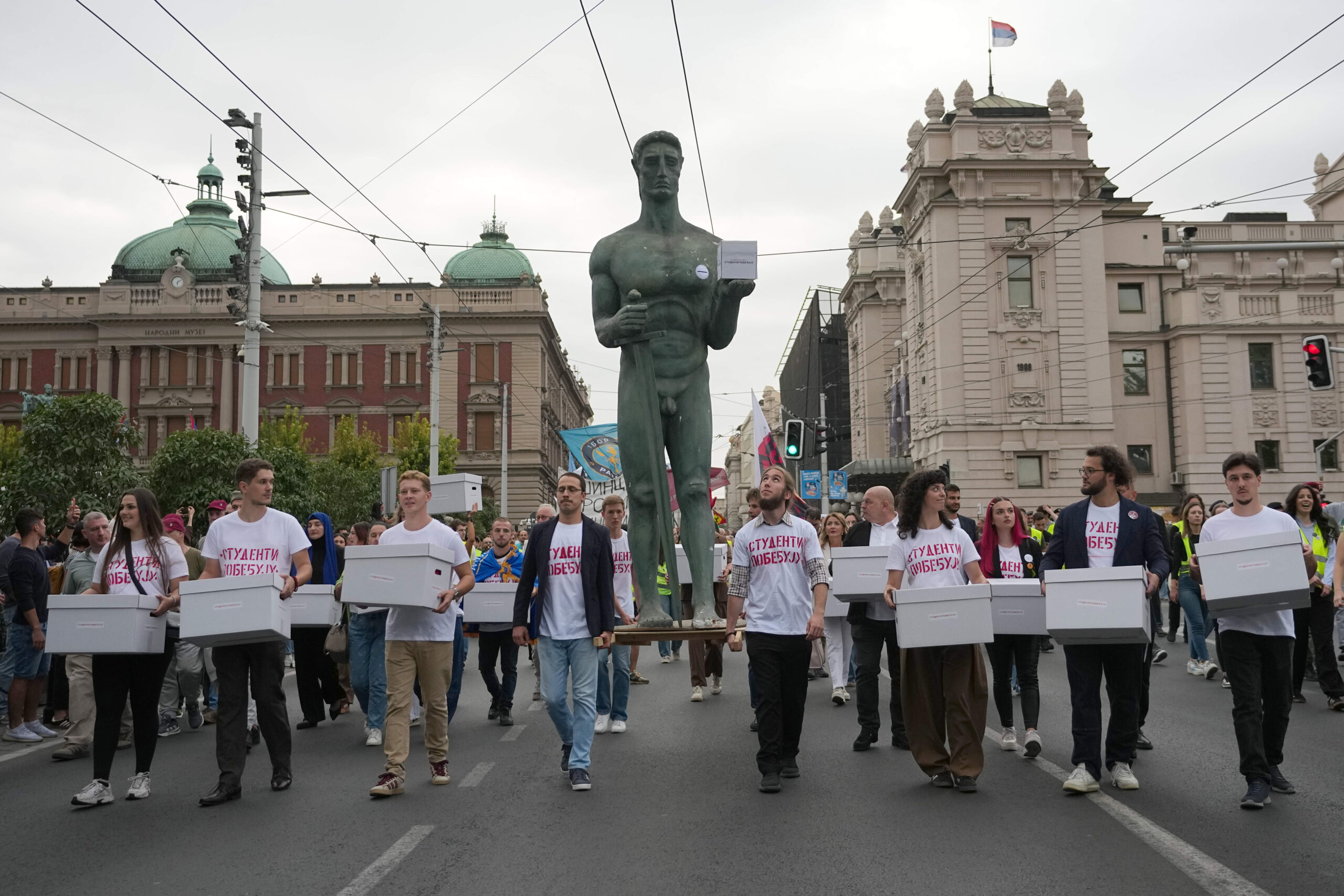
In reality, the real turning point was the assault on students at the Faculty of Dramatic Arts in Belgrade. According to the prosecutor’s office, some attackers were SNS members in the municipality of Novi Beograd. They attacked the students in the street, forcing them to retreat into the faculty building. This is how the barricades began, in late November 2024, and how the movement took shape.
The student movement has existed for two years now. How can we explain its reach and its ability to sustain momentum over time?
Serbia has a long tradition of supporting student protests. Yet to simply call this movement a “student rebellion” would miss a key element: the median age in Serbia sits at 47; only 15% of the population is between 15 and 29, and students represent only 2.7% of residents, roughly 200,000 people. In this demographic context, what happened is extraordinary. In Nepal, where a student rebellion also occurred, the median age is 27; the youth form a much larger share of society.
Thus, while people talk about a “student movement” or a “Student List,” a large portion of the movement’s support does not come from students but from people whose university education dates back to the 1990s. They remember experiencing the war and isolation, fighting for democracy. The students gave them hope and momentum. This helps explain the movement’s success.
Its strength is also explained by structural factors. The SNS has remained in power through a strategy of total control at all levels of government. Even in a tiny, isolated village of 20 or 50 inhabitants, it knows how to deploy state resources to win an election. The opposition, which lacks the means to compete with such overwhelming power, has been severely weakened by this strategy. For a decade, a large portion of the population has thus been excluded from any participation in political life. It should be noted that the average turnout in major elections since 2014 has hovered around 55–56%, i.e., more than 40% abstention.
The student movement’s success rests on a demand from part of the Serbian electorate for a political force outside the “system.” The “Student List” managed to capture voters who had remained inactive over the past fourteen years. It faced the SNS with a new strategy, which proved effective in mobilizing large-scale participation; this Sunday, we could see around one million additional voters heading to the polls. It remains to be seen whether this strategy will be enough to win the election.
Could SNS supporters be swayed by the student movement?
We will have to wait until Sunday to see whether some SNS supporters have become swing voters and have decided the party has stayed in power for too long. A desire for change seems to have entered the electorate. But mood is one thing; the actual electoral outcome is another. Regardless of the result, change is inevitable. The winner will have to confront a strong and consolidated parliamentary opposition. Moreover, the SNS’s economic and political model has run its course. If Aleksandar Vučić and his team remain in power, they will need to find another way to govern.
Where can we recognize this loss of SNS influence?
While party leadership appears consolidated—the major figures remain loyal to their policies and positions—the same cannot be said at the local level. In cities and municipalities, citizens are deeply dissatisfied with their government representatives, notably due to corruption. Local corruption attracts little media attention because the cases are relatively small, but it affects people’s daily lives. The SNS’s apex still seems powerful; its foundations have eroded.
On September 9, Aleksandar Vučić announced early parliamentary elections, a demand long championed by the student movement. A few weeks later, Vučić announced his resignation to run for Prime Minister. Does this reshuffle of the electoral calendar favor the SNS?
The SNS consciously disrupted the electoral calendar. A presidential election had been due in April or May 2027, followed six months later by legislative elections. Instead, they reversed the order of ballots and shortened the interval between them to a month and a half. Strategically, the SNS sought to ensure its base was consolidated and that enough time had passed since the Novi Sad tragedy and the mass protests in the first half of 2025. They were counting on a form of political amnesia, which is known to exist in the region. After a while, people tend to forget older details; Balkan strongmen exploit this tendency by piling up events or controversies, creating constant noise that makes reflection difficult. Vučić and the SNS counted on this.
They had also scheduled the vote for the end of October because several major infrastructure projects, notably highways, had been completed in the preceding months. Social measures were also announced, including pension increases and a salary rise of 8.5% for civil servants if they were to win. The choice of this date is therefore rational for the SNS: it has invested resources in policies and projects that are now bearing fruit.
For the student movement, timing matters less. Its representatives have repeatedly stated that they would be ready for elections, whether they take place tomorrow, in three months, or in a year. As for traditional opposition, it was initially somewhat taken aback but has since adapted. The campaign has been very dynamic.
For years, the Serbian opposition suffered from a lack of unity. Opposition coalitions such as “Serbia Against Violence” (SPN) failed to overturn the balance of power. At first glance, the Student List might have seemed even weaker, as it previously had no clearly identified leader.
Indeed, the student movement did not have a leadership structure comparable to that of the opposition. However, it counted on militants ready to go door-to-door and canvass by telephone. The opposition never developed this sort of network, because people did not believe in it and it lacked resources. Door-to-door campaigning is costly: you need transportation and campaign materials. In Serbia, parties receive public funding proportional to their parliamentary representation. A party with, say, seven seats out of 250 receives little. By contrast, the SNS has become extremely rich. It also has private donors, but its resources go far beyond. In the 2023 elections, in which the SPN coalition ran, the SNS spent around €7 million on its campaign. Relative to the total number of votes obtained, that was about €4 per voter, a substantial amount.
The opposition has never had access to such resources. Consequently, over the last decade, opposition parties could stage protests and marches of limited duration, but these were not followed by sustained campaigns. The opposition did not have the ability to turn protest into persuasion, to reach out to voters, to follow up, and to convince them to vote.
In the early days, the student movement relied primarily on donations and the volunteer activism of people willing to take action on the ground. It now has enough funds for television appearances, paid advertisements, and printed materials, but its main and first strength remains its capacity to mobilize the base.
Has the emergence of the Student List influenced coalition strategies within opposition parties?
Several reactions are conceivable from other parties in the wake of the vote. As a matter of course, the Socialist Party would likely side with the SNS. Within the opposition, positions differ from bloc to bloc. Its two main components are the “European Serbia” list, a pro-European coalition of three parties, and a right-wing nationalist strand, True Right, whose positions resemble those of other European far-right parties: anti-EU, anti-LGBT, and anti-pluralist.
The pro-European parties propose forming a genuine governing coalition that would pursue European integration and modernize society over the next four years. They outline a path akin to the Hungarian model: a four-year program of significant changes and the dismantling of SNS power structures.
By contrast, the right-wing parties propose only a technical coalition of about one year, whose sole objective would be to restore political and electoral conditions that are free and fair. This would include liberalizing the media, verifying voter rolls to remove deceased individuals, guaranteeing judicial independence, and reducing political influence over the police. Fresh elections would then be organized. This scenario resembles what happened in Montenegro: a short-lived technocratic government, followed by stabilization of the political system. In this scenario, the SNS could remain the largest party, with around 30% of the votes, but without governing capability.
Why did SPS or European Serbia lists not align with the Student List? Was the traditional, centrist, and left opposition bypassed or absorbed by the student movement?
I do not think such a coalition would have been a realistic option. Once, in April 2025, the student movement made elections its political objective, it explicitly excluded any coalition. The opposition then had eighteen months to prepare. It could have formed some sort of second “Serbia Against Violence” coalition and declared: “The students have their voters, and we will mobilize our own traditional electorate while proposing a coalition after the vote.”
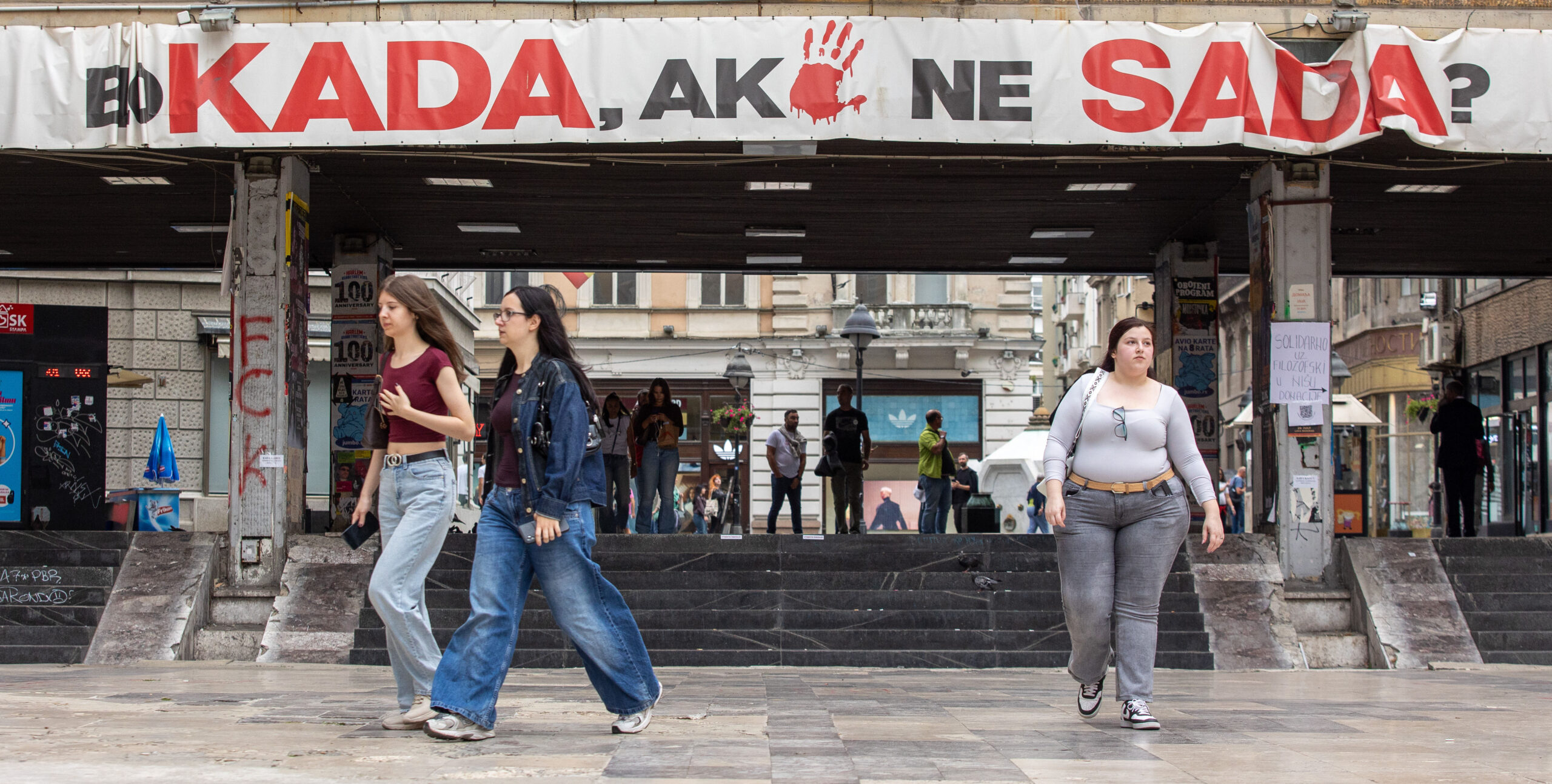
Instead, a handful of parties, including the Green-Left Front (ZLF) and the Free Citizens Movement (PSG), announced before the official election call that they would not run and would back the students. A moderate center-right coalition later withdrew as well, as the campaign had already begun. Other parties made different choices. When Aleksandar Vučić published the decree calling elections, some still hoped to form a broad alliance, but it never materialized.
Beyond the Student Movement’s central objective, namely the restoration of the rule of law and the fight against corruption, to what extent is this movement coherent on social and political grounds? Have significant ideological divisions emerged, particularly on economic and social issues or foreign policy?
The Student List adopted a strategy of ambiguity. It issues broad messages that voters can interpret in various ways. During the debate broadcast on Wednesday, October 21 on the public broadcaster RTS, for example, its representative explicitly stated that the Student List would not impose sanctions on the Russian Federation. This message partly targets SNS voters who might consider switching sides: it suggests they can vote for new candidates with impeccable records without subscribing to a radically different foreign policy.
The drawback is that we know little about the student movement’s program. It has been said that a program exists and might number around 400 pages, but it has not been made public. From what I have heard, the movement does not seem to propose radical change. That is probably deliberate, because advocating a program endorsing radical change in Serbia could cost you victory. The movement’s strategy is, on the contrary, to avoid alienating voters.
How can these different camps be reconciled in such a polarized society, especially given that media debate has become very difficult, with journalists frequently targeted?
These assaults and the lack of a true space for political discussion signal the deep division in Serbian society. This polarization is not only ideological but physical. One only has to walk down the street to see supporters of opposing camps shouting at each other. Even those who wish to stay out of politics find themselves drawn into this confrontation.
The situation could change if the system built around a dominant party were replaced by real political competition. Even if the SNS secured enough votes to form a government, it would have to negotiate with a coalition partner, such as the Socialist Party (SPS) for example, rather than with a purely nominal ally. Socialists should be able to credibly threaten to support a minority government backed by the student movement if their demands are ignored. Thus, even if Vučić becomes the next prime minister, significant constraints on his power from potential partners would be a first step toward calming the political landscape. Society must relearn that changing governments is not a catastrophe: voters can elect someone else and replace this majority in future elections if it proves ineffective.
Many analysts seem to believe that one camp must win and the other must disappear. But that view is unrealistic. Even if the SNS loses, it will remain a powerful opposition force, perhaps holding at least 100 of the 250 seats in the Assembly. Serbia therefore again needs coalition governments to restore pluralism and checks and balances, not only institutionally between the judiciary and the legislative branch but also politically among coalition partners. A partner must be able to credibly threaten to back a minority government supported by the student movement if its demands are ignored. Replacing the SNS with another party that wields the same degree of domination would not heal the ills of Serbian society. We must return to a consensus politics, as in 2008, when, after the 2000–2008 transition, a genuine coalition emerged between the Democratic Party and the Socialist Party with a clearly pro-European orientation. The agreement among parties does not have to be identical to that of 2008, but the principle of political compromise is essential.
What issues have most shaped the campaign?
The student movement’s central demand has been, and remains, the fight against corruption. Whatever the issue raised, the movement tends to respond that other problems can be addressed later and that it is necessary first to remove corrupt political actors.
The SNS, for its part, has sought to portray the student movement as inauthentic and compromised by its own scandals or corruption. Pro-government tabloids have relentlessly circulated allegations, half-truths, and misinformation designed to discredit their opponents. But these attacks had little impact, as the students remained focused on one message: the fight against corruption. A telling episode illustrates this phenomenon: Vučić staging a debate with a stone and a photo of Ilija Srdanović, head of the Student List, who had repeatedly refused to debate with him. This episode showed how the SNS’s successive allegations seemed to have little resonance. Likewise, the government camp highlighted supposed irregularities involving a Student List professor. But the student movement quickly countered by pointing out that the Finance Minister himself had faced plagiarism allegations regarding his doctoral thesis.
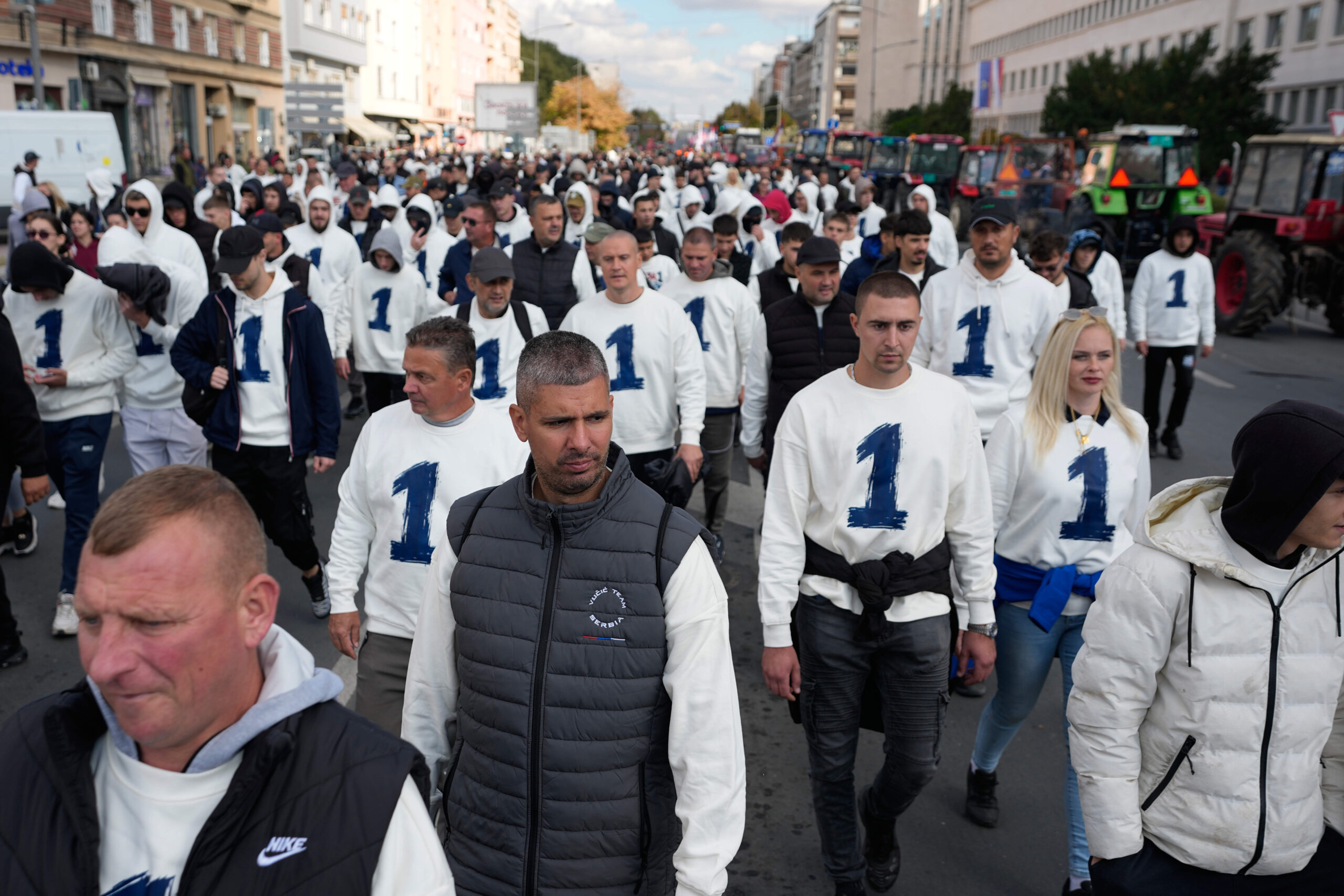
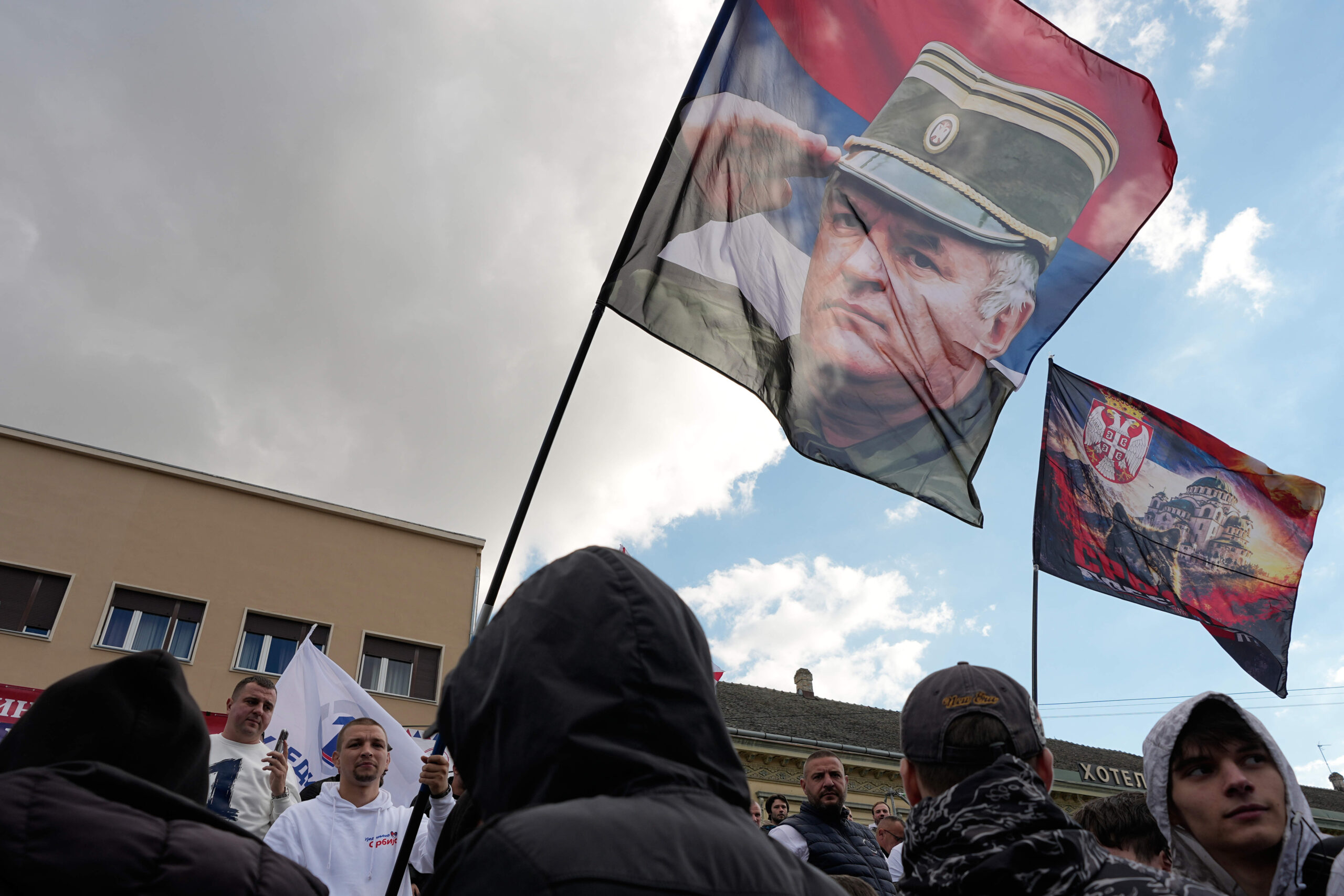
One of the SNS’s campaign strategies has been to portray the Student List as a movement of urban youth out of touch with social reality. Has this strategy worked?
The SNS has been using variants of this strategy since 2011 and has brought it back into vogue today. Yet Serbian society has not stood still during the SNS’s fourteen years in power. Some people have climbed the social ladder, improved their education, and joined the middle class during that time. Their dilemma is whether to attribute their progress to the SNS while concluding that they now need fresh ideas because their ascent has stagnated, or whether it is better to avoid change for fear of losing what they have gained. There are arguments on both sides. Cars are a significant symbol of social status in Serbia: if I may use that metaphor, someone who swapped an old Renault Clio for an Audi A4 might hesitate to risk going back.
That transition from a Renault Clio to an Audi also says a lot about perceptions of corruption. People may indeed assume that someone driving a luxury car obtained it dishonestly. I recall a street interview with a health professional from Novi Sad who said he wanted to live in a society where, upon seeing someone behind the wheel of a Mercedes, he could say: “Good for him, he deserved it,” rather than suspect him of corruption. Suspicion arises when those connected to the ruling party show sudden and ostentatious increases in wealth.
On another front, what about the quality of the electoral process? In your view, will this Sunday’s elections be free?
I would lean toward describing the Serbian elections as “free, but not fair.” Officially, Serbia has 6.5 million registered voters. Between 2014 and 2023, around 3.5 million voters participated in elections. This time, turnout could be between 4 and 4.3 million. However, we know the voter registry is imprecise and contains more names than actual voters. Thus, 4.2 or 4.3 million voters could represent more than 70% of the real electorate, giving this election a high level of legitimacy in terms of participation.
To prevent Vučić from retaining power, his total vote would need to stay below two million. Vučić has claimed he could secure between 2 and 2.1 million votes, betting on a strongly personalized campaign to achieve this. His supporters have asked voters to “elect” Vučić as Prime Minister, although the Serbian electoral system does not provide for a direct election to that post. Vučić thus hopes to keep roughly the two million votes he won in the 2022 presidential election by rallying voters who back him personally rather than the SNS as a party. But deep dissatisfaction with local authorities could cost him hundreds of thousands of votes.
The Student List, meanwhile, could gather more than 1.5 million votes. Recent informal estimates put the figure at around 1.7 million, a result roughly comparable to the SNS. The SNS could thus slightly edge out the Student List, but by only tens of thousands of votes rather than a half-million, as Vučić hopes. A coalition would then be necessary. If the two largest lists each obtained around 1.7 to 1.8 million votes, several hundred thousand votes would remain to be allocated to other parties. The Socialists might get around 200,000, with the rest spread among opposition parties. Some votes would also be lost to parties that fail to reach the electoral threshold and would then be redistributed according to the seat allocation formula. The magnitude of this effect can be significant, but I do not expect it to be decisive.
Would diaspora voter registrations also increase? Diaspora voters are often overlooked by opinion polls. Could the roughly 100,000-vote potential add to the Student List’s total?
That’s possible, but the enthusiasm shown on social media can be misleading. It may give the impression that students will win nearly all diaspora votes. In this context, one must distinguish diaspora voters in a country such as France from those in Serbia’s neighboring countries. In Bosnia and Herzegovina, for example, about 20,000 voters are registered, and prudently one could estimate that more than 60% will vote for Vučić. Students could win a sizable share of votes elsewhere, and every vote counts, but the diaspora’s impact is probably overstated. It may not decisively alter the balance between the main lists.
Could turnout gaps between younger voters and older voters, or between urban and rural areas, substantially change the electoral balance?
These socio-political cleavages—particularly the generation gap—have existed in Serbia for a long time. What could change this time is youth turnout. About 800,000 people under 30 have the right to vote. Previously, their turnout hovered around 45–50%, a figure below the national average but still significant. One might therefore see between 100,000 and 200,000 fewer voters under 30. Older voters have traditionally shown the highest turnout rates.
Poland offers an instructive comparison: while some analyses highlighted youth, women, and marginalized groups, the voters who remembered the 1990s transition—now in their fifties—also played a crucial role in the election that brought the Civic Coalition to power.
In Poland, some older supporters of Law and Justice stayed home; change was not driven solely by mobilization of young voters…
Exactly. A similar situation could unfold in Serbia, though we’ll see how older voters behave this Sunday.
Regarding geographic disparities, Serbia does not display the classic urban–rural divide seen in France. The distinction is more between Belgrade and the rest of the country. Belgrade residents have been among those who abstained the most in the past decade. Former Serbian president Zoran Đinđić described such people as “democracy lurkers”: they observe and critique politics but find something else to do on election day or believe their vote will not matter. Students have challenged this attitude and managed to mobilize a portion of these passive voters.
Even though concrete economic policies were barely mentioned during the campaign, social inequality could prove decisive in the election’s outcome. The question is whether those who endured Serbia’s painful social and economic transition in the 1990s–2000s will credit the SNS’s threats that a student victory would bring back that era, or whether they expect improvement or simply view alternation as natural. We can only truly understand their motivations after the election, once the necessary research is conducted.
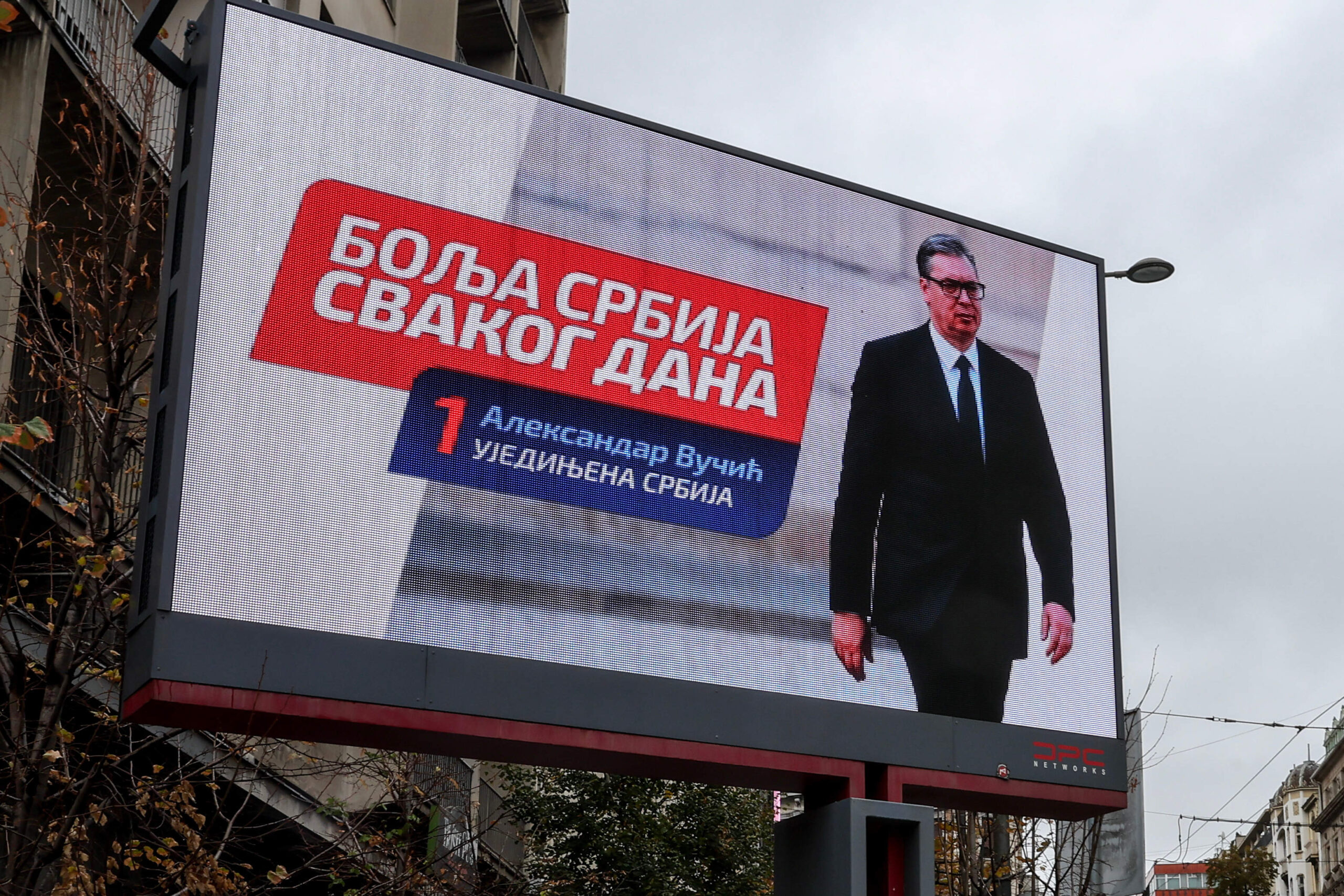
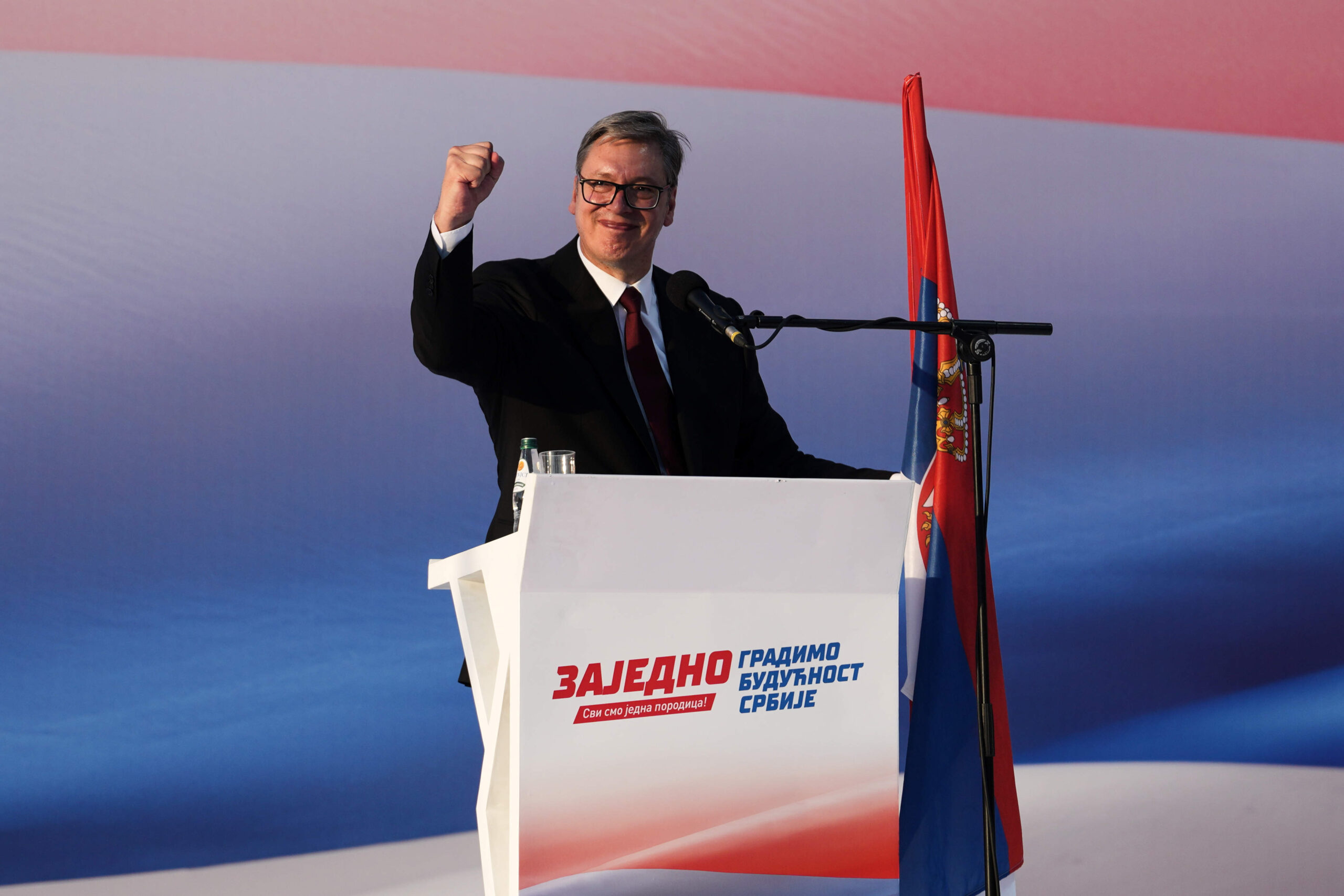
What role could minority parties, especially those representing the Hungarian and Bosniak communities, play in forming a government?
The regional balance of power has shifted. Take the example of the Alliance of Hungarians in Vojvodina (VMSZ), a traditional and loyal partner of the SNS. Viktor Orbán was a close ally of Vučić, but he is no longer in power. Consequently, relations between the two states are not necessarily bad, but they have strained. The Alliance could thus face a choice: stay aligned with Vučić or adapt to the wishes of the new Hungarian government, depending on Péter Magyar’s stance. It will need to balance its relations with Hungary with its interest in maintaining influence over the Serbian government.
Among the Bosniak parties of Sandžak, some have already stated that they would join the SNS. Rasim Ljajić, president (Bosniak) of the Serbian Social Democratic Party, has hinted that his party could win one or two seats. He wants to be represented at the negotiating table when decisions are made, without committing clearly to one side or the other.
Over the past decade, Serbia has taken a balancing stance in its relations with the European Union, Russia, and China. Could this change if the Student List were to win?
We simply do not know what position the Student List would adopt. It has taken a very cautious approach to these questions, often simply stating that all topics would be addressed in due time. In this respect, the Student List is a bit like the British monarch: it avoids revealing its intentions. If it forms a coalition with pro-European parties, negotiations could make European integration the Serbian foreign policy’s top priority. The SNS has long maintained that integration into the European Union is its goal as well. In the scenario where the Student List secures more than 50% of the votes and could govern alone, its orientation would be even more difficult to predict.