
Test the Grand Continent. The ideas and analyses you won’t find anywhere else. But you’ll see them soon everywhere. In your inbox from eight euros per month
A specter haunts the French political landscape: a nationalist, antisemitic, and conspiracy-driven ideology personified for more than a quarter of a century by Alain Soral. Through books and, above all, countless videos, he has managed to establish himself as an indispensable opinion leader within the contemporary French far-right. In the United States, aided by Donald Trump’s return to power, a radical ideological current initially marginal, “the Dark Enlightenments” , has gained considerable visibility and seems to be achieving a form of recognition at the highest levels. Indeed, one of its main theorists, Curtis Yarvin, claimed to have met repeatedly the second-in-command of the current American administration, Vice President J. D. Vance, who explicitly cited him as early as 2021, publicly adopting several of his ideas. A radical fringe thus appears to be normalizing by moving closer to the center of American political life.
Could a similar scenario be envisageable in France? Is the National Rally deeply influenced by Soralian ideology? We do not pretend to offer a definitive answer to these questions, but we intend to participate in public debate by shedding light on Soral’s ideology, whose springs, in our view, remain too little known. It should be noted that the ideology elaborated by Alain Soral does not belong to the current labeled as “the Dark Enlightenments.” If similarities are observable, notably in the critique of liberal democracy and the denunciation of a hidden, diffuse power, their intellectual origins, value systems, and political projects are in fact completely different. Alain Soral himself judges this ideology negatively, arguing that it is a project aimed at surpassing liberal universalism, while he advocates, on the contrary, a return to a form of republican universalism – though completely misdirected as we will see. A comparative analysis remains to be written; the perspective offered here aims merely to highlight a recent precedent. This precedent shows that ideological marginality does not preclude the capacity to exert a significant influence in public debate, or even on the orientations of political power.
A Masculinism Ahead of Its Time
A composite ideological current, masculinism emerged in the 1970s, in reaction to the feminism developing in Western societies at the time; its rise would become more visible in the 2010s, thanks to digital tools. In some respects, Alain Soral’s early trials prefigured some of its components: the rehabilitation of virility, rejection of the feminization of society, and the belief that women cannot assume a collective vision. Yet a careful analysis reveals interesting specificities. One can already discern the three essential components that would structure Soral’s ideology: a professed use of a Marxist analytical tool, references to traditional and reactionary values, and recourse to a conspiracy theory that is already clearly identifiable.
For Alain Soral, feminism is merely a “victim-communityism” that would mask the true structural cleavage of human societies, between the owning class and the exploited. The feminist struggle is, in his view, nothing but a sham. He specifies that “the woman, no more than the man, is a social category. The interest of the bourgeoisie rarely coincides with that of the worker, which they exploit without even realizing it” . He goes even further by asserting that “the so‑called opposition between man and woman undermines the solidarity for wages on the jobsite” . Soral thus sees feminism as a rival version of Marxism, drawing on the same perpetual-struggle principle as the motor of history—the struggle of the sexes replacing the class struggle.
He also denounces feminism as responsible for altering masculine values, which he deems inherent to political struggle and necessary for it—femininity, by contrast, fostering submission to the established domination. He specifies thus: “according to my theory, the woman is not ‘the future of man,’ but that of the social-democratic liberal order, which necessarily passes through the ‘societal’ depoliticization of social struggles” . Soral relies here on the work Sex and Character by the Austrian philosopher Otto Weininger, in which, according to him, it is explained that “the woman is a man without a collective vision of the future, that is, the most easily manipulable being by the political” , and that genius would be intrinsically masculine. In this work, Weininger only contemplates the difference between man and woman in terms of inferiority or superiority, within a hierarchical and essentialist logic broadly shared in certain intellectual circles of the era: “the woman” would be primarily governed by affect; her place would thus not be in political action, but in the private sphere.
Soral also argues that feminist movements are not spontaneous but are orchestrated by the oligarchic elites in power. Their aim would be to divert workers’ attention from real domination relationships. The conspiracist logic thus appears: nothing is due to chance or complex historical and social evolutions; social and political phenomena are planned and organized by a very small number of people who stand to profit from them.
From Critique of Communitarianism to Multiform Antisemitism
In his first overtly political work, communitarianisms are judged responsible for a serious breach of republican universalism, national unity, and social progress. Soral places central emphasis on the “Jewish communitarianism,” which he claims to be the most powerful, best organized, and most harmful community. It would manipulate the others to divide the people, thus creating secondary problems and stakes that it would present as essential (for instance, the question of same-sex marriage), in order to mask its domination. All social crises and communal tensions would thus be orchestrated with the sole aim of creating a diversion, a smokescreen that hides the real domination at work in our society, that of the Jewish elite.
The following quotation deserves to be quoted in full as it constitutes an excellent summary of Soral’s thinking on this subject (in his own words, the expression “ces gens-là” designates the Jewish elites): “We are in a country where ces gens-là have reached the position they occupy today, and when you look at the CRIF dinner, you understand very well that it is a dominant position […] And you can see very well that they rule in the name of equality to impose a world view that is totally unequal and which is entirely contained in the two pillars that underlie their worldview: chosen people, promised land, it is quite transparent. How can they protect themselves from this obvious, which I call the Torah values? By the Shoah, because each time they are shown as dominant and playing double standards, and even dividing to rule, they pull out the Shoah joker, hence the hypertrophy of Shoah history today. The Shoah as a shield to rule according to the rules of the Torah, which is a racial, unequal, theological worldview” . All components of Soral’s antisemitism are identifiable here: theological anti-Judaism, economic antisemitism, radical and conspiratorial anti-Zionism, and denialism.
How does Alain Soral “justify” his antisemitism? “The truth is that I discovered Jewish domination while studying the class struggle; the two are historically well integrated,” he asserts . Soral draws a close link between the “Jewish domination” he wishes to denounce and economic exploitation. This refers to what one could call “economic antisemitism” and also signals a conspiracist vision—this idea of domination evoking a power that is hidden and illegitimate. The historian Michel Dreyfus, in his work L’antisémitisme à gauche, establishes a kinship between the anti-capitalist thought of certain authors (Proudhon, Toussenel) and a rising antisemitism in the latter half of the nineteenth century.
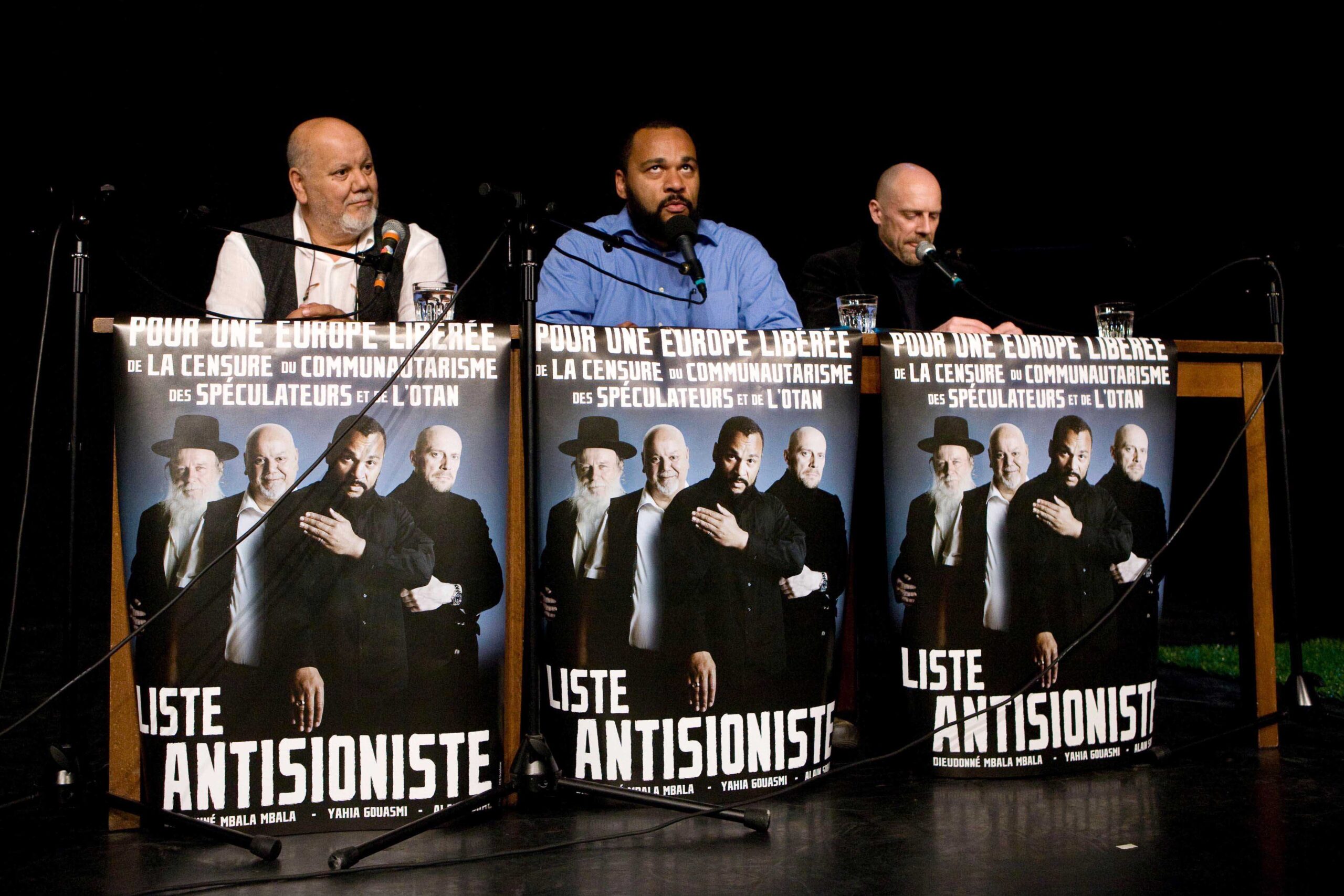
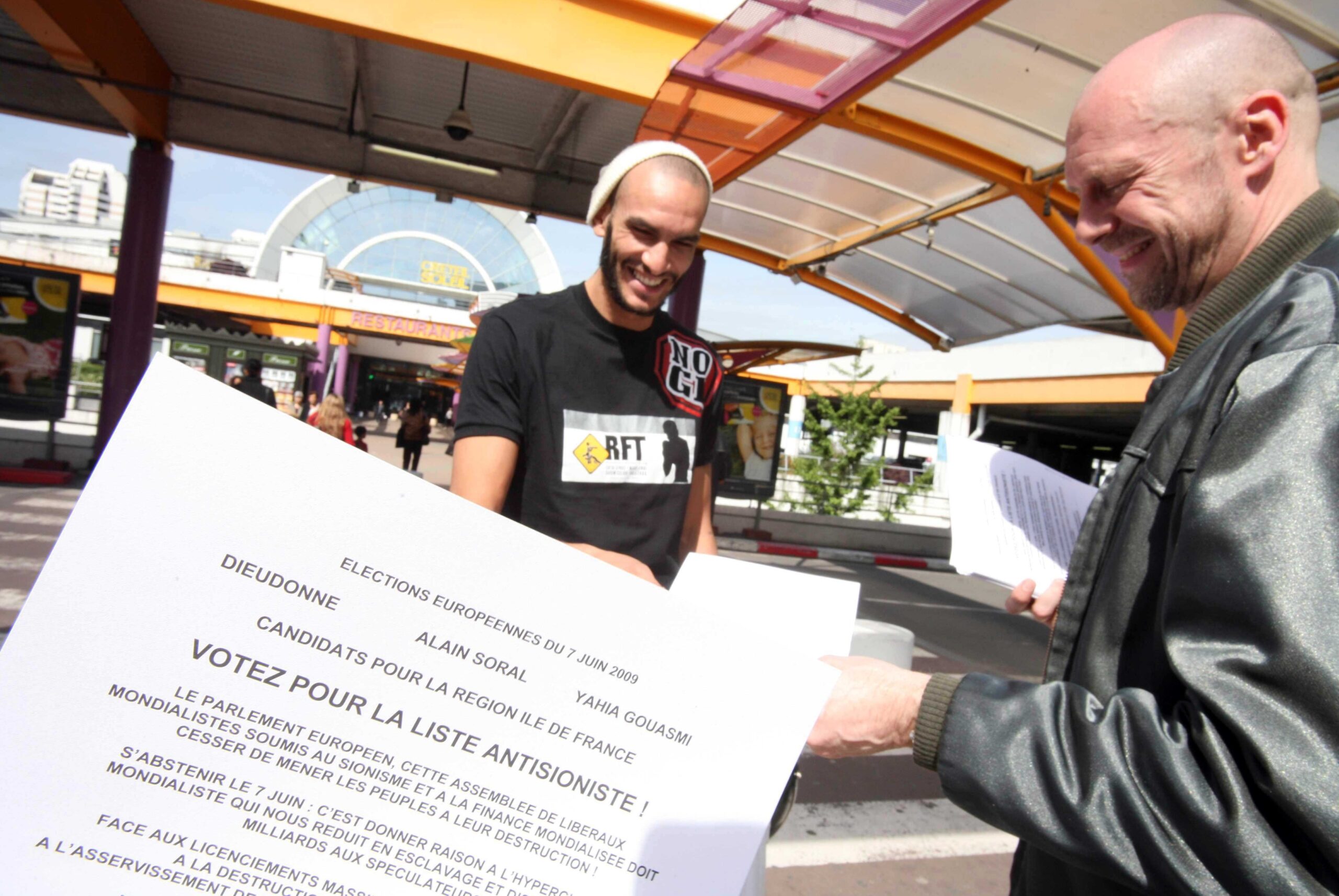
The nascent French far right, following Édouard Drumont, quickly adopted this analysis. Indeed, “the internationalism of the Jews” and the myth of the “wandering Jew” appear, for example, in Maurice Barrès’s writings: “the Jews have no homeland in the sense we understand it. For us, the homeland is soil and ancestors, it is the land and the dead. For them, it is the place where they find their greatest interest; homeland is an idea. But what idea? The one most useful to them” . Soral fully aligns with this continuity. He designates neoliberalism, ultraliberal economics, and libertarian liberalism (a concept borrowed from Michel Clouscard) as his opponents, while ascribing to the Jewish community the leadership of the “globalist oligarchy” – notably through the banking system he presents as an instrument of the Jews: “this international organized Jewish community that rules today over the Western world, through the rise of this financial capitalism that replaced Christian feudalism” . Soral here personalizes vast economic phenomena—economic liberalism—attributing its development to individuals or groups of individuals who would be its originators. This is one of the distinctive traits of conspiracist thinking: to designate scapegoats, to name culprits.
The racial approach is rarely foregrounded by Soral, but not entirely absent. In a June 2014 interview, Soral comments on a Russian President Putin interview by French journalist Jean-Pierre Elkabbach and speaks these words: “and then we also saw the little Elkabbach there; this is my somewhat more racial-communitarian analysis, which is that the little Sephardic Semite ultimately submits like a woman to someone who represents, in a certain sense, Aryan virility, even if they are Slav, and that is the traditional proper hierarchy” . Here we can return to Otto Weininger, an author who, by his own admission, counted a lot for Soral. Regarding his Sex and Character, Jacques Le Rider writes: “the woman shares with the Jew the role of embodying the absolute negative and the ferment of decadence” .
In Weininger’s single chapter, “The Jews,” Weininger indeed paints a particularly negative portrait of the “Jew,” considering him a race with a specific biological constitution incapable of representing the positive masculine traits he describes. This link between women and Jews is a long-standing motif among antisemites, according to Léon Poliakov . For Weininger, as for Drumont, Henry Coston, and many other later antisemitic authors, Jews share a “mode of thinking,” a particular psychical constitution. Le Rider emphasizes that Weininger hardly borrows from biology, though his essentialist considerations clearly fit into a racist logic. The same logic unfolds in Soral’s ideology.
While it is important to distinguish anti-Zionism from antisemitism, in Soral’s case, his radical, essentialist, and conspiracist anti-Zionism can be regarded as another form of antisemitism. In his discourse, Soral proceeds to merge Jews with Zionists: every Jew, even French, is suspect and frequently accused of being a supporter or agent of Israel. The CRIF is for Soral one of the most important channels of this “Zionist power,” which is why he repeatedly asserts that “the principal, the most serious struggle is the struggle against CRIF, against international Zionism, against political Judaism” . Zionism is thus perceived as an extremely powerful network of influence to which all political decision-makers would be forced to submit if they wished to advance their political careers. In Soral’s argument, anti-Zionism and antisemitism are therefore closely linked: the first can serve as an alibi for the second, but it is most often classic antisemitism that underpins arguments attacking Zionism.
It should be added that denialism must be considered as the fourth component of Soral’s antisemitism. It is well known that for a portion of the French far right, the reality of the Jewish genocide during World War II would be a particularly dangerous lie, a “lock that must be broken.” First, because denying the genocide criminalizes Nazism and fascism, making their rehabilitation more difficult. Second, because it would enable Jews to victimize themselves and thus become untouchable. Soral adopts this discourse and, in concluding his homage video to Robert Faurisson, the leading figure of denialism in France, states: “I think that France will never be liberated, France as a nation and as a people, except on the day when the odious and unjust Gayssot law falls, for there is no real possibility, as Vincent Reynouard very well puts it, of nationalist renewal and pride of a national people as long as historical revisionism is forbidden” . He concludes hoping that “if one day France is liberated,” there will be “avenues and schools named Robert Faurisson” and declaring that he “has lived a Christlike life, that is a model and a teacher” .
A Nationalism Against Imperialism and Conspiracy
For Alain Soral, the enemy to fight is the “Empire,” a kind of organized nebula of networks controlled by an omnipotent Jewish elite whose aim would be the dismantling of nation-states to implement a global governance. It is therefore logical for him that the nation-state must be protected in order to withstand this destructive globalist process. Against this, he advocates a “double national reconciliation.” On the one hand, a reconciliation between the “working left” and the “values right,” which he contrasts with a bad left—interested only in societal questions—and a rootless financial right. On the other hand, it would entail a reconciliation between “native French” and immigrants, particularly Muslims, whom he portrays as being driven toward confrontation by the Jewish community in order to rise to power by dividing to rule. There, in his view, there exists a good nationalism and a bad nationalism, the latter embodied by Reconquête by Éric Zemmour but also by the National Rally. Both, as well as small identitarian groups, would represent the “Zionist nationalism” that falls into the “clash of civilizations” trap.
Soral believes that the identitarian line, Islamophobic by nature, is objectively on the side of the “Empire” since it would promote civilizational clash. This leads Soral to proclaim, in his characteristic conspiracist vein: “the identitarians, all agents of the Empire and Zionists” . The identitarians, for their part, view Soral as an outright accomplice in the Muslim invasion. In short, dialogue between them appears impossible. The rising power of the identitarian movement within the French far right undeniably pushes Soral’s theses to the margins. Soral analyzes similarly the evolution of the National Rally since Jean-Marie Le Pen’s exclusion. He argues that Marine Le Pen “wants to reintegrate tomorrow the ‘republican arc,’ i.e., global governance […], and she never opposes the Empire’s interests and logic in public, only superficially,” and worse, she “softly promotes civilizational conflict” . He also reproaches her for submitting too readily to the “Jewish and Zionist lobby”: “Marine Le Pen is doing teshuva to be allowed to step out of post-Nazi exclusion and reintegrate the republican arc that is Jewish-Masonic domination over France” .

Moreover, the “Empire,” which would rely on two completely servile states—the United States and Israel—would use a multitude of plots and manipulations that Soral sets out to expose. The use of various conspiracy theories as an explanatory factor for historical evolutions and recent events is almost systematic in Soral’s ideology. This device allows him to maintain the global coherence of his worldview by neutralizing contradictions likely to challenge his paradigm. For Karl Popper, “according to the conspiracy theory, everything that happens was desired by those who benefit from it” , and Pierre-André Taguieff notes that “under conspiracist scrutiny, coincidences are never chance events; they are signs, revealing hidden connections and enabling the construction of explanatory models of events” . Soral’s ideology matches exactly these defining elements.
The September 11, 2001 attacks, or the January and November 2015 attacks in Paris, are analyzed as conspiracies. These events could, a priori, be seen as notable limits to his worldview, given that the arrival of a Christian-Muslim alliance against Jewish and Zionist values would then seem logical. In far-right circles, these attacks are indeed seen as a symbol of the Islam’s struggle against the Judeo-Christian West, thus reinforcing proponents of the civilization clash theory. Yet, through conspiracy theory, Soral inverts these facts, explaining that the real perpetrators would not be those officially named. To reach such a conclusion in the absence of evidence, the reasoning rests mainly on the question: “Who benefits from the crime?” . Thus, since the U.S. government could have found in the September 11 attacks a good pretext to intervene in the Middle East, it would necessarily have organized them itself, by elements tied to the “deep state.”
Such reasoning recalls Édouard Drumont’s interpretation, author of the antisemitic La France juive, of the Fourmies shooting on May 1, 1891 . It was, in fact, a labor demonstration that the army violently suppressed. Yet Drumont concluded that it was inconceivable for the army and the people to be at odds; thus he deduced that the prefect, a Jew, gave the order precisely because he was Jewish, to divide the French. “Divide to rule” is, together with “who benefits from the crime?,” another expression particularly used by Soral to justify the veracity of his theories.
In sum, Alain Soral innovates little. The core of his ideas, notably antisemitic and conspiracist, had already been formulated in similar terms over a century ago by authors he frequently cites. His singularity lies in the updated synthesis adapted to contemporary issues that he manages to produce. This also rests on his position, contrary to the dominant trend within the French far right, in favor of the identitarian line that seeks to shed this burdening heritage deemed counterproductive. There lies a central paradox: Soral claims to liberate himself from the sole reactionary and nationalist view by drawing on leftist references and advocating union with Muslim immigrants, while returning to the most radical references of the French far right—Maurice Bardèche, Henry Coston, and many others.
A Diffusion That Works but Is Limited
Beyond the commercial success of his books , Alain Soral’s prominence in the public space has come chiefly through online video dissemination, making provocation his signature and one of the main levers of his notoriety. Like Jean-Marie Le Pen, provocation serves two functions for Soral: to deliver an offensive and seductive discourse that clearly designates the enemies to fight; and to present himself as a victim of the criticized system, which earns him sympathy and support from part of his audience. His prosecutions, described as “persecutions,” are thus presented by Soral and perceived by his followers as signs of genuine disobedience to the “System.” Between 2015 and 2016, at the height of his influence, his website “Equality and Reconciliation” was among the most visited political sites in France, with more than 8 million monthly visits and videos sometimes exceeding a million views. The removal of his Twitter and YouTube accounts in 2020 seemed to accelerate a certain downgrade and loss of audience. Yet, Soral managed to maintain his presence by using other platforms, then by returning to Twitter’s successor X in 2023, and by enjoying significant visibility on YouTube through associated channels—videos regularly reach several hundred thousand views in 2026. One must, however, be cautious, as a single view does not necessarily imply adherence to the ideology.
By adopting a meta-political strategy that relies primarily on Internet use and modern communication tools such as videos, social networks, memes, and gimmicks, Soral has managed to widely diffuse his ideology, extending even beyond the usual circles of the far right. This is partly explained by his mastery of web culture’s communication codes, but also by the “style” he employs. Moreover, the pervasiveness of conspiracy thinking in Western societies, coupled with a resurgence of nationalist sentiments and even antisemitism in the French context, helps explain why the Soralian ideology has enjoyed a favorable moment. Several recent public opinion surveys testify to the scale of antisemitism and conspiracy thinking within the French population . This context largely explains the success of disseminating Soral’s ideology. It is an ideology that feeds off democracy’s weaknesses: declining trust in institutions, rejection of major media outlets, difficulties of integration into the liberal economic model, and a taste for marginality and extremity among a segment of youth.
That said, despite the media attention it has attracted during the Bardella affair, the Soralian ideology remains marginal. If the idea of a “Soral generation” highlighted by the press is interesting insofar as it reveals a notable influence that may have extended beyond traditional far-right circles, it is probably greatly exaggerated. If radicalism can be considered a persuasive tool, because transgression attracts and seduces, it is only to a certain extent. Outspokenness and extremism can become repulsive, hindering the conversion of media notoriety into real political influence.
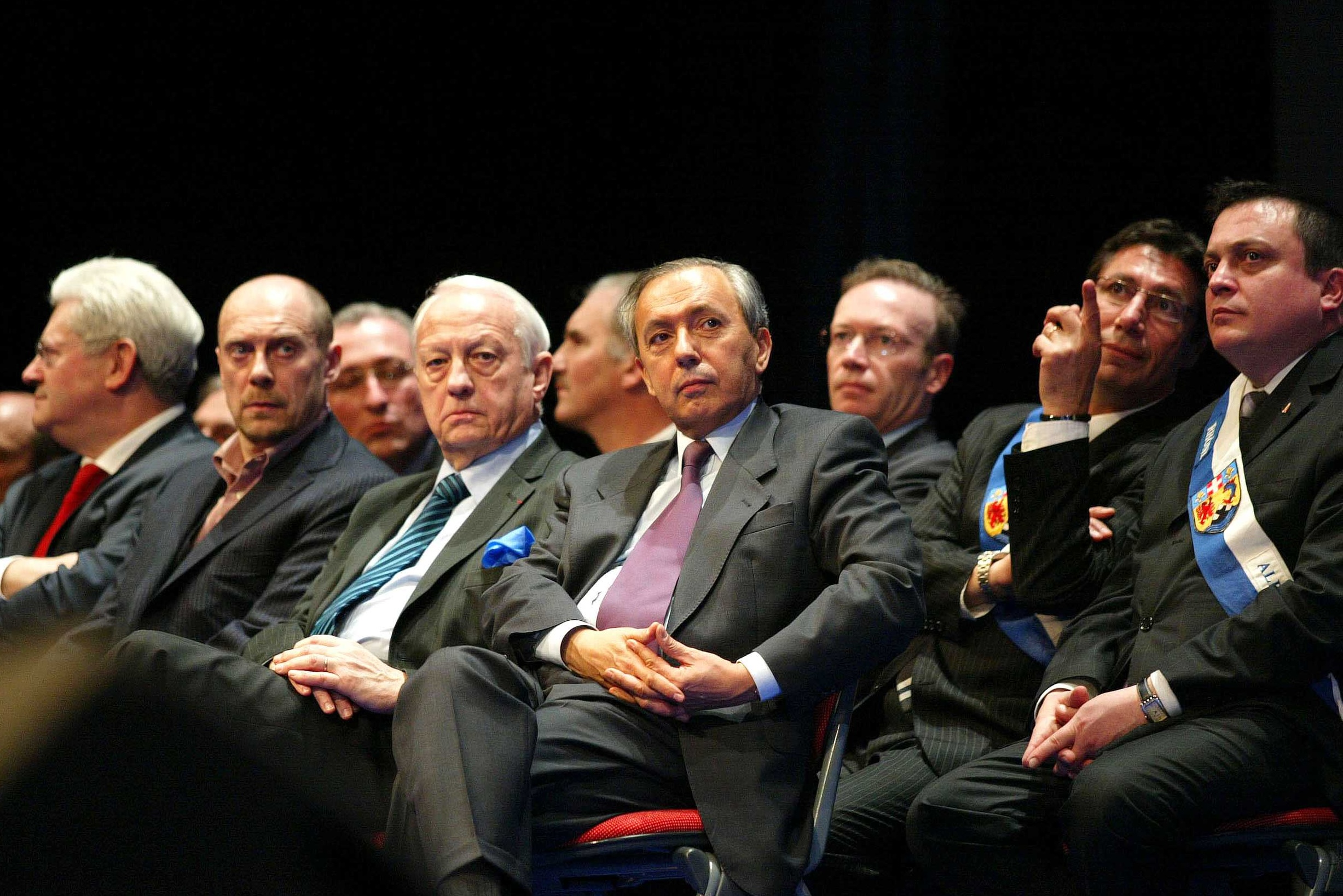
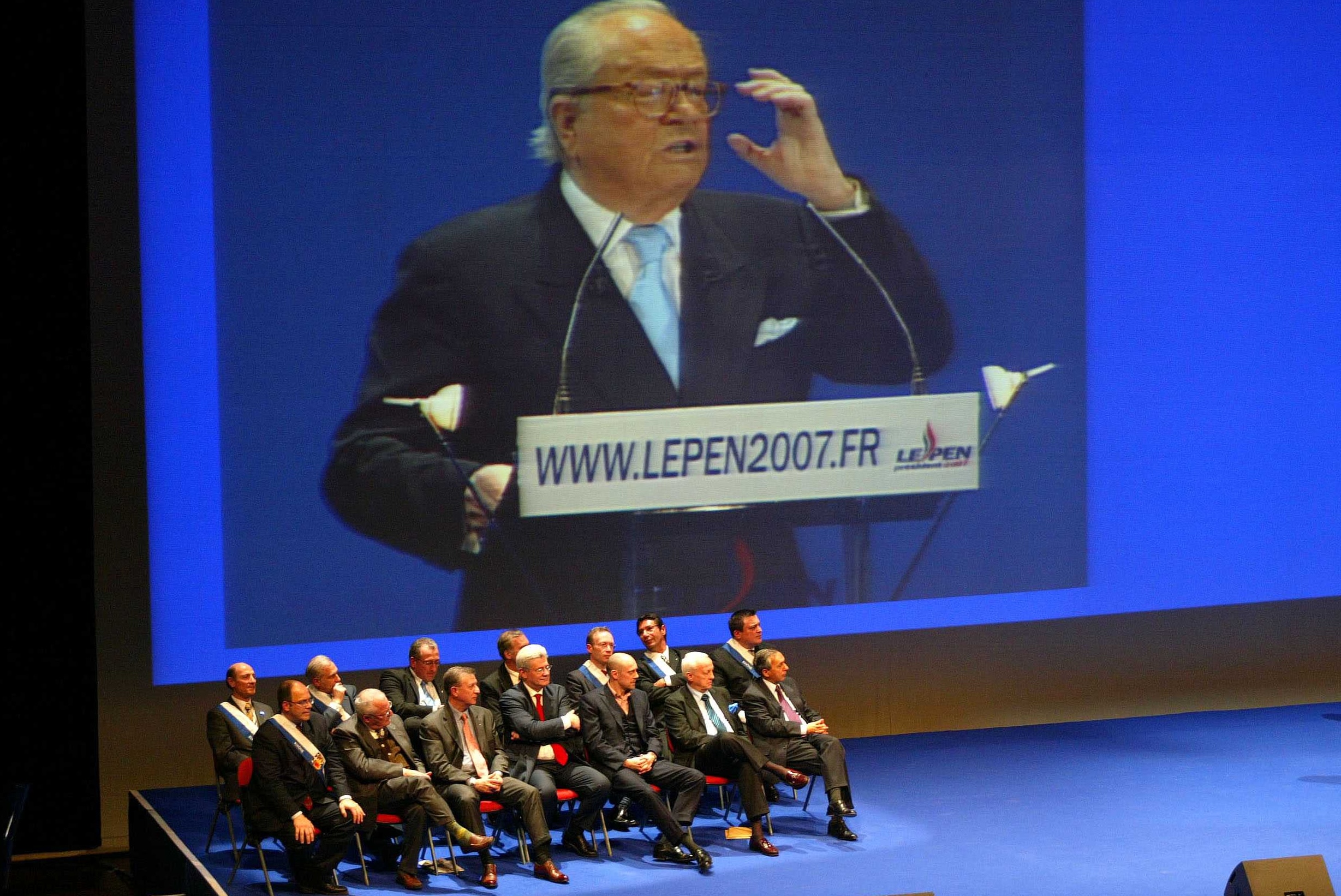
Among nationalist circles, Alain Soral now seems to provoke more rejection than admiration. His desire to forge an alliance with Muslims, his obsessive antisemitism, and his systematically conspiratorial analyses all appear excessive to many, even within the far right, because they jeopardize an ambition to seize power. This is probably his main limit: the political line chosen and the strategy adopted by the identitarian current, which dominates the French far right and, notably, the National Rally, diverge strongly from Soral’s approach.
Since his exile to Switzerland in October 2019, and then to Russia in February 2026 following his two-year prison sentence with a warrant for arrest , the radicalization of his discourse has further intensified. A letter from the Ministry of the Interior dated October 9, 2026, informing Alain Soral of the dissolution proceedings against his association, reveals, over about ten pages, numerous extremist, antisemitic, and conspiracist statements made exclusively in 2025. Soral could have chosen a different strategy, a form of normalization consisting of voicing his radical ideas only obliquely, as in the early 2000s. He chose instead the reverse path: his taste for marginality and provocation seems to know no bounds. His recent prominence, coupled with ever heavier sentences, appears to reinforce the path he has chosen. Soral is a self-styled mystic who claims to have a mission to accomplish, even a destiny to realize.
Despite his stint with the Front National between 2005 and 2009 and the pervasiveness of his ideology in public debate, Alain Soral does not appear to have exerted decisive influence on the policy line currently claimed by the National Rally. His marginalization and the condemnation of his antisemitic and conspiracist positions invite reflection on his possible indirect influence on a portion of Marine Le Pen’s militants and cadres. This influence could take the form of a diffuse intellectual permeation, whose extent remains difficult to measure, notably due to a lack of sufficient historical perspective. In any case, the Soralian ideology emerges as a significant phenomenon in the history of political ideas in France at the start of the twenty-first century.