

Test the Grand Continent. The ideas and analyses that you won’t find anywhere else. But you’ll see them everywhere soon. In your inbox starting at eight euros per month
The phones and applications we use every day have become one of the unexpected battlegrounds of this decade’s wars, and with them the infrastructures that keep them running. This is especially true in an authoritarian regime like Russia, where state interference in citizens’ digital lives has grown ever more brazen and has been amplified by Western companies’ withdrawal. Justified in the name of fighting Ukrainian drones, internet access cuts from mobile phones are, for example, regularly practiced by the Kremlin.
When restriction lifts create targets
However, faced with the drawbacks posed by this practice, the Russian authorities have, since autumn 2025, progressively established “white lists” of sites and applications spared from these restrictions. They include Gosuslugi, the public services portal, VK (including MAX, the state-promoted online messaging), the video platform Rutube, the marketplaces Ozon and Wildberries , but also the entire suite of services of a company that has become central to the Russian Internet, namely Yandex (Яндекс). It is precisely this insular Internet that Kyiv is now targeting.
The facts, first. In the night from 7 to 8 October 2026, Ukrainian drones strike Sasovo, in Ryazan region, about 300 kilometres southeast of Moscow. The target is neither a refinery nor a weapons depot nor a triage centre, but a Yandex building housing tens of thousands of servers enabling the data storage and processing necessary for everyday apps used by Russian citizens. The facility is completely shut down. The next day, a second Yandex data centre is struck in Kaluga and several modules are taken out of service. On 11 October, the Vladimir site is hit and suffers a total outage. In four days, three of Yandex’s five major data centres have thus been hit. The choice of this target is not accidental.
Moscow has also prepared the war on this front: the regime has patiently built a digital environment designed to control the way Russian citizens use their smartphones and the Internet. National services hosted in Russia and backed by a national payment system have been substituted one by one for Western platforms as they were blocked. But what the regime concentrates to better control, Ukraine can now strike. By targeting Yandex’s servers, it produces a double effect: it disrupts Russians’ digital life and makes the war visible in their daily lives, but it mainly undermines the autocratic contract Vladimir Putin has gradually forged with society – less freedoms in exchange for relative prosperity, and a regained stability and grandeur.
Ukraine thus strikes two distinct functions of the same infrastructure. The first are internal: it tests the Russian hinterland in daily life, by disrupting services related to work, travel, payments or consumption. It also reaches more indirectly the digital environment shaped by the regime to organize what Russians perceive as reality.
The second are external: these very infrastructures form the material substrate of the information operations by which Russia seeks to erode adversary societies from within, what we call corrosive power. Without the ability to destroy the devices that run these operations, Ukraine can affect the material conditions.
The “Iron Core” of Russia’s insular Internet
Yandex itself found a striking label for its facilities, calling them the “Iron Core” of the company. Indeed, if the digital world often gives the impression of an immaterial realm of queries, maps, messages and AI models, the image recalls that it rests on concrete buildings, power lines, cooling systems, fiber optics and clusters of prohibitively expensive processors. By striking data centers with drones, Ukraine targets this very material base. Just as the concept of “Sea Power” from Admiral Mahan rested on a whole network of land installations enabling ships’ projection of power, the idea of “Digital Power” or “power in the digital realm” of a modern state presupposes tangible electronic and hardware infrastructures that missiles and drones can destroy.
This sequence is therefore not merely an extension of Ukraine’s “deep strikes.” After rail infrastructure, refineries or online commerce, Kyiv is now striking equipment that supports the ordinary economy, technological sovereignty and part of the Russian information environment. Until now, these infrastructures were kept at a respectful distance from the front and were spared. But the situation changed with the deployment of drones and missiles designed and manufactured in Ukraine, such as the FP-1 drone or the FP-5 Flamingo cruise missile: they gave Ukraine a reach of 1,500 to 3,000 kilometres and freed Kyiv from the restrictions that frame the use of European and American weapons against Russian territory. In Zelensky’s campaign of long-range sanctions, the Yandex servers thus constitute a target of high functional centrality, due to the number of activities, services and capacities that depend on this node of digital infrastructure.
An ecosystem integrated in the Chinese style rather than a “Russian Google”
Taking advantage of the shutdown or ban of major Western platforms in Russia, Yandex fulfills, for individuals, functions comparable to those of Google, Waze, Uber and Netflix all together. Yandex holds nearly 70% of the Russian online search market. Its Yandex Go app combines taxis, deliveries and car sharing, and counts more than 58 million users. Its Yandex Plus subscription, which gives access to films and series online, streaming music and benefits across other services in the group, has around 45 million subscribers. For businesses, Yandex functions as both Gmail and OVHcloud. Yandex Cloud counted 64,000 clients by summer 2026, from large corporations to SMEs. Providing messaging, storage and collaborative work services, Yandex 360 boasted over 117 million users and 185,000 client companies, notably in IT, retail, construction, industry and services. For the state, Yandex is one of the pillars of a digital sovereignty hampered by sanctions. These three levels of dependence have gradually made Yandex a central infrastructure of Russia’s digital life.
Yandex therefore knows what Russians search for, but also where they go, what they watch and what they want to eat. Recently, this data feeds an artificial intelligence, Alice AI, integrated into the search engine, akin to Google’s AI Overviews.
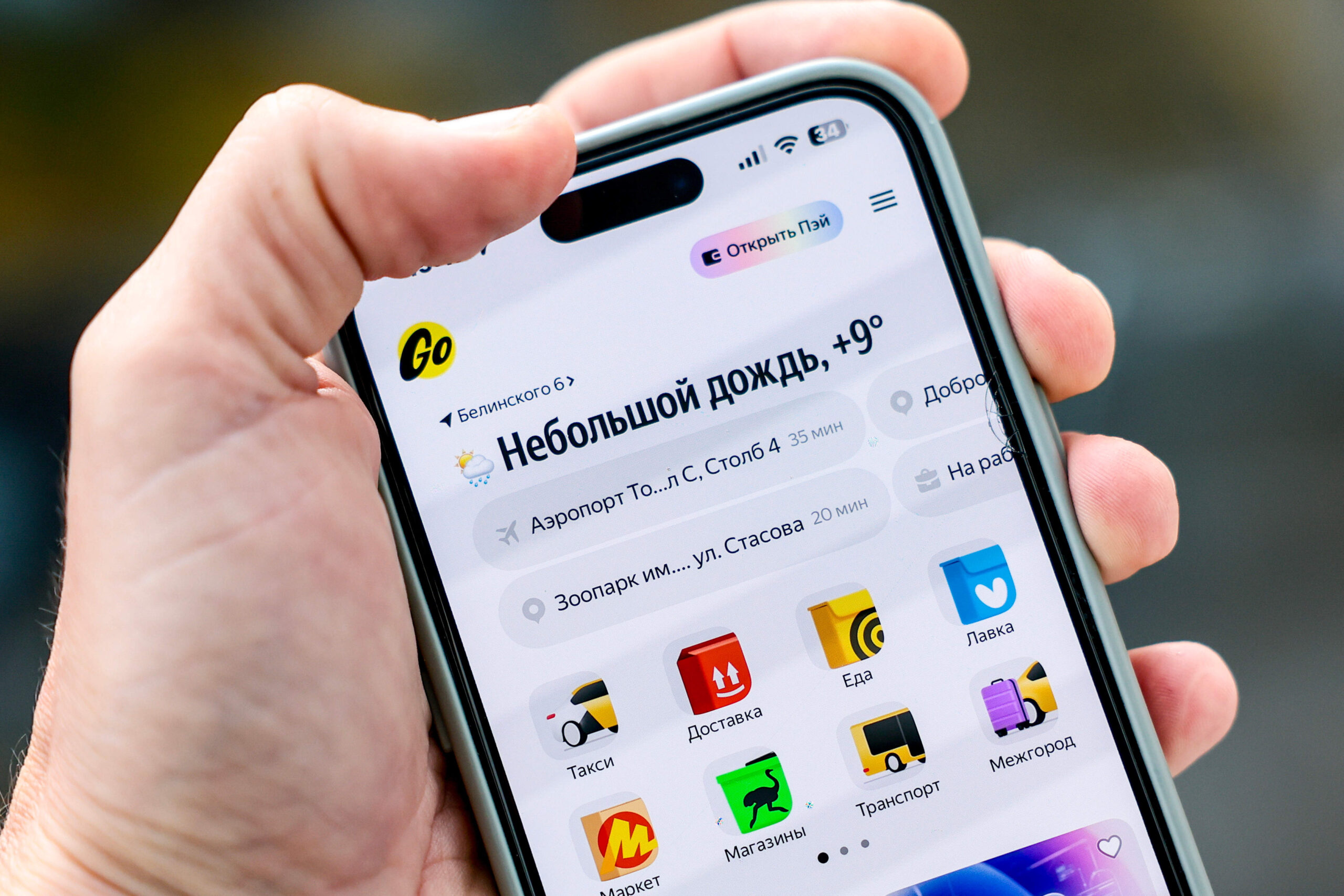
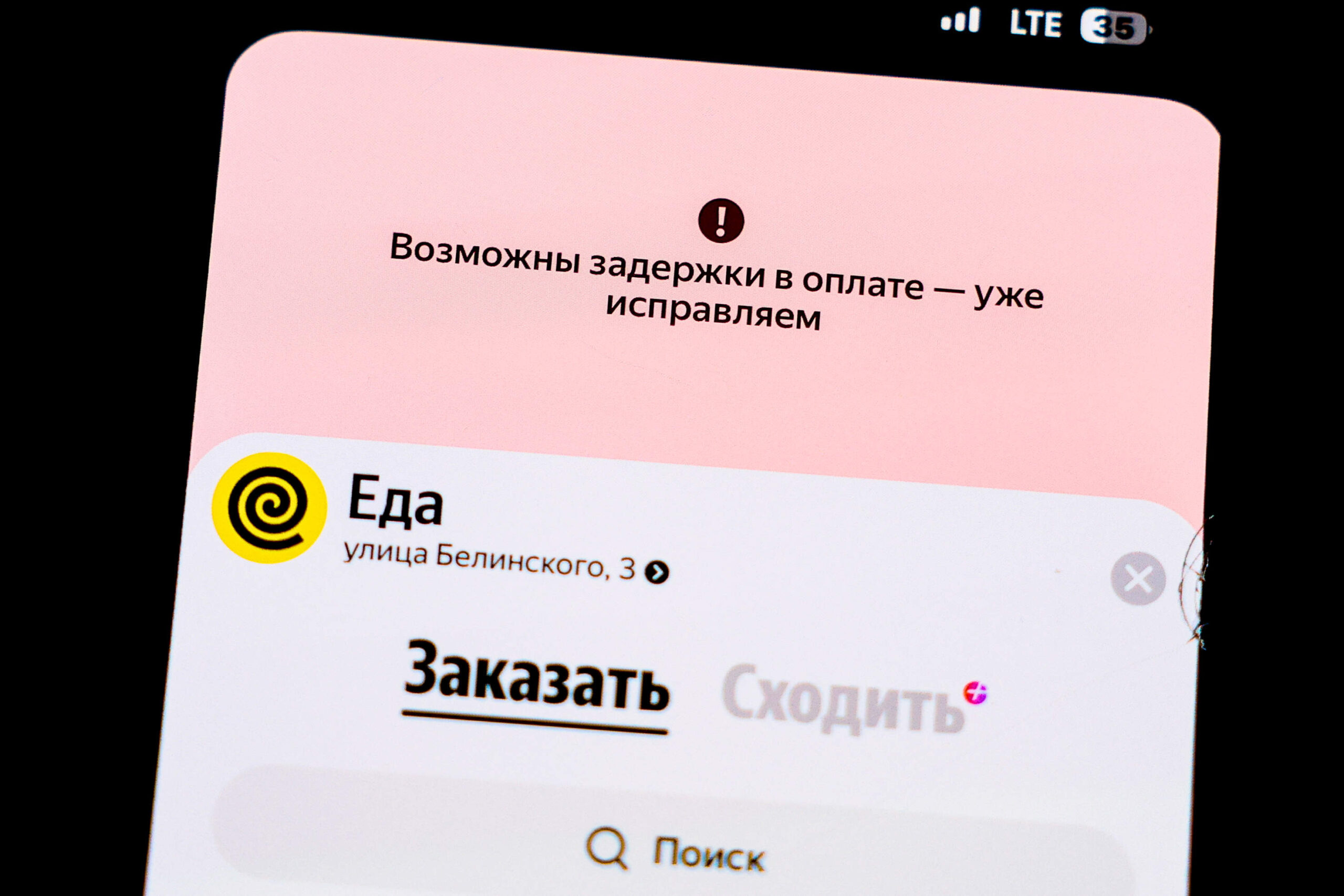
But the comparison with Google stops there. Yandex more closely resembles an ecosystem integrated in the Chinese fashion, similar to Tencent or Alibaba. It relies on a single identifier (Yandex ID), a subscription (Yandex Plus), a payment method (Yandex Pay), which give access to dozens of interlinked services—from an Internet search to taxi ordering, to meal delivery and online cinema. Wildberries already gathered the equivalent of Amazon, Le Bon Coin, FedEx and Crédit Agricole. Yandex concentrates, on its own, functions that no Western company unites. This integration is its commercial strength, each service guiding the user to the others.
But this centrality also makes it strategically fragile. The concentration of infrastructures increases its vulnerability and runs against one of the foundational logics of the Internet – designed as a distributed network so that, in case of an attack, destroying a small number of central nodes does not compromise the entire system. In other words, the more integrated the ecosystem, the more a node’s failure propagates. This centrality was further reinforced by the 2024 break with the old Dutch parent company Yandex N.V. which had to cede its activities to a Moscow–coopted investor consortium tasked with “Russifying” its assets, for $5.4 billion and with a discount of at least 50%. The international activities of the former parent are since named Nebius .
What interest did the Kremlin find in this “Russification”? In a sanctions-struck economy, such infrastructure ensures a function of digital sovereignty. The strategic value of national players indeed grows as the country cuts itself off from Western suppliers. Far from being mere markets, search, cloud, maps or even AI are indispensable capacities for Russia, to avoid dependence on any external actor. Under sanctions and keen to preserve strategic freedom of action, Russia could not base its critical digital architecture on San Francisco or Shenzhen. Yandex thus became the pillar of this self-reliant Internet.
Three strikes in four days
The first attack, at Sasovo, is the most spectacular. In the night of 7–8 October, drones trigger a fire at the site, located more than 500 kilometres from the Ukrainian front. Yandex quickly announces that the data center has been “seriously damaged” and is entirely shut down. Reuters reports that the site houses tens of thousands of servers and two of Yandex’s three supercomputers, which power the company’s in-house artificial intelligence used across its software and apps. In the hours that follow, disruptions spread to third-party services, up to a Moscow region public bus company that temporarily suspends its online ticketing. Detector404, a digital outage-tracking service, records over 58,000 incident reports in twenty-four hours. Yandex’s stock falls by about 3% on the Moscow Exchange.
Under sanctions and keen to preserve strategic freedom of action, Russia could not rely on San Francisco or Shenzhen.
Antony Dabila, Alexandre Escudier, Jean-François Marti
On 9 October, a second strike takes place in Kaluga, about 160 kilometres southwest of Moscow. Yandex confirms that part of the infrastructure is out of service. Ukrainian manufacturer Fire Point claims the attack was conducted with FP-1 drones. Volodymyr Zelensky explicitly presented these strikes as a response to Russia’s attacks on Ukrainian digital infrastructures. In this regard, Ukraine’s defense is partial. In February 2022, just a week before the full-scale invasion, a law allowed public data to be hosted outside the national territory. Clouds located abroad—in particular Amazon Web Services and Microsoft—had thus copied, from the war’s first days, a large part of the State registers (population, cadastre, taxation, banks, education). Some operators maintained services thanks to backup sites. This is the case for Datagroup, one of Ukraine’s main telecommunications and digital services operators, which said all its services continued to function from its backup sites after Russia’s strike on Kyiv’s data center on 25 September 2026. These backups reduce the risk that destroying a single server would lead to the permanent loss of data—an exposure to which Russia could be more vulnerable. This “tactical” approach is also used at the industrial and financial levels: part of Ukraine’s strategic depth now lies outside national territory, in Europe, and thus escapes Russia’s missiles and drones.
These Ukrainian strikes on Yandex show the limits of Russia’s strategy of concentrating infrastructures. Impacts on client companies become visible this time around. Yandex signs deals with other cloud providers to transfer some workloads in emergencies, while a small company cited by Reuters can no longer access either its main service or its backup, both hosted in Yandex Cloud. Yandex’s stock drops more than 4% during trading. On 11 October, finally, Yandex announces that its Vladimir data center, about 180 kilometres east of Moscow, has also been damaged by drones and is completely shut down. No injuries are reported, but some services become unavailable.
From warehouse warfare to data center warfare
The strikes against Yandex actually extend a strategic shift that began a few months earlier. First, Wildberries’ warehouses were targeted by Ukraine starting 18 July 2026. Attacks against civilian infrastructures with high functional centrality marked an expansion of Ukraine’s targeting, capable of affecting Russia’s economy far beyond the site struck.
By late July, according to Wildberries, seven of its warehouses had been damaged, around 10% of its stated storage capacity. The company sought to relocate operations to Kazakhstan. Dozens of thousands of small merchants relying on the platform faced losses and delays. By mid-August, the campaign expanded: according to Ukraine’s Defense Ministry and the Institute for the Study of War, seven of the ten largest Wildberries logistics hubs had been taken out of service—such as the Koledino complex near Moscow. A few days later, on 22 August, Kyiv claimed to have struck Wildberries’ fifteen largest hubs. In five weeks, more than twenty warehouses were hit. On the same day, the second major player, Ozon, was targeted as well—losing nearly 30% on the Moscow Exchange two days later. Wildberries sellers’ losses are estimated at 215 to 280 billion rubles. According to them, only 5 to 7% of losses would be covered by “support” payments offered by the platform. The State thus had to step in with an August 25 decree organizing tax and contribution deferrals for the stricken sellers.


This distribution of losses offers another point of comparison between Wildberries and Yandex. On 7 July, even before the first strike, Wildberries had amended its partnership contract to exclude liability for damages caused by drones or missiles. On 10 October, the day after the Kaluga strike, Yandex added drone and missile attacks to its force majeure clauses in its terms of use, while stating that these changes were only for clarification. Yandex and Wildberries thus make the costs of war borne by those with the least leverage: sellers, business customers and users.
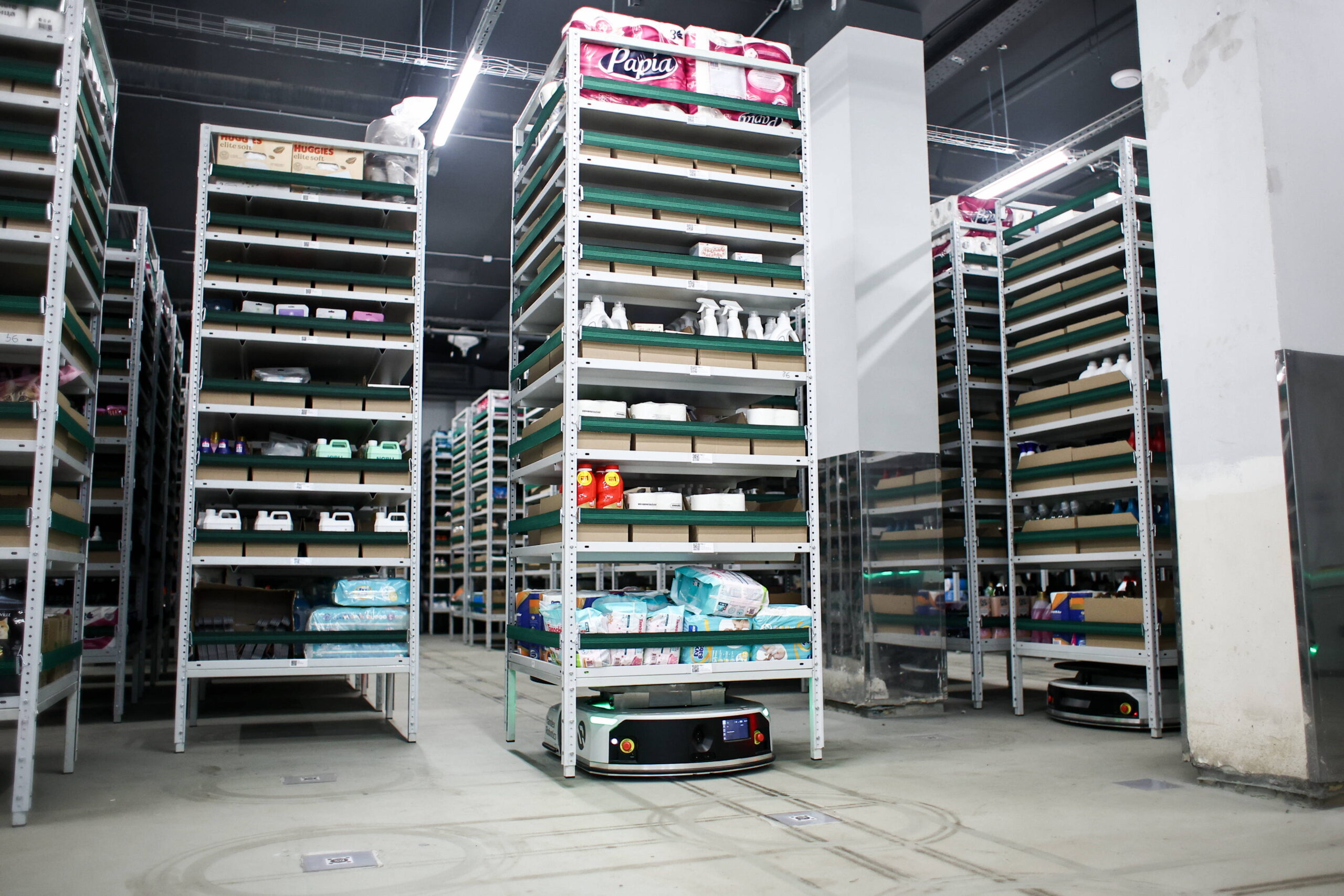
Another common trait between the two firms: if an “e‑commerce warehouse” and a “data center” do not have the same function, they both concentrate in a few places services on which a multitude of downstream actors depend. Thus, the destruction of a warehouse can disrupt goods flows, while a data center outage can affect storage, computing, databases, applications, recommendation systems, AI services, and, by extension, all the businesses using these services. The reach of strikes against Yandex, however, is deeper than for Wildberries. Wildberries is part of the distribution chain; Yandex participates upstream in a cross-cutting infrastructure on which both ordinary economic activities and Russia’s state power depend. This is no longer about a single flow being hit, but a key node where civilian, administrative and strategic uses intersect. After Russia’s consumer circulatory system, Ukraine is aiming at its nervous system.
From digital infrastructures to a “corrosion power”
Yandex’s infrastructure not only supports Russians’ digital lives; it is also a crucial component for Russia in developing its ability to act beyond its borders, especially in the cognitive domain. When an actor, especially a state actor, seeks to bend an adversary’s will, it can act in several ways.
Among the forms of external power that regulate relations between states, but also between states and adversarial societies, three fundamental modes can be distinguished: coercion, attraction and corrosion. Coercion consists of changing an opponent’s conduct by force or the threat of force. By contrast, through attraction one seeks voluntary alignment of actors around values, institutions or forms of life deemed desirable. Finally, corrosion does not attempt to coerce or seduce but to weaken an opposing society and its capacity for cohesion, judgment and collective action from within. The identification of common problems and the organization of collective responses become more difficult because corrosion contributes to perceptual blur and intensification of discord, exploiting pre-existing fractures.
After the circulation system of the Russian consumption, Ukraine aims at its nervous system.
Antony Dabila, Alexandre Escudier, Jean-François Marti
A single campaign can combine these modes, but each is defined by the mechanism at work. In the Ukrainian case, the use of drones initially falls under military action, not necessarily obeying a coercive logic. When strikes seek or manage to degrade the adversary’s internal conditions, they take on a corrosive dimension. They affect normal social life, the regime’s performance trust, material capacities and, more indirectly, mobilization conditions. The goal is not necessarily to obtain a concession from the Kremlin on a particular point, but to raise the cost of reproducing its power and the social compromise that sustains it. There is a reciprocity in the use of corrosion as a mode of action: since 2022, Russia has repeatedly attacked Ukraine’s electricity grid; in autumn 2026, it also struck several data centers. These latter strikes have been presented by the Kremlin as a “mandatory digital detox” imposed on Ukrainians. Kyiv says it now responds to these strikes.
This kind of external action has long been mastered by Russia, thanks to the development of specialized instruments – media, intelligence services, political and digital relays, fake accounts, coordinated campaigns, clandestine or automated operations. But this vast apparatus coordinated by the Kremlin is not identical to Yandex, and nothing guarantees that the three data centers targeted by Ukraine house troll farms, clandestine networks or operational centers for Russia’s influence campaigns.
The confusion that followed the attacks shows that this distinction is necessary: graphs showing the collapse of some automated flows from Yandex circulated as proof of the neutralization of some “Russian bots.” In reality, most of these flows were not tied to clandestine political networks, but to Yandex’s indexing robots and other technical services. It would be wrong to reduce the scope of these strikes to the destruction of “troll farms,” and even more so, it would obscure a deeper strategic phenomenon.
Yandex rests on computation, storage, models, analytics tools, search engines, recommendation systems and platforms capable of circulating content. All of these resources are necessary to carry out an influence operation, and are not inherently corrosive, since they are also deployed for economic, administrative, military or simply everyday digital uses. However, within a strategy aimed at influencing perceptions and behaviors of adversary societies, they become the technical substrate needed to carry it out. If strikes against Yandex do not directly target a corrosion device, they can produce a corrosive effect by degrading general computing, hosting, storage or dissemination capacities, thereby disorganizing certain influence instruments without destroying the device that implements them. The controversy that followed the strikes blurred these two levels; it nonetheless reveals a real dependency and gives materiality to “hybrid warfare” operations—the most immaterial in appearance—made tangible by the image of burning data centers.
The campaign can thus produce two distinct effects: a potentially corrosive one inside Russia if it gradually erodes the material basis of political normality; and a potentially anti-corrosive one abroad if it weakens the means by which Russia seeks to corrode adversary societies.
The autocratic contract: a scissor effect
Given the strong interweaving of Yandex services into everyday life, its disruption requires going beyond a simple analysis of strategic uses. It raises another political question: what happens when war—long kept at arm’s length from much of the population—begins to affect ordinary conditions?
In contemporary authoritarian regimes, each official statement need not be believed by every citizen. According to Sergei Guriev and Daniel Treisman, “informational autocrats” mainly want to maintain a reputation for competence. They contain unfavorable information, maintain a narrative of performance, and, above all, hide signs of failure.
There exists therefore a set of mediations that select, order and render certain fragments of reality more or less present, shaping what seems plausible even before explicit opinion forms. One can speak of a “regime of the plausible.” In contemporary Russia, social reality is not produced solely by controlled media, digital platforms, search engines or recommendation devices. These, however, contribute to organizing what becomes collectively perceptible, by accentuating or relaying certain facts, and by favoring certain frames of interpretation over others. Persuading people of the regime’s own statements is therefore not the only objective of power; it is more broadly about preserving a perceptual environment in which the facts made available continue to lend themselves to readings favorable to it.
This environment has long been facilitated by the physical distance of the conflict.
The front remained distant. The violence of the war and its human and budgetary costs spared a large part of the Russian population: transports functioned, digital services were available, shops delivered, and for some categories incomes rose. If war could be omnipresent in public discourse, it did not impose itself with the same intensity in everyday experience.
This sense of normality preserved in wartime is a political resource. It prolongs one of the old foundations of the compromise struck between Putin’s power and part of Russian society: restriction of freedoms in exchange for regained prosperity and a stabilised and reasserted status. Aleksei Makarkin and Peter Oppenheimer described as early as 2011 a “social contract” in which a large portion of the population accepted a relatively autonomous authority so long as it guaranteed economic stability and improved living conditions, while Igor Logvinenko showed the role of social policy and redistribution in the regime’s stability,
Since 2022, this contract has changed without vanishing. Resources have been shifted toward the military industry and some salaries sustained by the war economy. Yet this latter has also caused inflation, labour shortages, high interest rates and growing imbalances between military and civilian sectors.
The joint evolution of the two clauses of this compromise gives the October strikes their political reach. The first clause, freedoms, is trimmed by the regime itself, patiently since 2014, brutally since 2022, in the name of war. The second, comfort, is now being affected by drones. Less freedoms and less comfort: the autocratic contract potentially suffers a scissor effect.
Yandex embodies this second clause better than any other actor. The middle classes of major cities—who formed one of the main foci of the 2011 and 2012 mobilizations—were among the first beneficiaries of digital modernity: taxis ordered with a click, meals and groceries delivered in minutes, administrative steps accomplished online. One of the most tangible counterpoints of Putin’s autocratic contract is thus targeted by strikes against Yandex, which disrupt the continuity of services used by an urban, connected population.
The clause of freedoms, trimmed by power
This progressive empowerment of the Russian digital life accompanies the Kremlin’s break with the West. Kevin Limonier could speak of an “islanded empire.” The movement began in 2014. In July, a few months after Crimea’s annexation, a law requires storing Russians’ personal data in Russia. The same year, Visa and Mastercard having ceased servicing several sanctioned banks, the state created its own payment system, whose first cards, named Mir, were issued in late 2015. Then, in 2016, a law made news aggregators responsible for the information they relay. Yandex reserves its “main news” to media registered with Roskomnadzor, the communications regulator.
In 2019, the law on the “Sovereign Internet” obliges operators to install state-controlled traffic inspection equipment. Another law imposes the preinstallation of Russian apps on smartphones sold in the country. Yandex, finally, agrees to subject some of its strategic decisions (transfer of personal data or intellectual property rights, major minority or majority stakes) to the veto of a “public interest foundation” where regime allies sit. Each measure seems technical. But taken together, they sketch a national Internet that can be isolated, monitored and, when necessary, reduced to essentials.
Less freedoms and less comfort: the autocratic contract potentially suffers a scissor effect.
Antony Dabila, Alexandre Escudier, Jean-François Marti
Russia’s invasion of Ukraine accelerated the movement. Facebook and Instagram were blocked in March 2022. The same year, Yandex ceded to VK, a group controlled by regime-friendly shareholders, its news aggregator and its content platform Zen. YouTube was gradually slowed until it became nearly inaccessible in 2024. In 2025, a law created a national messaging service, MAX, developed by VK and preinstalled on all smartphones sold in Russia since 1 September. In February 2026, Roskomnadzor slowed Telegram, then blocked WhatsApp, used by more than 100 million Russians. With the disappearance of every foreign service, a national service takes its place. Through these substitutions, the regime has been able to gradually restrict the digital space while ensuring the uses to which the population was accustomed.
Mobile Internet cuts, generalized since May 2025, complete this device. Justified by the fight against Ukrainian drones, which would use mobile antennas to guide themselves, they unevenly affect the federation’s regions. Some, like Oleanovsk, are indefinitely deprived; others, like Moscow, had been spared for a long time. In the capital, however, the March 2026 outages disrupted access to many apps for over a week. Kommersant estimates losses at 3 to 5 billion rubles in five days; the Kremlin says the drone threat justified the security measures.
The comfort clause undermined by Ukrainian drones
The depth strikes add a new element to these tensions. By disturbing the routine digital life of ordinary users, they tend to reduce the material distance that still separated part of society from the conflict. Their reach is not measured only by the value of facilities destroyed, but by the level of inconvenience caused in daily life. A refinery struck eventually weighs on fuel prices. A warehouse destroyed delays orders. A data center outage renders an app unavailable, disrupts work and interrupts services. As these effects accumulate, the war ceases to appear solely as a fight unfolding in a distant Other Place.
With Yandex, the outage itself is the message. The user does not receive the strike as distant information; they feel it when their taxi does not arrive, when their payment fails or when their cloud backup becomes inaccessible. These inconveniences are, of course, smaller than those suffered by Wildberries’ and Ozon’s sellers, but they now affect tens of millions of users. To revisit McLuhan’s central intuition, if media extend our senses and our capacity to act, and thereby reconfigure what he calls the sensorium, their interruption, with the digitization of daily life, is felt in the most ordinary gestures. The war no longer needs images to be perceptible.
This accumulation also goes far beyond the strikes against Yandex. By the end of August, according to the Levada Center, 65% of Russians said they had experienced a gasoline shortage or closed gas stations in the preceding month; 68% faced difficulties accessing mobile Internet; and 63% were affected by messenger blockages. The effects of Ukraine’s action are not alone responsible for this decline in Russia’s quality of life. The deterioration of digital life is, in the first instance, the product of government decisions, and because these perturbations accumulate without a single origin, attributing them becomes a political issue in itself.
The battle of attribution
The question is therefore less whether Russians will rise up because Yandex was heavily damaged, than how far the war’s expansion into the rear can weigh on and degrade the daily life of social groups long kept materially distant from a highly lethal war officially euphemized as a “special military operation.”
To assess what this pressure can produce, we must distinguish two centers of gravity within the regime. The first is martial: the apparatus of domination that protects the executive center—namely the army, the police, the security services and the National Guard. Its power asymmetry explains why an authoritarian regime does not simply topple because social discontent grows. There would need to be a fracture within this apparatus and a faction that defects without being immediately isolated, neutralized and purged.
Nothing suggests Ukraine can currently provoke such a rupture, but it can weigh on the regime through the deterioration of social conditions. This reveals the second center of gravity—social.

There are now far more diffuse dependencies: being able to work, earn a living, move, consume, raise children, maintain a minimum level of safety and predictability, without having to enter politics. Support for the executive remains high as long as the regime fulfills these expectations. The terms of the autocratic bargain can thus be jeopardized by sustained deterioration.
There is, however, no automatic political translation for each of these effects. A population hit could also rally behind the regime; each outage could be attributed by the Kremlin to Ukrainian aggression, and thus become further proof of a siege. Interpretations of a single disruption can therefore diverge. For Russian citizens, the question remains: is it the war desired and prolonged by the Kremlin that costs more, or is it the external enemy attacking ordinary Russians?
Strategic interest and legitimacy of targets: two separate questions
Viewing the campaign as corrosive warfare requires a crucial distinction: a strategically exploitable vulnerability is not, in itself, a legitimate target.
That a data center is important for the economy or for a country’s overall power does not, in itself, make it a lawful military objective. The International Committee of the Red Cross reminds us that data centers used exclusively for civil purposes remain civilian property protected. A center, or an identifiable part of one, can become a military objective only if it contributes effectively to military action and if neutralizing it yields a precise military advantage under the circumstances. Proportionality and precaution rules continue to apply, including for indirect effects on civilians who rely on hosted services.
We do not currently have public information sufficient to determine the legal qualification of each of the three Yandex sites struck. Showing their strategic importance does not in itself amount to concluding that each attack was legally legitimate.
The distinction becomes particularly important when considering the social effects sought or produced by a strike campaign. This is indeed the case here, as Ukraine’s strategy could corrode Russians’ social consent to the war. A strategy may aim to raise the cost of continuing the war, to multiply the functions a state must protect, or to disrupt the normalcy of its rear. International humanitarian law does not authorize directly targeting civilians or civilian property as such. A campaign’s political aim does not qualify any target. It is site-by-site that one assesses the contribution to the military action and the precise military advantage; and the prevailing doctrine does not place weariness of a population among permissible advantages. Kyiv’s reciprocity provides no additional legal title; the first Additional Protocol forbids reprisals against civilian property. Expanding targeting would not automatically expand the scope of legitimate military objectives.
Who pays for adaptive resilience?
The Yandex case forces us to revisit an old strategic notion: depth. For Russia, this defensive asset even has a legendary name, that of “General Winter.” It primarily rested on geography and the vastness of the territory, allowing retreating troops and some infrastructures to be shielded from enemy blows. This territorial advantage is now eroded by Ukraine’s long-range capabilities: distance no longer necessarily protects a facility located 700 or 1,000 kilometres from the front. It is no longer enough to deter by detection, jamming or air defense; one must also anticipate what happens if it is hit. Yandex will disperse its data centers and network nodes in anticipation, so that others can take over if one is destroyed. Distance is thus no longer the sole depth parameter. This strategy also relies on the ability to organize infrastructures so that a local loss affects as little of the system as possible.
Ownership of space as well as of the network, depth is described as reticular depth, when it rests on duplication of capabilities, backup solutions and the ability to quickly redistribute functions from one site to another. Conversely, a system loses depth when a node concentrates more dependencies without an immediate substitute. Thus, two logics now overlay: front -> distance -> protection on one side, node -> dependencies -> functional propagation on the other.
Sasovo provides a textbook case. The site housed Chervonenkis and Lyapunov, two of Yandex’s AI-oriented supercomputers. The third, Galushkin, was located in Vladimir. The two sites were struck between 8 and 11 October; their precise physical state remains unknown to this day. Each of these systems contains more than a thousand Nvidia A100 GPUs; in 2021, all were among the world’s 40 most powerful supercomputers. While this concentration of computing power yields greater efficiency in peacetime, it becomes a critical point of failure in wartime when a drone can reach the building.
Difficult to replace, these processors amplify the severity of the situation. Yandex could indeed retain its users after the 2024 split, but must do without the most advanced processors because of sanctions. Nebius, the former international arm, has since become a major AI computing provider outside Russia; in 2025 it signed a $17.4 billion contract with Microsoft. The concentration of computing power at Sasovo thus materializes one of the effects of the “Russification.”

In January 2025, Vladimir Putin asked the government and the chief executive of Sberbank, German Gref, to strengthen cooperation with China in this domain; Gref acknowledged that graphic processors were difficult to replace with Russian equivalents. According to Kommersant, replacing damaged equipment would take around six months, while computer hardware prices are at their highest in years. This inflation is likely to spill over into cloud pricing.
More than a vulnerability, the strikes against Yandex highlight the question of adaptation—namely, the possibility of preserving the same functions when the infrastructures that concentrate them become reachable. Further dispersal and organizing the resilience of digital infrastructures through reticular redundancy appears to be the most obvious response.
Yandex had known this principle for a long time. Back in 2007, when opening a new data centre, a company executive explained that sites should be “autonomous, interchangeable and geographically separated” to increase resistance to external perturbations. This is the very principle of reticular depth: a function should not suffer from the loss of a node that ensures it.
Not all functions lend themselves as easily to distribution, though. Data and ordinary services can be duplicated across several centers, and processing redistributed from one site to another, at the cost of temporary performance dips. After the strikes, partner suppliers provided support to Yandex to help some clients.
Dispersal is more costly for supercomputing. The performance of large AI training runs requires close synchronization of thousands of processors.
Russia faces another constraint. Expanding the spread of computing across more sites requires increasing interconnections and redundancy devices, often increasing the number of processors. But sanctions make the acquisition and replacement of these advanced components more difficult. Moving servers is not enough to counter Ukraine’s strikes. Russia must also procure resources that the economic war is specifically making scarce. In this sense, the drone war directly intersects with the sanctions war.
The success in Ukraine’s campaign is thus measured not only by destroyed servers or downtime but also by the additional costs Russia must bear to maintain, protect or restore the function affected by a strike. Beyond civilian investments, these costs weigh on the allocation of military resources as well. Indeed, to better defend its data centers, its refineries, its warehouses, its power plants or other economic sites, Russia must deploy more air defense resources. Protecting infrastructures thus competes with resources for detection, jamming and interception.
As early as August 2026, even before the Yandex sequence, the Russian government had already gained enhanced powers to retake control of critical infrastructures deemed insufficiently protected—signaling that the issue had already become political. After the strikes, the Ministry of Digital Development began discussions with the Ministry of Defense on protecting data centers, while the Duma reminded that protection rests with the companies themselves.
The question thus becomes distributive: who should pay for this additional resilience? With a federal deficit now estimated at 7,300 billion rubles for 2026, or 3.2% of GDP, the state is driven to shift part of the burden onto private operators, who can in turn pass it on to their clients. The strategic cost of a strike thus diffuses well beyond the site hit. By categorizing drone strikes as force majeure, Yandex has already indicated who will bear the cost: the user pays twice, first through the outage and then through the bill.


The October strikes do not yet tell whether this strategy will succeed. It will be necessary to know the real state of the three supercomputers and further strikes could be added to the first ones. These immediate damages will only provide part of the answer. What must be observed is what Russia will do next: new centers, duplication of capacities, anti-drone protections, redistribution of loads and a new geography of computing.
It is in these adaptations that the campaign’s lasting strategic effect will be measured. If Yandex restores its sites without major changes, the strikes will have produced a one-off damage. If the company and the Russian state alter the architecture of their digital infrastructures in a durable way, the strikes will have forced Russia to devote more resources to maintaining capabilities it already possessed.
Rust on the “Iron Core”
Yandex calls its data centers its “Iron Core.” The image is more accurate than it may seem, because iron’s enemy is more patient than shock: rust. A corrosive war doesn’t simply break; it eats away. It does not aim for the opponent’s collapse, but compels it to spend more and more to maintain the same functions, until upkeep costs exceed what they yield.
The October campaign thus acts on three layers at once. Materially, the extra resilience costs divert resources toward protection, duplication and rebuilding of assets whose supply is constrained by sanctions. Socially, the autocratic contract is hit by the scissor effect between restricted freedoms and deteriorating comfort. Cognitively, each outage brings the war into everyday experience and tests Putin’s “regime of the plausible” by making the attribution of causes a political issue. None of these layers yields alone. All rust together.
The user pays twice, first by the outage and then by the bill.
Antony Dabila, Alexandre Escudier, Jean-François Marti
The Ukrainian drones that reached Sasovo, Kaluga and Vladimir thus went further than merely penetrating deep into Russian space. They reached the Internet the regime had chosen to keep, i.e., infrastructures through which war can spread well beyond the site struck, into the economy, services, resource allocation and, more indirectly, the social experience of the conflict.
The lesson extends beyond Russia. In the night of 9–10 March 2021, an OVHcloud data center fire in Strasbourg took offline around 3.6 million sites, including France’s state procurement platform. Some clients lost both their servers and backups stored by the host in the same building, which earned it a 2023 judgment. As this incident shows, a society’s digital life can hinge on a few buildings. European states, which have also concentrated their data, payment systems and public services in a small number of digital infrastructures, would do well to inventory vulnerabilities before a foe does. Rust advances quietly and never stops on its own.