
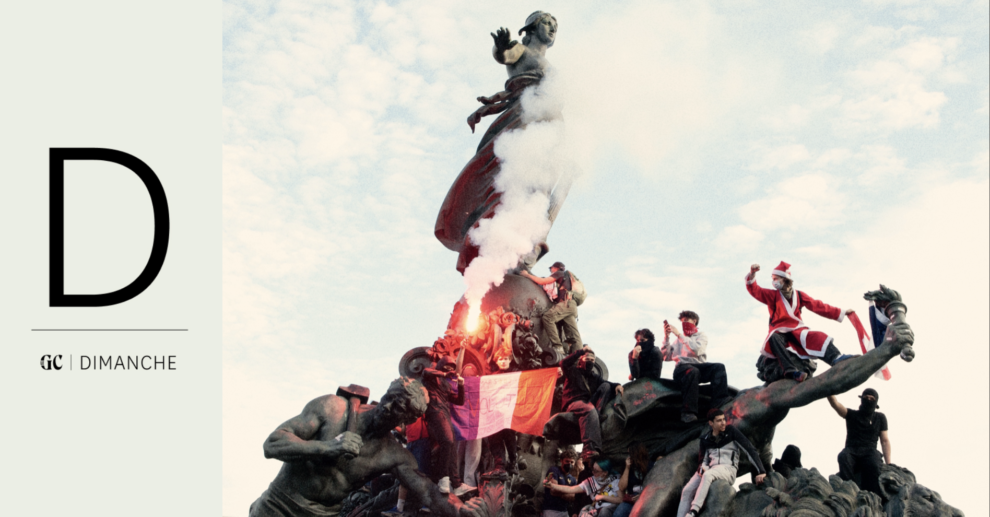
Every generation has said: before me, darkness. Every generation believed it was born at the moment the world was dying. Every generation lived as if misunderstood and yet strong with a mission. I remember my twenty years. It was a sad month of January. In the streets of Paris, helicopters hovered in search of the Kouachi brothers. That same year, Donald Trump descended an escalator to announce his candidacy for the presidency, the British prime minister proposed a referendum on Europe, attacks drenched France in blood, international diplomacy tried to contain the conflict in Iran in Vienna, the Russian invasion of Donbass in Minsk, the climate crisis at the Paris COP. Containing warming to under two degrees: that sentence from the Paris Agreement sounded like a motto. The inevitable disaster had to be contained. I was twenty when there was still time to prevent the world from coming apart.
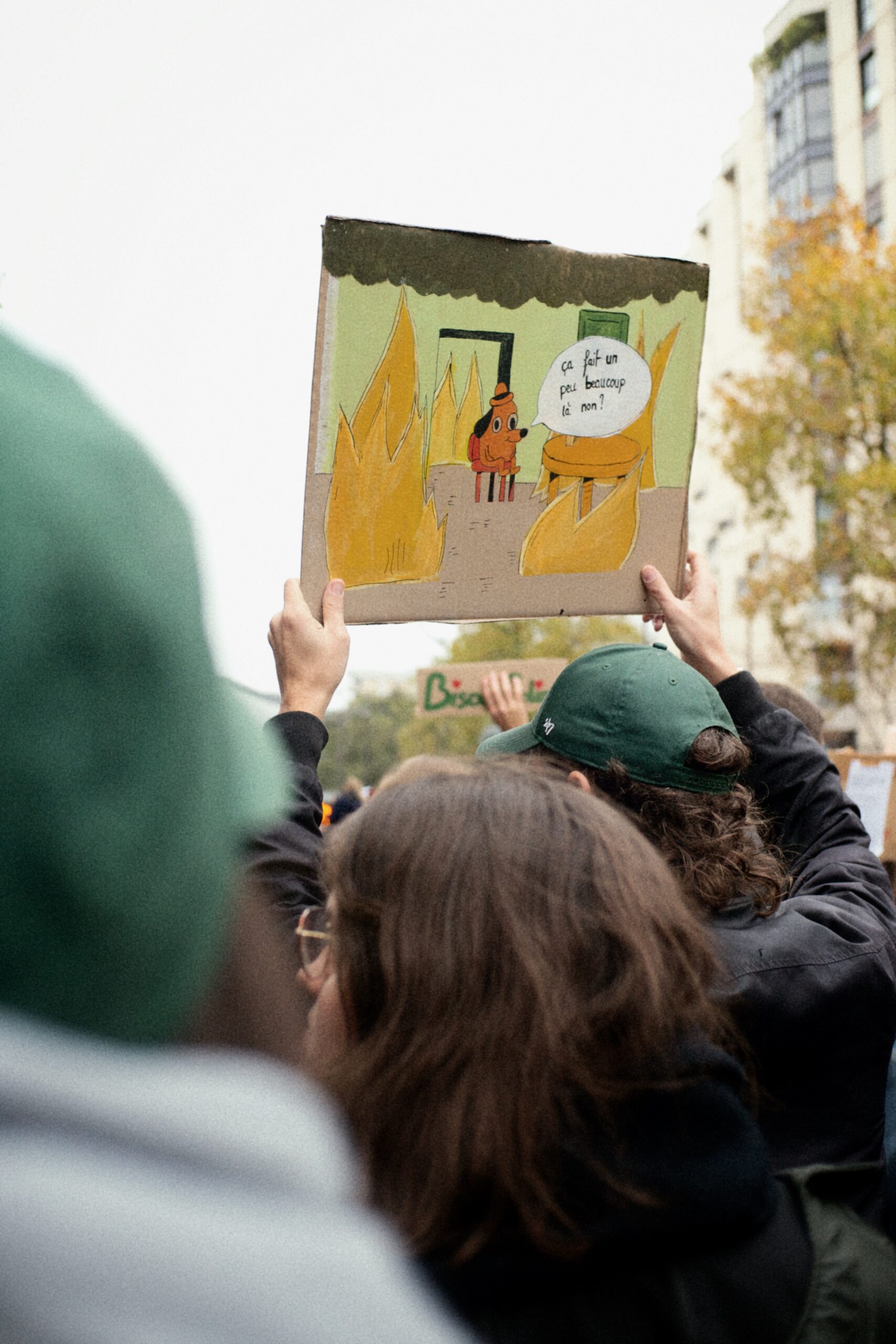
Youth lasts as long as firsts arrive for you. In that sense, youth is not the beginning of life. It is a state of mind. What does our youth, which has burst onto the country’s political and social life in recent weeks, want? Lucky indeed is the one who knows how to speak for it. Yet, giving up being its ventriloquist does not forbid trying to understand its condition. “Bismillah it’s the darkness.” Parodic, the phrase proclaimed in demonstrations has taken on a political meaning. For our youth too, the present and the future are only darkness and threats.
This generation bears a misfortune it did not invent: existing in a world not made for it. Like the nineteenth-century romantics, who arrived after the epics and the wars, it feels born too late in a world that is too old. But this generation does not bear Musset’s melancholy. This generation looks on, with horror, at the revolutions of capitalism — but it does not seek, as the nineteenth-century symbolists did, the meaning of the world in mystic delights. This generation, confined during the epidemic, experiences the sense of a collective trauma that has robbed it of its carefree days and its most beautiful years. Yet it has not drawn from it, like the “People of 1914” after the Great War, a pallid nihilism and a guilty blindness. This generation speaks the language of progress, urges its comrades to run because the old world is behind it, demands equality for women and men, and ties its destiny to those of other peoples on Earth. But it is not the Mai 1968 generation, the children of the “baby-boom,” optimistic and numerous, who through mass force managed to push their parents from positions of control and authority. This generation has lived through the end of a system, fears for the longevity of life on Earth, but has not become disillusioned enough for punk or the no future. This generation grew up behind screens rather than in playgrounds, with as its toy algorithms — but unlike the inventive geeks with a universal spirit, it emerged depressed, stricken by severe psychiatric illnesses. At bottom, this generation possesses three differences that set it apart from all past cohorts.
It arrives first after the Millennials. To them — to us! — was preached the end of history. Certainly we quickly lost our illusions. Born between the fall of the Wall and the fall of the Twin Towers, we understood that history had awakened. For those born after us, there was no prelude. They were cast from birth into an atmosphere of the end of the world. Someone born in 2010 has known no landscape but this sad film: financial crisis, fires, heatwaves, wars, epidemics. And then hatred, anger, struggles, political rigidity. And always the sense that our twenties were like the thirties of the other century. From 2000 to 2026, generation after generation, we have moved from the end of history to the history of all endings. End of peace, of democracy, of the world. If one talks of the Anthropocene to describe the block of centuries in which Humanity dominates the world, and of eschatology to denote the study of the end of the world, we are in the eschatocene. It is the era of the exit from all epochs.
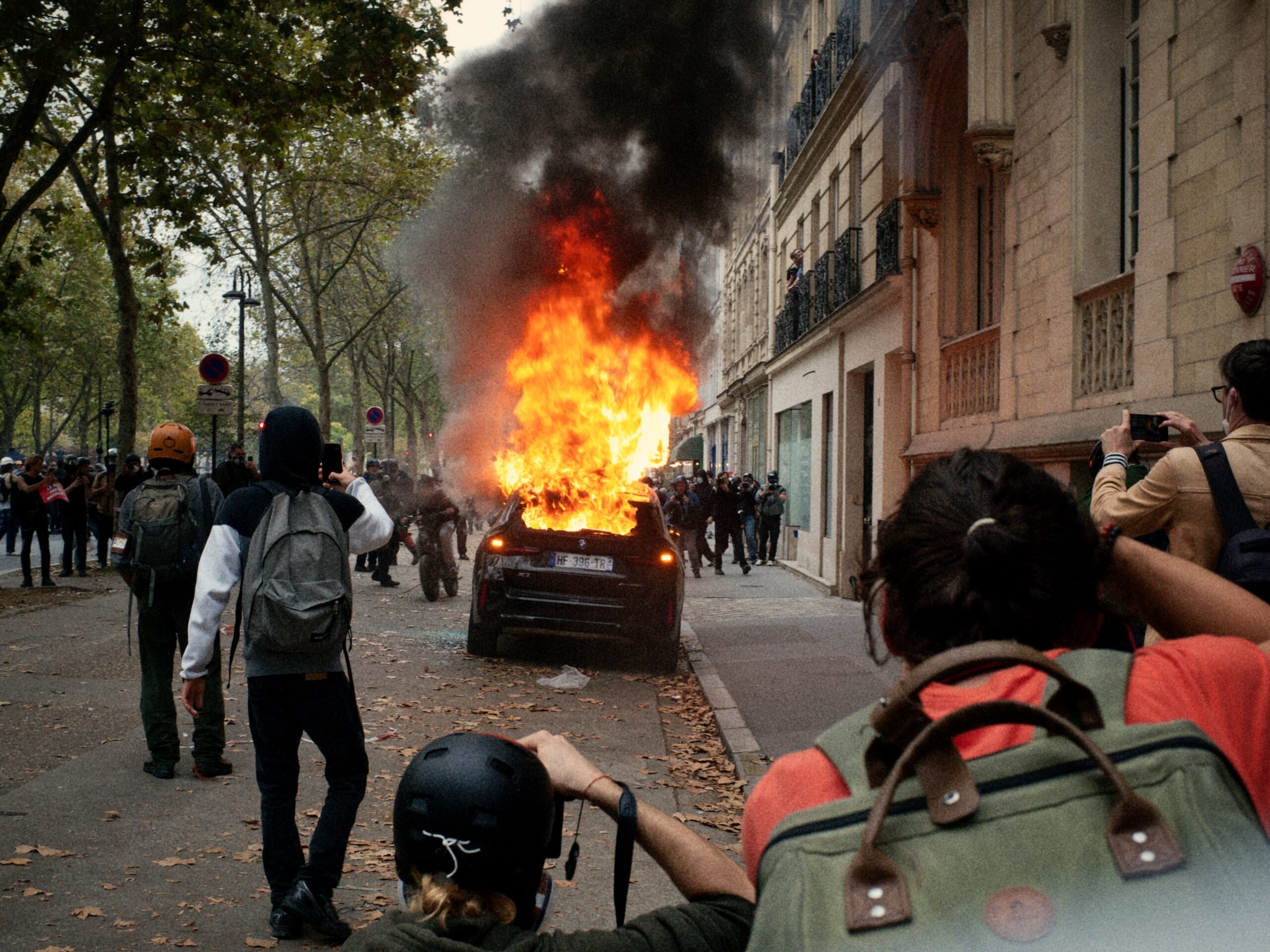
This generation is also what previous generations were not: a species on the path to extinction. It was the romantics who invented the misfortunes of the children of the century because they were the first to confront the question of choosing their adult life, in a society where the Revolution had removed the spaces and the orders. Two hundred years later, it is the opposite. In aging societies that do not have children anymore, this generation faces the vertigo of statistical anomaly. The reduction in the number of positions in the National Education system, a logic of demographic terms, becomes one of the reasons for anger. Because this is the moment when, literally as well as figuratively, this generation counts less and less. This generation lives not only with the end of the world. It also lives with the end of babies, a demographic reversal that threatens to consign it to political minority status in favor of the oldest citizens.
This generation finally inaugurates the world of artificial intelligence, before which it experiences two legitimate fears.
The first is economic. It is the fear of mass unemployment born from the substitution of workers by machines. In China, with the development of AI and robotics, youth unemployment probably reaches a quarter of the population. Perhaps it is frictional unemployment that will ease with time. It remains that — to speak in Marxist terms — this new revolution of capitalism, by mechanizing jobs, causes a shift of the value of labor toward capital, a concentration of wealth, and a spread of inequalities. It is not enough that a long-term balance is found. The mere anticipation of this prospect of mass unemployment is enough to drive a youth seized by doubt to the streets as they enter a professional path. These young people live a radical experience in its scope and breadth: the end of the jobs they had dreamed of or had resigned themselves to.
The second fear is metaphysical, for AI advances rapidly and touches on singular domains. First, technology makes astonishing leaps. André Malraux noted that there had been more technological ruptures in the twentieth century than in the previous two thousand years: “If the great Pharaos had to speak to Napoleon, they would have spoken about the same thing. Of course, the French army was larger than Ramses’s army. But they were the same ministers, the same finances, the same war. Whereas if Napoleon were to speak seriously with the president of the United States, they would no longer have anything in common to talk about.” From ancient Egypt to nineteenth-century France, the world evolved within a largely agrarian civilization prior to the surge of electricity or the atomic weapon. We are living a technological acceleration so rapid that we are changing civilizations. It isn’t merely that a curtain fell between Napoleon and Kennedy. Nor between us and our parents. Or between us and our children. It is between us from last year and us tomorrow morning. We become our own ancestors.

This industrial and technological revolution is also special because it makes duplicable and accessible the privileges of the human mind. In this, it revokes the singularity of Man. In the slop and the prompts of the machines, artificial intelligence brings into being Michel Foucault’s famous prophecy: “Man will fade away, like at the edge of the sea, a face of sand.” Artificial intelligence consigns large swaths of our social activity and activities regarded as the privilege of men to the flea market. It also brings its share of progress. Silicon Valley offers us to give up paid work and promises to cure all diseases. These visions of a future humanity freed from contingencies are sometimes wonderful and often heartrending.
Thus the certainty that we are doing so many things for the last time triumphs everywhere. This generation is indeed the one of all endings. The end of the world due to the violences of history and the upheaval of the climate. The end of demographic growth that signals the political minority status of youth. The end of work, or at least the disappearance of thousands of jobs because of artificial intelligence. The end of a certain conception of the Human. The end of dozens of life’s things that we loved and had loved to learn. Sometimes for the better and sometimes for the worse. Everything is going away, our bearings and our troubles. The tempered summers, democracy, literature, family, cancer, wage-labor and death — all this will fade away, like at the edge of the sea, a face of sand.
If youth is the time of firsts, this generation is destined to live the last times. In that, its revolt is tragic. It results from a divorce between its vocation, to inaugurate the world, and its role, to have to close down a civilization. We are incapable of saying what twenty-year-olds will look like in twenty years. The anxiety of our youth resides in this radical unknown portion. They are called to save a world they do not love and to find their place in a civilization that erases them.