
In prey to religious conflicts, modern Europe has forged XVIIe century an unprecedented right to protect people persecuted for their faith. Detangling the legal debates that the reception of these exiles aroused, the historian Naïma Ghermani uncovers their testimonies and their stories.
While “ asylum “Has long been associated with criminal law, offering the accused in a legal case to obtain protection – gradually guaranteed by royal power during the Renaissance -, the XVIIe century led jurists like Hugo Grotius (1583-1645) to approach the right of exiles (Exulum juice). More specifically, the latter theorizes the law of exiles “ miserable “Which deserve the commiseration, as opposed to the right of asylum given since the Middle Ages to exiles” blamemilables Who seek to escape a judicial conviction. It was during this period, decisive for the recognition, in modern Europe, of the law of persecuted and innocent exiles to find a refuge far from home, that the historian Naïma Ghermani is interested in The right of exiles.
Confessional migrations
The birth of this new right for exiles “ innocent It is to be taken in account of the large population movements caused by the wars of religion. The book thus looks at the sequence of two centuries-1550-1750-during which thousands of people are forced to flee their state for denominational reasons, flowing towards the Holy Roman Empire and the Swiss Confederation, the main observatories here retained by the author.
The bet of this book thus consists in ingeniously crossing the history of the law of emerging asylum and the history of these denominational migrations, by restoring the point of view of the exiles themselves. To this end, the author summons a rich material, listening to both “ What the exiles (…) said of their own experience ” – through private correspondence, memoirs, sermons – and (…) examine (ANT) the responses of urban and princely authorities in the face of the massive arrival of religious migrants (P. 20). The other source from which Naïma Ghermani draws consisting of dissertations of lawyers specialized in the discipline of people’s law (juice gentium), dispersed in the funds of several German libraries. This emerging branch of the law, which the Chancellor of Aguesseau had described as “ law between nations “, Aimed to study the relations establishing itself between peoples, a right coming to somehow complement the regulation of natural laws.
The European factory of exiles
The right of exiles does not stick to an intellectual analysis of the texts left by European lawyers, here methodically gathered and compared. The book seeks to meet materials rarely associated or combined: legal and theological sources on the one hand, archives on the other. Among these, we find in particular the deliberations of the city councils-since this asylum was played and was most often granted on an urban scale-, the registers of charitable scholarships which granted help to exiles, and the many supplications that these addressed to the authorities to obtain recognition. Finally, the writings of the private forum are also mobilized, making it possible to restore accounts of exile even more personal than those produced, often with a pragmatic intention, in the pleas.
One of the many merits of this work is not to stick to the study of a single group of confessional exiles in this Europe in the years 1550-1750, marked by powerful migratory movements. Echoing the precious synthesis of Mathilde Monge and Natalia Muchnik on Europe of diasporas: XVIe–XVIIIe centurythe prologue of this book brings us into this “ Factory of exiles »What is Europe, from the end of XVe century in reality. He thus evokes the exile of the Vaudois, chased from the Alpine valleys from 1475, without forgetting to mention the much larger trips caused by the end of the reconquest in Spain – expulsion of the Jews of Spain, then of Portugal, who are nevertheless not studied in the work.
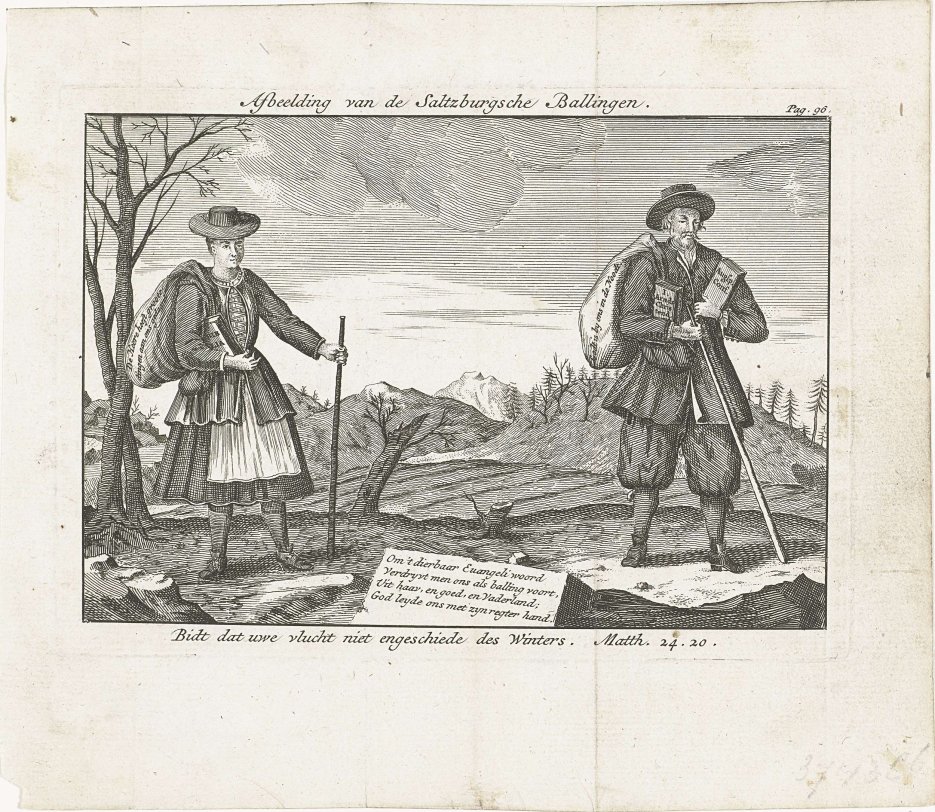
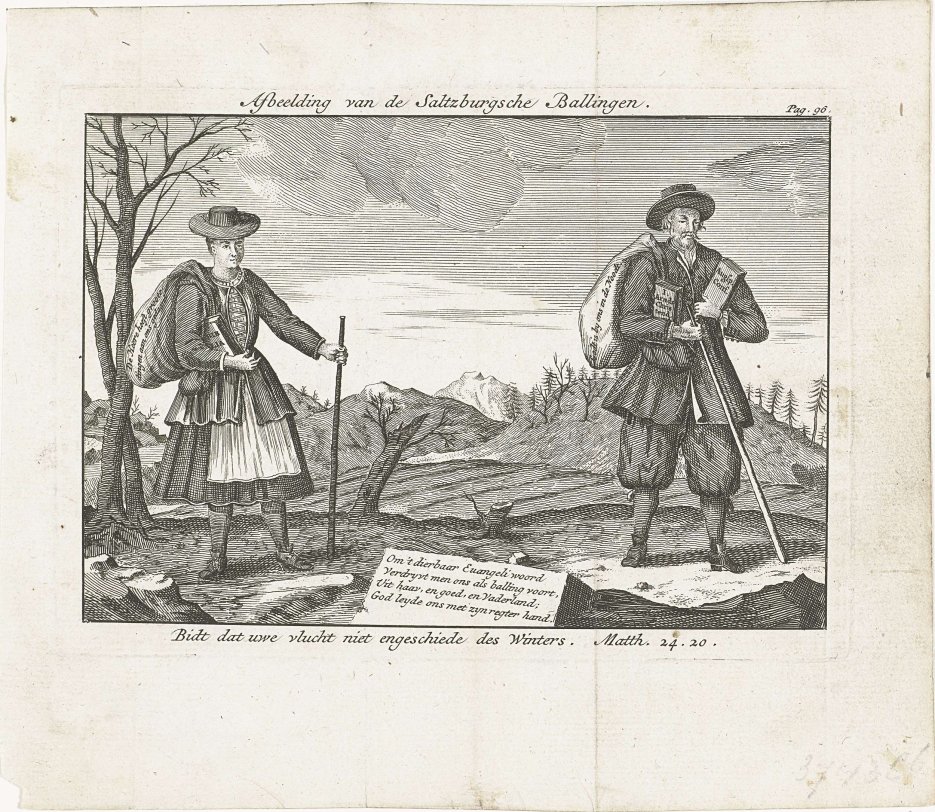
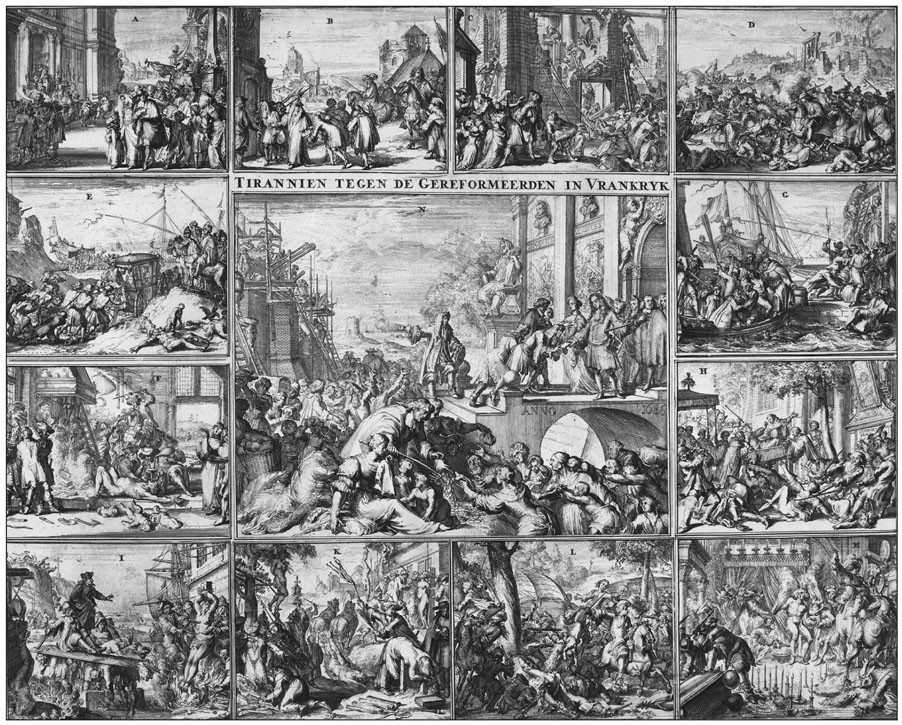
Even before the great departure of the Huguenots, the Thirty Years War (1618-1648) caused intense population movements: Protestants of the Kingdom of Bohemia and Moravia refugees in the Lutheran electoral Saxony, then Austrian Protestants who arrived in the cities of the south of Germany. The French exiles of the revocation of the Edict of Nantes represent the most important exodus-150,000 to 200,000 people-among these movements which extend over time, with the flight of the Lutherans of Salzburg, in particular, in 1731-1732.
Scales and environments
By drawing up this table of a Europe traveled by groups of exiles with multiple denominational identities, Naïma Ghermani thus makes us enter the concrete of another “ asylum crisis Live by the continent four centuries ago. But it is undoubtedly the introductory chapter, devoted to the experience of crossing borders, which makes the reader understand all the news of this research on exile in modern times. The passage from the border do The exile ; This test is not reduced, however, to crossing a line (especially since it is often not well materialized in space at that time), since the “ thick border »Explains inside the territories:« Control in each city, patrols, passports, restrictive legislation which prohibits entry to such and such a social group (P. 46).
The urban scale is still essential to understand the adoption of rescue policies for exiles “ religious “: Their massive arrival presupposes emergency aid, sometimes sustainable to come to the aid of part of these foreign populations. These sometimes claim their poverty, militant act and act of faith, proof of religious constancy. The boxes intended for charity for refugees are gradually held by former exiles themselves, and they sometimes set the foundations of assistance systems called to a certain sustainability, as in Ratisbonne. These boxes, which maintain the exiles (by distinguishing them from the poor “ local »), Also serve in pursuit of the trip, an experience of circulation from one country to another which succeeds more to the aristocrats, provided with letters of recommendation and already endowed with a habit of mobility.
Social membership is also decisive to understand who is authorized or not to stay in the cities-relief: the poorest of exiles who have come in Geneva, Bern, Zurich, are initially encouraged or simply expelled at the end of the XVIIe century, while the richest can claim the right of bourgeoisie. Other statutes are also sought: individual naturalization (very sparingly granted in Geneva to the Huguenots, for example), or, in England, the denial (Adoption without tax payment, but accompanied by limited rights) or collective naturalization, offered in 1709 by Queen Anne to all religious refugees, before the decision was canceled by Parliament two years later.
The voice of exiles
By closing this book, we can only be surprised by his astonishing topicality with regard to what we know about crossing borders by migrants, exiles and refugees in the present time. Confessional exiles of XVIe And XVIIe centuries continue to cross borders to take shelter, using artifices, such as travesty, to avoid controls and discharges. They must bring papers, passports or leave, precious sesames to be able to circulate. Men are not the only protagonists of this story of crossing and flight, as evidenced by the stories of women here returned – thus of the Huguenote Suzanne de Robillard, daughter of a knight of Poitou who justifies a posteriori His flight, undertaken at the age of nineteen from La Rochelle in 1687, invoking “ Freedom of conscience ».
If Naïma Ghermani takes up the challenge of intertwining these different voices on the denominational exile, it is also because it shows well the links that exist between these exiles and the jurists who have theorized the Exulum juice. Grotius, father of the renewal of the “ people of people “Written the rules to welcome the Sephardic Jews in the States of Holland and Western frieze in 1615, before in turn known exile from Rotterdam to Paris six years later. Christoph Daniel Klesch (born in 1658), who in 1680 defended a thesis on the law of travelers at the University of Jena, in the Duchy of Saxony, proposing a typology of foreigners on the move, is itself a descendant of Hungarian exiles. Finally, Emmer de Vattel (1714-1767), in People’s lawpublished in 1758, in turn established a typology of the mobile people to which the states owe hospitality: foreigners of passage, emigrants who left to settle in a sustainable manner in a foreign, exile and banished country.
Certain round trips of the work in the chronology, from one chapter to another, can prove difficult to follow for the reader, as well as these large-scale population movements are bad, which are not all the subject of cards (two location cards being however inserted in the appendices). But one of the great forces of this book is undoubtedly to the chapters that restore the voice of exiles: when they tell their desperate flight, when they are addressed to power, becoming “ begging “, These fugitives who” implore the protection of a sovereign against the nation or the prince that they left ».
Through their letters, exiles are working to demonstrate the legitimacy of their struggle, imputing their distress to an ethical choice. It is also at the turn of their writings that the conflicts of belonging that they are going through. Thus, the Huguenots in exile which are more and more commonly called “ refugees After the revocation are first of all the subjects of King of France, or exiles ? Do they have to loyalty to cities and states that welcome them ? What about their religious affiliation once in exile, knowing that they often have to register in the registers of a church as soon as they arrive ?
By mixing an intellectual and legal approach to asylum – the right of exiles in the prism of juice gentium – And an approach from below, Naïma Ghermani manages to have her reader sail in this modern Europe in crisis. The exile, heretical in his country, can appear in places of refuge as a Christian par excellence, whose sufferings justify that he is offered “ not only a place of residence, but also rights (P. 354). It is this story of law, and of rights to the plural, that this book lights up with force.