
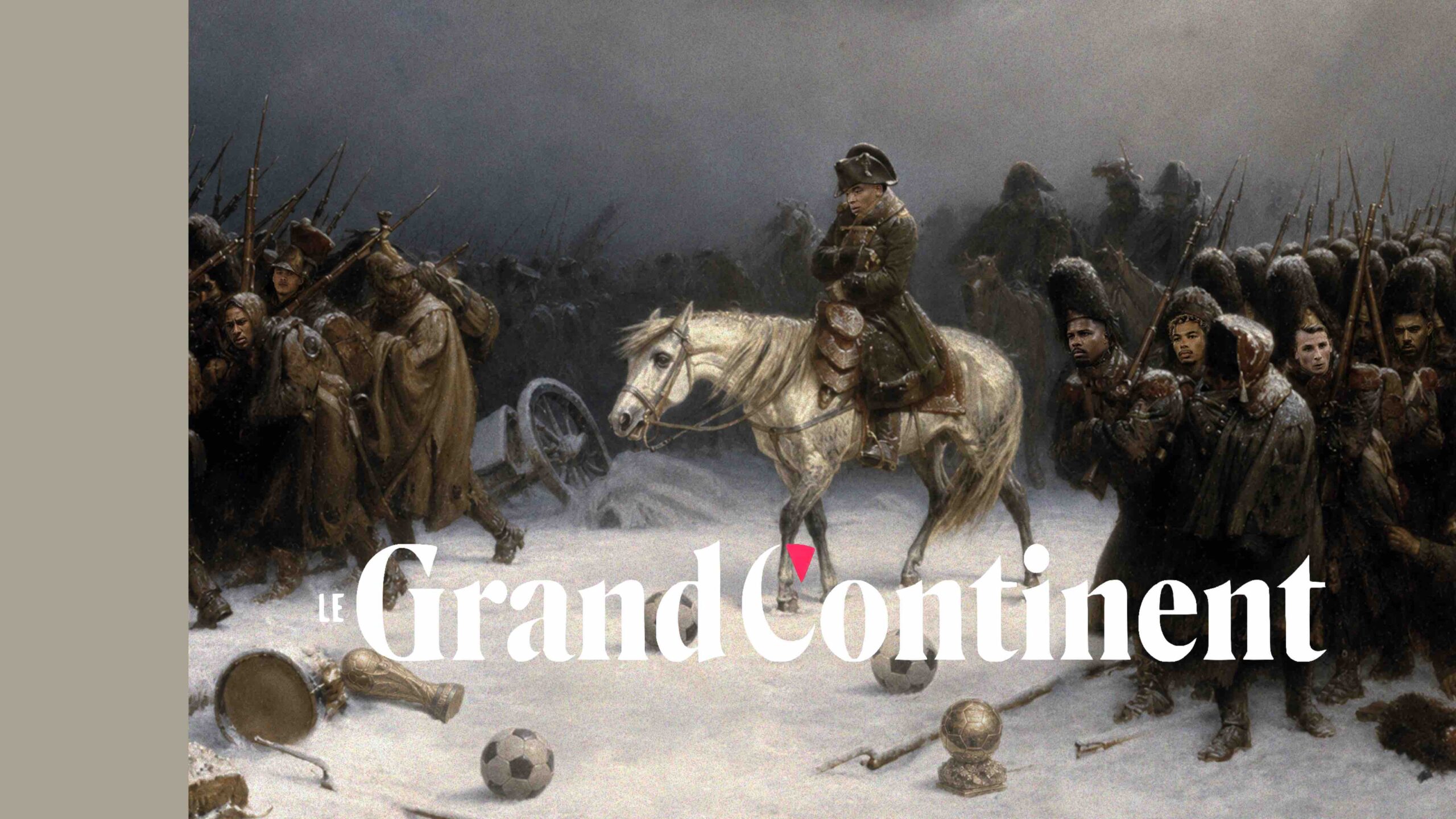
All summer, Le Grand Continent will stay in motion. Every day, we will bring you ideas wherever you are that you will not find anywhere else (but which will be everywhere come the new season), texts you won’t find elsewhere or refreshing with our Sundays. To receive them directly in your inbox and support this momentum, consider subscribing to the review
It is obvious: sport, and football in particular, the world’s most popular sport, plays a substantial geopolitical role. From Maradona’s Argentina against Thatcher’s England, to France’s Zidane, the World Cup has allowed states to project their power, their values, and their ideologies outward, while strengthening their internal identity and cohesion. A formidable tool of soft power, football even sees the international organizations that govern it, such as Gianni Infantino’s FIFA, establish themselves as institutions capable of influencing global geopolitical balances.
But football is more than just a domain affected by geopolitical tensions.
Classified among sports, cooperative and invasion games, its vocabulary is full of military metaphors: attack, defense, counter-attack, full-backs… Like the two opposing armies in a battle, the opponents in a World Cup match indeed need weapons, strategies, tactical intelligence, and cooperation to overcome their rival.
In this text, we will take this geopolitical dimension seriously, analyzing in detail the campaign of a team that, until yesterday, imposed a crushing balance of power on its opponents, forcing them to adopt strategies that constitute a new manual of strategy — Mbappé’s Blues.
The French Team in a Grand Army
Until last night, France had appeared as the strongest team in the World Cup. Across the tournament, it surpassed all of its opponents. The quality and abundance of its attacking talents were evident even before the competition began, but its coach, Didier Deschamps, quickly found the right balance to showcase this arsenal, building a machine that seemed impossible to stop.
Facing an excess of attacking talent, Deschamps chose to line up four forwards simultaneously, resisting the temptation to reinforce midfield with an extra midfielder. After the first match, the least convincing of the World Cup, at least for the first 45 minutes, the Bayonne-born coach swapped the positions of Dembélé and Olise on the field. The PSG player was moved mainly to the right flank, and Olise played behind Mbappé as the playmaker. This choice, far from trivial, fit perfectly with the rest of the team’s characteristics. Olise, as an attacking midfielder, delivered the most assists of the entire tournament — 5, just one behind the historic record held by Brazilian legend Pelé. The Ballon d’Or winner Dembélé, positioned on the team’s weak side, found the space necessary to express his phenomenal speed and technique. As for Mbappé, beyond his extraordinary technical qualities, he seems to take on, at the national team level, a leadership role that he does not always display at club level.
Deschamps thus managed to impose order and hierarchy in what could have been a surplus of potential in every zone of the pitch. In attack, the only alternation involved Doué and Barcola, while in midfield Tchouaméni, Koné, and Rabiot rotated in the engine room.
In this almost obsessive quest for balance that has always characterized his management, Deschamps opted for a lighter approach, favoring the free expression of talent over rigid scheme-based organization. The starting idea was that, whatever the tactical context — playing on the transition or attacking compact blocks — France would always find the solutions to overcome its opponent thanks to the power of its squad. The defense also seemed reliable, conceding only two goals in six matches — before the two conceded to Spain in the semi-final — and it is hard to find a defensive pair more solid than the one formed by Upamecano and Saliba.
The army of General Deschamps thus possessed a more varied, abundant, and formidable arsenal than any of its opponents. Faced with such predominance, all of his rivals had to find the best strategy to compensate for their inferiority.
Sweden or the Failure of Conventional War
The first opponent France faced in the knockout phase was Sweden, led by Graham Potter. In their group, the Scandinavians had scored many goals, but had conceded just as many: a 5-1 win over Tunisia, a 5-1 defeat to the Netherlands, and a 1-1 draw with Japan. These results revealed a team capable of attacking, but fragile in defense. Potter had started the tournament with a cautious 3-5-2, but it had not allowed a phase of non-possession that matched the required level.
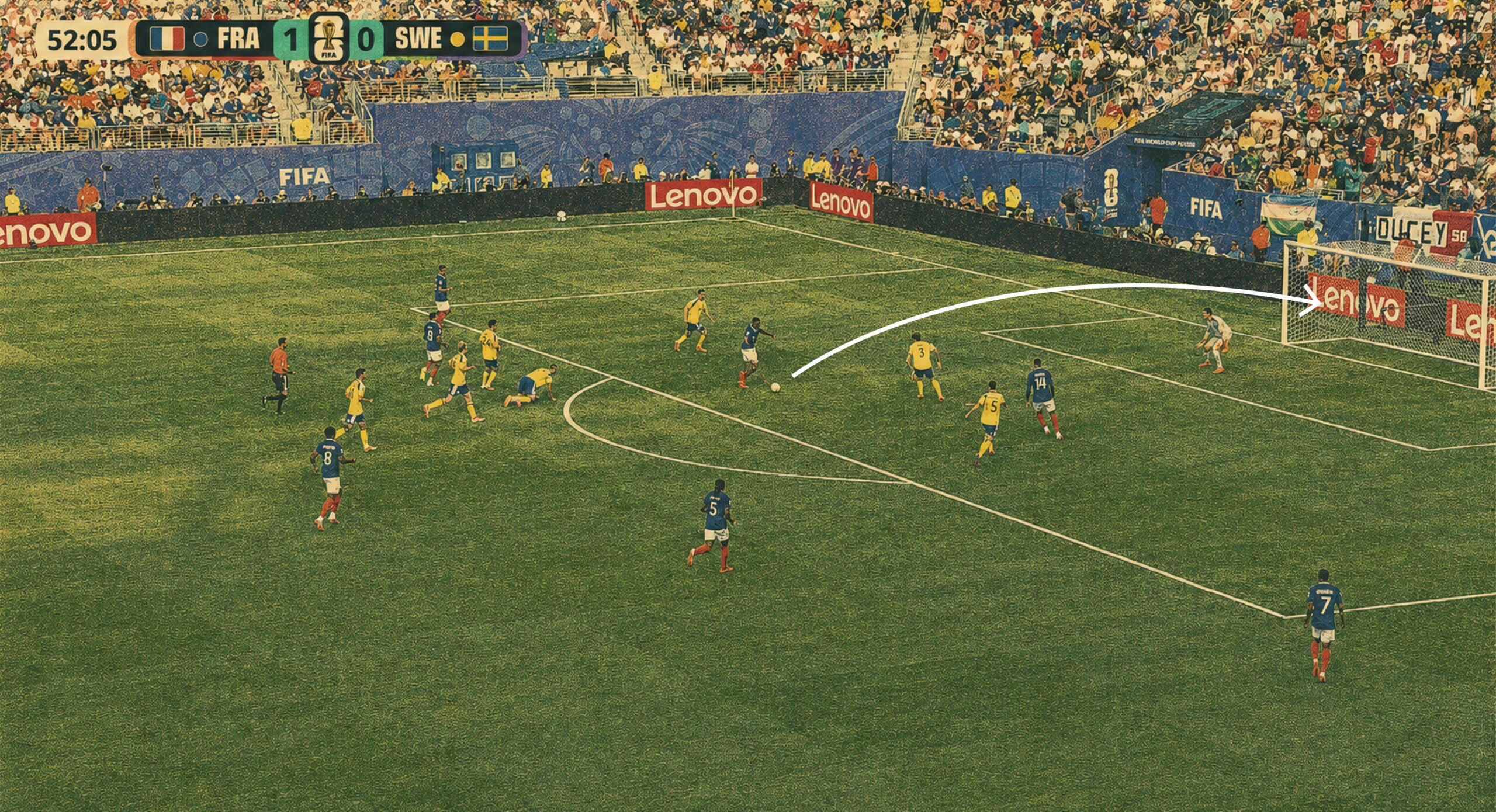
Sweden’s attack, featuring Viktor Gyökeres (Arsenal) and Alexander Isak (Liverpool), was the strongest part of the team. The Newcastle winger Anthony Elanga’s off-the-bench performances had convinced Graham Potter that relying on the best weapons of his squad, rather than sacrificing some of them for a defensively balanced plan that was hard to achieve, would be wiser. The Sweden facing France thus lined up Gyökeres, Isak, and Elanga in a very offensive 4-4-2, with the Newcastle winger on the right wing and the double midfield trio formed by the two young talents Yasin Ayari (Brighton) and Lucas Bergvall (Tottenham), with no defensively-minded central midfielder.
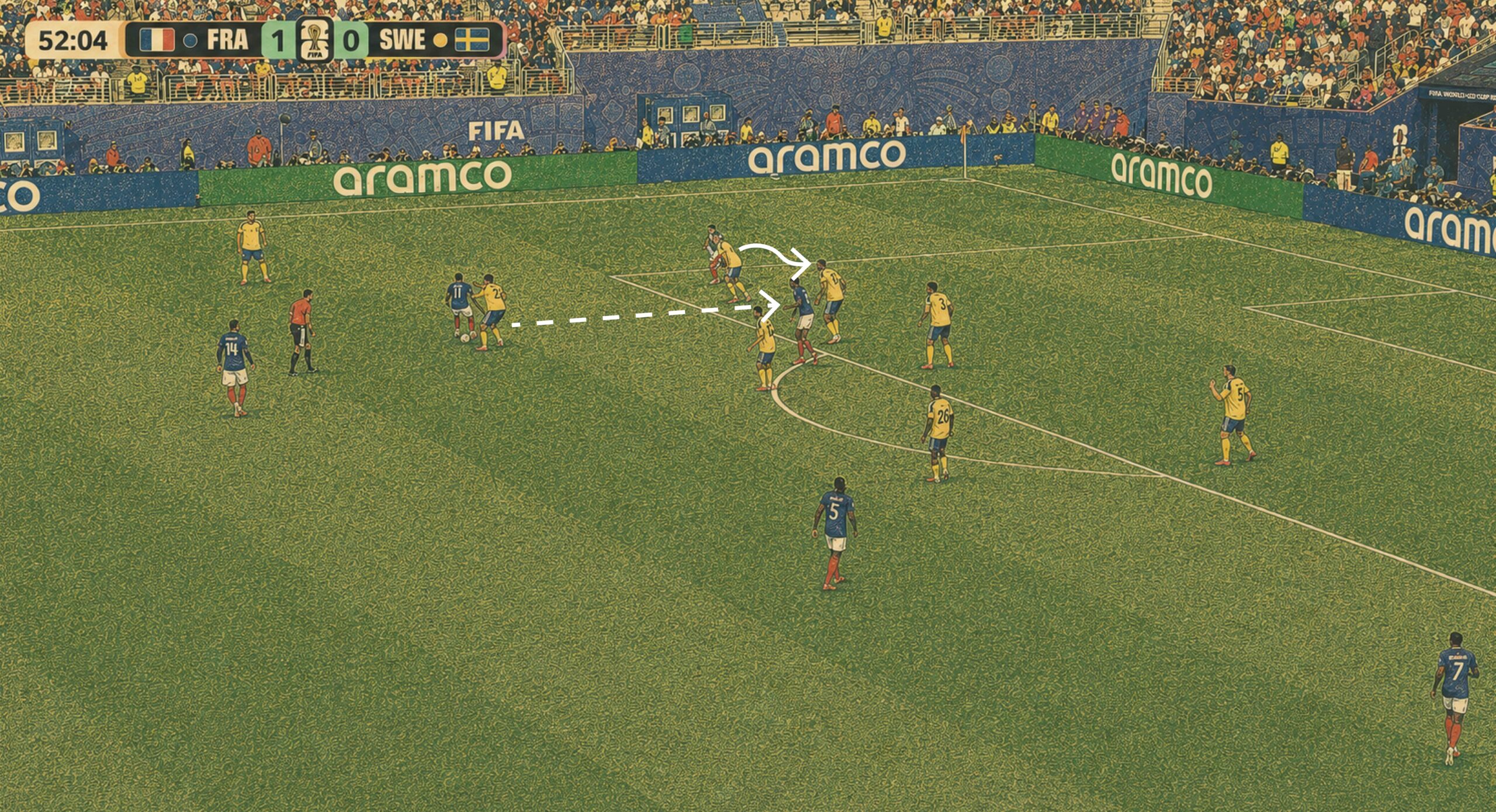
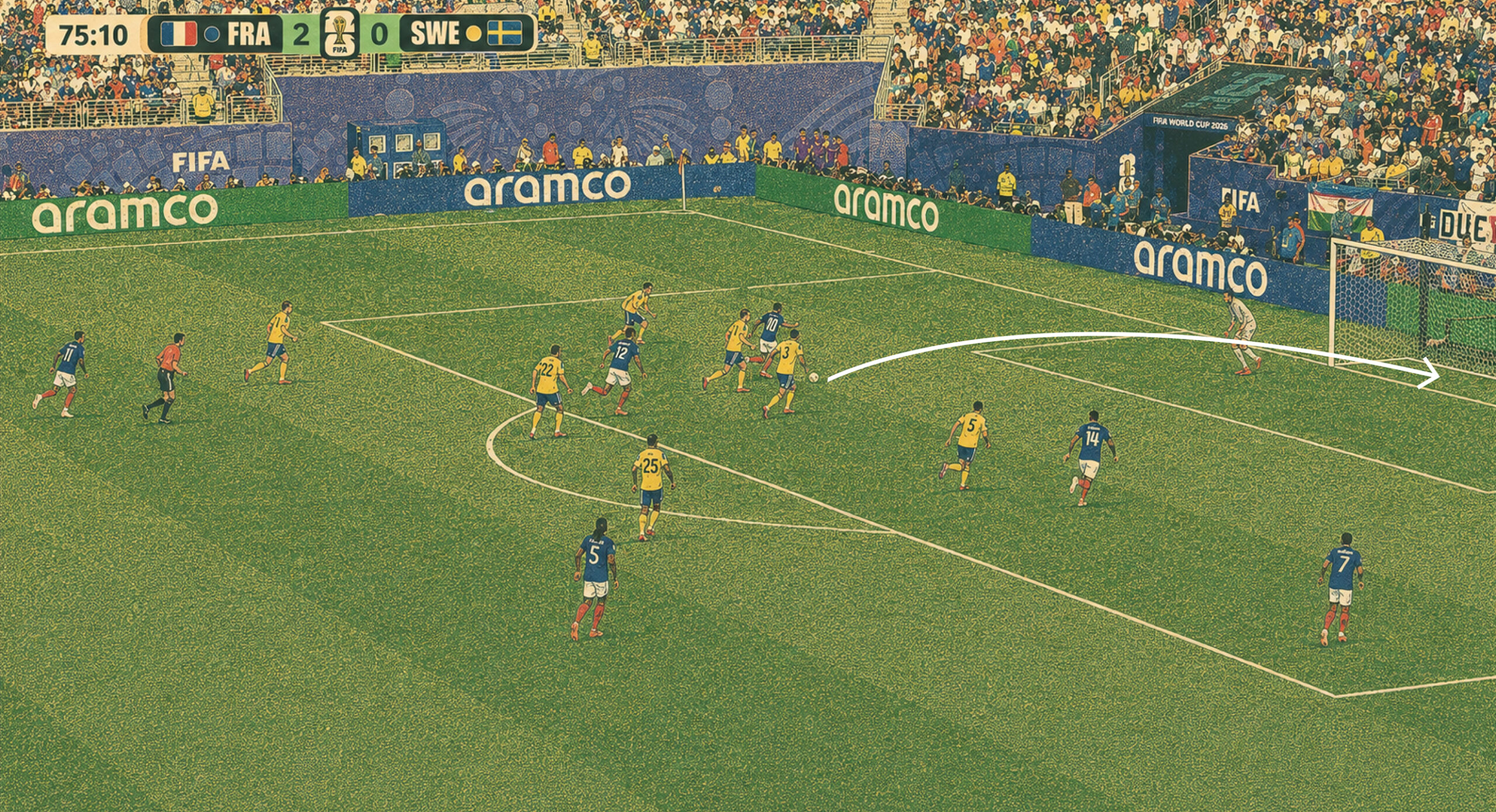
Graham Potter thus challenged France by focusing on its strengths, playing rather openly and hoping that his attacking weapons would be enough to make the difference. On the battlefield that is the pitch, one can thus say that Sweden accepted a conventional war against France, a symmetrical clash in which both teams deployed their regular forces and their usual attacking and defensive tactics. But, as one could easily predict, in such a confrontation, France, whose weapons are infinitely superior, clearly took the upper hand and ended up crushing Potter’s men. Against Sweden, France registered 25 shots, generated 3.24 expected goals, scored 3 goals, and hit 2 woodwork shots. In reality, there was no other option; Potter’s strategy proved a failure.
Paraguay or the Resources of Asymmetric Warfare
Paraguay had qualified for the round of 16 thanks to their victory in the second group stage match against Turkey. The South Americans had opened the scoring after only two minutes with a long-range strike by Galarza, then had managed to resist, at the cost of tremendous efforts, 32 opposing shots, while playing more than half of the match with ten men after Almirón’s sending-off, and possessing the ball only 21% of the time. This victory against Turkey effectively defined the team’s identity in this World Cup.
In the round of 16, Gustavo Alfaro’s side faced Germany in a match that seemed doomed from the start for the Paraguayans. Following a penalty shootout victory, Alfaro’s words prepared his men for an even bigger challenge: the match against France. The Albiroja coach had compared the victory over Germany to those of the last against the first, citing players who, as children, played barefoot on dusty ground against those trained in “high-level training centers,” as well as parents who could barely make ends meet to allow their sons to play football and pursue their dream.
Beyond the sincerity of his remarks, Alfaro spoke in the framework of the strategy Paraguay planned to adopt in the match against France. Faced with a clear imbalance of forces (Paraguay’s combined squad value was 156.2 million euros at the start of the tournament versus 1,523 million for France), he chose to wage an asymmetric war by moving the theater of operations to a field where the French technical advantage would be minimized.
To wage an asymmetric war, motivation is fundamental, and the narrative of the underdog against the strong, by birth and by destiny, served that objective perfectly. On the field, Paraguay did not simply look to defend, as one might have reasonably expected, but sought by all means to disrupt the French technical game: provocations, elbows, simulations, etc. The aim was to unsettle the opponents and reduce the match to a chaotic series of guerrilla-like situations. It was not enough. Mbappé’s penalty, with 20 minutes left, after a foul on Doué, wiped out the Paraguayan hopes of dragging the match into the mud and taking it to penalties.
Setting aside the bumps, the little kicks off the ball, and the incessant verbal taunts (which is not so simple, I admit), Alfaro’s men produced a high-level defensive performance. The team was always well organized, showed formidable precision in their two-man marking, and reacted quickly to contested balls. Paraguay’s guerrilla-style approach may have limited France, but it did not beat them. Deschamps’ men, for their part, managed to adapt to the scenario proposed by their opponents. As Kylian Mbappé bluntly stated at the end of the match: “If we have to get our hands dirty, we’ll get our hands dirty. It doesn’t bother us.”
Morocco or the War of Position
After the coaching change following the Africa Cup of Nations, with Walid Regragui handing the reins to Mohamed Ouahbi, Morocco’s idea was to fully valorize the many young talents already coached by the latter in youth teams, implementing a more offensive style than his predecessor. Yet, to face France, the Moroccan manager opted for a different strategy. The absence of Saïbari, who was injured in the round-of-16 match against Canada, deprived Ouahbi of his best attacking asset. But the choice of his replacement, Chemsdine Talbi, a winger-midfielder rather than a center-forward, already began to reveal the strategy devised by the Moroccan coach to counter France’s arsenal.
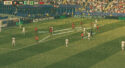
Ouahbi chose to line up his team with a mid-to-low block, reducing the distances between players to limit the spaces the French team could maneuver in. Once the ball was recovered, Morocco, lining up four attacking midfielders in the four positions of its 4-2-3-1, never attempted, at least while trailing on the scoreboard, to trigger a transition from the ball recovered by its defensive block. Instead, he sought to play at a slow pace by circulating the ball, as if to lull the game. Ouahbi thus opted for a war of position, defending prudently, without pressing, and maintaining his defensive structure when France had possession. When he had the ball, he sought to reduce the number of actions in the match by preserving it as long as possible in a cautious manner, without forcing a clearance move.
At the end of the match, Adrien Rabiot stated that his team had taken no risks, even when the ball was in Morocco’s possession. Ouahbi’s war of position led to, up to Mbappé’s opening goal in the 60th minute, 16 France shots on target to only 2 for Morocco, not counting the penalty Mbappé missed in the first half. The war of position also did not stop France, which required only a sliver of space, a single moment, to unleash its full power.
Spain or the Preventive War
France and Spain faced each other in the semi-finals of an international tournament for the third time in three years. Two years ago, De la Fuente’s men quickly cancelled out Kolo Muani’s opener with goals from Lamine Yamal and Dani Olmo, and reached the final, which they won against Germany. Last season, Spain and France clashed in the Nations League semi-finals. The final score of 5-4 in favor of the Iberians should not mislead: Spain led 4-0, then 5-1, and the three goals scored by the Blues at the end of the match certainly did not compensate for their poor showing.
However, despite these two defeats in their last two meetings, France appeared the favorite on the eve of the match, boasting an impeccable run and sparkling performances in the tournament. Spain, on the other hand, seemed less brilliant than at Euro 2024. From their first match, the Iberians had been held to a 0-0 draw by Cape Verde, playing its first World Cup. Then, two late goals by Mikel Merino allowed them to defeat Portugal and Belgium to reach the semi-finals.
The general strategy of this confrontation between De la Fuente and Deschamps was quite predictable. Even before the whistle, it was easy to imagine that Spain would attempt to neutralize the opposing arsenal by taking possession of the ball. The exemplary quality of Spain’s ball circulation, which can also control the match’s tempo and create goal-scoring opportunities through passing, could be leveraged by De la Fuente to deprive France of the ball and thus limit their danger. It was therefore no longer a defense without the ball strategy, like Paraguay’s asymmetrical approach or Morocco’s position-based one, but a preventive strategy using ball possession to ward off potential dangers arising from French attacking weapons. This Spanish preventive war would also mobilize the French defense, which had not been overly tested throughout the tournament.
And indeed, the scenario that unfolded on the Arlington pitch was, from the outset, the one foreseen the night before the match. Yet, the best game plan is never a guarantee of success — there is always a gap between theory and practice. France had players of very high quality in every position to contest Spain’s possession. Even without possession, Deschamps’ men could have been dangerous on the counterattack after winning the ball back, a plausible scenario that France would not have disliked.
The preventive strategy of De la Fuente worked. Spain took control of the game by dominating the midfield, where the impressive technique and fine reading of space by its players constantly translated into positional superiority, facilitated by Spain’s constant numerical advantage in that zone.
Apart from pressing on opponents’ clearances performed with a man-to-man approach, France defended in a 4-4-2 in a zone shape. By maintaining numerical superiority along the defensive line, Spain could sustain that advantage, especially in the center of the pitch, where the three midfielders, supported by Oyarzabal’s movements into the ball, constantly pressed the two French central midfielders. Thanks to their technical quality, ability to resist pressing, and exemplary use of the “third man” and one-twos, the Spaniards were able to exploit their tactical advantages.
Ball possession also allowed Spain to organize better and prepare counters led by a formidable Rodri. He neutralized France’s transitions, notably through the deep-ball coverage ensured by goalkeeper Unai Simón. Spain also benefited from the poor performance of certain French stars, such as Dembélé and Olise. Struggling with their game plan, France’s players would have needed tactical support from their coach, but that support never arrived. France’s tactical difficulties remained unchanged throughout the match, with the coach failing to address them. Didier Deschamps ends his tenure as France’s coach, which began 14 years ago, with several victories and one crushing defeat. He had the best team and the best weapons at his disposal, but he was decisively outmanaged on the strategic level.
In football as in war, it is not enough to have the best arsenal. You must also adopt the best strategy.