
International football matches between nations are rarer than club clashes. World Cup games, even more so, occur only every four years, and two national sides can face each other at most a handful of times across their entire histories.
- Each meeting eventually becomes part of a country’s cultural memory.
- A single moment in a single match can alter how one nation views another—an almost warlike diplomatic echo, though purely symbolic in nature.
England–Argentina is one of the most explosive showdowns a World Cup can deliver. Tonight the two teams meet for the sixth time, and at every moment of the match, the shadows of the five previous encounters will loom in the background.
- Jorge Luis Borges said that in truco, the Argentine national card game, each hand exists in the continuum of games played by ancestors before them.
- In the same way, tonight the English and Argentine players will not only contest their own game: they will carry within them the footballers who came before them.
There is no match more famous in the history of the World Cup than Argentina–England 1986.
- It was a quarterfinal, and in a matter of minutes Maradona scored with his hand (the “Hand of God”) before weaving past a multitude of English players to score what remains known as the Goal of the Century.
- The two most iconic goals in World Cup history probably would never have existed without the political tensions surrounding this match: just four years earlier, the Falklands War had ended between Argentina and Britain, and the Argentines, having lost, viewed this game as a chance for revenge.
- “We held the English players responsible for all the suffering of the Argentine people,” Maradona would later say. “We defended our flag, the young dead, the survivors. That is why I believe my goals took on such powerful meaning.”
In 1998, Argentina and England met again at the World Cup, this time in the round of sixteen. Argentina prevailed on penalties in a match remembered for revealing Michael Owen, the 18-year-old English striker, and for Beckham’s red card—followed by heated controversy over its validity. The latter got a partial redemption four years later, when he converted a penalty in a group-stage victory that mattered little in context but did mark a return to form.
Argentina–England was also the site of the 1966 World Cup quarterfinal, won 1–0 by England, who would go on to claim the world title.
- This game is mainly remembered for the sending-off of Argentine captain Antonio Rattín, who left the field eight minutes later—feigning ignorance of the German referee Rudolf Kreitlein’s instructions—after he crumpled a British flag.
- From that episode, the idea of cards—yellow and red—was introduced: symbols of “misconduct” on a football pitch owe their existence to an Argentina–England clash.
Today, the Falklands War is 44 years in the rearview, but the memory of the 1986 World Cup has never felt more alive. Several coincidences during this tournament have rekindled it:
- In the round of sixteen against Mexico, England returned to the Azteca—the same stadium where the 1986 match unfolded—and this time they won, “making peace with the history of this place,” as the English manager Tuchel put it.
- On June 22, exactly forty years to the day after Maradona’s double, Lionel Messi himself notched a World Cup double against Austria.
And now this Argentina–England semifinal, for a place in the final.
- The memory of the Falklands—and, implicitly, the political and football rivalry with England—remains latent in the Argentine cultural fabric, a smoldering ember that never fully dies.
- In the previous World Cup, four years ago, fans sang a chant that began: “I was born in Argentina, land of Diego and Lionel, the Falklands boys I will never forget.”
- In this edition, another chant has gone viral, picked up by the players in the locker room after every victory, promising to win the World Cup “for the Falklands, for Diego, and for Leo’s last.”
All the Argentine players and manager Scaloni himself have been working to downplay the tension, insisting that it’s just another match. Yet everyone knows that is far from true.
- Tuchel even acknowledged it in a press conference: “Of course history will be there… they are driven by it as well. They are carried by this history, and it means a great deal to them. It’s a factor we expect and will confront.”
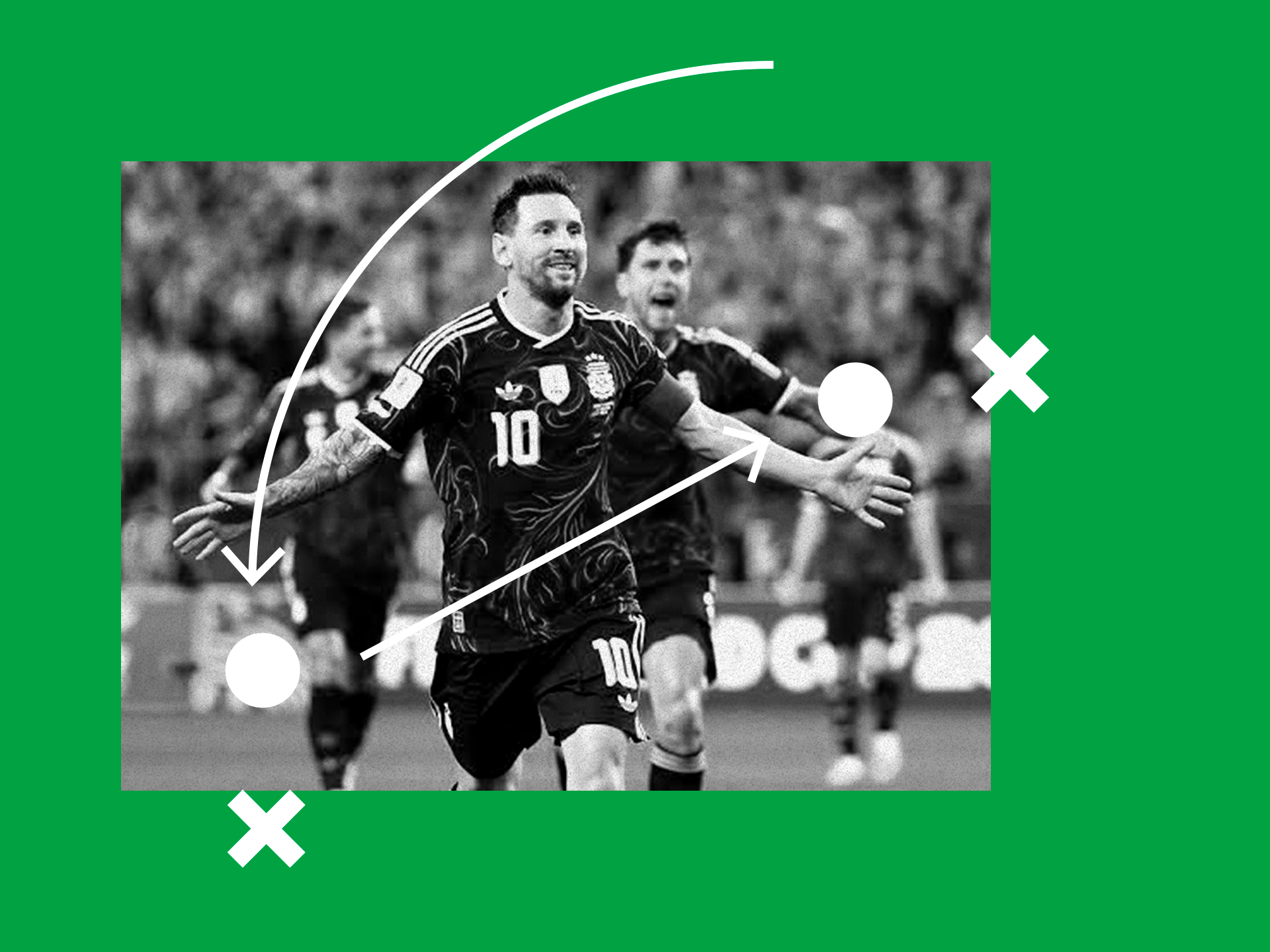
- The Argentine federation itself intends to lean into this historical aura: for tonight’s game, it requested—and obtained—FIFA’s permission not to wear their usual light-blue and white striped kit, but the navy alternative.
- That is also the jersey Argentina wore in 1986 and in 1998.
No team leans so heavily on history, mystique, and emotion as Argentina. And it is especially true in this World Cup: every knockout match has been an exceedingly dramatic affair, each potentially Messi’s swan song.
- Today, this semifinal against England represents a pivotal step toward a second consecutive World Cup title for Argentina—an achievement only Italy and Brazil have accomplished.