

Testez le Grand Continent. Les idées et les analyses qu’on ne trouve nulle part. Mais que vous verrez bientôt partout. Dans votre boîte mail à partir de 8 euros par mois
Why did Pedro Sánchez take the risk of calling early elections?
We must start from Parliament, a highly atypical body formed by the 2023 elections. Since his reelection, Sánchez has had the amnesty law passed, but little else. Lacking the capacity to push through a new budget, the government has renewed the previous one for three years. This underscores the fragility of his parliamentary majority, and it is partly to escape this deadlock that Sánchez called these elections.
Does this paralysis weigh on the daily life of Spaniards?
Yes, and this is visible in the contrast between Spain’s robust GDP growth—one of the strongest in Europe—and the state of households, particularly on housing.
How can one explain this mismatch?
The previous Sánchez government, in office until 2023, was very active legislatively. It notably improved working conditions and raised the minimum wage. Yet wages remain relatively low and, despite falling unemployment, many still struggle to make ends meet, especially when it comes to housing.
It is not common for a government to stay in power for three years without passing a new budget. Why did Sánchez wait so long, and why call elections now?
Sánchez would have to come to this conclusion sooner or later, and he chose the moment that suited him best. The Ceuta crisis, which occurred this summer, significantly weakened the government, with repercussions both in Spain and abroad.
However, the housing crisis allowed him to regain the initiative. He sought to mobilize the energy it generated, especially among young people and those on the left, to secure a new mandate. His housing decree failed to pass Parliament due to opposition from Junts per Catalunya, Carles Puigdemont’s party. Sánchez was then able to argue that he did not have the majority needed to push his policy, and to urge those who had mobilized on housing to vote for a left-wing government. According to him, a PP-Vox government would do even less for housing and the cost of living.

It was, in my view, a calculated attempt to break the parliamentary impasse and shift the terms of the debate. Rather than allowing the housing crisis to push him onto the defensive, the government sought to go on the offensive. It also allowed diverting attention away from Ceuta.
Sánchez has an extraordinary political instinct and a taste for risk. He knows how to surprise the opposition, and the announcement of these elections is another example. Seeing young people marching for housing in Puerta del Sol may have convinced him that his chances would not improve in the coming months.
Did the railway accident break this momentum?
It happened before the official start of the campaign, at a moment when Sánchez was rising in the polls. It interrupted his ascent: both the PSOE and the PP paused their pre-campaign for several days, something Vox did not do to the same extent. The resignation of Transportation Minister Óscar Puente also slightly scrambled the cards. The idea that Spain suffers from an infrastructure problem remains widespread. Some speeches link it to immigration, arguing that public services have not kept pace with demographic growth. The problem is real, but I am not convinced it affected the outgoing government as much as one might have thought in the days following the accident.
Several corruption scandals have hit Sánchez’s close circle. Do they weigh on the campaign?
Indeed, they help explain the roughly 15-point gap between the two blocs in polls, while the two major parties, PP and PSOE, remain neck and neck. It is nonetheless remarkable that he has weathered it politically; I doubt many other leaders would have.
It is largely because he consistently presents the alternative to his government as the arrival of the right, and in particular Vox. He places PP and Vox in the same camp, even though they are not identical. Vox’s rejection was the cement of his parliamentary majority. Most parties that backed his investiture are left-wing, national or regional, but one also finds some right-wing nationalists who feared Vox entering government alongside the PP.
That shared rejection was enough to empower Sánchez, but not enough to let him govern effectively.
Will foreign policy, rarely decisive in Spanish elections, weigh in this time? Sánchez has taken strong positions on Trump, Israel, and rising defense expenditure.
Vox clearly identifies with Trump and strongly supports Israel. Some personalities in the PP share these views, but they are in the minority; Isabel Díaz Ayuso, president of the Community of Madrid, is one. As a whole, the party, including its most conservative wing, moved away from Trump relatively early. Ayuso has shown more independence on this issue, as in her dealings with Javier Milei: she is one of the few PP figures to have agreed to meet him during his visit to Spain. I doubt this was well received by the rest of the party.
The PP and PSOE diverge on several foreign policy issues, notably defense spending and NATO commitments, but I would not overstate their differences regarding Spain’s long-term relationship with Washington.
In my view, Sánchez’s stance on military spending was partly tactical, linked to domestic difficulties he faced at the time, notably the Santos Cerdán affair. This undoubtedly appealed to the left-leaning electorate, but at the cost of frictions with European partners. Internationally, he enjoys substantial visibility and support among progressives, especially for his positions on Palestine and Israel – which also helped him attract voters to his left.
Having fallen to 33 seats in 2023, Vox has risen significantly in the polls. Is its rise based on the same levers as at its outset?
Since 2018, Vox has been a major actor in Spanish politics, with cycles of rise and fall. Its ascent was initially closely tied to the Catalan crisis: it denounced the government’s reaction, deemed too moderate, by Mariano Rajoy’s PP in the face of the independence movement. Vox presented itself as the uncompromising defender of Spanish nationalism, and it is very likely that without the Catalan question, its initial breakthrough would not have been as pronounced. This mobilization predates Sánchez’s arrival, even if it only translated into votes later. Sánchez could, moreover, highlight the easing of tensions in Catalonia. He rarely discusses it, probably to avoid reminding voters of the amnesty law covering offenses related to the independence process, unpopular even among a portion of socialist voters.
During Sánchez’s first coalition government (2020–2023), Vox mobilized against feminism and gender equality policies. This was clearly visible in 2023, with a noticeable gap between male and female voters, especially among the young.
Today, Vox is also beginning to capture discontent in rural areas, where support is tied to lifestyle issues and opposition to environmental regulation. It continues to grow because it responds to real frustration, particularly among the young and especially young men. It has also tapped into concerns about pensions and the sense of a social contract breaking down between generations.
Has immigration become Vox’s real engine?
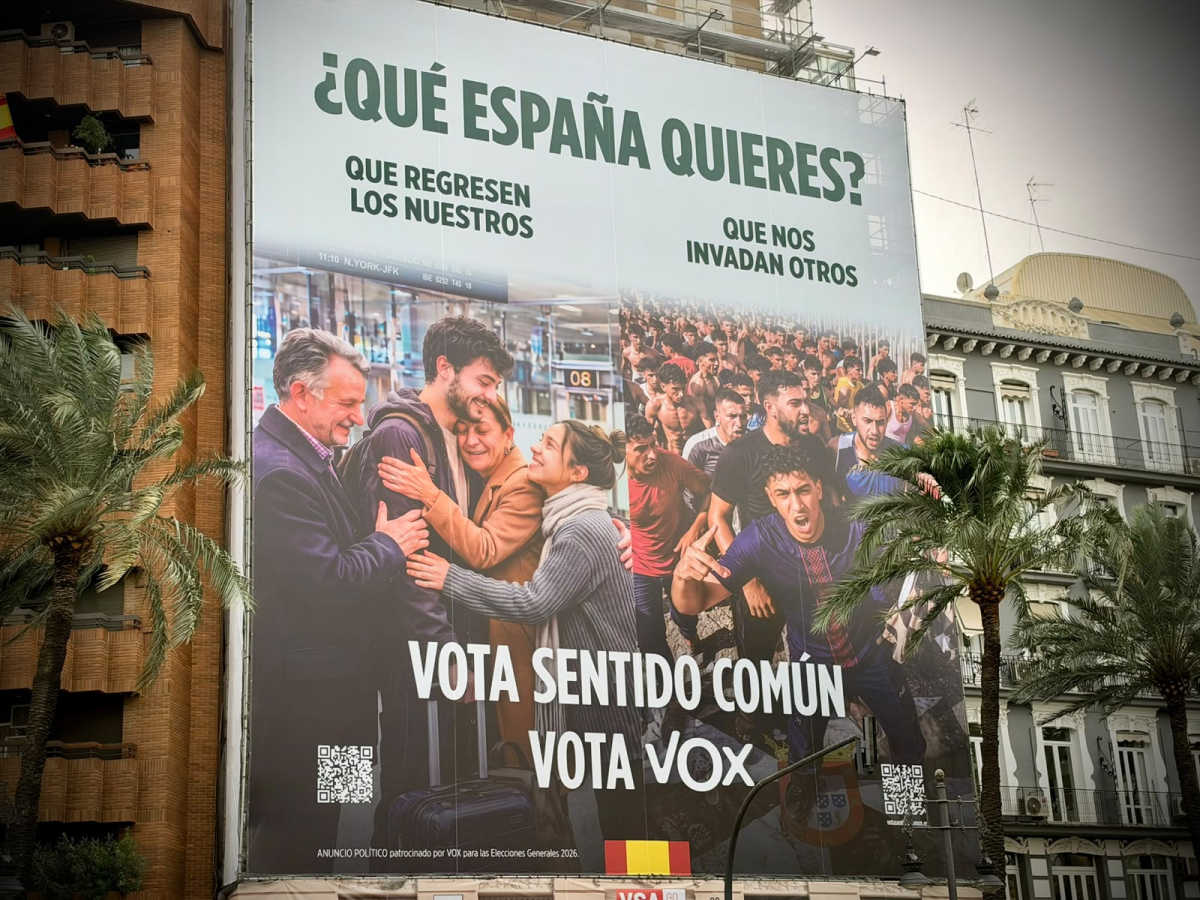
Only in the last two or three years has immigration become central in Vox’s discourse. The party links it to tangible concerns, such as housing, social benefits, and economic insecurity, advocating a “national priority.” This is clear in the coalitions between the PP and Vox in Andalusia, Castile and León, Aragon, and Extremadura. Since these regions have broad social competencies, these coalitions place priority access to public services and benefits at the heart of governance. For about eighteen months, Vox has decidedly hardened its position and proposes mass expulsions under the slogan “Return to the homeland.” These proposals largely echo those of other European far-right populist parties, without any adjustment to the Spanish context.
This rhetoric has reorganized the right and more broadly altered the left-right polarization. A few years ago, Catalonia and the organization of Spain’s territorial structure dominated the debate. Today, immigration and access to public services have taken precedence, pushing the Catalan question to the background. This could still change: if a PP-Vox government pursued a strongly centralizing policy, it could trigger a new territorial crisis. For now, the territorial issue weighs little outside Catalonia and the Basque Country. Vox has also, to some extent, pushed the PP toward more restrictive positions on immigration, though notable differences remain between the two parties.
Why has women’s vote become a key issue at the end of the campaign?
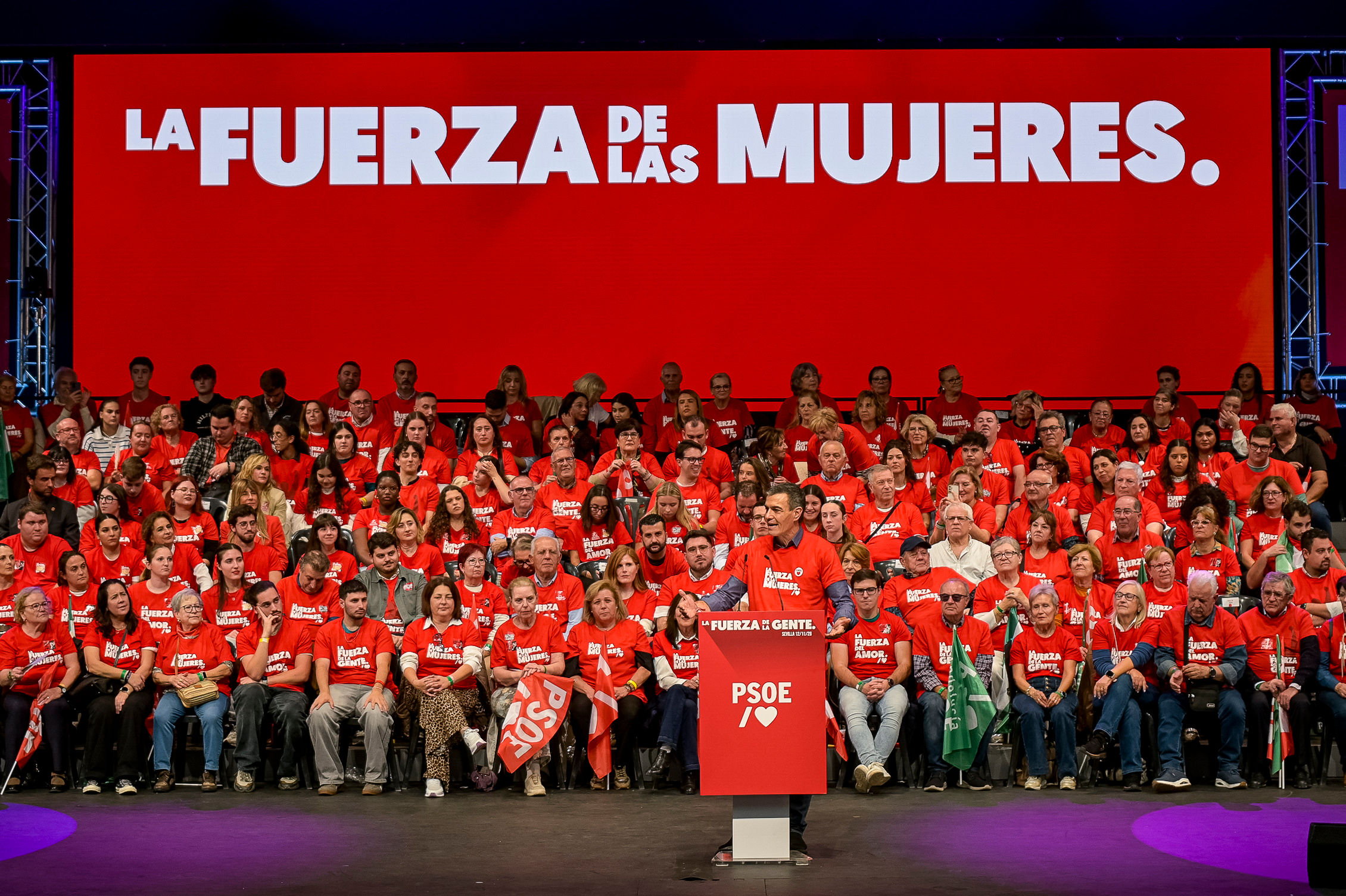
Several pre-electoral surveys show women are overrepresented among the undecided voters. This is a hesitation about which party to choose, not a weaker propensity to vote.
In this context, the battle for these voters intensified in recent days, especially between PSOE and PP. I think this helps explain, in part, the growing emphasis on gender issues in the final stretch. Along with housing and the cost of living, corruption is one of the defining features of the final days.
Vox borrows part of its discourse from Trump, Milei, or its European allies. How should one interpret this imported inspiration, especially on immigration?
Its influence is considerable, and Vox sometimes seems to rely too heavily on imported playbooks that may not be well suited to Spain. For example, the proposal to expel millions of people, including some who already hold Spanish nationality, seems quite detached from the country’s realities. But its positions have helped normalize a certain type of discourse, and immigration is now at the forefront.
Notably, Vox is also gaining in Catalonia, where its initial rise was precisely based on opposing Catalan nationalism. It now attracts voters by emphasizing immigration, with a discourse that can resonate across both sides of the independence divide: Vox champions Spanish nationalism, while Aliança Catalana advocates independence.
However, I do not think the average voter places a high importance on Vox’s international relations, or even that they are fully aware of them. Milei regularly visits Spain. During his October visit, Santiago Abascal did not meet him, but the two men spoke by phone, a conversation widely shared on social networks and reported by the press, where they displayed their close friendship.
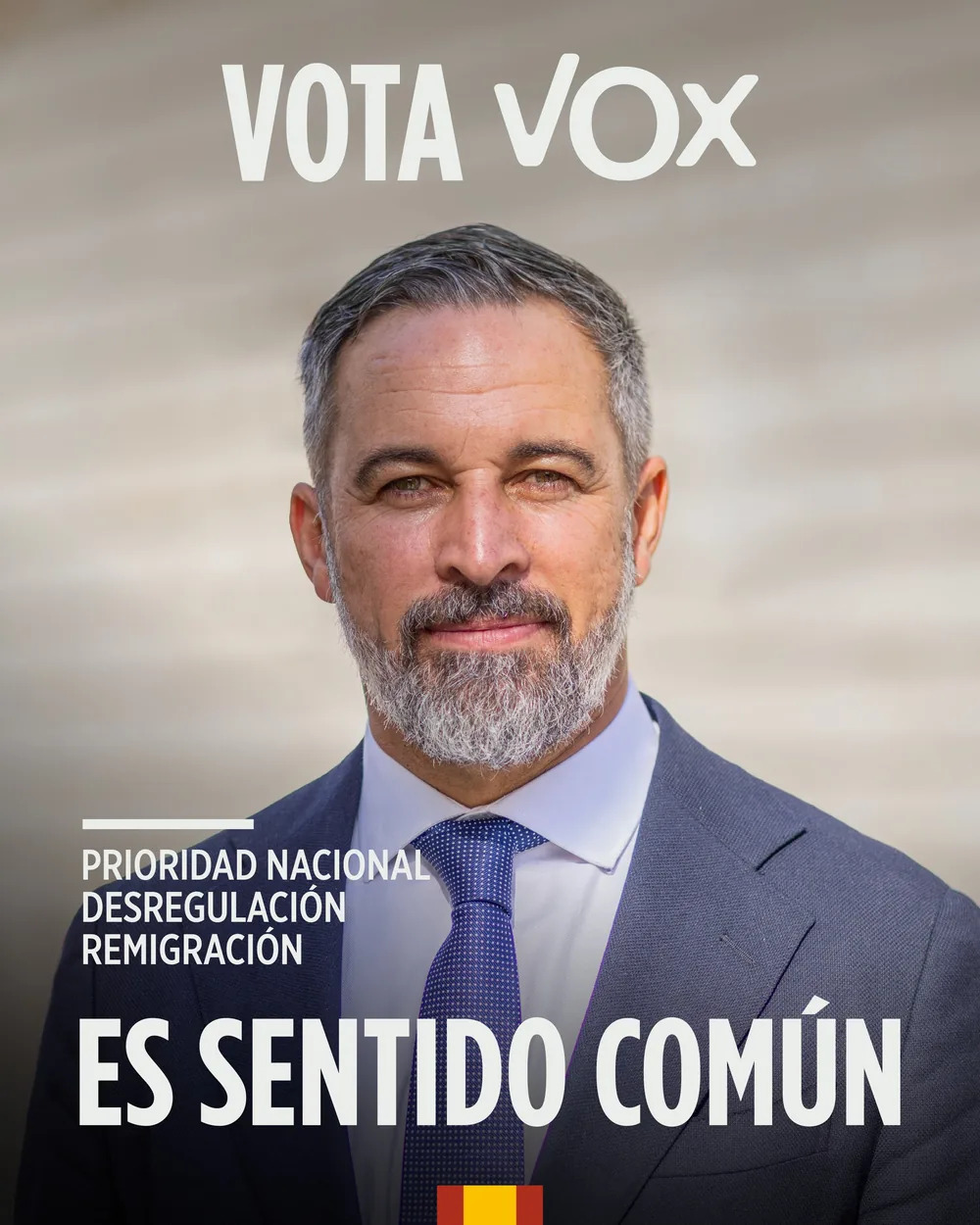

Will a PP-Vox coalition be a done deal now, or can the rivalry between the two parties still prevent it?
Vox originated from a split within the PP: several of its founders, including Abascal, were members of the party, hence the fierce rivalry at the outset.
But relations have evolved. If the PP long insisted on distancing itself from Vox, in the last two years it has adopted some of Vox’s positions, notably on immigration.
In the previous elections, the PP still avoided publicly committing to a Vox coalition: it wanted to encourage “useful voting” in its favor and prevent this prospect from dominating the campaign. That ambiguity has largely disappeared: its leaders now acknowledge the possibility of a joint government.
The two parties even coordinated for the Senate, with PP withdrawing candidates in certain constituencies in favor of Vox. During the campaign, a kind of non-aggression pact seemed to prevail, with neither side sharply criticizing the other. This is a notable change.
They have not ceased competing, however. Each seeks to maximize its results, particularly in small constituencies where a slight shift in votes can flip a seat.
The final Vox score will be key to assessing the viability of this coalition. The party slipped slightly in the polls during the campaign, reaching around 18% of voting intentions, a level that could allow it to win seats in a larger number of constituencies, including smaller ones. There is no fixed threshold: it depends on how votes are distributed and the scores of other parties in each district. A decline could cost Vox some of its seats. I estimate it could win between 50 and 70 seats. At the start of the campaign, 70 looked possible; if the decline continues, we would lean toward 50 or 55. Of course, these are only estimates, and no recent poll confirms this trend. For reference, Vox won 52 seats in November 2019 and 33 in July 2023.
On the Left, can Sánchez still count on allies?
Left-leaning parties are noticeably weaker than in previous elections. Podemos has declined, and Frente Amplio, successor to a large portion of Sumar’s space, trails in the polls.
Sumar’s fundamental problem is that it never built an organization as solid as Podemos, which had a clear structure. Sumar, on the other hand, brought together national and regional parties. Yolanda Díaz did not invest much in building the apparatus and admitted that this was not her strength.
In December 2023, five Podemos deputies elected on Sumar lists left their group to join the mixed group, and both sides suffered for it. The process that led to the creation of Frente Amplio was also muddled, personal rivalries among leaders taking center stage. I don’t think voters appreciated this kind of power struggle.


Nevertheless, Sánchez and the PSOE have managed to attract enough of these disenchanted voters and could now benefit from a logic of “useful voting.” The PSOE is also gaining more on its left than among moderate voters.
Gabriel Rufián, candidate of Esquerra Republicana de Catalunya (ERC), tried to federate the left beyond Catalonia. Why did this attempt fail?
Rufián is a singular figure, a high-profile deputy who is very popular with younger people, who masters social networks and sometimes adopts communication codes more associated with the right.
Aware that his audience extends beyond Catalonia, he explored last year the idea of a broader left front. Discussions were held, but I doubt he conducted them well, and personal rivalries weighed in. This episode is part of the many setbacks that slowed Frente Amplio in its early days.
He even campaigned alongside Irene Montero outside Catalonia. But ERC does not run candidates nationwide: to lead a national platform, Rufián would likely have had to leave his party, which did not want to forgo such a popular figure. I sense that he ultimately judged that the game was only worth playing if he could lead the project himself.
Where will the election really be decided on Election Night?
Everything will depend on how the votes translate into seats in each constituency. In smaller constituencies, which typically elect three to six deputies, the last seat could be fought between the PP, Vox, and PSOE, or even by regional parties in some cases.
For the overall balance, the key question is whether these contested seats will move from right to left or simply shift within the same bloc from one side to the other.
The collapse of Vox from 52 to 33 seats in 2023 shows that a modest national decline (from 15.08% in 2019 to 12.38% in 2023) can translate into heavy parliamentary losses. The same mechanism could operate this time. It is therefore essential to monitor these contested seats: together with the national results they will determine whether the PP and Vox obtain a majority and what weight each party will have in the negotiations to come.