
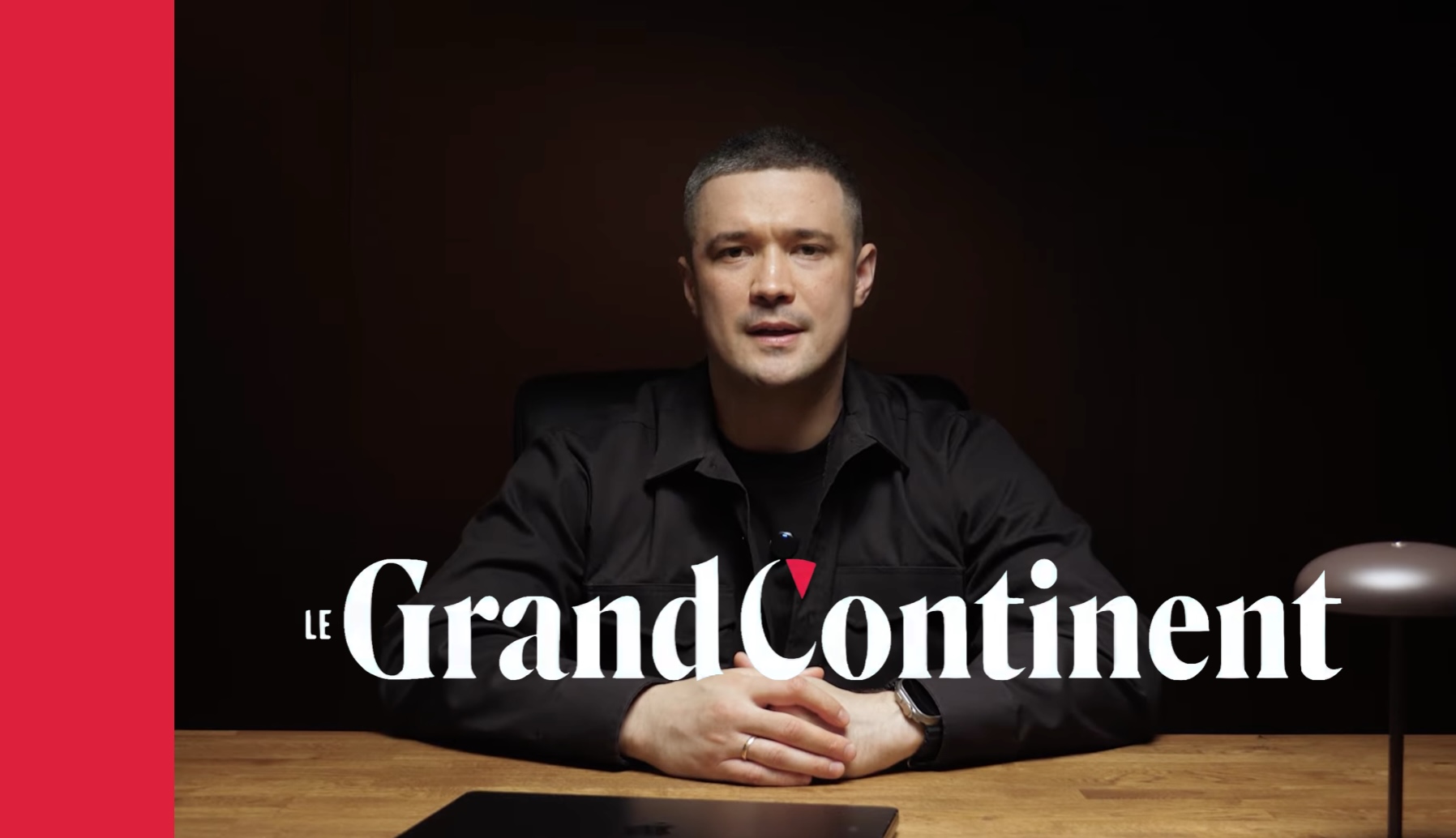
On July 16, Volodymyr Zelensky dismissed his defense minister, Mykhailo Fedorov, as part of a controversial ministerial reshuffle. The departure of this popular figure, who had played a leading role in transforming the armed forces, notably in drones and technology, opened in Ukraine the most significant political crisis since the removal of Valeriy Zaluzhnyi, the former commander-in-chief of the army.
Several demonstrations erupted across the country, as a domino effect took hold within the military institutions. Colonel Pavlo Yelizarov, deputy commander of the Air Force, denounced “a hard blow to the defense of the country” and resigned alongside influential advisers including Serhii Beskrestnov, one of Ukraine’s most renowned drone experts, and former adviser to Fedorov, Serhii Sternenko.
The Ukrainian president explained his decision as an effort to preserve the “unity” of the military command. This move, however, was perceived as a victory for the old guard of the army, embodied by Commander-in-Chief Oleksandr Syrsky, criticized for his “Soviet” style of leadership, which has led to heavy casualties among troops, and for maintaining a network of loyal officers whom he rewards with commanding posts.
The Ukrainian analyst Tatarigami, a former officer with a strong voice in military circles, said at the time: “President Zelensky preferred the comfort of the old guard, incompetent, to change and to a new vision.”
On July 21, under pressure from demonstrators, Zelensky in turn dismissed the army’s commander Syrsky and named Mykhaïlo Drapatyi to replace him. Fedorov had refused several positions offered to him, including that of deputy prime minister, and had been asking to return to the Defense Ministry.
Yesterday, August 18, the Ukrainian president decided to appoint Ievhenii Khmara definitively to the post of Minister of Defense, a position he had held on an interim basis since July 16. His nomination now requires approval by the Rada, but the announcement effectively closed the door to a possible return for Fedorov.
The speech we translate below was published yesterday evening, Tuesday, August 18, on YouTube under the title “Звернення до українців : про корупцію, кризу управління і Україну, яку ми маємо побудувати” (Appeal to Ukrainians: on corruption, the governance crisis, and the Ukraine we must build).
It marks an unprecedented moment in the Ukrainian political debate: he presents himself as delivering a direct address to the Ukrainian people and as posing a profound challenge to President Zelensky’s authority, calling for a test of his real support in the country through elections.
Fedorov had been appointed to the Defense Ministry in January. Born in Zaporizhzhia, a city located about thirty kilometers from the front, he embodied the emergence of a new generation of leaders in the defense sector. Before his appointment, he led the Ministry of Digital Transformation for more than six years, where he played an active role from 2022 in launching Starlink terminals. He is the third most popular figure in Ukraine, after Zelensky and Ihor Terekhov, the mayor of Kharkiv.
Since the martial law regime went into effect in February 2022, elections cannot be organized in Ukraine. Article 108 of the Constitution holds that the head of state must exercise office until a new president is elected. Earlier this year, rumors circulated that Ukraine had begun preparations for a presidential election and a referendum on a possible peace agreement with Russia, under pressure from the White House. When former U.S. President Donald Trump suggested last year that Kyiv was “using the war” to avoid an election, Zelensky replied that Ukraine was “ready to organize elections” within 60 to 90 days, provided that its allies guaranteed security.
If Zelensky still enjoys broad popularity, it has waned since the start of the war. Several corruption scandals within his inner circle have weighed on his image in recent months, and have led to the dismissal of his influential chief of staff, Andriy Yermak. The Ukrainian president also dismissed today one of his top aides after anti‑corruption authorities conducted a raid at her home.
According to the few available polls, if an election were held, Zelensky’s greatest challenge would not be Fedorov, but Zaluzhnyi, who since March 2024 has served as ambassador to London and remains the country’s most popular figure with 66% trust, according to an April KIIS poll. He is followed by Fedorov (63%) and Zelensky (56%).
Fedorov’s speech does not spell out any political future, and he does not declare an intention to challenge Zelensky, but it could alienate some of his supporters. Oleksandr Merezhko, a lawmaker close to Zelensky, said he supported Fedorov’s return to the Defense Ministry but judged the idea of organizing elections “very dangerous and unrealistic”: “It would weaken the country, our unity and our resilience. That’s why I think the idea of holding elections unfortunately plays into Putin’s hands.”
Christopher Miller, the Financial Times correspondent in Kyiv, wrote in a post on X: “The reactions from Ukrainian officials, lawmakers and civil society are all relatively similar: shock, dismay at the extraordinary criticisms of Fedorov toward the state, his political challenge to Zelensky, and his controversial call for elections while Russian bombs continue to fall. ‘He is pressed because people might forget him within a year,’ said a senior Kyiv politician who has supported Fedorov from the start. He adds: elections in wartime ‘would bury the country.’”
His speech comes at a moment of significant front-line success for Ukraine. Last week, Zelensky announced that the army had regained control of 745 square kilometers of territory occupied by Russia in six months, and had liberated 26 villages in the Dnipropetrovsk, Donetsk, and Zaporizhzhia regions. Deep strikes into Russian territory, targeting refineries and warehouses, increasingly undermine the Kremlin’s strategy and may presage, after the September pseudo-vote, a renewed mobilization.
We are living through one of the most difficult and decisive periods in our history.
Every day, Russia reminds us who we are dealing with. It seeks not only to break us on the front but also to make fear an everyday part of our lives. It tries to force us to get used to sirens, explosions, losses, to the idea that the war will last forever. But we cannot get used to it, and we cannot allow Russia to decide Ukraine’s future. This is precisely a moment when Ukraine faces colossal challenges.
The war continues, the enemy changes tactics, we must produce weapons faster, introduce new technologies, negotiate with our partners, and make crucial decisions every day.
In such a situation, a country cannot afford to have a Defense Minister who is not fully named. This is not normal. In a country that fights daily for its survival, defense policy cannot be in temporary mode.
But the problem is far larger than a single post or a single ministry.
We must answer a fundamental question. How should the State function if the war lasts for years? If it lasts one more year, two years, three years, can Russia truly have the right to decide when Ukrainians will again elect their government? I am convinced that the answer is no.
Democracy cannot be a hostage of Russia. We fight precisely because we want to remain a free European state. That is why we must find a legal, secure and realistic mechanism to restore a full democratic process for Ukraine, even in a prolonged war. It is difficult. We must guarantee the right to vote for soldiers, the millions of Ukrainians abroad, and residents in frontline areas. We must guarantee the security of the electoral process, the independence of institutions, and trust in the outcome.
Yet difficulty does not mean impossibility. Ukraine has repeatedly achieved what the world deemed impossible. We can find a solution to this as well. For democracy is not a luxury in peacetime. It is part of what we fight for today.
There is another reason this conversation is necessary now. People cannot live indefinitely in a state where they do not understand why certain decisions are taken, why some reforms advance and others stall, or why essential frontline decisions linger in offices for months. It is especially dangerous when society feels that the main criterion for appointing someone is their personal loyalty to the system, not their professionalism, results, or ability to change the country.
A modern state cannot operate like that. And even more so a country fighting an existential war. We must also talk about corruption. Not because it is a popular word, but because in wartime corruption takes on an entirely different meaning.
In peacetime, stolen money means a poorly maintained road, a hospital or a school in disrepair.
During war, stolen money can mean a drone that was never purchased, ammunition that was never delivered, an air defense system that was never deployed, a vehicle that failed to evacuate a wounded person. A technology that could have been produced but was not.
Corruption in wartime is not merely a financial problem. It is a question of our ability to survive and to win. Every hryvnia that should have served defense must serve it. Not to fill a private pocket, not to purchase political influence, not to sustain personal schemes, not to retain a post.
Corruption is only a symptom. The deeper problem runs through governance. The old system continues to operate by its own rules, protects itself, fears change, makes decisions slowly, punishes initiative, and rewards loyalty. It can also maintain ineffective structures for years simply because everyone is used to them.
And the state is a system that must have clear objectives, a strategy, and effective teams. Parliament governance must be based on the majority program, on values and principles, not private interests in defense, pharmaceuticals, gambling, and taxation. Parliament is the heart of Ukrainian democracy, not its stock exchange. And war leaves no room for such distortions.
Ukraine needs one very simple principle. Power carries responsibility. If you have been given authority, own the results. If you have been given a budget, show what has been accomplished. If you have been given a post, explain what outcomes you have achieved. People can endure extremely difficult moments. Ukrainians have already proven this. But there is one thing they cannot bear indefinitely: a sense of injustice.
When a person risked their life at the front and someone steals during the war. When a business pays taxes and endures the arbitrary actions of law enforcement. When a talented individual cannot change the system simply because they are not part of it. When decisions are announced to society, yet no one explains why they were made. This is how the most essential thing—trust between the citizen and the state—gradually dissolves. That trust must be restored.
There is another thing we must discuss. Hope. The hope that tomorrow will be better. The hope that this country will change. The hope that after all our sacrifices, we will not fall back into the same system we have tried to move away from for years. We are certainly not fighting for a country without hope. We are fighting for a state where everyone feels that their voice matters.
The Ukrainians have always trusted their government. Especially during the war. Millions have accepted restrictions, difficulties, and incredible sacrifices because they understood the country had to endure. And that is a huge responsibility for any government. This social credit does not entitle one to act without explanation.
It is a duty to be even more honest with society. This is where a simple social contract principle must exist once again. The citizen trusts the state, the state is honest with the citizen, the citizen fulfills their duty, the state fulfills its. The man protects the country, the country protects the man. People do not demand that the state be infallible. They understand how hard this war is. They understand that there are not always perfect solutions, but they have the right to the truth. It is in this way that trust is restored.
With trust, hope returns.
The hope that after this war, Ukraine will not merely be a country that has survived, but a country that has become stronger, fairer, and freer. We do not have the right to let the old system deprive Ukrainians of that hope.
We already have an enemy. It is Russia. Russia does not seek only to take our lands; it also aims to prove that the Ukrainian model of freedom is doomed to fail. That is why Ukraine must prove the opposite.
Ukraine can both fight and remain a democracy. Elections are not simply ballots. They are the moment when the government turns to the citizen and says: “Here is what we have done; now you decide whether you still trust us.” It is this principle that distinguishes a democratic state from a system in which those in power decide when society may evaluate them. We must not allow Putin to decide when Ukrainians may elect their government. Ukrainian democracy must not depend on the Kremlin’s good will.
We have seen our military perform the impossible every day. We have seen our engineers in months produce technologies that would take global giants years to develop. We have seen young Ukrainians who do not wait for someone else to solve a problem—they find their own solutions. We have seen people who, after a night under bombardment, go to work in the morning and continue. They continue to build the country. We have seen people who lost their homes, their businesses, their loved ones, yet did not lose faith in Ukraine. When we see such people, we understand that the country’s problem does not lie with its people. Our people have long been ready to build another country.
Now, our state must be worthy of its people.
An state where institutions are stronger than names. Where results matter more than loyalty. Where truth matters more than political convenience. Where corruption does not steal our future. Where the Ukrainian people are not mere spectators but the source of power. The state exists for the citizen. Institutions exist to deliver results. The army exists to defend the country. Power exists to serve Ukraine. Never for itself.
This is the Ukraine we must build. This is the Ukraine we must defend. And this is the Ukraine we must leave to those who will follow us.