
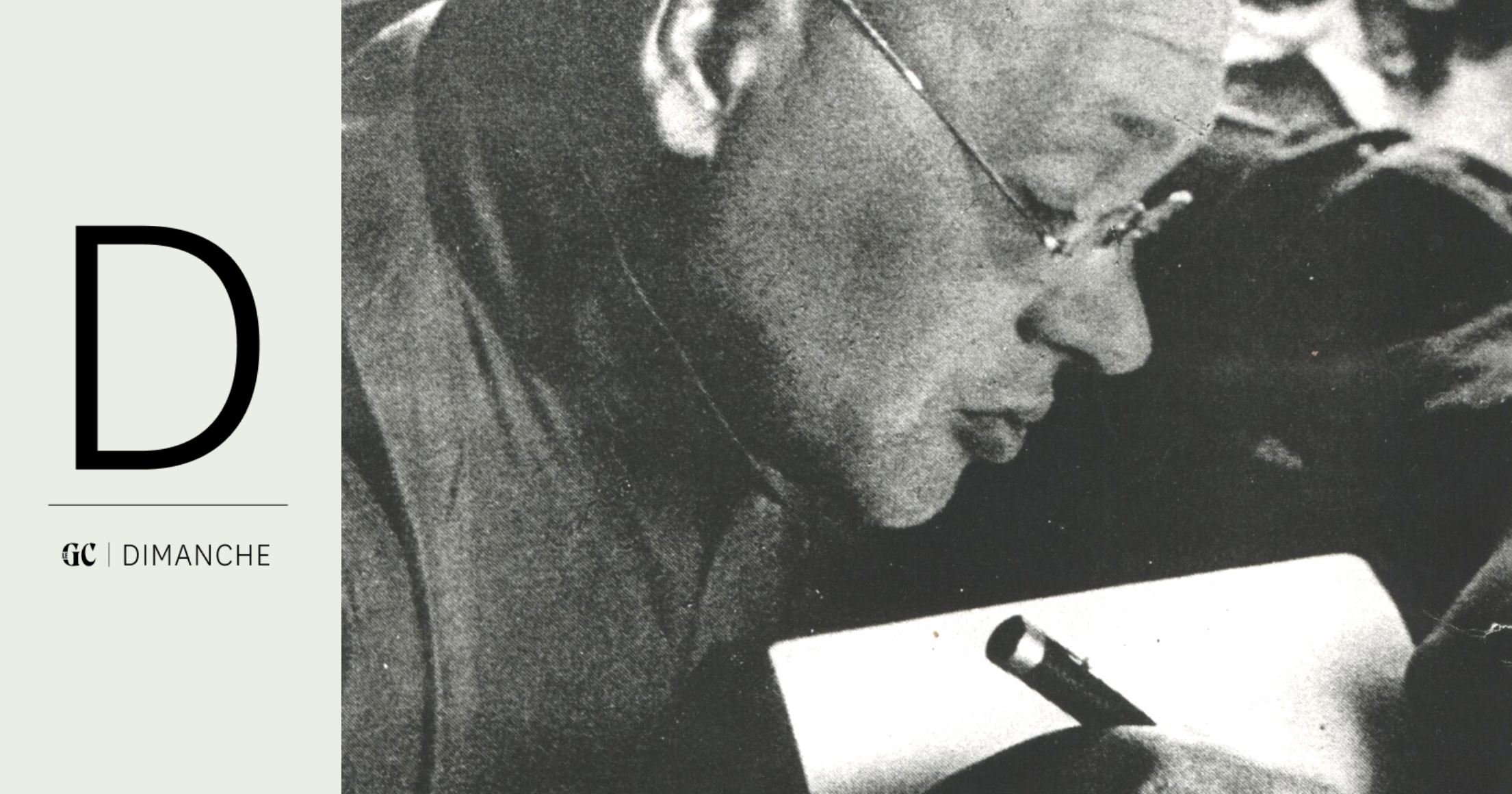
Who is Isaac Babel?
In my view, he is one of the greatest writers and stylists in Russian literature. He is a deeply mysterious figure. It is hard to determine his opinions from what he says. One can only gauge what he thinks through what he writes and the way he writes it.
When reading Red Cavalry, his short stories about the Russo-Polish War (in 1920 he accompanied the First Cavalry Army commanded by Semyon Budyonny as a correspondent), you do not really know which side he takes. He tells of a war with Jews, Cossacks, Russians, and Poles, and offers no judgment on the conflict, content to describe it in a way that, in fact, denounces violence. He revealed little about his own life. He wasn’t a liar, but rather a somewhat ambiguous figure. He was a player and a trickster. He loved telling stories, fabricating, and he had a great sense of humor. He may seem ambivalent, because he was a man capable of viewing a situation from every angle. When one is made like this, one cannot state simple, one-sided things; life is too complicated. He was a curious man, an archetypal scholar of curiosity. Several people who knew him, among them Elias Canetti, said that this is what fascinated them about him.
How would you describe his work?
It is not very voluminous: a little over a hundred stories, two plays, several screenplays, portraits, essays, articles, a few drafts, and correspondence with family and friends.
It is rather limited for three reasons: he was assassinated at the age of 46. He wrote only short pieces, on which he worked tremendously, drafting up to fifty pages to get two. Finally, a portion of his work (the material he wrote in the 1930s), kept as manuscripts and not published at the time for reasons likely political, was confiscated when he was arrested in 1939, then vanished without a trace. There is no novel in his oeuvre. He joked that it was because he was asthmatic and didn’t have enough breath to write long texts.
Is it difficult to translate?
Yes, until you enter his way of playing with language, which possesses something incredibly poetic and lyrical, yet also very concrete and raw. He was said to be able to speak of both a sunset and syphilis at the same time. He manages to link them to one another, producing something organic.
Back to the origins…
He was born in Odessa in 1894 into a Jewish family that settled not far away, in Nikolayev, where he grew up until the age of ten, before returning to Odessa. He is deeply marked by the city, as reflected in The History of My Pigeon House, a collection of stories about his childhood and youth.
In it, he recounts, in a fictionalized form, memories of the 1905 pogrom he survived and of growing up in a Jewish family, his school escapades, his grandparents, and the performances at the Odessa theater, which he attended diligently. He began writing quite early (his earliest stories, which have been lost, were in French). He published small articles in Petrograd newspapers in 1918, and his first literary texts appeared from 1924 onward. He was also the author of screenplays for cinema, which was an important activity in Odessa.
How should we picture Isaac Babel’s identity, the Odessite, in the era of the Ukraine war? Babel defined himself as both Russian and Jewish.
Russian, that is certain, he was, like Gogol, in love with the Russian language as his homeland. But, to my knowledge, he never renounced being Jewish. Having suffered a pogrom as a child, he became aware of his Jewishness at an early age.
When he joined the army as a correspondent during the Russo-Polish War, he adopted a Russian alias: Kirill Lioutov. No one knew he was Jewish. Yet he accompanied an army of Cossacks that passed through shtetls and massacred Jews. In Red Cavalry, he alternates between passages where he seems to identify with the Cossacks and those where he shows empathy toward the Jews.
That is one aspect of his ambivalence. One feels both his horror of violence and the fascination it exerts on him. He never denounces war in a direct way. He does not say that war is monstrous; he simply describes what he sees in such a way that, when you read it, you understand that it is horrific. At the same time, he sometimes has a way of poetry about violence that may seem equivocal. Personally, I don’t think so; I believe Isaac Babel is first and foremost a writer, an artist. If he did not take a political stand, it was out of danger, but also because politics did not interest him. What excites him is to observe what is happening and to describe it. Babel seeks to understand people, the violence of the Cossacks for instance, and to place himself in the shoes of Jews to describe what they might feel. It may seem odd, but to my mind, this is not a sign of a lack of emotion; the emotions he conveys through his writings are always extremely strong.
He was utterly against the grain of his era, which imposed sharp positions.
That explains why, throughout the 1930s, he published very little. What he would have liked to publish was unpublishable. We will never know, because his archives disappeared when he was arrested in 1939, but three pieces on collectivization, absolutely magnificent and terrible, have been preserved. Once again, he does not denounce directly, but what he tells and the way he tells it constitutes a denunciation in itself.
Odessa is a matrix of his work. We recall the prophetic line: “The literary messiah we have waited for in vain for so long will come from there, from those sunlit steppes bathed by the sea.”
Odessa shaped him. There are two major strands in his work: the Odessa Tales and Red Cavalry, the two only collections he published during his lifetime. The two main poles of his inspiration are there.
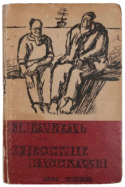
In an essay, he discusses what southern writers, and especially those from Odessa, can bring to Russian literature, and what Russian writers and readers lack. The Russians, he says, are tired of grayness, fog, cold, and coarseness; they want something else.
One also finds in his work reflections on the difference between Galicia Jews and Odessa Jews. He describes, for example, in an especially delicious way how Ashkenazi Jews from shtetls transform and flourish in Odessa.
Babel is proud of his city. He has no doubt helped to build Odessa’s myth as much as it inspired it. What cityscape would you say he draws?
Very colorful. Color, smells, violence, the joie de vivre, which is not incompatible with cruelty and violence. These are the two faces of the same landscape. The South, the sun at last… under his pen, everything is very physical.
He was one of the first writers to use the Odessa speech pattern in his works.
There has always been, even during the Soviet period, a distinct Odessa way of speaking, a language blending Russian, Ukrainian, and Yiddish, with intonations and terms instantly recognizable. There is especially an Odessa slang. Babel soaked himself in the language he heard around him and greatly helped to introduce it into literature. Many expressions and phrases from the Odessa Tales are quoted very often; one no longer knows whether they are Babel’s or things he heard… But they have entered the city’s folklore.
He truly helped forge the myth of this city in which Jews held a central place. Odessa indeed accounted for 30 to 35% of its population at the time. Wealthy Jews, but also the poor and gangsters. He took as a model for his hero Benya Krik a real-life gangster. It seems to me that here too, it is his fascination with violence that led him to become interested in the underworld. Partly through its slang, for Babel is a writer and what excites him most is language.
But as different as his two collections are, it is the same author who wrote Odessa Tales and Red Cavalry. In one, he describes a world that is violent, yet also extremely joyful and colorful. In the other, violence is much darker, but it is still the same writing style, the same inimitable voice. Perhaps the great difference is that Red Cavalry tells of a world in the process of being born, whereas in Odessa Tales he attempts to fix a world that no longer exists.
Besides, his hero, Benya Krik, ends up dying. After all, this character could not have lived in the Soviet Union; he knew it himself: he was too free.
Bandits are part of the city’s myth, but also of its history.
The character of Benya Krik was inspired by a real-life gangster. There really were gangs operating in Odessa, especially Jewish gangsters. In the Soviet era, particularly in the 1920s, there was a romanticization of the underworld, a romanticism that existed in various places as well.
In the Soviet Union of that era, true enemies were class enemies; common criminals were considered “friends of the class.” In The Thief, a highly popular novel by Leonid Leonov (1899-1994), thieves and crooks are portrayed as morally and humanly superior to the bourgeois and the “class enemies.” Chalamov, in Essays on the World of Crime, one of the books in Kolyma Tales, violently denounces this romanticization. According to him, writers like Leonov helped foster a terribly dangerous and, above all, false myth. Isaac Babel certainly contributed a little to it.
Is Odessa humor influenced by the city’s underworld?
Yes, it’s a roguish humor that leans a lot on the language of thieves. You can hear it in Odessa songs from the 1920s and 1930s, such as the famous Odessa Mama. It’s Russian infused with Ukrainian and Yiddish, always spoken with a particular, comic, highly recognizable accent. Their humor is delectable and relies heavily on self-deprecation.
Odessa is a city where people love to tell stories. Odessans even claim that jazz was born in Odessa, not in New Orleans.
What can be said about Isaac Babel’s relation to politics and communism?
Like all intellectuals of the early 20th century, Babel supported the end of autocracy. Moreover, the new regime granted Jews rights they had previously been denied. But, as I have already said, politics did not truly interest him.
The Red Cavalry texts were not in praise of the Red Army, which indeed earned him criticism and may have caused serious problems for him, perhaps one of the reasons for his arrest. What his position was later, at the end of the 1920s and in the 1930s, is a difficult question. In Russia, since always, being frank and sincere about political topics can cost a lot. We will never know how much prudence there was in what Babel said or did not say.
Looking back, the only judgment one can pass on someone who lived in that era rests, in my view, on two questions: did he condone the crimes committed in his work or in his deeds? Did he denounce someone or testify against him? Regarding Babel, it seems to me that he exposed those crimes in his work, which is already an achievement. And he did not testify against anyone, did not denounce anyone. He spoke under torture, but later retracted.
In Red Cavalry, he shows the war as he saw it, and it is not because he records the Reds’ actions that he justifies them.
Was it a commissioned work?
No, in fact, he had taken notes while accompanying the army as a correspondent. He wrote articles that he sent to the press, while keeping a diary that served as the basis for his stories. He had disappeared and was only found years after his death.
It should be noted that Red Cavalry is a collection made up of pieces Babel first published in newspapers and journals, then gathered by himself. There are a few stories he had not included in the first edition and which were added in subsequent editions.
Did he achieve success?
Yes, he immediately achieved immense success. Reprints did not stop until his death. He was quickly recognized and hailed as a great writer. First in Russia, though he faced harsh criticism from Budyonny who reproached him for giving a negative image of the army and for reporting “women’s gossip.”
But he was also recognized in Europe, where his stories were translated almost immediately. Left-wing writers and intellectuals, especially in France, saw in him the great Soviet writer they had been waiting for. This likely protected him for a time and perhaps gave him the impression that he was untouchable.
So did he gain fame too early?
He became a major figure of Russian letters and was supported by the great revolutionary novelist, Maxim Gorky. He was sent to report, notably in the Caucasus, and these reports were later published in the Soviet press.
His fame was such that for a long time he was not harassed, even when after collectivization he published only sparingly, a few stories here and there. He continued to be part of the Union of Writers. Everyone waited for him to write new texts, but he retreated into silence. His excuse: he was known for taking a long time to be satisfied with his work and for tirelessly rewriting every page.
Why was Maxim Gorky as a patron so essential?
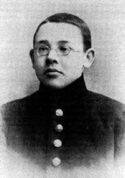
Gorky was the patron of many writers; he was evidently an extremely generous man. It is precisely Gorky who told him in 1918 to leave home, to follow the army, and to throw himself into the world. Babel was then a “little bespectacled boy,” a sensitive intellectual incapable of violence. Perhaps this partly explains his fascination with violence. As long as Gorky lived (he died in 1936), Babel felt protected. Then he knew he was in danger, even if he wrote nothing that shows he was afraid. We do not know what he felt or thought. Beyond a reasonable caution, he was one of those writers who put everything into their work without revealing themselves. He was truly a secretive man. One might refer to his correspondence, but there is little of it: it was dangerous to reveal oneself in letters at that time.
What is his connection to France?
Babel translated Maupassant. He spoke French, which he had learned when he was a child. He mentioned several times his French teacher. Like many Jewish children, he was encouraged to study, to learn languages, and to pursue music. Why did he love French? I think it is because he loved literature from an early age, and at the time French literature was very popular in many countries. He studied in Russian and, it seems, spoke Yiddish and Russian within his family.
He greatly admired Flaubert; both are great stylists for whom language and style matter more than anything. In his literary exchanges and in The History of My Pigeon House, he dwells on style and the placement of words in terms very close to those of Flaubert and Maupassant. With Maupassant, to whom he even dedicated a piece, he was highly sensitive to the carnal, raw, concrete, and colorful dimension of his writing. This is precisely one of the criticisms leveled at Babel.
He also has a familial link with France.
His first wife emigrated to France, his in-laws to Belgium, and he himself visited the country three times for long stays, the last time in 1935 for the Congress of antifascist writers.
This history is worth telling. As I said, he was already famous in the Soviet Union and in Europe in the 1930s. All left-wing writers in France were waiting for one thing: for a great Soviet writer to appear. Yet great Soviet writers were rare: those who were more or less promising were killed (such as Gumilyov or Pilnyak), sent to camps (such as Mandelstam or Chalamov), muzzled (such as Bulgakov, Pasternak, or Akhmatova), or emigrated (such as Zamiatin or Bunin). Those who became Soviet writers were, in fact, those who served the regime; by selling their souls, they evidently lost their talent. All, except Babel. But he did not serve the regime; he found a way not to commit himself in his work. He tried to stay as discreet as possible. His only concessions are a few articles here and there, factory reports for example, because one must live and, from time to time, show a sign of allegiance. Yet one recognizes his style, his way of describing, and his irony, which allow us to sense that he distances himself from the ideology he seems to more or less defend. No compromises, however, in his narratives.
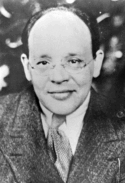
In 1935, the Soviet authorities sent to the antifascist writers’ congress only mediocre authors, so that on the first day the French, upon seeing the delegation, went to protest at the USSR embassy: “Where are Babel and Pasternak? Where are your real great writers?” And they had to send Babel and Pasternak the next day, in a rush.
Pasternak had a dreadful eczema outbreak. He had no desire to come, because he knew he could not speak about the real situation in his country for fear of reprisals. The silence to which he was forced made him ill. We do not know what Babel said. The session minutes were not preserved. It is known that he gave a speech in French, but there is no record: there was neither recording nor notes. He got away with it by using his usual evasions. He used his stay to remain in Europe longer than planned. On each of his trips, he visited émigrés with whom he was not supposed to mingle. This was, in itself, a sign of courage, and perhaps a hint of provocation. He knew he was being watched, like all Soviets abroad.
Did he ever think of staying in France?
He never spoke about it, but it is certain. He was well known in France and had friends among writers and intellectuals. He adored his daughter who lived there. And then, in the 1930s, for a Soviet citizen who had the opportunity to travel, how could one not consider it?
But first and foremost, he was a writer. Boris Souvarine notes in his memoirs that he would say: “I am a Russian writer. If I did not live among the Russian people, I would cease to be a writer; I would be like a fish out of water.”
From the perspective of the war unleashed by Putin in the name of a discourse on Russian and Ukrainian languages, what can we say about Babel?
Babel was Jewish, wrote in Russian, and lived among Ukrainians. One must place oneself in the spirit of the era: Odessa fostered a cosmopolitan atmosphere, and initially the Soviet regime supported this universalism that runs counter to today’s nationalism.
The 1920s were the only years during which there existed a Jewish theater, magazines, and newspapers. After being crushed by the Tsarist regime, all ethnic groups within the Soviet Union were valued after 1917, Jews as well as others. Gradually, starting in the late 1920s and through the 1930s, the national cultures of the Soviet republics began to be stifled. How could Babel have guessed that things would deteriorate this far?
Odessa, for Babel, is above all cosmopolitan. He writes much about the port and all the ships that arrived. It was an incredibly open city: there were English, French, Greeks, Armenians… This cosmopolitanism was then regarded not only as a characteristic but as a quality of this city, unmatched by any other in the Russian Empire. After the Bolshevik coup, it became much poorer and closed in on itself. Isaac Babel writes in his correspondence that he saw what Odessa would have become if there had not been the Bolshevik coup when he went to Marseille.
On May 15, 1939, he is arrested; he is shot on January 27, 1940.
Writers enjoyed privileges at the time, but they had to write and produce: they were paid for travels, they had right to dachas and apartments. Babel attended meetings and gave speeches; he was obliged to speak up to justify his treatment. It was in his dacha that he was arrested. It is said that at the moment of his arrest, he said: “They did not let me finish.”
When they took him away, they also carried off all his archives. Unlike in other cases, the order for destruction was never found. This is why some still hope they are somewhere and will reappear one day. Many have searched the NKVD, KGB, and Central Committee archives when they were opened in the 1990s. Without result. But one can still hope.