
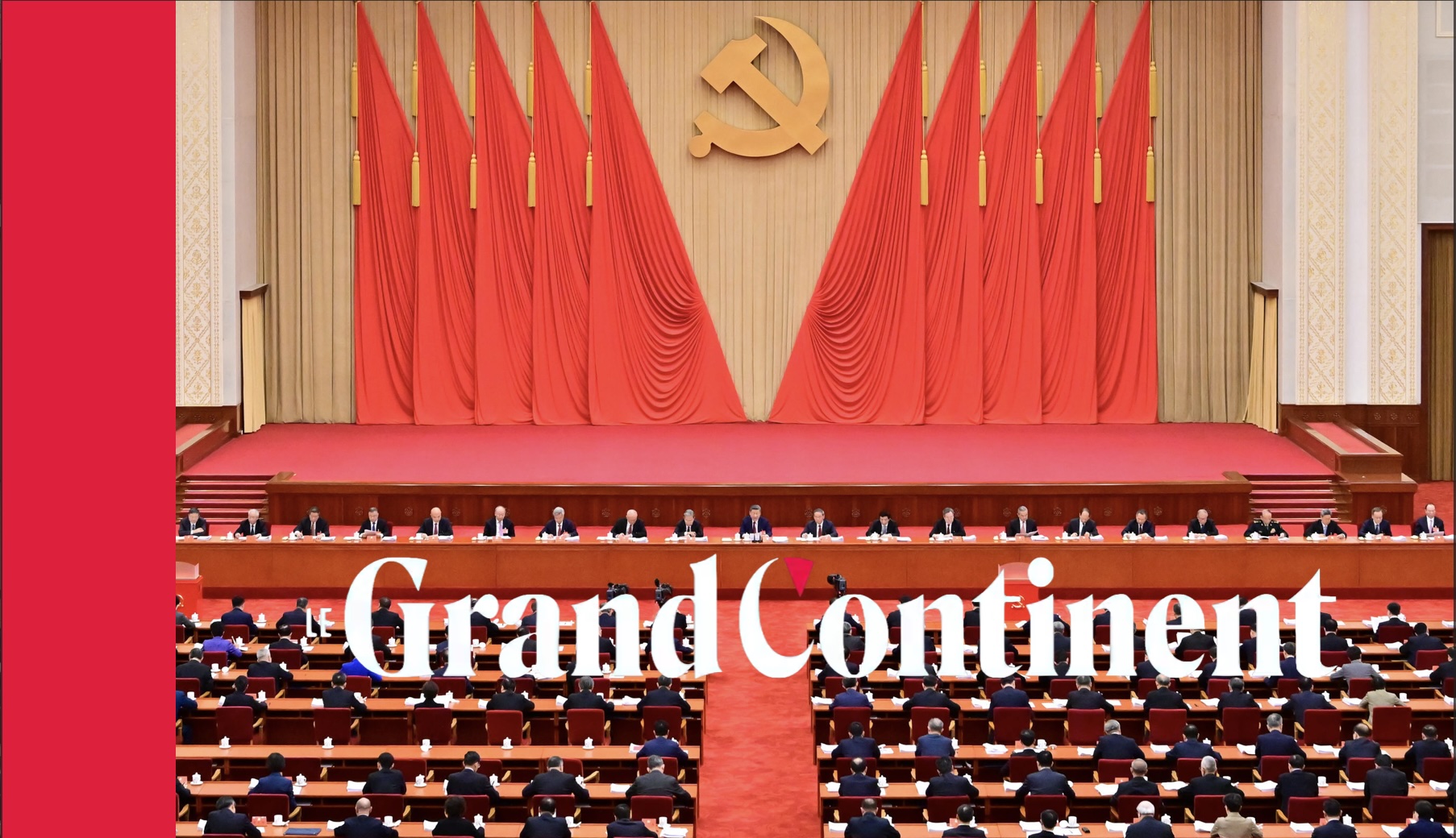
We publish here the “Resolution of the Central Committee of the Chinese Communist Party (CCP) on major questions relating to the unremitting pursuit of the Party’s comprehensive self-government with rigor.” Adopted on October 29 at the close of the 5th Plenum of the 20th Central Committee, this document serves to frame the Party’s work for the year ahead of the next Congress, which will be held in Beijing in the autumn of 2027. With its publication, the regime sends a clear signal: the aim is to reinforce discipline within its ranks. In line with Xi Jinping’s anti-corruption campaign since his rise to power almost 15 years ago, the Party leadership chiefly seeks to ensure that the entire Central Committee does not deviate from the current line. It thereby fully renews its support for a fourth term for Xi Jinping, as General Secretary, at the forthcoming Congress.
The fifth plenary meeting of the 20th Central Committee, held from October 26 to 29, 2026 in the Chinese capital, marked a moment of great significance in the political life of the regime. The previous plenary session took place in October 2025. Its principal theme was the organization of the 15th Five-Year Plan (2026-2030), dedicated to China’s economic and social development. This year, the focus of the fifth session was chiefly political. Xi Jinping sought to preserve his grip on the CCP. It should be recalled that, at 73, Xi Jinping can renew his term as president of the Republic indefinitely since the 2018 constitutional amendment. Facing numerous internal imbalances, notably linked to the country’s economic slowdown, he was determined to narrow the remaining opposition within the Central Committee to the Party line. The international environment also weighs on China, given the U.S.-led trade war and the delicate Taiwan question, still unsettled in the face of a volatile Donald Trump.
Very little information exists about the discussions that took place during this event, traditionally conducted behind closed doors within the Jingxi Hotel in Beijing. Western media, however, learned that this fifth plenary session was characterized by extensive political purges. The Central Committee, composed of 205 full members and 170 alternate members, experienced one of the most significant political purges in recent Chinese history: 33 senior officials, including 16 senior officers of the People’s Liberation Army (PLA), were expelled. Without providing further detail on the reasons for these exclusions, the CCP merely spoke of “grave violations of discipline and the law” (grave violations of discipline and law). It should also be noted that nearly a quarter of the seats were empty during this plenary session.
RESOLUTION OF THE CENTRAL COMMITTEE OF THE CHINESE COMMUNIST PARTY ON MAJOR QUESTIONS RELATING
TO THE RELENTLESS PURSUIT OF THE PARTY’S COMPREHENSIVE SELF-GOVERNANCE WITH RIGOR
(Adopted on October 29, 2026 by the 5th Plenum of the 20th Central Committee of the Chinese Communist Party)
Having reviewed the major achievements attained in the rigorous self-governance of the Party in the new era and having drawn invaluable lessons, the 5th Plenum of the 20th Central Committee of the Chinese Communist Party (CCP) analyzed the current situation and the tasks ahead concerning the Party’s control, governance, development and strengthening. On this basis, the Plenum adopted a decision on major questions relating to the relentless pursuit of the Party’s comprehensive self-governance with rigor.
I. Pursue relentlessly the Party’s comprehensive self-governance with rigor: importance, urgency and general requirements
I) The CCP was born for the people and grew up with him: it arose at a moment when the nation of China was in danger and developed in a historical process of struggle to realize the great rejuvenation of the Chinese nation. By uniting and leading the multi-ethnic Chinese people, the Party achieved major successes in the new democracy, the revolutions and socialist construction, reform, opening up, and the modernization of socialism with Chinese characteristics in the new era, and in building socialism with Chinese characteristics in the new era. It has written the most sublime epic in China’s several-thousand-year history and given the world the image of a Marxist party that is firm, resolute, vigorous, and self-assured.
If the CCP has achieved victory time and again, it is because it is animated by the noble ideal of communism, devoted to the grand cause of the Chinese nation, faithful to the goal of bringing happiness to the Chinese people and reviving the Chinese nation; it has always attached the greatest importance to self-discipline and self-governance across historical periods; it has always shown courage to defend the truth and correct its errors; it has learned to rely on the people and to solve its problems through self-regulation; and thus it has become the powerful leading force of the Party’s and the people’s cause. Considered successively as the “great undertaking” and the “great and new undertaking” during the revolution, the socialist construction, and reform, the Party’s leadership has undergone new progress since the 18th Congress, becoming the “great and new undertaking of Party building in the new era.” Consequently a double solution emerged to escape cycles of order and disorder, grandeur and decline: “allow the people to supervise the government” and “practice self-revolution.” This is a unique innovation of the CCP, worthy of entry into the annals of Marxist party-building.
II) Since the 18th Congress, the Central Committee gathered around Comrade Xi Jinping has shown immense political courage and a keen sense of responsibility in facing a deplorable situation: party leadership had weakened, blurred and diluted; self-governance had slackened, becoming ineffective and sluggish; the problems afflicting the Party had reached alarming proportions. The Central Committee has demonstrated an unshakable will to govern the Party with the utmost rigor on all fronts, “holding the knife to its own throat” and imposing a steel discipline to restore order. It has resolved, one after another, the grave issues besetting it, radically reversing a climate of complacency, laxity and softness in the Party’s self-governance; it has eliminated unhealthy tendencies that had persisted and could not be eradicated before; it has corrected serious and entrenched evils and removed grave risks that existed within the Party, the state and the army.
Through these revolutionary battles, the Party has become more determined and vigorous. The Party’s leadership across all fronts and the centralized, unified leadership of the Central Committee have been strengthened; the Party’s unity and cohesion have been better preserved; never have the Party, the army and the people been more united. Sinicization and modernization of Marxism have advanced, providing the Party with a stronger theoretical framework; the Party’s level in Marxism has risen. The Party’s organizational line in the new era has been implemented with vigor; the functions of Party organizations at all levels have been strengthened overall, and Party members, especially cadres (hereafter “members and cadres”), have seen their quality improve; the Party’s organizational strengths have been fully demonstrated.
The “eight recommendations” of the central leadership have become authoritative, and the actions to combat the “four undesirable trends” and to promote a sound moral atmosphere have deepened, resulting in a completely new atmosphere within the Party, the Administration and society at large.
Progress in building the Party’s discipline has been steady; discipline and codes of conduct have become more rigorous; their educative, restrictive, preventive and incentive roles have grown day by day. The fight against corruption has proceeded with unprecedented intensity and yielded evident results, opening a path for a Chinese approach to anti-corruption. The regulatory and institutional apparatus has functioned more effectively; the authority of rules and their enforcement has been strengthened; the scientific, regulated and standardized character of Party oversight and governance has visibly deepened.
Organizations of the Party at all levels have developed a stronger sense of Party governance and have not hesitated to assume their responsibilities, carrying out concrete and effective actions, so that a strong synergy has formed within the Party characterized by the interaction between the upper and lower echelons and close cooperation among all. The Sinicization and modernization of Marxism has taken a major step forward; the Party possesses a better theoretical apparatus; the Party’s overall level in Marxism has risen. The Party’s organizational line in the new era has been applied with energy; Party organizations at all levels have strengthened their functions, and Party members, especially cadres, have seen their qualities improved; the Party’s organizational advantages have been fully realized.
The new era has seen us achieve major successes in controlling, governing, developing and strengthening the Party, and new prospects have opened for the cause of socialism with Chinese characteristics. These results are primarily due to the leadership of the Central Committee gathered around Comrade Xi Jinping and to the guiding thought of Xi Jinping on socialism with Chinese characteristics for a new era. The consolidation of Comrade Xi Jinping’s central position within the Central Committee and within the Party, and the confirmation of the leading role of Xi Jinping Thought on socialism with Chinese characteristics for a new era, constitute a major political achievement for the Party in the new era and hold decisive importance for the Party’s and the state’s development in the new era and for the great rejuvenation of the Chinese nation.
During the grand practice of controlling, governing, developing and strengthening the Party in the new era, the Central Committee gathered around Comrade Xi Jinping formulated a series of new concepts, thoughts and strategies in response to two major questions of our time: what kind of Marxist party to build to wield power for the long term, and how to do it? Thus was born Xi Jinping’s Thought on the Party’s Construction. Enriching and extending Marx’s theory on founding a political party, it represents an important theoretical innovation, the fruit of synthesizing the fundamentals of Marxism with China’s realities and the core of its traditional culture. The crystallization of the Party’s and the people’s collective experience and wisdom, it is a crucial element of Xi Jinping Thought on Socialism with Chinese Characteristics for a New Era, and provides a foundational support and a practical guide for carrying forward the great and new work of Party-building in the new era.
III) The comprehensive self-governance of the Party with rigor is a continuous project. Through the sustained efforts of all, and especially the hard-fought battle waged in the new era, tremendous progress has been achieved in economy, science, technology and national defense; our overall power and global influence have grown markedly; the State’s system and governance capacity have been significantly modernized; our multiethnic people have become more confident, autonomous and powerful; the construction of a great socialist modern country now rests on a more solid material base, a more mature regime and a higher moral driving force; a great reservoir of strength has been accumulated through advances in Party control, governance, development and strengthening.
We thus have optimal conditions to pursue a policy of comprehensive governance with rigor in the Party. Yet we must be lucid: profound changes in the world, in the country and in the Party have created new situations and new obstacles to progress.
Internationally, unprecedented changes continue at a rapid pace; a new cycle of scientific and technological revolution and industrial transformation is accelerating; the Global South is rising collectively; power relations are undergoing deep shifts; unilateralism and protectionism are on the rise; hegemonism and power politics reemerge; geopolitical conflicts and regional struggles occur ceaselessly; the global economy remains sluggish. Global challenges accumulate and the world enters a new phase of turbulence. Our external environment is laden with growing uncertainties and unpredictability. This underscores that the Party’s task of defending China’s sovereignty, security and development interests by uniting and leading the people is more arduous than ever.
Domestically, China has entered a crucial period: one in which a solid foundation must be laid for the basic realization of socialist modernization and all living forces must be mobilized to achieve it. Our country remains hampered by unbalanced and inadequate development, continuously changing demographic structures, shifting social groupings and their interests; digitalization, networking and AI technologies are advancing rapidly; modes of living and production and forms of social organization are diversifying; ideas and values collide and intertwine. Many new problems arise as reform proceeds in depth on all fronts, in promoting high-quality development, in building and governing society, in coordinating development and security, and in revitalizing society. This means the Party’s task of promoting reform and development and maintaining social harmony and stability by uniting and leading the people is more challenging than ever.
Internally, the evolution of the Party’s personnel composition—the rise of the post-reform generation—poses new challenges to the methods of education and governance. Most Party members are good elements, but serious problems persist in ideology, organization and conduct. Not all cadres and members possess the qualities and capabilities required by our times. A minority, including some senior cadres, waver regarding the Party, losing faith in its ideals. There is evident indifference toward the masses; a distorted sense of political merit; formalism, bureaucratic tendencies, hedonism and a taste for luxury; lack of vigor; evasion of responsibility and apathy in carrying out missions; violations of discipline; abuse of power for personal gains, corruption and moral decay.
Some grassroots organizations perform mediocre political and organizational work, and some even sink into laxity and inertia. In certain sectors, especially in emerging sectors, Party organizations are not sufficiently present, and those that exist are ineffective. Too many Party organizations and leaders treat Party governance as secondary, neglect their duties in this area, or fail to enforce rules properly; key problems are not detected and addressed in time; malignant trends persist. This means the Party’s task of remaining at the forefront of progress and maintaining its purity is more challenging than ever.
These new problems pose serious challenges to the Party’s ability to exercise power, lead the country, improve personnel quality and resist corruption and degeneration in the current situation. Whether in exercising power, advancing reform and opening up, properly managing a socialist market economy or meeting international challenges, the Party faces stubborn, complex and grave tests. The major dangers of moral laxity, incompetence, estrangement from the masses and corruption are no less worrisome. These problems—characteristic of a great Party—can only be solved through very great effort. The longer the habit of power and peace endures, the more vigilant we must be, fully aware of the dangers lurking in the complex world we inhabit, and do all we can to carry forward the Party’s construction and make it stronger.
To strategically consolidate its long-term ruling status and realize the great rejuvenation of the Chinese nation, the entire Party must fully recognize the crucial importance of relentlessly pursuing rigorous self-governance on all fronts. With greater confidence and firmness, it must impose higher standards on itself and take more effective measures to perpetuate the good practices of the new era and maximize their benefits, properly address the principal problems facing Party-building, consolidate and broaden the political gains achieved in self-control and self-governance.
IV) The guiding ideas to pursue in the relentless self-governance of the Party with rigor are as follows: to base policy on Marxism-Leninism, Mao Zedong Thought, Deng Xiaoping Theory, the important thought of the “Three Represents” and the concept of scientific development; to fully implement Xi Jinping Thought on socialism with Chinese characteristics for a new era, to deepen study and application of Xi Jinping Thought on Party-building; to realize the overarching requirements of Party-building in the new era by focusing on the Party’s mission and tasks.
We must also base ourselves on the Party’s statutes, preserve its vanguard nature, maintain direction in all respects and defend the centralized and unified leadership of the Central Committee. We must improve the Party’s capacity to exercise power over the long term, preserve its purity, its advanced character and its close ties with the masses, and perfect the Party’s rigorous self-governance system across all fronts, conducting this effort with relentless discipline. We must further strengthen the Party across all fronts through political construction, mobilize fully its enthusiasm, initiative and creativity, and realize its purification, progress, renewal and improvement. In addition, we must continuously strengthen our capacity for political leadership, ideological guidance, mass organization and social mobilization. Finally, we must ensure that the Party remains a Marxist party in power, at the forefront of its era and wholeheartedly supported by the people, a party capable of withstanding all tests and remaining the unwavering guiding force behind the development of socialism with Chinese characteristics.
In the grand practice of controlling, governing, developing and strengthening the Party in the new era, the Central Committee around Xi Jinping has formulated a series of new concepts, thoughts and strategies in response to the two great questions of our time: what kind of Marxist party should be built to exercise power for the long term, and how should this be done? Thus was born Xi Jinping’s Thought on Party-building. By enriching and extending Marx’s founding theory on a political party, it represents a major theoretical innovation, the fruit of combining the Party’s core principles with China’s realities and the essence of its traditional culture. An accumulation of the Party’s and the people’s experience and wisdom, it is a vital element of Xi Jinping Thought on the New Era socialism with Chinese characteristics, and provides essential support and a practical guide for advancing the great and new work of Party-building in the new era.
III) The comprehensive self-governance of the Party with rigor is a continuous project. Through the grand practice of control, governance, development and strengthening in the new era, the Central Committee around Xi Jinping has formulated a series of new concepts, thoughts and strategies in response to the two major questions of our time: what kind of Marxist party should be built to wield power for the long term and how to do it? Thus was born Xi Jinping Thought on the Party’s Construction. Enriching and extending Marxist theory on building a political party, it is a major theoretical innovation, the result of fusing Marxist principles with China’s realities and the essence of its traditional culture. The crystallization of collective experience and wisdom of the Party and the people, it is an essential element of Xi Jinping Thought on the New Era socialism with Chinese characteristics, and provides a fundamental support and a practical guide for leading the great and new endeavor of Party-building in the new era.
IV) The relentless self-governance of the Party with rigor, in practice, is a perpetual project. It requires that the entire Party continue to move forward with discipline and firmness: with a pragmatic and disciplined approach, we must remain vigilant to adapt to the changing global and domestic conditions; we must continually improve ideological work, organizational building and the governance capacity of the Party; we must strengthen the Party’s internal governance in alignment with the law and its own regulations, ensuring that the pursuit of comprehensive self-governance is well-regulated and well-protected by legal and institutional guarantees.
V) The guiding principles to follow in pursuing relentless self-governance are the following:
— Continue to serve the Party’s mission and tasks. By remaining faithful to our original pledge and always keeping the Party’s mission foremost in mind, we will plan our work and act with consideration for the overall objective of upholding and developing socialism with Chinese characteristics, closely linking Party-building with the Party’s and the State’s cause, so as to always align our efforts with the central task and serve the public interest.
— Maintain political construction as the guiding axis. We must uphold and strengthen the centralized and unified leadership of the Central Committee, stay the political course, and implement its requirements in Party-building at all levels, improving the political competencies of Party organizations at all levels and of their members and cadres so that the entire Party follows the Central Committee and to reinforce its cohesion and unity.
— Continue to pursue greater rigor in all areas. We must strengthen a systemic approach, saturate the entire process of Party-building with severity—from the atmosphere to the measures taken—and have the courage to enforce rigorous, effective and ongoing control.
— Continue to target the problems to be resolved. By focusing our efforts on addressing prominent issues, we must not dodge contradictions or mask ailments for fear of treatment, so as to raise the standard of work during the redress of deviations and the elimination of evils afflicting the Party.
— Continue to innovate without neglecting fundamentals. This means maintaining the Party’s core theory, line and strategy, following the laws of building a Marxist party in power, building on the Party-building achievements, and continually renewing measures and methods in response to changing circumstances and tasks.
— Continue to make our leaders exemplary role models for their subordinates. Beginning with the Central Committee, from leadership bodies to senior cadres, those at the top should set an example for those below, assist and guide them in their work, so that the broad majority are motivated by the example of the “decisive minority.”
— Continue to regulate the Party’s self-governance. This means embedding regulatory-building within the entire process of rigorous self-governance, managing powers, matters and personnel within a regulatory framework, strictly applying the Party statutes, regulations and discipline, and increasing the efficiency of work through comprehensive, scientific, standardized and effective regulation.
Derived from a scientific assessment of the Party’s comprehensive self-governance with rigor in the new era, these principles must be respected in the long term and continuously enriched.
II. Strengthen the Party’s sense of identity among our ranks
This is a fundamental task of rigorous self-governance across all fronts. All Party members and cadres must remain true to the Party’s nature and purpose, cultivate a heightened sense of belonging to the Party, identify themselves as Party members and as members of a vanguard, and regard strengthening their Party sense as a lifelong mission. They must strive to fortify their beliefs, dedicate themselves unwaveringly to the Party, always serve the people, seek truth from facts, purify themselves morally and maintain integrity, so as to become loyal, incorruptible Communists who bear responsibility and preserve the Party’s initial political colors.
I) Strengthen the loyalty of Party members.
It is crucial to place fidelity to the Party at the forefront of strengthening the Party’s sense of identity. This involves educating and training members and cadres to fully grasp the crucial meaning of the “double confirmation,” reinforcing the “four consciousnesses” – political consciousness, consciousness of the overall situation, consciousness of the core leadership, and consciousness of alignment – and the “four absolute confidences” – confidence in our path, our theory, our system, and our culture – preserve the Central Committee’s central position of Comrade Xi Jinping within the Party and its centralized, unified leadership, and act in full accord, in thought and in action, with the Central Committee around Xi Jinping.
They should be educated and trained to strengthen their Marxist ideals, their Communist convictions, and their confidence in socialism with Chinese characteristics so that they become faithful, steadfast and unyielding Communists. They should sharpen their political sense, align themselves with the Central Committee’s analyses and judgments on the situation and tasks, implement the Central Committee’s decisions and policies to the letter, and resolutely oppose any challenge to the Party’s leadership and the socialist system, any refutation of the Party’s theories, lines, principles and policies, and any threat to national unity or ethnic solidarity.
They should love the Party, defend it, care for it, and devote themselves wholly to its cause; they should trust the Party’s organization, rely on it, obey it, and submit willingly to its governance and supervision; they should be honest in word and deed; they should be frank and open, “lay their cards on the table,” and align their conduct with their words. They should love the people, always place the Party’s cause and the people’s interests first, work with enthusiasm for the Party and the people, take pride in their work, and demonstrate professionalism and selflessness.
Strict discipline and political conduct must be upheld, and the Party’s political ecosystem cleaned up. It is absolutely forbidden to appoint cadres through nepotism or to exclude people solely for holding different opinions; to form cliques, to level anonymous defaming allegations, to spread false rumors, to practice clientelism to win votes in elections, to promise titles or positions, to act capriciously, to display duplicity and to disregard higher-level directives. We must decisively combat ideological liberalism, political speculation, organizational sectarianism, regionalism in work and excessive indulgence in office. We must precisely expose and mercilessly expel “double-faced” individuals.
II) Rally minds around innovative Party theories.
Efforts must be intensified to transform our Party into a Marxist party continually trained in its craft, treating the study, understanding and application of the Party’s innovative theories as a key lever to strengthen Party sense. All Party members must unify their thoughts, wills and actions by applying Xi Jinping Thought on socialism with Chinese characteristics for a new era. We must study well and apply Xi Jinping’s thoughts on Party-building. The methods of study and theory education should be diversified, making the Party’s innovative theories the central subject of cadres’ training programs. We should better assist cadres in reading original works, grasping the principles they illuminate, mastering the positions, viewpoints and methods they lay out, comprehending the breadth of mind and the sentiments expressed, renewing their subjective world while transforming the objective world, strengthening the essence of their ideals, forging political qualities, and resolving the central question of how to shape one’s worldview, life, and values.
By applying the Marxist manner of study, Party members and cadres should deepen theoretical study according to their region, department and unit, as well as their ideological state and professional needs, analyze and resolve concrete problems through the Party’s innovative theories, so that study, reflection and practice are more closely integrated and knowledge, beliefs and action better harmonized. Senior cadres should align with the standards of a Marxist statesman, sincerely and lifelong believe in the Party’s innovative theories, know them well and know how to apply them.
It is essential to maintain and perfect the “first topic at meetings” system and to improve the quality of theoretical study sessions conducted by the Party’s central study groups (or leadership groups) and by Party organizations at the grassroots levels. It is important to innovate in the research and theoretical edification projects of Marxism, to deepen systematic and scientific study and interpretation of the Party’s innovative theories. Finally, greater effort will be devoted to developing the discipline of Party history and Party-building studies.
III) Cultivate the Party’s sense of identity through the glorious Party tradition and China’s excellent traditional culture.
It is necessary to better teach and publicize the Party’s history, the history of New China, China’s reform and opening-up policy, and the development of socialism, while extolling the moral heritage of the Chinese Communists rooted in the Party’s noble founding spirit. Party members and cadres should appreciate the grandeur of the Party’s century-long struggle and its historical record, preserve and praise virtuous behavior, transmit the “revolutionary genes” and safeguard the “moral consanguinity” and values of Chinese Communists.
Furthermore, they should draw on the values of our illustrious traditional culture that extol loyalty and integrity, cultivate a sense of honor, nurture a fear of fault and require self-examination. They should strengthen the political and moral education of Party members and cadres so that they practice the cardinal virtues, public virtues and individual virtues, devote themselves loyally to the motherland and family, and possess the breadth of mind and purity that render them impervious to temptations of power, money and luxury. They should lead by example in study and reading. We must strengthen political-ideological work in the current moment so as to render it as relevant and effective as possible. We must carry forward campaigns on upholding the Party’s sense of orientation. The Party schools (institutes of administration) and cadre training schools should be fully engaged, and their curricula perfected.
IV) Forge the Party’s sense of identity in practice.
Party members and cadres must strengthen their sense of the Party through strict adherence to the Central Committee’s decisions and dispositions, by carrying out urgent, difficult, dangerous and important tasks, and by meeting the tests and trials of all kinds; sharpen their sense of the Party in their handling of the truth and error, public interest and private gain. Internal Party life should act as a forging furnace; therefore it is essential to implement the fundamental provisions in this regard and to properly use critique and self-critique. Emphasize the distinctive character of political life, adapt it to our times, align it more closely with principles and make it more combative. We must diversify the Party organizations’ routine activities and enrich their content: democratic political life meetings, organizational life meetings, general meetings of Party branch members, branch committee members’ meetings, Party groups’ meetings, educational courses and thematic days should see improved quality.
We must implement to the letter the regulations on the participation of Communist leadership cadres in the two political life meetings. We must have the courage to expose and correct faults and errors, and to fight all deviations, resisting the mindset of self-preservation and a lax complacency, for what we need is solidarity grounded in Party principle rather than unity achieved by flouting rules. Exemplary figures should be highlighted to inspire others and stimulate a spirit of emulation. To ensure the authenticity of their commitment as communists, Party members and cadres should regularly examine their conduct against the Party’s statutes, regulations and discipline, and against the oath they took when joining the Party. This is how we can sweep away dust and grime, strengthen our political immune system, and keep the Party’s public image clean.
V) Strengthen Party members’ discernment of the Party’s sense of identity.
The quality of the Party sense should become a key criterion in evaluating cadres and democratically assessing Party members: emphasis should be placed on breadth of mind, loyalty and integrity. We must improve the mechanisms linking organizational departments with discipline and supervision bodies, inspection missions, audit offices and public grievance services, so as to analyze and evaluate comprehensively the sense of the Party among the leading teams, cadres slated for promotion, and young cadres. We should consider not only their ability to meet challenges, endure trials, overcome difficulties, and resist adversities, but also their daily work, words and deeds, the people with whom they associate, and their families’ conduct. We should consult their superiors, colleagues and subordinates, as well as the populace’s reputation. The results of this assessment will play an important role in selecting cadres, elite elements and model members.
III. Apply strictly democratic centralism
The democratic centralism is the Party’s essential organizational principle and the fundamental system on which its leadership is based. Implementing democratic centralism is an intrinsic requirement of the Party’s fully rigorous self-governance. We must improve the various mechanisms of democratic centralism and realize their implementation, broadly promote internal democracy within the Party, and practice the principle of centralism effectively and correctly, so as to better leverage the advantages of democratic centralism in political, organizational, institutional and practical terms.
I) Maintain and strengthen the centralized and unified leadership of the Party’s Central Committee.
We must uphold the principle that individuals subordinate themselves to the organization, minorities to the majority, the lower echelon’s organization to that of the higher echelon, and all Party organizations and members to Congress and to the Party’s Central Committee. We should improve the centralized, unified leadership system and its mechanisms so that every directive or prohibition from the Central Committee is strictly followed. We must strengthen the mechanisms for implementing the Central Committee’s major decisions and dispositions, reinforce supervision, evaluation, and the impact of their execution. Submitting instructions to the Central Committee and reporting back is an obligation to be scrupulously observed. We must implement, refine and regularize political control, monitor in a prioritized way the execution of the Central Committee’s major decisions and dispositions, so as to identify and address inefficiencies, distortions or derailments in their application, and to deter and counter “low flattery” and “high treachy.”
II) Improve the quality of democracy within the Party.
We must preserve and refine the Party’s democratic system, respect the autonomy of each communist, and guarantee their democratic rights. We should better implement the system that gives full voice to delegates from Party congresses at all levels. Party committees, their standing committees and leadership groups should improve the quality of their meetings. All Party work must be conducted in accordance with the democratic principles and procedures laid down in the Statutes and Regulations. No leadership cadre should regard their mission, domain or locality as their private fief or presume themselves above the Party’s organization. We must smooth the channels through which Party members participate in discussions about Party affairs and expand avenues for them to express themselves. The Party’s circulars and information dissemination system should be optimized. Finally, we should foster egalitarian democratic relationships among Party comrades and create an atmosphere conducive to frank discussion, encouraging everyone to speak clearly, tell the truth, and reveal their true thoughts. Comrades holding divergent opinions should not be pressured to remain silent, excluded, or pointed at.
III) Rigourously implement the decision-making and deliberation regulations for leadership teams.
It is essential to combine collective leadership with individual responsibility based on division of labor and to follow a scientific, democratic and legal decision-making process for leadership teams. We should ensure that any important matter is decided collectively after discussion, in line with principles of collective leadership, democratic centralism, prior individual consultation, and collegiate decision-making. We should optimize the Party committee’s (or leadership group’s) deliberation regulations and decision-making procedures, and expand the use of inquiries, theoretical studies and risk assessments before major decisions. In case of serious disagreement on a major issue, one should refrain from arbitrary decisions. We should strengthen compliance with laws and regulations on major decisions and build a supervisory system for them, as well as for appointments and removals and for major projects and large-scale funding.
Every leadership cadre must submit to the collective decisions of the Party organizations, particularly regarding task allocation, and fulfill their responsibilities within their powers and in strict accordance with the Central Committee’s will and collective decisions. If they have the liberty to voice opinions, once the collective decision has been made they must implement it to the end. We must resolutely combat arbitrary decisions and scattered initiatives. We must prohibit discussions that do not lead to decisions, decisions without implementation, and hurried or careless execution. No Party committee (or leadership group) shall undertake unconstitutional actions or evade responsibilities on the pretext of a collective decision. Generally, higher-level organizations should solicit the lower level’s views before making important decisions that affect them. A life-long accountability mechanism for major decisions will be improved.
IV) Regulate the powers of the “Number One.”
We must apply regulations aimed at intensifying supervision of leadership teams and their “Number One.” The selection and appointment of the “Number One” must first consider their property disposition and their ability to implement democratic centralism. While strengthening counterweights to the powers of leadership teams, it is important to define the boundaries of the “Number One’s” attributions, and to apply a speaking rule whereby the “Number One” allows others to speak before him. A thematic meeting of the Party Secretary can never substitute for a meeting of the Party’s Standing Committee when decisions are being made. The Party Secretary (or leadership group) must uphold a spirit of democracy, attentively listen to diverse opinions, seriously consider what the minority has to say, avoid monopolizing the floor, and refrain from paternalistic behavior. They are not permitted to announce their position before discussing with the group, to substitute their own ideas for the leadership’s decisions, to reverse these decisions, or to demand absolute obedience to every echelon’s orders.
Each “Number One” will submit a special report on how they supervise and guide their lower-level counterpart. Each Party committee (or leadership group) will supervise and question the lower-level organization’s “Number One.” Horizontal oversight should be strengthened. Leadership team members should fulfill their political responsibility to uphold centralism, discipline themselves, and openly report the “Number One’s” issues while reporting serious cases to the higher-level Party organization.
IV) Forge a high-caliber cadre team capable of carrying forward the great task of national renewal
Comprehensive self-governance with rigor rests primarily on strict control over cadres. By fully applying the Party’s organizational line in the new era and by strengthening training, selection, appointment, supervision and oversight of cadres, we shall form a cadre corps of high rank, with firm political stands and excellent capabilities, who demonstrate exemplary conduct and iron discipline.
I) Maintain the proper orientation in personnel appointments.
Faithful to the principle that “the Party takes care of its own cadres,” we must consider professional competence while prioritizing moral qualities, appoint on merit regardless of social origin or geography, and select based on devotion to the Party’s cause, integrity and loyalty. Applying the new-era cadre selection criteria, we will preferentially appoint cadres who are loyal to the Party, sincere, courageous and capable of delivering results, honest and pure. We must exclude timid, lazy or unstable individuals. We must decisively rule out disloyal elements, hypocrites and those who misuse power for personal ends.
II) Select and appoint cadres in a targeted and rational manner.
Applying with rigor the principles and procedures of cadre selection and appointment, we will ensure that cadres are selected by organizations, deployed fairly and appointed according to real needs. In doing so, we will strengthen the leadership and oversight exercised by Party organizations. We will work to raise the quality of cadre evaluation. We will assess cadres politically and deepen ongoing evaluations. We will examine their entire conduct: how they behave in critical moments, how they handle contradictions and difficulties, how they combat unhealthy tendencies, how they resist various interests’ temptations, how they respond when kept in the same post, when promoted, reassigned to a less important post or transferred; how they bear heavy responsibilities.
We should broaden the scope of evaluation: we will consult the institutions that employed them, examine their family environment and social networks; we will carefully use outcomes from inspections, audits and oversight related to them. Cadre selection must be based on professional responsibility requirements so they fit their posts better. In seeking the highest quality of every individual and leadership team, and subordinating structure to function, we will strengthen leadership teams at all levels, especially the “Number One.” We will build multi-generational leadership teams and know how to utilize talents from all groups, including women cadres, cadres from minority nationalities, and non-Communist cadres, regardless of age, degree or seniority.
We must avoid privileging leadership composition over individual quality, overemphasizing degrees and seniority at the expense of real ability, or assembling leadership teams that flout rules or lower recruitment criteria. We should recruit competent cadres from grass-roots levels. A system of recusal, regular rotation and transfer will be improved. We will refine and apply a cadre-term system, with provisions to preserve stability: no continuous personnel changes at the same post, no cadres repeatedly transferred. We will strengthen analysis and evaluation of leadership teams and cadres, regularize transfers to higher or lower positions, and intensify efforts to remove incompetent cadres from their posts.
For promotions, mandatory verifications must include: a formal cadre-file review; obligatory personal data declaration verification; mandatory consultation with disciplinary and supervisory bodies; and a thorough inquiry into well-founded and verifiable complaints and violations of rules, especially disciplinary ones. We will ensure the integrity rating of a cadre is confirmed jointly by the Party secretary (or leadership group) and the discipline inspection commission (or the on-site discipline supervision team).
Cadre appointments must include improving the declaration of personal data and establishing a complete records system for the nomination process. Local committees must better report on the nomination of their cadres, and democratically evaluate and review the newly appointed cadres. Special controls on cadre selection and appointment will be strengthened, and accountability mechanisms for appointing “crooked” cadres will be completed. We will firmly oppose all abuses, strictly prohibiting cronyism, eliminating cliques and countering influence-peddling and graft to obtain leadership posts.
III) Instill in Party cadres a sound conception of political merit.
We will intensify efforts to inculcate in our cadres a proper view of political merit so that they fully dedicate themselves to public service and the people’s happiness, make decisions using rational methods and pursue effective efforts, because this is how achievements that withstand scrutiny by practice, history and the people will be produced. Applying comprehensively the new development vision, we will improve the merit evaluation in promoting high-quality development: we will examine the person and their acts, integrating ongoing assessments with prior performance. We will assess how a cadre contributes to reform and development, to people’s welfare and safety, how they advance both current tasks and long-standing issues, and how their current results translate into future outcomes. We will refresh the list of major distortions to political merit and refine safeguards to prevent and correct such drift. Current anomalies include renouncing “old obligations” inherited from predecessors, chasing instant success, misrepresenting results, impulsive actions, decisions made without regard to reality or the people’s wishes, projects undertaken for show or self-promotion, policies that shift as easily as flipping a pancake, illicitly increasing hidden debts of local governments, and a reckless pursuit of growth at the expense of security. We will especially curb inertia and arbitrariness among cadres. The mechanism for replacing the head of the leadership team and handing over duties to a successor will be improved.
IV) Strengthen cadres’ capability to act.
Every cadre should develop ideologically, politically, practically and professionally to acquire the capacity to contribute more to high-quality development, to serve the people, to prevent and resolve dangerous situations, and to lead their work guided by the spirit and methods of the law. Each cadre should become a true fighter, possessing the skills to do so. Cadres, especially those in leadership roles, must carry out on-site investigations with utmost seriousness to devise plans, solve problems and improve work with full knowledge of reality. Cadres should continuously update their knowledge, raise their professional level, and address their deficiencies to become real experts in their posts. Each cadre should regularly review their actions to extract lessons and make their work more principled, more systematic, future-oriented and innovative.
V) Enhance the training and selection of young cadres.
We must develop sustainable training and selection modes that yield competent young cadres. This means equipping them with a solid political framework capable of withstanding the tests, an iron will, impeccable morals, and an absolutely correct mindset. Cadre training should begin at the grass-roots level, deploying them to the most challenging localities, the most intricate environments, and the most demanding posts. This will harden their character and help them acquire good working habits and improve their abilities. While pursuing training and oversight in tandem, we will ensure young cadres progress healthily in their work: they must submit to Party organizations’ decisions, be prepared to work hard, but avoid vainglorious agitation, presumptuous beliefs that dreams become reality, and careerist shortcuts. We will closely monitor their mastery of Party theories, participation in political activities, courage in carrying out assigned tasks, resilience in adversity and adherence to Party rules and discipline. All of this is to guide them more effectively. This approach will prevent expecting too much too soon, in line with the saying: “you can’t rush growth.”
VI) Strengthen oversight of cadres.
There must be comprehensive, continuous management and oversight of cadres, especially at higher levels: every cadre’s entire career should be guided and supervised according to strict criteria; cadre management is no less important than their selection. The system for declaring personal data of leading cadres will be improved. Whenever the assets or family expenditures of a cadre far exceed their normal income, inquiries will be conducted. The family business or entrepreneurial activities of cadres’ families will be regularly monitored. Special actions to root out nepotism will continue, and cadre recruitment will come under increased scrutiny. Cumulative roles, external postings and resignations aimed at evading disciplinary action will be better regulated; evasions will be punished.
Finally, even retired cadres will be subject to enhanced oversight. Both Party organizations at all levels and leading cadres are called to show the greatest courage in applying strict standards. Wrongdoers must be dealt with without any leniency, and their faults must not be concealed or diminished. A cadre-control regulation will be drafted.
By combining rigor with care, incentive with compulsion, we will complete the set of measures that reward and protect deserving cadres, supporting those who stay true to their mission, and ensuring justice for those who devote themselves to their tasks. The “open-hearted interviews” system should be applied conscientiously: it provides real-time insight into a cadre’s disposition, including their work attitude, health and family situation. It is an excellent tool for guidance and counsel. We will not forget public servants and will adopt incentives for them, notably by aligning positions with ranks and improving the commemorative reward system. Measures to improve the treatment of grass-roots cadres will be implemented across the board.
Under the principle that “the Party takes charge of human resources,” we will strive to better govern and politically integrate human resources, carry forward system and mechanism reforms in their development, and align education, research and personnel development so as to achieve optimal training, induction and elevation of human resources. We will provide strong support and better services, and encourage cadres to love the Party, serve the homeland, devote themselves to their work and dedicate their abilities to the people. The aim is to attract elite talent from all sectors to join the Party and the people’s cause. To better serve them, we will implement a liaison system between Party committees and specialists, and fill gaps in the mechanism that allows leading cadres to engage directly with them. We will encourage Party-member researchers to exhibit exemplary conduct in scientific research, talent development, collaboration, academic integrity and scientific ethics. They should refrain from dishonesty such as fraud or plagiarism and must not fall into the traps of chasing quick success, impatience to achieve goals, or propaganda-led self-promotion. Overstating credentials, promotion based solely on seniority, factional culture and mandarinate are to be rejected.

V. Establish a tight organizational system that enables smooth top-down communication and sound implementation of decisions
Party organizations at each level are the main actors in the Party’s comprehensive self-governance with rigor. We must systematically consolidate Party organizations at all levels and sectors, strengthen their political and organizational functions, and ensure perfect coordination between higher and lower levels so that the Party’s line, principles, policies, and the Central Committee’s decisions and dispositions are applied exactly and effectively.
I) Promote the exemplary role of the CCP cells present across the state and Party.
Within the framework of strengthening political entities, we will ensure that all Party organizations present at various levels, with their cadres and Party members, remain at the forefront and set an example in the study and thorough application of Xi Jinping Thought on socialism with Chinese characteristics for a new era, in aligning their thoughts and actions with the Central Committee around Xi Jinping, and in resolutely implementing the Central Committee’s decisions and dispositions. The Organization for Coordination and Evaluation (OCE) must be exemplary in political criteria, discipline observance and effective task completion.
We will push forward systemic reform through the OCEs, oversee each sector with strengthened Party action, advance the strengthening of the Party in the OCEs, the enterprises and public-interest institutions directly linked to them, and the detached organs of these OCEs. We will ensure the political capacities of the CCP cells, the quality of their leadership teams, the capabilities of their members and the effectiveness of their work meet the task at hand. We will promote closer integration between Party strengthening and work domains, avoiding separation. We must combat organizational drift within OCEs, such as bureaucratic inertia and self-blindness to one’s own faults.
II) Strengthen local Party committees.
Local committees, in carrying out their leadership and coordination roles for local actors, must stay on course, consider the general interest, make decisions and ensure their execution. We need strong local committees—those that strictly follow the Central Committee’s instructions and implement them vigorously, whose administration is exemplary in discipline and integrity, and whose cohesion shows no fault lines. We encourage them to take initiative and adjust to local conditions, provided they remain strictly aligned with the Central Committee’s will. We will have permanent local committees bolster their teams, rigorously manage personnel, perform regular “political body diagnostics,” and improve their ability to identify and solve internal problems. Local committee work regulations will be revised as needed and deliberative and coordinating institutions regulated.
III) Advance base-level organization-building across all sectors.
To ensure local CCP organizations become genuine “fortresses” for the Party’s leadership role, we must place greater emphasis on the critical importance of the base. At this level, it is necessary to address gaps and weaknesses, strengthen capacities, and elevate work quality. In advancing the overall redress campaign through Party-building, we should reinforce county and town Party committees as well as village-level organizations, improve village cadres’ education and administration, and optimize the mechanism for selecting and managing village secretaries and working teams in post. Concrete steps should be taken to ensure Party-building in “deserted villages.” We should intensify Party presence in urban administrative districts and residential areas, consolidate neighborhood Party organizations and pilot a new collaborative management approach led by the competent Party organization, engaging residents’ committees, homeowners’ associations and property-management firms. We will strengthen Party presence in megadistricts and development zones (industrial parks) and consolidate base organizations in border regions. The Party-building should guide grassroots governance and strengthen grassroots organs.
Continuing and enriching the new-era version of the Fengqiao Experience, we will improve urban and rural grassroots governance led by Party organizations, based on a mix of autonomy, rule of law and morality.
We should optimally network services, enhance the role of service centers for Party members and the masses, and multiply lawful channels for grassroots organizations and the masses to participate in governance. We will pursue overall improvement of Party-building in state organs, and implement this work within their subordinate units and all sectors where they are present. We will improve the systems and governance mechanisms of the Party within public-interest institutions and promote Party-building in schools, hospitals and research institutions.
To increase the Party’s role in state-owned enterprises and public financial institutions, we will strengthen the Party committees’ (or leadership groups’) role in guiding major management and corporate matters through preliminary investigations and deliberations. This will ensure both stronger corporate leadership and enhanced Party function.
Base-level Party organizations that are weak and disorganized will be brought back on track through routine efforts and exceptional interventions. For base-level Party leaders, we will select the best and provide high-quality training. More resources, services and administrative means should be directed to the base, and upper-level decisions should better reflect base priorities so that working conditions at this level genuinely improve. We should ensure Party strengthening also strengthens mass organizations, allowing these bodies to better serve as the transmission belt between the Party and the masses.
IV) Prioritize Party-building in emerging sectors.
In order to improve category-based control and accountability systems, the sectors’ control services, sectoral control bodies and local governments should meaningfully contribute to expanding the Party’s influence in emerging sectors, its mobilization and gathering capacity. It is important to extend the Party’s presence and intensify work in new economic and social organizations, and among workers engaged in new forms of employment. It includes appointing capable secretaries and improving cadre selection and assignment of instructors, ensuring that Party-building is integrated with production, operation, innovation, entrepreneurship, social services and grassroots governance.
Party-building will be consolidated and enhanced in non-public enterprises, mixed-ownership enterprises (by category), platform companies and technology-innovation-focused firms; a dynamic oversight mechanism granting direct input into the Party organizations within higher-level Party committees will be established for online service platforms; all stakeholders must fulfill their responsibilities accordingly.
We should direct, by category, the strengthening of the Party within new social organizations, improve the management systems and operations of professional associations, academic associations and chambers of commerce, and embed Party-building requirements in their statutes to reinforce sectoral self-discipline through Party-building. It is essential to integrate the Party with schools and private hospitals. For workers in new forms of employment, we must better educate them politically and ideologically while offering superior services and safeguarding their rights, ensuring this category of workers also heeds the Party and follows suit.
V) Improve the quality of Party teams.
Putting political criteria above all else and to recruit the best, we will make cadre admission procedures more stringent, excluding anyone with questionable motives. To optimize the Party’s ranks, we will recruit more from youth, workers, peasants and intellectuals, ensuring new members from emerging sectors. We will improve member education and management, through regular training, especially foundational training. Party cells should educate, lead, and directly supervise their members. The online activities of Party members will be subject to stricter controls.
As for “floating” Party members, we will regularize their dossier registration and the process of admission into new entities, and improve the online-offline cooperation mechanism between origin and destination organizations. We will develop ways to value Party talents both offline and online, at work and in leisure, in ordinary times and during crises: we will create jobs with specific responsibilities based on real circumstances, encourage Communists to commit to meeting the masses’ needs and to keep their promises, to organize “commandos” in emergencies, and to always play a pioneering role by proclaiming their Communist identity. We will refine incentive, care and support mechanisms within the Party, and impose strict but appropriate sanctions on Communists who are not worthy of the name.
VI) Improve communication among the Party organizations across levels.
We must improve the mechanism by which higher levels transmit and implement their instructions, while lower levels report their situations and collaborate to solve problems. It is necessary to perfect the two-way oversight of Party building: establish a rational division of responsibilities and close cooperation between local-level higher-control authorities and the bodies responsible for sector oversight. The higher level must strengthen its guiding role toward the lower level, and positive results should be generalized. We will review and note the reports by the Party committee secretaries (or leadership group) on how they carried out their duties to strengthen the base; we will enhance cadre-work training by increasing staff and resources. All organizations should perform their own tasks well while assisting the lower level. In this way we will promote overarching progress of Party organizations at all levels, render them capable in all respects, and prevent them from shirking their responsibilities.
VI) Continuously improve conduct and discipline
Ensuring better conduct and stricter discipline is a powerful way to implement the Party’s rigorous self-governance at all levels. We must work on the sense of the Party, good conduct and discipline; combine behavior reform, discipline strengthening and anti-corruption work; continue to practice rigorous self-governance by improving members’ conduct. In short, continuously improve behavior, ensure the Party’s governance through strict discipline, and unite hearts around the Party’s excellent image.
I) Better follow the Party’s mass line in the new era.
By further educating our members and cadres in the Marxist mass line and the Party’s mass-line strategy, we will encourage them to remain loyal to the people’s fundamental aim and to strengthen their sense of being their servants. They must adopt the people’s stance, improve their relations with the masses, avoid distancing themselves from them or placing themselves above them. We will encourage our members and cadres to grasp the characteristics and laws of the Party’s work with the masses in the new era. They should regularly go among the masses, listen humbly to their comments, work diligently to resolve stubborn problems that are of urgent concern, and seek to rely on the masses to carry out their work and resolve conflicts; guide and educate the masses, accompany them in their advance, while providing services. We should avoid both authoritarianism and subservience. We must better apply public opinion mechanisms when decisions of major importance concern public welfare.
We should implement a system that reorients education on the Party’s line, principles and policies from cadres in leadership positions to grassroots levels, encourage fieldwork, grievances handling, and community engagement, and promote mass contact as a core path to serve people better. We will expand mass-line work on the Internet, strengthen the Party’s capacity to organize, mobilize and serve the masses through online networks, and develop cadres’ skills in mass work in cyberspace.
II) Unwaveringly apply the spirit of the “eight recommendations” from the central leadership.
The “eight recommendations” are a steel rule that must be maintained indefinitely. We will consolidate and broaden the gains from the study campaign on strictly applying the spirit of the eight recommendations, improve and implement their modalities, relentlessly combat the entrenched vices of formalism and bureaucratism, prevent a rebound of hedonism and luxury, and firmly eliminate a privileged mindset and its manifestations. Meetings and documents will be simplified in line with the requirements of “simplicity, pragmatism and novelty,” and the organization of meetings and the drafting of reports will be improved. Party and government leadership cadres cannot publish their writings through a publishing house without approval from the competent body.
In applying the rules on overseas missions for leadership cadres, opportunistic junkets are forbidden. We will continue the campaign against formalism to ease the load on grass-roots level organs; we will coordinate and regulate inspection, supervision and evaluation; standardize experiences-sharing events, performance assessments, competitions and awards; sanitize and normalize events such as celebrations, exhibitions and forums; combat “digital formalism”; implement the list of delegated powers and responsibilities for local-level governments (county and town/districts) and improve the working agenda system for village or neighborhood administrative governance. We will continue the battle against dining ordinaries and banquets, illegal gifts or cash, and all acts that harm the masses’ interests. By practicing frugality and fighting waste, Party and government organs must continue to “tighten their belts,” strictly control “the three public expenses,” and tightly regulate the construction of administrative buildings and official structures. We will also monitor emerging forms of deviation within the Party to prevent and correct these insidious and evolving evils.
III) Promote normalization and enduring improvement of conduct among members.
We must integrate good conduct into daily work and persist in this effort. Inertia or fatigue is unacceptable in this area. We must complete the mechanism for timely problem-spotting and resolution: we will reinforce analysis of serious problems related to the “four vices” to correct them precisely. We will address general or recurring problems with attention to place, sector and circumstances. Supervision and control will be reinforced, especially at critical moments, with violations of discipline punished severely. Typical cases will be identified and disseminated widely through circulars.
Each supervisory authority is responsible for ethics in its sector. We must strengthen dynamic analysis and effective control of ethical standards; train cadres in ethics for doctors, teachers and scientists with high moral standards; devote more efforts to addressing the “four vices” in state-owned enterprises, especially those in the financial sector, and in branches of enterprises under vertical governance. We will regulate the actions of executive and judicial authorities toward enterprises. We will deepen the integrated fight against pernicious trends and corruption: we will relentlessly pursue cliques, patronage networks and quid pro quo arrangements that thrive on the “four vices,” and will expose the moral decay that underlies corruption. We will continue to curb the “four vices” while promoting healthy new practices, so that exemplary conduct by the Party and the Administration guides society toward progress and virtue.
IV) Tighten discipline’s enforcement.
All processes for drafting Party rules, educating on discipline, applying it, and monitoring its implementation must meet strict standards. We must enforce discipline, apply it rigorously, and relentlessly pursue anyone who violates it. Discipline violations will be punished decisively as soon as they are detected: we will show absolute firmness. We must observe Party political discipline and rules of conduct with scrupulous care, thereby making organizational discipline and integrity, relations with the masses, work and private life more stringent. Focusing on key areas, weak links and grey zones, we will refine discipline rules and standards.
Party discipline must be stricter than the law and applied before the law; the enforcement of Party discipline and legal norms must be pursued in parallel and in harmony with justice. We will continue to act early and quickly to counter deviations, suppressing problems at their inception, and adjusting our mechanism as needed when issues could worsen or spread, so that minor problems do not become major. We will strengthen oversight and inspection of discipline enforcement, ensure Party organizations at all levels apply and defend discipline rigorously, and resolutely root out laxity and laissez-faire in this area.
V) Let Party discipline play its role in education, restriction, prevention and incentive.
We will establish a permanent and effective mechanism for discipline education: Party statutes, regulations and discipline must be part of every member’s and cadre’s obligatory training, so they study, master and observe them, and live and work in an environment where supervision and constraint prevail. We will strengthen full-cycle discipline education while increasing reminders and warnings at each key stage—joining the Party, taking office, changing roles, shifting family circumstances, resigning or retiring. Members and cadres must fully understand discipline rules and internal regulations appropriate to their posts, rank and sector. We will carry out disciplined training for newly appointed cadres, key positions and young cadres.
Following the principle of learning from past mistakes and treating illness to save the patient, we will make the most of the “four modalities” of discipline supervision, especially the “first modality,” implementing effective measures at different levels to bring back strayed individuals. Objectively and in accordance with rules, discipline and law, we will integrate political-ideological work into the full course of our actions, standardize and sharpen discipline enforcement and accountability so that they yield integrated political, disciplinary, judicial and social effects. By combining strict discipline with benevolent protection, we will encourage our members and cadres to reform, innovate and perform well in accordance with the rules. We will severely condemn defamation and timely rehabilitate victims. We will also carry out follow-up, visits, education and management of disciplined members and cadres.
VII. Persist resolutely in a synergistic anti-corruption campaign based on “do not dare, do not dare, do not imagine”
The slogan “do not dare, do not dare, do not imagine” constitutes an indispensable strategy for the Party’s comprehensive self-governance with rigor and a fundamental principle for the anti-corruption campaign. Each of us must internalize the idea that the Party has no selfish interests, that it serves only the working class and the masses, and that corruption and the Party are antagonistic. We must steadfastly follow a Chinese approach to anti-corruption: strengthening the centralized and unified leadership of the Central Committee, addressing both symptoms and causes, and adopting a systematic approach with strong punishments, targeted actions, effective prevention and synergistic fight. In short, we must fight corruption to the end.
I) Persist in a ruthless fight against corruption.
Fully aware of the complexity of the situation and the difficulty of eradicating the corruption soil, we will never rest and will relentlessly sweep away this scourge. We will keep pursuing “tigers,” “flies” and “foxes,” never deviating from our strategy, and will conduct the fight unflinchingly.
We will give no quarter and make no concessions. We will intensify efforts to prevent and extinguish corruption. We will refuse asylum to corrupt elements, eliminate loopholes and pursue those who believe they are untouchable. We will focus on significant, major and priority areas and groups, and resolutely fight corruption where power, money and resources are concentrated. We will severely sanction corruption involving both political and financial power, collusion between politics and business, and the intrusion of money’s power into the political sphere. We will pursue corruption that hides behind any crisis. We will target the corruption of the “decisive minority,” especially among “Number One” leaders, corruption among young cadres, and corruption within leaders’ families and close circles. We will vigorously expel hardened corrupters who continue to act with impunity.
We will conduct thorough investigations to uncover new forms of corruption and insidious corruption such as predictable returns, front men arrangements, “white gloves” and “revolving doors,” and we will vigorously combat corruption that uses the Internet, cryptocurrency, cross-border capital and blockchain networks. We will continue to repress abuses and corruption that directly affect the people, particularly in areas of employment, elder care, social protection, housing, education, health care and rural governance; we will severely punish embezzlement and misappropriation, false reporting, and using power for gain; we will crack down on micro-corruption at grass-roots levels; and we will relentlessly root out criminal gangs by destroying their “shields.”
We will deepen international cooperation in anti-corruption, intensify actions to prevent the escape of corrupt elements, extradite culprits who have fled abroad and recover ill-gotten gains, and strengthen the pursuit of cross-border corruption cases.
We will intensify the fight against both active and passive corruption, punish bribe-taking in accordance with Party rules and laws, employ a combination of measures to punish the corrupt and those who wield influence, and prevent cadres from being lured into traps. We will strengthen dynamic monitoring of risk-prone situations that threaten integrity, and establish a comprehensive anti-corruption mechanism combining early warning with sanctions. We will encourage regions, departments and units where major corruption cases occurred to eradicate malignant influences and restore a clean political climate.
II) Strengthen the limitation and supervision of power.
We must exercise power with fairness, in accordance with the law, in line with integrity and in the people’s interest, and prevent and rectify arbitrariness, abuse of power and emissary corruption. We will establish clear, transparent and traceable mechanisms to ensure coherence among delegation, use and oversight of power, strengthen regulation and supervision over the distribution and exercise of power, timely detect problems and correct deviations, thereby confining power within a more scientific and effective “regulatory cage.”
Focusing on key links such as policy making, discussion and decision-making, approval and oversight, as well as law enforcement and judicial power, we will regulate powers, the scope of power, working procedures and discretionary authority to prevent power abuse for personal gain. We will accelerate the establishment of regulatory frameworks and oversight mechanisms in priority areas and new sectors. We will draw up a clear list defining the powers of administrations in key sectors, including smaller powers at base levels. We will implement a system for minutes and reporting on cadres’ interventions in judicial or administrative matters.
III) Consolidate the ideological basis for respect for integrity and rejection of corruption.
We will strengthen the development of a new-era integrity culture, enriching its content and channels, educating and guiding Party members and cadres to respect themselves, engage in self-reflection and maintain constant vigilance in solitude as well as in action, thus enabling them to resist any attempt at corruption. We will foster a healthy political culture within the Party and raise awareness of integrity among Party members and cadres through the ideals, beliefs, values, morals and discipline highlighted in the Party’s innovative theories.
We will incorporate integrity culture into the essential socialist values and education about integrity into the national education system, creating a social atmosphere that esteems probity and despises greed. We will renew awareness-raising mechanisms for integrity, coordinating online and offline activities and tailoring content and methods by level and category so that integrity education is more targeted and effective. We will showcase role models of diligence and honesty and intensify political-ideological education in the current context to make it as relevant and effective as possible. We will implement broad campaigns to educate about the Party’s sense of integrity. The Party schools (administration institutes) and cadre-training schools will play their full part, and their curricula will be refined.
IV) Make integrity a core feature of discipline in practice.
We will render organizational discipline more solid by combining rigorous monitoring with benevolent protection, ensuring that discipline serves a preventive, restrictive and incentive function. We will implement a permanent, effective discipline-education mechanism: the Party’s statutes, regulations and discipline must be part of compulsory member and cadre training so that they study, memorize and adhere to them, and so that they live and work in a disciplined environment. We will strengthen full-cycle discipline education, increasing reminders at key junctures: joining the Party, taking office, transferring roles, family changes, resignation or retirement. Members and cadres must know the discipline rules and internal regulations relevant to their post, rank and sector, and we will ensure disciplined training for newly appointed cadres, key posts and young cadres.
Consistent with the principle of learning from past mistakes to cure the illness and save the person, we will use the four modes of discipline supervision, especially the first mode, introducing effective measures at different levels to bring back strayed individuals. Objectively and in compliance with rules, discipline and the law, we will integrate political-ideological work into the entire course of actions and render discipline enforcement more standardized and precise, ensuring it yields combined effects on the political, disciplinary, judicial and societal levels. By uniting stringent discipline with prudent protection, we will encourage our members and cadres to reform, innovate and perform their duties well in accordance with rules. We will severely sanction defamation and timely rehabilitate victims. We will also ensure the follow-up, visits, education and management of disciplined members and cadres.
VII. Resolutely pursue synergistic anti-corruption in line with the motto “do not dare, do not dare, do not imagine”
The motto “do not dare, do not dare, do not imagine” is an indispensable strategy for the Party’s thorough, comprehensive self-governance in all respects and the fundamental principle guiding the anti-corruption campaign. Each of us must internalize the idea that the Party has no selfish interests, that it serves only the working class and the masses, and that corruption and the Party are incompatible. We must unwaveringly follow the Chinese approach to anti-corruption: strengthen the centralized and unified leadership of the Central Committee, address both symptoms and root causes, and adopt a systemic approach that combines severe punishment, targeted actions, prevention and synergistic effort. In short, we must fight corruption to the end.
I) Persevere in a ruthless, unyielding anti-corruption campaign.
Fully aware of the complexity of the situation and the difficulty of eradicating the soil from which corruption grows, we will never relent and will continue to sweep away this scourge until it is completely removed. We will pursue “tigers,” “flies” and “foxes” without deviating from our strategy and will wage the fight without weakening.
We will give no quarter and make no concessions. We will escalate efforts to prevent corruption and eradicate it wherever it exists. We will not grant asylum to corrupt elements, will eliminate special favors and will hunt down those who imagine themselves untouchable. We will concentrate on important, major and priority areas and groups, and resolutely fight corruption in domains where power, money and resources are concentrated. We will severely sanction corruption involving both political and financial power, collusion between politics and business, and the infiltration of money into the political sphere. We will seek out corruption that hides behind a crisis. We will target corruption within the “decisive minority,” particularly among youth cadres, and corruption among leaders’ families and close associates. We will expel hard-core corrupt elements who continue to act as they wish.
We will conduct thorough investigations to uncover new forms of corruption and the subtle corruption such as predictable returns, proxy holders, “white gloves,” and revolving doors, and will vigorously combat corruption that uses the Internet, cryptocurrency, cross-border capital and blockchain networks. We will continue to repress abuses and corruption that directly affect the people, especially in areas of employment, elder care, social security, housing, education, healthcare and rural work; we will severely punish embezzlement and misappropriation, false reporting and the use of power for personal gain; we will combat micro-corruption and repeatedly root out corrupt networks. We will persistently fight organized crime by breaking their protectors.
We will deepen international cooperation in the anti-corruption campaign, strengthen efforts to prevent the escape of corrupt individuals, extradite the culprits who have fled abroad and recover ill-gotten gains, and intensify pursuit of cross-border corruption cases.
We will intensify the fight against both active corruption and passive corruption, prosecute bribery in accordance with Party rules and laws, use a combination of methods to punish the corrupt, and prevent cadres from being lured into traps. We will strengthen dynamic monitoring of risk-prone situations that threaten integrity, and establish a robust anti-corruption mechanism combining early warning with sanctions. We will encourage regions, departments and units where major corruption cases occurred to eliminate harmful influences and restore a sound political climate.
II) Strengthen the limitation and supervision of powers.
We must exercise power with fairness, in accordance with the law, under the principles of integrity and in the people’s interests, and prevent and rectify arbitrary action, power abuse and venality. We will establish clear, transparent and traceable mechanisms to ensure consistency among delegation, use and oversight of power, strengthen regulation and oversight of the distribution and exercise of power, detect problems in time and correct deviations, and confine power within the “regulatory cage” more scientifically and effectively.
Targeting key links—policy-formulation, discussion and decision-making, approval and control, and the exercise of law and judicial power—we will regulate powers, the scope of power, working procedures and discretionary authority to prevent power abuse for personal gain. We will accelerate the establishment of regulatory and supervisory mechanisms in priority areas and emerging sectors. We will lay out a clear list of the powers held by administrations in key sectors, including minor and micro-powers at grass-roots levels. We will implement a system for documenting and reporting cadres’ interventions in the judicial or administrative process.
III) Consolidate the ideological basis for integrity and rejection of corruption.
We must strengthen the construction of integrity culture in the new era, enriching its content and channels, educating and guiding Party members and cadres to respect themselves, reflect, maintain constant vigilance in private life and in action, and thus resist all attempts at corruption. We will foster a healthy political culture within the Party and raise members’ and cadres’ integrity through the ideals, beliefs, values, morals and discipline enshrined in the Party’s innovative theories.
We will embed integrity culture in socialist core values, and education on integrity into the national education system to create a social atmosphere that esteems probity and repudiates greed. We will renew mechanisms for raising integrity awareness, coordinating online and offline activities and defining content and methods by level and category, so that integrity education is more targeted and effective. We will promote the guiding role of models of diligence and honesty and the warning and deterrent role of those who violate the Party’s discipline or the law. We will urge leadership cadres to set an example in building sincere and detached relationships between government and business, strengthen family spirit, family education and family values, and strictly supervise their families and their professional networks.
IV) Make the fight against corruption more effective according to the “do not dare, do not dare, do not imagine” formula.
We will seek to clarify and properly apply the objective principles of anti-corruption within the context of a socialist market economy. By improving anticorruption laws and regulations, we will pursue the anti-corruption campaign according to the “do not dare, do not dare, do not imagine” formula, deploying a simultaneous, synergistic and comprehensive effort to eliminate the conditions that breed corruption.
We will optimize the coordination and collaboration mechanism under the unified leadership of the Party Committee, between discipline-inspection organs and supervisory departments and the relevant ministries, to promote integrated governance through the entire chain. In improving anti-corruption tools, cases should inspire: if the most serious require campaigns to clean a domain or an entire system, all should provide material for adjusting the anti-corruption apparatus. We will plug gaps in regulations, correct weaknesses of the authority and the control system’s blind spots, and create a virtuous circle of supervision, investigation, regulatory reappraisal and repression. Taking into account new trends and features of corruption, we will develop a digital system for disciplinary oversight and supervision, and advance the construction of a public powers supervisory platform using big data to deepen the reach of the anti-corruption struggle.

VIII. Ensure Party self-governance through regulatory and institutional tools
Strengthening the regulatory and institutional apparatus is essential and must be maintained over the long term to guarantee the Party’s rigorous self-governance on all fronts. We should continue to regard the Party’s Statutes as the fundamental code of conduct, deepen regulatory reforms in Party-building, align state governance under the law with Party governance in accordance with its regulations, and provide the regulatory guarantees necessary for relentlessly advancing the Party’s fully rigorous self-governance.
I) Perfect the Party’s regulatory and institutional apparatus.
We must draft a scientific plan for writing internal Party rules. We need to harmonize drafting, revising, repealing and interpreting the rules to ensure they form a coherent and orderly whole. In line with the needs of unremittingly pursuing rigorous governance within the Party, we will improve the Party’s rules and procedures and fill gaps in a timely fashion. We will consider the most acute problems when formulating these rules and ensure they are applicable and effective. We must complete the internal rules’ interpretation mechanism. We will optimize mechanisms so that internal Party regulation is compatible with national law and both are applied in a coordinated manner.
II) Strengthen the implementation of regulations.
We should make regulatory constraint more stringent and apply it without exception: there must be no privilege or exception in respecting regulations. We must encourage Party members and cadres to study, observe, implement and enforce the Statutes. The Party must publicize its internal regulations more and teach their content more effectively. The regulation applies as long as any Party organization or cadre, including a cadre, holds office; it applies across regional administrations, departments, sectors, grassroots levels and simple work units. This principle also applies to the monitoring of its application. No one should dare violate the regulation, and its constraint must be felt continually and everywhere. Any refusal to comply, any violation, any selective or partial application will be punished: the regulation shall not remain a dead letter!
III) Chase down tacit rules.
We must establish clear rules and promote transparency of Party and government affairs. Party members and cadres should internalize the necessity of abiding by established principles, respecting law and discipline, walking the right path, and opposing tacit rules in the exercise of power, policy implementation, project procurement, cadre selection and appointment, and the election of leading-edge figures. We must crack down on those seeking favors by currying favor with superiors or wooing local authorities, those who believe relationships take precedence over principles, those who prioritize inducements over official documents, those who monetize their services or seek influence behind the scenes. We must vigorously combat mercantile mentality and a culture of patron-client ties, lest the Party’s internal functioning be compromised.
The whistleblower system will be strengthened to punish matchmakers and political schemers and their accomplices. A retroactive case-review and rectification notification system will be established, and the current dynamic system of political ecosystem supervision and improvement will be perfected.
To continue relentlessly the strict self-governance of the Party on all fronts, we must continue to refine the tools of control available to the Party and the State. We will ensure that Party committees (or leadership groups) perform their general oversight effectively, while strengthening their supervision over other control bodies. The Party’s Internal Control Regulations will be revised. The dual-direction system for supervisory and disciplinary control will be improved. The Discipline Inspection Commission and the Supervisory Commission at higher levels bear primary responsibility for guiding supervision and prosecution of corrupt elements, and we must coordinate available forces to maximize their effectiveness. We will ensure better alignment among disciplinary control, supervision, mandated inspection teams and on-site visits.
District, county and village-level control mechanisms should be better utilized. The basic-level oversight system will be completed, including cross-checks and, if necessary, recourse to a higher-level oversight body than the ordinary one. Oversight by the masses must have more accessible channels. Grassroots administration and grassroots control must go hand in hand. Internal Party control will be integrated with oversight by the National People’s Congress, democratic oversight, administrative oversight, judicial oversight, audit, accounting oversight, statistics, mass control and public opinion oversight, so that they interact effectively and form a virtuous cycle. We will apply in all respects the work principles of the Party’s inspection tours and implement regulations in this domain. We will make full use of inspections—regular, special, or situational—and will not hesitate to appeal to a higher level when necessary. Inspection methods will be renewed, retrospective inspections intensified, monitoring of inspections improved, and the results used more effectively. We will promote vertical interaction among inspection missions of different hierarchies and improve the quality and efficiency of village-level inspections. In short, inspection tours must become the spearhead of our overall supervisory effort.
Continuing relentlessly the Party’s comprehensive self-governance with rigor is the political responsibility of the entire Party. We must focus our efforts on applying the accountability system because it plays a key role in Party self-governance. Recall: the Party committee (or leadership group) assumes primary responsibility; the Discipline Inspection Commission takes on supervisory responsibility; the Party secretary (or leadership group secretary) is the principal leader, with other members sharing a dual duty; every Party member and cadre has their own responsibilities. It is essential to ensure this unified and coordinated system functions properly, with everyone bearing responsibilities. Party committees (or leadership groups) at all levels must zealously tighten the accountability chain, moving pressures up and down the hierarchy. District-level and above Party committees should hear at least once a year from their leading members on how they have performed their governance duties for the Party, offering help and encouragement where needed. The Discipline Inspection Commissions at all levels (or on-site inspection and discipline supervision teams) must fulfill their duties: at least twice a year, each unit should submit to the superior an accountability report detailing how the leadership team, especially its “Number One,” has performed its duties and exercised its powers, as well as how it has met its own supervisory and disciplinary obligations.
Each branch of the Party committee must fulfill its responsibilities properly while cooperating with others. Senior leaders must be especially demanding of themselves, take their unique responsibilities seriously, exercise the strictest supervision over all activities within their remit, and set an example of impeccable Party governance. By carrying forward the strengthening of the Party at all levels and in all areas, we must always be objective and seek real results while avoiding formalism. We should also improve the assessment system to verify how each cadre carries out their governance duties. Any lapse, grave fault in this respect will be punished severely.
The history shows the dawn of the future; effort is the price of all great projects. The Chinese Communist Party, in its unstoppable march, has forged many qualities: it has shown the determination to relentlessly pursue truth and to always stay the course; it has become deeply rooted among the people, solidly grounded; it has had the courage to take on its historic mission and has secured the initiative strategically; aligning with the world’s development momentum, it has surged to the forefront of our era and stayed there; it has dauntlessly fought, never doubting the outcome; it has never ceased to strengthen itself and thus has preserved its vitality.
The vicissitudes and huge changes in China’s land over more than a century have demonstrated that the Party is worthy of the mission history has entrusted to it and the people’s trust, and that it absolutely deserves to be the vanguard of the working class, the people and the Chinese nation. The great, glorious and righteous Chinese Communist Party, despite the winds and storms it has faced, has never disavowed its youthful ideals; it has bravely and steadily advanced toward its objectives. Always mindful of the “triple imperative” and always ready to present its work for power’s scrutiny, it will not hesitate to wage a grand struggle with a large number of new features and will strengthen its commitment to build a better future by overcoming all difficulties.
The time has come for us to unite more closely with the CCP Central Committee assembled around Comrade Xi Jinping and to apply Xi Jinping Thought on the socialist path with Chinese characteristics for a new era in full. So that the entire Party works tirelessly and with determination toward the pursuit of the Party’s rigorous self-governance on all fronts, opening up new prospects for control, governance, development and strengthening of the Party in the new era. Bringing together and leading the multi-ethnic Chinese people in an ongoing struggle, we will together make China a great modern socialist country in all respects and will comprehensively advance the great rejuvenation of the nation through Chinese modernization!