
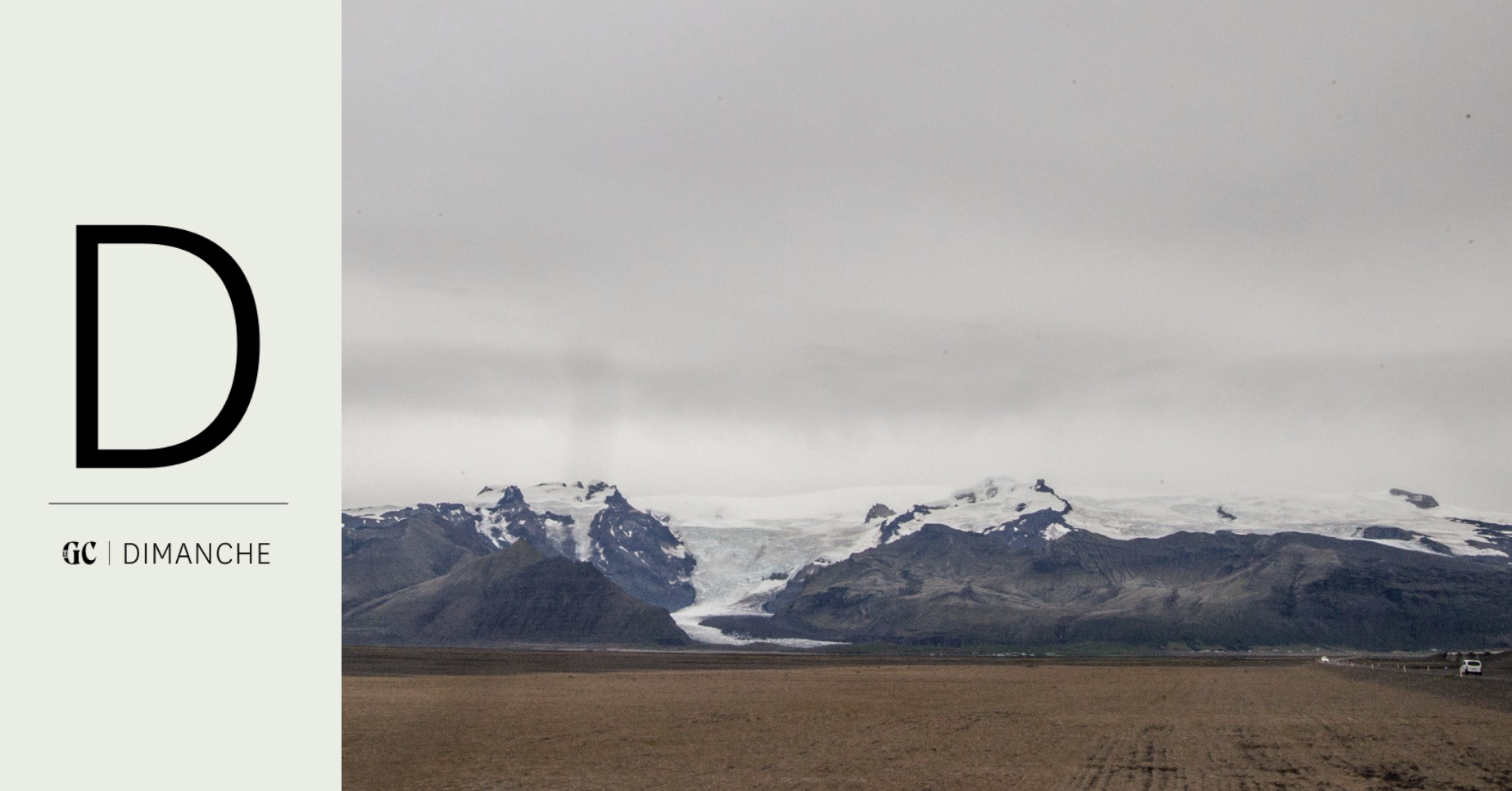
In the past, glaciers did not really win the sympathy of Icelanders. About 150 years ago, they were synonymous with danger and death due to frequent collapses and floods associated with subglacial eruptions. This is what glaciologist Oddur Sigurdsson, one of those who today contribute most to reshaping the gaze we cast on these ice companions, explains. They are, in a way, the planet’s last giants. Local Icelandic poets had indeed helped soften their image in the previous century. Scientific progress, for their part, had allowed better risk management, which made glaciers less intimidating. More recently still, ecological upheavals have evolved our projections of glaciers, recast as essential actors in the environmental balance of our world.
These photographs bear witness to it: the first one you saw, large and detailed, shows Vatnajökull, Iceland’s largest glacier.
But let us talk about the one below. We are in August 2024, in Iceland, a few kilometers from Reykjavik, at a funeral for glaciers. On that day, artists, researchers, activists, and students commemorated the disappearance—either complete or imminent—of fifteen glaciers around the world, from Kilimanjaro to the Alps, via the Himalayas and the Andes. The wind blew fiercely and migratory birds crossed the sky, as if they too had come to pay their final respects to the glaciers lost. The gathering, which blended happening, artistic event, and international environmental action, raises the question of the narratives we weave from what surrounds us: in the face of climate inaction, how can we change our representations of the planet so that things finally change?
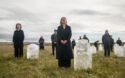
From there comes the particularly solemn side of this other photograph, which shows participants gathered at the ice graves. Before they melted within a few hours, one could read on the markers the name and death date of each glacier: Pizol, in Switzerland near Zurich, died in 2019; Sarenne, in France, Isère, died in 2023; and in the background of the photo, Okjökull, the Icelandic glacier extinguished in 2014, for which the glaciologist Oddur Sigurdsson even issued a symbolic death certificate for the occasion. Each of them received a speech dedicated to it, followed by Icelandic funeral chants.
Oddur Sigurdsson was among the first to name the vanished Icelandic glaciers and to date their deaths in the mid-2010s, in an effort to draw media attention, which did not really succeed until two anthropologists, Dominic Boyer and Cymene Howe, picked up their camera and produced a documentary on the subject, Not Ok (2018), in reference to the nickname often used by Icelanders for the Okjökull glacier.
The emotion is readable on the few faces captured by the image: Benoît Chanas, on the right, who had helped organise a similar commemoration in the Alps in homage to the Sarenne glacier, appears particularly affected. He also highlighted the hybrid nature of the event, between sincere mourning, infinite sadness (some people cried), and a media outreach operation aimed at informing the press, which received wide coverage of the event.
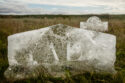
As with human burials, this shared moment elicited a range of intense and highly complex emotions: anger, sadness, powerlessness, but also acceptance of loss and celebration of the being that was lost. One also bids farewell to a glacier, and its disappearance certainly must not go unnoticed, and of course all of us are alerted. If this kind of gathering can spur people to take up causes, it is above all a cathartic experience, a dimension amplified by the collective. To such an extent that how the ceremony ended and how to bring it to a close became a key question: the next day, those who wished could extend this singular moment with a hike to the summit of what remains of Okjökull. Its remnants show that it has long ceased moving.
That is how the fading of a glacier is diagnosed: moving under its own weight has become impossible because it is no longer thick enough. As for humans, to move is to live. When the glacier’s front fragments and calves, glaciologists say it has “calved,” as with cows giving birth. That life force is also found in the memory carried by these vast ice blocks: listening to them is also about gathering the secrets of the different geological eras they have held, being sensitive to their song is like discovering the reserves of a great library. If you stay long enough, you can hear their cracking, especially in summer: thousands of crystals melt and burst like tiny bubbles.
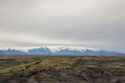
I was attending the Icelandic commemoration as a journalist; I was thus busy collecting testimonies, observing everything in order to later craft an article. Of course, I was moved. But it was only a few days later that the sum of these emotions fully unfolded. I had travelled to the south of the island and found myself alone before a glacier immense and sublime. At that moment I was struck by the beauty of the landscape, but also by the sadness that emanated from it. I felt this tug-of-war between awe and unsettling disorientation, admiration and a sense of powerlessness. Yet if the emotions felt when in contact with glaciers are extremely powerful and linger long after, this photograph taken in August 2024 also shows what one can do with them: not merely surrender to that form of worry and the painful solastalgia, but transform them into collective action.