
To gear up for your return, try Grand Continent . The ideas and analyses you won’t find anywhere else. But you’ll see them everywhere soon. In your inbox from eight euros a month
Research regularly shows how democratic political life can serve the interests of the wealthiest groups, enabling a substantial concentration of wealth within a small circle of companies and individuals. Jeffrey Winters thus notes in his work on oligarchy that the participation of all citizens in democratic life, most of whom belong to the working and middle classes, very rarely challenges the vertical concentration of wealth and power, which remains unchanged. These deeply rooted inequalities partly fuel the current populist backlash against the political class in democracies around the world.
Yet, in several countries, it is the oligarchies themselves that have managed to capture this rejection movement. Donald Trump offers the most striking illustration of the possible convergence between oligarchic wealth and anti-establishment rhetoric. The career paths of Andrej Babiš in the Czech Republic, Thaksin Shinawatra in Thailand at the turn of the 2000s, and Jair Bolsonaro in Brazil follow the same logic. Indonesian President Prabowo Subianto also fits into this line.
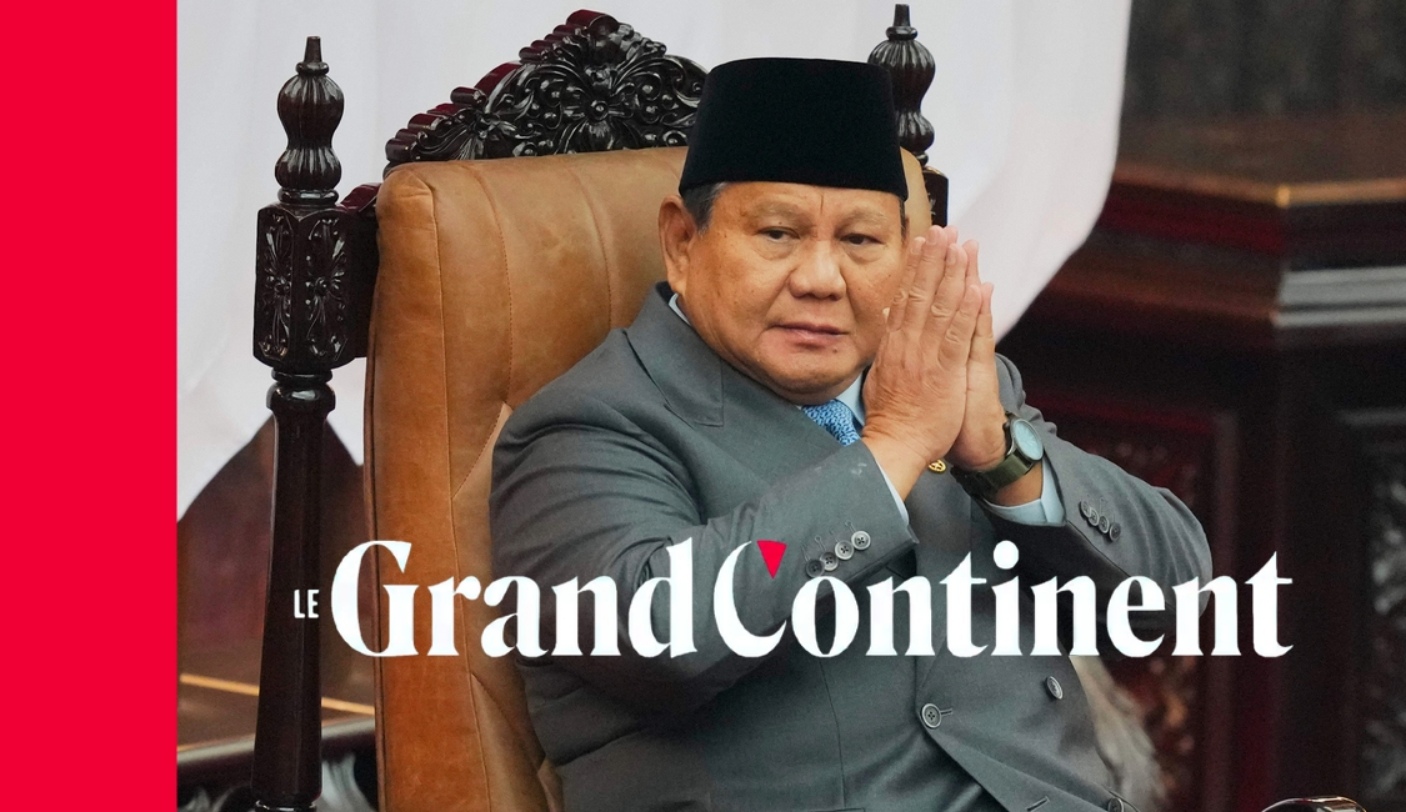
Indonesia is regularly described as an oligarchic democracy, a system in which a small group of extremely wealthy individuals wields considerable influence over political life. The boundary between the private sector and public service is permeable: influential businessmen do not merely stay close to leaders, they often enter politics by forming parties, running in regional elections, occupying ministerial posts, and in the case of Prabowo, some even reach the presidency. Prabowo Subianto is indeed the product of the Indonesian oligarchic class in the most literal sense: a wealthy general who built his commercial and political success thanks to the privileges accumulated during the authoritarian era of the “New Order” (Orde Baru). And yet, since taking power in 2024, he has gone after the country’s largest fortunes, pressuring their interests to obtain financial concessions.
Prabowo within the Indonesian oligarchy
In an oligarchic regime, real political power depends less on electoral outcomes and the popularity of elites than on the ability of a small, extraordinarily wealthy group to mobilize material and political resources to defend their private interests. In the Indonesian context, this analytical framework has been extensively adopted by scholars as well as activists. Thus, Robison and Hadiz, whose work remains a reference for understanding Indonesia’s political economy, have repeatedly argued that in post-Suharto Indonesia the real power stayed in the hands of the wealthy heirs of the former authoritarian regime, despite a radical reorganization of the political system.
If this theory does not fully account for the major changes democracy has brought to Indonesians, it does illuminate the persistence and predominance of certain types of actors in post-authoritarian Indonesia. Indeed, many magnates and military officers who thrived under Suharto’s “New Order” have found new means to accumulate wealth in the decentralized electoral democracy that followed. The surge in commodity prices, notably coal, palm oil, and minerals, from the early 2000s onward, enabled new fortunes to be created and revived economic players who the Asian financial crisis of the late 1990s had left on the brink of collapse.
Prabowo’s political ascent provides an illustrative example of this oligarchic thesis and bears witness to the enduring political influence wielded by those at the apex of the military-business-political triangle. He embodies the power and privileges of the old era of authority: the son-in-law of the former dictator Suharto, he led the elite unit of Indonesia’s special forces through the transition to democracy. Yet, Prabowo has forged a post-authoritarian political identity precisely by denouncing the abuses associated with elite corruption. After founding his own political party, Gerindra, he built a nationalist and populist image. Edward Aspinall’s influential analysis of the 2014 presidential campaign highlights this evident contradiction: Prabowo condemns oligarchy while, by any standard definition, being one of its foremost beneficiaries and actors. His wealth, derived from coal, palm oil, timber, and other extractive activities, traces back to the privileges accumulated by his family under the “New Order” . His presidential campaigns were largely financed by his brother Hashim Djojohadikusumo, one of Indonesia’s wealthiest individuals, as well as by other leading magnates.
Despite these oligarchic origins, Prabowo has consistently presented himself, with steadiness and a strong sense of spectacle, as the sworn enemy of a corrupt elite. For more than a decade, his writings and public statements have attacked businesspeople, calling them greedy, predatory, and thieves, with pointed insinuations about the predominance of people of Chinese origin within the country’s economic elite. Prabowo thus embodies both the institutionalized racism and the clientelism that characterized the “New Order” regime.
Prabowo Subianto became in October 2024 the third Indonesian president directly elected, thus attaining a position he had previously missed in two elections. In the two years following his ascent, he governed precisely as he had long hinted: privileging economic nationalism and populist measures, paying little attention to governance details; preferring international diplomacy and foreign travel to meetings with his constituents; and cultivating pomp, ceremony, and nationalist rituals rather than practical aspects of running the government and the country. Finally, faithful to the rhetoric he has nurtured for decades, Prabowo openly expresses his contempt for a portion of Indonesia’s oligarchic elite. The combination of an for-the-state ideology and relations with various factions of the economic elite, which publicly appear especially fractious, has given rise to a new form of interventionism that goes far beyond what his predecessors had attempted.
Going after the oligarchs
Three major interventions, launched since his ascent to power, illustrate Prabowo’s hostility toward economic elites. First, the Forest Regulation Enforcement Task Force (Satgas PKH), led by Sjafrie Sjamsoeddin, a close ally of Prabowo and the Minister of Defense, confiscated more than three million hectares of palm oil plantations and forests from dozens of companies accused of breaching their permits. A portion of these assets was transferred to Agrinas, a new public agricultural-and-food company. This redistribution of vast productive assets, orchestrated by the state, proceeds outside any legal or consultative procedure, based on opaque governance mechanisms that leave substantial room for favoritism. The companies whose assets were not seized were fined instead.
The Patriot Bond program of Prabowo, implemented through Danantara, the new sovereign investment body, is another telling example. Large national enterprises were urged to join this program and accept a fixed coupon of 2%, while reference and public-bonds yields sit around 5.25% to 5.95% approximately. Some viewed it as a loyalty test imposed on big capital. It is widely believed that the Prabowo regime specifically targets conglomerates of Chinese origin that occupy top places in private-sector wealth rankings and with whom he maintains openly contentious relations. This dynamic extends a much older pattern inherited from the authoritarian era, whereby the capital of Indonesians of Chinese origin is tolerated and periodically exploited as long as it remains politically compliant.
It also reflects the anxious search for new revenue streams within a state facing mounting budgetary pressures. This bond program now protects illicit funds as well. Law No. 4/2026, amending the 2023 Financial Sector Law (P2SK) and effective since June 17, inserts Article 50A, exempts Patriot Bond purchases from criminal, fiscal, or civil prosecution, prohibits the use of transactional data as evidence or a basis for new taxation, and even exempts such funds from scrutiny of their origin.
In effect, participation in this bond program risks becoming a mechanism for money laundering with legal cover. Private insiders privately explain that this new system allows favored or compliant capital to convert illicit or undeclared wealth into state assets while staying shielded from oversight.
A similar logic operates in certain aspects of the broad anti-corruption campaign that has dominated headlines since Prabowo took office. The most spectacular cases, which have involved losses for the state estimated in tens of trillions of rupiahs, have targeted business rivals and critical or oppositional officials to the president’s program. State power is exercised selectively: the best-informed observers see these “cleansing” anti-corruption operations as political score-settling. Complex internal power rivalries also shape the security apparatus’ different branches—the police, the attorney general, and the military. The result is a rule of law under increasing strain, whose unashamed instrumentalization arouses fear in business, bureaucracy, and civil society alike.
The third intervention, confirming the intensification of the conflict with the private sector, is the creation of Danantara Sumberdaya Indonesia, a new subsidiary of Danantara, Indonesia’s public investment vehicle, which the government has designated as the sole intermediary for exports of strategic raw materials, notably palm oil, coal, and certain minerals. This announcement, made in May, surprised Prabowo’s own cabinet, stunned the business world, and sent a shock through the markets. The justification offered was to end long-standing and widespread fraudulent practices whereby resource-sector companies under-invoice their exports and shift profits to subsidiaries in lower-tax jurisdictions (primarily Singapore) to evade taxes — a serious problem that indeed calls for urgent action.
One lingering question remains: if the sole objective of the president was to reform pricing, why not focus exclusively on customs and the tax administration, rather than creating an entire export-brokering function within Danantara, a public body increasingly large and complex, placed under the direct control of the head of state?
Danantara has indeed become a kind of state within the state for Prabowo: it controls all state-owned company assets, runs all major state banks, manages a “development fund” intended for government programs and available with wide latitude, and will now oversee an export registry that will grant it enormous oversight over the activities of exporters, both public and private.
In private conversations, national and regional political elites do not doubt that Danantara paves the way to opportunities for personal enrichment. More than $7 billion are invested in natural-resource industries, biofuel production, and agro-food facilities, all sectors in which some business figures can easily become investment partners. Prabowo’s brother has visited repeatedly one of Indonesia’s most strategic and lucrative nickel industrial parks, dressed in Danantara uniform and accompanied by Haji Isham, one of Prabowo’s major financial backers and a member of the privileged magnate clique. Rumor now suggests that the two loyalists are negotiating for Danantara stakes in this park managed by Chinese investors, while also seeking to bring their own companies into the venture.
From oligarchy to neo-royalism?
This reward-and-punishment system is not an invention of Prabowo. Under former President Joko Widodo, known as Jokowi, nationalist interventions and state-owned enterprises already served to distribute material advantages selectively. But Jokowi’s approach served a broad range of business actors. He was adept at offering rents and opportunities to major magnates while using public enterprises and the regulatory apparatus to discipline private capital and redirect it toward national development goals.
Most importantly, Jokowi reintroduced what one could call the “coercive dimension” of state power. During his presidency, the state’s coercive apparatus—the tax authorities, the anti-corruption commission, the attorney-general’s office—was mobilized to persuade the private sector that its relationship with the state was conditional. This combination of opportunism and discipline gave Jokowi unusual negotiating power, all the more so since he himself did not belong to the oligarchic class. For example, his interventions in the extractive industries managed to balance state ambitions with national corporate interests, earning him substantial political capital. To do this, he redistributed key extractive assets, shifting them from foreign-owned companies to national players, and broadened the potential for rent-seeking for a wide network of well-connected financiers. More importantly, Jokowi linked these rent-seeking opportunities to large-scale social protection and infrastructure programs that sustained his popularity.
So how does Prabowo’s approach differ from Jokowi’s? The war Prabowo wages against the oligarchies is not the work of a populist insurgent taking on the capitalist establishment; it resembles the forging of a new clique — Prabowo’s family, loyalists within the army, Danantara insiders — that consolidates a court around its sovereign. It is the kind of “neo-royalist” system described by Goddard and Newman as characteristic of a second Trump presidency. Their work seeks to define the emerging world order not as a system organized around sovereign states negotiating as unitary actors, but as a “system of cliques forming networks of political, financial, and military elites devoted to individual leaders” who extract tangible and symbolic tributes from their clients.
Although their argument centers on the international system, it helps distinguish Prabowo’s governance style from that of his predecessors. His distant manner of governing, entrusting most decisions to a small circle of military and loyal aides, and the pervasive fear his ministers and officials show toward him, both belong to a courtly mode of operation.
In this light, state interventions can be read as devices for extracting tributes: the Patriot Bonds program and, more broadly, entities like Danantara enable, at the national level, not only to control and distribute state capital but also to steer private firms and extort tributes from the country’s wealthiest fortunes. On an international level, this system operates as a sovereign wealth fund designed to strike deals with major capitals in the United States, the Gulf, Russia, and China. In doing so, it becomes a vehicle enabling loyal allies to forge lucrative overseas partnerships on terms similar to those Goddard and Newman describe for the emerging neo-royalist order.
The war Prabowo wages against the oligarchic system is therefore not a redistribution program in the populist sense, nor even a genuine attack on the economic elite, but a new form of elite domination, a court-like control over power.
But this court is politically fragile.
The political fragility of Prabowo’s regime
In Prabowo’s worldview, the state should not be a neutral arbitrator among competing interests, but an instrument in the hands of a strong leader, used to bring private capital to heel. His mandate so far has been marked by a chaotic implementation of this program.
Attacks on the establishment should, in principle, be a political asset in a country where most of the active population remains employed in the informal sector, where the middle class is increasingly precarious, and where protests against political greed, corruption, and inflation have become common. Yet Prabowo’s erratic policy has not only eroded investor and technocratic establishment confidence; public opinion support appears increasingly fragile as well.
Since taking office, the cadence of national polling has slowed markedly, with the president appearing to neglect public opinion and electoral behavior studies. Yet the trend remains discernible. Indikator Politik Indonesia, the country’s most reliable and widely followed polling institute, recorded a 79.3% satisfaction rating with Prabowo’s actions in January 2025, during the post-inauguration honeymoon; by early September of the same year, the rating had fallen to 58.9% following nationwide protests against a proposed law to raise lawmakers’ allowances. At that moment, a relative majority of those questioned evaluated Prabowo’s economic, political, and security measures negatively. Then Prabowo experienced a new rebound, returning to about 79.9% approval by the third week of January 2026. But five months later, his satisfaction rating fell again: an Indopol poll conducted between May 26 and June 1, 2026 pegged it at 59.8%, with more than a third of those surveyed citing rising costs of essential goods as their main grievance.
The anti-oligarchy crusade led by Prabowo also does not seem to bear political fruit, as the population remains primarily sensitive to immediate everyday hardships.
The late-2025 revival in popularity coincided with the implementation of an emergency program providing rice, cooking oil, and financial assistance to more than 35 million households. Yet even at the height of this rebound, as public opinion expert Burhanuddin Muhtadi wrote, the finer indicators of political support did not follow: Prabowo’s approval rating fell from 68.9% in January 2025 to 46.7% by the end of October, and support for his party, Gerindra, dropped from 36% to 29% over the same period.
The causes of this decline in government support are structural, and Prabowo’s war against the oligarchy has done little to resolve these complex problems affecting daily life for a population facing economic insecurity. The Indonesian middle class continues to shrink, from about 52 million people in 2016 to fewer than 47 million in 2025, according to the National Statistics Agency, even as overall growth remains between 4% and 5%.
Meanwhile, central government transfers to localities were reduced by about 270 trillion rupiahs, or 16 billion dollars, to support the president’s flagship centralizing programs, prompting eighteen provincial governors to travel to Jakarta to express their discontent. Some regional authorities say they can no longer pay salaries on time, and tensions are rising. Violent protests even erupted in Tidore Kepulauan’s eastern district in July 2026, when the regent announced that 30% of public sector workers would be temporarily placed on unpaid leave. In the poorest regions of the country, the public sector remains the primary source of jobs and income. Student, worker, and civil servant protests have multiplied across the country.
None of Prabowo’s measures against big capital—neither the land seizures by the forest-working group, nor the Patriot Bonds program, nor the new monopoly on exports of raw materials—has attacked the precarity faced by many Indonesians. The assets and revenues recovered from magnates are being funneled into public bodies and into the presidency’s core programs, but Indonesians who need it most have not yet benefited.
It is therefore not surprising that in June 2026 students again took to the streets to protest rising fuel and food prices and to demand that the president abandon his costliest programs. Danantara has been a particular target in these protests: students see it as a new instrument of state control, even less accountable for its actions than before, now operated directly from the presidential palace.
The paradox of an anti-oligarch oligarch
The gap between populist showmanship and actual redistribution is not unique to Indonesia, but defines the very genre of “populist oligarch.” Tariffs and immigration crackdowns by Trump, Bolsonaro’s supposed “culture war,” Babiš’s anti-Brussels rhetoric: each of these illustrates how extremely wealthy leaders claim to answer popular discontent with the establishment, while backing policies that leave the underlying distribution of wealth and power largely unchanged, and often reinforce their own faction’s grip on the state.
A war against a corrupt oligarchy should enjoy immense popular support in Indonesia. Yet Prabowo’s populist policies are clumsy and poorly implemented, and they have failed to resonate with a population increasingly anxious about its economic security. For the pro-democracy camp of opinion and civil society, it is clear that Prabowo’s war is conducted selectively, against rivals and those he does not trust, while a tighter circle of loyalists is poised to profit from his state interventions.
This circle includes his own family: his brother Hashim Djojohadikusumo’s Arsari conglomerate rapidly expanded into digital infrastructure, telecommunications, mining, and renewable energy since 2024, with several of its companies directly benefiting from branding and partnerships tied to the president’s strategic projects. Magnates like Haji Isham, who contributed heavily to the president’s campaign, have also been rewarded with ministerial appointments and new business opportunities. Indonesians who took to the streets in August 2025, then again in June 2026, view this selective settling of scores with clarity, as a real redistribution of power in favor of the rich.
Voters do not embrace the president’s anti-oligarchy war as much as he would have hoped, largely because his programs do not deliver direct redistributive effects that give Indonesians a sense that their lives are becoming, or will become, safer or more prosperous economically. On the contrary, the economic consequences of Prabowo’s initiatives are worrying. The rupiah has hovered at historically low levels against the dollar, forcing the central bank to raise interest rates. In recent months, rating agencies have warned of a potential sovereign-debt downgrade due to governance issues. This combination of currency pressure, rising oil prices, and food inflation has strained Indonesian households and fed public discontent.
The stated ambition of Prabowo is to make Indonesia a self-reliant and globally respected power. The country has long been marked by a nationalist tilt that makes the population particularly sensitive to perceived subordination to foreign capital and international financial institutions. But the interventionism advocated by the president—coercive, discretionary, and organized around the interests of his narrow oligarchic coalition—is not the path to a fairer economy or a more satisfied population.