
To gear up for the new term, try the Grand Continent. The ideas and analyses you won’t find anywhere else, but you’ll see them soon everywhere. Directly in your inbox from 8 euros per month
Andrew Carnegie (1835-1919) was one of the greatest steel magnates of the industrial era, during what American historians call the Gilded Age. He rose from poverty to a vast fortune. In June 1889, he published an essay that has gone down in history under the title The Gospel of Wealth (L’Évangile de la richesse), one of the foundational texts of modern philanthropy in the United States.
The rich, he says, have a responsibility. They are “trustees” of a fortune that does not truly belong to them. They are only its temporary stewards on behalf of society. There are three ways to dispose of surplus wealth, and Carnegie ranks them in order of merit. Leaving the inheritance to one’s family, the worst solution because heirs waste the money. Leaving the fortune to causes after death—also a bad option, because the donor no longer controls how the funds are used. The best way is to give while alive, thoughtfully and actively.
“The man who dies rich dies discredited.” It’s the essay’s most famous line. Carnegie gave his money to more than 2,500 libraries, universities and institutes of higher education, museums, parks, and medical and scientific research institutions. I begin with Andrew Carnegie because, at a time when tech magnates amass fortunes three times larger than those of robber barons and have broken the social contract, we can forget that the social and economic elites have often proposed theories about their responsibilities, following the idea that privilege creates duties toward the society around them.
In the feudal-aristocratic model, nobles partly justified their extraction of rents with obligations such as military protection or patronage. The expression “noblesse oblige” indeed comes from there. Philanthropy is another model of responsibility that has accompanied industrial society.
If the elites have responsibilities, that should also apply to intellectual elites. It is thus within this frame that I would like to raise the question of the responsibility of intellectuals.
Eva Illouz
Thus, responsibility presents itself as a reciprocal bond between the privileged and those they dominate, and for this very reason it is also a way of beautifying, almost always, the privilege itself by granting it a high moral status. It is therefore also and, curiously, a way to legitimize those privileges. Andrew Carnegie did not challenge capitalism, nor the inequalities nor the inheritance, though they were condemned at length in the era of the robber barons. Moreover, he believed that wealth concentrated in the hands of the most capable was beneficial to society, provided that these rich people act as stewards (managers) who are responsible. The responsibility of elites is therefore paradoxical: it limits power and privilege by creating moral, social, and economic obligations which, in turn, give their power a firmer moral footing.
If elites have responsibilities, this should also hold for the intellectual elites. It is within this broad frame that I want to raise the question of the responsibility of intellectuals, because you are going to be part of these elites. You will use your intellect to express your opinions and influence others. What exactly are intellectuals responsible for? Does this responsibility have the same mutuality, self-enhancement, and self-legitimation that I just invoked with Andrew Carnegie?
Defining the Intellectual
The concept of the intellectual, as sociology understands it, presupposes that two fields are differentiated from one another and conceived as autonomous: the field of cultural production (with its own legitimacy criteria such as literary, artistic, journalistic value or scientific truth) and the political field.
The “intellectual” is the one who crosses or transgresses the boundary between the two, importing into one field the capital accumulated in the other. When he writes “J’accuse,” Zola transposes into the political field the authority he had acquired in the literary field. Zola had a resounding impact because he converted symbolic capital into political intervention.
The Dreyfus affair becomes the founding myth of the intellectual, universal and disinterested, devoted to truth because that truth represented the alignment almost perfectly between epistemology and justice, between the truth of the evidence and the moral cause. It is this synthesis that originally constituted the social group of intellectuals.
One day after Zola’s “J’accuse,” on January 14, 1898, a letter signed by hundreds of writers, essayists, scientists and artists appeared in the newspaper L’Aurore and demanded a revision of the trial of Captain Alfred Dreyfus. This petition turned a military affair into a collective crisis. Maurice Barrès, the ultra-nationalist, immediately understood what was at stake: by defending the principles of truth and justice, it was the State and the military honor of the nation that were being called into question.
This suspicion will hover over intellectuals throughout history and periodically raise the question: to whom do intellectuals belong?
Eva Illouz
In Le Journal of February 1, 1898, in a column titled “The Protest of Intellectuals!”, Barrès attacked the “petitioners” who had burst into public life: “Nothing is worse than these bands of half-intellectuals (…) All these aristocrats of thought insist that they do not think as the vile crowd (…). These so-called intellectuals are a fatal waste in the effort of society to create an elite (…).”
This is one of the first times the word “intellectual” is used by a leading writer as a noun, and it is an insult, especially since “these bands” are only half that. The word designates them, ironically, as aristocrats of thought. Barrès senses that we are dealing with a new rising social group and discredits them by introducing doubt about their true motivation: their aim is not moral, but a mere strategy of social distinction to mark their distance from “the vile crowd.” A second point: Barrès correctly perceives that intellectuals are not unconditionally loyal to the nation and the state. They are a vanguard that challenges the raison d’État because they are driven by an epistemology and a moral aim without a territory or a nation. The authority this detachment grants them bypasses that of nationalism. This suspicion will weigh on intellectuals throughout history and raise again the question: to whom do intellectuals belong? A third note: it is a supremacist (forgive the anachronism) who coins the word “intellectual” to designate, with contempt, the Dreyfusards universalists and thus refuses the term for his own side. This will have the effect of classifying intellectuals from the outset as left-leaning.
In 1927, Julien Benda would return Barrès’s gesture with interest. It is the nationalist right that is accused of intellectual and moral betrayal, he says. The intellectual must be a cleric, a figure inherited from the medieval clergy, an unselfish guardian of transcendent values (truth, justice, universal reason). He opposes the world of political action, national passions, and what Barrès called political realism that commands us to choose the State and the nation over truth. For Benda, the cleric must say, like Christ, “my kingdom is not of this world.” It should be noted that Benda reserves a nearly symmetrical treatment for clerics on the left who defend international proletariat and revolution. “Class spirit” is no less guilty of betrayal than “spirit of race,” even if the center of gravity of his denunciation targets nationalists. One can state thus what I would call the paradox of Benda: the intellectual betrays their responsibility when they meddle in the affairs of the city and when they align their politics with their thinking. So I would say that at the origin there is a tension, even a contradiction in the position of the intellectual: the intellectual is born from their capacity to intervene in the public sphere, but in the name of ideals that must remain apolitical, such as universality, truth, and justice.
The “crime,” according to Sartre (not to engage) is the symmetric opposite of the “crime” according to Benda (to engage). Sartre thus gave the cleric who had betrayed all his legitimacy.
Eva Illouz
The end of World War II would mark a deep change in Benda’s model. Clerical neutrality becomes suspect and it is Sartre’s thesis, formulated in “Qu’est-ce que la littérature?”, that becomes dominant: the writer who pretends to hover above the fray objectively serves the established order. The experience of the Occupation had made silence or aesthetics suspect as consent and reversed the burden of proof: it was no longer engagement that had to justify itself, but distance. The “crime” according to Sartre (not engaging) is the symmetric opposite of the “crime” according to Benda (to engage). Sartre thus gave the cleric who had betrayed all his legitimacy.
The second change would confirm what Barrès had already stated: the purge of writers (Robert Brasillach was executed in February 1945, Maurras sentenced to perpetual imprisonment in January 1945, Céline exiled) permanently linked nationalism and xenophobia to national treason and collaboration, hence to a crime rather than an error in judgment. The National Committee of Writers (CNE), born from the Resistance, drew up a black list of collaborators, thus aligning intellectual legitimacy with the left. Henceforth, “intellectual” implies a moral legitimacy that the field structurally refuses to the far right; their writers became “polemicists,” “pamphleteers,” “ideologues,” not “intellectuals.” Being an intellectual became inseparable from a moral mandate.
The third postwar change was the massification of the university and studies. This process had begun under the Third Republic with the expansion of high schools, the agrégation, and the republican university which had created a pool of professors, normalists and publicists with academic capital. After World War II, in barely twenty-five years, France experienced an unprecedented massification of schooling. The number of university students rose from about 120,000 in 1945-1946 to nearly 700,000 in 1970-1971. This massification produced an inflation of academic credentials. The postwar intellectual thus enjoys strong academic capital and forms a social group, but is situated on a competitive market that risks devaluing their capital.
Critique is a set of thought patterns that convert educational capital into moral and political capital.
Eva Illouz
The widening of the group and its institutionalization in the university was accompanied by the formation of a class habitus. Habitus, in short, refers to patterns of thought and action that a person acquires in and through their social group and that continue to guide them throughout their social trajectory. Intellectuals, like the great bourgeois or workers, have an habitus, but one they acquire during schooling and university training.
This habitus is to be sought in what I would call, with the American sociologist Alvin Gouldner, “the culture of critical discourse.” Gouldner argued that in advanced capitalism a new class of intellectuals and a bureaucratic intelligentsia emerged, drawing legitimacy from their power not from ownership of the means of production (as with the bourgeoisie): this power lies in their mastery of the rational language, expertise and critique, more precisely in the culture of critical discourse.
Critique is a set of thought patterns that convert educational capital into moral and political capital. To illustrate my point I cite the official site of the Ministry of National Education, which explains the vocation of education thus: “(…) critical thinking trains students to decipher reality and to build gradually an enlightened, autonomous, and critical mind. This is a major ambition of the School.” The capitalized “École” suggests that critical thinking is here elevated as a value and as the very end of education and the foundation of citizenship. Teachers and intellectuals have become the custodians of this mission.
Critique and Its Inconsistencies
By critique, one should understand the sense Kant gave to the word: it means using reason to refuse to validate an assertion by appealing to authority or tradition. Reason must demand reasons from authorities. Since critique, in principle, refuses to let an assertion rest on authority, it is structurally equipped to challenge any power, any tradition, and any orthodoxy.
It is precisely this critical vocation that you will be trained in at this fine school, and it is therefore of it that we must speak when asking what responsibility it carries. Or whether it carries any at all.
Karl Marx is the figure who defined for generations the mission of critique. His heirs notably retained his call to use critique as a pitiless dismantling of dogmas. In 1843, in a letter to Arnold Ruge, a German left-Hegelian thinker, he wrote: “(…) we understand more clearly than ever what we have to accomplish in the present — I am speaking of a merciless critique of all that exists, merciless in the sense of not fearing the consequences it may lead to and in the sense of not fearing conflict with the powers that be.”
Note that Marx did away with the notion of “reason” and, as if anticipating Max Weber’s coming objection, he explicitly states that he does not care about the results. He defines critique as a gesture without teleological guardrails, i.e., without a positive model beforehand or concern for the consequences. This position absolves the intellectual a priori from bearing responsibility for the consequences. It is the radicality of the diagnosis and its opposition to power that matter, regardless of its pragmatic validity or its grounding in reason. It will be Max Weber who, in 1919, in a text you will read and reread in your courses—Politics as a Vocation—opposes this approach. We must differentiate, he argues, between ethics of conviction and ethics of responsibility, i.e., between ethics of absolute principles and ethics that reflect on the practical consequences of those principles.
A critique can be just, in both senses of the word, but have profoundly unjust results — it becomes a hollow radicalism if it is indifferent to its outcomes and to the real world.
Eva Illouz
Here is an example of what this means. In the 1960s, the asylum had become a target of critique, notably by Erving Goffman and Michel Foucault, who saw it as a device of power and psychiatric diagnosis as a technology of social control of deviance. Franco Basaglia (1924–1980) was a prominent Italian psychiatrist and neurologist. He had read Goffman and Foucault and had drawn from their critiques to undertake a humanitarian revolution in mental health care. Law 180 (Basaglia Law) was enacted in 1978, and led to the closure of psychiatric hospitals in Italy. There is no doubt that at the time, psychiatric hospitals were imprisoning, abusive, oppressive institutions and that critique was largely warranted. But Basaglia’s humanitarian reform did not address the question of its implementation, which would replace the asylum for patients with severe disorders. In 2020, a study published in The European Journal of Public Health established that Basaglia’s law was associated with a significant increase in suicide rates as asylums were closed rapidly while implementing the reform.
This means the following: a critique “indifferent to its consequences” is not necessarily wrong in its diagnosis, but fails at a second level by refusing to treat the reception by the world as part of what it must respond to. This is why Max Weber was wary of the ethics of conviction, which judges action first by the purity of the actor’s principles, irrespective of consequences. He demanded that it confronts an ethics of responsibility, which judges action by its consequences and asks for accountability for its outcomes. The conclusion is troubling: a critique can be just in both senses of the word, but may yield profoundly unjust results. A critique becomes hollow radicalism if it is indifferent to its results and to the real world.
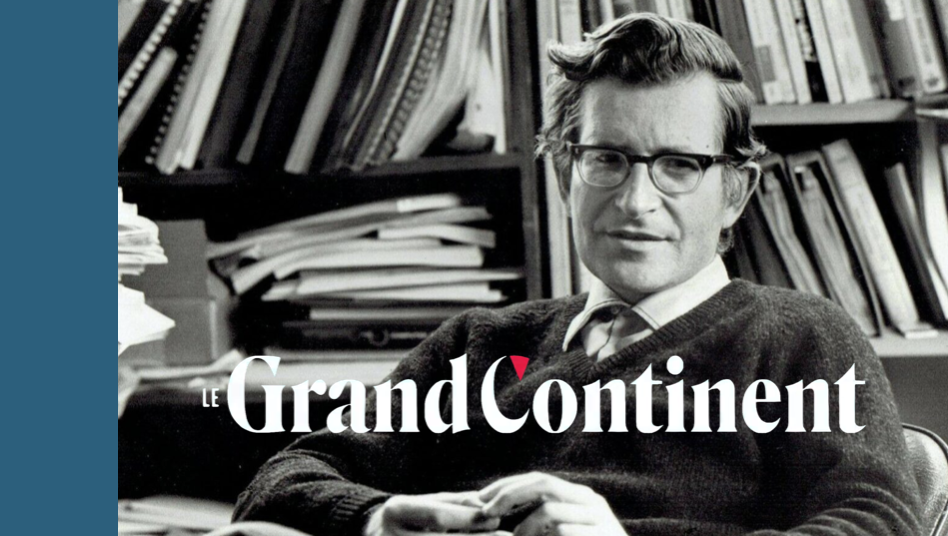
Just over a century after Marx, in 1967, Noam Chomsky echoed him and defined the responsibility of intellectuals. In a famous essay, The Responsibility of Intellectuals, he denounced the Vietnam War and wrote: “Intellectuals are capable of denouncing the lies of governments, of analyzing actions by their causes, motives and often hidden intents. In the Western world at least, they wield power granted by political liberty, access to information and freedom of expression. For a privileged minority, Western democracy offers the leisure, resources and training needed to seek truth, hidden behind the veil of distortion and disinformation, of ideology and class interests through which the events of contemporary history are presented to us. The responsibilities of intellectuals are therefore much deeper than the ‘responsibility of the people,’ given the unique privileges that intellectuals enjoy.”
A critique that is indifferent to its consequences is not necessarily false in its diagnosis, but fails at a second level by refusing to treat the world’s reception as part of what it must respond to.
Eva Illouz
Note several elements. In the 1950s, Chomsky had become the founder of a revolutionary scientific theory in linguistics, making him one of the most famous linguists in the world. A decade later, he transformed his academic capital into political engagement. His intervention had a profound impact because of his scientific status and played a major role in mobilizing intellectuals against the Vietnam War and against the broad falsehoods propagated by the US government. Moreover, like Carnegie, Chomsky is aware of his privileges. He asserts that the intellectual has a salary, leisure, and above all the freedom granted by democracy. It is these privileges that give him a greater responsibility than that of an ordinary citizen.
But what exactly does this responsibility entail? Let us examine more closely the three simultaneous presuppositions on which it rests: the intellectual is in a position of utterance outside the field, a place from which he can judge in the name of Truth and Justice. This truth is external to the ideology he denounces and it is the intellectual who has access to it; the political power he condemns is distant and the intellectual confronts it from the outside; and finally the intellectual can neutralize his own privileges and interests. What makes these three assumptions possible? It is critique. Note that in doing so, the intellectual assumes a heroic role: he fights against power and defends grand ideals from a position that claims to be outside the field, even though Chomsky is part of an institution objectively close to power, MIT, which pays him and ensures his freedom. If the intellectual defines himself as lacking interests and as being outside power and ideology, he is above suspicion. He is not more responsible than the people; he is simply above them. He thereby claims an authority that no other social actor enjoys.
In the decade that followed the 1967 article, Chomsky wrote several books on the Vietnam War, and offered a critique not only of state power but also of his colleagues, liberal intellectuals, the “new mandarins” who, according to Chomsky, had provided the ideological cover for the excesses committed by his government against the Vietnamese people. Experts and scholars, he said, had put their expertise at the service of power rather than at the service of truth. By criticizing them, Chomsky placed himself above them, morally and epistemologically.
He would continue these analyses with Edward Herman in a book that dismantled the foreign policy of the United States, its suppression of human rights, and its support for authoritarian regimes in Asia, Africa and Latin America during the 1960s-70s. In doing so, Chomsky and Herman broadened the field of critique: they argued that this repression had been obscured with the complicity of American media, which distinguished atrocities by their usefulness to Washington rather than by their objective severity.
It was this geopolitical alignment of the actors of violence with American interests, not the scale of the massacres, that dictated media coverage. Yet it was this very stance that led Chomsky and Herman to challenge the narratives of Cambodian refugees and Western media witnesses to the extraordinary violence of the Khmer Rouge, the Cambodian communist regime that was not under American influence. The Khmer Rouge were, they wrote, comparable to “France after Liberation, where thousands were massacred in a few months.” It should be recalled that nearly two million people died from executions, forced labor, famine and disease during the roughly forty-five months the Khmer Rouge were in power.
His untouchable stance is that of a monarch… The responsibility this intellectual assigns himself grants him infinitely more power and privileges, not less.
Eva Illouz
But because Chomsky and Herman operated within an ever more total framework of critique — the intellectuals and the media complicit with the government and its anti-communism — they had mechanically diminished the scale of crimes. Much later, in 2010, Herman and Peterson argued that the Kosovo War, the Srebrenica massacre, or the Tutsi killings by the Hutus had been presented in the media as “genocides” to promote Western economic and ideological interests. This is not a matter of blindness or denial but a position that arises directly from their critical stance: if everyone lies all the time and serves power, one cannot identify who is telling the truth.
The philosopher Paul Ricoeur proposed the notion of hermeneutics of suspicion to designate a mental attitude that refuses to believe what a text or a person says. The premise that there is always a hidden intention, an invisible domination, a generalized state lie with which journalists, intellectuals and the media are complicit leads to a view that can no longer distinguish between falsehood and truth, and cannot imagine that the enemy of the United States or of the West could also be brutal.
This argument becomes clearer with the Faurisson affair. In December 1978 and January 1979, Robert Faurisson, a literature professor at the University of Lyon-II, published in Le Monde two letters denying the existence of gas chambers used by the Nazis to exterminate Jews. Brought before the courts in France, he was tried in 1981 and found guilty of defamation and incitement to racial hatred. In 1980, Chomsky published a text that would serve as a preface to Faurisson’s book Mémoire en défense.
This text is striking, not because it defends Faurisson’s right to deny the existence of gas chambers in the name of freedom of expression, but because he attacks, with an almost astonishing disdain, the French intellectual class that had been outraged by Faurisson’s text. Chomsky describes Faurisson as “a kind of relatively apolitical liberal,” persecuted by a French intelligentsia that would not understand the right to freedom. The historian Pierre Vidal-Naquet offered a remarkable analysis of what was at stake here.
It is Chomsky’s principled suspicion of the institutional consensus that led him to erase the difference between defending a right and endorsing a thesis that denied historically proven facts and invented others. Chomsky serves as a credential precisely because, as an anti-establishment and anti-imperialist figure, his critique affords him moral capital accumulated. “(…) a man whose scientific stature, combined with the righteous and courageous struggle he waged against the American war in Vietnam, earned him considerable prestige.”
Ironically, this makes this intellectual figure closer to our irresponsible tech giants who float above laws and borders and fully assume their irresponsibility.
Eva Illouz
Vidal-Naquet denounces two things: the critical posture of Chomsky delegitimizes any disagreement a priori and cannot, in itself, self-examine. He is blind to his own ideological imperialism. And he denounces also the power that the overtly critical stance grants Chomsky. The untouchable position is that of the monarch. The conclusion is relentless: the responsibility this intellectual assigns himself grants him infinitely more power and privileges, not less.
Where Carnegie distributes his fortune, increases his prestige but diminishes his wealth, here the scientific reputation of Chomsky, his superior stance, his claim to know truth and morality alone, the suspicion he casts on all institutions, the a priori exemption from his own interests, all increase and embellish a power that becomes absolute. Chomsky is one of the most cited authors of all time, alongside Freud, Marx or Aristotle, and has become paradigmatic of the practice of critique that is so widespread. Ironically, this makes him closer to our giants of irresponsible tech, who drift above laws and borders and entirely embrace their irresponsibility, than to an Andrew Carnegie who, without questioning the social order, had nonetheless tried to contribute to it.
Michel Foucault, who often gave the impression of hating power in all its forms, thus described this type of intellectual: “For a long time, the so-called left-wing intellectual spoke out and was granted the right to speak as a master of truth and justice.” The Chomskian critique is paradigmatic of an irresponsible critique that ultimately aligned with the worst theses and regimes of its time.
The Responsibility, Not Engagement
In one of his last interviews, Pierre Bourdieu said: “People speak of the ‘engaged intellectual,’ I say ‘responsible.’ It’s a bit old-fashioned (…). It’s a great responsibility if one believes sociology is a science; and I do.” Bourdieu prefers “responsible” to “engaged,” and he is right. The difference is crucial, because he understood that engagement can take irresponsible forms.
What, then, is the responsibility of intellectuals? Responsibility only makes sense if it does not magnify our status, our authority, and our power, but rather limits and diminishes them. It only makes sense if it does not lead to self-glorification, but, on the contrary, makes us uncomfortable.
In 1945, George Orwell wrote a small, wonderful essay in which he differentiated between patriotism, a simple attachment to a way of life and to a particular territory, and nationalism, which, he argued, is inseparable from the desire for power.
Responsibility only makes sense if it does not increase our status, our authority and our power, but limits and diminishes them.
Eva Illouz
For Orwell, nationalism was a broader concept than the word in its conventional sense: the nationalist is the individual who identifies themselves obsessively with a cause (the nation, the Church, the race, but also the proletariat or the revolution) and makes that entity the principle of good while pursuing power.
It is a mental structure that can attach to any object, left or right, and this mental structure seeks to impose itself on others because power is what is sought first. Nationalism, he says, has three psychological characteristics:
1. Obsession: the nationalist thinks, speaks, and writes almost exclusively about the superiority of their chosen unit; they relate every event to this frame.
2. Instability: nationalism is not a fixed attachment to a real entity; it can shift from one object to another. An individual can change the object of their fanaticism without changing the mental structure. For example, from the proletariat to the colonized, from Christianity to the far right.
3. Indifference to reality: the nationalist judges events not by their truth but by whether they serve or harm their camp. They practice a morally variable accounting: the same atrocities are condemned in the opponent and excused, ignored, or celebrated in their own side. We condemn Nazi violence but excuse Stalin’s crimes, for instance. The nationalist can be entirely sincere in their pursuit of the Good while capable of the worst distortions, because loyalty takes precedence over truth. The nationalist is always sincere in their willingness to do good.
In his essay, Orwell does not aim at the “everyday person,” for whom he has a lot of respect, but at the English intelligentsia, where nationalism takes on virulent forms precisely because it sees itself as critical and rational. Orwell identifies different forms of nationalism at work in 1930s-40s England, such as what he calls positive nationalism or exalted identification with a unit, driven by the belief that it is superior to others. He cites three examples: neo-Toryism (imperial nostalgia, Churchill cult); Celtic nationalism (Welsh, Scottish and Irish nationalism); and Zionism.
I would like to dwell on the Zionism category. In the wake of the war, one could no longer ignore what had been done to the Jews. Orwell classes Zionism within nationalism. It is a remarkable stance. In 1945, the Jews had endured the most industrial genocide in history, and it was natural that they would desire a refuge and a national homeland. Without being anti-Zionist, Orwell denies them special treatment. He particularly attacks American Zionism, perhaps because it does not belong to survivors and refugees, but because it is the form of nationalism most associated with it. He thus does not automatically align with the victims’ discourse. Empathy for a group that has been decimated does not dictate his thinking. This does not prevent him from being uncompromising toward the anti-Semitism that infected the English ruling class. Anti-Semitism, for him, is the paradigmatic case of nationalist thought—irrational, indifferent to facts, able to coexist with a veneer of intellectual good faith among the most cultivated people.
That is what it means to be a responsible intellectual: to prefer one’s freedom to think over loyalty to a group, even one that has suffered. It means making distinctions between Zionism among those who were massacred and Zionism among those who, from afar, make it a nationalist cause. And it means staying aware that that same group remains a victim of an ancestral hatred. This freedom to think several things at once requires two qualities the university does not teach or teaches only a little: humility and courage.
The critique is only responsible when it refuses to become an absolute power.
Eva Illouz
Humility is the methodological humility of Orwell who refused to pretend to be free of nationalism, and doubted whether one could completely free oneself merely by will. He calls for constant examination of one’s own reactions, of loyalty to beliefs even if they are moral, and, like Bourdieu, he urges awareness of the authority that the intellectual position grants us. And courage, because nothing is harder than doing as Orwell did, who, in 1936, went to fight alongside the Workers’ Party of Marxist Unification (POUM) during the Spanish Civil War, and who discovered the repression of anarchists and Trotskyists by Stalinist communists. He wrote about it in his book Homage to Catalonia, which his usual publisher refused to publish. I don’t know whether it requires more courage to risk one’s life beside the Spanish Republicans than to endure the ostracism of one’s peers.
As you enter this institution you will learn to critique the social world. You will be tempted, as I have been, as many have been, to wield the authority that critique grants. In the era of social networks, we all want to be a Chomsky. It is the position that flatters the most. But being an intellectual today is far more difficult than in Zola’s time: a “J’accuse” is drowned out by millions of other “J’accuse,” and, above all, it is drowned out by the fact that lies and truths are now inextricably intertwined for philosophical and technological reasons.
Remember that critique is only responsible when it refuses to be an absolute power, that the radicality of critique does not necessarily make it more just, that it must ask itself about its consequences, that seeking the truth does not mean suspecting everyone of lying, that identifying the real culprits of the world’s misfortunes requires patient methodological work, that generalized suspicion is not more interesting than the ability to make nuances and distinctions, that victims, even real ones, should not demand that we renounce our judgment in the name of unconditional loyalty, and that only humility and courage help us think freely.