
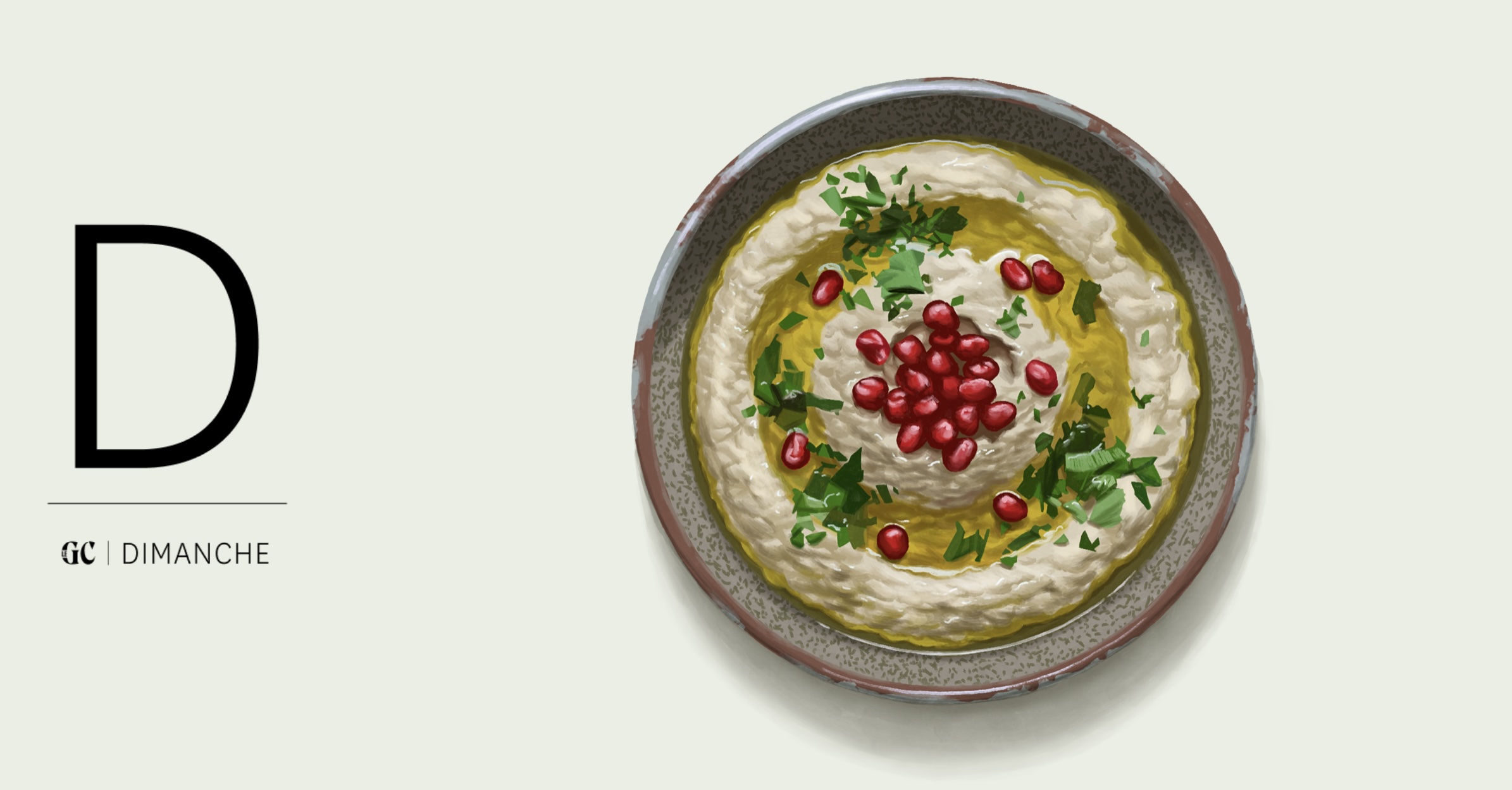
Ingredients for 4 servings:
- 4 eggplants
- 1 onion
- 140 ml of water
- Olive oil
- Garlic
- Thyme
- Bay leaf
- Salt
It’s cooler now and almost time for the new term, so we can finally talk about purée. Eggplant purée, to be precise.
But fear not, for this Odessa-flavored issue, we entrust the writer Valentin Kataïev to perform a perfect bit of magic on a rainy day: transforming the eggplant purée “Odessa-style” into a madeleine.
Born in Odessa in 1897 and died in Moscow in 1986, Valentin Kataïev began writing poetry and short stories before 1917. Five years after the revolution, he settled in Moscow where he pursued a career as a Soviet journalist and writer. Before satisfying the criteria of Socialist Realism, he published narratives and theatre works full of whimsy and humor.
Now that the introductions are made, do you know what “bluettes” are?
“Sometimes Kolesnitchouk would bring from Odessa smoked mackerel, brynza (sheep’s cheese) in a jar of water, and a dozen blue eggplants that he tenderly called in a southern style, ‘bluettes’.”
In Odessa Catacombs, first published in Izvestia in 1945 and translated into French in 1951, he recounts the Bolshevik resistance and the liberation of Odessa in April 1944. The Odessa catacombs are among the world’s most extensive underground galleries. The tale serves as a memory from childhood, the eggplant taking the role of a madeleine.
“Dad was in rapture. He cried out that this was the best food in the world, the food of the gods! Was it only that—eggplants, a divine dish? One might think Kataïev’s palate memory was playing tricks on him. Yet, in truth, he does not quite refer to the ‘bluettes’. Not yet. ‘Indeed, smoked mackerel pleased everyone. There was nothing to deny, it was of the very best quality. Truth be told, along the way it had sustained some damage and smelled a bit. But when the skin, fine as gold leaf, was peeled away and the delicate, fragrant smoked flesh stood exposed, everyone’s mouth watered.’”
And the eggplants?
“As for the brynza and the ‘bluettes’, they certainly did not appeal to anyone, except dad. It was therefore his dish; this madeleine has for Kataïev a paternal taste. Only he loved the eggplants and only he knew how to prepare them. ‘The brynza reeked of sheep, and we carried it to the kitchen. And what had to be done with the ‘bluettes’, no one in the house, except dad, knew. Mom and the cleaning lady, with a dismissive smile, twirled the mysterious vegetables between their fingers.’ Mysterious, because the father’s poetic gaze saw in these little‑liked vegetables something else—a color, a sea—perhaps the Black Sea, Odessa’s sea.
“They were, these vegetables, indeed blue, in fact better described as a deep lilac, almost black, glazed, like leather.”
– God forgive me! What strange objects, said the cleaning lady with a frown. Can this be eaten? Could it be poison.
Papa remained inflexible. He insisted that we should make a purée with the ‘bluettes’ right away. But not just any purée. “Not that yellowish, bland slop sold in canned-food stores.” No, this is “the real one, the homemade Odessa purée, green, with onion, vinegar and garlic, of diabolical strength that leaves your lips chapped.”
Now that you know the ingredients, what you want and what you do not want, here is what you must do. Attention, concentration and precision are required.
“To prepare this purée, you probably should not boil the eggplant, nor cook it in a pot, nor grill it in a skillet, but cook it in a bed of wood embers. Once grilled, the ‘bluettes’ develop a charred crust. Then peel them. Finely chop the green pulp, semi-raw, smoky, with its tiny white seeds.” Here, be careful. “Only God preserve you from chopping with a knife or a cleaver! In contact with iron, the pulp loses its green, natural color, and then the purée is good for nothing. You must chop the eggplants with a wooden knife, and nothing else! Then you obtain the true Odessa-style eggplant purée.”