
Try the Grand Continent. The ideas and analyses that you won’t find anywhere else. But you’ll see them everywhere soon. In your inbox starting at 8 euros per month
Dan Wang
Bi Gan (毕赣), filmmaker
When asked who the three most interesting Chinese figures today are, I begin with him. Born in 1989 in Kaili, Guizhou, a poor, mountainous province in southwestern China, he emerged to prominence with Kaili Blues (2015), awarded at Locarno, followed by A Great Journey Toward Night (2018). In May 2025, Resurrection won the Special Jury Prize at Cannes. Bi Gan’s films are exquisitely beautiful. Resurrection influenced me; I’d like to write about it someday. Bi Gan is a filmmaker who is very much from Guizhou—and Guizhou is the neighboring province to Yunnan, where I come from: we share a lot with these people. He always speaks the Guizhou dialect, which I understand very well and find quite amusing. My method for understanding China and the world is to read everything and then travel, travel, travel, to go into rural, poor, mountainous China rather than look at it from the capitals. Bi Gan captures this China from inside it.
Alessandro Aresu
Gu Ailing (谷爱凌), freestyle skier

If you don’t know Eileen Gu, also famous in China as Gu Ailing, you may have been away these last months. This freestyle skier, multiple Olympic champion in Beijing and Milan-Cortina (where many banners proclaimed “Eileen, marry me”), model and Stanford student, was born in San Francisco in 2003. Raised by her mother and her Chinese-origin grandmother between California and regular stints in China, she belongs to two worlds. Yet it was when relations between Beijing and Washington entered a more pronounced phase of rivalry that she became a global celebrity. In 2019, after competing under the American flag, she announced she would represent China at the 2022 Beijing Olympics, aiming to inspire millions of young Chinese girls to take an interest in sport and athletic culture. While juggling international politics and the government’s support for her as China’s most famous athlete, she continues to win victories, study, and travel the world as an ambassador for Western and Chinese brands, such as Red Bull, Louis Vuitton, and Anta.
Wang Laichun (王来春), cofounder of Luxshare Precision Industry

Wang Laichun, also known as Grace Wang, was born in 1967. She began her career at the age of twenty as a worker at the Taiwanese giant Foxconn in Shenzhen. Within about a decade, she acquired skills in production management and supply chain organization. With her brother, she embarked on entrepreneurship, eventually founding Luxshare in Dongguan in 2004. Luxshare is one of the cornerstones of “Apple in China,” the historical process described in Patrick McGee’s bestseller. The company became one of Apple’s main suppliers. It has been involved in assembling Apple’s flagship products and even became a competitor to Foxconn. On the verge of reaching 50 billion in revenue in 2025, Luxshare embodies the sectoral and geographic ambition of China’s electronics industry. The company has diversified into automotive electronics, communications, and data centers, and has established production sites or R&D centers in Vietnam, Malaysia, and Mexico.
Wang Tao (汪滔), aerospace engineer and businessman

Frank Wang was born in Hangzhou in 1980. After studying electronics engineering in Hong Kong, he founded DJI in Shenzhen in 2006. By integrating piloting, sensors, cameras, software, and image transmission, DJI became, over the past two decades, the global leader in civil drones and played a decisive role in bringing drones into consumer products. Estimates of its share of the civil global market vary between 70% and 80%, thanks to its ecosystem, production capacity, and ongoing talent development—a competitive position unmatched by others. Since at least 2020, DJI has been at the center of controversies in the United States, being placed on many blacklists by the Commerce, Defense, and Treasury departments. In some cases, the U.S. government had to roll back its own measures because there was no real alternative to Shenzhen drones. For American startups in the field, DJI is both the reason they seek government support and the model to emulate.
Michael Pettis
Yang Haisong (杨海崧), novelist, translator, producer

The most influential figure on China’s independent music scene is undoubtedly Yang Haisong. A poet, novelist, and accomplished translator, he became known when PK14, the band he founded in Nanjing in 1997, moved to Beijing in 2001. His use of language and Chinese theatrical traditions paved the way for nearly all the major bands that followed in China.
But his influence goes beyond that. In 2007, a Beijing-based rising group asked him to produce their first album, which he agreed to do. It became the most important album of China’s indie scene and marked the beginning of a long career for Yang as a producer of some of China’s most influential records.
Also in 2007, he co-founded the label Maybe Mars/Bing Masi, which in five to six years became China’s premier independent music label. It was sold to a large Chinese media group in 2020, but Yang continues to run it.
Zhang Shouwang (张守望), guitarist and composer
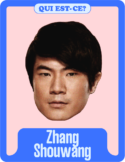
If Yang Haisong is often regarded as the elder statesman, the producer and craftsman of China’s indie rock scene, Zhang Shouwang is widely seen as the prodigy, as well as the emblematic guitarist and composer of the next generation. His group Carsick Cars, formed in 2005, achieved meteoric success across China in two years, thanks to its melodic mastery paired with a chaotic guitar sound.
The band quickly became a flagship of Chinese indie music and a source of inspiration for hundreds of younger bands that, in turn, triggered China’s music explosion between 2005 and 2015. It was also the most famous Chinese band outside China: it toured Europe with Sonic Youth and played major festivals in the United States, Europe, Australia, and Japan.
But Zhang’s role as leader of Carsick Cars is only part of his activities. His experimental dance music group, White, is almost as renowned in China as Carsick Cars. His compositions have been performed by chamber orchestras in Beijing, Shanghai, London, and New York, and he is undoubtedly the leading figure in Beijing’s vibrant community of experimental and improvisational composers and performers.
Yan Yulong (闫玉龙), singer and multi-instrumentalist
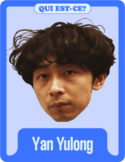
Yan Yulong, nineteen years Zhang’s junior, hails from the same experimental music scene before forming his flagship group, Chui Wan. Influenced equally by psychedelia, California and Balinese minimalism, as well as Western China’s musical traditions, the band developed a distinct style that steered younger Chinese musicians toward a more complex path. Yan Yulong is often regarded as one of the artists who propelled the Beijing underground rock beyond post-punk toward an increasingly ambient style, tinged with folk and experimentation.
An accomplished violinist and sound designer, he has performed internationally, notably in Europe, North America, and Asia. He is also, alongside Kan Ziyi, the curator of Beijing’s weekly Sally Can’t Dance series, which in the past two years has become Beijing’s main hub for experimental and improvised music.
David Ownby
Liu Xiaodong (刘小东), painter
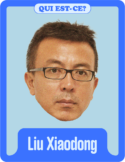
Liu Xiaodong is one of China’s most famous contemporary artists. He paints in oils, mainly portraits, though not exclusively. His central theme is “how to see people,” and, although his work is not explicitly political, he travels to conflict zones around the world to paint, for example, Israelis, Palestinians, Mexicans, Texans, and sex workers. The film Hometown Boy traces his return to his hometown to paint his friends and family.
Xiang Biao (项飙), anthropologist
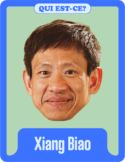
Xiang Biao is one of China’s best-known intellectuals and the unquestioned favorite of the Chinese youth. An anthropologist working in Germany, he writes books on the capacity to act and solitude, which enjoy great success in China. He also frequently tours across the country to promote his ideas, meet young people, and deepen his research. He popularized the term “involution” (neijuan) to describe the unproductive overwork many young Chinese feel compelled to undertake. His book Self as Method is available in English translation.
Tang Wei (湯唯), actress

Tang Wei is one of the best-known actresses in China, famed especially for her role in Lust, Caution by Ang Lee (for which she faced trouble in China due to explicit scenes). However, the peak of her career came in Park Chan-wook’s neo-noir thriller Decision to Leave, where she plays a Chinese immigrant in South Korea with ties to organized crime.
Jean-Louis Rocca
Jia Zhangke (贾樟柯), filmmaker and producer
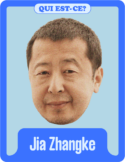
Jia Zhangke is an internationally renowned filmmaker (Golden Lion at Venice in 2006 for Still Life; Best Screenplay at Cannes in 2013 for A Touch of Sin). His films illuminate the contradictions and problems of Chinese society, which has earned him occasional clashes with censorship. At the same time, he served as a deputy in the National People’s Congress (2018-2023). He is the president of the National Association of Filmmakers (since 2024), an official organization representing the profession. He embodies the stance of many Chinese artists within the country’s unique political context, often compelled to hold official positions. Their objective: to create works that critique social reality. Meanwhile, the Chinese state needs recognized artists for the quality of their work in order to secure a prominent position in this field as well. In this context, a modus vivendi emerges.
Li Peilin (李培林), academic, sociologist
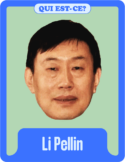
A sociologist by training, former student of Lyon 2 University and PhD from Paris 1, Li Peilin enjoys international scientific recognition. His work focuses on China’s new society and its various characteristic phenomena (social stratification, inequality, the middle class, fertility, aging, urbanization and rural renewal), as well as the problems they generate. In his writings, he provides lucid diagnoses of the social situation. He has also held public positions: he was vice-president of the Chinese Academy of Social Sciences and a deputy in the National People’s Congress from 2018 to 2023. He was also a substitute member of the CPC Central Committee.
Wang Huning (王沪宁), theorist and politician

Wang Huning is a member of the CPC Politburo Standing Committee (the core of central power), president of the Chinese People’s Political Consultative Conference (a kind of second parliamentary chamber) and number four in the regime. Regarded as the party’s “ideologue,” he first earned a degree in French, then studied international politics at Fudan and subsequently held various academic posts. He entered politics in the late 1990s, participating in numerous commissions under three successive leaders (Jiang Zemin, Hu Jintao, and Xi Jinping), aimed at providing a theoretical framework for the party’s sometimes eclectic orientations. He helped develop the concept of the “Three Represents,” enshrined in party statutes and the constitution, formalizing the entry of successful entrepreneurs (read: capitalists) into the party and state institutions. He is also a proponent of neo-authoritarianism, arguing for a strong, capable government to develop the country. For him, Marxism-Leninism must remain at the heart of the political system, but he also advocates for China to create its own values, drawing on the past while asserting values such as democracy, equality, and the rule of law.
Emmanuel Lincot
Wang Yi (王毅), Chinese Foreign Minister
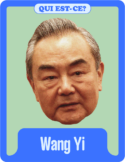
Wang Yi participates in all international meetings. Steadfast, he succeeded Yang Jiechi, then Qin Gang (fired in 2023) as foreign minister. In terms of style, affability, and firmness that characterize him, Wang Yi seems to have displaced Zhou Enlai as China’s best-known diplomat in the collective imagination. Born in Beijing in 1953, he belongs to the last generation of leaders who experienced the Cultural Revolution. A tireless worker, he began studying English and Japanese in the late 1970s, languages he mastered perfectly. Appointed ambassador to Tokyo under Hu Jintao, he served there for three years during a period when Sino-Japanese relations began to deteriorate dangerously. Since 2023, he has led the CPC’s Central Foreign Affairs Office, strengthening his central role in Chinese diplomacy. For him, diplomacy comes down to two words: power and sovereignty. Attached to symbols, in 2026 he reaffirmed the Chinese tradition that the minister of foreign affairs’ first annual trip is to go to Africa, underscoring the continent’s importance to China. A champion of multilateralism, he has held numerous meetings with Japan and the Philippines and participated in international conferences bringing ASEAN countries together to find solutions to island disputes and political issues, notably regarding Taiwan.
With the United States, Wang Yi seeks to avoid direct confrontation and to favor peaceful coexistence despite persistent tensions, while increasing talks with his Russian counterpart, Sergei Lavrov, and strengthening coordination between Moscow and Beijing within the United Nations and the Shanghai Cooperation Organisation. At the same time, Wang Yi asserts that China and the European Union are partners rather than rivals and advocates for harmonious coexistence despite their differences. Beyond the sometimes soothing remarks of the Chinese top diplomat, history will remember him as a top-tier negotiator.
Gao Xingjian (高行健), writer, playwright, stage director and painter
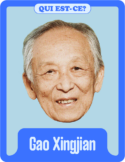
There are two kinds of men: those who travel and those who leave and never return. Ulysses and Abraham, in short. Gao Xingjian, first of all, traveled through languages. In Beijing, he studied French before being exiled to the countryside, like millions of other educated youths during the Cultural Revolution. Gao Xingjian’s mastery lies mainly in the written word—the characters—and in the brushwork that ties him to a long tradition of literati. Painter and lover of words, hardened by the adversities of existence and the humiliations inflicted by power, he has not returned to China since 1988. Subversive, he faced censorship and the totalitarian ideology’s hegemony that perverts language, as Viktor Klemperer observed for Nazi Germany, when language becomes a juxtaposition of slogans. Despite the extraordinary maelstrom of reform, foreign authors were no less suspect in the regime’s eyes. The “spiritual pollution” from the West is one of the regime’s deadliest poisons to avert at all costs. The Tiananmen crackdown of 1989 solidified his choice to stay in his adopted country, France.
With the Nobel Prize in Literature awarded in 2000, particularly for his novel The Soul Mountain, Gao Xingjian is celebrated. But in Beijing, he remains far from universal consent. Party officials regard him as a painful defeat and a critique of their regime. The Chinese press and many of the novelist’s detractors argued that Ba Jin (1904-2005), presented as Lu Xun’s rightful heir (1891-1936), deserved it far more. What is at stake here is, in reality, the formal liquidation of the spirit of modernity rooted in the May Fourth Movement of 1919 and its openness to the West. Xi Jinping’s regime is today the principal gravedigger of that tradition.
Ai Weiwei (艾未未), artist and activist
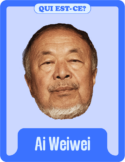
Born in 1957 in Beijing, Ai Weiwei is one of the world’s most influential and engaged contemporary artists. The son of the famed French-speaking poet Ai Qing, he is a multidisciplinary artist, architect, photographer, designer, critic and activist. Blending the figures of entrepreneur and countercultural hero, Ai Weiwei embodies the paradox of our time. A self-taught artist, he was exiled for more than ten years to New York after being expelled by the regime to the Xinjiang province with his father. Ai Weiwei leaves behind at least three major works. Bird’s Nest, the Beijing stadium built with Herzog & de Meuron, stands as a symbol of modernity and the regime’s contradictions, serving as one of the main venues for the 2008 Olympics. Remembering (2009) is a homage to the victims of the Sichuan earthquake a year earlier. Composed of thousands of school backpacks, it was exhibited at Haus der Kunst in Munich and confronted the Chinese government with its responsibilities in the crisis. Sunflower Seeds (2010) is a monumental installation. With millions of porcelain seeds, it was shown at the Tate Modern in London and questions mass production and individuality in Chinese society. This work critiques an aspect of Maoist propaganda that likened the Chinese people to sunflowers all turning toward the sun embodied by Mao Zedong himself. Considered undesirable and harassed by his own country’s police, Ai Weiwei sought refuge first in Germany, then in Portugal.
His involvement in migrant issues is the subject of the documentary Human Flow (2017). Sparking a strong controversy even in Europe, it isn’t only his activism that irritates, but also the encounter of conceptual art with Duchampian irony and Warholian excess that Ai Weiwei seems to embody. His excesses are now aimed at the West. In January 2026, he declared that the West no longer has the moral authority to criticize China on human rights. He cites the censorship of his own works due to his support for the Palestinian cause, and the treatment of Julian Assange, as examples of the deterioration of freedom of expression and human rights standards. He argues that the West has economically profited from the Chinese regime (coercive labor rights, lack of environmental protection) and that it is complicit in the creation of a “monstrous regime” in China while turning a blind eye to its own ambiguities. In short, Ai Weiwei no longer merely criticizes China: he denounces Western hypocrisy and economic interests, which, in his view, fail to defend fundamental values such as freedom of expression or human rights. “Exile is a hard job,” wrote the great poet Nazim Hikmet (1902-1963), to whom Ai Weiwei remains a major admirer. His painful experiences in China, followed by successive exiles to the United States and Europe, have allowed him to cultivate a total aversion to system thinking and ideological frameworks. Not without contradictions.
Gilles Guiheux
Huang Nubo (黄怒波), businessman, founder of Beijing Zhongkun Investment Group
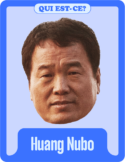
Born in 1956, Huang Nubo is a billionaire, poet and mountaineer. A Red Guard during the Cultural Revolution, he was later sent to the countryside as part of the millions of urban youths. In 1976, he began studying literature at Peking University. Upon graduation, as a party member, he spent nearly ten years in the Propaganda Department of the CPC Central Committee. The connections he made there would serve his interests at the head of Zhongkun Investment Corporation, an empire of real estate and tourism that makes him one of the country’s wealthiest figures.
Huang Nubo began writing poems at 14. Under the pen name Luo Ying, he published his first work in 1978. In Le Gène du garde rouge. Souvenirs de la Révolution culturelle (Gallimard, 2015), a work not published in his homeland, he recounts his gradual indoctrination, his father’s corpse abandoned on a pile of rubbish, and his mother reduced to begging to survive. Over the past twenty years, he has become a seasoned alpinist, summiting the world’s highest peaks, Everest included, three times. His latest novel, À la vie, à la mort – De Pékin à l’Everest, published in France in 2024 by Éditions du Mont-Blanc, explores the backstage of a businessperson’s ascent in a rapidly changing country where ambition, money, and power shape destinies. Huang Nubo’s trajectory, spanning multiple worlds, nicely summarizes the complexity of Chinese society, even at its summit.
Wang Bing (王兵), filmmaker and documentary filmmaker

Born in 1967, he is a filmmaker and documentarian. After studying photography at the Shenyang University’s Academy of Fine Arts (Liaoning province), he continued his training in the Beijing Film Academy’s Photography Department. From 1999 to 2003, he undertook a particularly ambitious project: to record, with a single video camera, the frontal disappearance of the world of workers in the state-owned industry, once the heroes of socialist China sacrificed to reform. He filmed both the interior of the steel plant that was shutting down and the daily life of workers at home or in aging public spaces. Thus arose a unique nine-hour documentary,铁西区 West of the Rails.
Since that masterwork, Wang Bing has pursued projects that bear witness to the lives of the left-behind and voiceless in China’s prosperity: victims of the prison system (Le Fossé), children who must survive on their own while parents have gone to work far away (Les Trois Sœurs du Yunnan), psychiatric patients (À la folie), or young migrant workers in the garment industry (Argent amer and the Youth trilogy). His work has earned him numerous international awards.
Liu Cixin (刘慈欣), science-fiction writer
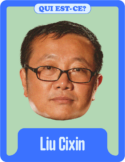
Né in 1963 in China’s Shanxi province, Liu Cixin is a science-fiction writer best known for the Three-Body Problem trilogy. He graduated in water and energy conservation from North China University in Taiyuan and worked for several years as an engineer at a power plant.
The Three-Body Problem (三体) is the first volume of a trilogy that continues with The Dark Forest and Death’s End. The title refers to the n-body problem in celestial mechanics. Serialized in magazines in 2006, the novel was published in full in 2008. It was adapted into a TV series for Chinese audiences by Tencent Video, then for international audiences by Netflix in 2024. Evoking contemporary Chinese history, extraterrestrial civilizations, and scientific research, this science-fiction novel is one of the century’s most ambitious and testifies to Chinese writers’ ability to address a global readership.
Afra Wang
Yang Zhilin (杨植麟), founder of Moonshot AI
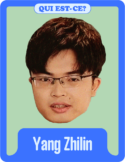
Zhilin is the founder of the rock group Splay, but he is best known for creating Moonshot AI, the company behind the Kimi AI model, whose capabilities approach Claude Fable 5’s and have taken Europe and the United States by surprise.
If asked to define success in China, Yang would embody it: born in 1992, he graduated from Tsinghua University and holds a PhD from Carnegie Mellon. He worked at Google Brain and Meta before returning to Beijing to start an AI-focused company. The Chinese name of the company, 月之暗面 (“the dark side of the Moon”), references Pink Floyd. Moonshot AI is among the youngest and most innovative Western-facing Chinese AI players. Yang represents what I call the “fourth generation” of Chinese tech founders: the latest cohort forged in the crucible of US–China tech rivalry in the 2020s.
Wang Xingxing (王兴兴), founder of Unitree Robotics
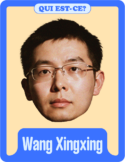
Wang says he has always been an outsider: a poor student, a founder who does not speak English, and who attended a second-tier university. In his first year of college, he spent about 200 yuan on a few cheap microcontrollers and more than a dozen servos. He built and refined the parts by hand, then assembled a bipedal humanoid robot with 14 degrees of freedom. His hands still bore knife scars and calluses from all the tinkering and assembling.
Yet, in 2026, Unitree Robotics dominates the global market for quadruped and humanoid robots. Deep down, Wang is a Zhejiang entrepreneur who tirelessly works to reduce the cost of each component through a thorough understanding of manufacturing processes and the supply chain. Unitree’s robots now dance at China’s Spring Festival Gala and even perform in front of Friedrich Merz. Unitree embodies China’s bet that the next frontier is physical: robots that can walk, fall, and get back up in the real world.
Zhou Qunfei (周群飞), founder of Lens Technology

Zhou was the woman sitting next to Elon Musk and Tim Cook at a high-level state banquet in Beijing last May, during Donald Trump’s visit to China.
Before quitting school at 15, Zhou raised pigs and chickens in rural Hunan. At 17 she left home to work in a factory in Guangdong, where she polished watch glasses for one dollar a day.
Today she is among the wealthiest women in the world. The glass she manufactures sits under the fingertips of almost every touchscreen, from Apple to Tesla.
She was rightly frustrated by her schooling. Over the years, she earned certificates in accounting, computing, customs declarations, and driving, but she simply could not learn English well, which remained a constant source of suffering even after she founded her own company in Shenzhen at 23. Her life is the compressed biography of modern China’s ascent—a reminder of China’s true miracle of growth and a genuine embodiment of Shenzhen.
Pierre Haski
Cui Jian (崔健), musician
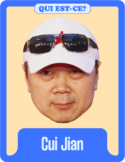
For five years, I listened to Cui Jian out of pleasure, but also out of obligation: the cassette of the Chinese rocker was stuck in my car’s player, and rather than fix it, I played it on repeat. I also went to see him live in Beijing in small venues, in front of a crowd that knew his songs by heart and demanded that he perform his 1980s pieces, especially the best-known one, “Nothing to My Name.” A symbol in itself: he sang it on Tiananmen Square in Beijing, in front of students demanding democracy. For that act, Cui Jian, the former trumpeter who became a rocker after a tourist gave him a cassette of Simon & Garfunkel, was punished for two decades. Limits on audience size, no television slots, no visibility. But like a Chinese “Johnny,” he survived fashion trends and China’s transformation to become a aging rocker, now a regular on TV shows, a tempered rebel, but one whose landmark remains having sung “Nothing to My Name” in front of an impassioned youth who would later face assaults from the army and “normalization.”
Zhang Zhan (张展), lawyer and whistleblower

In early 2020, as a mysterious virus paralyzed Wuhan and then the entire world, Zhang Zhan, a fearless Shanghai-born woman, decided to investigate. She published 122 videos on social networks showing what the official media did not say: hospital corridors crowded with patients, the city’s crematorium operating 24/7, etc. On May 15, 2020, the young woman “disappeared,” as one says in China for people arrested for “sensitive” reasons. She was sentenced to four years in prison for “picking fights and provoking trouble,” from which she was released in 2024, weakened and diminished. But she refused to stay silent. She resumed her whistleblowing role on YouTube, the American network accessible in China only with a VPN. She “disappeared” again, having been sentenced to four more years for “re-offense.” “A world without truth has no meaning,” she wrote in one of her messages, a former lawyer struck off the bar for political reasons. China aspires to become the world’s leading power, but it fears this “truth.”
Lei Jun (雷军), founder of Xiaomi
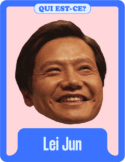
Lei Jun is often likened to Steve Jobs. The Chinese tech entrepreneur admits finding inspiration in reading, while still a student at an engineering school, from Steve Jobs’ autobiography. When he founded Xiaomi in 2010, he did everything like his model, especially during the launch of new smartphones in keynote-style presentations directly inspired by Apple. Even his outfits were intentionally reminiscent of Steve Jobs. Like Jobs, he is regarded as a “guru” by a segment of Chinese youth, and his smartphones have generated an allegiance that goes beyond brand popularity. He has just taken a further step with the launch of his first electric car, at a time when Apple has abandoned its own automotive ambitions. In the mobile sector, Xiaomi has risen to the global third place and aims to sell its SUVs worldwide. Lei Jun has also managed to avoid the political traps that struck his rival Huawei, which constitutes one of his greatest successes in a world that is divided.
JiaJia Wang
Li Ziqi (李子柒), global ambassador of traditional Chinese culture

Li Ziqi is one of the most internationally known Chinese content creators. Through videos devoted to rural life, traditional cuisine, farming, and craft, she offers a vision of China imbued with aesthetics, nature, and ancestral know-how.
Her videos contain very little dialogue. They rely primarily on the power of imagery, music, and narrative rhythm, which allows them to reach an audience far beyond the Chinese-speaking world. More than recipes, they tell a way of life and a vision of the relationship between humans and nature.
Her success rests on the ability to transform personal creation into a genuine cultural project. Without political discourse or an explicit intention to promote her country, she has deeply renewed China’s image for an international audience.
Ba Ling Biaozi (八零彪子), the guardian of rural memory in China

Ba Ling Biaozi is a content creator who specializes in reconstructing daily life in rural China during the 1970s and 1980s. Through making traditional foods, restoring old objects, and presenting artisanal techniques, he revives a collective memory spanning several Chinese generations.
His videos favor a slow pace, a sober aesthetic, and a nostalgic atmosphere. They invite less learning a craft than returning to a familiar universe built from childhood memories and rural traditions.
Criticism centers on the sometimes idealized portrayal of rural life. Some argue the videos embellish an era marked by difficult living conditions, while others see it as a cultural approach to preserve intangible heritage and traditional know-how. Yet his success reflects a deeper trend among Chinese youth, as seen in another viral format circulating on Chinese social networks called “the core of the Chinese dream” (中式梦核), which features grainy images of 2000s China.
Alex (“Lao A” / 牢A, Squeaky King), a new generation of Chinese storytellers shaped by international experience

After studying in the United States, Alex recounts the life path abroad, his experiences in low-skilled jobs, and observations about cultural differences between China and the United States.
His main strength is his storytelling talent. By blending personal experiences, social analyses, and a narrative dramatization, he captivates a young audience eager for authentic stories and international experiences. He is also the originator of the term “American Kill Line,” borrowed from video-game vocabulary, which denotes the critical threshold beyond which a disease, job loss, or accident can push an American household into an irreversible financial state. This phrase quickly became one of the most widely shared concepts on the internet in China.
His success, however, is accompanied by controversy. While many praise his view of American society, others point out that some of the stories or details he relates cannot be independently verified and are more personal testimony than investigative journalism. Nevertheless, Alex embodies a new generation of Chinese creators who build influence through storytelling, lived experience, and a distinctly international perspective.
Yolaine Escande
Maggie Cheung (張曼玉), actress
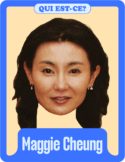
Maggie Cheung is a Hong Kong-born film actress, born in 1964. She grew up there, studied in the United Kingdom, then returned to take part in the Miss Hong Kong beauty pageant before joining TVB.
At the start of her career, she acted in television series, the most famous being Police Cadet ’84 (1984), in which she co-starred with Tony Leung. She later turned to independent cinema, notably under the direction of Wong Kar-Wai (As Tears Go By, 1988; Our Years, Wild Years, 1990; Ashes of Time, 1994; In the Mood for Love, 2000), while occasionally accepting roles in commercially successful films (such as Jackie Chan’s Police Story, 1985, or Zhang Yimou’s Hero, 2002). Maggie Cheung won the Golden Horse Best Actress Award four times and the Hong Kong Film Award Best Actress five times. She rose to international fame by winning the Best Actress award at the Cannes Film Festival in 2004 for Olivier Assayas’ Clean, after earning the Silver Bear for Best Actress at the Berlin Film Festival in 1992 for Center Stage by Stanley Kwan.
Guo Pei (郭培), haute couture designer
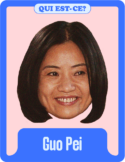
Born in 1967 in Beijing, Guo Pei is a haute couture designer who has presented her collections for about thirty years. After working in one of Beijing’s rare private design studios from 1986 to 1997, she founded her own studio in the capital in 1997. She trains her own assistants and quickly earns recognition in the high fashion world for her sumptuous embroideries and exceptional craftsmanship. She blends the dress codes of Chinese imperial court with European court fashion themes, architectural aesthetics, and the plant world. She is the first and only designer born and trained in Asia to be invited by the Fédération de la Haute Couture et de la Mode (FHCM) to present ten couture collections in a row in Paris, from 2015 to 2020. She also received the title of “Extraordinary Couturière of Asia” from the Asian Couture Federation (ACF). In 2016, she was listed among Time magazine’s 100 most influential people in the world.
Jack Ma (Ma Yun马云), cofounder of Alibaba Group
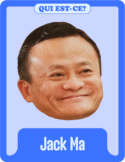
Born in 1964 in Hangzhou, Jack Ma co-founded Alibaba in 1999, initially an online commerce company that later grew into a multinational conglomerate. After a tumultuous English studies at Hangzhou University, he began teaching English at Hangzhou Electronic University. A 1995 trip to the United States made him realize the importance of the Internet and the absence of Chinese product websites in the United States. He created chinapages.com, one of China’s first Internet startups, which earned substantial profits within three years. From 1999 to 2019, Jack Ma served as executive chairman of Alibaba, one of China’s major tech holdings for two decades after its creation. This powerful leader, however, “disappeared” for several months in 2020 after making critical remarks about the Chinese government. He has since returned to the fold and unwaveringly supports the CPC’s policies.
Simone Pieranni
Cai Qi (蔡奇), Premier Secretary of the General Secretariat of the Chinese Communist Party
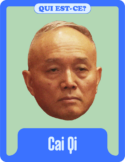
Today probably the most powerful politician after Xi Jinping. He is one of Xi’s long-time close aides, part of what is now known as Xi’s Fujian faction, which forms a large part of the Communist Party. When Xi Jinping rose to power, he sidelined many leaders from the former leadership (Hu Jintao/Wen Jiabao), who came from this faction. Cai Qi holds two particularly important roles: he is secretary of the CPC Central Committee and a member of the Politburo Standing Committee, i.e., one of the seven most powerful men in China. But that’s not all: he is also Xi Jinping’s personal secretary. This does not mean he manages Xi’s schedule, but that he exercises tight control over the ideology defended by Xi. He effectively organizes the ideological work of all the CPC’s most important sessions, from plenary to Beidaihe summer meetings, in a way. He is almost the same age as Xi Jinping, born in 1953, while Xi was born in 1955.
Yin Li (尹力), Secretary of the Communist Party of Beijing
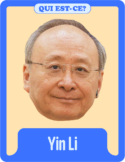
Yin Li, born in 1962; he currently holds the position of party secretary in Beijing, a typical stepping stone to entering the ranks of the seven. The CPC congress will take place in 2027, and it is typically after this congress that the new ruling elite emerges—though with Xi Jinping it is somewhat less “new”—but he was born in 1962; he was sent in 2003 to manage the SARS outbreak at that time, and then, during the Covid pandemic, he was sent to Sichuan, a province of 82 million inhabitants, where he proved that he knew how to do his job well, even facing a technocratic elite more than the one Xi Jinping seems to favor. He is a physician and party secretary and could be among China’s seven or nine most powerful people.
Wang Qishan (王岐山), politician
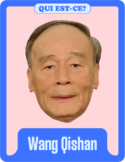
Since I cited one during its ascent, I will mention another in decline: Wang Qishan, who led the anti-corruption campaign with which Xi Jinping began his term. In March 2013, Xi became president of the People’s Republic and launched a ruthless anti-corruption campaign, during which hundreds of thousands of cadres and officials ended up in prison. Wang Qishan appears to sleep little these days because, beyond the purges within the military, the purge targeting his secretaries and the technocrats of Zhu Rongji’s era—who died at 98 a few weeks ago—has been ongoing for some time. Zhu Rongji was seen as Jiang Zemin’s prime minister and, in the 1990s, as the architect of China’s accession to the WTO. Wang Qishan, meanwhile, is a “tsar” of China’s anti-corruption drive who seems somewhat endangered. He is 78 years old, but we have seen that Xi Jinping shows no mercy, neither to the elderly nor to those who have walked a long political path with him.
Federico Fubini
Wan Gang (万钢), father of China’s strategy on electric vehicles
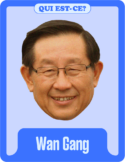
Wan Gang reshaped the history of the global economy. What matters less is the mere fact, but how he achieved it. Belonging to a certain generation, he was deeply marked by the Cultural Revolution. As a child, he was sent to a remote province in northeastern China where he studied while working as a “soldier-worker.” He earned a degree in forestry, then pursued a specialization in mechanical engineering in Shanghai. He later chose to go abroad. He prepared a PhD in mechanical engineering in Germany. He settled there, earned his PhD, and was hired by Audi, where he worked from 1991 to 2000. In 2000, an accomplished middle-aged man left his home country, but he wrote a letter to the State Council. He introduced himself and said: “I am this engineer, I work in Germany, I have a lot of experience in the automotive industry, and I tell you we have no hope. We will never catch up with Westerners, Europeans, in the field of internal-combustion engines, because they are too far ahead. We will never get there. The only way is to skip a technological step and plunge into electric cars.” To everyone’s surprise, the letter was opened and read; Wan Gang was summoned to Beijing, and some time later the State Council entrusted him with the mission of spearheading this transformation. We are at the very beginning of the 2000s. He would become minister of the State Council for Science and Technology without being a CPC member. He is the originator of the electric-vehicle revolution.
Guan Zhi’ou (关志鸥), Secretary of the CPC Committee of Hubei Province
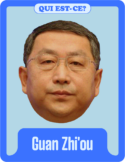
Guan Zhi’ou is the party secretary in Hubei, a semiconductor-producing region. Appointed in May, he has overseen the emergence of a new section in the province’s official newspaper entitled “Weekly Theory.” This section contains a critique of Xi Jinping’s economic management, the extent of which is debated. China indeed displays certain economic peculiarities. One of them, of particular interest to Europe, is that household consumption’s share of GDP remains quite low, around 39%. Even in Italy, a country known for its low domestic consumption, this figure is around 55%.
Ma Huateng (马化腾), founder of Tencent
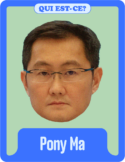
Tencent is today a giant of Internet services with 1.4 billion customers. I recently had access to one of their apps that bundles 24 functions, ranging from payments and savings management to travel and insurance, including medical questions.
Thierry Breton
Ren Zhengfei (任正非), CEO of Huawei
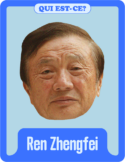
Born in 1944 in Guizhou, Ren Zhengfei is the son of two teachers. A civil engineer by training, he spent nearly a decade in the People’s Liberation Army’s Engineering Corps. It was there that he read Clausewitz, a writer he would never abandon. In 1987, with roughly 3,000 euros in his pocket, he founded Huawei in Shenzhen. Today, the company employs 200,000 people worldwide and has become a direct rival to America’s tech giants.
Our story crossed paths without us knowing it. In 1998, I headed Thomson Multimédia in France and RCA in the United States. We were establishing one of the first Western factories of this wave of industrialization that would change everything at Dongguan, in the Pearl River Delta. Twenty years later, as a European commissioner, I spoke via video with Huawei’s CEO and asked him where he was calling from. “From a city you probably don’t know, in Guangdong.” I guess, “Dongguan?” Silence, then: “But how did you know?” It is there, on the land where Thomson had set up shop in the middle of nowhere twenty years earlier, that Huawei built its vast research center: twenty-five thousand researchers and twelve villages imitating major European cities. The rebirth of new China, in short.
Yuja Wang (王羽佳), pianist

Born in Beijing in 1987, she is the daughter of a dancer and a percussionist. She entered the Central Conservatory of Music as a child, then went to Philadelphia and the Curtis Institute, like her elder Lang Lang, another world-renowned Chinese pianist, under the tutelage of Gary Graffman. In 2007, she stood in for Martha Argerich in Boston at the last moment, at twenty. Deutsche Grammophon signed her subsequently, and she won a Grammy in 2024. What she does on stage is hard to describe: limitless virtuosity, breath-taking tempos, a body that lives the music without restraint. Rachmaninoff, Prokofiev, John Adams: she plays everything with the same authority, not seeking to imitate the West; she has taken what it had to offer, made it her own, and returns it to us transfigured.
Pan Jianwei (潘建伟), vice-president of the Chinese Academy of Sciences

Born in 1970, he trained at China’s University of Science and Technology—the Chinese equivalent of Caltech—and then in Vienna, where he completed his thesis under Anton Zeilinger, one of the leading figures in quantum physics (he would win the Nobel Prize in Physics with Alain Aspect in 2022). Back in China, his obsession is to make China the world’s first quantum power. In 2016, he launched Micius, the first quantum communication satellite ever placed in orbit. The following year, he organized a quantum-encrypted video conference between Beijing and Vienna, spanning nearly eight thousand kilometers. In July of last year, UNESCO awarded him the Mendeleev Prize in Paris.